VEVOR Electric Hoist Crane Winch 1197.5 kg with 426.7 cm Wired Remote Control 230V


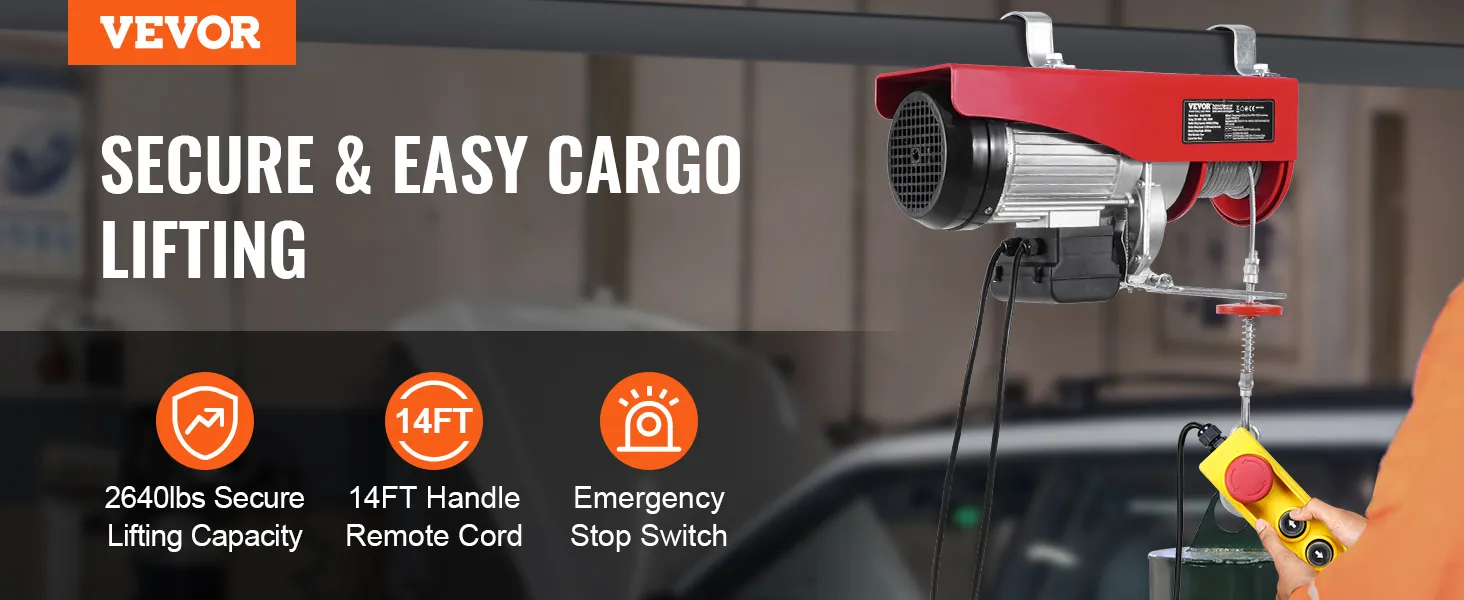
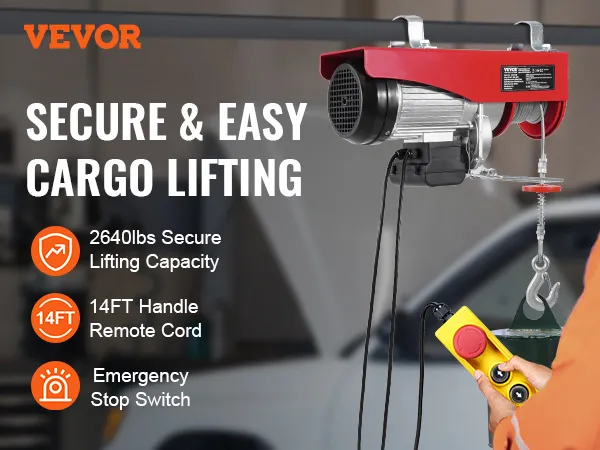
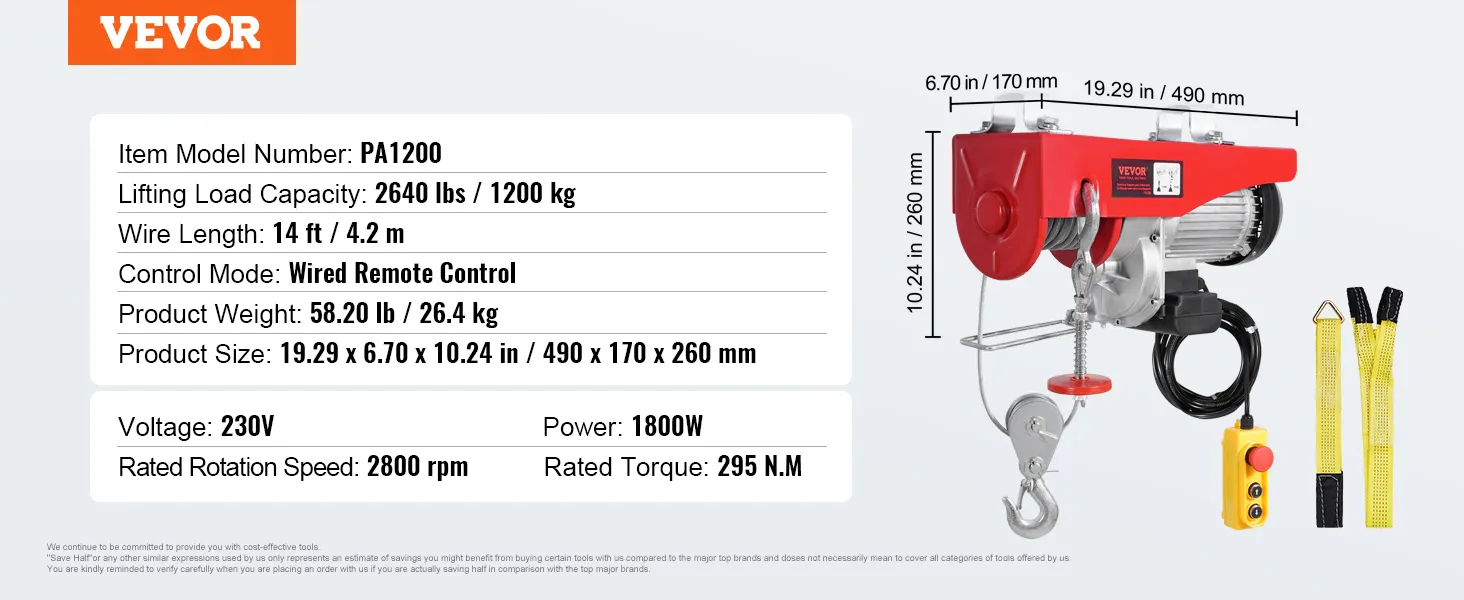
- 2640 lbs Load Capacity: This electric hoist can easily lift small engines, transmissions, large workshop tools, or construction supplies. Lifting Load Capacity: 1320 lbs/600 kg (Single Cable), 2640 lbs/1200 kg (Double Cable).
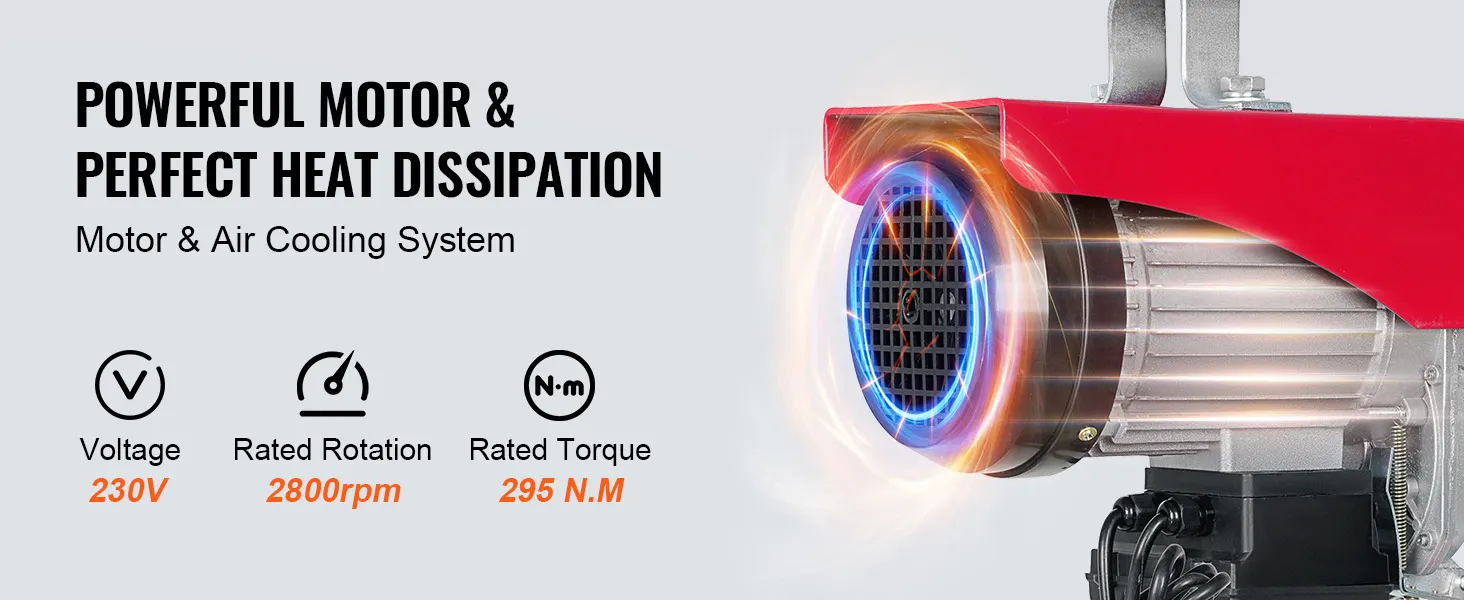
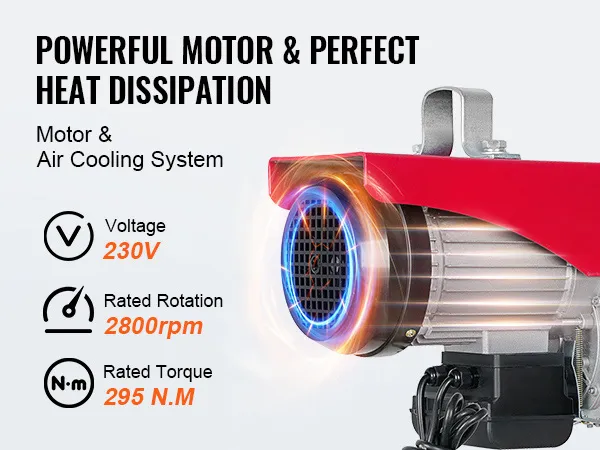
- Powerful Motor: The high-quality motor provides strong power, which can withstand large forces without causing deformation of the electric winch. In addition, the large cooling fan can quickly cool the machine to avoid overheating. Therefore, this powerful motor ensures efficient operation and saves you more time and energy.
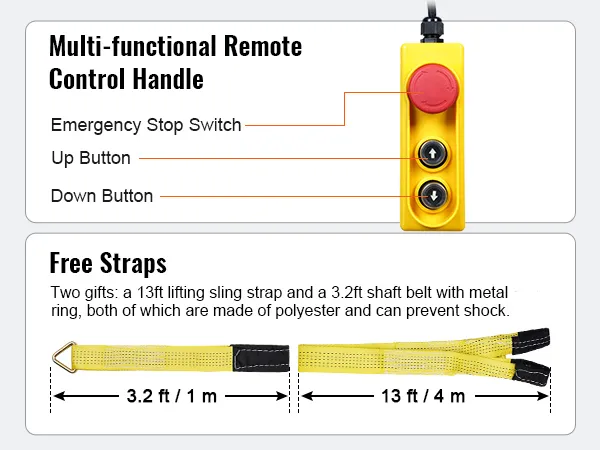
- Convenient to Install: Our garage hoist can be directly hung on the ceiling using metal or solid wooden strips. Moreover, it is equipped with an emergency stop switch and an electromagnetic braking system to avoid abnormal sliding.
- Remote Control: Wired remote control is achieved through the switch of a controller on the cable installed on the ceiling lift. The length of the extended cable is approximately 14 ft, allowing you to operate within a secure distance.
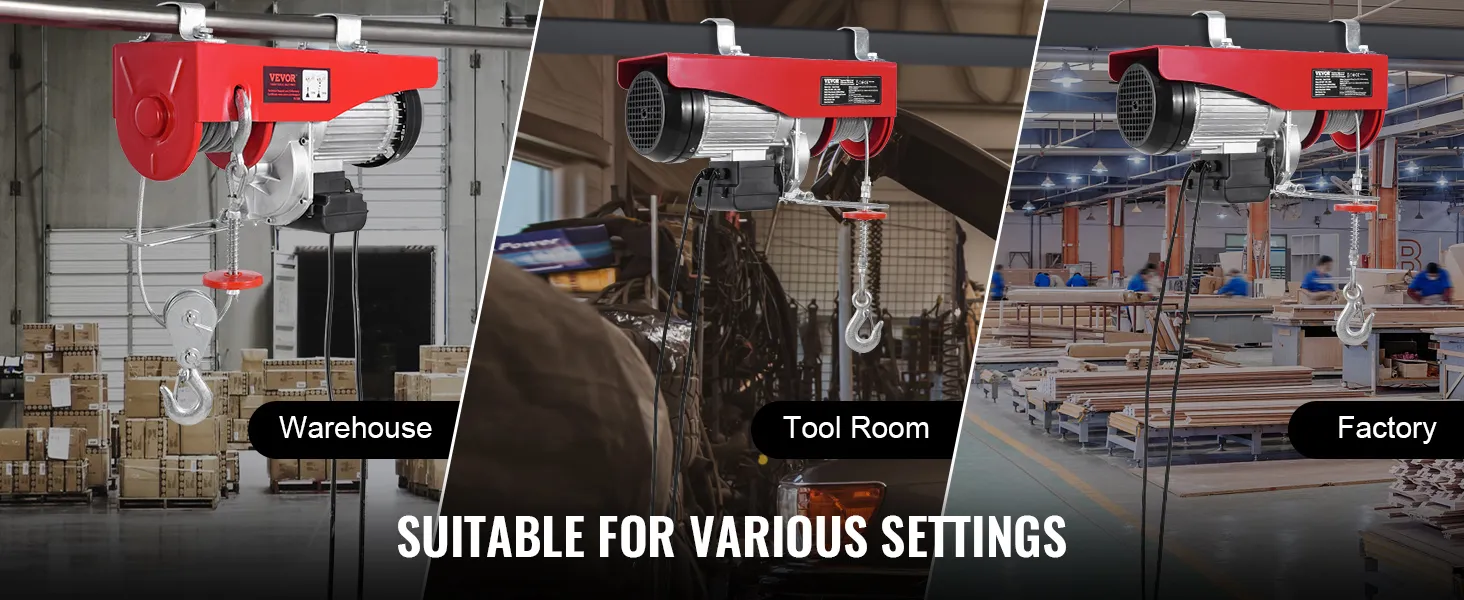
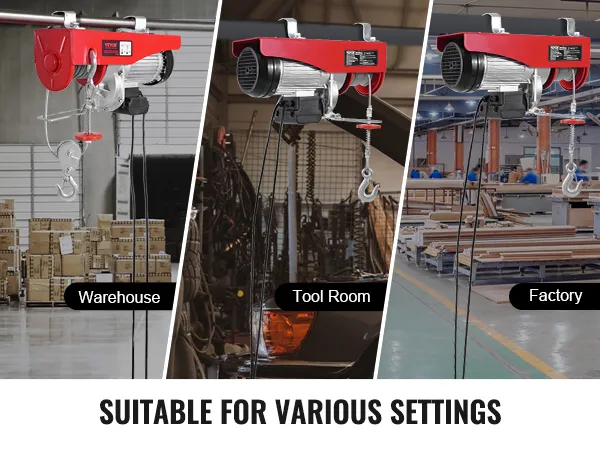
- Multiple Uses: This electric cable hoist is widely used in garages, factories, warehouses, and families, as well as professionals and amateurs. It is suitable for repairing ships, cars, lawnmowers, golf carts, home decor, engines, boulders, trees, etc.
Frequently Bought Together
Reviews
 Giarrafano alessandro

 gennarobalzano65@gmail.co
 be***
be***  Róbert csizmadia
 About this item


Engine Hoist Winch with 2640 lbs Dual-Cable Capacity for Heavy Workshop Lifts
This VEVOR engine hoist winch can lift to 2,640 pounds (1,200 kg) when set up with two cables. This capacity is large enough to handle all the jobs that occur in a professional workshop or garage. This machine can handle engines, transmissions, motors, building materials, and large workshop tools within its rated capacity. In single cable mode, the lifting speed reaches 27.6 ft/min, which is better suited to smaller, faster jobs.
The 2640-pound capacity provides the lifting capability needed for demanding workshop applications. Working below the stated capacity reduces stress on the cables, extends part life, and ensures that every lift stays well within the mechanical limits of the hook, drum, and frame. If you often lift items close to the maximum weight a garage hoist can hold, that extra weight is not just a technical detail; it is there to protect both the equipment and the person using it.
14 ft Wired Remote Control for Safe Operation at a Secure Distance
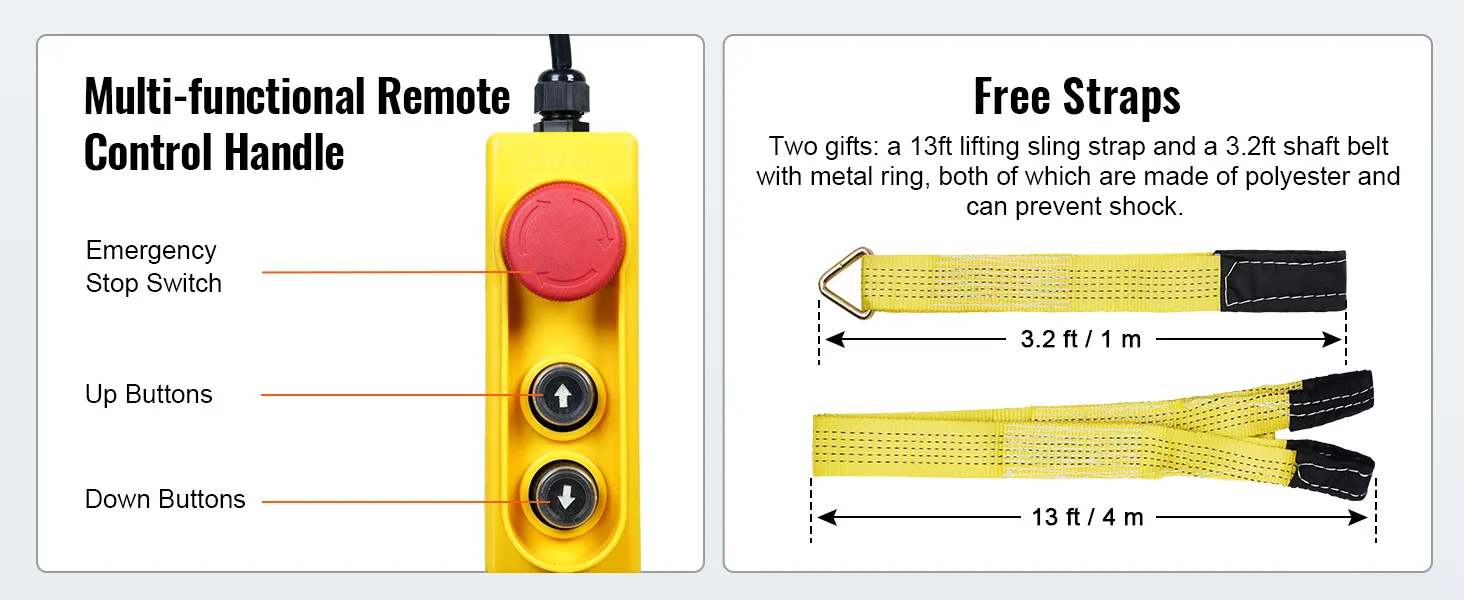
At 14 feet (4.2 m) away, the wired remote gives users enough space from the load to see the lift clearly without being right under it. In a normal garage or workshop, a ceiling-mounted hoist has a 14-foot cable reach that covers the entire work area around the hoist's installation point. The cable length provides ample reach for most garage and workshop layouts. It is easy to control; one button raises and lowers, and an emergency stop is always within reach.
With wired control, you do not have to worry about signal interference or batteries dying in the middle of a lift. This engine hoist winch is perfect for operators who prefer the guaranteed response of a hardwired link over the convenience of a wireless one. The control cord is just the right length to be useful, but not so long that it could trip someone up on a busy workshop floor.
Air-Cooled Motor That Keeps Working Through Long Back-to-Back Sessions
This unit includes a cooling fan motor that actively draws heat away from the body while running. In a professional garage, where a full engine swap takes several hours and involves multiple rounds of raising, lowering, and repositioning, motors without active thermal management break down from excessive heat buildup. This does not happen because the fan maintains the operating temperature within safe limits, rather than relying on passive heat transfer alone.
The motor is designed to withstand repeated lifting loads during long-term operation. With a maximum capacity of 2640 pounds, a full double-cable lift requires considerable force. If the motor bends or warps under peak load, each subsequent lift becomes less predictable. This construction helps maintain stable performance during repeated lifting operations. This means that it will work consistently and reliably for years, not months, of regular workshop use.
Single and Double Cable Modes for Speed or Maximum Lifting Strength
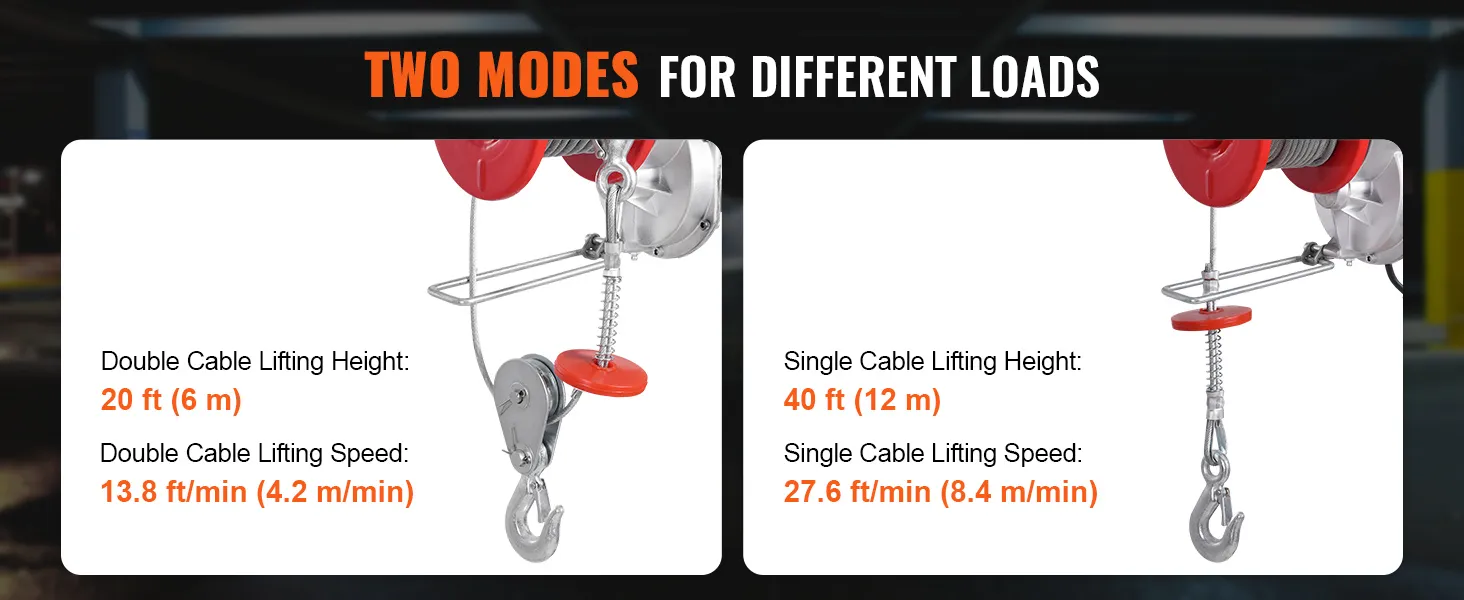
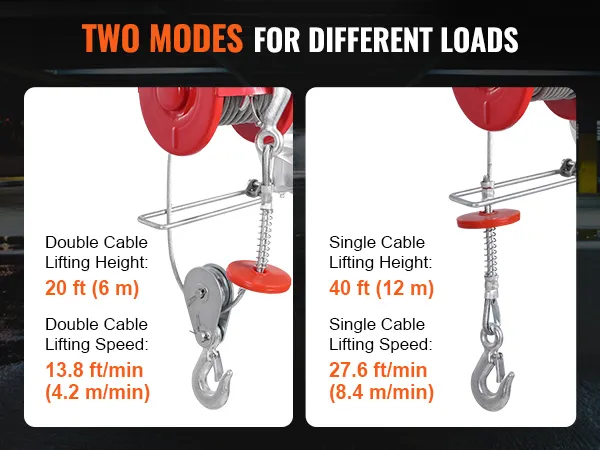
Both the capacity and the speed of the lift change when you switch between single- and double-cable setups. The single-cable mode moves at 27.6 ft/min, which is fast enough to move loads quickly without waiting between setup steps. It can support up to 1320 lbs (600 kg). In double-cable mode, the speed is halved to 13.8 feet per minute, but the capacity is increased to 2,640 pounds.
It is helpful to have both modes available so the machine can adjust based on the job, rather than keeping every lift in the same position. You can move lighter items faster in single-cable mode. Use two cables for added stability and more space for big, awkward loads. On a busy workshop day, switching between the two without tools or moving things around saves time and keeps the work going.
Electromagnetic Brake and Emergency Stop for Dependable Load Security
When the motor's power is lost, the electromagnetic brake instantly engages, locking the load in place without requiring continuous electrical input to maintain the hold. The load stays exactly where it was when the user stops mid-lift to reposition a guide strap, check for clearance, or take a break. It does not move or fall slowly. This behavior is always the same and predictable, which is important when dealing with heavy things that could hurt or damage you if they move without warning.
The emergency stop button provides another level of control, separate from the first. No need to use the normal raise/lower controls when something unexpected happens during a lift, such as the load shifting, someone stepping into the danger zone, or the equipment under the load needing adjustment. One press stops everything immediately. Since these two processes are independent, a problem with one does not affect the other.
Engine Hoist Winch Built for Garages, Warehouses, and Factory Environments
Ceiling installation uses the standard crossbeam bracket system, which attaches to metal or solid wooden beams and requires no special mounting tools. Most people can use this engine hoist winch within an hour of taking it out of the box. Once set up, it can handle all the tasks a professional or serious home workshop needs, such as pulling engines, swapping gearboxes, lifting compressors, moving large pieces of equipment, and positioning building materials.
With a capacity of 2,640 pounds, this type of unit can move engines, machinery, workshop equipment, construction materials, lawn mowers, and other heavy loads. It is one of the most useful ceiling hoists you can get at this price because it has a high capacity, reliable braking, and simple wired control.