- 500 ft fiberglass tape ensures long-distance wiring with fewer re-feeds and smooth conduit navigation.
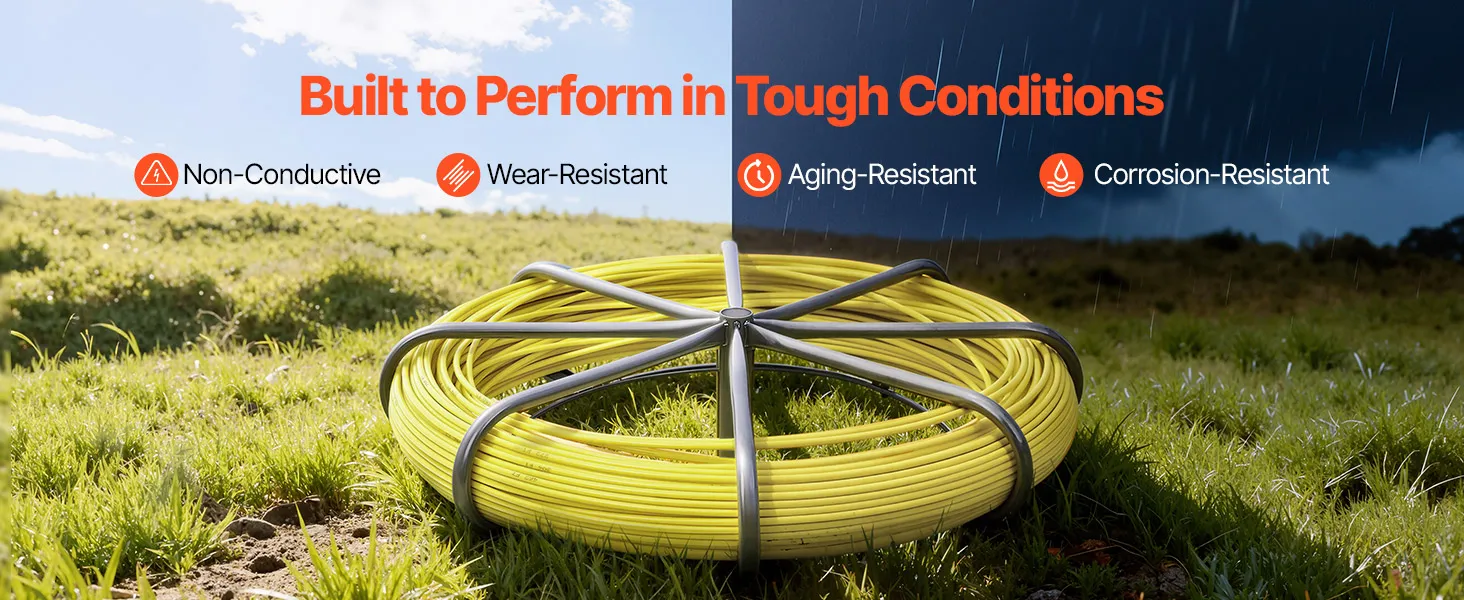
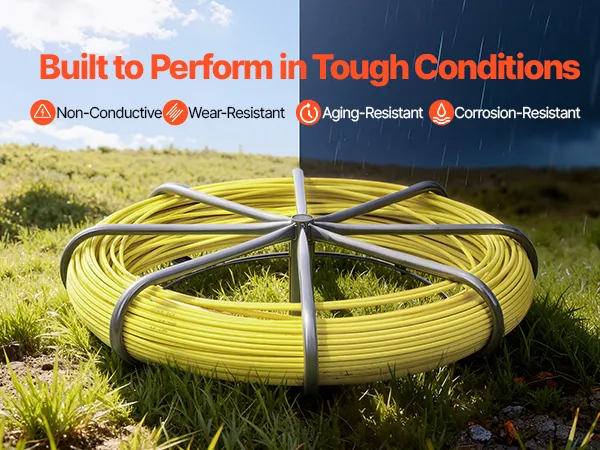
- Non-conductive fiberglass resists rust and aging for reliable performance in harsh environments.
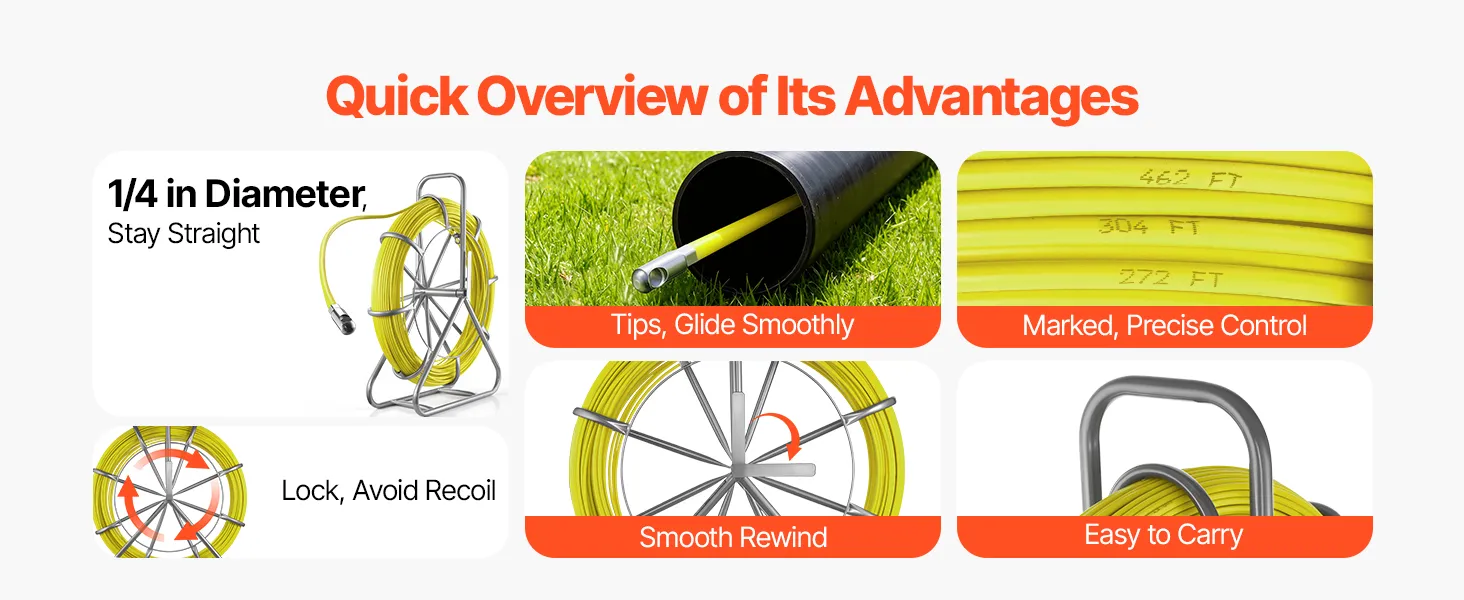
- Locking mechanism prevents snap-back and enables precise, efficient rewinding.
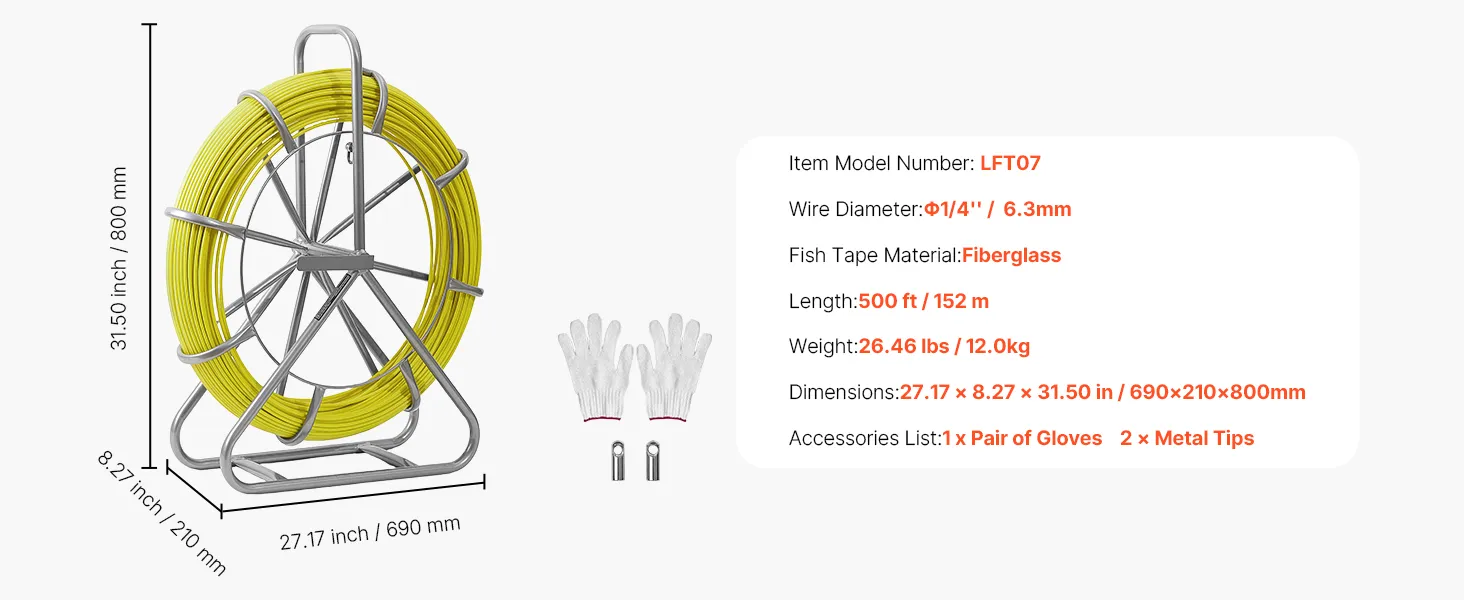
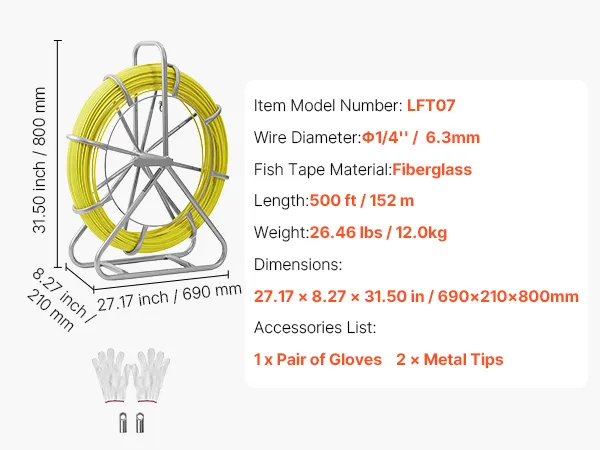
- Item Model Number LFT07
- Wire Diameter Ø1/4" / 6.3 mm
- Stand Diameter Ø0.64" / 16.3 mm
- Stand Wall Thickness 0.03" / 0.8 mm
- Stand Material Black Annealed Steel Tube
- Fish Tape Material Fiberglass

About this item


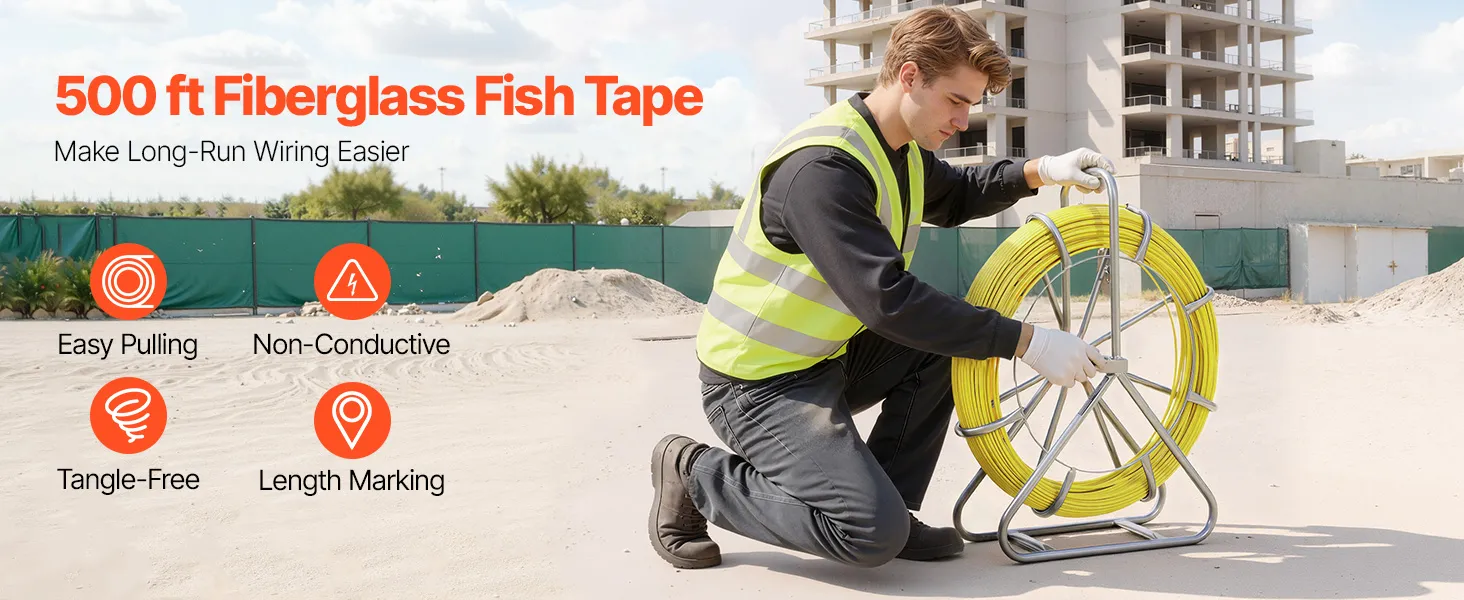
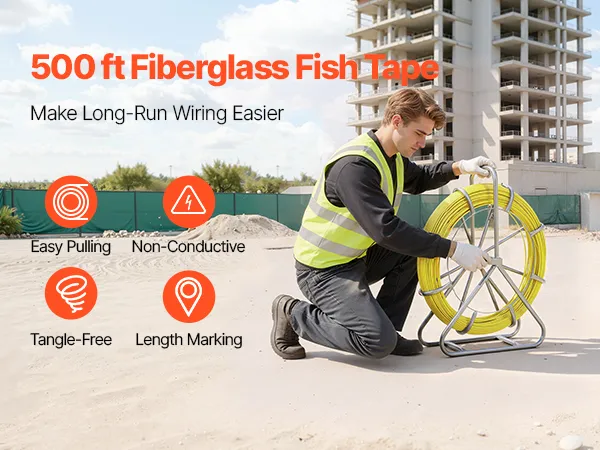
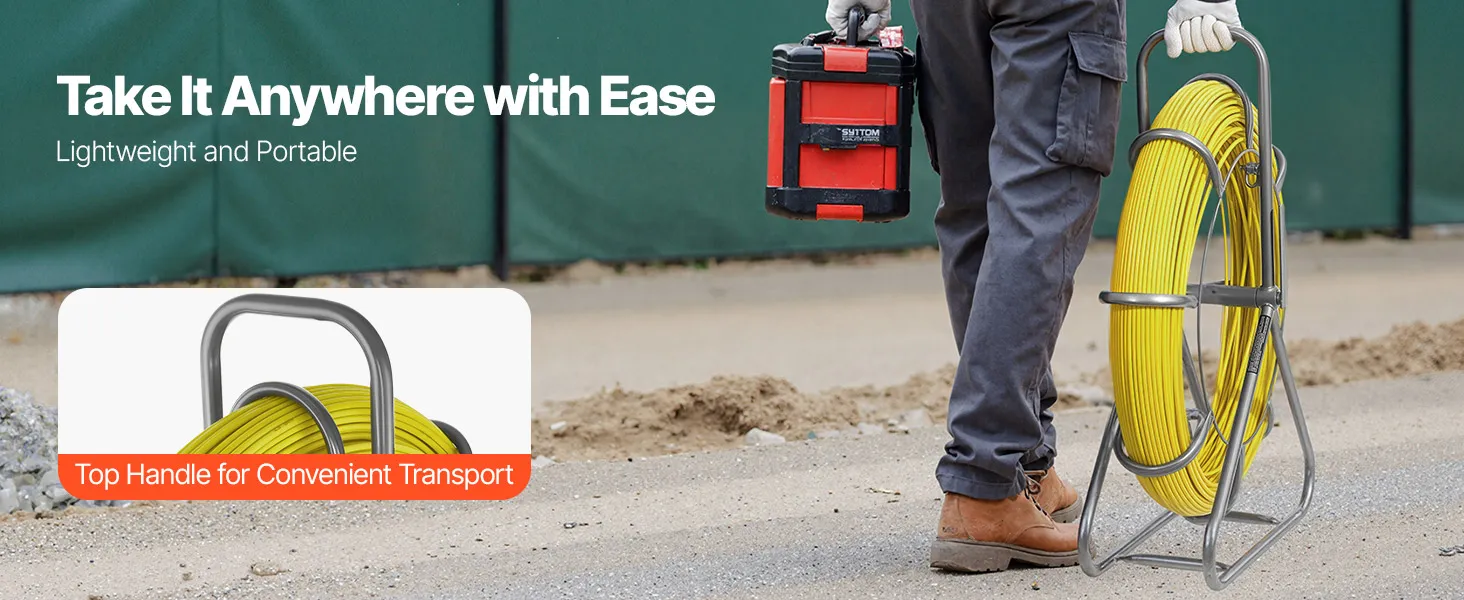
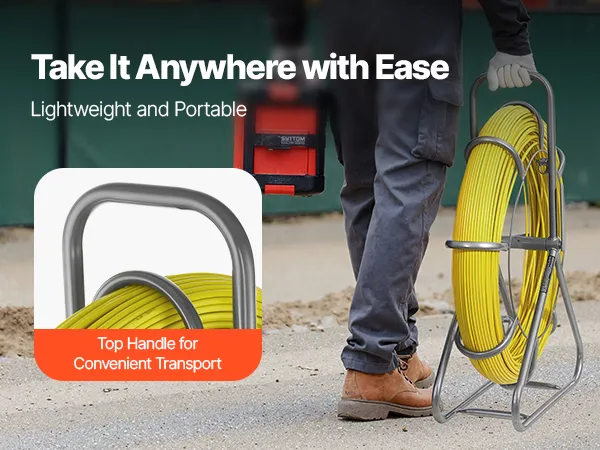
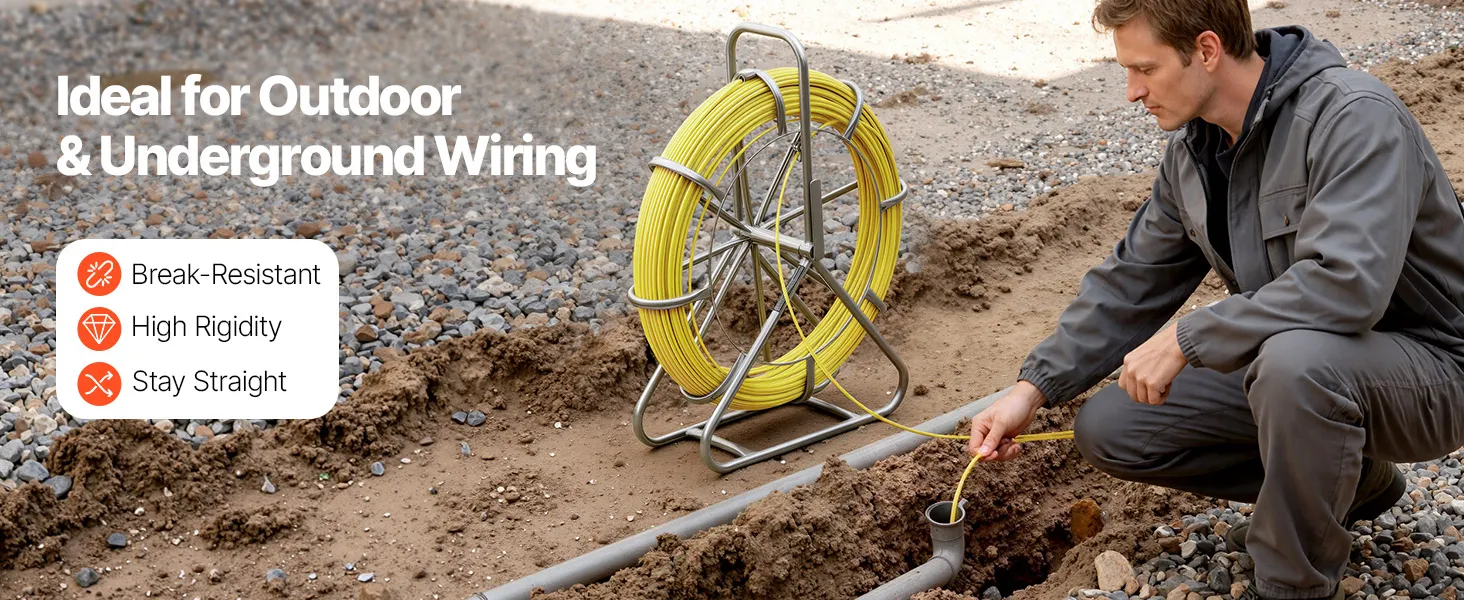
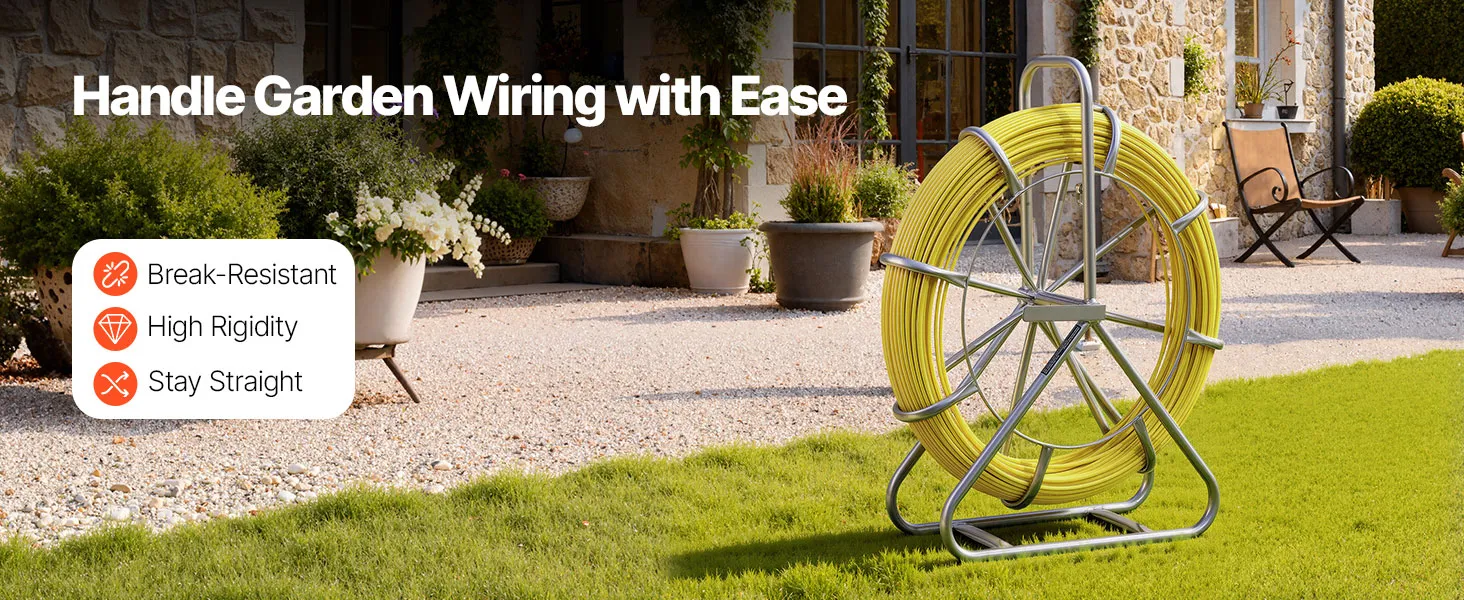
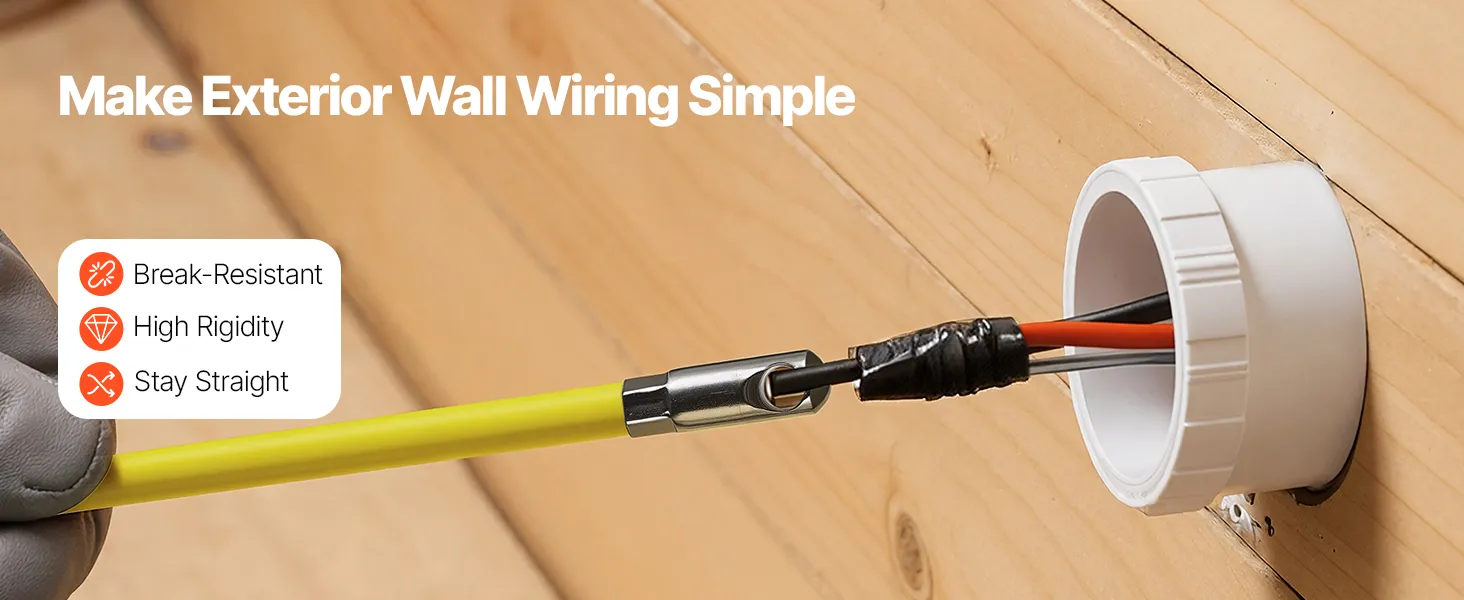

Fiberglass Fish Tape with 500 ft / 152 m Length for Long-Distance Cable Routing
The VEVOR fiberglass fish tape provides 500 ft (152 m) of working length, covering large-scale wiring projects where shorter tapes require multiple feeds to complete a single conduit run. At 152 m, this tape can handle most floor-to-floor conduit installations in buildings, underground utility duct runs, and long horizontal wall routing jobs with just one continuous push. There is no need to re-feed the tape from a different starting place halfway through the run.
To find a good balance between push stiffness and conduit flexibility, the 6.3 mm (1/4 in) tape diameter is thick enough to transmit forward pushing force through bends and transitions without buckling inside the conduit but thin enough to go through standard conduit diameters used in residential and commercial electrical installations without the tape contacting the conduit walls during the push.
Non-Conductive Fiberglass and PP Construction for Safe Electrical Work Environments
The body of the tape is made of fiberglass reinforced with polypropylene (PP). This creates a non-conductive tape that helps reduce electrical conductivity during cable installation. This non-conductive property is a basic safety requirement for fish tape used in environments where electrical safety is important.
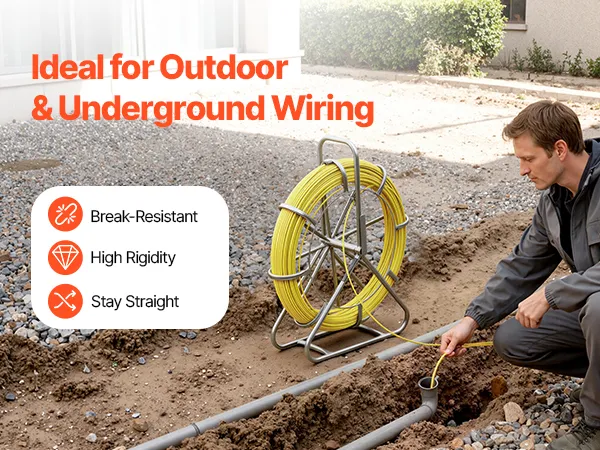
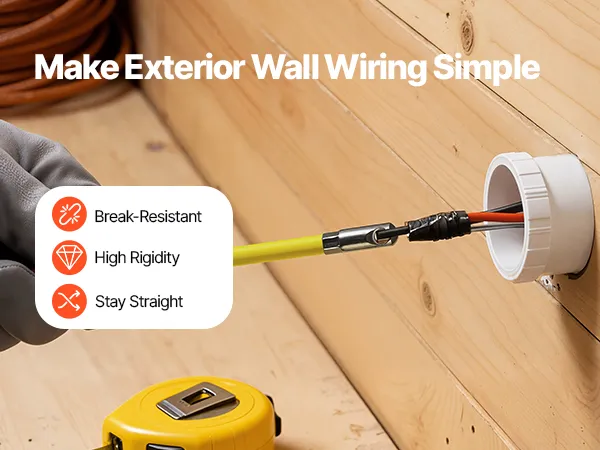
Fiberglass also does not rust or wear down when installed in damp places, like underground duct runs, concrete floor conduits, and outdoor wall routing, where the tape is wet during and after the pull. The polypropylene (PP) outer layer does not break down over time, so the surface stays flexible even after long periods of storage and repeated use. This keeps the surface from cracking and breaking like unprotected polymer tapes do when they are moved back and forth between indoor storage and damp or outdoor working conditions.
Locking Mechanism for Snap-Back Prevention and Directional Pull Control
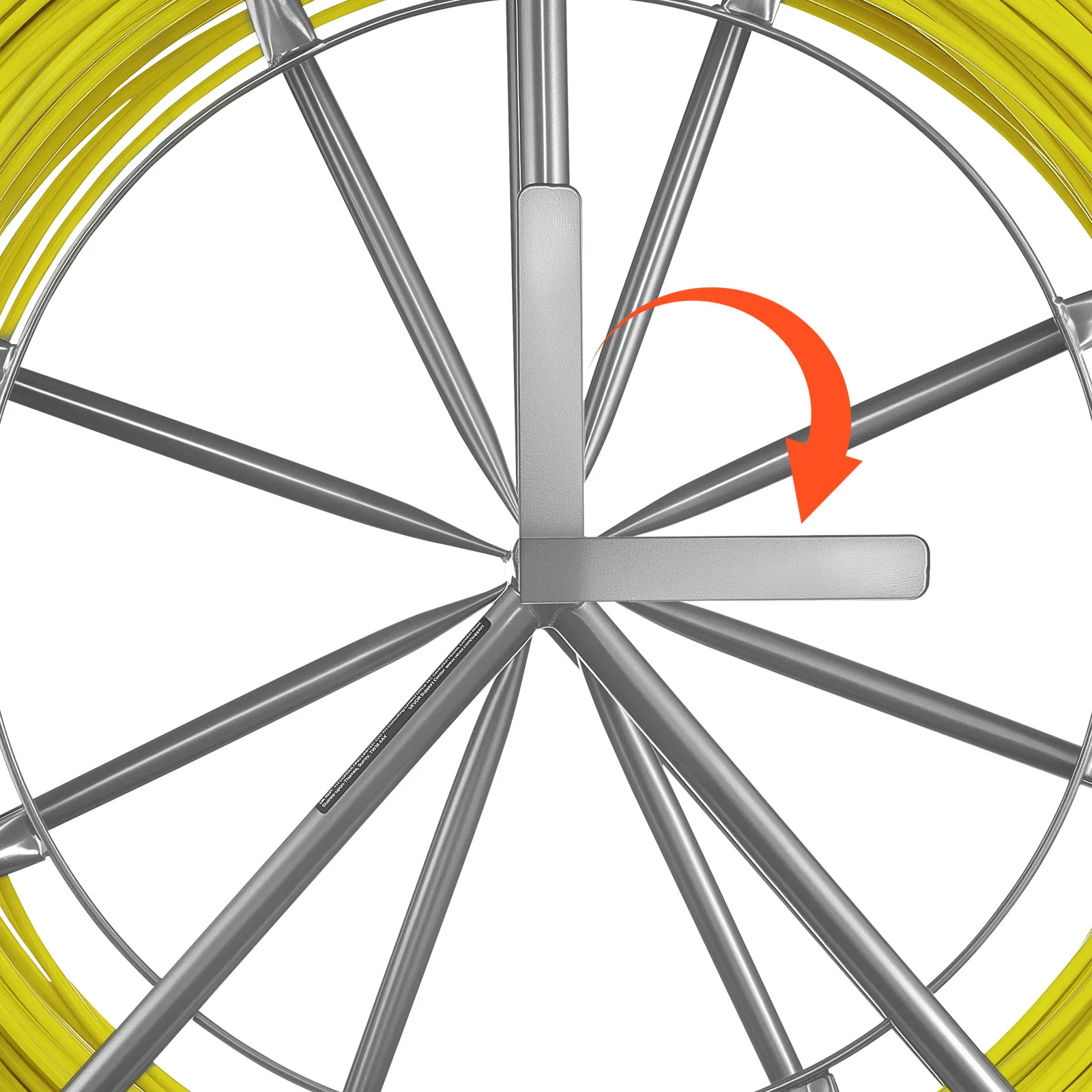
The locking mechanism in the reel assembly keeps the tape at its extended length while the cable is being attached and pulled. This keeps the tape from pulling back into the reel under the spring tension that builds up as it is pushed into the conduit. If you take your hand off the tape during any part of the operation to move the grip, connect the cable, or pause the pull without a locking mechanism, the tape may retract unexpectedly.
The operator engages the lock with a simple mechanism that they control with one hand while keeping the tape in the other. This gives them precise control over how much tape is used at any point in the pull. This control is especially important when moving the tape through a series of bends in the conduit. The tape tip can find the right path through each bend change by slowly moving forward and backward a few times.
Two Replaceable Metal Pulling Heads with Smooth Surface for Low-Friction Conduit Pulling
There are two metal pulling heads that can be switched out. This way, you can replace the main head if it gets worn out or deformed from heavy use without having to buy a whole new tape system. The pulling head is securely attached to the tape tip and is designed to withstand the rotational and longitudinal forces applied during cable attachment and the subsequent pull.
To move the tape along, which runs with a lot of friction, you need to use more push force. This is because the pulling head's smooth surface geometry reduces friction against the conduit wall as the tape moves around bends and through straight sections. The smooth profile of the head also lowers the chance of snagging on conduit joint edges and fitting transitions inside the run, which can stop the tape from moving forward and require it to be partly pulled back and re-advanced to clear the obstruction.
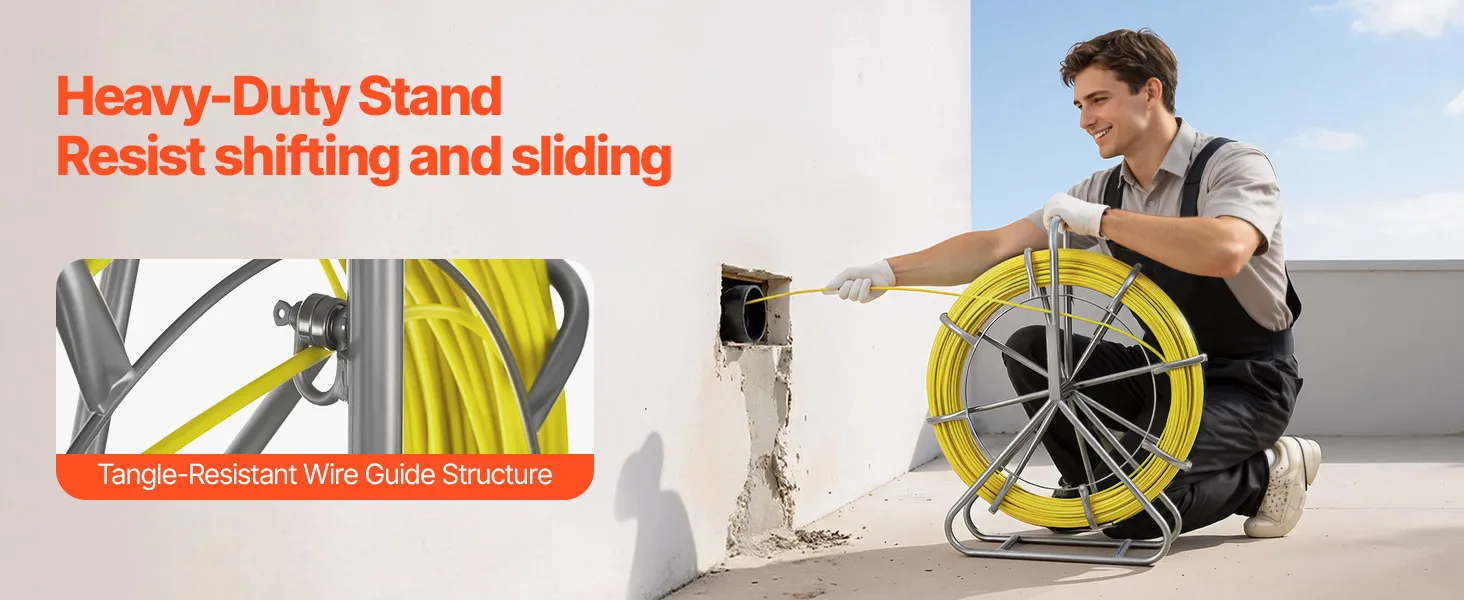
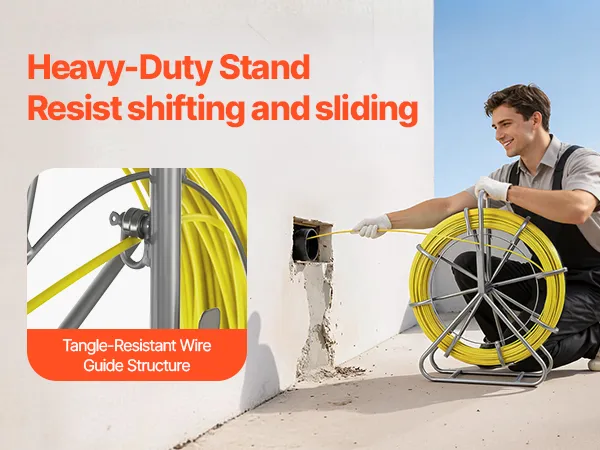
Fiberglass Fish Tape with Steel Tube Stand for Tangle-Free Rewinding and Storage
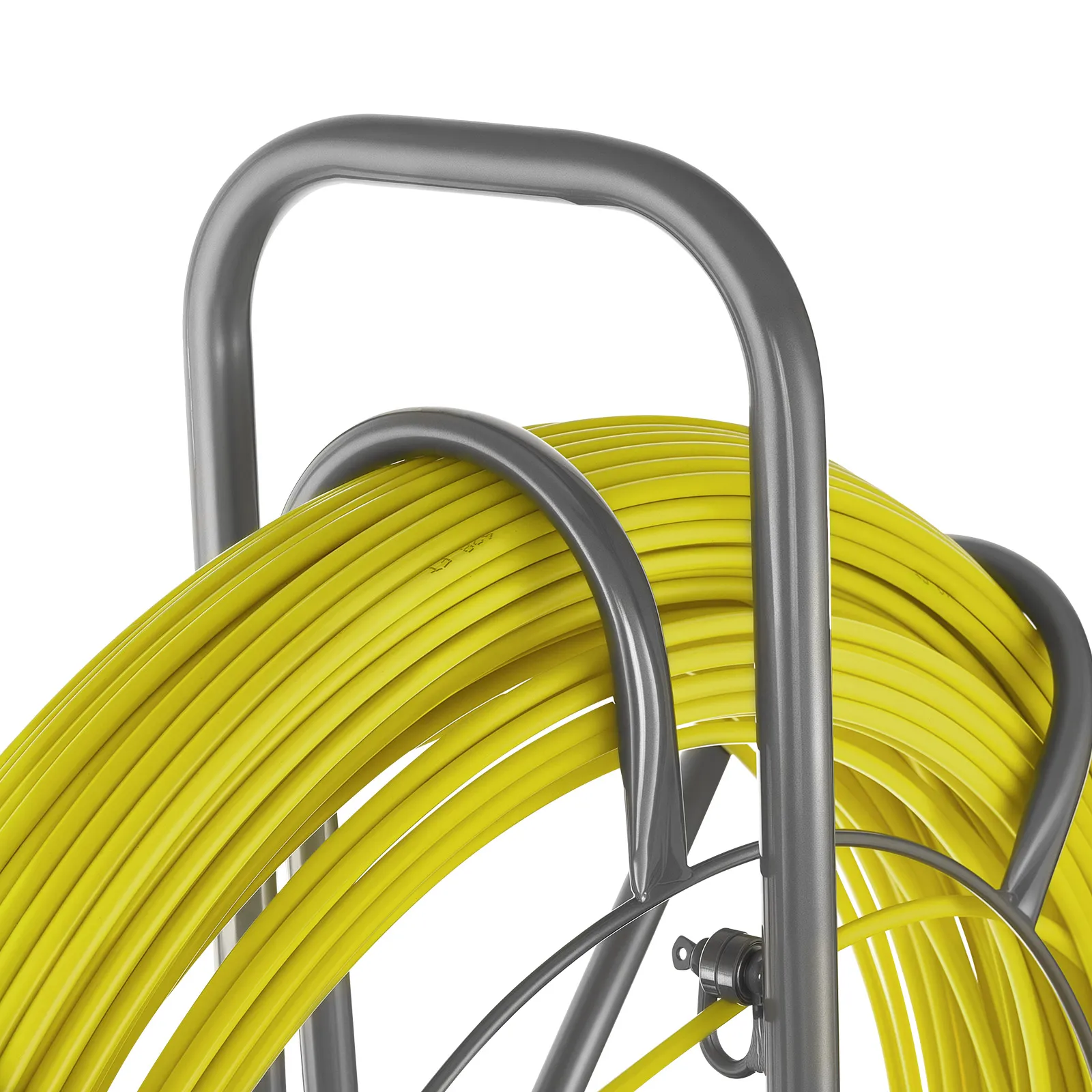
The stand that the fiberglass fish tape is wound on is made of a black annealed steel tube that is 16.3 mm in diameter and has a wall thickness of 0.8 mm. This makes the winding drum rigid and stable, and it keeps its round shape when force is applied during rewinding. Bending or warping of the stand during rewinding tension causes uneven tape layering on the reel. This helps keep the tape from tangling during future use.
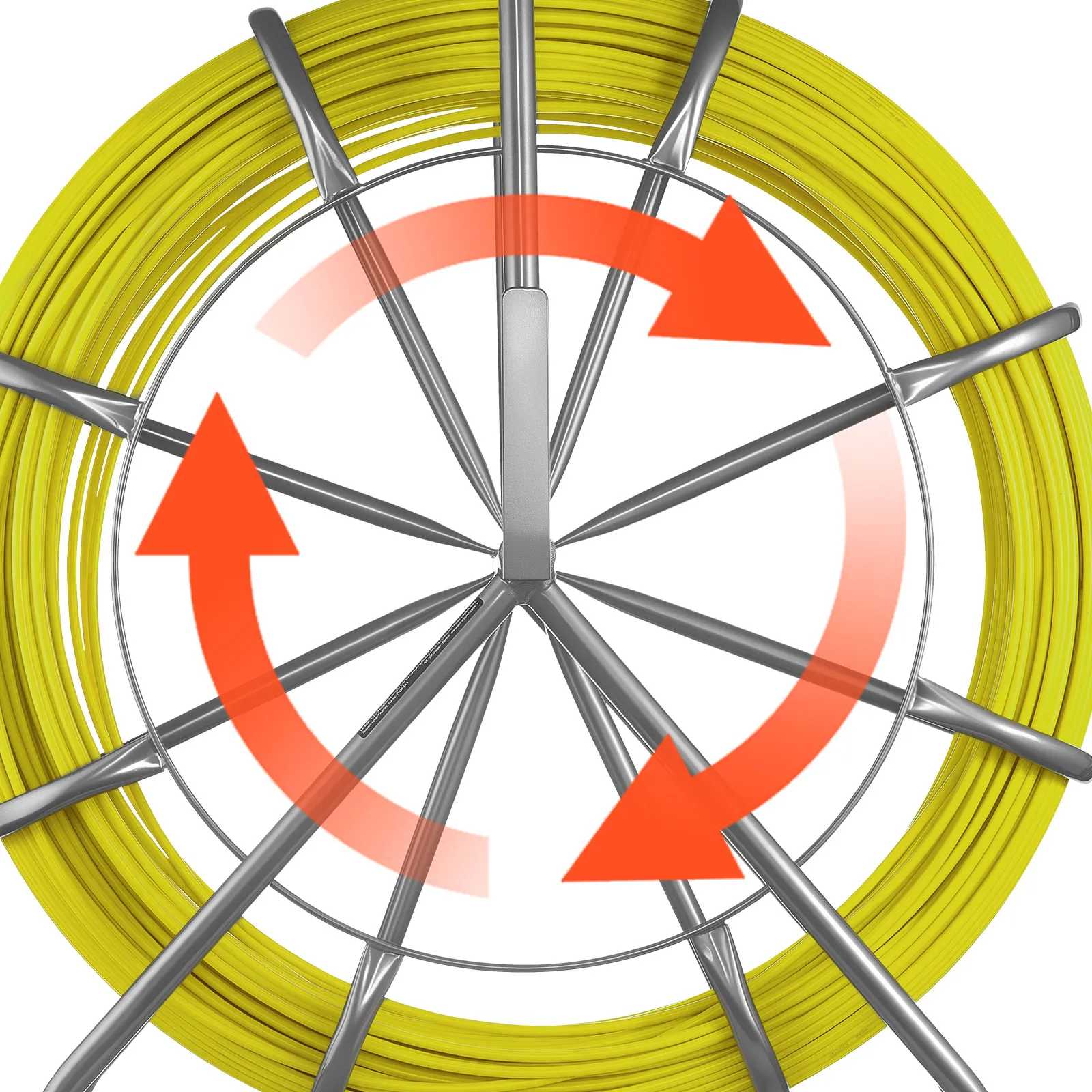
The tangle-free rewinding feature makes sure that each layer of tape settles smoothly against the one below it as the reel turns during retraction. This creates a clean, evenly spaced spool that pays out freely on the next use, without the operator having to manually separate or untangle loops before starting the push. The open design of the stand also lets the tape dry naturally after use in damp conduit areas and before storage.
2-ft Interval Markings for Precise Cable Length Control During Pulls
Along the entire fiberglass fish tape, distance marks are printed every 2 feet. This lets the operator always know how much tape has been fed into the conduit during the push. This measurement capability allows the operator to confirm when the tape tip has reached the expected exit point based on the conduit run length, identify unexpected resistance at a specific depth that suggests a blockage or sharp bend requiring attention, and calculate the exact length of cable needed for the pull before cutting it to length at the pull end.
As an installer working from a building plan or conduit layout drawing, knowing the exact depth of the push helps them compare the length of tape used to the planned conduit route and verify that the tape follows the intended route.
Frequently Bought Together
Deals
VEVOR Fish Tape Fiberglass, 152M 6.3MM, Duct Rodder Fishtape Wire Puller with Stand, Cable Running Rod with Locking Mechanism, Fishing Tools, for Walls Floor and Electrical Conduit, Non-Conductive