Fish Tape





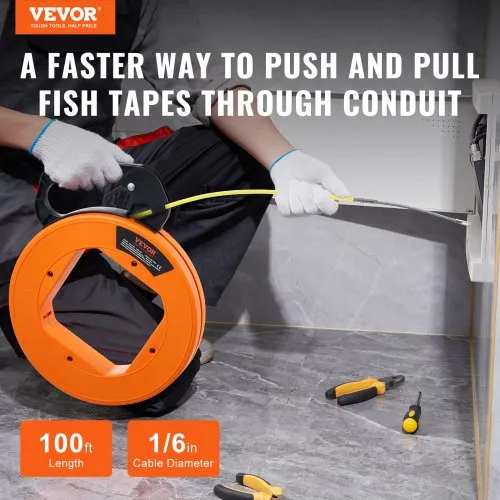
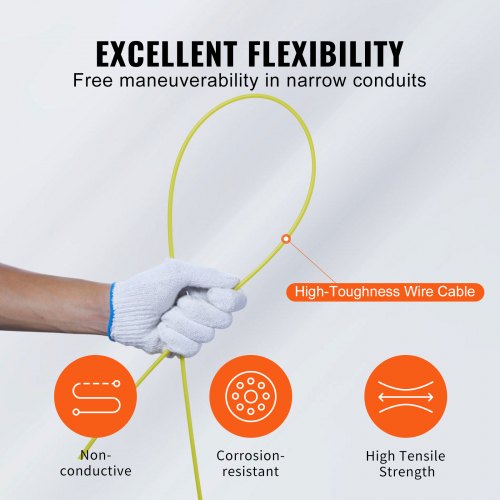
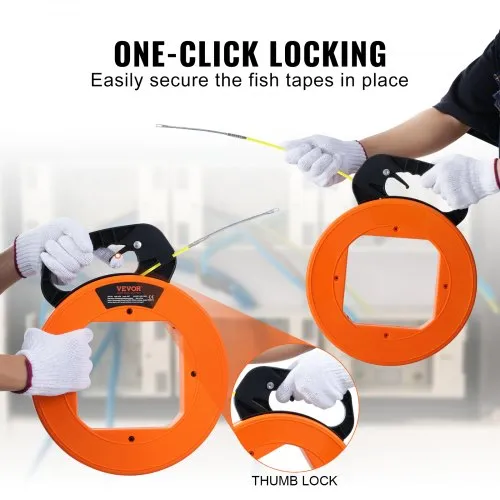
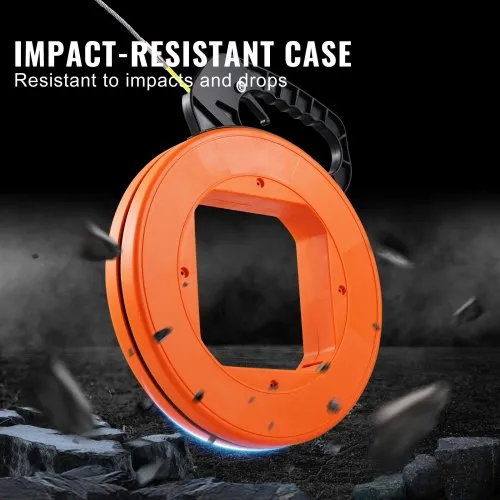

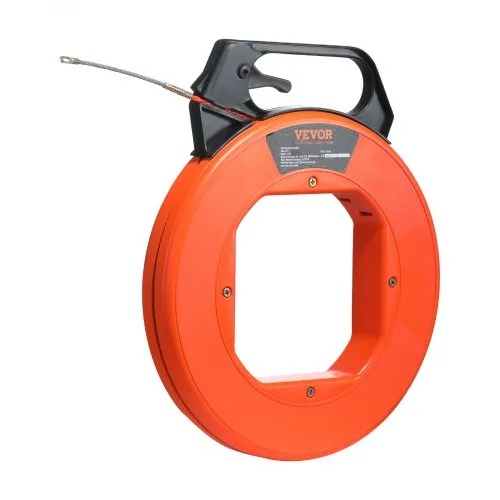
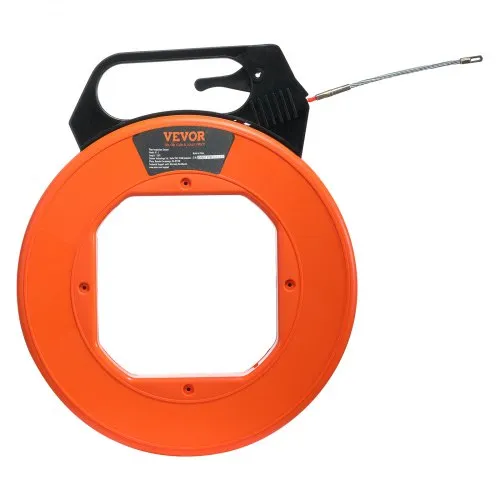
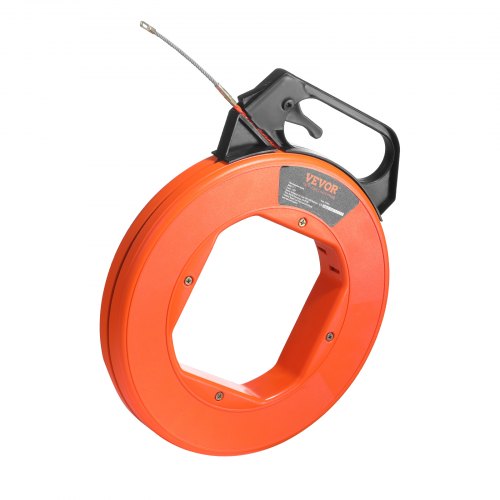


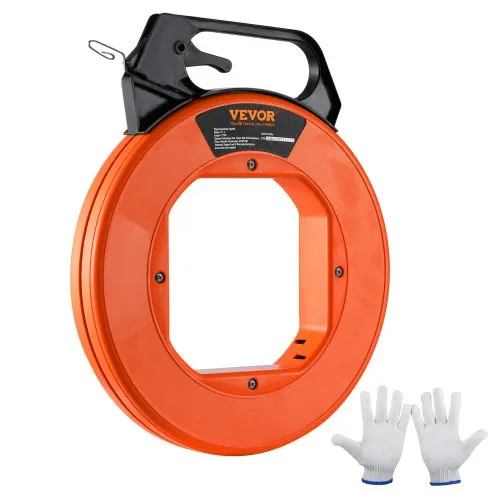
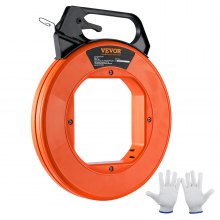

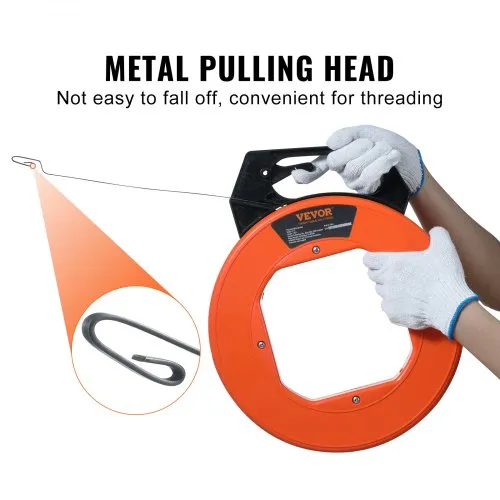

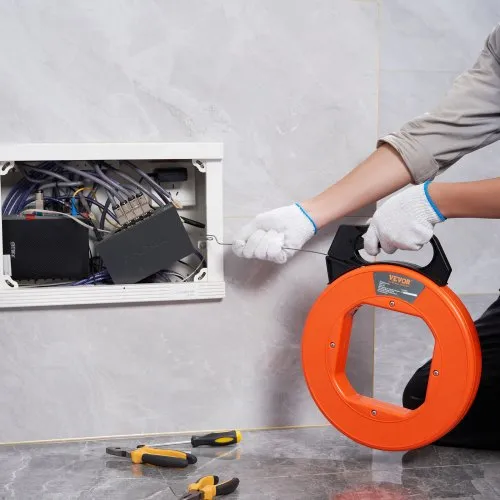
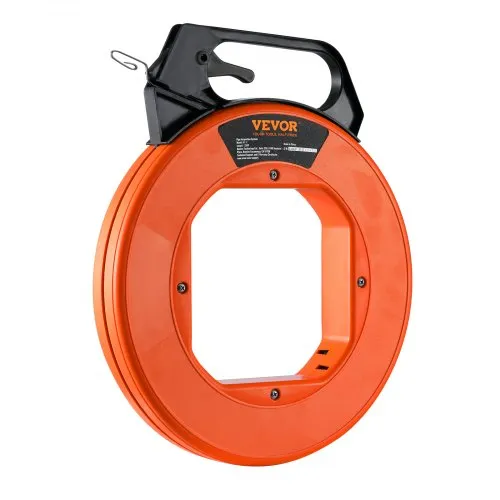
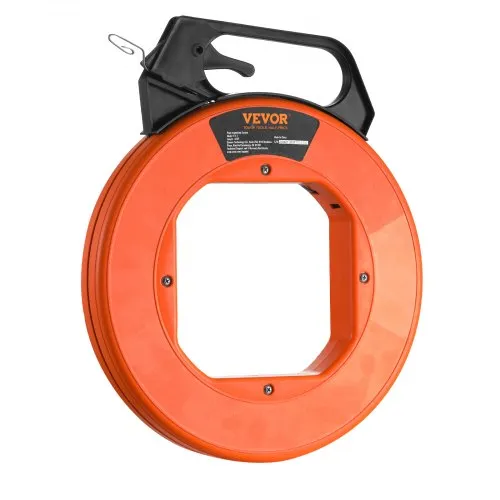



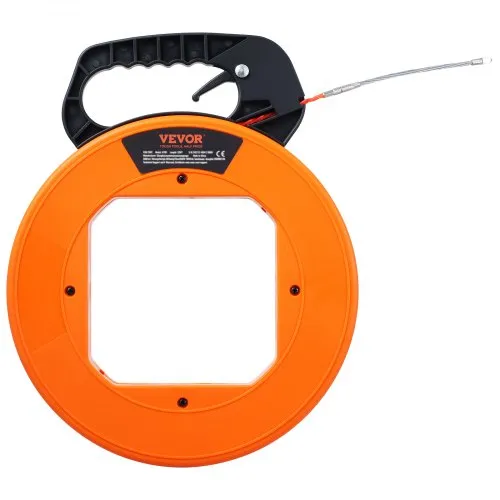
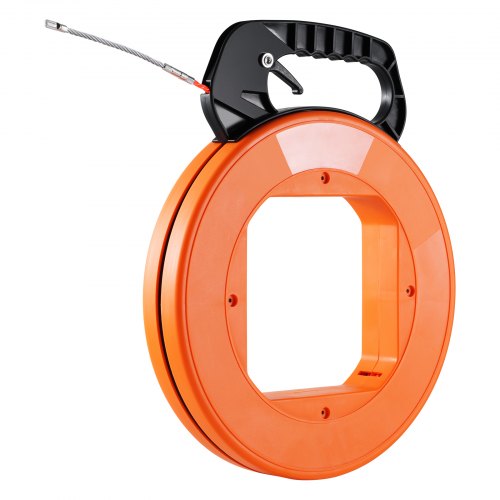
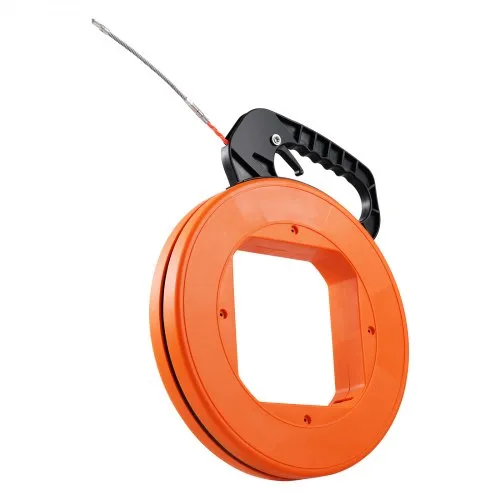
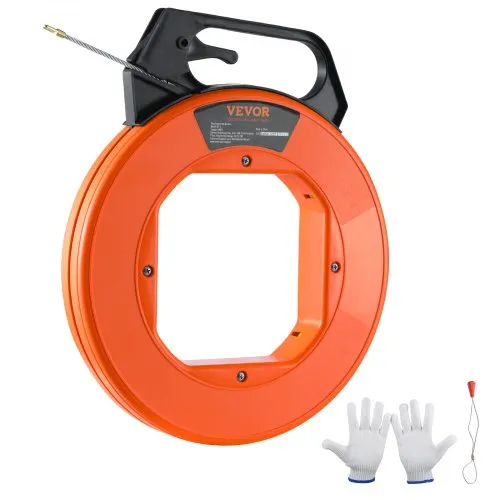
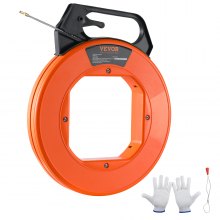
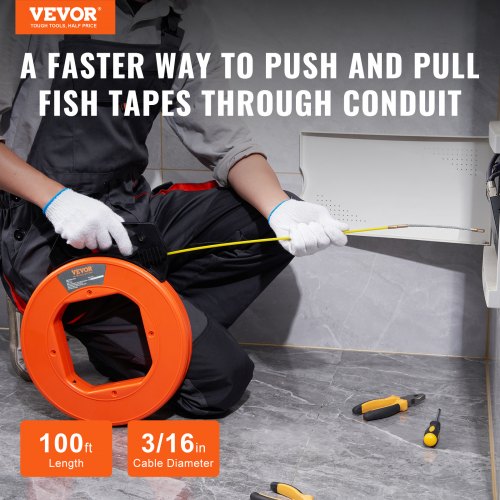
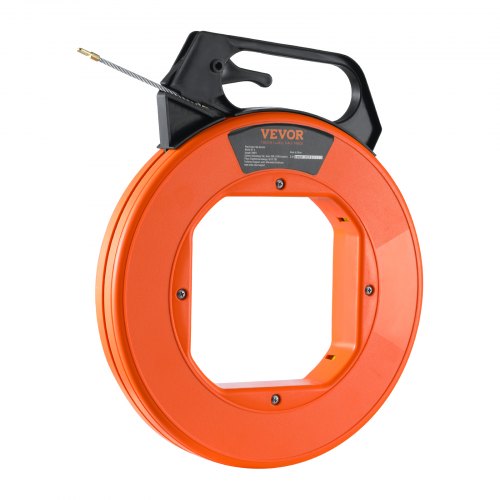
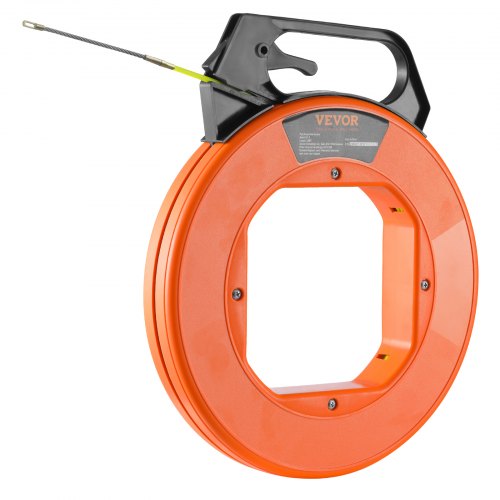
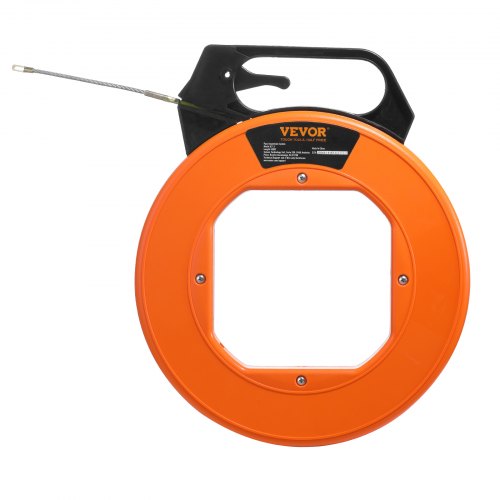
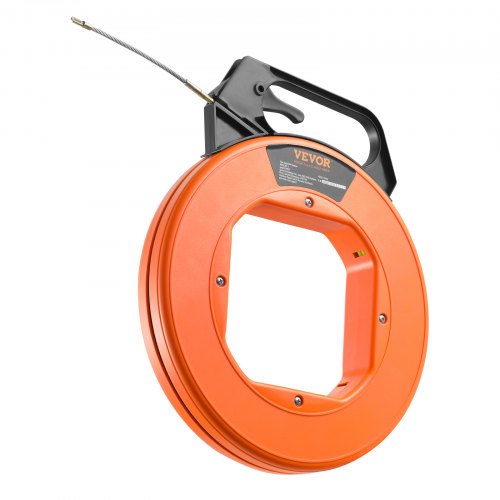
Results for Fish Tape
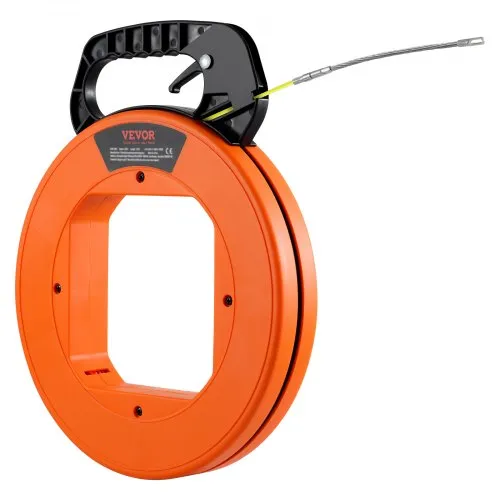
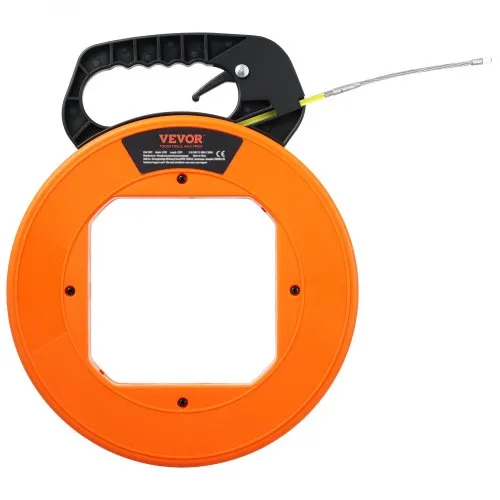
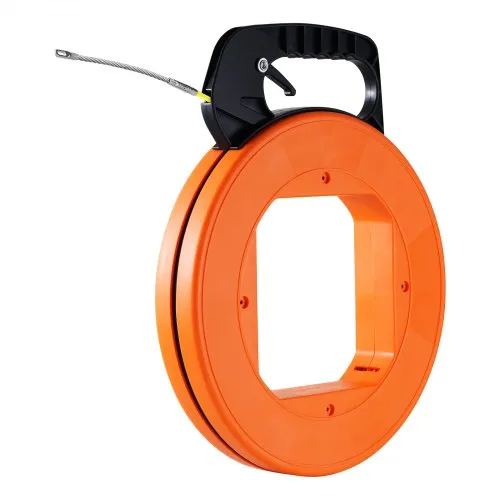
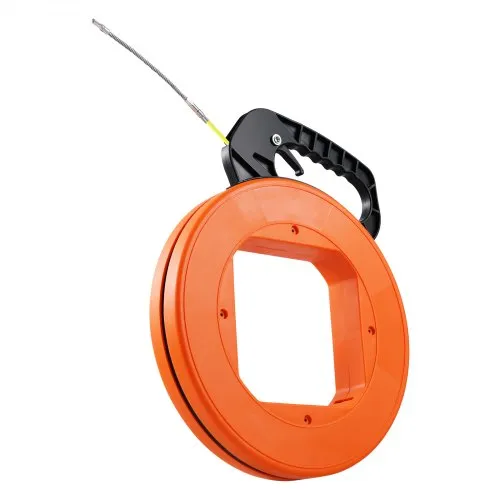
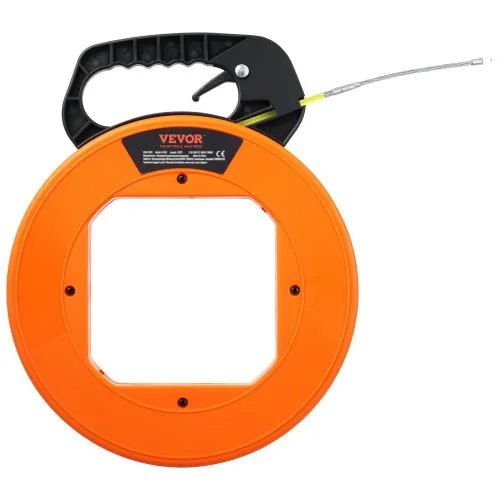
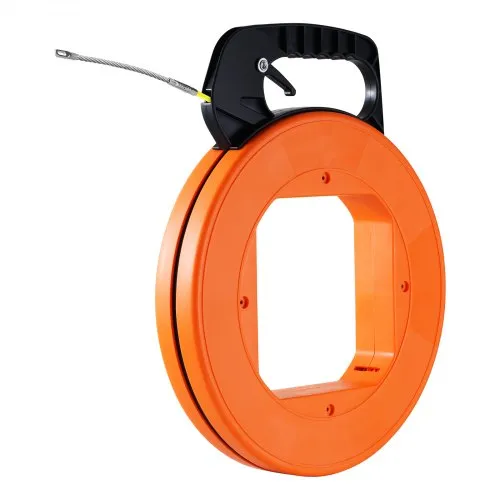
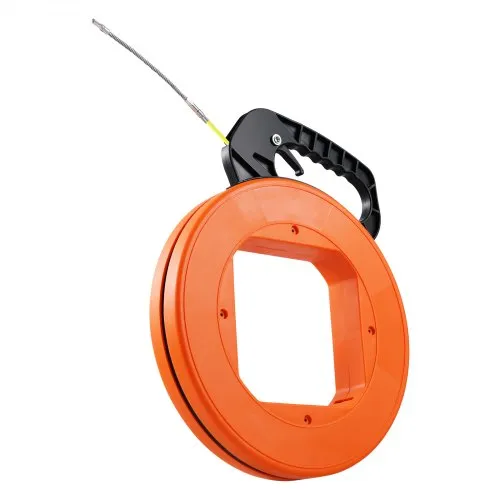
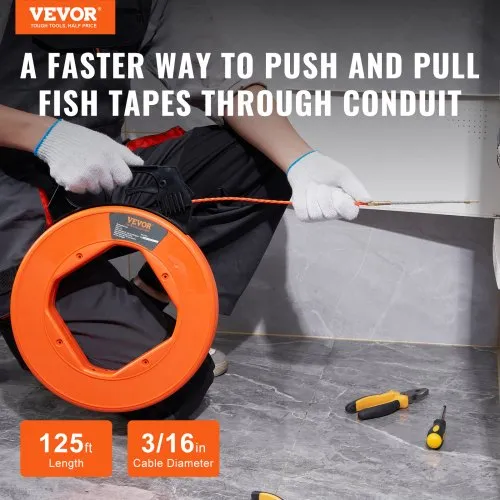
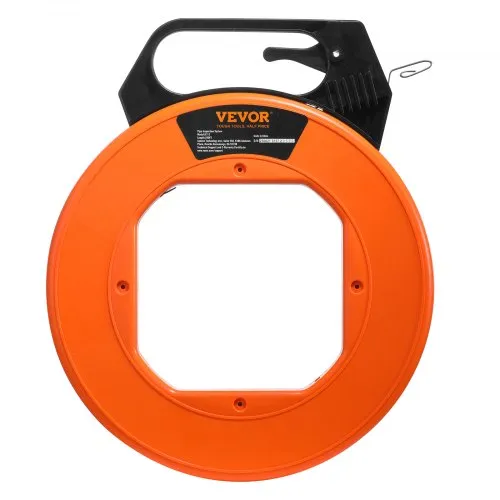
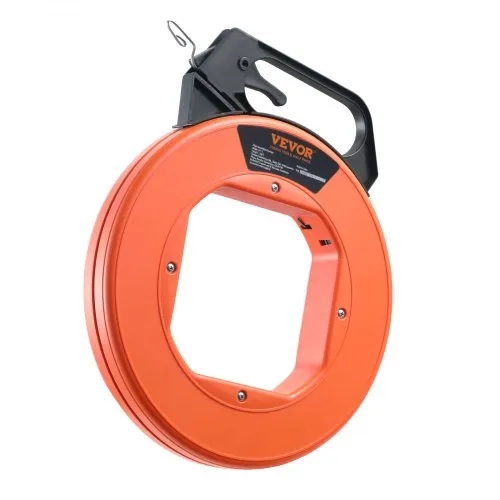
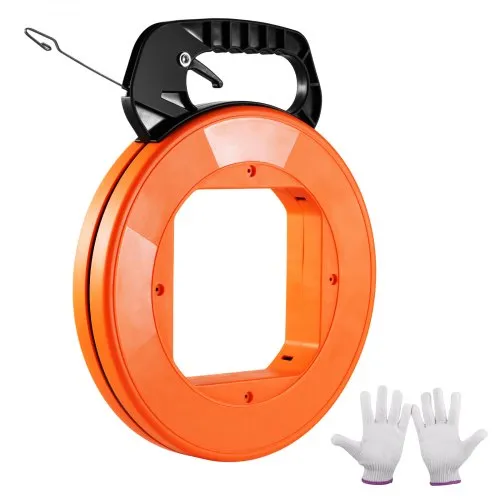
VEVOR's fish tapes cover every wire-pulling task, from heavy-duty steel wire puller alternatives for demanding conduit runs to non-conductive fiberglass fish tape for electrical work near live circuits. This portfolio provides electricians, contractors, and do-it-yourselfers with the appropriate equipment for walls, conduit, and underground runs alike. It comprises duct rodder wire rodders, cable running rods with steel reel stands, and PET wire pullers with protective shielding. VEVOR's full range ensures you can choose the right material type and length at a price that fits real job budgets, whether you need a flexible wire fishing tool for walls & conduit or a heavy-duty steel option for underground lines.
VEVOR Fish Tapes: Fiberglass and Steel Wire Pullers for Every Job
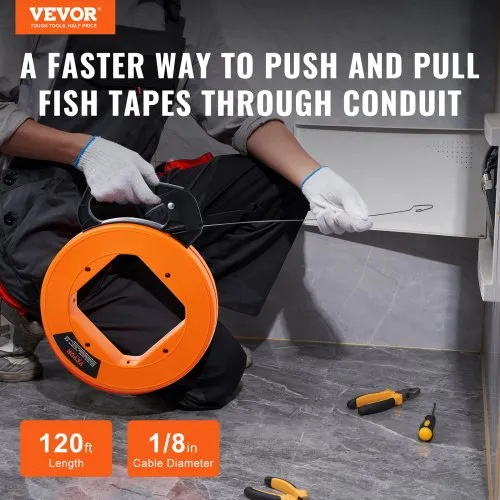
Pulling cable through a lengthy conduit on a construction site or running wire through a wall cavity? VEVOR fish tapes are designed to withstand both challenging commercial wire pulling and delicate domestic applications. With a variety of lengths and reel configurations, plus fiberglass, steel, and PET material options, this collection gives electricians and do-it-yourselfers the precise wire routing aid their project needs. Depending on the material, each fish tape strikes a different balance between push strength and flexibility; therefore, the best option depends on the cable-routing distance and the task's conductivity requirements.
Fish Tapes: Material Type and Conductivity Guide
The first step in selecting the right fish tape is matching the material and conductivity to the task's electrical safety requirements. Next, make sure the tool has sufficient push power for the required run length.
Fiberglass Fish Tapes for Non-Conductive Applications
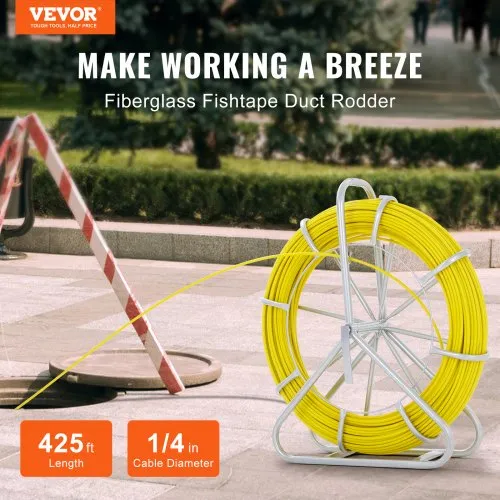
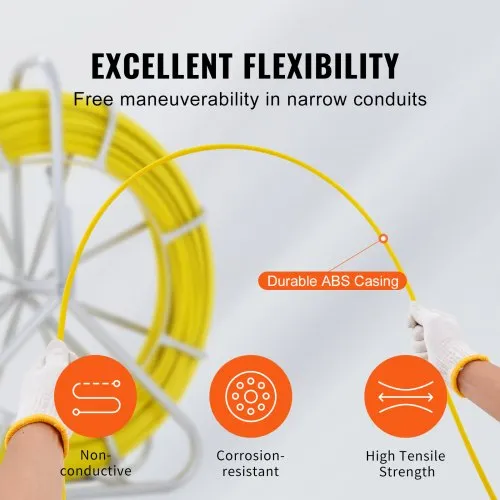
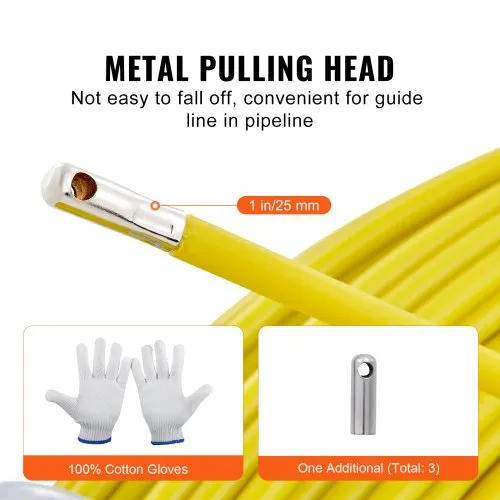
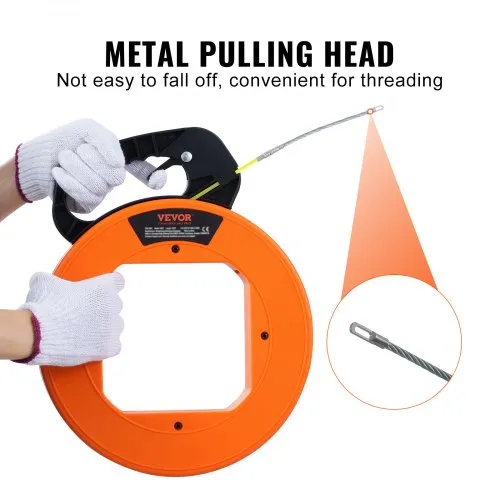
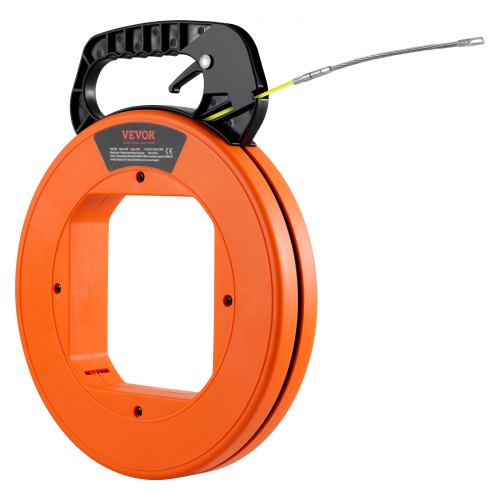
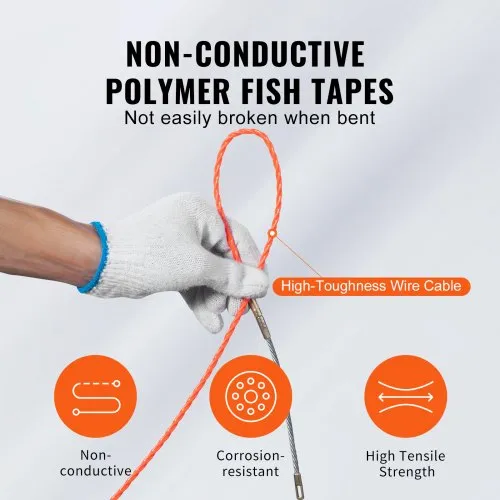
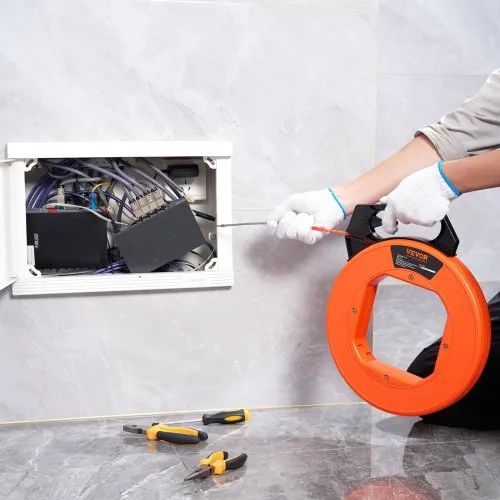
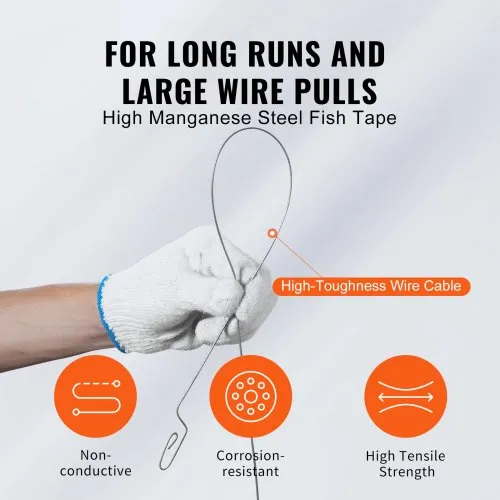
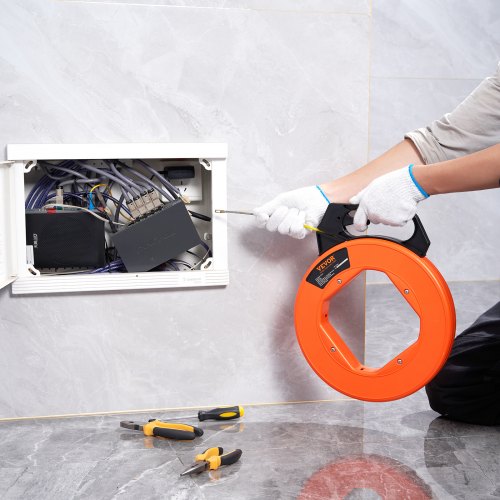
Fiberglass fish tape remains the preferred option for electrical work near live circuits or in settings where conductivity poses a safety risk, because not all wire-pulling jobs allow a metal tool near the work area. A crucial safety characteristic that steel fish tapes cannot provide is that a non-conductive electrical fish tape composed of fiberglass won't carry electricity if it unintentionally comes into contact with an energized wire. For most residential and commercial electrical rough-in work, panel upgrades, and any work near active circuits, fiberglass fish tape is the standard recommendation.
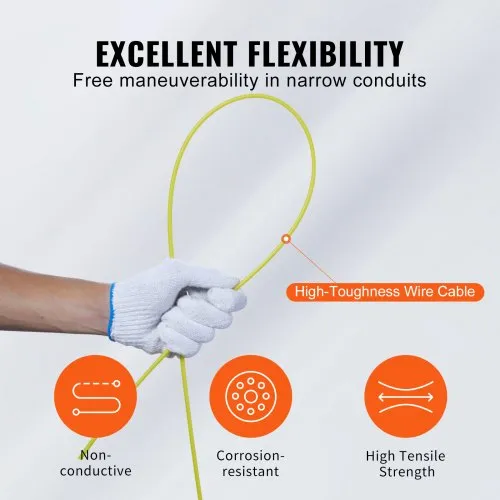
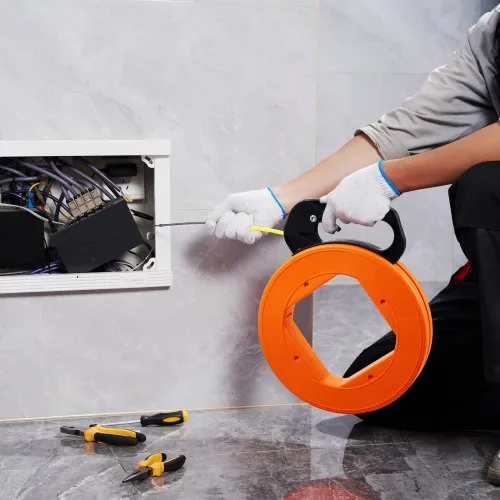
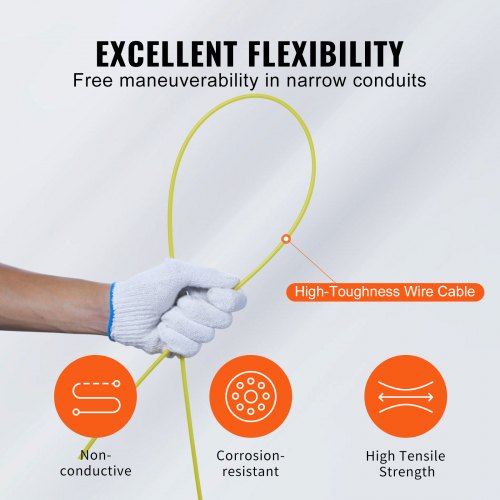
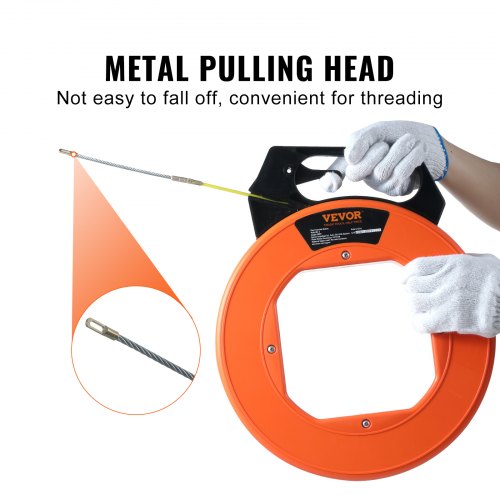
Fiberglass can become brittle and crack if forced through excessively acute bends at high pressure; thus, VEVOR's fiberglass fish tapes feature a flexible fiberglass cable that bends over tight corners and studs without kinking. Because the non-conductive nature of fiberglass fish tape eliminates one layer of risk when the tool's path cannot be fully established beforehand, electricians who pull wire through finished walls, where the precise path isn't always visible, typically prefer it over steel. Even though steel may provide greater push strength for the same run, fiberglass is still the safer option for any project near existing wiring.
Steel Fish Tapes for Maximum Push Strength
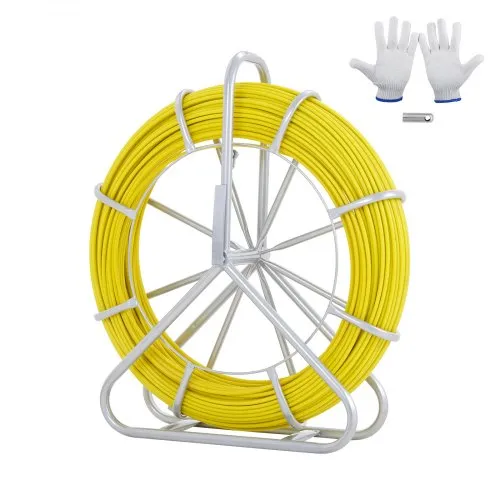
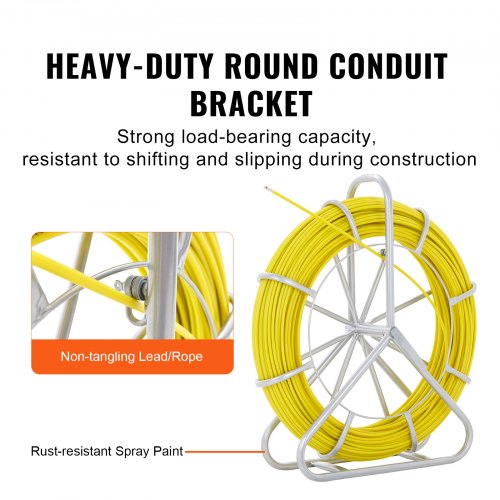
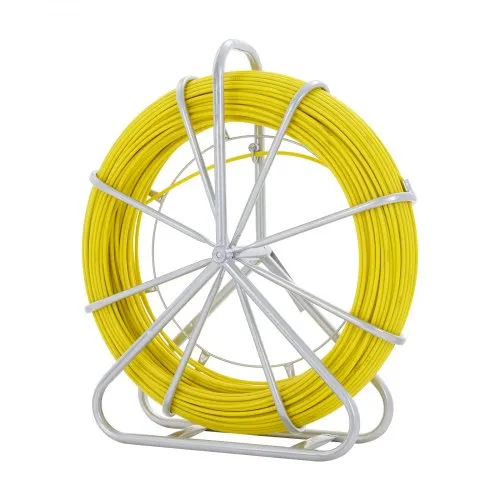
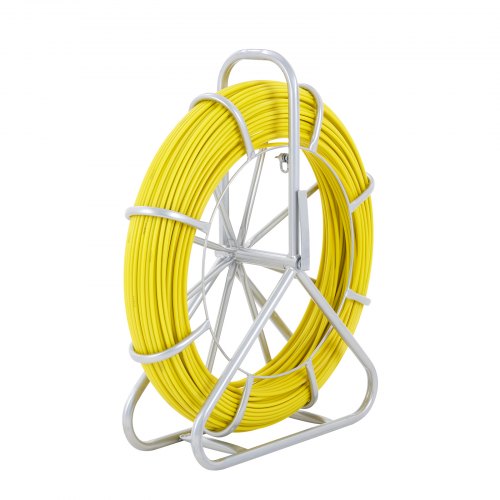
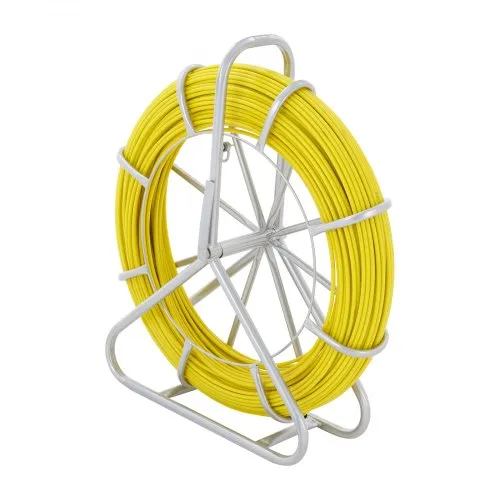
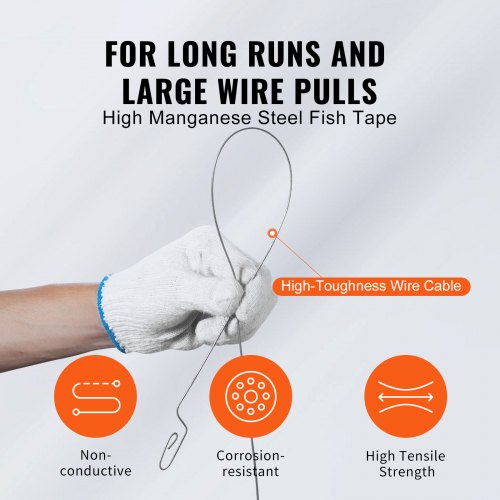
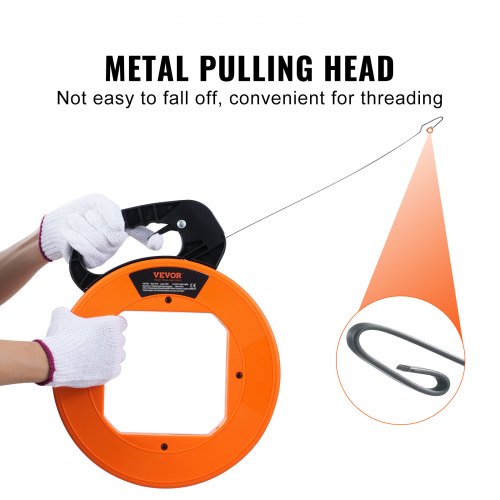
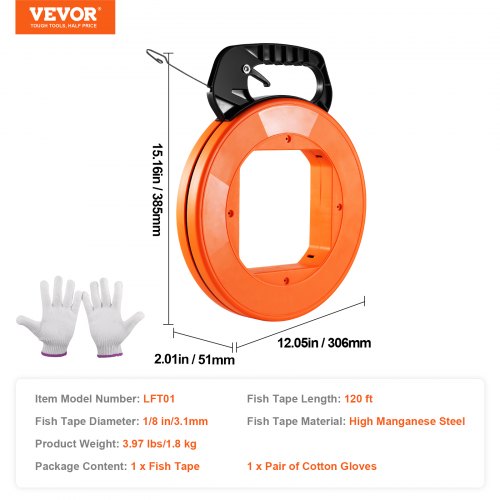
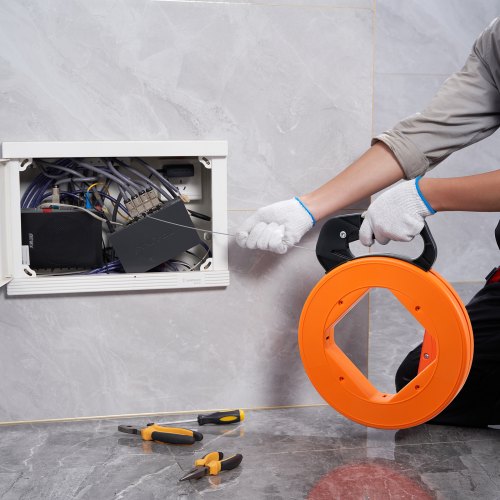
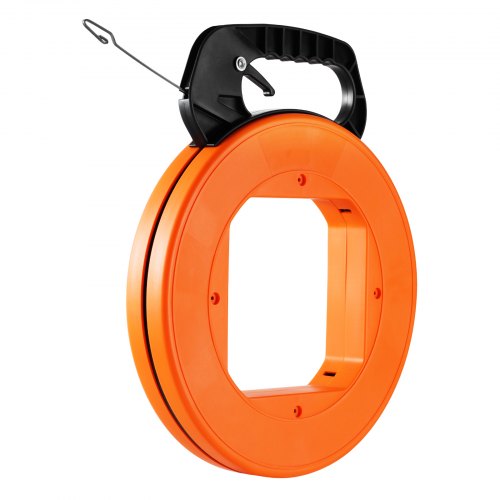
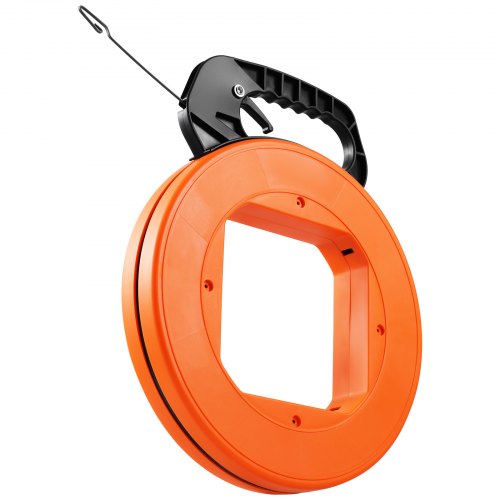
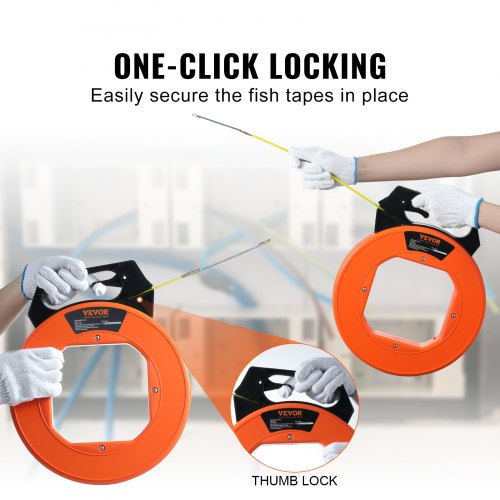
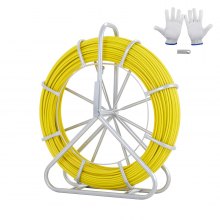
Steel wire puller choices provide the stiffness that fiberglass often lacks over long distances when a task calls for pushing a fish tape through lengthy, straight conduit runs or underground ducting. Steel fish tape is easier to feed through long, straight conduit sections without bending or coiling back on itself midway through the run because it maintains its shape better under push pressure than fiberglass. To stay organized and minimize tangling during repeated extend-and-retract cycles on a job site, VEVOR's steel fish tapes are often used with a steel reel stand for a cable-running-rod setup.
This combination works well for contractors doing underground utility work or new conduit installs, because getting a long, straight, obstruction-free draw becomes more important than being close to live wiring. The choice between steel and fiberglass fish tape depends mainly on conductivity and job type because steel conducts electricity and should never be used near energized circuits or in wall cavities where existing live wiring might be unexpectedly encountered.
PET and Duct Rodder Options for Specialized Pulls
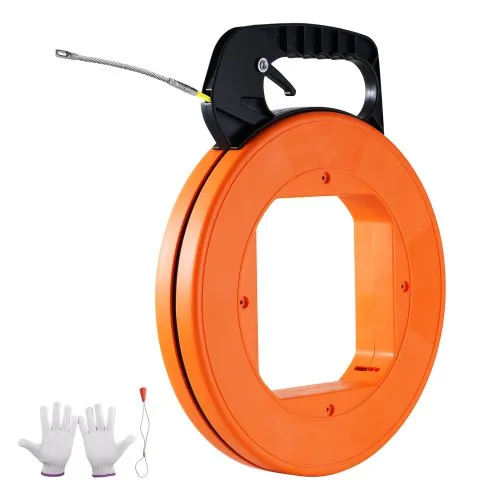
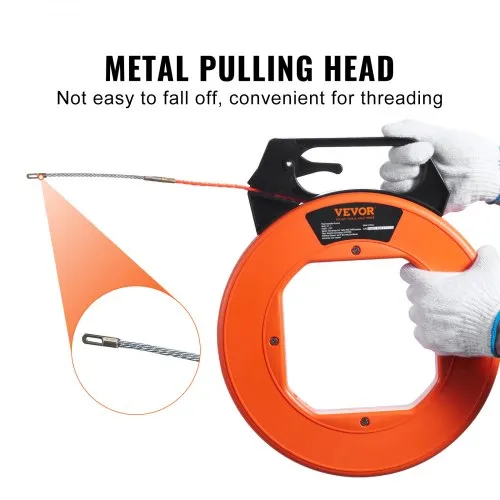
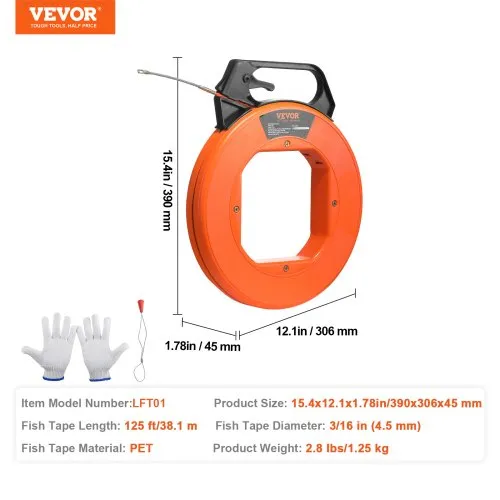
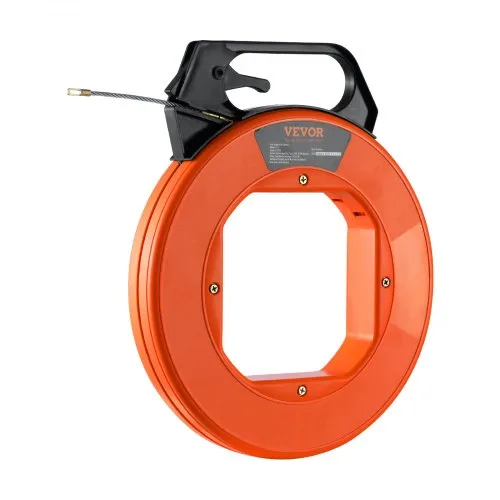
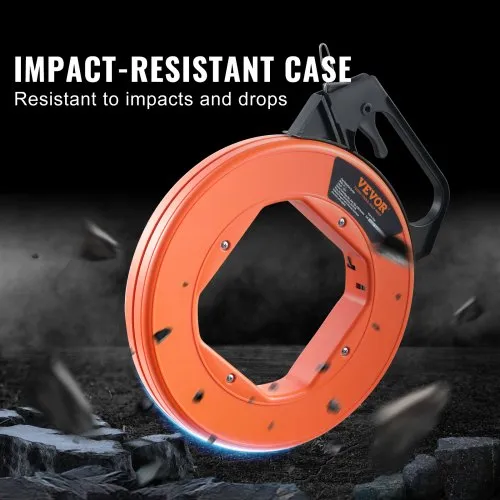
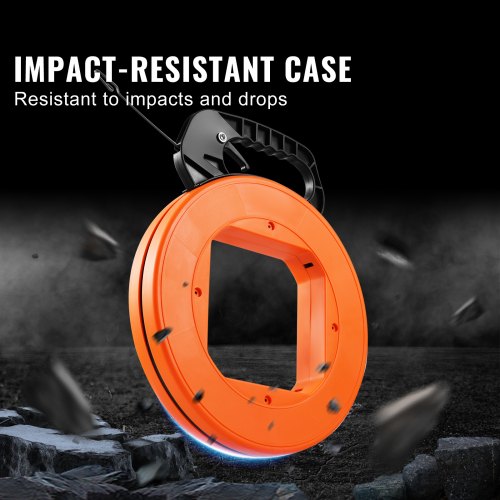
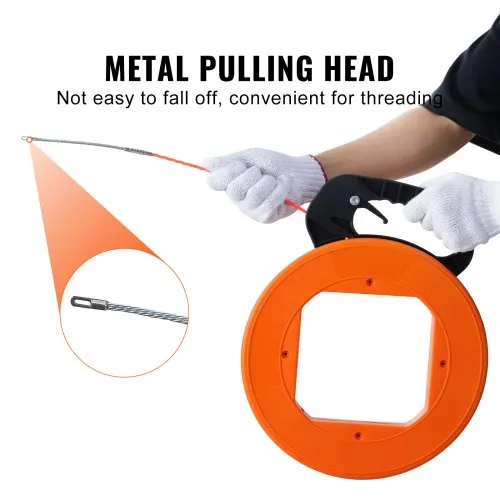
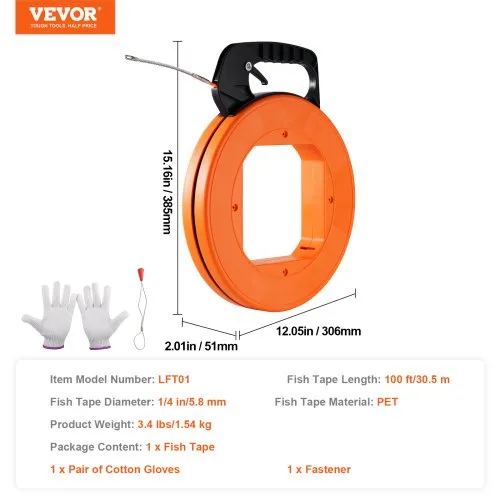
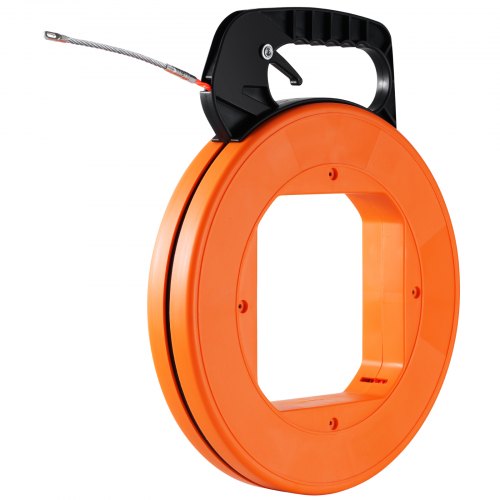
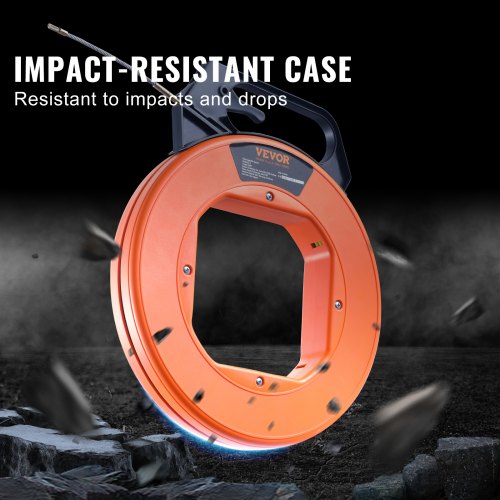
In addition to steel and fiberglass, specialized duct rodder wire rodder tools and PET wire pullers with housing and handle options meet certain gaps in the larger fish tape market. For smaller jobs or technicians who need to carry multiple tools between service calls without the bulk of a full reel setup, a PET wire puller is a more portable and compact option because it usually comes in a protective case with an integrated handle. When a regular fish tape's flexibility profile isn't suitable for the narrow, frequently curved paths involved, duct rodder tools are designed specifically for routing through underground or in-wall ductwork.
When pushing through narrow duct runs with several bends, technicians have more control thanks to VEVOR's duct rodders, which use a firmer, more directed material than ordinary fiberglass fish tape. Using a dedicated duct rodder alongside standard fish tape lets low-voltage technicians, cable installers, and HVAC contractors handle both general electrical work and specialized ductwork routing without sacrificing performance on either task.
Matching Conductivity to Job Site Safety Requirements
When choosing fish tape materials, conductivity should always come first since the safety consequences outweigh convenience or price differences. Regardless of how much push strength the run may otherwise benefit from, a non-conductive electrical fish tape is required for any work where the fish tape's path crosses near breaker panels, junction boxes, or existing circuits that may still be activated.
Even on routes where steel would theoretically work, electricians working on reconstruction or remodeling jobs, where current wiring conditions aren't usually properly documented, should use fiberglass as a baseline safety practice. Before starting a pull, it's easy to verify that a tool meets job-site safety regulations because VEVOR's fiberglass fish tapes are clearly labeled non-conductive. For new construction or obviously de-energized runs, you can choose steel fish tape or a cable running rod based only on push strength and run length when conductivity is not an issue.
Fish Tapes: Length and Features to Consider
How well a fish tape or cable pulling tool performs on site depends on factors beyond material and conductivity, such as tape length and integrated features.
Choosing the Right Length for Your Run
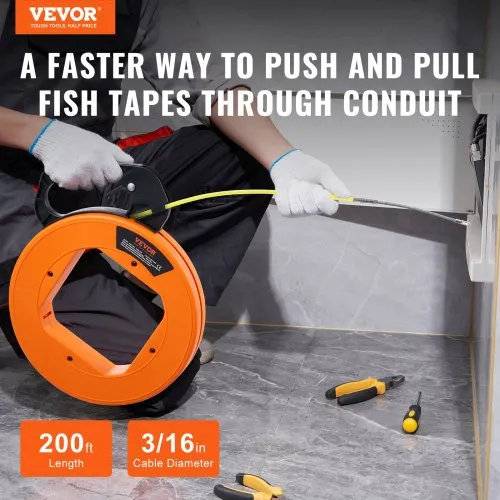
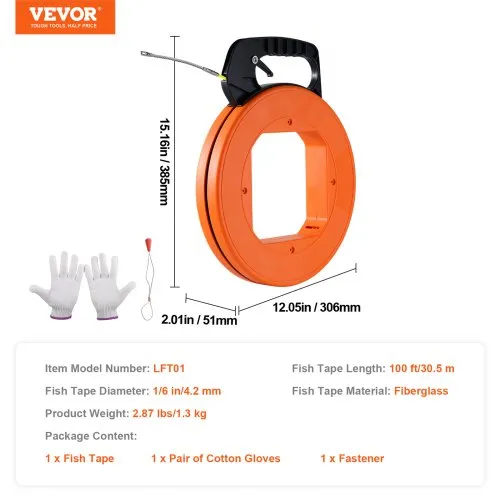
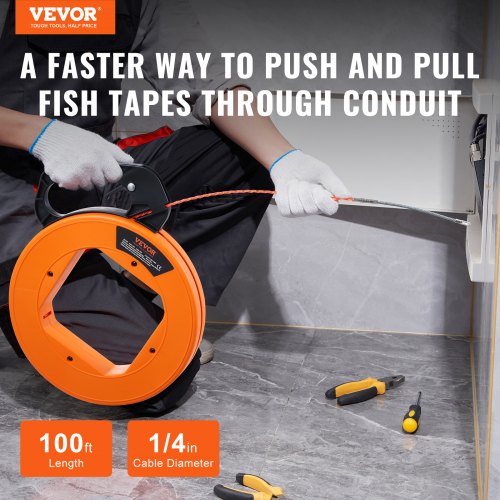
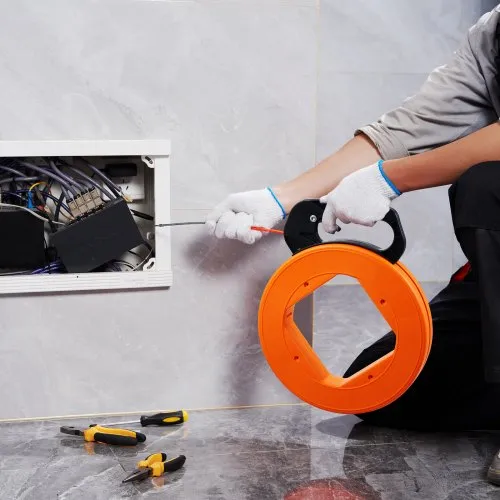
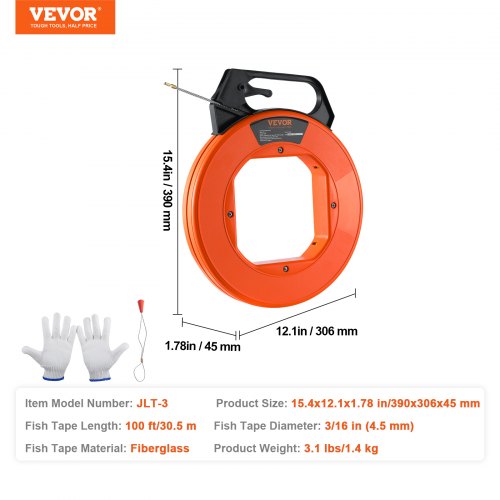
Since running out of tape mid-pull necessitates backing out and switching to a longer tool, fish tape length must match or exceed the longest anticipated run. Typical residential wall cavity pulls, where distances between outlet boxes or connection points never exceed a conventional wall run, are best suited to shorter fish tapes. For commercial conduit lines or underground work where cable must travel much farther between access points, contractors typically use longer fish tapes with a reel stand.
Because an enormous reel can be cumbersome and slower to handle on rapid, straightforward pulls, contractors who frequently handle both short residential pulls and longer commercial runs often have different lengths on hand rather than depending on one lengthy fish tape for every job. Instead of settling for a single all-purpose length, VEVOR's fish tape assortment lets users match tool size to the run lengths they see most often.
Reel Stands, Housings, and Handle Design
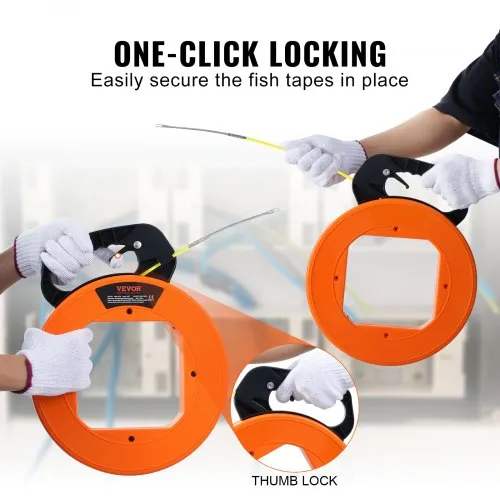
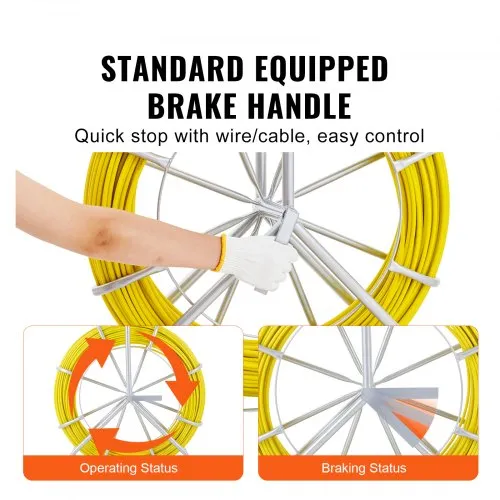
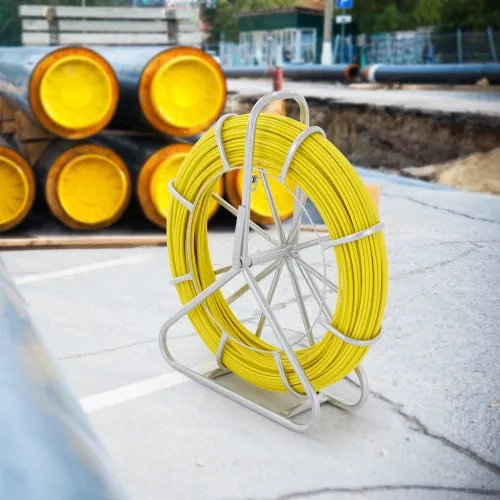
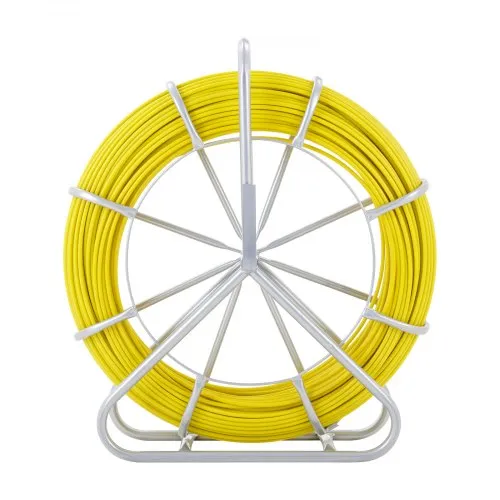
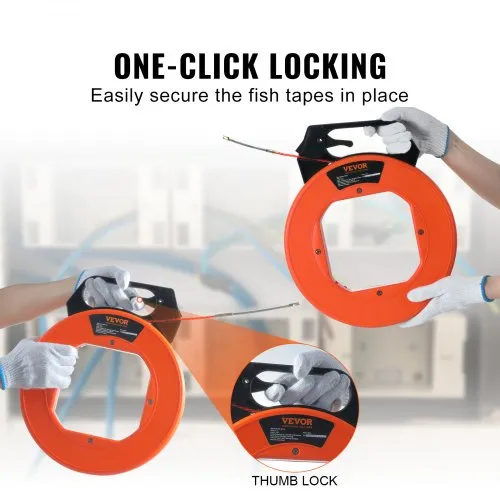
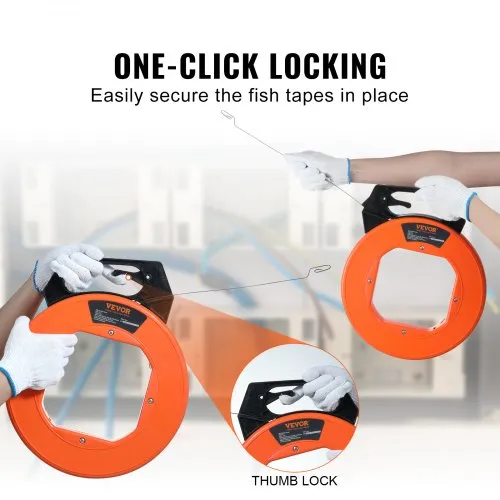
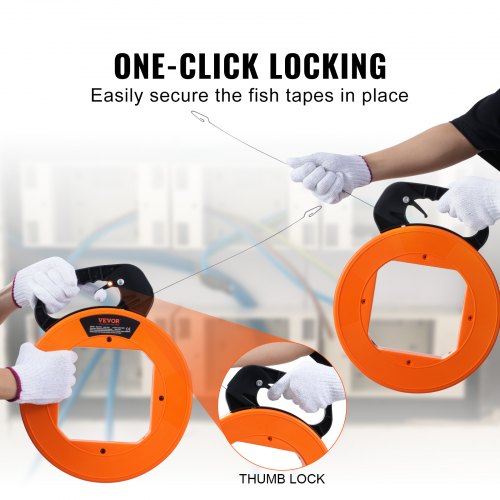
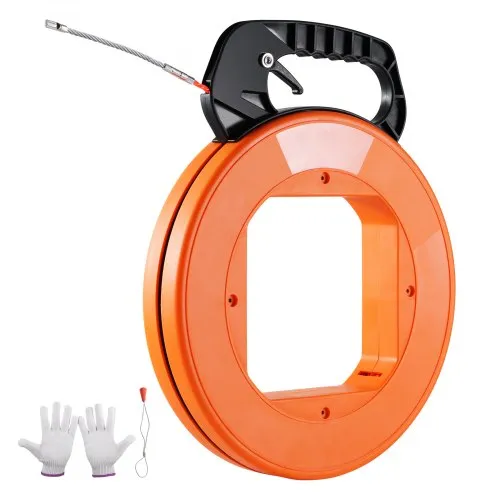
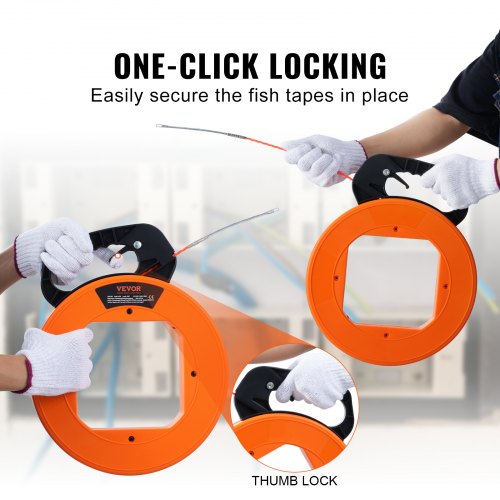
Usability on a job depends on how you store and use a fish tape, and on its raw length. A cable running rod with steel reel stand keeps the tape wrapped and organized when not in use, reducing tangling and speeding the extension and retraction process during multiple pulls in a shift. This is great for contractors who do a lot of back to back pulls where fumbling around with a loosely coiled tape between jobs is a waste of time.
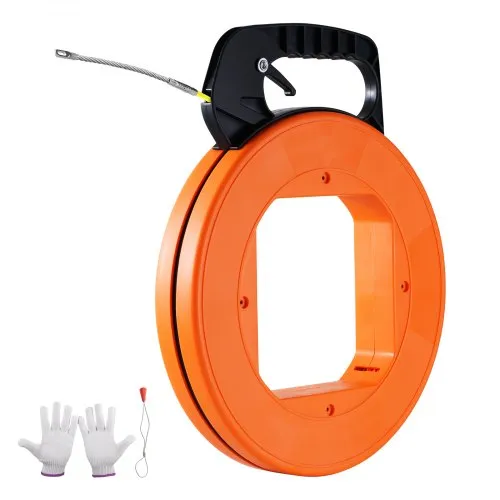
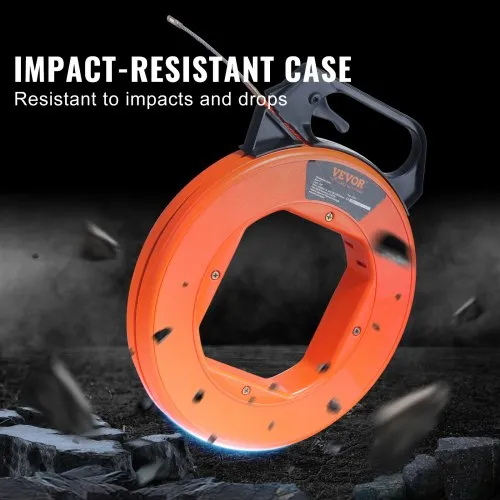
The PET wire puller with housing and handle trades the reel stand's increased capacity for ease of access and portability. VEVOR offers fish tape and wire puller options for technicians to choose from: a reel mounted cable running rod for major installation projects where long reach and frequent use are more important than mobility, or a compact housed unit for service calls and quick repairs.
Why Choose VEVOR Fish Tapes?
VEVOR provides a full range of fish tapes for both residential and commercial conduit work, from heavy-duty steel wire pullers and specialty duct rodders to non-conductive fiberglass variants. Affordable pricing makes it easy to outfit a complete toolbox, and material variations let you match conductivity and pull strength to the job. VEVOR helps contractors and electricians pull wire safely and effectively on every job, backed by dependable customer support. Discover the ideal fish tape material, length, and features for your project by perusing the entire range right now.
FAQs
Should I use fiberglass or steel fish tape for electrical work?
Do not use fiberglass fish tape in a live circuit. It is non-conductive. Use it when you're not sure about the wiring conditions. Steel fish tape is good for de-energized conduit runs where push strength counts more.
What's the difference between a fish tape and a duct rodder?
Fish tapes are used to pull common wire through conduit and walls. Standard fish tape is less effective at routing tight, curved ductwork than duct rodders, which use a stiffer, more directed material.
How long of a fish tape do I need?
The length should be as long as you expect the longest run to be. For commercial conduit or underground runs, longer reel-mounted cable running rods are useful, while shorter tapes are generally used for residential wall pulls.
Is a PET wire puller as durable as a steel one?
Portability and speed of access are more important to PET wire pullers than steel's load capability. They work well for modest service duties, but steel is better suited for more demanding commercial pulling tasks.
Can steel fish tape be used near live wiring?
No, steel conducts electricity and should never be used in wall cavities or next to energized circuits where live wiring may suddenly be found. Instead, use fiberglass.