
Chicken Coop











Results for Chicken Coop
Discover the entire selection of chicken coops from VEVOR, which are made for secure, cozy poultry housing for backyard flocks, small farms, and homestead holdings. With sturdy coops designed for long-lasting outdoor performance, VEVOR meets every flock size, construction material, and feature requirement, whether you need a large chicken coop for an established laying flock or a portable chicken coop for rotational grazing use.
VEVOR Chicken Coops for Safe, Comfortable Flock Housing in Any Setting
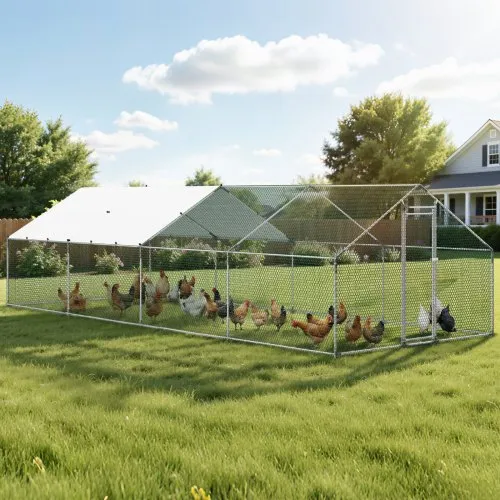
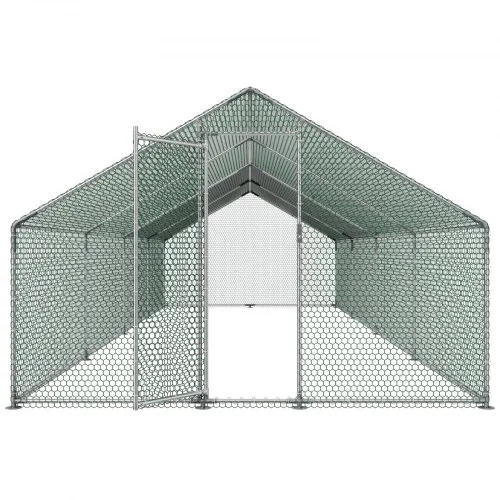
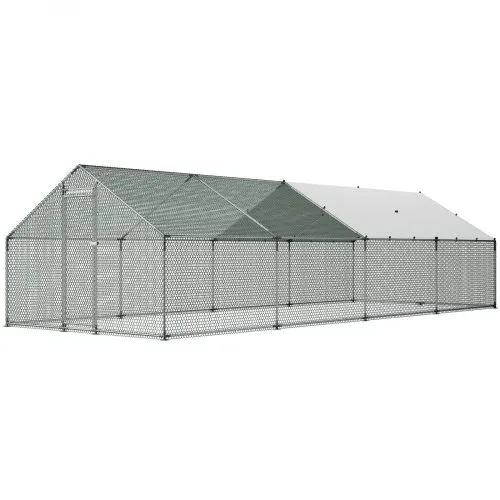
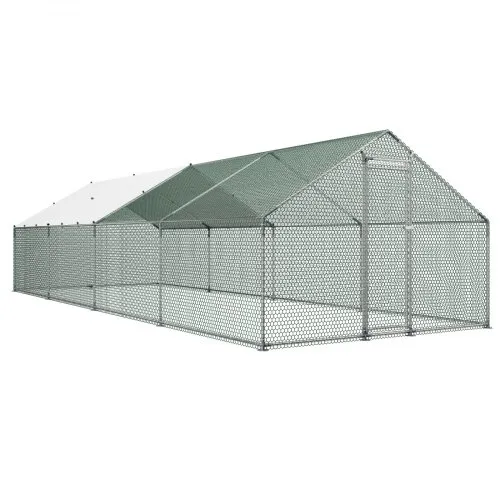
Are you trying to find a dependable chicken coop that can provide your flock with year-round safety, comfort, and productivity? VEVOR offers the ideal choice for your flock size and property, whether you need a small chicken coop for a small backyard or a metal chicken coop run for safe outdoor access. Explore our assortment designed for weather protection, predator-resistant structure, and useful flock management features.
Chicken Coops by Size & Portability
The two practical factors that influence how well a chicken coop meets your flock's space requirements and how easily it can be moved around your land are coop size and portability. Small backyard coops and larger multi-bird coops, with both stationary and movable variants, are part of VEVOR's inventory.
Small Chicken Coops – Compact Housing for Backyard Flocks
When outdoor space is limited, and municipal regulations may limit the size of the coop, small chicken coops are ideal for urban and suburban backyard keepers with modest flocks of 2 to 6 birds. At this scale, the coop's footprint must accommodate the available backyard space while providing each bird with 2 to 4 square feet of internal space, as commonly recommended for healthy chicken housing.
The small chicken coop models from VEVOR are sized for regular backyard use; they are small enough to fit within the conventional proportions of a home rear garden while still offering enough interior space and ventilation for each bird in the flock they are intended to house. VEVOR's small coops feature nesting box access doors, enabling egg collection from outside the coop without entering the bird area. This everyday convenience saves time during the flock's morning care. VEVOR's small models offer a comprehensive, appropriately specified housing solution at an affordable price point that does not overinvest in capacity beyond current flock requirements for new backyard chicken owners starting with a small starter flock.
Large Chicken Coops – Capacity for Established Flocks
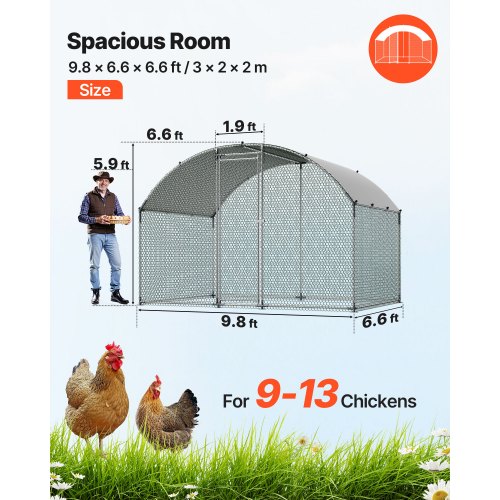
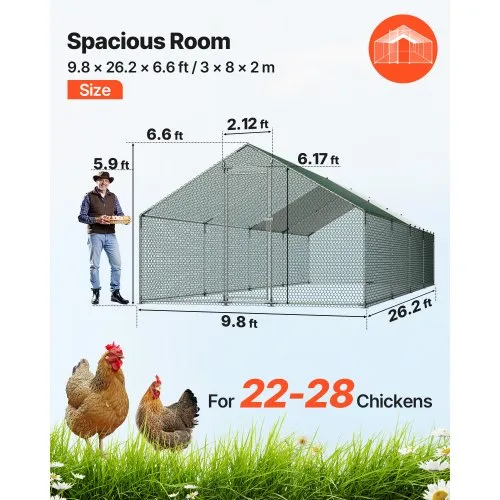
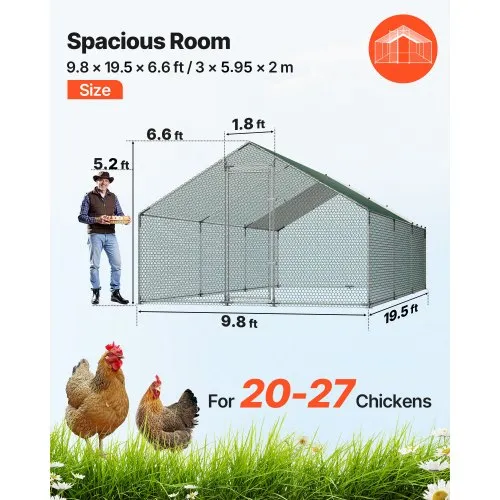
Large chicken coops cater to established backyard and small-farm flocks of eight or more birds, where the main housing needs are adequate space per bird, effective flock management, and structural longevity under heavy daily use. In contrast to small-coop concessions, interior layout elements such as feeder access design, nesting box count, and roost bar length have a direct impact on flock health and laying productivity at this scale.
With several nesting boxes, full-length roost bars, and ventilation systems that preserve air quality throughout the coop's rated flock capacity, VEVOR's large chicken coop models offer substantial interior dimensions. During the many deep-cleaning cycles that healthy flock housing requires, VEVOR's large models with walk-in or large access doors provide comfortable interior cleaning and maintenance without the awkward crouching often required by smaller coops. An appropriately designed VEVOR large coop directly promotes flock health, laying consistency, and daily management efficiency for small-farm operators and serious homesteaders who keep laying flocks as a productive family resource.
Portable Chicken Coop – Rotational Grazing Flexibility
A portable chicken coop, often called a chicken tractor, allows the flock to be moved and rotated across various pasture sections on a schedule. This feature allows birds to explore new ground while allowing previously grazed sections to recuperate. Without the need for permanent fencing infrastructure across the entire property, this rotating technique helps reduce the accumulation of parasite loads, distribute organic manure fertilizer throughout the pasture, and provide more reliable access to fresh forage.
The lightweight frame architecture and integrated wheel or skid systems of VEVOR's portable chicken coops enable one person to move the coops across typical grass and pasture surfaces without disassembling them. To move the entire bird housing and outdoor access area as a single, integrated unit that ensures predator security during every relocation, VEVOR's portable coops feature a run section directly attached to the coop housing. A VEVOR portable coop offers pasture management flexibility and flock health benefits that static coops on permanent ground cannot match for homesteaders, hobby farmers, and backyard keepers with sufficient outside space for rotational grazing.
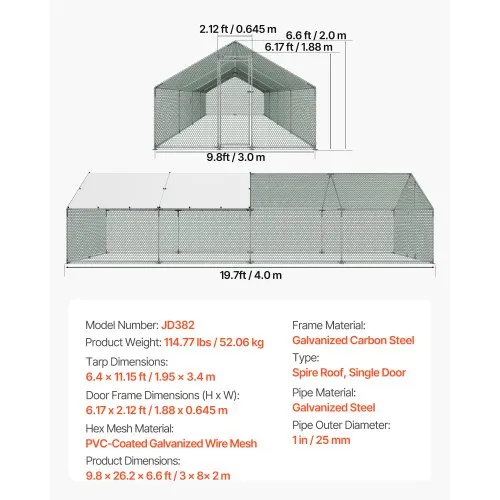
Metal Shed Chicken Coop – Robust Housing for Larger Operations
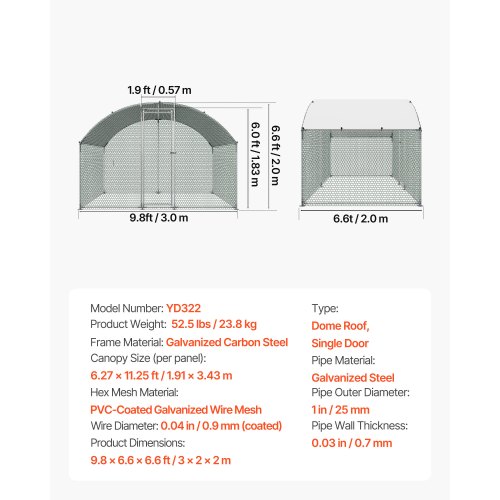
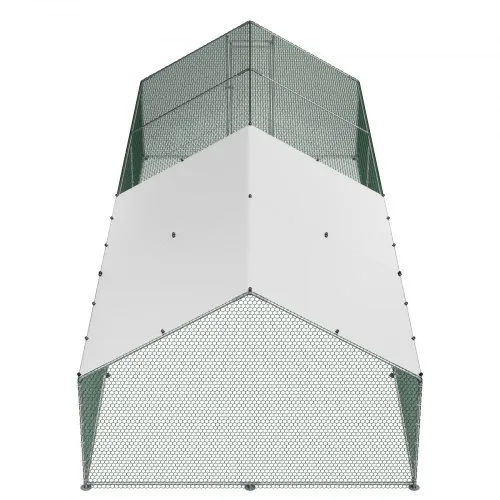
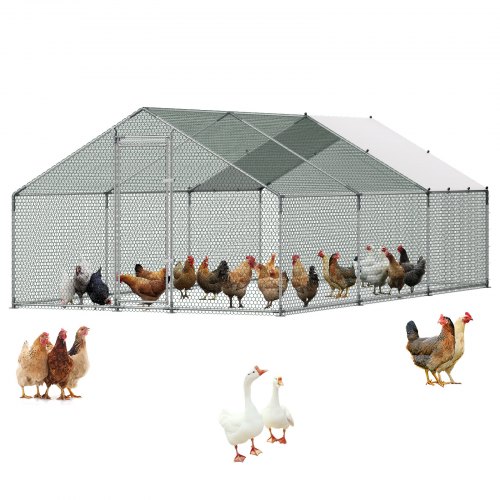
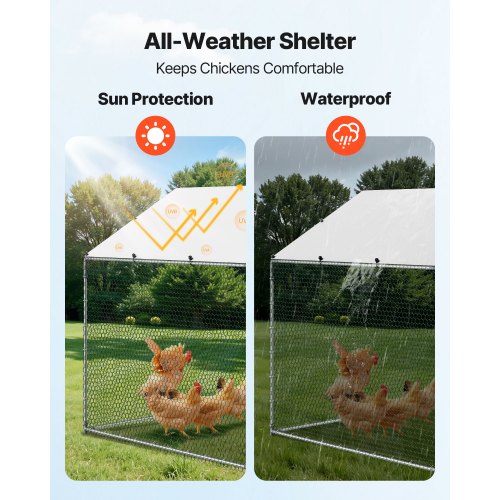
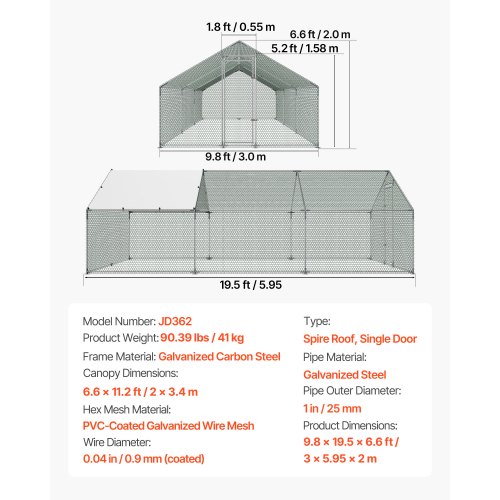
Compared to timber-framed alternatives of comparable footprint, metal shed chicken coops offer substantially improved structural durability, weather resistance, and predator deterrence by adapting typical steel shed construction to fowl housing applications. Under the year-round moisture and temperature cycling of outdoor installations, metal construction resists rot, warping, and pest damage that accelerate deterioration in wood coops, preserving structural integrity over several years of intensive poultry use without the upkeep that wood structures require.
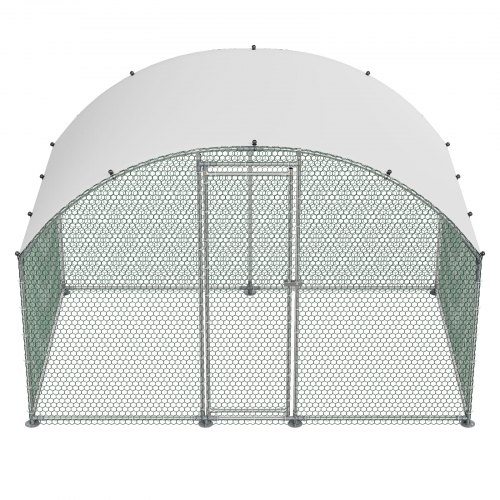
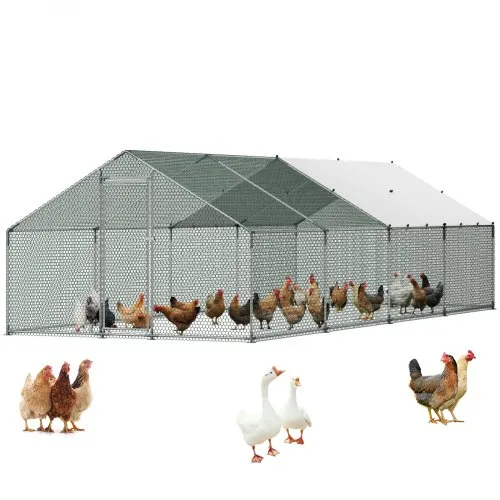
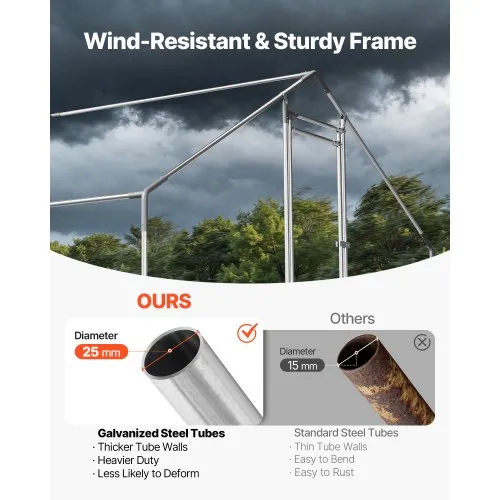
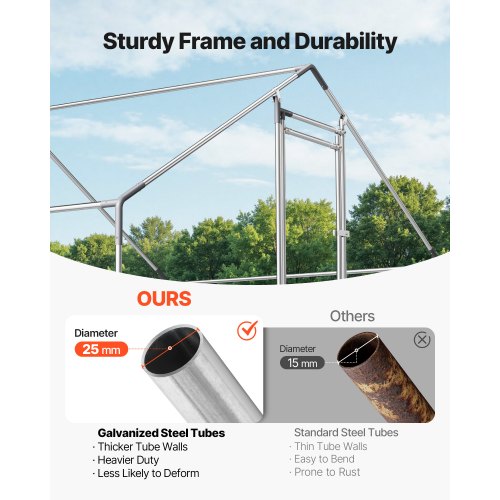
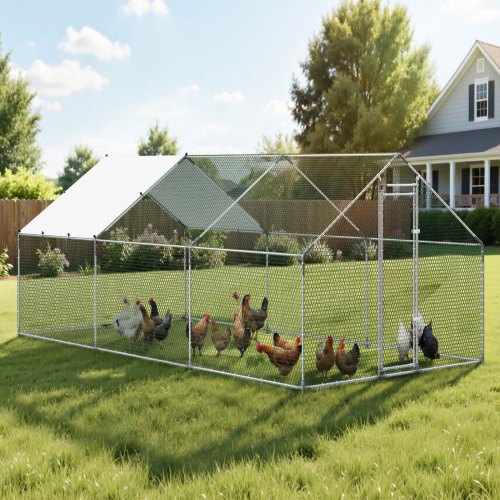
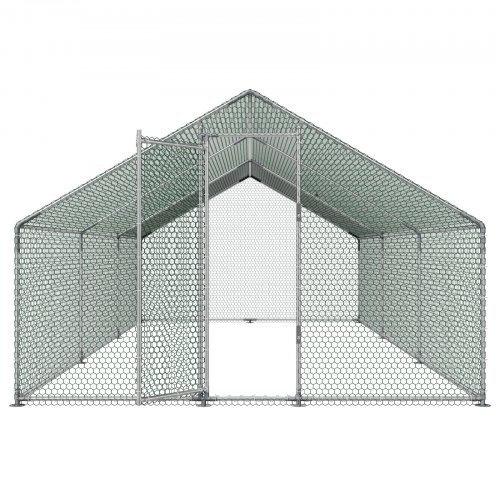
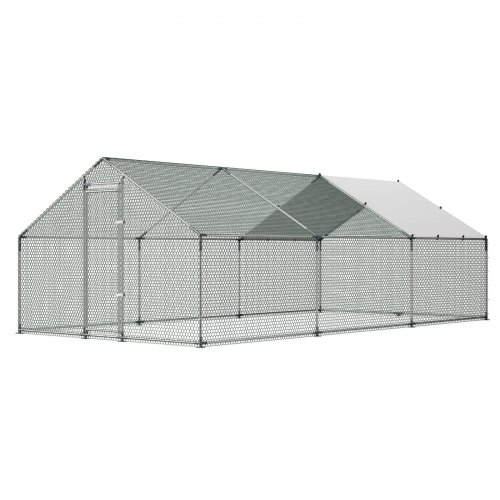
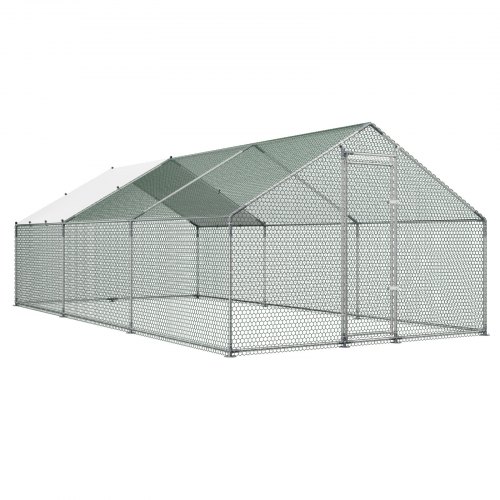
The galvanized or powder-coated steel used in VEVOR's metal shed chicken coop designs is resistant to corrosion and surface deterioration that standard steel experiences in the humid, ammonia-rich conditions of active poultry housing. The positioning of the ventilation panels on VEVOR's metal coops is intended for cross-flow air movement, preserving interior air quality without creating cold drafts at roof height. This ventilation balance promotes respiratory health in confined flocks year-round. Metal construction provides the durability investment that offsets its higher initial cost, making it a good choice for small-farm owners looking for long-lasting, low-maintenance housing infrastructure.
Chicken Coops – Material & Features
How well a chicken coop protects the flock and how effectively daily management activities can be carried out depend on the construction materials and the built-in features. Predator-resistant materials and user-friendly features are top design goals for VEVOR's coops.
Predator-Resistant Construction for Flock Safety
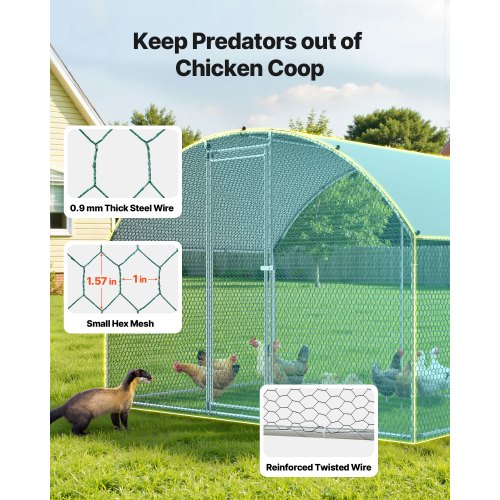
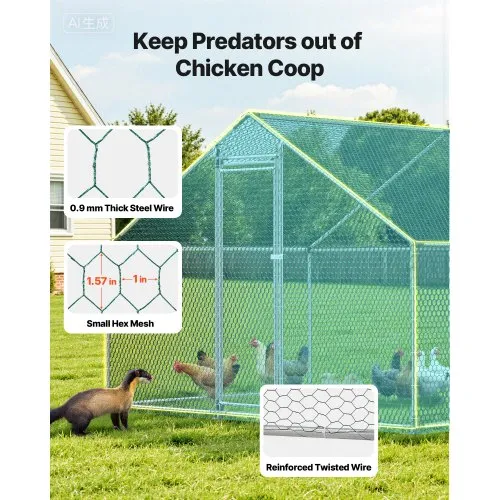
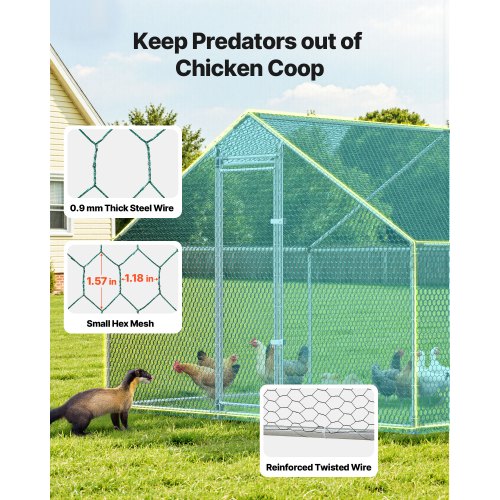
Since foxes, raccoons, weasels, and birds of prey can all get into poorly built coops and runs, flock predation is the biggest continuous threat to backyard and small-farm chicken keeping. Compared to standard chicken wire, which has larger hexagonal openings that allow small predators to reach through and whose thinner gauge wire is easily cut or torn apart by determined larger predators, hardware cloth or welded steel wire mesh with small hexagonal or square openings offers significantly better predator resistance.
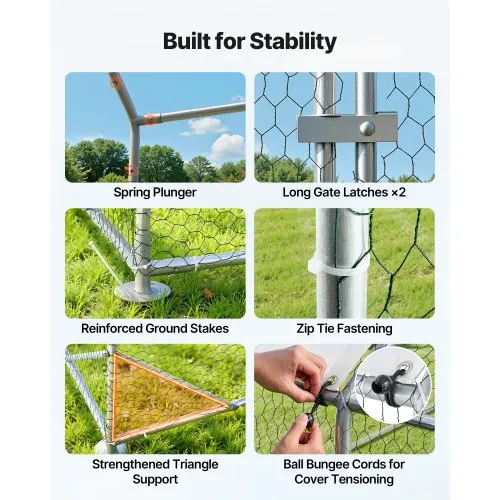
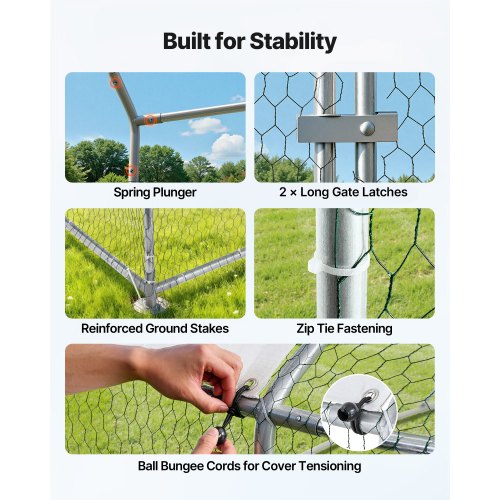
The hardware cloth or heavy-gauge welded wire mesh used in VEVOR's chicken coops protects run panels and ventilation openings against both small predators' reach-through attacks and larger predators' persistent attempts to pull and chew at run perimeter weak points. Raccoons, who are infamous for their manual dexterity with basic single-point latches, are unable to defeat the multi-point closure mechanisms used by secure door latch hardware on VEVOR's coop access doors through the persistent manipulation that single-hook latches frequently give way to during nighttime predation attempts.
Practical Features for Daily Flock Management
Egg gathering, feeding and watering, cleaning, and monitoring the health of the flock are some of the normal duties involved in daily chicken keeping. Depending on how carefully the housing is planned, well-designed coop features can make these tasks easier or more difficult. Features that make these everyday duties less time-consuming and physically demanding promote regular flock maintenance, which directly enhances laying productivity and bird health.
Healthy housing requires regular spot cleaning between deep clean sessions, and VEVOR's chicken coops feature slide-out cleaning trays under the roosting area that remove accumulated droppings without requiring full coop access. The elevated coop designs on VEVOR's models increase the flock's functional outside space beyond the run area without requiring additional building. During hot weather, birds actively utilize the under-coop outdoor shade and shelter area. Wide run door openings, integrated feeder mount points, and external nesting box access hatches complete the useful feature set that makes everyday VEVOR coop administration effective and simple for keepers of all skill levels.
Why Choose VEVOR Chicken Coops?
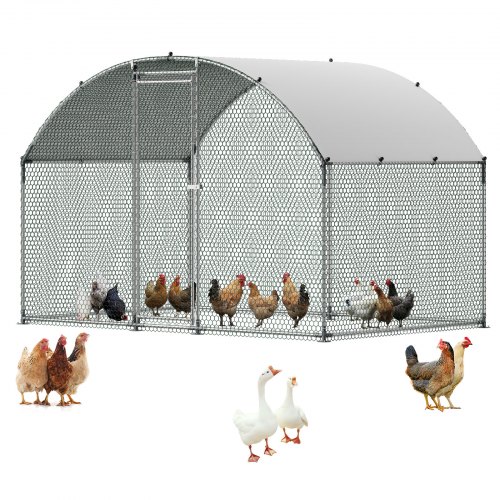
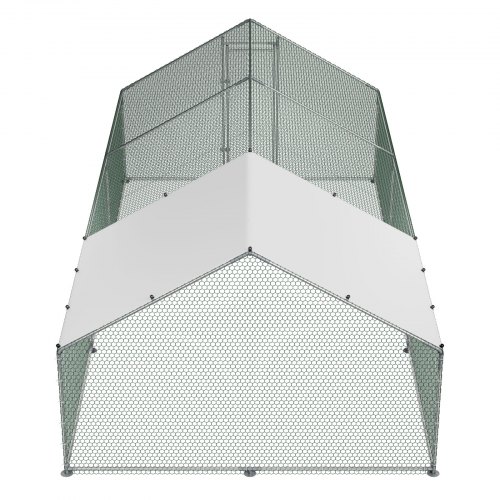
VEVOR's chicken coops feature predator-resistant construction, useful management features, and a range of size options in portable, stationary, and metal designs, suitable for all flock sizes and property types. There is a VEVOR coop for every keeper, ranging from massive metal chicken coop run buildings for established farm businesses to compact small chicken coops for urban backyard flocks. Dependable after-sales support is available for every transaction. Give your flock the secure, cozy habitat it deserves by perusing the entire assortment right now.
FAQs
How much space do chickens need in a coop?
Generally speaking, each bird should have 2 to 4 square feet of inside coop space and 8 to 10 square feet of run space. Stress, pecking, and the spread of disease are all consequences of overcrowding. To enable comfortable mobility and potential flock growth, always choose a VEVOR coop rated for slightly more birds than your existing flock.
Are VEVOR portable chicken coops easy to move?
Yes, the lightweight design and built-in wheels or skids of VEVOR's portable chicken coop models enable single-person repositioning on pasture and lawn terrain. Without disassembly or interim flock confinement, the attached run travels with the coop as a unified unit, ensuring predator security during each movement.
What predator protection do VEVOR chicken coops provide?
VEVOR's coops employ multi-point latch hardware on access doors and hardware cloth or heavy-gauge welded wire mesh on run panels and ventilation apertures. The two most frequent predation strategies that poorly secured coops are unable to deter are raccoons' attempts at physical manipulation and small predators' reach-through attacks.
Can a VEVOR metal chicken coop run be used year-round?
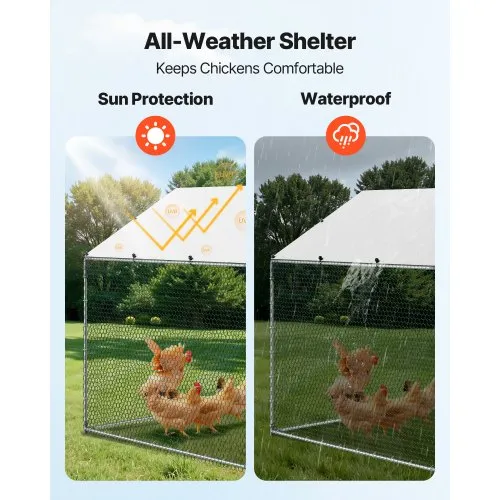
Yes, the galvanized or powder-coated steel used in VEVOR's chicken coop run layouts is resistant to corrosion and weather deterioration during year-round outdoor installation. Adding temporary windbreak panels on the side facing the prevailing wind reduces cold stress on the flock during periods of low temperature in areas with harsh winters.
