Compression Test Kit











Results for Compression Test Kit
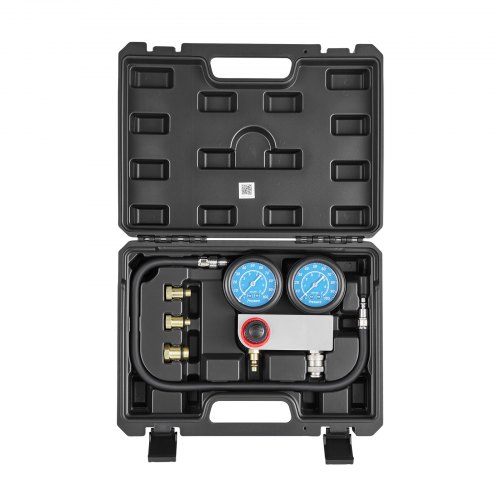
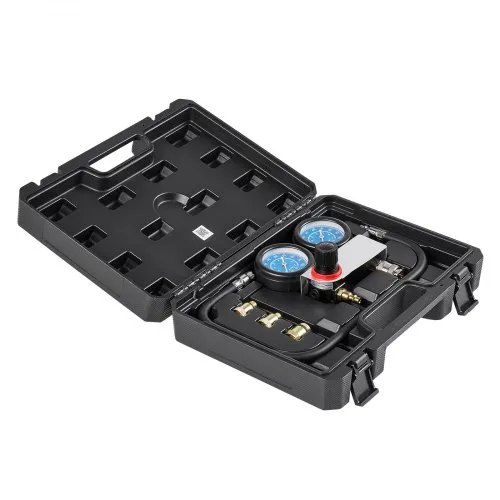
Browse a full selection of compression tester kits for professional mechanics, mobile techs, and serious home garages. You can find gasoline and diesel gauge sets, leak down testers, turbo boost testers, and full adapter collections at VEVOR. This way, you can easily find problems like worn rings, burned valves, blown head gaskets, and boost leaks. We have a kit for every engine, workload, and budget, whether you work on one family car or many different types of cars, from small hatchbacks to heavy-duty trucks.
VEVOR Gas and Diesel Compression Tester Kits for Precise Engine Diagnosis
Not getting enough power, burning oil, or trying to figure out a rough speed that a scan tool will not show you? Before you pull a single head bolt, you can get a reading of the cylinder pressure to see what is going on inside the engine. You can use VEVOR's compression tester kits for both gasoline and diesel engines. They also test for leak-down and boost, so you can get a clear explanation in minutes instead of spending hours taking the car apart.
Choosing Compression Tester Kits by Engine Type and Test Method
Before you choose the right tool, you need to know two things: what fuel the engine uses and what problem you're trying to fix. To help you buy it once, here is a list of each engine type and test method.
Gasoline Engine Testing and Standard Compression Gauges
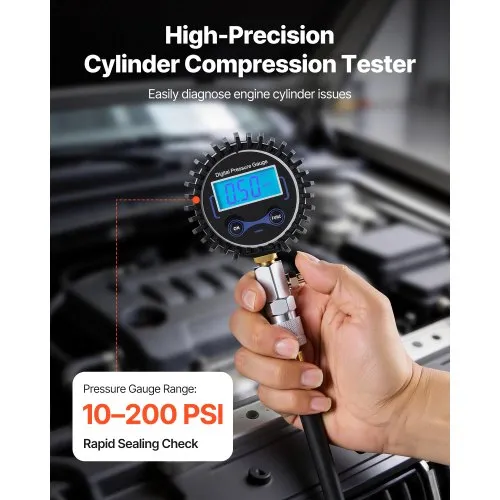
If you have a gasoline engine, you can put an engine compression tester into the spark plug hole and turn the engine over to measure the peak cylinder pressure. A healthy engine should show all cylinders within about 10% of each other. Most gasoline engines read between 125 and 175 PSI. Lower readings or large differences can indicate worn rings, leaking valves, or a failed head gasket. Standard gasoline compression gauges have two sets of markings: 0 to 300 PSI and 0 to 21 Bar. This gives plenty of room for both naturally aspirated and mildly boosted engines. For easy reading in dark engine bays, look for a gauge face 2 to 2.5 inches across that resists breakage.
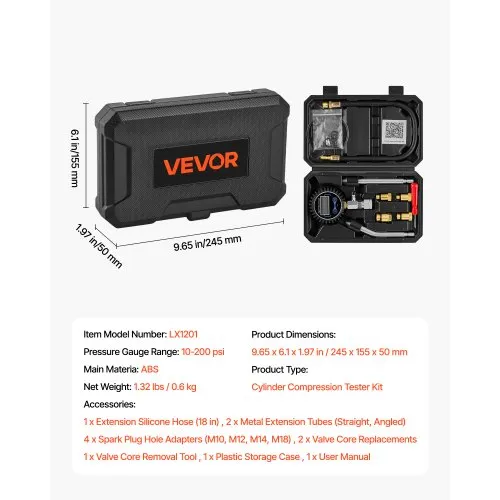
Most buyers do not realize how important thread sizes are. M10, M12, M14, and M18 adapters work with almost all current cars. However, for deep-well applications on Toyota, Honda, and many VW engines, you need fittings with a longer reach. A good compression test kit has a quick-release valve on the hose that lets you dump pressure and retest a cylinder without unthreading anything. This makes diagnosing multiple cylinders much faster.
Diesel Compression Testing at Higher Pressures
Because diesel engines compress air at much higher rates, a gasoline gauge can't handle the job. A diesel compression tester can read up to 1000 PSI (70 Bar). Normal readings are usually between 275 and 400 PSI, but this depends on the engine's size and design. Anything below 250 PSI usually means the engine will start hard and blow by too much. Choosing the right adapter for the diesel compression gauge kit matters because it can connect through either the glow plug port or the injector bore.
Common threads for fittings are M8, M10, M12, M14, M18, M20, and M24. For common rail applications, injector-style adapters are also common. So much higher diesel pressure makes hose construction a safety issue, not a comfort. Look for steel-reinforced braided lines rated well above the gauge's maximum range. Use brass or steel couplers instead of plastic. If you work on light cars, tractors, generators, or marine diesels, you should buy a diesel engine compression tester kit. If you try to use a gasoline tool on a diesel engine, you could get an incorrect reading, or the hose could burst under pressure.
Leak Down Testing to Pinpoint the Exact Fault
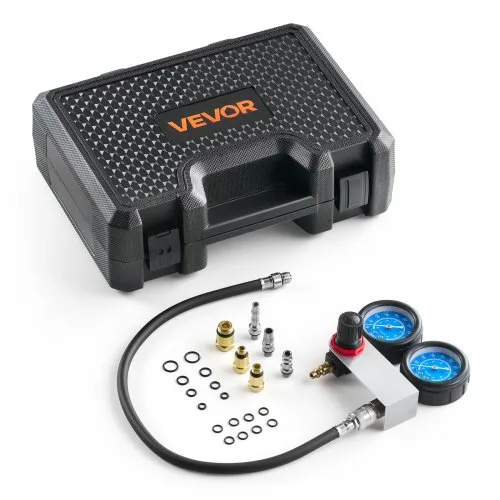
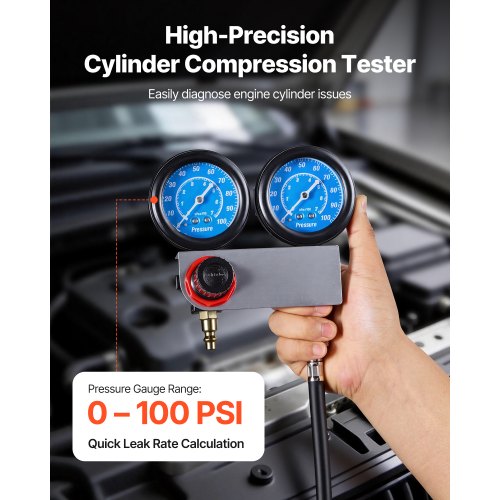
A cylinder is weak if it fails a compression test. It tells you why when you test for leaks. A cylinder Leak Down Compression Tester puts regulated shop air into a cylinder at mid-top dead center and checks how much leaks out. It does this job by showing both the input pressure and the cylinder pressure on a dual-scale pressure gauge. The whole point is to read the escape route. A valve that hisses sounds like it is opening or closing is an exhaust valve; a valve that pops sounds like it is opening or closing is an intake valve; a valve that pops sounds like it has worn rings in the oil filler or dipstick tube; and bubbles in the coolant reservoir sound like a head gasket.
Leakage of less than 10% is good, 10 to 20% is fine for a used engine, and more than 25% needs repair. For the automotive Leak Down Tester Kit to work, it needs a compressor that can provide at least 90 PSI. Many technicians have both of these. You can quickly check the engine with a compression cylinder tester, and then a leak down test will find the broken part before you order any replacements.
Turbo and Boost Leak Testing for Forced Induction
No cylinder test can find a third type of failure in modern turbocharged engines: pressure escaping from the charge pipes before it reaches the cylinders. Using regulated shop air, a turbo boost leak tester kit pressurizes the intake system so you can hear and find the leak directly. An intercooler & intake piping leak tester usually has a stepped or adjustable cone that fits over the turbo inlet or intake pipe and is held in place with a hose clamp. The tester then adds 15 to 30 PSI to the system. You can quickly spot cracked couplers, split intercooler end tanks, and loose clamps.
A turbo system leakage tester is very helpful when a car makes boost but doesn't perform well, throws underboost codes, or blows black smoke on a diesel. These problems can look like engine wear and take a long time to diagnose. For diesel engines, where charge pressures often go over what a gasoline-spec gauge can handle, pair boost testing with a high-pressure gauge tester. Together, these tests give you a full picture of how well an engine's seals are working.
Kit Contents and Features in VEVOR Compression Tester Kits
Beyond the gauge itself, what comes in the case determines how many vehicles you can actually service. Here's what to check on the specification list before ordering.
Gauge Accuracy, Build Quality, and Usability
Most gauges have a precision rating of ±1.5 to ±3% of full scale. That means values within several PSI of a 300 PSI face, which is fine since you're comparing cylinders to each other, not trying to find a firm number. Find a brass Schrader-style check valve that can hold high pressure until you release it by hand. When you test the last cylinder, cheap tools give you low readings because they bleed pressure slowly.
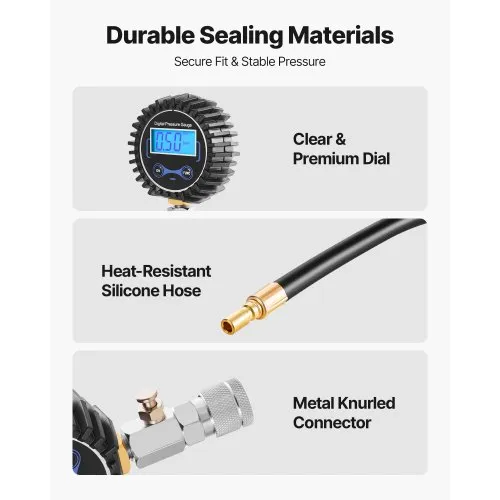
For frequent tightening, steel or brass parts last longer than plastic, and a rubber-coated gauge bezel can handle the inevitable fall onto a concrete floor. Fuel and oil don't stick to nitrile O-rings the way they do to regular rubber. Big printed numbers, a hanging hook, and color-coded thread marks on each adapter make it easier to use. An organized set of cylinder compression tools cuts a fifteen-minute job to five minutes, and good automotive compression testers stay accurate for years of daily shop use.
Adapters, Hoses, and Case Configuration
Whether a kit fits your fleet or just sits there half-used depends on the engine compression tester adapter set. Basic gasoline sets come with three to five adapters that cover M10 to M18. Full kits include eight to twelve fittings, plus rigid and flexible extension hoses. The hose length is a useful feature to check. A rigid adapter cannot physically reach recessed plugs on transverse V6 engines, but a 12-inch flexible line can. On the other hand, an accessible inline-four engine seals better with a short, rigid fitting.
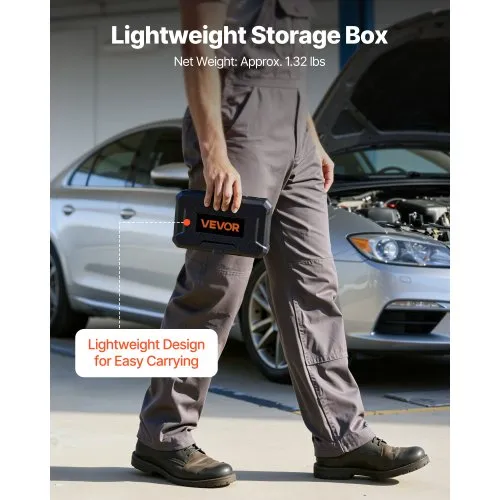
It is more important than it sounds to have a blow-molded case with die-cut foam. People lose loose adapters quickly, and at 7 p.m. on a Friday, a missing M12 fitting can end the job. Make sure that you can buy replacement seals, gauges, and hoses separately. When a part in one of VEVOR's compression tester kits breaks, the company offers quick, helpful customer service so you don't have to throw away the whole set.
Why Choose VEVOR Compression Tester Kits?
From single-gauge petrol sets to full diesel, leak-down, and turbo-boost tooling, VEVOR covers every diagnostic situation at prices that leave room in the budget for the actual repair. Every kit includes the adapters, hoses, and storage case you need to start testing immediately, backed by dependable after-sales support and replacement parts. Browse the full range today and stop guessing what's wrong inside your engine.
FAQs
What compression number is considered healthy?
Most petrol engines read 125 to 175 PSI; diesels 275 to 400 PSI. More important than the absolute number is uniformity; all cylinders should fall within about 10% of each other.
Can I use a gas gauge on a diesel engine?
No. Diesel compression far exceeds a 300 PSI petrol gauge's range, risking damage and inaccurate readings. Use a specialized diesel tool rated to 1000 PSI with glow plug or injector adapters.
When you try it, should the engine be hot or cold?
Test at operating temperature with the throttle wide open and no plugs or injectors in the engine. When an engine is cold, readings from different cylinders are all artificially low.
What is the difference between testing for break down and testing for compression?
A compression test finds weak cylinders and measures the peak cranking pressure. A leak down test uses shop air to find where the pressure is leaking: the valves, rings, or head gasket.
Do these tools need an air compressor?
Only for checking leak down and boost leaks, which need a steady flow of about 90 to 100 PSI. Standard compression testing only involves turning the engine over.