Electrical Pliers



Results for Electrical Pliers
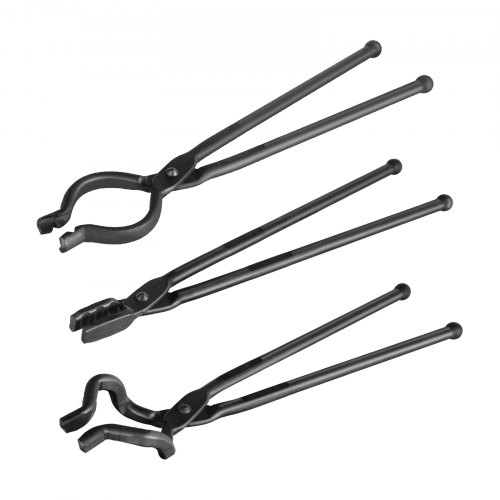
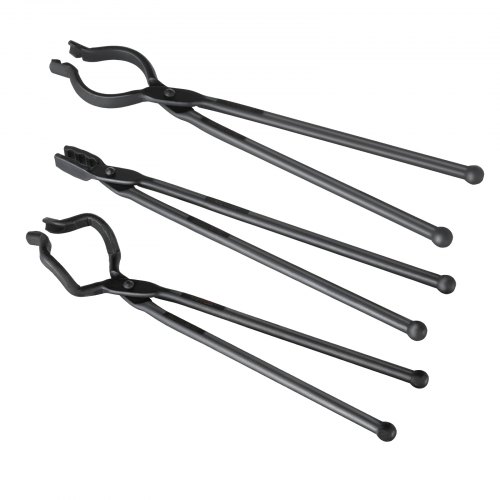
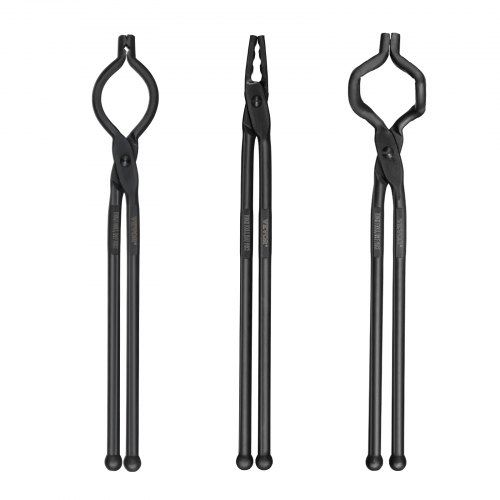
For safe, secure handling of hot metal at the forge, VEVOR offers a well-built, focused range of blacksmith tongs. Our catalog has the right tool for the job, whether you need V-bit bolt tongs for precisely gripping round and square stock, wolf jaw tongs for controlling flat and wavy workpieces, or blacksmith wolf jaw tongs for heavy-duty professional use. In a real forge, the blacksmith tongs from VEVOR are made to handle high temperatures, heavy use, and the need for a grip that never lets you lose control of hot metal.
VEVOR Blacksmith Tongs: From Bolt Stock to Flat Bar and Beyond
Are you building your first forge or adding to your skilled smithing toolkit with tongs that fit common workpiece shapes? VEVOR's blacksmith tongs are made from high-quality heat-treated steel to ensure they last longer on the forge side. They are also the right size to grip the stock that most expert and amateur blacksmiths work with. VEVOR provides the grip security your forge work requires, from small V bit bolt tongs for precise control of round bars to wide-jawed blacksmith wolf jaw tongs that can handle flat stock and odd shapes with ease.
Selecting Blacksmith Tong Type (V-Bit, Wolf Jaw)
The jaw profile of a pair of blacksmith tongs is the most important thing to consider when choosing them. It affects what types of stock the tongs can securely grip, how much control the smith has over the workpiece while hammering, and how safely hot metal can be moved without slipping. If you know the differences between jaw types and how they work, you can be sure your tongs will work with the anvil without awkward adjustments.
V Bit Bolt Tongs, Precision Grip for Round and Square Stock
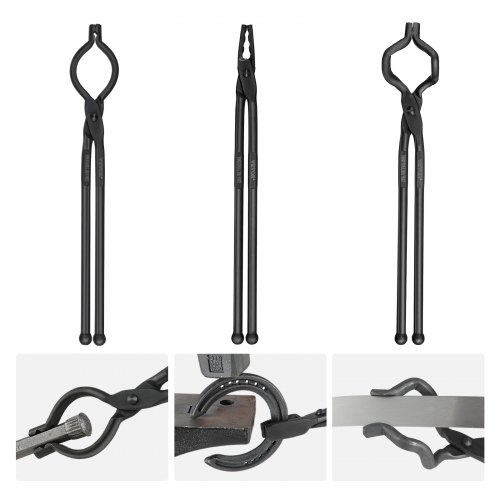
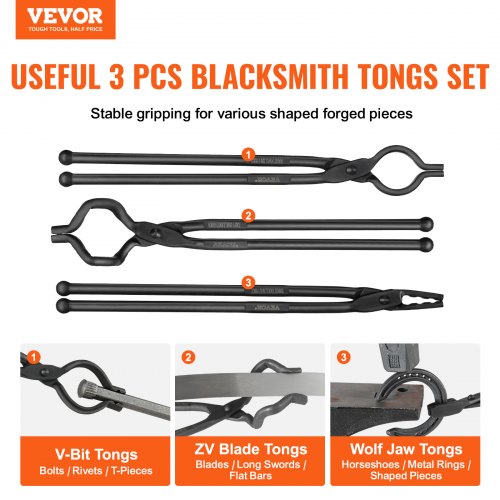
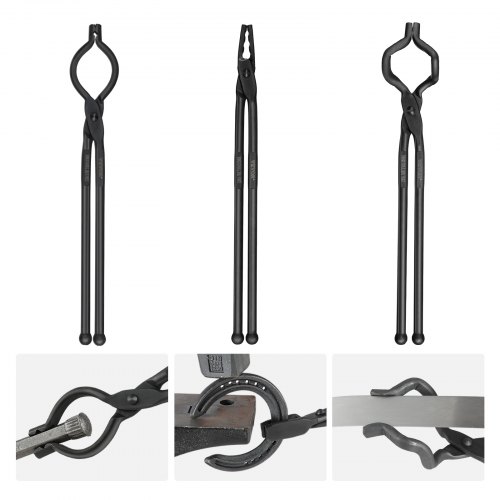
It's no surprise that V-bit bolt tongs are some of the most famous blacksmith tongs, both in home forges and in professional ones. The V-shaped groove, machined or forged into each jaw face of V bit bolt tongs, creates four contact points that lock the object against rotation and lateral movement simultaneously.
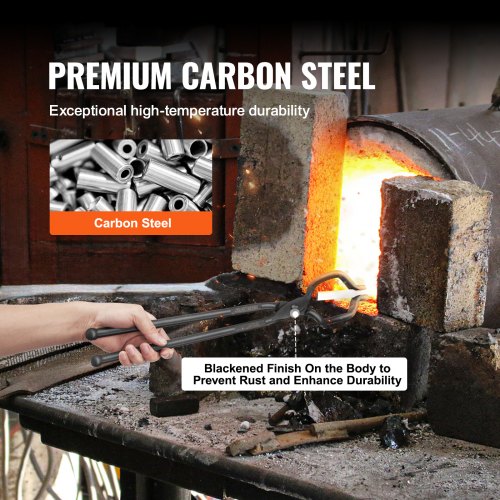
The V bit bolt tongs from VEVOR are made of high-carbon steel and have long reins that keep the smith's hand safe from the heat of the forge and anvil while they work for long periods of time. Smaller v-bit bolt tongs can usually hold stock with a diameter of 8mm to 16mm, while larger models can hold material that is up to 25mm. Jaw opening capacity varies by model.
Wolf Jaw Tongs and Blacksmith Wolf Jaw Tongs: Versatile Control for Flat and Irregular Stock
When it comes to gripping, wolf jaw tongs are very different from V-bit designs. Instead of a precisely matched groove, wolf jaw tongs have an offset, multi-stepped jaw profile that can work with a wider range of stock shapes in a single tool. Both the upper and lower jaws are not the same shape. The top jaw has a flat gripping face, while the lower jaw has a stepped or curved profile that can hold flat bar, sheet stock, and irregularly shaped workpieces without switching jaw positions.
Blacksmith wolf-jaw tongs make the tool even more useful for heavy stock and tougher forge tasks. VEVOR's blacksmith wolf jaw tongs have wider jaw faces and heavier reins than most wolf jaw models. The design provides more leverage and grip area for larger flat bar sections, thick plate stock, and consolidated billets.
Matching Tong Type to Forge Task, Building a Functional Tong Collection
Because there isn't a single best pair of blacksmith tongs for many jobs, skilled smiths collect a set of tong jaw types suited to the stock shapes and tasks they do most often. For most blacksmithing work, such as making tools and gear or creating ironwork for decoration and building parts, V-bit bolt tongs are a key tool. They hold round and square bar stock.
Wolf jaw tongs and blacksmith wolf jaw tongs complement V-bit designs because they can handle flat stock, sheet, and uneven profile work that groove-jaw tongs can't. One pair of V-bit bolt tongs that are the right size for their most common round stock diameter, one pair of blacksmith wolf jaw tongs for working with flat bars, and a third pair that can be used for either smaller detail work or heavier stock, depending on the project.
Tong Fit and Adjustment, Why Out-of-the-Box Fit Matters
A pair of blacksmith tongs that don't exactly fit the planned stock profile is not only inconvenient but could also be dangerous. When tongs don't grip tightly, hot workpieces can spin around when the hammer hits them or fall off when the blacksmith moves around at the anvil, which can cause burns and impacts. If you tighten the tongs on the stock too much, the hammer strikes may cause them to break open, freeing the workpiece at the worst possible time.
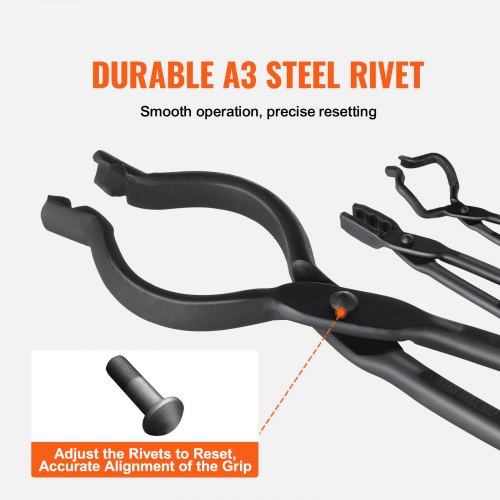
While VEVOR's blacksmith tongs are made with tight tolerances that mean they don't require fitting adjustment before use, it is normal for any good blacksmith tong to need some small forge adjustment. Heating the tong jaw area to working temperature and making small changes with a hammer over the anvil horn is normal and doesn't mean the product is broken; it's just how you make sure the tool fits perfectly to your most common stock size.
Evaluating Blacksmith Tongs by Material & Size
Different types of jaws and the size of the blacksmith tongs in relation to your stock affect how long they last, how safely they handle heat transfer, and whether they give you the mechanical edge you need for your hardest forge work. Material and size are the two factors that distinguish tongs that work well for years from those that bend, fatigue, or feel awkward on the anvil after only a few uses.
Steel Quality and Heat Treatment: What Makes Forge Tongs Last
Blacksmith tongs work in one of the harshest environments for tools because they constantly come into contact with hot metal objects, typically between about 900°C and 1,200°C, absorbing and releasing heat cycle after cycle. So, the steel used to make tongs needs to be a good mix of hardness (so the jaws don't bend when gripping and hitting) and toughness (so the tongs can handle the shock loads transmitted through it when the smith strikes the workpiece on the anvil).
Forged jaw profiles on VEVOR's blacksmith tongs better distribute stress than cast or machined ones; forging aligns the steel's grain structure with the tong's load-bearing geometry, which improves fatigue resistance over the tool's working life.
Tong Length and Stock Size: Choosing Dimensions That Match Your Work
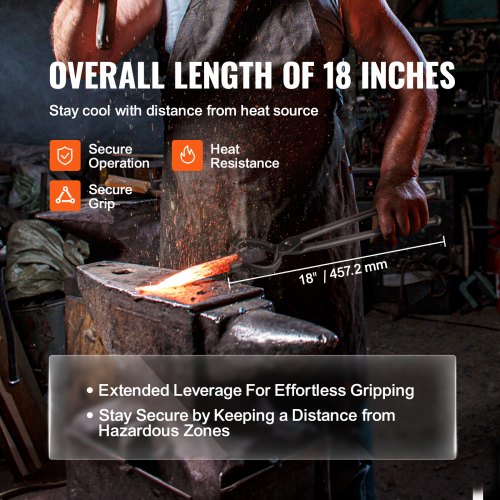
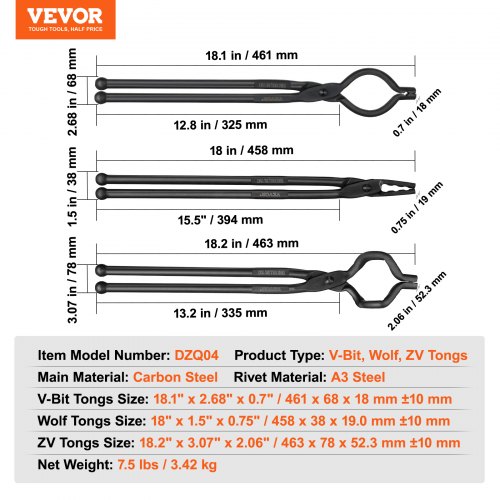
When you measure the length of tongs from the jaw tip to the end of the rein, you can see how far away the smith's gripping hand is from the heat source and how much mechanical advantage there is for holding big or heavy stock. In the 12"–16" range, shorter tongs are best for small stock, fine detail work, and tasks close to the edge of the anvil, where longer reins would make it hard to use the tools properly.
For v-bit bolt tongs and blacksmith wolf-jaw tongs, the jaw opening size should closely match the cross-sectional size of the stock you use most, not the biggest stock you handle every once in a while. Tongs made for 20mm stock will not grip tightly when used on a 10mm bar, while tongs made for 20mm stock won't be able to close around the workpiece at all.
Shop VEVOR Blacksmith Tongs for Forge-Ready Grip and Lasting Durability
When it comes to blacksmith tongs, VEVOR offers jaw types that many smiths find useful: V-bit bolt tongs for exact control of round and square stock; wolf jaw tongs for versatile flat bar handling; and blacksmith wolf jaw tongs made for heavier professional forge tasks. Forged from high-quality steel, each pair is available in the most popular stock sizes and priced to make building a full set of tongs more accessible. VEVOR makes forge tools that many professional blacksmiths rely on.
FAQs
What is the difference between V-bit bolt tongs and wolf jaw tongs?
V-bit bolt tongs feature V-shaped grooves that grip round and square bar stock with precision, preventing rotation under hammer blows. Wolf jaw tongs use an asymmetric offset jaw profile that accommodates flat bars, sheet stock, and irregular shapes. Each type is optimized for different stock profiles; most smiths use both.
Do VEVOR blacksmith tongs need forge adjustment before use?
Minor forge adjustment is normal for any quality blacksmith's tongs. Heat the jaw area to working temperature and adjust it over the anvil horn to achieve a snug fit on your most common stock size. VEVOR tongs are manufactured to close tolerances that minimize the need for adjustment, but fitting to specific stock is standard practice.
What stock sizes do VEVOR v-bit bolt tongs accommodate?
VEVOR v-bit bolt tongs are available in models covering stock diameters from approximately 8mm to 25mm, depending on the selected size. Always match the jaw's V-groove width to your most frequently used stock diameter for the most secure and stable grip during forge work.
How long should blacksmith tongs be for safe use in the forge?
For most general forge work, tongs with a 16"–20" rein length provide adequate heat separation and grip leverage. Shorter tongs are suitable for detail work and small stock. Longer tongs are preferred for larger stock and heavier hammer work, where additional mechanical advantage and heat distance are both beneficial.
Can blacksmith wolf jaw tongs handle round stock as well as flat bar?
Blacksmith wolf jaw tongs are optimized for flat bar, plate, and irregular stock profiles. While they can grip round stock in some configurations, V-bit bolt tongs provide a more secure and rotationally stable grip on round and square bars. For a complete forge toolkit, use both jaw types matched to their respective stock profiles.