Extension Ladders


















Results for Extension Ladders
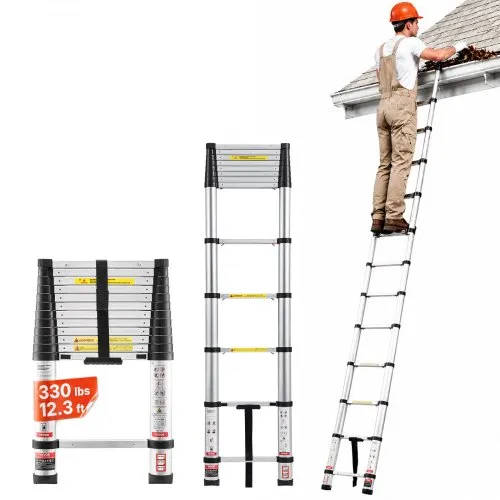
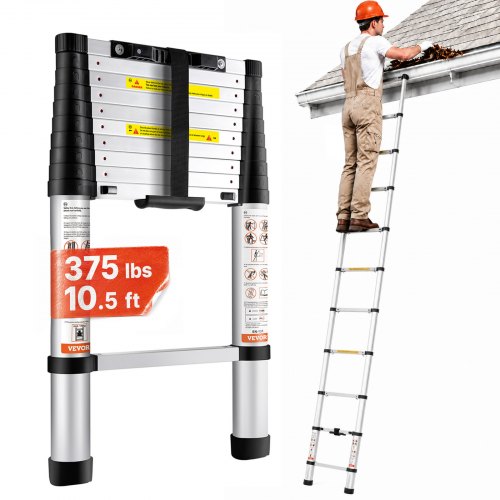
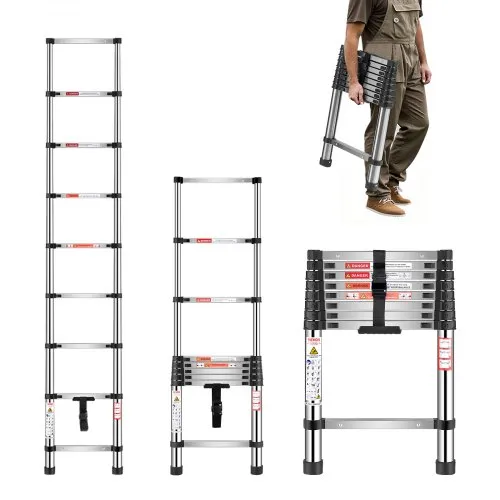
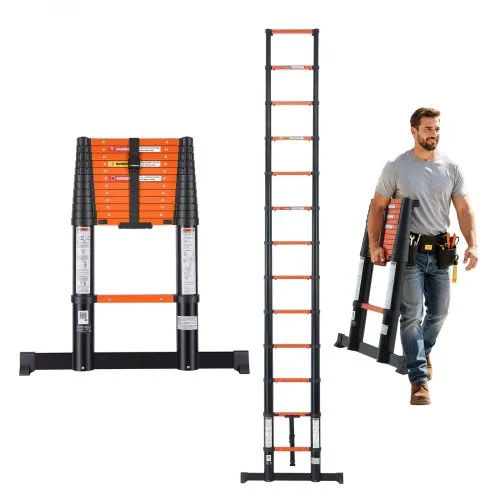
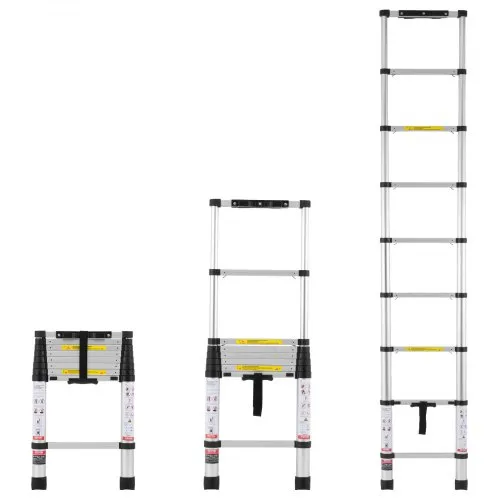
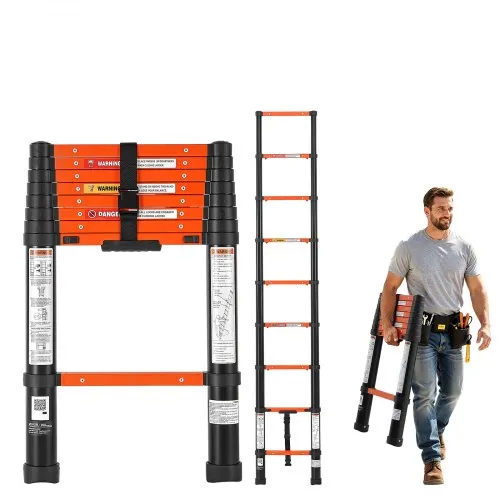
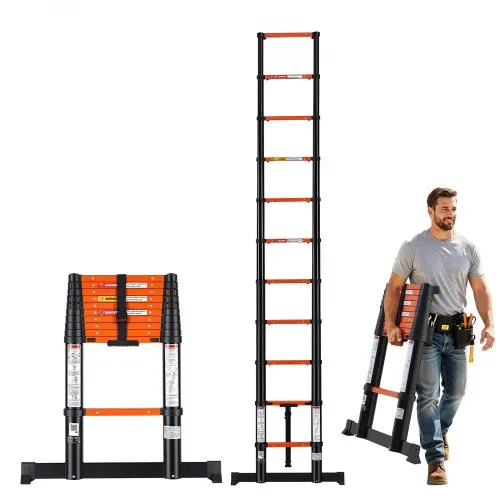
VEVOR's telescoping ladders provide homeowners, painters, and maintenance workers with a full-size extension ladder that fits in a utility truck, trunk, or closet by collapsing to a quarter of its extended height. Each telescopic ladder in the lineup has locking rung mechanisms that click into position at each extended segment, ensuring that once the ladder is fully deployed, it remains secure and firm. VEVOR offers a wide selection of heights and materials at reasonable prices, whether you need a heavy-duty model for everyday jobsite use or a small, collapsible ladder for occasional gutter cleaning.
VEVOR Telescoping Ladders: Compact Extension Ladders for Every Job
Are you sick and weary of keeping a heavy extension ladder in your garage? When necessary, VEVOR telescoping ladders expand to their full working height and collapse to a compact size. Telescoping ladders range in height from 8.5 to 18.5 feet and are made of stainless steel and aluminum. You can use them for everything from two-story exterior painting to indoor touch-up work.
Extended Height and Material: Which Telescoping Ladder Fits Your Job
While material affects weight, corrosion resistance, and performance in various conditions, extended height determines what jobs a ladder can safely reach.
8.5 ft and 10.5 ft: Compact Sizes for Indoor and Light Outdoor Use
For indoor tasks like replacing light fixtures, painting standard ceilings, or reaching higher cabinets, an 8.5 ft telescoping ladder is ideal. It collapses to about 2.5 feet for easy storage in a closet or under a workbench. For single-story homes and apartments, where a full-size extension ladder is excessive for most maintenance tasks, this height is ideal. Moving forward, a 10.5 ft telescoping ladder provides sufficient reach for basic outdoor maintenance, exterior touch-up painting, and single-story gutter cleaning without the bulk of a longer model.
Both heights work well for renters, apartment residents, and anyone without a garage or shed for long-term ladder storage because they fold down small enough to fit in a car trunk. These sizes are also easier for one person to carry and set up without assistance because of their compact, compressed length, which is important for lone homeowners working on weekend tasks. Even studio apartments can keep one on hand without taking up storage space, since either size can be stored flat under a bed or upright in a closet nook.
12.5 ft and 18.5 ft: Extended Sizes for Two-Story Reach
A 12.5 ft telescoping ladder can reach roof edges on single-story homes, second-story windows, and most exterior painting tasks that are unsafe for a shorter ladder. For most homeowners working on outdoor tasks, this height balances reach and portability while remaining easy for one person to extend, lock, and reposition without undue exertion. An 18.5 ft telescoping ladder can handle larger tasks, such as roof access on larger residences, tree cutting, and two-story gutter work.
Use two people to extend or move the fully extended ladder at this length, as the collapsed ladder is substantially heavier and longer even when folded down. Keeping an 18.5-ft model on hand for tasks that shorter ladders can't reach safely is a common benefit for contractors and maintenance teams working in larger facilities. Since standing height plus arm reach usually adds several feet above the ladder's fully extended length, always compare the ladder's advertised maximum reach to the actual height you need to operate at.
Stainless Steel Telescoping Ladder vs Aluminum: Choosing the Right Material
Of all the material options, this one offers the strongest corrosion resistance, making it ideal for outdoor storage where rust and humidity are constant issues, industrial settings with chemical exposure, and coastal regions. If you haul the ladder up and down stairs or across a jobsite several times a day, the added weight compared to aluminum is a trade-off. For standard home and light commercial use, an aluminum telescopic ladder remains substantially lighter while maintaining strength.
Most painters and homeowners find aluminum's lightweight and portability more useful day to day, saving stainless steel for situations where rust is a real, constant problem rather than a sporadic worry. The decision primarily comes down to weight tolerance versus long-term corrosion exposure in your particular industrial environment, since both materials use comparable locking mechanisms. For most common uses, the weight savings of aluminum often outweigh the added durability of stainless steel when regularly moving the ladder between A-frame designs for Stepladder Versatility.
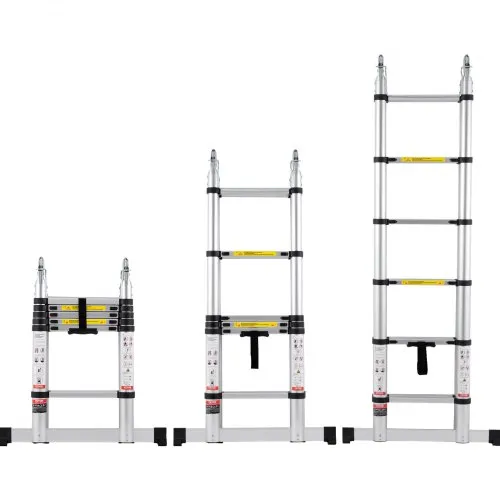
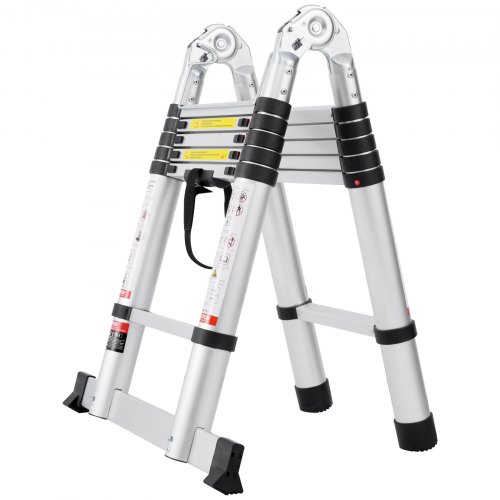
A-frame telescoping ladder offers more adaptability than a fixed-length extension ladder by converting between a straight extension ladder and a freestanding A-frame stepladder. For chores like painting a freestanding fence, working under an overhang, or setting up in an open area far from a solid surface, this design works well. Check the weight rating and hinge lock mechanism carefully before purchasing, as the hinge mechanism adds a bit of complexity compared to a straight telescoping design.
This style experiences additional stress at the pivot point during repeated configuration changes. This hybrid design eliminates the need for two separate purchases for anyone who frequently needs both a straight ladder and a stepladder but has storage space for only one. Since an unknown lock state at the pivot point is one of the most frequently reported failure points in hybrid designs, look for a model with a clearly defined positive-locking hinge indicator.
Folding Features and Duty Rating: What to Check in a Telescoping Ladder
For daily use and long-term safety, a ladder's folding mechanism and the weight it can securely support matter as much as its height and material.
Collapsible and Folding Mechanisms Explained
A collapsible ladder's locking mechanism releases with spring-loaded buttons at each level, allowing sections to slide down into the one below for compact storage. Before relying on a rung on a jobsite, make sure it locks with an audible click and remains rigid under weight. A mechanism that feels weak or squishy at the release button is a warning flag to take seriously, as quality varies greatly across models. Both a folding extension ladder and a collapsible telescopic ladder prioritize minimizing the ladder's footprint when not in use, but they achieve comparable compact storage through slightly different mechanisms.
While some expanding ladder designs use a different locking sequence that extends one part at a time rather than allowing unfettered expansion to any height, telescopic and collapsible extension ladders usually collapse along their full length in seconds. A telescopic multi-position ladder adds even more versatility, letting you use it in ways beyond a straight extension, such as a staircase-friendly stance or a scaffold base. Before you rely on the collapse-and-extension mechanism for real work, test it in the store or right after delivery to identify any production flaws while it is still easy to return.
Duty Rating and Weight Capacity
The maximum combined weight that a ladder can safely sustain, including your body weight plus any tools, paint cans, or items you are carrying up with you, is indicated by the ladder's duty rating. Typically, a lightweight telescoping ladder has a Type II or Type III household-duty classification, which is sufficient for sporadic homeowner use but not designed to meet the needs of a commercial project odai. er than assuming a ladder is rated for normal use, always compare the listed capacity to your actual weight plus equipment.
Type IA or Type IAA heavy-duty telescoping ladders are designed for contractors and tradespeople who frequently use ladders and carry heavier tool loads. To withstand multiple loading cycles without the mechanism becoming loose over time, these models use thicker rung material and reinforced locking points. Your safety and your investment in the ladder itself are safeguarded by matching the duty classification to your real use case, such as sporadic residential duties versus regular commercial labor.
Why Choose VEVOR Telescoping Ladders?
VEVOR offers telescoping ladders in stainless steel and aluminum, ranging from 8.5 to 18.5 feet, plus A-frame and straight designs for any task. All telescopic collapsible ladders in the range offer reliable after-sales support, reasonable prices, and reinforced locking mechanisms rated for frequent daily use. VEVOR has everything you need, whether you require a heavy-duty model for regular worksite work or a portable extension ladder for sporadic home projects. Discover the ideal height and duty grade for your upcoming job by looking through the entire telescopic ladder lineup.
FAQs
What height telescoping ladder do I need for gutter cleaning?
To safely reach the roofline and gutters, most single-story homes require a telescoping ladder 10.5 to 12.5 feet tall, whereas two-story homes usually need one 18.5 feet or higher.
Is an aluminum or stainless steel telescoping ladder better?
While stainless steel offers greater resistance in industrial or commercial settings where rust exposure is a constant concern,cern aluminum is lighter and suitable for most residential applications.
How do I know if a telescoping ladder's locking mechanism is safe?
When you apply weight, each rung should feel totally firm and lock with an audible click. Don't use the ladder until you've checked it; if any part feels loose, or the button feels spongy, don't use it.
Can one person safely set up an 18.5 ft telescoping ladder?
While not advised, it is feasible. It is safer to handle longer telescopic ladders with two people when extending, transporting, or positioning them against a building, as they are heavier even when collapsed.
What's the difference between household and heavy-duty ratings?
Type II/III household-rated ladders suit infrequent use and have lower combined weight restrictions. Higher combined weights for regular commercial or contractor use are supported by heavy-duty ratings (Type IA/IAA).