

Garden Trellises


















Results for Garden Trellises
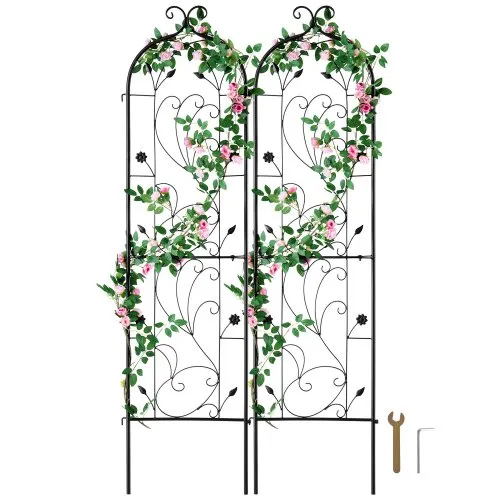
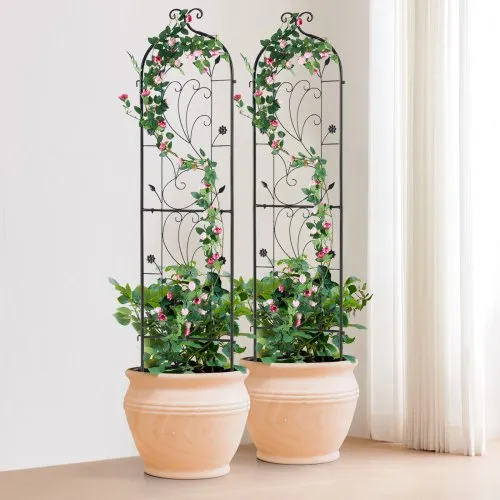
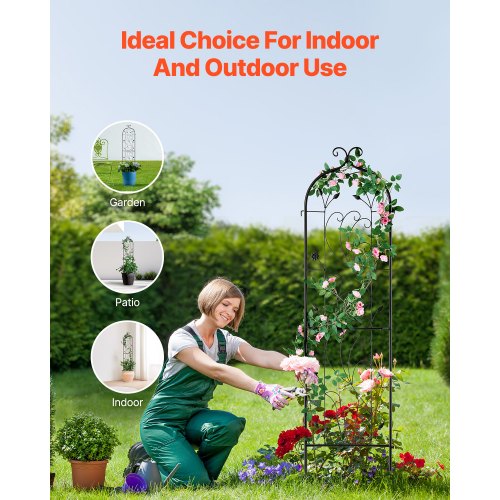
From cucumbers and tomatoes to roses and blooming vines, VEVOR has a wide selection of garden trellises made to accommodate all kinds of climbing plants. Our selection accommodates all garden sizes, layouts, and skill levels, whether you are training plants along a fence or growing vertically in an elevated bed. Make the most of your growing space by selecting the ideal framework for your plants.
VEVOR Garden Trellises for Climbing Plants, Vegetables, and Flower Support
Are you searching for a dependable support for your vegetable garden, a stylish flower trellis, or a durable cucumber trellis? The ideal trellis maximizes your growing space, enhances circulation, and keeps plants off the ground. With strength, adaptability, and clever design, VEVOR's garden trellises are built for real garden conditions.
Choosing the Right Trellis Type for Your Plants and Garden Layout
The kind of trellis you select has a direct impact on the quality of your harvest and the appearance of your garden, whether you are cultivating delicate climbing roses or spreading cucumbers. Knowing which structure is best for each plant helps your garden flourish season after season, saves time, and lowers crop loss.
A Frame Cucumber Trellises for High-Yield Vertical Growing
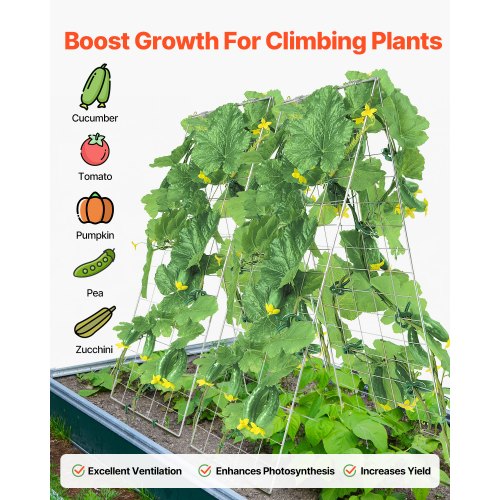
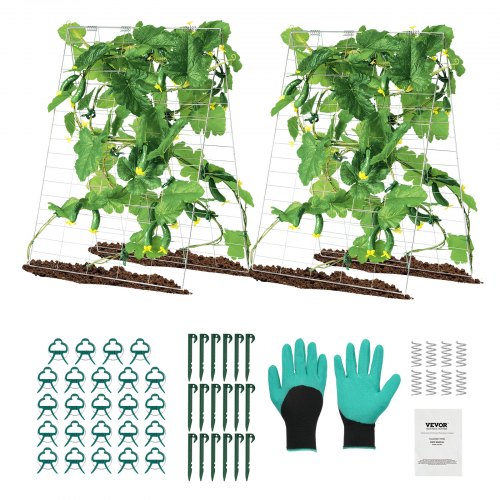
One of the most useful additions to a vegetable garden is the A frame cucumber trellis. Cucumber vines can easily climb on both sides of their inverted V-shaped growing surface, which keeps fruit hanging straight and visible during harvest. Because leaves and cucumbers stay off the wet ground, this design greatly lowers the risk of soil-borne infections. Mesh netting or wire grids are used in conjunction with powder-coated steel or rust-resistant metal frames to construct VEVOR's A frame cucumber trellis variants. Cucumber varieties like English, Persian, and pickled cucumbers require plenty of vertical space, as most models are 4 to 6 feet tall. Because of its small footprint, the A frame is a wise choice for short garden rows, container gardens, and raised beds.
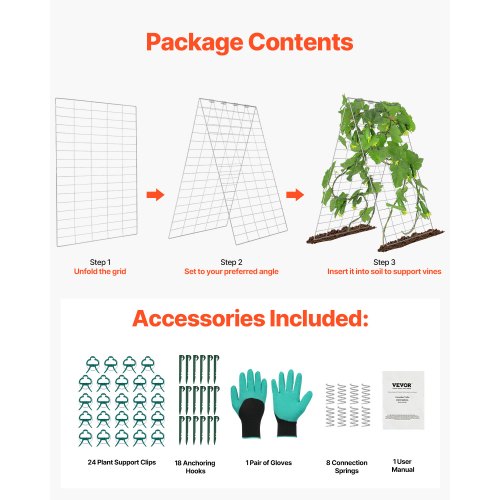
Plant your cucumber trellis seedlings near the base of each leg for optimal results. As they grow, carefully guide their tendrils onto the mesh. Because the structure is self-supporting, wall anchoring is not necessary; just place it in your bed and let the plants take care of the rest. For an even more profitable design, many gardeners also plant beans, peas, and small melons on A frame garden trellises.
Flat Panel and Wall Trellises for Flower and Vine Training
For gardeners who wish to train climbing roses, clematis, morning glories, or jasmine against a wall, fence, or garden structure, a flat panel flower trellis is the traditional option. As vines grow, they naturally cling to the grid of anchor points provided by these trellises, which are flat against vertical surfaces. There are two types of VEVOR flat panel garden trellises: fixed square-grid and extensible lattice. Expandable models are very useful because you can stretch them wide to cover an entire fence panel or compress them for tight spaces. Formal garden styles complement the cleaner, more consistent appearance of fixed-grid arrangements. The materials used in both variants are weather-resistant and can withstand several growing seasons.
Spacing is important for flowering climbers. Select a trellis that has grid openings between 4 and 6 inches so that stems can pass through without becoming constrained. The smooth edges of VEVOR flower trellis panels minimize stem abrasion, a crucial concern for delicate flowering plants. For simple attachment to masonry, siding, or wooden fences, wall-mounted variants come with pre-drilled holes or bracket systems. A flat-panel trellis adds practicality and aesthetic depth to your outdoor area, whether you use climbing roses to frame a garden entrance or flowering vines to soften a blank wall.
Vegetable Garden Trellises for Tomatoes, Beans, and Squash
Beyond cucumbers, a carefully selected trellis for a vegetable garden can change how you grow squash, tomatoes, pole beans, peas, and even small watermelons. Vertical growth increases sun exposure for all leaves, lessens ground-level pest impact, and greatly simplifies harvesting.
Tall single-panel structures, T-post designs, and multi-plant row trellises that can span entire garden beds are all examples of VEVOR vegetable garden trellises. To support full-season growth, use garden trellises at least 5 to 6 feet tall for indeterminate tomato varieties. Mesh-style or string-grid trellises, which allow lightweight vines to grasp and climb without further training, are advantageous to farmers of beans and peas.
Strength is essential for heavier fruiting crops, such as squash or small melons. The deep anchor stakes and reinforced cross-bars of VEVOR's heavy-duty metal garden trellises maintain the structure securely in place even as the plant burden grows through midsummer. As the plants get taller, you can modify the support levels using some models' movable horizontal wires. A highly effective growth system is created by combining vegetable garden trellises with drip irrigation at the base; water reaches the roots directly while the foliage remains dry, minimizing fungal problems and maintaining plant productivity far into harvest season.
Trellis for Cucumbers: Netting vs. Wire Grid Configurations
When choosing a trellis for cucumbers in particular, the surface configuration, whether netting or hard-wire grid, makes a significant difference in how straightforward harvesting is and how easily plants climb. Each choice works well in various garden settings and cucumber growing techniques. Flexible mesh, usually composed of nylon or polypropylene, is stretched between two upright pillars to create netting trellises. Cucumber tendrils need very little human assistance to grasp netting because they do so naturally and effortlessly. Lightweight, easy to install, and inexpensive to repair at the end of each season, netting offers sanitary benefits by eliminating microorganisms that accumulate on its surface. For a complete setup straight out of the box, VEVOR cucumber garden trellis netting kits come with posts and clips.
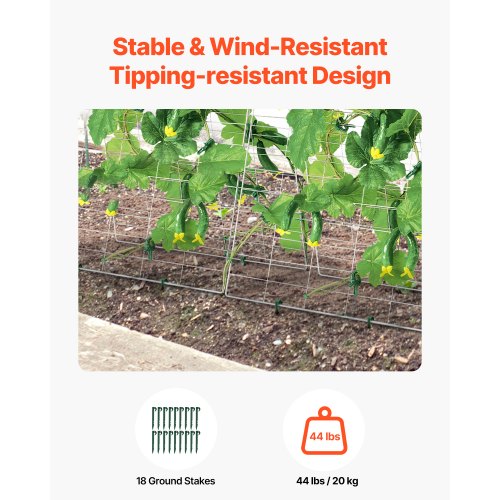
An alternative that is more durable and robust is a rigid wire-grid trellis. Unlike netting, which often sags in the middle of the season, the strong grid surface maintains its shape under the weight of several loaded cucumber vines. Additionally, wire grids are a better long-term investment for dedicated cucumber beds because they are simpler to clean and reuse year after year. A sturdy wire trellis for growing cucumbers, fixed into the soil with deep ground anchors, is a more dependable option for gardeners planting in windy areas or with exceptionally vigorous cucumber varieties. Lightweight netting solutions provide the versatility you require for container or seasonal gardens.
Material and Configuration Guide for VEVOR Garden Trellises
Your garden trellis’s longevity, stability, and compatibility with various plant species depend on its material and structural design. Selecting the appropriate combination ensures your trellis functions consistently with minimal upkeep, season after season.
Metal vs. Wood vs. Plastic: Which Material Suits Your Garden Best?
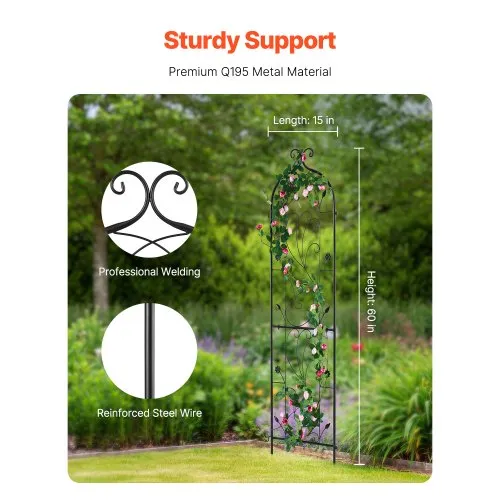
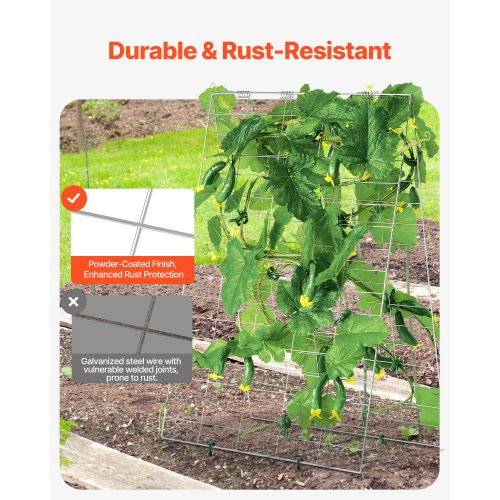
Powder-coated steel, galvanized iron, and rust-resistant metal alloys—materials designed to withstand external exposure without corroding, warping, or splitting—are the main components used to construct VEVOR garden trellises. For heavy-duty applications where structural integrity under plant load is crucial, metal garden trellises for climbing plants are the best option. Trellises made of steel and galvanized iron are resistant to rust even in damp soil, humid regions, and rainy seasons. In addition to providing an extra layer of corrosion resistance, the powder-coat finish gives the trellis a neat, appealing appearance that complements both traditional and modern garden designs.
The dark green or black coating on VEVOR metal alternatives usually blends into the landscape foliage. For rustic outdoor areas and cottage gardens, wooden trellises provide a cozier, more natural look. But without frequent sealing or staining, untreated wood deteriorates more quickly in moist soil, making it less appropriate for long-term usage. Although plastic trellises are inexpensive and lightweight, after two to three seasons, they may become brittle from prolonged UV exposure, reducing structural stability. A powder-coated metal trellis from VEVOR offers the best value, durability, and aesthetics for most gardeners who grow veggies or support large blooming climbers. It is designed to survive multiple growing seasons with no maintenance.
Height, Spacing, and Configuration: Matching the Trellis to Your Space
When selecting garden trellises, the appropriate proportions and configuration are just as crucial as the right material. A trellis that is too narrow for your flower garden or too short for your cucumber variety will not provide the support your plants require. Garden trellises from VEVOR come in a variety of heights, ranging from small 3-foot panel trellises ideal for decorative flowers and dwarf bean varieties to larger 6- to 7-foot freestanding structures ideal for robust climbing cucumbers, indeterminate tomatoes, and tall flowering vines. Choose a trellis with a footprint that fits inside the bed without overcrowding the root zone for raised bed gardening by carefully measuring the internal growing area.
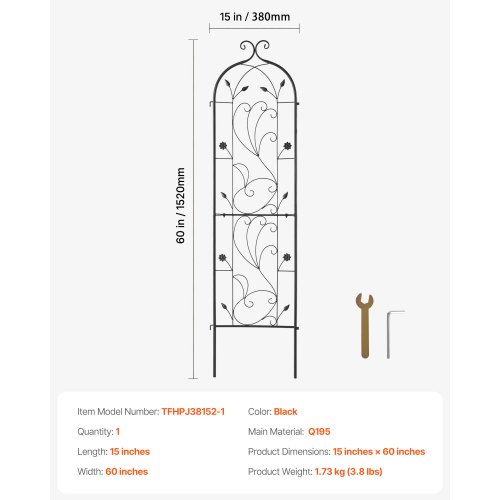
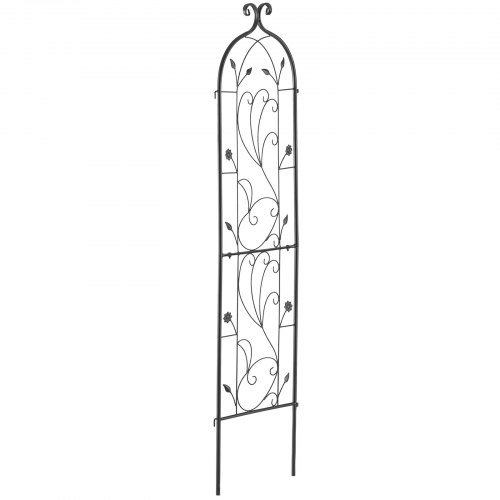
Single-panel, double-panel, A frame, fan-shaped, and arch configurations are available. Fan-shaped trellises are ideal for climbing clematis and roses that expand outward as they get taller. Arch arrangements support vines on both sides simultaneously, creating striking garden paths. For vegetable garden trellises where heavy fruiting crops require bilateral support, A frame designs remain the most practical. To prevent falling during wind or under plant strain, taller structures should have anchor posts that penetrate at least 8 to 12 inches into firm soil. For dependable, worry-free installation, VEVOR designs incorporate ground anchors that are proportionate to each trellis height.
Shop VEVOR Garden Trellises for Every Plant and Growing Space
VEVOR offers heavy-duty vegetable garden trellises, A frame cucumber trellises, and ornamental flower trellis panels at fair, affordable prices. With dependable after-sales support and easy returns, our structures are designed to withstand several seasons. Browse the entire VEVOR collection to locate the ideal trellis for your area and grow more intelligently this season, whether you are a serious grower or just a weekend gardener.
FAQs
What size trellis works best for cucumbers?
To allow complete vine growth, a cucumber trellis needs to be at least 5 to 6 feet tall. Your row length determines the width. For most conventional and container cucumber cultivars, an A frame or vertical panel design works well.
Can I use VEVOR garden trellises in raised beds?
Indeed. Compact A frame and panel trellises that suit standard raised beds are available from VEVOR. Make sure the trellis height is appropriate for your climbing plant type, and select models with small ground anchors that will not damage bed liners.
Are VEVOR garden trellises rust-resistant?
Indeed. The majority of VEVOR metal garden trellises feature galvanized or powder-coated finishes that effectively resist rust and corrosion. They are designed for year-round use outside in a variety of weather conditions, including rain, humidity, and seasonal soil wetness.
Can one trellis support multiple climbing plants?
Yes, as long as the structure is sufficiently wide and robust. Three to five bean or cucumber plants spaced 10 to 12 inches apart along the base of a 4 to 6-foot-wide panel or A frame garden trellis can be supported without becoming overcrowded.
How do I anchor a garden trellis in windy conditions?
In firm soil, drive the provided ground stakes at least 10 to 12 inches. Use extra U-shaped garden pegs or secure the trellis to an existing fence post with weatherproof rope for extra support in highly exposed situations.
