Hoist Support Arm
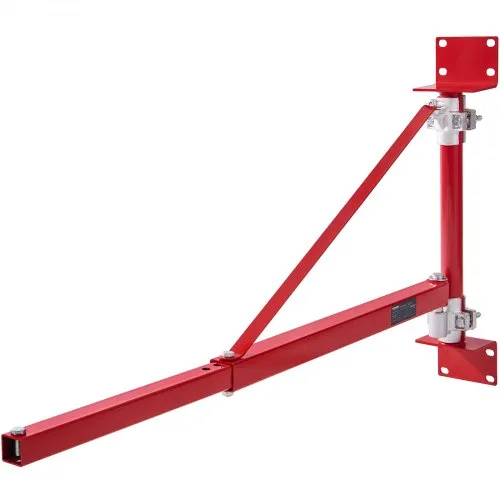


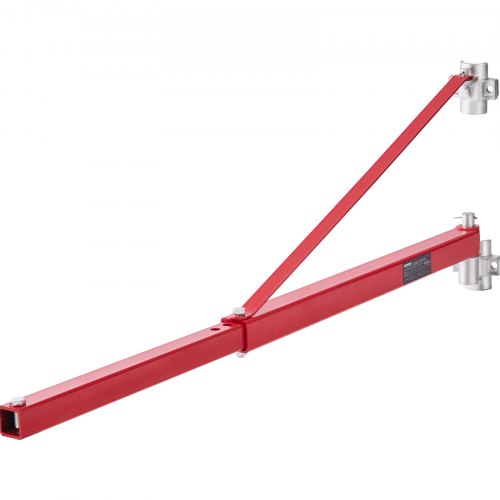


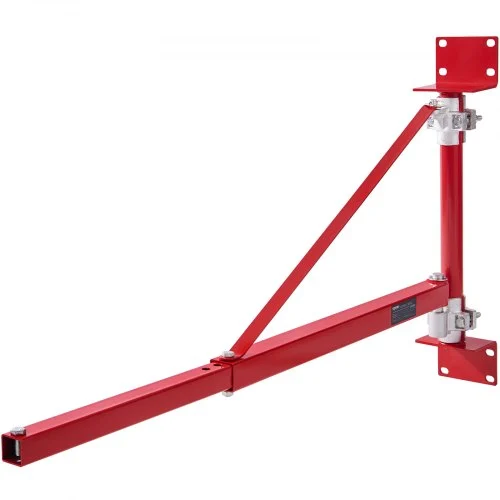


Results for Hoist Support Arm
Explore VEVOR's full selection of hoist support arms, designed to provide stable, dependable support for lifting overhead loads in workshops, warehouses, construction sites, and scaffolding installations. Our selection has everything you need, whether you're a contractor overseeing material lifts in a multi-story building or a workshop operator working with overhead equipment. We have small swing hoist arms for fixed workshop setups and heavy-duty scaffold hoist arms made for tough use on the job site. Find lifting equipment with high weight limits, a variety of mounting options, long-lasting steel construction, and useful adjustments to keep your setup safe on every job.
VEVOR Hoist Support Arms for Safe, Stable Overhead Lifting Across Every Application
Are you looking for hoist support arms that can safely lift heavy loads across a variety of mounting positions? You can use VEVOR hoist support arms to provide strong, steady support for electric hoists, chain blocks, and manual lifting systems in workshops, factories, and construction sites. You can choose the right VEVOR model for your load needs and placement area, whether you need an electric hoist support arm for a fixed workshop gantry or a scaffolding hoist arm for moving materials on a busy construction site.
Weight Capacity & Mounting Compatibility: The Core of Reliable Hoist Support Arms
The two specifications that determine whether a hoist support arm is suitable for your lifting application are its weight capacity and mounting compatibility. If you get both of these things right, your arm will be able to safely lift the load, attach to your existing structure, and stay within its rated working limits. VEVOR hoist support arms are available in a wide range of sizes and configurations to meet real-world lifting requirements.
Weight Capacity Ratings and Safe Working Load Requirements
A hoist support arm's weight capacity, also known as its Safe Working Load (SWL), is the maximum weight the arm can safely lift under specified operating conditions. VEVOR hoist support arms can support up to approximately 2,200 pounds, making them ideal for heavy-duty scaffold hoist arms and industrial swing hoist arms used in tough manufacturing and building sites. Smaller workshop models typically support loads of up to 500 pounds.
It is a safety requirement, not a suggestion, that you choose a hoist support arm whose size matches or exceeds the largest load you expect to put on it. Lifting tasks usually involve unsteady or uncontrolled loads in real life. During lift start, load swing, and positioning, dynamic loading generates forces exceeding the object's steady weight. When choosing a hoist support arm, it is recommended to maintain at least a 25% safety margin above your highest expected load.
When installing scaffolding hoist arms on busy construction sites, load ratings must account not only for the weight of the material being lifted but also for the hoist unit's weight. The listed SWL for VEVOR scaffold hoist arm models accounts for the equipment's total weight, so it reflects the arm's actual lifting capacity rather than a theoretical number. Before choosing a model, you should always compare the arm's SWL to the total system load, including the hoist, rigging gear, and the lifted material.
Mounting Compatibility Across Installation Environments
There are many ways to mount a VEVOR hoist support arm, including on a wall, post, scaffolding tube, or beam clamp. This allows operators to install a hoist arm onto an existing structure without requiring custom fabrication. You can use bolt-through or anchor bolts to connect wall-mounted swing hoist arms directly to masonry, concrete, or steel-framed walls. This makes them a useful choice for fixed lifting points in workshops and warehouses.
Standard 48.3mm scaffolding tubes are the international standard for modular scaffolding systems. Scaffold hoist arm models are designed to clamp onto these tubes using compatible coupler hardware. This lets the arm be repositioned along the tube as the lift point requirements change during a construction project. This tube-clamp mounting method allows VEVOR scaffold hoist arms to connect directly to existing site scaffolding without requiring a separate support structure. This technique saves time and money on setup.
VEVOR's electric hoist support arm models are rated and made to handle the combined dynamic loading of powered hoisting. This includes the additional forces generated by motor-driven lifting acceleration, which exceed the equivalent load of a manual lift. If you choose a VEVOR electric hoist support arm that is approved for powered hoist use, you can be sure that the arm's structural welds, pivot hardware, and mounting points are made to handle the changing loads that come with using an electric hoist, not just static or manually paced loads.
Load Distribution and Structural Integrity Under Dynamic Lifting Conditions
How a hoist support arm distributes load through its structure to the mounting point is just as important as its maximum weight capacity. If you don't design an arm well, stress builds up at the root weld or mounting bracket, which can cause it to fail well below the stated SWL when the load is changing. With gusset-reinforced root connections and wide-flange mounting plates, VEVOR hoist support arms spread the load across the entire bracket area rather than concentrating it at a localized weld area.
When the swing hoist arms rotate about a vertical pivot, they place additional torsional stress on the frame that holds the hoist up when it moves laterally. Built with appropriately rated thrust bearings and machined pivot pins, VEVOR swing hoist arm pivot assemblies can accommodate both vertical lifting loads and the torsional forces generated during rotation. This means the swing can move smoothly and controllably, even when fully loaded, without any binding or lateral play that could destabilize the load.
On installations of VEVOR scaffold hoist arm clamp assemblies, the load-spreading saddle plates spread the clamping force over a larger section of the scaffold tube. This reduces the likelihood that the tube will deform under peak dynamic loading. This is an important engineering consideration when installing older or mixed-gauge scaffold tubes, where the tube wall thickness may vary across the structure.
Matching Arm Reach to Your Lift Point Requirements
How far a hoist travels horizontally from its mounting point is determined by its reach, also called outreach. This directly affects whether the arm can move things where they need to go without hitting the mounting wall or structure. There are different types of VEVOR hoist support arms, with reach sizes ranging from approximately 3 feet for small workshop swing hoist arms to about 6 feet for typical heavy-duty scaffold hoist arm models made for lifting materials over parapet walls and into openings on upper floors on building sites.
When you match the outreach to the geometry of your lift, you avoid two common installation mistakes: choosing an arm that is too short to clear the structure below the lift point or choosing an arm that is too long, creating a moment arm at the mounting bracket that is too much for the structure to handle. VEVOR publishes outreach dimensions and moment arm loads for each hoist support arm type. This provides the necessary information to verify structural suitability before installation, rather than discovering limitations afterward.
Material & Adjustability in VEVOR Hoist Support Arms
How long a hoist support arm lasts under repeated heavy loads, and how well it fits different installation configurations and lift point requirements, depend on the quality of the material it is made of and how easily it can be adjusted. The VEVOR hoist support arms are made of structural steel and feature adjustable arms that let them be used in both set installations and situations where the lift point needs to move as the job progresses.
Structural Steel Construction and Surface Protection
The structural steel that the VEVOR hoist support arms are made of is the same type used in certified lifting equipment in the building and industrial sectors. For overhead lifting jobs, structural steel has the right mix of tensile strength, ductility, and weld integrity. It resists deformation under high dynamic loads and can absorb energy during rapid load changes without failing prematurely. It is important for VEVOR's scaffold hoist arms and swing hoist arms to have the correct wall thickness and steel section sizes so they meet the approved SWL and have the appropriate structural safety factors applied across the full outreach range.
Some VEVOR hoist support arms have powder coatings or zinc-based primers that protect the surface and prevent rusting on building sites, in outdoor environments, and in humid workshops. For scaffolding hoist arms and models that are out in the weather on open construction sites, a corrosion-resistant surface treatment helps maintain structural integrity over long-term outdoor installations, reducing the need for frequent maintenance or recoating during the project.
Height and Angle Adjustability for Flexible Installation
With VEVOR's hoist support arms, you can adjust the installation height and outreach angle without needing to make any special parts or perform any extra structural work. Some models have telescoping boom sections that let you set the outreach length at several positions. For example, the boom can be shortened for small lifts or extended for wider outreach needs. The chosen length is then locked in place with a pin-lock or bolt-clamp adjustment, even when the machine is fully loaded.
Support arm and swing hoist models from VEVOR feature a vertical angle adjustment, allowing you to set the arm at a small upward angle relative to the horizontal. This prevents the structure from deflecting excessively under load, which could otherwise cause the hook point to drop below the intended lift line. This adjustable deflection feature is especially useful in large setups, where the arm's deflection at full stretch would normally make it hard to accurately place the lift point.
Why Choose VEVOR Hoist Support Arms?
At price points suitable for building, industrial, and workshop use, VEVOR hoist support arms offer high safe working load ratings, a wide range of mounting options, long-lasting structural steel, and easy adjustments. Our range includes heavy-duty scaffolding hoist arm models for busy building sites and small swing hoist arms for fixed lifting points in workshops. The range includes models suitable for a variety of load requirements and installation environments. It's easy to choose the right arm when you have reliable after-sales help and clear SWL specifications. Get VEVOR hoist support arms today to create a safe lifting system that works for any job.
FAQs
What is the safe working load of a hoist support arm?
The safe working load is the maximum weight the arm can safely support when working normally. Always choose a VEVOR hoist support arm that is rated at least 25% heavier than the heaviest load you expect to lift. This is because the forces acting on the lift during start-up, load swing, and placement are greater than the object's static weight.
Can the VEVOR scaffold hoist arms mount to standard scaffolding tubes?
Yes, both the VEVOR scaffold hoist arm and the scaffolding hoist arm models are made to clamp onto standard 48.3mm scaffolding tubes using compatible coupler hardware. This means they can be used with the existing scaffolding on the job site without needing a separate support structure.
What is the difference between a swing hoist arm and a fixed hoist support arm?
A vertical pivot makes the arm of a swing hoist turn, which lets the hoist move laterally across an angle for easy load placement. There is a single steady lift point right below a fixed hoist support arm. Swing arms are good for moving loads horizontally, while fixed arms are best for lifting things vertically.
Are VEVOR electric hoist support arms rated for powered hoist use?
Yes, VEVOR electric hoist support arm types are designed and rated to handle the dynamic loading profile of a powered hoist, accounting for the additional forces generated by motor-driven lifting acceleration, which are higher than those of the same manual lift loads.
How do I choose the right outreach length for my application?
Find out how far away your mounting point is from the lift spot you need. Pick a VEVOR hoist support arm that can reach that distance or more, but not more than the moment arm load that your mounted structure can safely handle. To help with this estimate, VEVOR posts the outreach dimensions and bracket loads for each model.