Inspection Cameras










































Results for Inspection Cameras
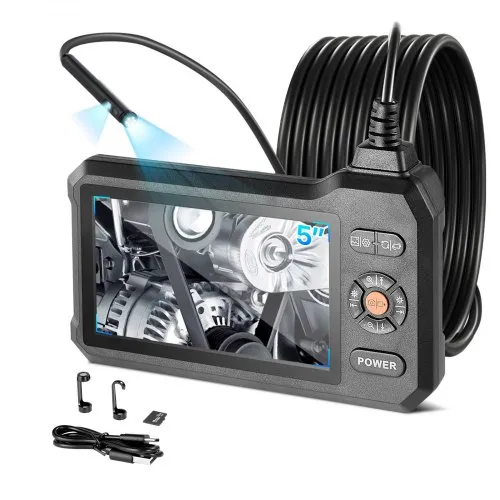
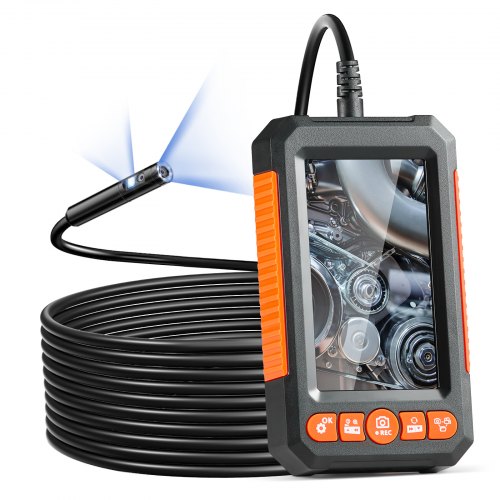
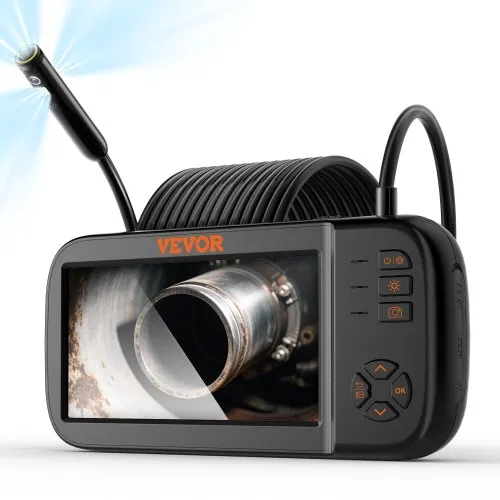
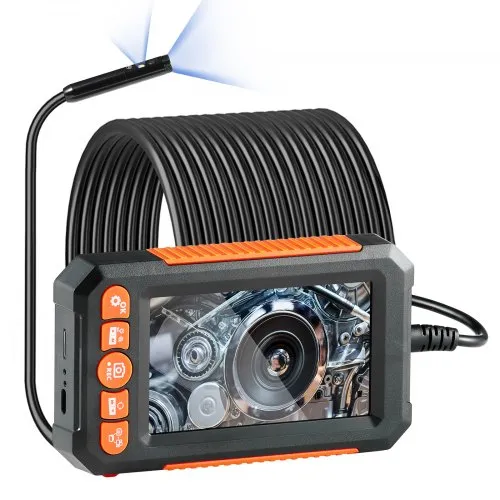
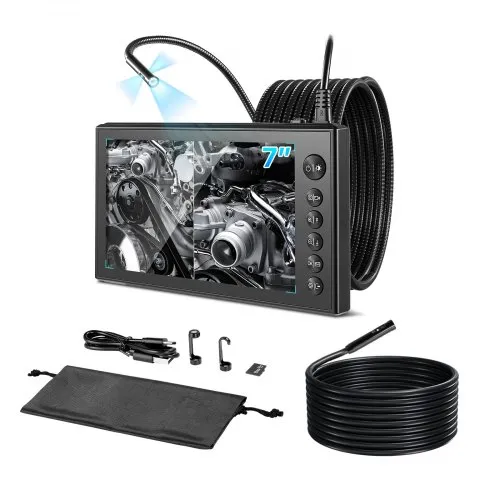
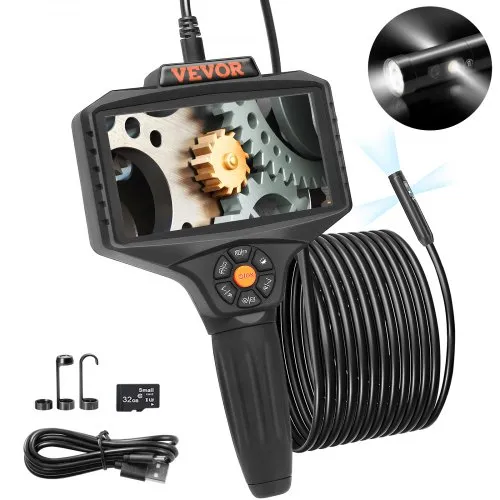
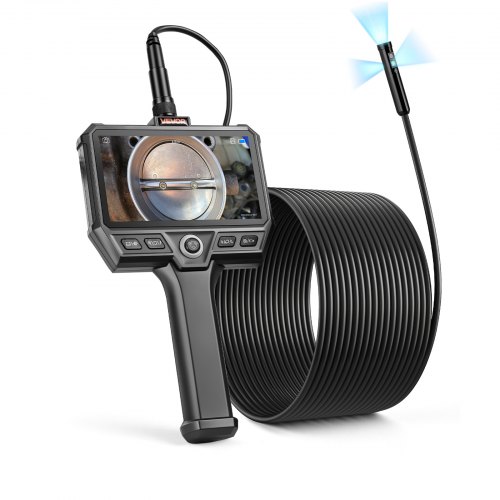
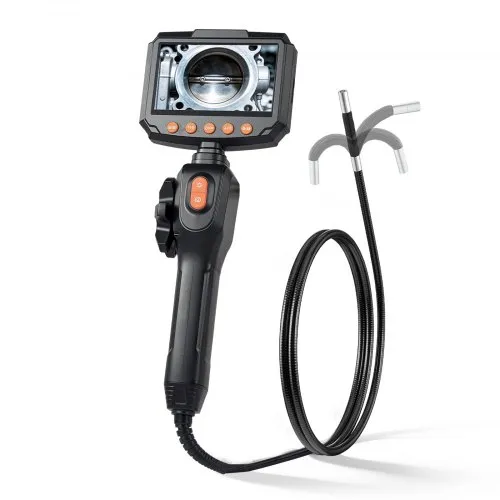
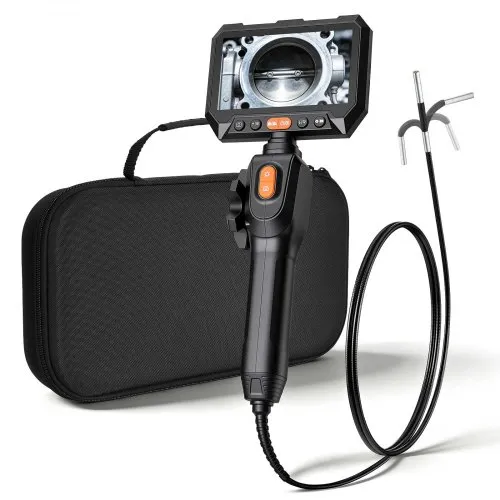
Inspection cameras are handheld video tools that put a small camera and LED lights on the end of a cable, so you can see inside spaces you cannot reach or open. This category covers articulating borescopes, single, dual and triple-lens endoscope cameras, rotating-probe cameras and smartphone endoscopes. They are used to inspect engines, drains, pipes, walls, ducts and machinery. The probe is pushed into the space while live video shows on a built-in screen or phone, and most models record photos and video. Unlike drain snakes or mirrors, they show the problem without taking anything apart.
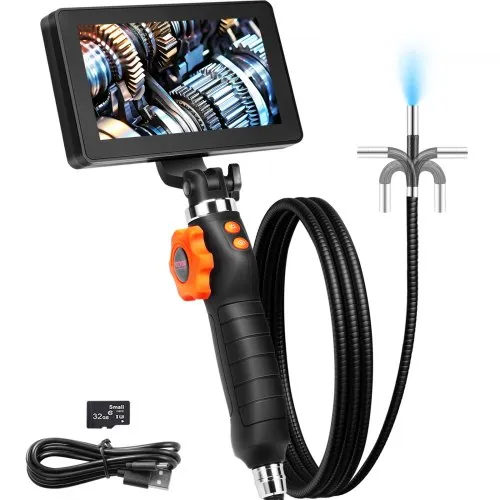
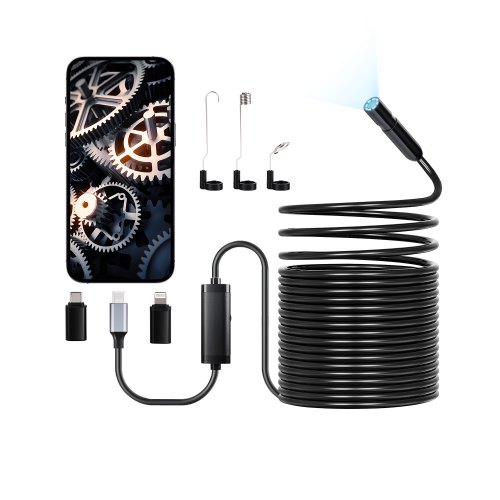
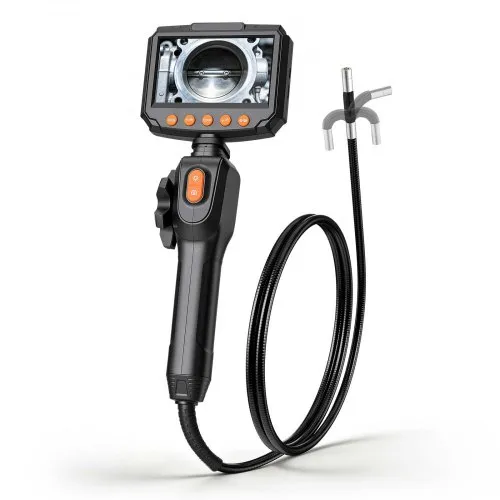
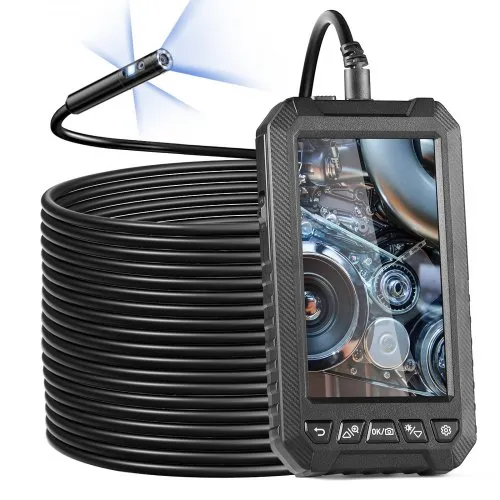
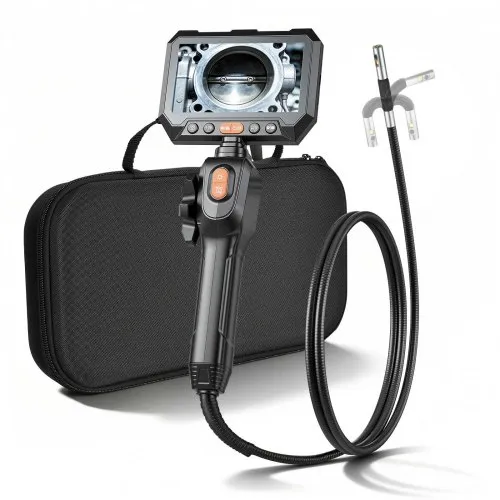
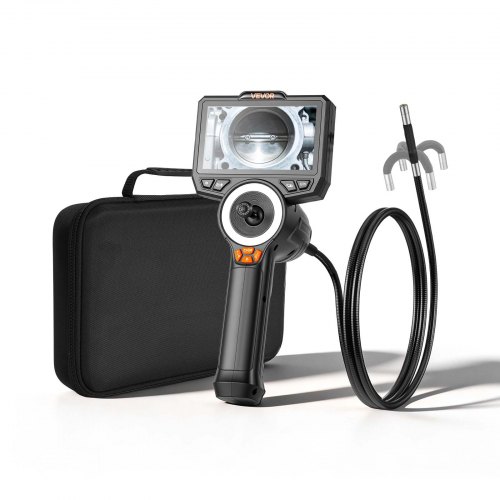
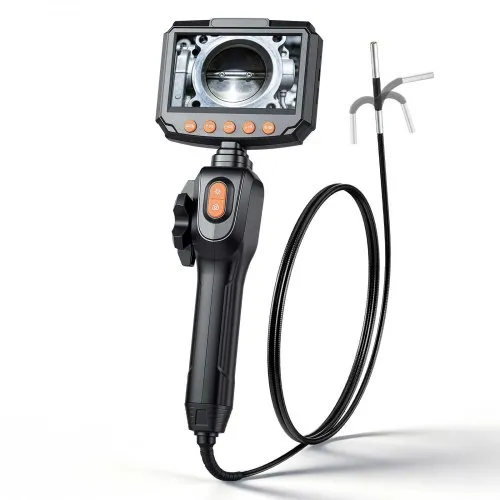
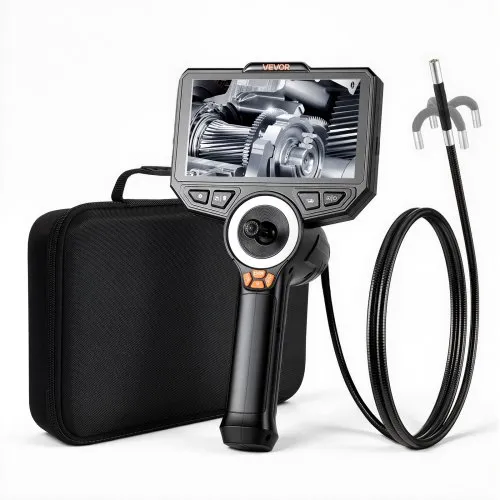
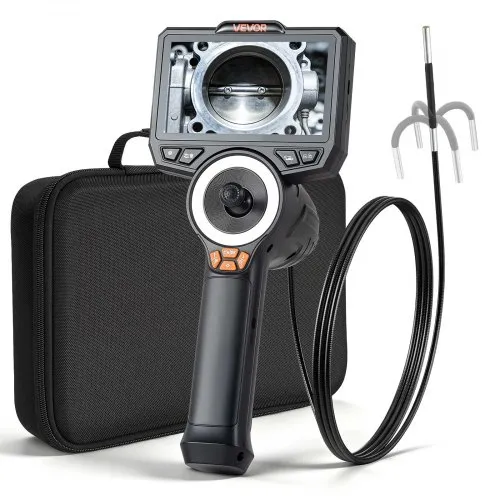
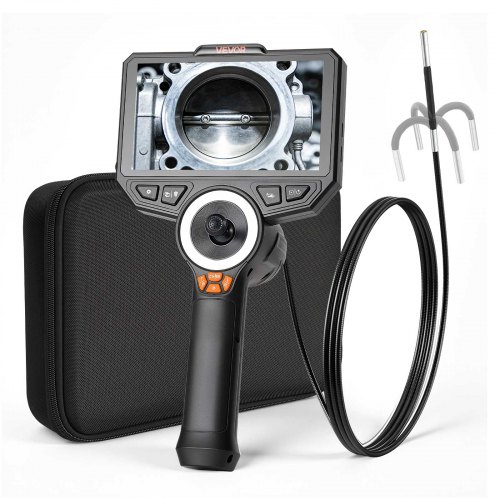
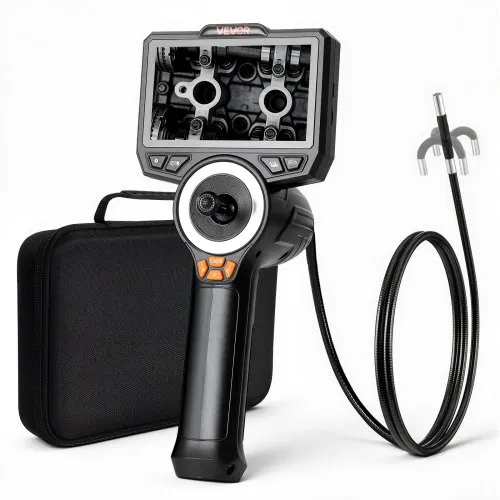
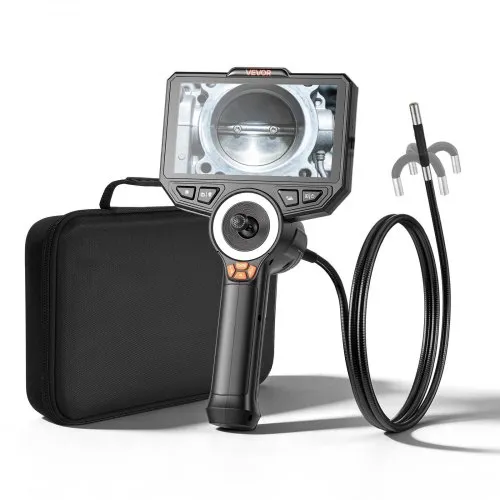
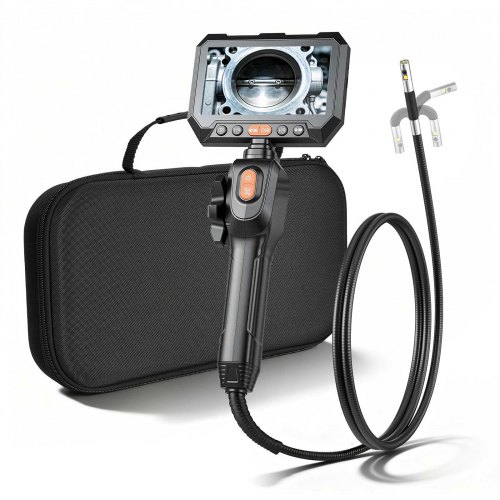
Articulating borescopes steer the tip by joystick, two ways through 180° or four ways through 360°, with probes as slim as 3.9 mm for engine cylinders and tight machinery. Dual-lens inspection cameras add a side lens to switch between front and side views without turning the cable. Triple-lens borescopes add two side lenses with split-screen viewing for pipes and walls. Semi-rigid cables run from 4.9 ft for automotive work up to 49.2 ft for drains and long runs, and screens range from 4.3 to 7 in. A rotating-probe borescope turns its view through 360°. For lighter jobs, smartphone endoscopes connect to Android and iOS devices. Most models are IP67 waterproof and record to a 32GB card.
Five things decide which one fits:
- Probe diameter: how small an opening the camera can enter, from 3.9 to 8 mm.
- Articulation: whether the tip steers, and in how many directions.
- Camera lenses: front only, or added side lenses for wider coverage.
- Cable length: how far the probe reaches, from 4.9 to 49.2 ft.
- Cable type: flexible snake, semi-rigid that holds its shape, or a mix of both.
Browse all inspection cameras to compare models side by side, or step back to the wider power tools range.
Inspection Camera Types at a Glance
| Type | How It Works | Best For |
|---|---|---|
| Articulating borescopes | Joystick bends the camera tip to steer around corners | Engine cylinders and tight machinery |
| Dual-lens inspection cameras | Switches between a front lens and a side lens | Checking pipe walls and joints |
| Triple-lens borescopes | Front and two side lenses with split-screen view | Drains, sewer lines and long pipe runs |
| Rotating-probe borescopes | Probe turns its view a full 360° inside the space | Walls, cavities and engine bays |
| Smartphone endoscopes | Connects to an Android or iOS phone instead of a screen | Quick home and DIY checks |
VEVOR Inspection Cameras for Borescope, Endoscope & Multi-Lens Tools for Every Inspection Task
Having trouble figuring out what's wrong when you can't see it? VEVOR inspection cameras give you a clear, well-lit picture of things that are difficult or impossible to see with the naked eye. VEVOR has the right inspection camera for the job, whether you need an endoscope camera with light for plumbing inspections, a dual lens borescope for engine diagnostics, or a triple-lens borescope for wide-angle industrial surveys. These cameras are built for durability and come with after-sales support.
Camera Types and Lens Configuration for Choosing the Right Inspection Camera
When choosing an inspection camera, the most important thing is to ensure the camera and lens configuration are right for your needs. VEVOR offers borescopes, endoscopes, dual-lens, and triple-lens models, each designed for different inspection depths, angles, and environments. Knowing the differences will help you buy with confidence and get accurate results from the start.
Borescopes with Rigid and Flexible Inspection for Tight Spaces
Borescopes are among the most flexible types of inspection cameras available. They can be used in the automotive, aerospace, plumbing, and construction industries to inspect pipes, engines, walls, and other components without disassembling them. The insertion tubes on VEVOR borescopes can be semi-rigid or fully flexible and range in length from 1 meter to more than 5 meters. This design lets you reach places that many other tools cannot.
VEVOR borescope inspection cameras feature LED ring lights at the end of the probe that keep the area illuminated even in complete darkness. Adjustable brightness settings prevent areas with metal or reflective surfaces, such as engine cylinders or the insides of pipes, from getting too bright. Most VEVOR borescopes have probe diameters between 5.5mm and 8.5mm, which means they can be used with most standard access points in homes and businesses.
Select VEVOR borescope inspection cameras with articulating control. These cameras have a 4-way joystick that lets you steer the probe and bend the camera head up to 180 degrees in any direction. This feature is especially helpful when you need to go around bends in pipes or look behind walls without cutting holes. A VEVOR borescope inspection camera is a good investment if you need to perform frequent close-up inspections in various locations.
Endoscopes for Compact and Portable Inspection Camera Solutions
The endoscopes in VEVOR's inspection camera line are the smallest and easiest to use. HVAC technicians, electricians, home inspectors, and DIYers love VEVOR endoscopes because they are small and easy to use with one hand. They are a great portable diagnostic tool that doesn't take up as much space as a larger borescope unit.
The VEVOR endoscope inspection camera has an adjustable LED light built right into the probe head. It ensures you get clear, shadow-free pictures in tight spaces like wall cavities, drain pipes, and air ducts. Most VEVOR endoscopes send live video to a separate handheld monitor or connect directly to a smartphone or tablet via USB or Wi-Fi. It means you don't need a separate screen.
The cables on VEVOR's endoscope inspection cameras are usually between 1 and 3.5 meters long, which is enough for most home inspection jobs. The waterproof probe ratings, usually IP67, mean the probes can be fully submerged in water pipes and drains without breaking. The VEVOR endoscope inspection camera with light is a strong choice for professionals who need to check things on the go and get reliable results quickly. It's lightweight, rechargeable, and easy to store.
Dual Lens Inspection Cameras for See More Without Repositioning
VEVOR's dual-lens borescope and dual-lens endoscope inspection cameras are an excellent choice for inspections that require viewing both the front and the side simultaneously. These models have two separate camera lenses on the probe head, each at a different angle. It lets you take pictures from the front and the side without having to pull the probe out and move it.
In automotive diagnostics, VEVOR dual-lens inspection cameras are especially useful because a mechanic may need to see a cylinder wall straight on while also checking the valve seat from the side. You can see both feeds in real time or save them separately for later use on VEVOR monitors that support split-screen or switchable display modes.
The VEVOR dual lens endoscope camera with light is just as waterproof and bright as single-lens models, but it offers two viewing angles for greater flexibility. The probe diameters on dual-lens models are slightly larger, usually between 8mm and 11mm, so that both lenses can fit without damaging the structure. The VEVOR dual-lens inspection camera reduces inspection time while improving diagnostic accuracy, making it a great choice for professionals who want to be thorough and efficient on every job.
Triple Lens Borescopes for Maximum Coverage for Complex Inspections
The triple-lens borescope is the best inspection camera VEVOR makes. It's a professional-grade tool for complicated inspections that need more than one or two lenses. The triple-lens borescope has three separate camera lenses that let inspectors see in front of, to the side of, and behind the probe tip simultaneously. It provides near-360-degree awareness around the tip.
VEVOR's triple-lens borescope inspection cameras are designed for industrial use, including pipeline inspection, turbine maintenance, weld verification, and structural surveying. Missing a defect from just one angle could have serious consequences. Independent LED clusters for each viewing direction support the three-lens array. It ensures that all three image feeds have the same even lighting.
Even though VEVOR triple-lens inspection cameras are very advanced, they are still designed to be easy to use. Dedicated monitors can display all three feeds simultaneously or let the user switch to a full-screen view of any one lens. Probe insertion tubes are made of semi-rigid, corrosion-resistant materials. They retain their shape even after long use. The VEVOR triple-lens borescope inspection camera is the professional standard for inspection work that requires maximum coverage and no blind spots.
Choosing an Inspection Camera by Job
The table below matches each job's access opening, reach and bends to the camera on this page that handles them.
| Job | Access Opening | Required Reach | Cable Needed | Looks Around Bends | Recommended Camera | Main Limitation |
|---|---|---|---|---|---|---|
| Engine cylinders through spark plug holes | Small holes that need a 3.9 mm probe | Under 4.9 ft | Flexible snake | Yes, 4-way through 360° | Articulating Borescope, 3.9 mm Ultra Slim Lens | Only 4.9 ft of cable and a 4.5 in screen at 854 x 480 |
| Engine bays and under-vehicle checks | Openings wider than 8 mm | Under 4.9 ft | Flexible snake | Yes, 4-way through 360° | 4-Way Articulating Endoscope, True 1080P | The 8 mm head needs a larger opening than the 3.9 mm model |
| Behind walls and ceilings | Holes of about 9 mm | Up to 16.4 ft | Semi-rigid, holds its shape when pushed | No, a side lens views sideways instead | Dual Lens Endoscope Camera, 16.4 ft | No steering, and pipes need to be at least 1.5 to 2 in wide for smooth bends |
| Drains, sewer lines and ducts | Entries of 8.5 mm or more | Up to 49.2 ft | Semi-rigid, pushes through long runs | No, two side lenses cover the walls | Triple Lens Borescope, 49.2 ft | Cannot steer, so the cable must be pushed around each bend |
| Machinery with one tight bend | Openings of 6.4 mm or more | Under 4.9 ft | Semi-rigid with a flexible section | Yes, 2-way through 180° | Two-Way Articulating Borescope, 6.4 mm | Steers left and right only, not 360° |
Cable Length, Display Options, and Features to Consider for Your Inspection Camera
The cable length, display type, recording capability, and connection options all affect how useful the tool will be in your specific work environment. Before you make your final decision, think about these things.
Choosing the Right Cable Length for Your Inspection Needs
When you buy an inspection camera, one of the most important specs to consider is the cable length. VEVOR sells inspection camera cables: 1 meter for small handheld endoscopes and 10 meters for deep pipeline borescopes. If you choose a cable that is too short, you won't reach your target. Choosing one that is too long means you'll have to deal with extra cable in tight spaces.
A 1 to 3.5 meter cable on a VEVOR endoscope inspection camera is usually long enough for general home use, like checking HVAC ducts, wall cavities, or drain pipes. When checking engine cylinders or exhaust systems, automotive technicians usually find that 1 to 2-meter semi-rigid cables are best for control and movement. Plumbers or contractors who need to inspect sewer lines, underground conduits, or long pipe runs can use VEVOR borescope inspection cameras with 5- to 10-meter flexible cables. These cameras have the reach they need without losing image quality or LED brightness at the probe tip. Before choosing the length of your cable, always measure the deepest point you might need to inspect. This simple step can help you avoid costly mistakes.
Display, Recording, and Connectivity Features Worth Knowing
Modern VEVOR inspection cameras can do much more than just show you live footage. Many models come with built-in recording, photo capture, Wi-Fi streaming, and separate LCD monitors, making it easier to document and share inspections. Knowing which features are important for your work will help you pick the right inspection camera without overspending on features you are unlikely to use.
Entry-level VEVOR inspection cameras connect to a laptop or smartphone via USB and use a companion app to show and record live video. Mid-range models come with a 4.3-inch or 5-inch IPS LCD that records to an SD card. It means they can work completely on their own without a phone or a laptop nearby. High-end VEVOR inspection cameras feature Wi-Fi, letting you stream video to tablets and share inspection footage with clients or coworkers in real time from anywhere. Some VEVOR models feature built-in timestamp overlays and video annotation tools, making it much easier for professional inspectors to write inspection reports. Set up your VEVOR inspection camera to work the way you do, and it may pay for itself over time.
Best-Seller Comparison
Compare the five best-selling inspection cameras below by the five factors above: probe diameter, articulation, camera lenses, cable length and cable type.
| Product | Probe Diameter | Articulation | Camera Lenses | Cable Length | Cable Type |
|---|---|---|---|---|---|
| Articulating Borescope, 3.9 mm Ultra Slim Lens | 3.9 mm | 4-way, 360° | Single front lens | 4.9 ft | Flexible snake |
| 4-Way Articulating Endoscope, True 1080P | 8 mm | 4-way, 360° | Single front lens | 4.9 ft | Flexible snake |
| Dual Lens Endoscope Camera, 16.4 ft | 8 mm | None (semi-rigid cable) | Front and side | 16.4 ft | Semi-rigid, holds its shape |
| Triple Lens Borescope, 49.2 ft | 8 mm | None (semi-rigid cable) | Front and two side | 49.2 ft | Semi-rigid, holds its shape |
| Two-Way Articulating Borescope, 6.4 mm | 6.4 mm | 2-way, 180° | Single front lens | 4.9 ft | Semi-rigid with a flexible section |
Shop VEVOR Inspection Cameras for Clear Results Every Time
VEVOR inspection cameras can be used for anything from quick checks of home drains to complicated surveys of industrial pipelines. They come with borescopes, endoscopes, dual-lens, and triple-lens options. Professionals and DIYers alike trust VEVOR because of its low prices, sturdy construction, and reliable after-sales support. Check out the full line of VEVOR inspection cameras today to get the visibility your work needs.
Frequently Asked Questions
What is the difference between a borescope and an endoscope inspection camera?
Borescopes are usually longer and stiffer, and are used for deep or industrial inspections. Endoscopes are smaller and more flexible, making them better suited for shorter-range jobs such as plumbing, HVAC, and home inspections.
Are VEVOR inspection cameras waterproof?
Most VEVOR inspection camera probes are IP67 waterproof, allowing them to be fully submerged in water pipes and drains. Before using, always check the waterproof rating on the product page.
Can I connect a VEVOR inspection camera to my smartphone?
Yes. Many VEVOR inspection cameras can connect via USB or Wi-Fi, so you can watch and record live video on your smartphone using an app compatible with them. Some models also have an LCD screen built in.
What cable length do I need for a drain or sewer pipe inspection?
A cable length of about 5 to 10 meters is often suitable for checking sewer and drain lines. These lengths of VEVOR borescope inspection cameras come with flexible, waterproof cables that work well in pipes.
Do VEVOR inspection cameras record video and photos?
Yes. Most VEVOR inspection cameras can record video and capture still images. Models with built-in monitors can do this with an SD card, and models that connect to a smartphone or laptop app can do it too.
Can I use a VEVOR inspection camera for both residential and commercial plumbing?
Yes. VEVOR's long-cable models suit both. The triple lens borescope with 49.2 ft cable reaches deep into commercial drain runs, while 16.4 ft dual-lens models handle home sinks and toilets. Both are IP67 waterproof.
How do I choose the best borescope or snake camera for home inspections?
Match cable length and probe size to the job. A 10 to 16.4 ft semi-rigid cable suits walls and drains, and a dual-lens camera adds side views. VEVOR's 16.4 ft dual lens endoscope camera is a practical all-round choice for homes.
What features should I look for in an automotive inspection camera?
Look for a slim probe, articulation, a clear screen and good lighting. VEVOR's articulating borescope has a 3.9 mm probe that fits spark plug holes, 4-way 360° steering, 8X zoom and six adjustable LEDs.
Can you recommend the best remote inspection cameras for hard-to-reach areas?
For tight, twisting spaces, choose an articulating borescope you can steer. VEVOR's 4-way articulating endoscope turns through 360°, and its slimmer 3.9 mm model fits openings that larger probes cannot reach.
Which borescope camera offers the best image quality for industrial inspections?
Look for a 1080P lens, an IPS screen and adjustable lighting. VEVOR's industrial borescopes use 1920 x 1080 lenses, and its articulating borescope with 6 in screen adds a 7000mAh battery for long shifts.
What are the main differences between videoscopes and borescopes?
A videoscope is a borescope with a camera at the tip and a screen for live video, while older borescopes used lenses or fiber optics to view directly. VEVOR's borescopes are all video models with built-in screens.
How do I choose the right duct inspection camera?
Choose a semi-rigid cable long enough to reach the run, bright LEDs and side lenses to see the duct walls. VEVOR's triple lens endoscope with 32.8 ft cable pairs an ultra-rigid cable with three lenses and 8 + 2 lights.