Lift Tables








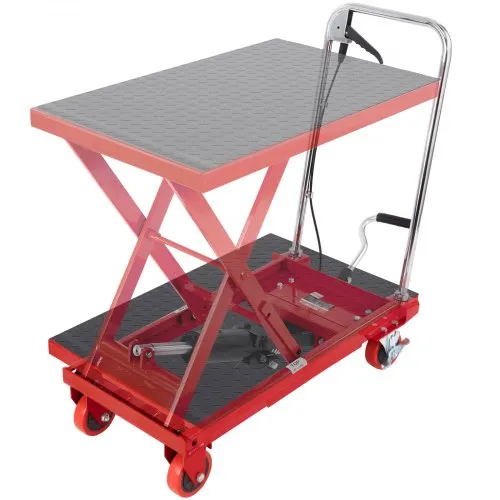


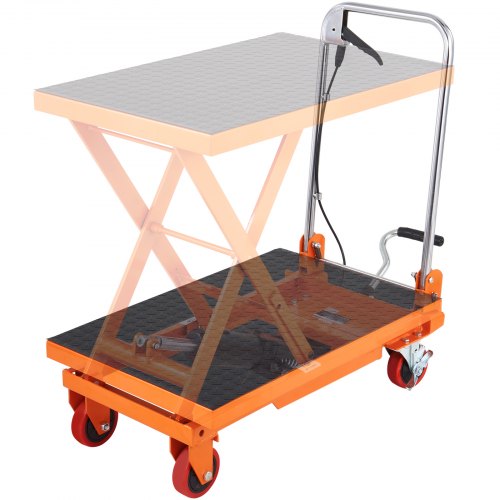


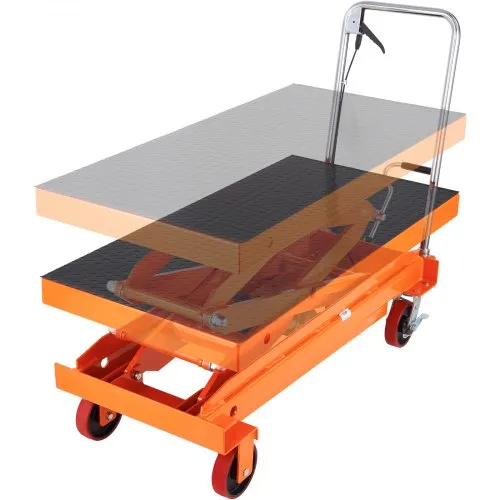


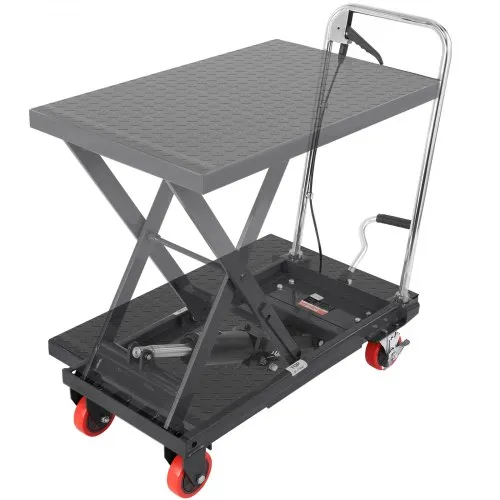








Results for Lift Tables
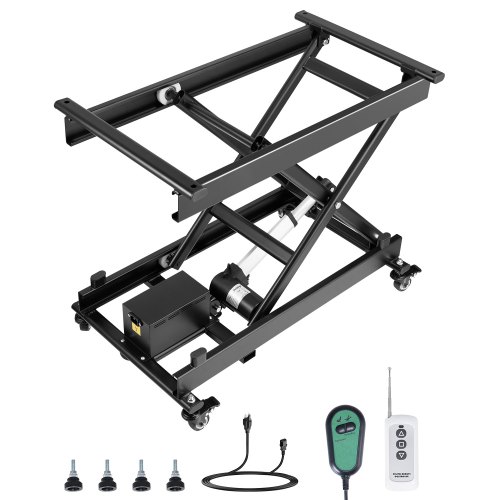
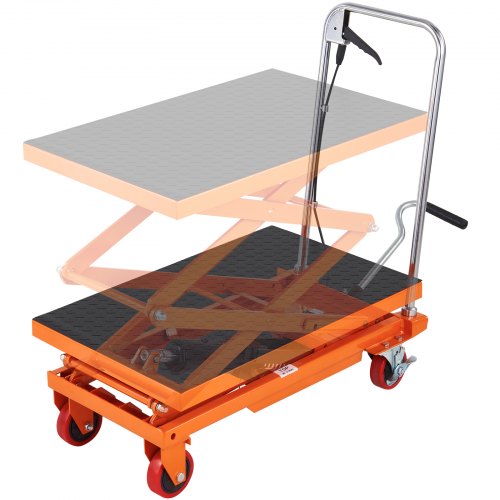
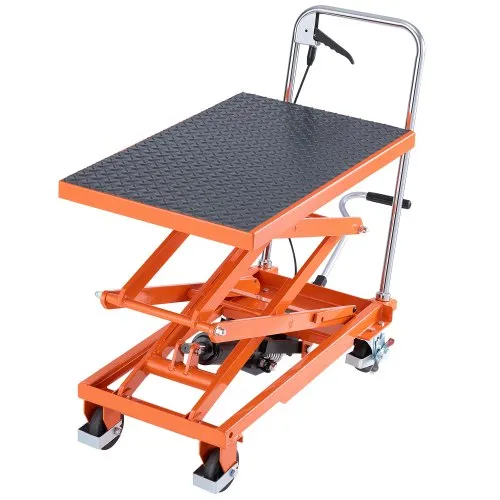
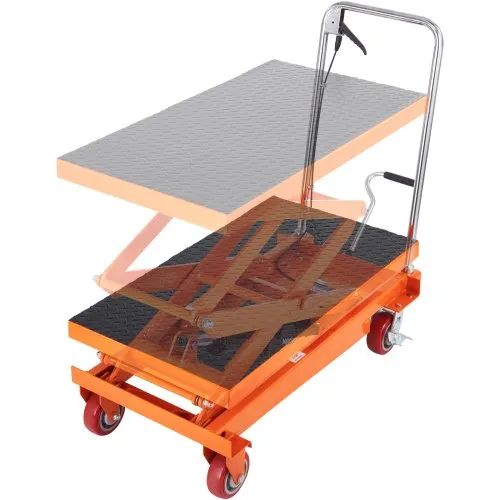
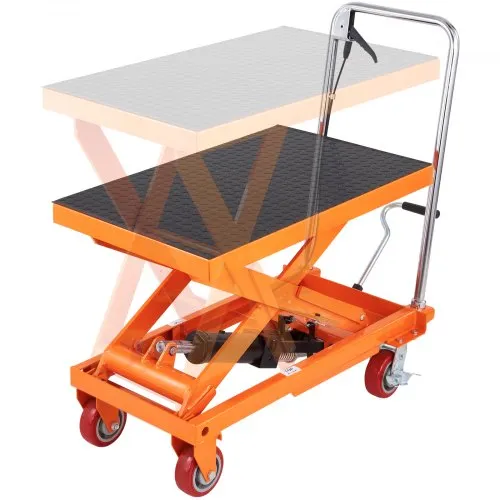
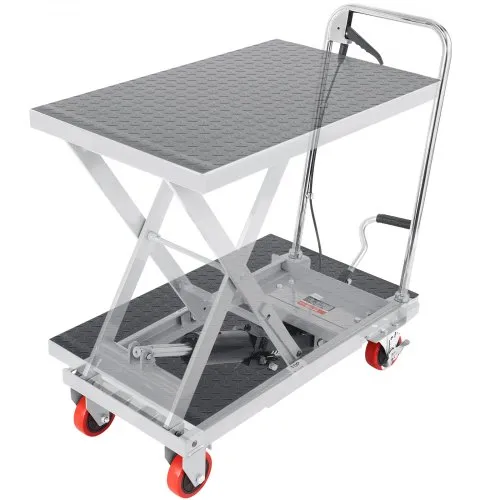
Lift tables are hydraulic or electric platforms that raise materials, parts, or tools to a comfortable working height, cutting the bending and manual lifting that slow down warehouse, workshop, and assembly-line tasks. A scissor mechanism does the lifting: crossed metal arms straighten as the platform rises, driven by a foot-pump hydraulic system on manual models or a motor on electric ones. VEVOR's range spans compact single-scissor carts through taller double-scissor platforms, each built with reinforced frames and non-slip, wheeled bases for stable, repeatable use.
Capacities span roughly 330 lbs on standard carts up to 2,200 lbs or more on reinforced industrial platforms, with lift height following a similar range: standard tables typically raise a platform from around 8-14 inches to 28-40 inches, while double-scissor models reach up to 59 inches or more for taller racks or conveyor loading. Power source is the other major choice: manual hydraulic tables use a foot pump and need no electricity, while electric scissor lift tables hold a steady lifting speed for jobs that raise and lower loads repeatedly throughout a shift.
These tables serve warehouses loading and staging pallets, assembly stations positioning parts at waist height, and automotive shops lifting engines or transmissions to a workable position. When choosing a table, match the rated capacity to your heaviest realistic load rather than an average one, confirm the platform's minimum and maximum height cover your actual transfer points, and pick manual hydraulic for occasional use or electric for high-cycle, all-day work. Browse the full VEVOR lift tables lineup to compare current models side by side.
Lift Table Types at a Glance
| Type | Power Source | Core Specification Range | Best For |
|---|---|---|---|
| Hydraulic Scissor Lift Table | Manual foot pump | 330-2,200+ lbs capacity | Cost-effective for moderate, occasional-use workloads |
| Electric Scissor Lift Table | Electric motor | 330 lbs and up, steady lift speed | Frequent, all-day lifting in warehouses or packaging lines |
| Double-Scissor Lift Table | Manual or electric | Reaches up to 59 in or more | Taller lift heights, conveyor loading, multi-level facilities |
Industrial Lift Tables for Material Handling, Loading, Assembly Work, and Ergonomic Positioning
Are you sick of bending, lifting, or moving heavy things around while you work, and need a better, safer way to move tools or place parts at the right height for work? VEVOR tables feature a stable lifting surface that reduces physical strain, speeds up work, and improves accuracy. Users can do a wide range of tasks, from loading a warehouse to precise assembly, with hydraulic, manual, and electric scissor lift tables. These tables are safe to use and can be lifted reliably. Every lift table is easy to use and works well in both industrial and commercial settings.
Key Features and Purchase Considerations
Load Ratings for Heavy-Duty Jobs
To choose the right Lift Tables, you need to know how much weight they can hold. Depending on the model, weight limits in warehouses and fabrication shops usually range from 330 lbs to more than 2,200 lbs. Standard scissor lift tables are great for moving cartons, toolboxes, and small machines. Reinforced industrial platforms, on the other hand, can easily move palletized goods or metal parts. By matching the load rating to the tasks you do every day, you can prevent the hydraulic system from being overstressed and extend equipment life.
For instance, a hydraulic scissor lift table that can hold 1,100 pounds is perfect for automotive shops that need to lift engines or transmissions. On the other hand, distribution centers often use Lift Tables with greater capacity to safely move large shipments. Overloading even once can break seals, bend scissor arms, or destabilize lifting cycles.
The way the frame is built also matters. Heavy-gauge steel platforms, reinforced scissor arms, and thick base plates make the structure stronger. Many Lift Tables come with powder-coated finishes that protect them from rusting in industrial settings. When looking at your options, make sure to check the maximum static load and dynamic load ratings, especially if the materials will be moved while they are high up.
Maximum Lift Height and Reach
The height of the lift directly affects productivity and ergonomics. Standard Lift Tables usually raise platforms from 8 to 14 inches to 28 to 40 inches. This range is great for assembly stations where workers need to reach materials at waist height. Adjusting the height correctly reduces bending and injuries from doing the same thing repeatedly.
A double scissor lift table can lift things higher, often up to 59 inches or more, so you can reach things higher. These models are great for loading items onto conveyor systems or reaching higher machinery platforms. A double scissor lift table has additional scissor arms that allow it to move farther without losing stability. Lift Tables with higher lift travel help operators connect the space between the dock and the shelving in multi-level storage facilities. For instance, a scissor table lift used at a shipping dock ensures packages fit perfectly on truck beds, preventing people from getting hurt when they lift them by hand.
When comparing models, make sure to check the lift time and the minimum and maximum platform heights. In high-traffic areas, faster lift cycles are helpful. But it's just as important to move smoothly and in a controlled way, especially when you're working with delicate equipment.
Before you buy, it's a good idea to measure the transfer height your workstation needs. Choose Lift Tables with longer reach rather than having workers move loads by hand if operators often stack goods on tall racks.
The table below lines up the capacity-tier examples together with the lift height data described in both sections above.
Lift Table Capacity & Height Tiers
| Type | Capacity Range | Lift Height Range | Best For |
|---|---|---|---|
| Standard / Light-Duty | 330 lbs and up | 8-40 in | Cartons, toolboxes, small machines |
| Reinforced Industrial | Up to 2,200+ lbs | 8-40 in | Palletized goods, metal parts |
| Automotive Shop | Around 1,100 lbs | 8-40 in | Engines, transmissions |
| Double-Scissor (Extended Reach) | Up to 2,200+ lbs | Up to 59 in or more | Conveyor loading, multi-level storage, shipping docks |
Stability and Operational Safety
Matching Capacity with Stability
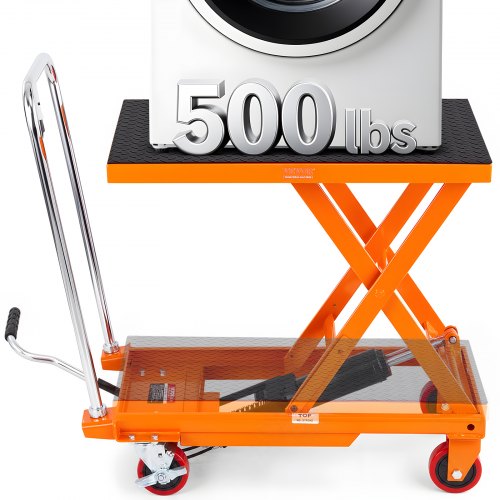
To keep balance, the weight capacity and lift height must work together. As Lift Tables get higher, it's more important to move the center of gravity. A well-designed scissor lift table distributes weight evenly across its reinforced arms and pivot points to prevent wobbling at its highest point. Wide platforms are great for lifting big or oddly shaped things. For instance, appliance repair shops can use a wider hydraulic scissor lift table to hold washing machines or refrigerators without the risk of tipping.
A stable base with non-slip surfaces adds another level of safety. Lift tables for industrial use often have hydraulic pedals that you can use with your feet to lift things smoothly. Consistent pump performance makes sure that things rise slowly, even when they are heavy. While this is going on, locking casters keep the unit in place while it works, which is very important in busy production areas.
If you need to stack heavy parts at full height, a double scissor lift table might be a good choice because it gives you better vertical reach and makes the table more stable. Double scissor lift table models work especially well in factories that work with die molds or steel assemblies. Check the condition of the floors before you make your purchase. Lift Tables with strong wheels and secure locking systems are needed for concrete surfaces that aren't level. For tasks that require a lot of precision, like putting together electronics, low platform vibration makes it safer to handle delicate equipment.
Power Systems and Built-In Safety
Modern lift tables come in different types of power and safety features, in addition to load and height. For moderate workloads, manual hydraulic systems are dependable and cost-effective. A hydraulic scissor lift table uses a foot pump, allowing you to adjust the height exactly without electricity. An electric scissor lift table is ideal for warehouses or packaging lines that frequently need to raise and lower items throughout the day. The electric scissor lift table maintains a steady lifting speed, reducing operator fatigue. Choosing the right mix of capacity, height, power source, and safety features makes it easy to move materials and keeps the workplace running smoothly for a long time.
See how VEVOR's current top lift table listings compare at a glance (selected in on-page order):
Best-Seller Comparison
| Product | Lifting Height | Capacity | Power Source |
|---|---|---|---|
| VEVOR Hydraulic Lift Table Cart, 330 lbs Capacity, 50 in Lifting Height | 50 in | 330 lbs | Manual hydraulic |
| VEVOR Hydraulic Lift Table, 500 lbs Capacity, 47.2 in Lifting Height | 47.2 in | 500 lbs | Manual hydraulic |
| VEVOR Hydraulic Lift Table Cart, 1100 lbs Capacity, 35.4 in Lifting Height | 35.4 in | 1,100 lbs | Manual hydraulic |
| VEVOR Hydraulic Lift Table Cart, 1760 lbs Capacity, 59 in Lifting Height | 59 in | 1,760 lbs | Manual hydraulic |
| VEVOR Electric Lift Table, 330 lbs Capacity, 8-28 in Height Adjustable | 8-28 in | 330 lbs | Electric |
Why Choose VEVOR Lift Tables?
VEVOR lift tables are well-built, easy to use, and can hold heavy loads at low prices. Users can choose the best solution for their workflow from a range of hydraulic, electric, and double scissor models. The tables are built to last, and we offer quick customer service and easy delivery options. To find the best lift table for your material handling needs, review each product's features on its own page.
Frequently Asked Questions
Q: How do I choose the right lift table capacity?
A: Match the rated capacity to your heaviest realistic load, not just your average one — VEVOR's lift tables range from 330 lbs on standard carts up to 2,200 lbs or more on reinforced industrial platforms. Overloading even once can bend scissor arms or damage hydraulic seals.
Q: What are lift tables used for?
A: Lift tables raise materials, parts, or tools to a comfortable working height for tasks like warehouse loading, precision assembly, and automotive component handling. They reduce the bending and manual lifting that cause repetitive-strain injuries, while speeding up work that requires repeated height changes.
Q: How do lift tables work?
A: A scissor mechanism raises the platform as its crossed arms straighten, driven by a foot-pump hydraulic system or an electric motor depending on the model. Hydraulic versions pressurize oil into a cylinder with each pedal stroke, while electric models maintain a steady lifting speed at the push of a button.
Q: Can adjustable table lifts be used for ergonomic workstations?
A: Yes, that's one of their main purposes — raising a platform to waist height lets workers position materials without bending or reaching awkwardly, which reduces injuries from repetitive motion. VEVOR's standard lift tables typically adjust between 8 and 40 inches, covering most workstation heights.
Q: What are the main types of lift tables available?
A: VEVOR's range includes manual hydraulic scissor lift tables operated by foot pump, electric scissor lift tables for frequent all-day use, and double-scissor models that reach higher, up to 59 inches or more, for taller racks or conveyor loading.
Q: Where can I buy reliable lift tables for automotive and workshop use online?
A: VEVOR.com carries the full range of hydraulic, electric, and double-scissor lift tables, including capacities suited to automotive shops lifting engines or transmissions. Each product page lists load rating, lift height, and power source so you can match a table to your specific workshop task.
Q: What safety tips should I follow when using lift tables for automotive or powertrain work?
A: Match the load rating to the actual weight of the engine, transmission, or component you're lifting, never exceed it, and use a table with a stable base and non-slip surface. Locking casters keep the unit in place while you work, which matters most when handling heavy powertrain parts at height.
Q: What are VEVOR's adjustable electric lifting column options for industrial desks?
A: VEVOR's electric lifting column systems function as adjustable table legs, letting you raise or lower a work surface at the push of a button rather than manually. They're built for repeated height changes throughout the day, similar to the electric scissor lift tables in the same lineup.
Q: How do I set up a lift table at home or in my workshop?
A: Most VEVOR lift tables need no permanent installation — position the unit on a level, stable floor, check that locking casters or a non-slip base are engaged, and confirm the platform is empty before your first test cycle. Electric models just need a nearby power outlet.