

Manual Tube Bender





















Results for Manual Tube Bender
A manual tube bender is a hand-operated tool that forms straight tubing into a curve or angle by holding it against a shaped die while force from a lever, crank, or hand pump bends it into place. Because the force comes from the operator rather than an electric motor, the bend is controlled by feel and by the marks on the tool, and it can be repeated without any power supply. The die supports the wall as the tube turns, which stops it from kinking or flattening and keeps the inside diameter open for flow.
Manual tube benders include lever models for light and medium work, hydraulic models for thick tubing and heavy pipe, and multi-die machines that cover several diameters and profiles. Sizes run from 3/8 to 1 inch lever benders with 7 dies to 16 ton hydraulic benders with 8 dies from 1/2 to 3 inches, while roller benders form curves in round tube, square tube, and flat bar up to 1-1/2 inch. Typical uses are HVAC and plumbing lines, handrails, exhaust and furniture frames, and automotive repair.
Four things decide what you need:
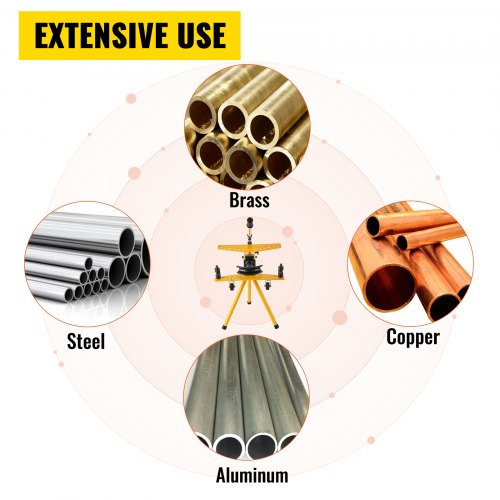
- Tube material: copper, aluminum, and thin-wall steel suit lever benders, while thicker steel pipe suits hydraulic ones.
- Die size: match the die to the outside diameter, from 3/8 inch hand benders to 3 inch hydraulic die sets.
- Force source: a lever relies on your own strength, while a hydraulic bender multiplies force and reduces fatigue.
- Profile: round tube, square tube, and flat bar need the matching die or a multi-die machine.
Browse the full Pipe & Tube Benders range, or see the wider Plumbing Tools category.
Manual Tube Bender Types at a Glance
Manual benders differ in where the force comes from, which tube sizes the dies cover, and how many dies are included, so the comparison below lines those up for each type.
| Bender Type | Force Source | Tube Size Range | Die Set | Trade-offs |
| Lever benders | Hand lever | 3/8 to 1 in | 7 dies | Light and portable for copper and thin-wall steel, but limited in size |
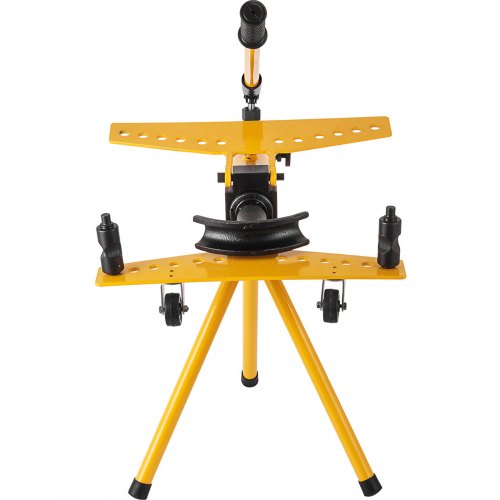
| Hydraulic benders | Hand-operated hydraulic with return spring | 1/2 to 3 in | 6 to 8 dies | Handle thick tube and heavy pipe with less effort, but heavier and floor-standing |
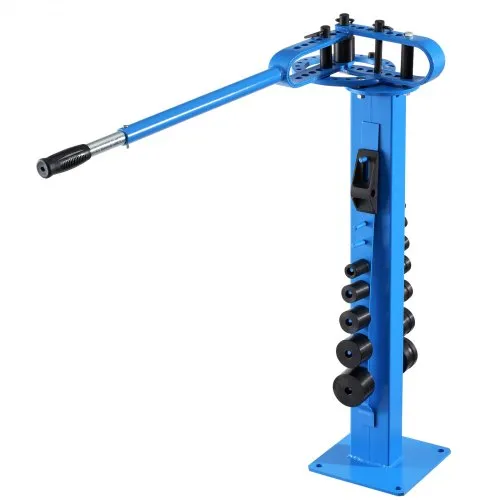
| Multi-die machines | Hand lever with rubber grip | Dies from 1 to 3 in | 14 dies | Cover several profiles in one tool, but need the right die swapped in each time |
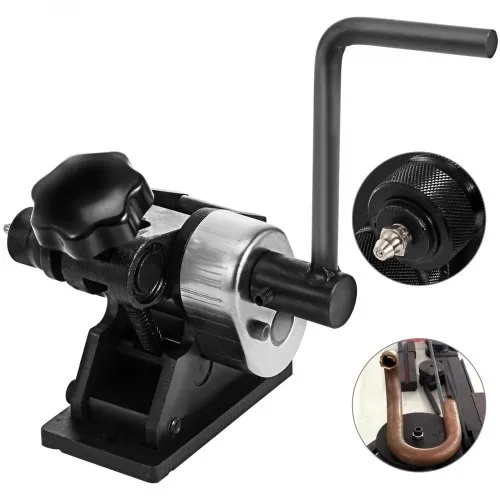
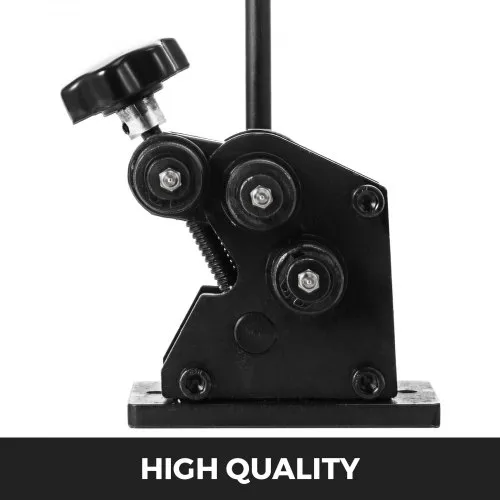
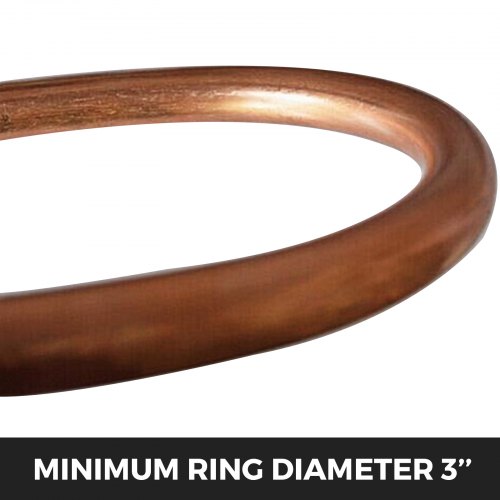
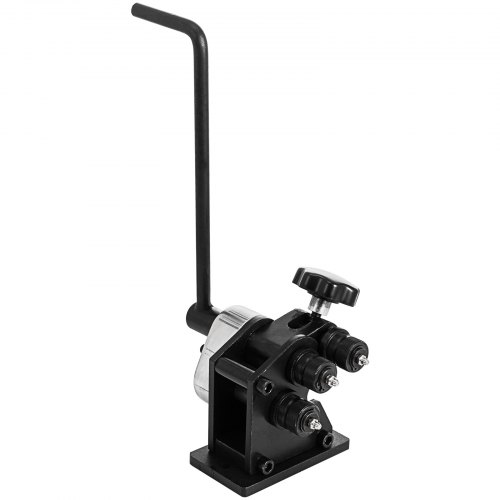
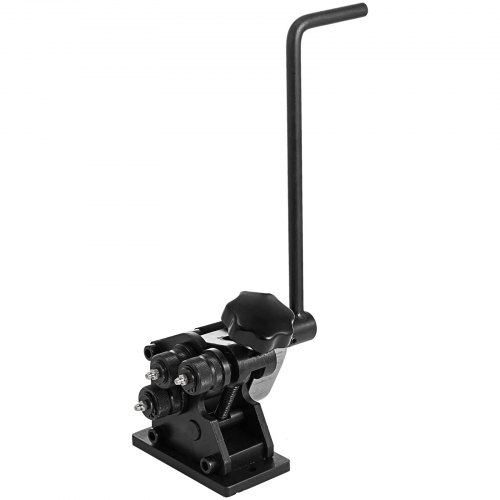
| Roller benders | Hand crank | Up to 1-1/2 in | 6 dies, round and square | Form smooth curves and rings, but not sharp angles |
VEVOR Manual Tube Bender: Precision Control for Every Bend
Do you bend metal tubing for HVAC systems, in-store shelves, furniture framing, or precision piping projects? All that you need is the right bending tool in order to make smooth and accurate bends with the strength of your material intact. VEVOR provides a strong product range of manual tube benders that provide high-quality, safe operation in the comfort of the home workshop or a professional working station. Whether it is a miniature handheld bender capable of working with small-diameter tubing or an industrial roller with the ability to bend large metal profiles, all VEVOR tube bending tools have been designed using quality materials and easy-to-operate designs so that you can flex steel, copper, and aluminum with ease and precision.
Types of VEVOR Manual Tube Benders
VEVOR offers real-life, highly developed solutions for all fabrication requirements levels.
VEVOR is a blend of quality construction and affordable price, producing manual tube benders with the quality of professional fabrication at non-premium prices. VEVOR tube benders are made of a solid and heavy-duty steel frame with precise dies that will ensure uniform and accurate bending without compromising the structural integrity of your tubes.
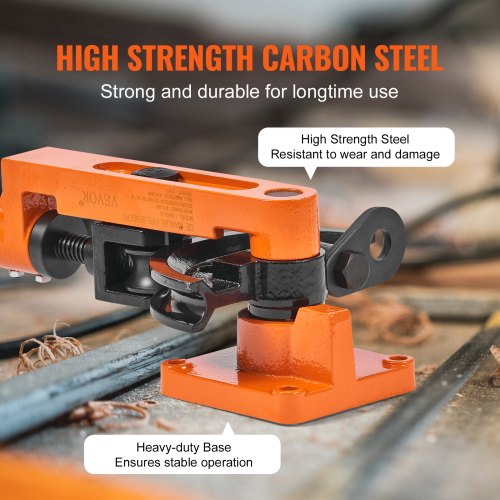
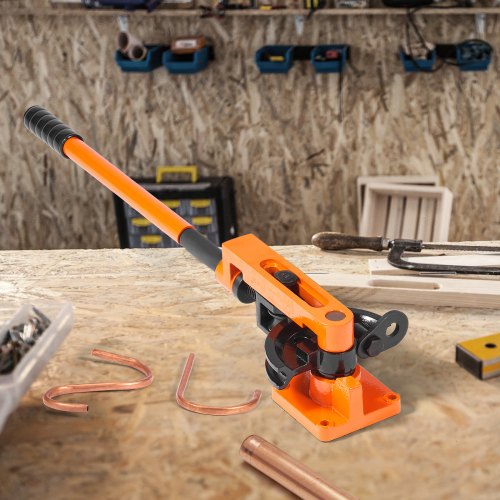
Manual Leverage Tube Benders. These manual Leverage Tube Benders are small, portable, and easy to use. Ideal for small workshops and fieldwork, they handle light- to medium-duty tube-bending tasks with ease. Such models are especially convenient in working with copper tubing and thin-wall steel, in supplying plumbing, heating, and ventilation, and in light metal fabrication work.
Hydraulic Tube Benders. Hydraulic Tube Benders are designed for higher force requirements and more demanding applications. The hydraulic tube bender lineup delivers smooth, controlled pressure for thick tubing and heavy pipe. These models significantly reduce operator fatigue while maintaining bending precision, making a hydraulic pipe tube bender especially valuable for structural steel work and industrial fabrication.
Multi-Die Tube Bending. Multi-Die Tube Bending Machines give workshops the flexibility to work across multiple diameters and profiles without switching tools. VEVOR's tube bending machine systems feature interchangeable dies compatible with round, square, and rectangular tubing, including full tube bender square support for architectural and structural projects.
What to Look for in a Manual Tube Bender
Choosing the correct manual tube bender depends on several key factors: material type, wall thickness, bend radius requirements, and overall project scope.
Material Compatibility. There are various projects that require varying bending abilities. The VEVOR copper tube bender is ideally suited for HVAC, plumbing, and soft metal applications where precise, damage-free bending is critical. However, the harder steel tubing requires stronger frames, an increased leverage ratio, and stronger die constructions.
VEVOR provides both manual leverage and hydraulic tube bender options, ensuring there's a solution for both light-duty fieldwork and heavy industrial fabrication environments.
Bending Capacity and Die Sizes. A reliable tube bending machine should accommodate multiple tubing diameters without requiring a separate tool for each size. The exchangeability of dies gives the choice required when dealing with different profiles, such as round, square, or rectangular. For projects involving structural framing or architectural metalwork, choosing a model with tube bender square capability ensures accurate, distortion-free bends on square and rectangular tubing every time.
Force Mechanism. Standard manual tube bender units rely on mechanical leverage to generate bending force. Hydraulic tube bender systems, by contrast, multiply the bending force through controlled hydraulic pressure. This solution helps eliminate the strain on the operator and permits the effective manipulation of a considerably thicker pipe and tubing material, which would otherwise be difficult or impossible to bend manually. The VEVOR hydraulic pipe tube bender is the preferred choice for industrial shops dealing with heavy structural materials on a regular basis.
Choosing a Manual Tube Bender by Project
A project's tube, setting, and bend count point to a specific bender, so the table below pairs common projects with the tool that fits, where it is best used, and the mistake to avoid.
| Project | Priority Bender | Work Setting | Key Concern | Buyer's Note |
| HVAC and refrigeration lines | Lever bender | Field or van, no power needed | Kinking on thin copper wall | Match the die size to the outside diameter before bending. |
| Furniture and shelving frames | Roller bender with round and square dies | Workbench | Distorted square profile | Use the square die for square tube to keep walls flat. |
| Handrails and railings | Hydraulic bender | Floor-standing shop with stable legs | Heavy pipe needs more force | Hydraulic force reduces operator fatigue on thick pipe. |
| Exhaust and automotive repair | Hydraulic bender | Shop floor, parts brought to the bender | Reaching the full angle | Bend in stages; this unit cannot reach 90 degrees at once. |
| Mixed bar, flat stock, and tube work | 14-die machine | Fixed shop use with a larger footprint | Picking the wrong die | Keep the matching die at hand for each profile. |
Why Tube Bending Tools Are Essential in Fabrication
A professional manual tube bender does far more than simply shape metal. When properly used, it enhances the efficiency of the workflow, increases the accuracy, and keeps the structural integrity of all the parts it touches.
Proper tube bending prevents the kinks, flattening, and weak spots that can compromise a finished assembly. Smooth radius bends retain the original wall thickness and carrying capacity of the material used and enhance the aesthetic appearance of the final product. Whether you're using a VEVOR copper tube bender for neat plumbing runs or a hydraulic pipe tube bender for heavy structural tubing, quality equipment consistently delivers professional outcomes.
VEVOR hydraulic tube bender models expand these capabilities even further, making them the right choice for workshops that regularly handle multiple material types and a broad range of tubing diameters. One of the most prevalent sources of material waste in fabrication is incorrect bending.
Manual Tube Bender Best-Seller Comparison
The five best sellers below range from a hand-cranked roller to a 16 ton hydraulic unit, so compare force source, tube size range, and the dies included against the work you do most.
| Product | Bender Type | Force Source | Tube Size Range | Dies Included | Weight | Best For |
| Electric Pipe Bender, 9 Round, 8 Square Dies | Electric die-set, closed cover | 1500 W motor | Round 5/8 to 3 in, square 5/8 to 2 in | 9 round, 8 square | 573 lbs gross | Only closed-cover unit; powered die-set bending with the drive enclosed |
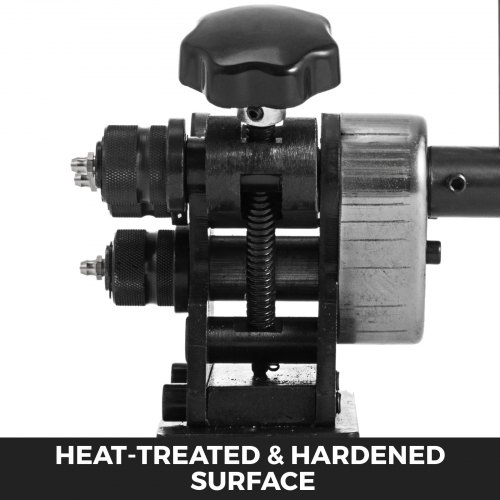
| Manual Tube Roller Bender, 1-1/2 in | Manual roller | Hand crank | Up to 1-1/2 in | 6, round and square | 79.8 lbs net | Only crank-driven roller here; curves in round tube, square tube, and flat bar |
| 1500W Electric Pipe Bender, Open Design | Electric die-set, open design | 1500 W motor | Round 5/8 to 3 in, square 5/8 to 2 in | 9 round, 8 square | 516 lbs gross | Open-design twin of the closed unit with the same dies at a lower shipping weight |
| 16 Ton Hydraulic Pipe Bender, 8 Dies | Manual hydraulic | Hydraulic with return spring | 1/2 to 3 in | 8 dies | 107.9 lbs net | Widest die range with 16 ton force; heavy pipe for railings and exhaust |
| Manual Pipe Bender, 14 Bending Dies | Manual lever machine | Hand lever, rubber grip | Dies from 1 to 3 in | 14 dies | 65.9 lbs net | Most dies here and a 200 degree bend; varied tube, bar, and flat stock |
VEVOR Tube Bender: Built for Precision. Backed by Value!
Using a properly sized tube bender square die, a radius-specific attachment, or the correct die for your tubing diameter ensures accuracy on the first attempt, saving both materials and money over the course of a project.
Find the product specifications and compare bending capacity, compatible tube diameters, come sets of dies, and frame strength to ensure that you have the appropriate VEVOR manual tube bender to meet your workshop or job site needs. Browse the entire assortment of handheld and high-capacity manual tube bender models to locate products to assist automotive fabrication, metal furniture, HVAC installations, and structure.
FAQs
Where can I find high-quality pipe bending dies and accessories?
Bending dies come included with VEVOR benders, so the quickest route is to pick the bender whose die set fits your tubing. The 16 ton hydraulic unit includes 8 dies and the manual lever machine includes 14. Browse VEVOR tube benders and check each die list.
How much is a pipe bender?
Pipe benders differ widely by force source, die count, and tube capacity, so compare models by the tube size and material you bend and check each product page for current details. Lever models suit small copper work, while hydraulic units suit thick pipe.
What tube material is suitable for the manual tube bender?
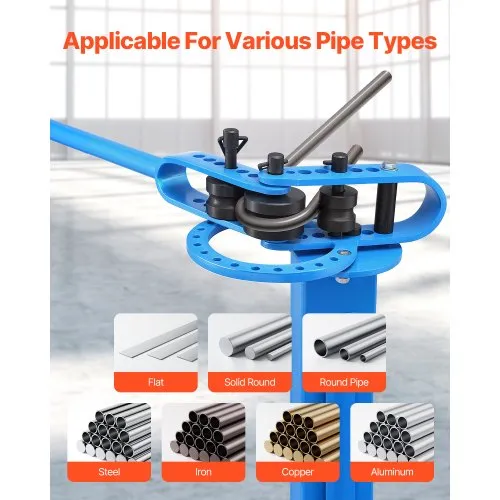
Manual benders suit copper, aluminum, and thin-wall steel, while hydraulic models also handle iron, stainless steel, and thicker steel pipe. Match the die to the outside diameter and stay within the rated wall, such as 2 mm steel or 4 mm aluminum on the 1-1/2 inch roller bender.
Can a manual tube bender be used for production?
Yes for short runs, since a die and angle marks make bends repeatable, but powered machines suit sustained volume. Hydraulic manual models reduce effort on thick pipe, and electric pipe and tube benders are better for production runs.
Why should a tube bender be used when bending tubes?
A tube bender supports the wall inside a shaped die, which prevents the kinks, flattening, and weak spots that a free bend creates. It keeps the inside diameter open and the bend radius consistent, which saves material and protects flow and joints.
What are the different types of tube benders and their uses?
Lever benders handle copper and thin-wall steel for HVAC and plumbing, hydraulic benders handle thick tube and heavy pipe, multi-die machines cover several diameters and profiles, and roller benders form curves and circles. Choose by tube material and size.
Can I find a reliable and inexpensive tube bender online?
Yes, VEVOR sells manual tube benders online, with review counts shown on each listing, such as 306 reviews on the 3/8 to 1 inch 7-die lever bender. Compare tube size, die count, and frame build to find a reliable match for your work.
Can you recommend the best heavy-duty tube benders for professional use?
For heavy-duty professional work, choose a hydraulic bender: the 16 ton model bends 1/2 to 3 inch pipe with 8 dies, and the 14-die manual machine adds a 200 degree bend. Both use steel frames and suit exhaust, railing, and structural jobs.
