Mortising Machine


Results for Mortising Machine
VEVOR mortisers and cutting tools are durable and built to create strong mortise-and-tenon joints. The All Models category includes tools woodworkers use when a round drill bit isn't enough, from square-hole chisel sets to a drill-press mortising adapter that turns a tool you already own into a joinery station. Whether you're framing cabinet doors, building chairs, or squaring timber joints, you'll find reliable cutting tools sized for clean, repeatable results on real woodworking jobs.
VEVOR Mortising Machines and Attachments for Precise Woodworking Joints
Tired of hand chipping out square holes, or dealing with joints that never quite fit? A VEVOR mortising machine cuts clean, square-walled mortises so your tenons seat tight every time. This category includes square-hole chisel tooling and drill-press mortising attachments, giving cabinetmakers, furniture builders, and weekend woodworkers an easy way to install robust, professional mortise-and-tenon joinery in any design.
Machine Types and How They Cut Square Holes
The mortising machines and attachments we have here all approach the same problem a little differently. Here's a breakdown of the common varieties and which cutting method best suits your bench.
Benchtop Mortisers for Dedicated Joinery Work
The benchtop mortiser is for the woodworker who cuts enough mortises to need a fixed spot on the bench. These little devices screw onto a workbench and combine a motor with a plunging head, so you pull a lever, and the cutter plunges straight down into the stock. The frame is sturdy and purpose-built, so a good benchtop mortiser maintains alignment far better than improvised hand methods.
Most benchtop mortising machines can handle a variety of chisel and bit sizes, so you can go from tight to wide mortises by changing tools. A fence and hold-down keep the workpiece square to the cutter, which is important if you are repeating the same joint on a stack of table legs or door rails.
If you run a shop that builds lots of cabinets, chairs, or framed panels, a dedicated bench morticer is worth the investment for speed and repeatability. If you're shopping for mortisers for regular production work, the benchtop class will give you the stiffness and repeatable accuracy that hand tools can't match on a hectic schedule. It's the workhorse pick for those who value throughput without sacrificing joint quality on every single item.
Hollow Chisel Mortisers and Chisel Cutting Systems
The hollow chisel mortiser machine mostly handles square-hole cutting, which is the heart of the operation. It uses an innovative two-part tool: a rotating auger bit removes most of the waste, and a square hollow chisel wrapped around it trims the corners clean. The result is a clean four-sided mortise in one pass, and the pocket is finished without any hand paring.
The auger and chisel must be sized and sharpened to function together correctly because chisel mortiser machines need well-matched equipment. VEVOR square-hole chisel sets come with many drill diameters and bushings to fit a variety of configurations, so you may tailor the tool to the width of the mortise your joint requires. Keeping your chisels sharp is the single most important key to clean cuts and effortless plunging.
When people think of mortising machines, they imagine a square chisel biting down and leaving a beautiful pocket behind. Hollow chisel mortiser tooling, whether incorporated into a benchtop frame or run through a drill-press attachment, provides you with the precision on which strong mortise-and-tenon joints depend. The difference between ragged and glass-smooth walls comes down to properly gapped chisels.
Mortising Attachment for Drill Press Setups
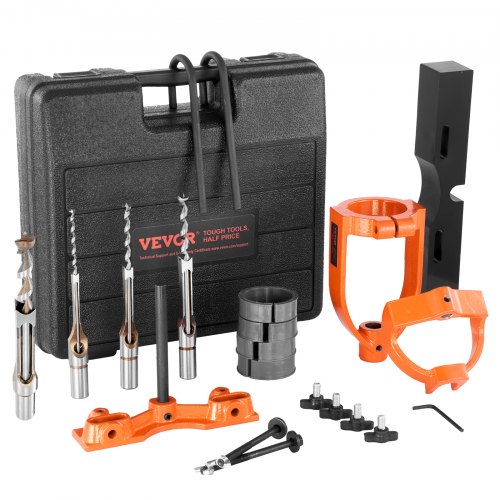
Not everyone needs a standalone machine, and that is where the mortising attachment for drill press setups shines. We also have a square hole chisel set. This kit is for bench drills, turning a tool you already own into a competent mortise cutter machine. This kit includes four different drill bits in different sizes, a square-hole chisel set, a bench drill finder, and five bushings for typical drill-press spindles.
Just clamp it on, insert the proper chisel, and start cutting mortises with the same drill press you already rely on for other projects. That means you don’t have to buy a separate piece of equipment that takes up bench space. It’s also a good beginner option if you’re new to joinery and want to dip your toes in.
This attachment does the same basic task as a full freestanding mortiser, just scaled down for lighter, occasional use as an alternative to a woodworking mortise machine. If you’re not cutting mortise and tenon joints all day but need them from time to time, this kit gives you real capability. That’s enough mortising power to get the job done for most home woodworkers.
Vertical Versus Horizontal Cutting Approaches
The mortiser cutting direction dictates how it approaches stock. Most chisel-type mortisers function vertically, the cutter dropping straight down into a workpiece held flat on the table. This vertical action suits deep, narrow mortises. It works perfectly with the hollow chisel system, thereby making it the dominant design for both bench and attachment chisel mortiser machines in the category.
A horizontal mortiser, however, presses the cutter sideways into vertically held material. Some manufacturing and timber-framing applications prefer this method for long mortises or slots. It's not a chisel-plunge setup; it's a different kind of machine. Woodworkers choosing between the two should match the tool to the joints they cut most often.
The VEVOR square-hole tooling uses the vertical chisel-cutting approach, which covers most general cabinet and furniture work. Once you understand these two methods, you can make a sensible purchase. If all your bench work involves typical mortise-and-tenon joinery, vertical mortising machines with chisel attachments will serve you well for years to come. These machines can handle everything from delicate drawer joints to sturdy structural connections with equal assurance.
Capacity and Features That Define Good Mortising Machines
Once you know the type, capacity, and features, you can choose a mortising machine for daily work. Always check these specs before you buy a VEVOR mortising machine.
Cutting Capacity, Chisel Sizes, and Depth
Cutting capacity determines the boundaries of what joints you can cut with any given tool. Chisel size dictates the width of the mortise the machine will accept. A kit that covers a range of sizes. This range lets you cut everything from narrow drawer joints to wide structural mortises. VEVOR offers square-hole chisel sets in a variety of drill diameters and bushings to provide that versatility.
The depth of the mortise is as important as the width. It determines how deep you can plunge the cutter to get a good surface for glue on your tenons. Thicker stock, like table aprons and bed rails needs deeper capacity for more solid connections, but lighter setups work comfortably and neatly on trim and tiny box work.
Always match capacity to your average material thickness before choosing, and the right equipment becomes clear. A mortiser too small for your stock will require difficult multi-pass cuts, while one too big will squander money on reach you'll never utilize. Planning for chisel range and depth ensures the mortise and tenon machine you select fits your work. That’s where the best mortising machines prove their worth on the bench.
Fences, Hold-Downs, Depth Stops, and Safety
The supporting elements make a mortiser accurate and comfortable to use. A strong fence squares the workpiece to the cutter, and hold-downs and clamps secure the stock so it can't shift or rise when the chisel retracts. They keep every mortise aligned, cut after cut, across a full run of parts without drift.
The depth stop is the unsung hero of repeatability. It keeps all plunges equal. It means you end up with a uniform batch of mortises without measuring each one by hand, once the depth is set. And that constancy is exactly what competent mortising machines require for any job that produces robust, gap-free mortise-and-tenon joints.
Don't forget maintenance and safety, because both help safeguard you and your work. Dull tooling can cause binding, while sharp, well-fitted mortising chisels and bits cut cleaner and safer. Just make sure the auger and chisel are correctly gapped. Test-fit your tenons; feed the cutter smoothly.
Why Choose VEVOR Mortising Machines?
VEVOR brings a complete selection of mortising machines. This full range gives woodworkers a dependable way to cut clean, professional mortise-and-tenon joints. Whether you're outfitting a busy shop or adding joinery capability to a home workbench, you'll find tools designed for accuracy, sized for real-world projects, and built to hold up under heavy use, backed by solid after-sales support. Shop VEVOR mortising machines online today!
FAQs
What comes with the VEVOR drill-press mortising attachment?
Our mortising machine range includes four model drills; a set of square-hole chisels, a bench-drill finder, and five bushings to suit typical drill-press spindles. These five models mean you have everything you need to start cutting square mortises on a press you already own.
Do I need a standalone machine or will an attachment work?
For occasional joinery, the drill-press attachment works without taking up extra bench space. However, if you cut mortises frequently or in bulk, a dedicated benchtop mortiser delivers more stiffness, speed, and repeatable precision.
How do I keep my mortise cuts clean?
Use sharp chisels and bits, feed the cutter gradually without straining it, and clamp the work firmly. Always dry fit your tenons before final assembly, and set a depth stop for consistent mortises.
What materials can these tools cut?
Our tools are mainly for wood, cutting crisp mortises in solid material and sheet goods such as MDF. However, always read the tool's instructions and use the right chisel size for your material for the cleanest, safest results.