Pallet Jack Truck
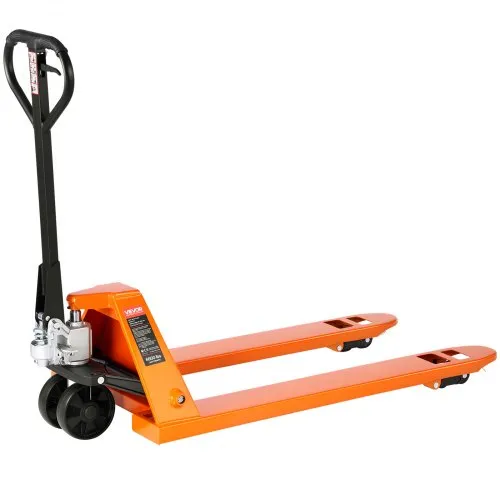


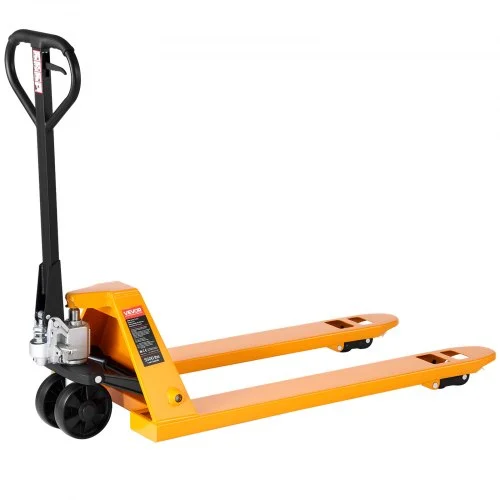


Results for Pallet Jack Truck
Across a wide range of facilities, including warehouses, distribution centers, retail backrooms, and manufacturing facilities, VEVOR offers a comprehensive line of pallet jacks to simplify material handling. Our selection covers every conceivable scenario, whether you need a tiny unit for confined spaces or a heavy-duty model for demanding industrial applications. Each pallet jack is built with sturdy construction and simple-to-use operation, ensuring effective daily load movement. VEVOR provides the lifting capacity professionals and organizations rely on for day-to-day operations. The company takes pride in offering affordable prices and providing solid customer assistance.
VEVOR Pallet Jacks: Reliable Manual and Electric Options for Every Workspace
Are you looking for dependable machinery that can handle large pallets while providing both safety and efficiency? The right pallet jacks can completely change how you handle materials. Traditional manual pallet jacks, modern electric pallet jacks, and motorized pallet jacks are just some of the solutions VEVOR offers. These pallet jacks are designed to handle demanding loads with minimal effort on the operator's part. Our collection addresses the fundamental challenges of modern logistics and warehouse management.
Understanding Weight Capacity and Fork Length for Pallet Jacks
To begin selecting the most suitable pallet jacks for your operation, you must fully understand two essential parameters that directly affect both performance and safety. A fork's weight capacity dictates the types of loads it can safely transport. In contrast, the length of the fork determines whether it is compatible with various pallet sizes and storage configurations. Accurately determining these parameters ensures efficient operations and protects against workplace injuries and equipment damage.
Matching Weight Capacity to Your Load Requirements
Selecting pallet jacks with the right weight capacity is essential to ensure the safe and effective handling of materials. The standard load range for standard units is 2,200 to 5,500 pounds, while heavy-duty models can handle loads over 6,600 pounds. Before making a purchase, determine the normal load weights you will be carrying, and always choose a capacity that is at least 20 percent greater than your maximum requirements.
This safety margin accounts for uneven weight distribution and reduces the likelihood of overloading during peak activity. Instead of simply considering their average weights, facilities that handle mixed cargo should also consider their heaviest regular loads. A manual pallet jack with a 5,500-pound capacity is suitable for most retail and light warehouse applications. On the other hand, manufacturing processes involving thick materials might require industrial-grade solutions.
Placing excessive weight on pallet jacks not only poses significant safety risks but also hastens wear and tear on hydraulic components, wheels, and frame structures. Consistently using equipment at or above its rated capacity severely reduces its lifespan. Electric pallet jacks typically offer higher capacity while simultaneously minimizing operator fatigue. As a result, these jacks are a worthwhile investment for businesses that routinely handle maximum loads during shifts.
Standard and Extended Fork Lengths Explained
The length of your fork has a direct impact on the pallet sizes your equipment can accommodate and on the efficiency with which you can move in your area. The majority of pallets in North America are compatible with standard 48-inch forks, whereas 42-inch forks are suitable for the demands of the supermarket and beverage industries. Forks extended to sixty or seventy-two inches can handle oversized loads and specific applications.
When working in restricted locations such as delivery trucks, narrow hallways, and congested stockrooms, shorter forks improve maneuverability. In addition to reducing the turning radius, they enable operators to precisely position loads without colliding with nearby goods. Using forks shorter than your pallet's depth can cause instability and dropping hazards during transport.
Those in the furniture, appliance, and construction materials industries typically use longer forks because they can accommodate double-stacked pallets and oversized platforms. When handling these difficult loads while maintaining stability, a motorized pallet jack with extended forks is essential. When determining fork parameters, consider the most common pallet dimensions and storage layouts to ensure compatibility across your entire operation.
Calculating Capacity for Different Pallet Sizes
You can safely improve your equipment's performance if you first learn how fork length, load center, and weight capacity are related. Manufacturers use a standard load center, typically 24 inches from the fork face to the load's center of gravity, to determine the maximum load capacity of their products. This procedure makes it much less safe to lift items that are farther back.
For instance, a pallet jack with a 24-inch load center and a weight limit of 5,500 pounds may only be able to securely handle 4,000 pounds when the load center is moved to 30 inches. This calculation is very important when working with pallets or cargo that aren't standard or that are unevenly distributed. You should constantly ensure that your equipment can withstand real load conditions, not just the total weight.
When handling large pallets, it's crucial to closely monitor these factors. When moving long load centers, standard electric pallet jacks don't work as well as those with stronger forks and better hydraulics. If your business often works with multiple pallet layouts, buying equipment that can be reconfigured means you don't need many specialist devices.
Assessing Your Facility's Specific Requirements
The ideal pallet jack specifications are influenced by the specific challenges presented by each workspace. While retail stockrooms may prefer compact dimensions over maximum lifting capacity, high-volume distribution centers can benefit from larger-capacity units that reduce the number of trips. Before making a purchase, it is important to conduct a comprehensive facility assessment to ensure the best equipment is selected.
Keep a record of the normal weights, dimensions, and volumes of movement of your pallets across the day. It is important to note any space limitations that could affect equipment movement, such as narrow doorways, tight corners, or raised dock plates. Consider the floor's conditions, including surface materials, slopes, and potential impediments, to inform wheel selection and stability requirements.
Seasonal variations are another factor that influences specification selection. Equipment should be sized for maximum demand rather than average conditions in operations experiencing significant volume surges during peak periods. In the event of holiday rushes or surges in inventory, a manual pallet jack suitable for routine operations may be insufficient, leading to additional bottlenecks and safety issues.
Essential Features and Durability Factors for Pallet Jacks
In addition to the fundamental parameters, numerous factors affect the product's everyday usability, operator comfort, and long-term durability. By understanding these components, you will be able to select pallet jacks that deliver consistent performance over years of rigorous use while reducing maintenance requirements and total ownership costs.
Key Features That Enhance Daily Operations
The majority of today's pallet jacks are equipped with features that enhance both efficiency and comfort for the operator during extended use. When it comes to pushing, pulling, and steering, ergonomic handle designs enable comfortable grip positions and limit wrist strain. Operators can raise loads with fewer handle strokes when using quick-lift hydraulics because they reduce the amount of pumping effort required.
Entry and exit rollers make it easier to smoothly engage pallets, reducing the force required to slide the forks into the appropriate position. When working with bottom-boarded pallets or navigating damaged pallet surfaces, these rollers are extremely useful. Proportional lowering valves allow precise speed control during descent, safeguarding cargo from rapid dips that could compromise its value.
Using a motorized pallet jack eliminates the need for manual pumping while providing powered driving assistance, substantially reducing operator fatigue. Electric pallet jacks are equipped with user-friendly controls, adjustable speed settings, and safety features, including automated horn and brake systems. These powered options transform difficult material-handling tasks into more manageable, acceptable duties for operators with varying physical capabilities.
Construction Quality and Durability Considerations
Long-term dependability depends on the construction of each component being of high quality. While carefully machined hydraulic cylinders can retain consistent lifting capability, frames made of heavy-gauge steel are resistant to bending and cracking under repetitive stress. Powder-coated surfaces offer protection against corrosion in humid environments and resist chipping from impact damage.
The quality of the wheel and roller has a significant impact on both durability and floor protection. The load-bearing ability of polyurethane wheels is exceptional, and they also prevent finished concrete surfaces from being marked. Nylon wheels are durable and suitable for harsher conditions; however, they may cause floor damage over time. Even though they can withstand severe loads, steel wheels require a strengthened floor.
Sealed hydraulic systems prevent contamination, which might otherwise lead to premature failure of the pump and cylinder. Conveniently accessible grease fittings are a hallmark of high-quality pallet jacks. These connectors enable frequent lubrication of moving parts without requiring disassembly. Inspection of these building aspects during the selection process helps prevent costly repairs and premature replacements.
Why Choose VEVOR Pallet Jacks for Your Material Handling Needs?
VEVOR pallet jacks provide exceptional value to businesses of all sizes, distinguished by their sturdy build, practical features, and affordable pricing. In our extensive selection, we offer manual pallet jacks for basic, cost-effective applications; electric pallet jacks for high-volume operations; and motorized pallet jacks that strike a balance between power and price. VEVOR offers a comprehensive material handling solution for all your operations, complete with quick-to-respond customer service and easy-to-understand warranty coverage. Today is the day to browse our inventory and provide your facility with dependable lifting power and equipment.
FAQs
What weight capacity do I need for standard warehouse pallets?
Pallet jacks with a weight capacity of 4,400 to 5,500 pounds are required for most regular warehouse operations. This capability handles ordinary pallet loads while providing a safety buffer for larger shipments. This task is accomplished without putting the operator or the equipment at risk of being damaged.
How do electric pallet jacks differ from manual models?
In electric pallet jacks, the hydraulics and drive motors are powered by batteries, eliminating the need for manual pumping and reducing the effort required to push. They can handle larger quantities while causing less fatigue for the operator, making them ideal for regular use over continuous shifts.
What fork length works best for retail applications?
Standard 48-inch forks can effectively accommodate most retail pallets. On the other hand, food and beverage companies frequently use 42-inch forks to conform to industry-standard pallet sizes and facilitate maneuverability in limited stockroom space.
How often should pallet jacks receive maintenance?
Hydraulic leaks, wheel wear, and handle functionality on pallet jacks should be inspected weekly. Twist points and wheel bearings should be lubricated monthly. A professional hydraulic service should be performed once a year, or after every 1,000 hours of operation, for applications that require heavy-duty hydraulics.
Can motorized pallet jacks handle rough floor surfaces?
The answer is yes: motorized pallet jack models with larger wheels and improved suspension systems can successfully handle uneven concrete, expansion joints, and dock plates. For the best possible traction and protection on your floor, choose models with polyurethane wheels.