Panel Carts














Results for Panel Carts
Explore our full selection of panel carts for drywall crews, cabinet shops, glass installers, and warehouse staff. VEVOR offers upright A-frame models, low-profile slab dollies, expandable deck designs, and foldable units that store flat between jobs. All items in this range come with steel frames, swivel casters, rubber-lined uprights, and load capacities of 600 to 1,500 lbs. A cart fits every job, whether you need to move sheetrock down a hallway, plywood across a shop floor, or countertop slabs from one place to another.
VEVOR Panel Carts for Drywall, Plywood, and Sheet Material Handling
Trying to move whole sheets of drywall by hand? Getting polished plywood dirty by dragging it across concrete? With the right cart, you can replace two people while saving your back and your stuff. VEVOR panel carts' welded steel construction and smooth-rolling casters make it easier for contractors, shop owners, and do-it-yourself builders to move sheet goods faster, with less damage and stress.
Choosing Cart Type and Adjustability for Your Material
What you can carry and where you can carry it are both based on cart shape. Here's how the main styles work in real life.
Upright A-Frame and Drywall Cart Dolly Designs
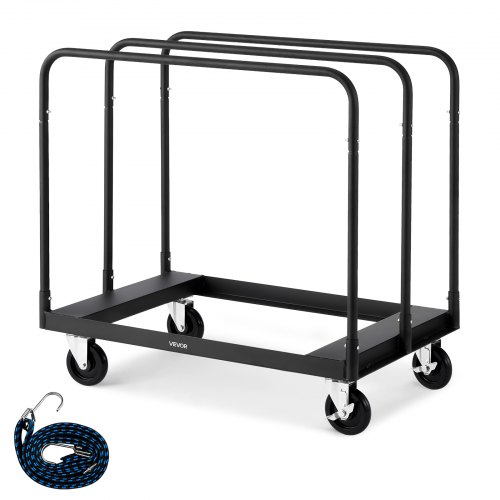
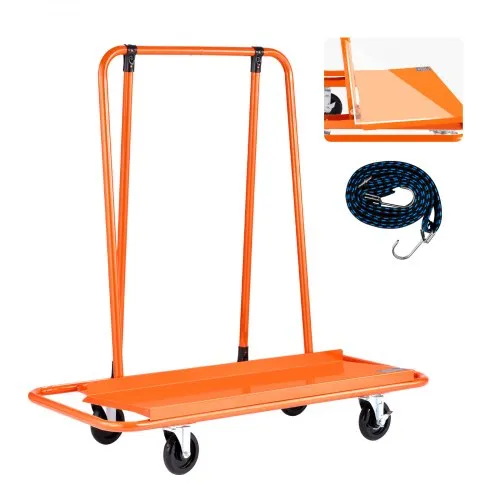
A drywall dolly cart holds sheets vertically between padded uprights. This is the safest way to transport gypsum board because carrying it flat can cause cracks across the middle of the sheet. This style looks great on the job site. A drywall mover with a small footprint can fit through standard doorways and down finished halls where a flat load cannot go around the corner. In rooms with more than one, that one benefit saves dozens of awkward hand-carries every day.
The best contact surfaces have a rubber liner or carpeting. Bare steel uprights scratch paper-faced board and prefinished panels, which means you will have to do more work later to fix and patch things. Depending on thickness, most upright panel carts can hold 8 to 15 sheets. Load the cart evenly on both sides of the middle spine so it stays balanced when you tilt it. For support, keep the heaviest sheets close to the spine.
Low-Profile Slab Dollies and Flat Panel Carts
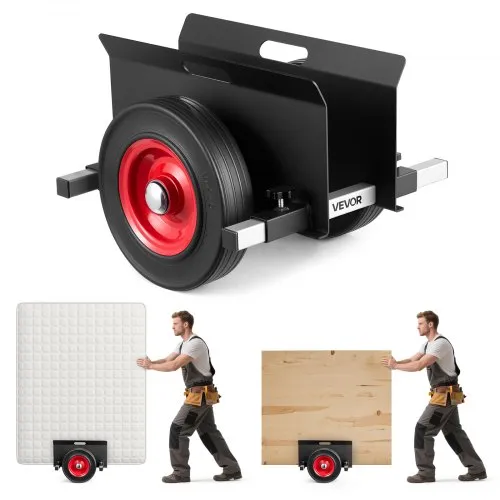
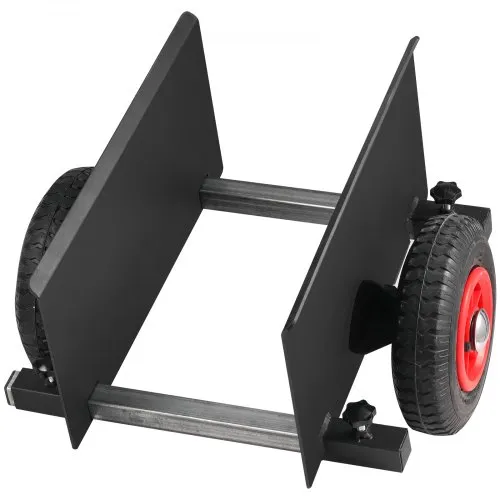
A slab dolly is designed to move heavy composite sheets, glass panels, and stone countertops that need to be moved straight but low. It sits close to the ground and leans slightly backward. A flat panel cart, on the other hand, has a deck that moves items horizontally. That works for moving plywood, MDF, and laminate sheets across a shop floor where stability or space from above is more important than turning radius.
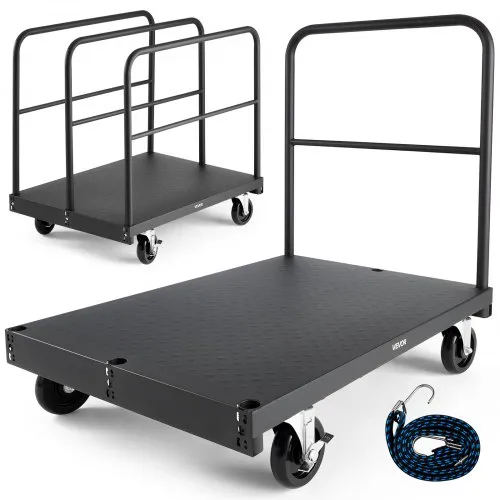
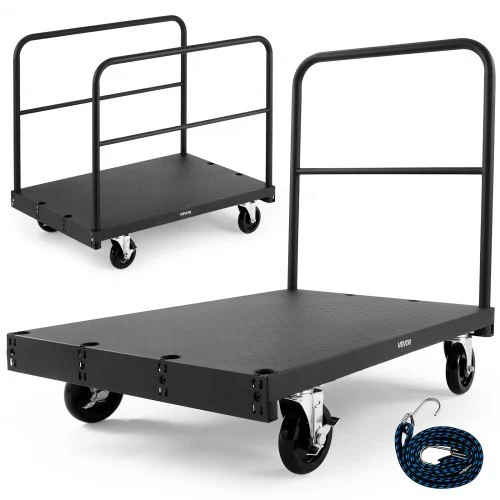
The deck surface is important. Decks with padding or rubber on top keep items from shifting during transport and protect the finished faces of cabinet-grade materials. Every weld seam will show through a bare steel deck to a soft veneer face. Think about how stacking works too. When you go around a corner or cross a threshold, a plywood panel dolly with side rails keeps a tall stack from rolling off the deck. For rough ground or ramps, add a locking strap.
Adjustable and Expandable Deck Models
With an expandable deck drywall cart, you can use one cart to carry all of your 12-foot sheets and standard 8-foot boards, instead of two carts taking up space in your truck. You can change the deck width, upright spacing, or handle height on adjustable panel trucks to fit the load. That adaptability helps shops that handle different materials each week, like when yesterday's order of plywood becomes today's delivery of glass.
When working with glass and thin composites, where loose retention could cause them to break, an adjustable clamp dolly is important for keeping panels of different thicknesses secure. Aim for strong but even clamping pressure. If you tighten too much, brittle materials will crack just as easily as if you let them move. Before you buy, check how it adjusts. Pin-and-hole systems are easy to use and reliable, but threaded clamps give you more precise control. Either one is better than a cart with a fixed width that can only hold a single material size.
Foldable and Space-Saving Configurations
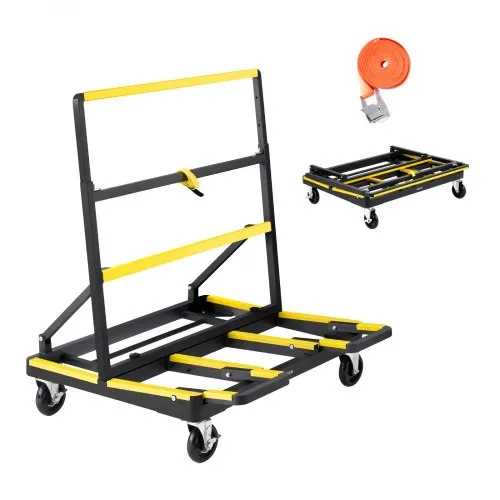
Being able to fold a panel truck flat when it is not in use is very helpful if you store your stuff in a van, a shared shop, or a shed already full of tools. Folding designs give up some rigidity for ease of use. For light-to-moderate loads, they work great. But for heavy sheetrock work every day, a welded fixed frame will stay in place better over time, and the hinges will not loosen up.
Compare the folded size to the storage space you have. A six-inch-thick cart can slide behind seats and along the van walls, where a hard frame takes up a whole piece of floor space. Safety depends on how well the latch works. Any folding panel cart dolly needs a strong lock that will not come loose under load. Test it before loading it fully, and check the latch often for wear.
Duty Ratings and Materials for Panel Carts
Depending on its size and build, a cart may only last one season or ten. Check out these things.
Load Capacity and Duty Rating Selection
A heavy duty panel cart that can hold 1,200 to 1,500 pounds can smooth out full stacks of 5/8-inch drywall, stone slabs, and dense hardwood plywood. Do the math before you pick. A 4x8 sheet of half-inch plywood weighs about 50 pounds, while a 5/8-inch fire-rated sheet weighs about 70 pounds. Ten sheets weigh close to 700 pounds, but most teams load more than ten.
Always put in more money than you normally would. Running a cart at its rated ceiling every day speeds up wheel wear, bends axles, and puts more stress on welds than operating with margin. A 30% reserve is a good target.
Heavy duty drywall carts also need wheels rated for that use. The most common problem is wheels that are too small. On cheap units, the frame lasts longer than the casters, so you have to find replacements mid-job.
Steel Construction, Casters, and Surface Protection
With welded joints and a powder-coated finish, a steel panel truck cart can handle job-site abuse, water, and the constant pressure of loading sheet goods. Welded joints don't come apart over time like bolted frames do.
Choosing a caster changes how you handle things in every way. Polyurethane wheels do not leave marks on finished floors and roll quietly. Pneumatic tires, on the other hand, absorb shock on gravel and rough site conditions, while hard wheels stop on every stone.
Two swivel casters and two fixed casters make it stable in any direction for long hauls. Four swivels make it easier to move around in small spaces, which is great for a sheetrock mover working in finished rooms with tight turns.
Protect both your stuff and your cart. For a little more, you can get a panel dolly cart with rubber pads, non-marring uprights, and a strap point that keeps your goods safe and prevents the load from shifting. Anyone who uses a panel cart every day should include these basic items at no extra charge.
Why Choose VEVOR Panel Carts?
With low-profile, flexible, and expandable designs, VEVOR offers everything you need to handle sheets, from small folding units to heavy-duty steel frames that support up to 1,500 pounds. It has welded construction, good swivel casters, rubber-lined contact surfaces, and a high load rating as standard features, not as extras. With prices much lower than standard contractor suppliers and quick after-sale customer service, it has never been cheaper to equip your crew or shop. Browse all carts and get the right one today.
FAQs
How many drywall sheets can a panel cart hold?
Most upright models can hold between eight and fifteen sheets, depending on the cart's thickness and rating. Figure out that each half-inch 4x8 sheet weighs about 50 pounds, and do not exceed the stated capacity.
Should drywall be carried flat or upright?
Upright. Moving gypsum board vertically keeps the center from cracking, which can happen when the board bends horizontally over an open span.
What casters work best on finished floors?
Polyurethane wheels do not leave marks on wood, tile, or vinyl, so they roll easily. Rubber tires work well on dirt and other rough outdoor surfaces, but they can leave marks indoors.
Do foldable carts hold as much weight as regular carts?
Not as strong as welded fixed frames most of the time. Check the grade carefully; folding models work best for light-to-moderate loads, while rigid models are better for heavy daily production work.