Paper Cutter







Results for Paper Cutter
Explore our full range of paper cutters, including electric paper cutters, manual paper cutters for daily office use, and industrial and commercial paper cutters for print shops and high-volume printing. This category also includes guillotine paper trimmers, rotary paper trimmers, desktop paper cutters, hydraulic paper cutters, programmable paper cutters, cardstock trimmers, and replacement cutter blades, supporting both light office trimming and heavy production cutting. Whether you’re trimming a stack of fliers or cutting cardstock all day in a shop, VEVOR has paper cutters built for the volume you’re actually running through them.
VEVOR Paper Cutters for Office, Print Shop, and Commercial Use
Looking to replace a tired old office guillotine or cut stacks of paper by hand with scissors and a ruler? VEVOR paper cutters range from compact desktop models for light office use to heavy-duty paper guillotines built for print shop volume. Instead of guessing which capacity or blade type fits your workload, compare electric vs. manual side by side and choose what matches how much you're actually cutting. You know what a unit can handle before you buy it because every listing has cutting capacity.
Paper Cutter Types by Cutting Method
The VEVOR cuts paper in two ways and handles a lot at once. That way, you can match the unit to your office or shop instead of guessing specs.
Guillotine and Stack Paper Cutters
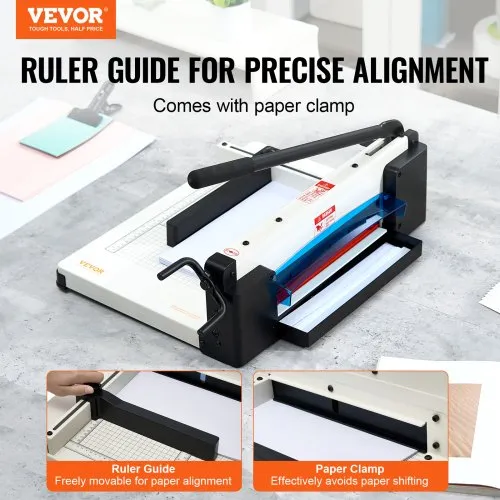
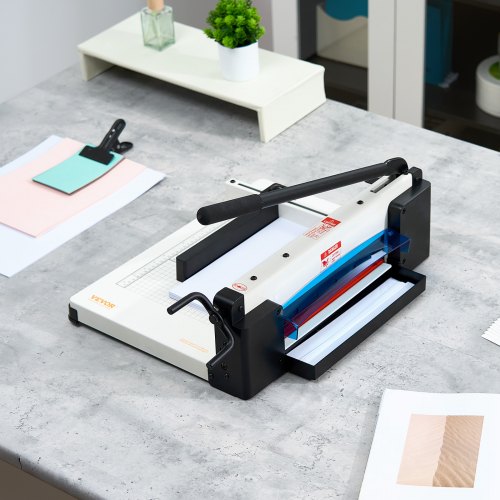
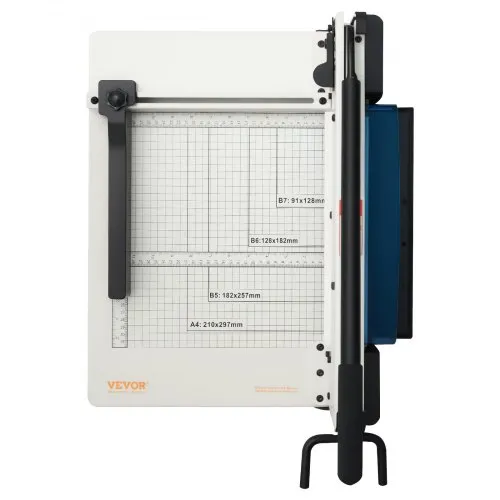
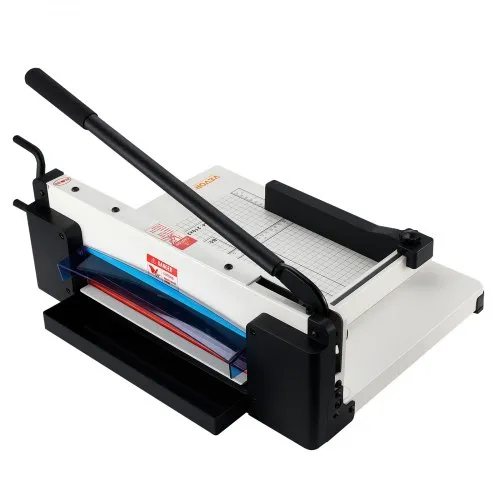
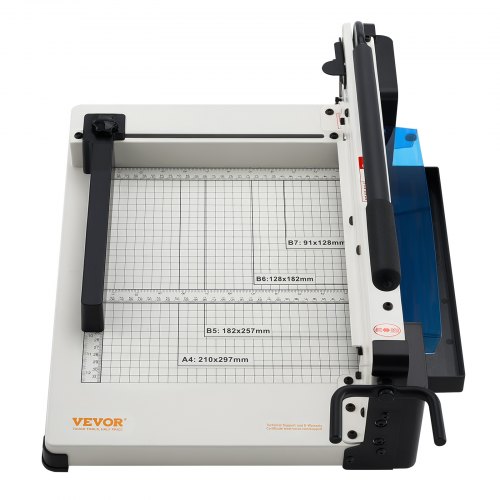
This guillotine type cutter cuts a thick stack of paper in one operation. A heavy-duty paper guillotine has a long, weighted blade that swings down through the stack in one motion, handling far more sheets at once than scissors or a rotary trimmer. Guillotine paper trimmers are in the same category. They are typically bolted to a table or stand for stability. The downward cutting force requires a solid base to remain accurate and safe over repeated use.
Stack paper trimmers and paper stack cutters serve the same basic function from a slightly different angle. They cut by stack size rather than a blade mechanism. Heavy-duty stack cutters increase capacity and are made for print shops handling large jobs where reloading paper every few sheets is impractical. Whether the listing says guillotine, stack cutter, or heavy duty stack cutter, the question at the heart of the matter is the same.
Electric and Manual Operation
The power source is more than another spec; it affects how a paper cutter fits into a daily workflow. In electric paper cutting machines, the motor drives the blade down into the stack. This speeds up repetition and reduces the physical effort needed for thick stacks that would otherwise require real arm strength with a manual lever. Electric paper cutter and paper cutting machine are the same thing, just a motorized type, worded differently depending on how you search for it.
Manual Paper Cutters are cheaper to buy, don't require an outlet, and use a hand lever or swing arm. They suit offices or classrooms where you need to cut small quantities as needed rather than for continuous production. Typically, the term paper cutter machine can be electric or manual, depending on the context. It is more important to check the actual operating type in the listing than the general search term. For the most part, it’s simply a matter of volume. Electric vs. Manual. Manual units work well for occasional trimming. But electric models make more sense for a daily, repetitive task.
Rotary, Desktop, and Specialty Trimmers
You don’t need a full guillotine blade for every cutting job. Rotary paper trimmers use a small circular blade that rolls along a track across the paper. This creates a clean, straight cut without the swinging blade of a guillotine style. This makes them a favored option for scrapbooking, photo trimming, and lighter craft use where safety around a large blade matters more. Desktop paper cutters come in a wider range of small units designed to sit on a desk or countertop and typically have a small guillotine or rotary blade in a smaller footprint than full-size shop models.
The cardstock trimmers are made with a sturdier blade and base for certain materials to handle heavier stock without ripping or bending the paper halfway through the cut, which is important for anyone printing out invitations, business cards, or scrapbook layouts on heavier paper. Photo paper trimmers are another specialty item, sized and calibrated for the glossy, sometimes slippery surface of photo paper, where a standard blade might slip or create a rougher edge than a trimmer built for that specific material. This family provides lighter, more accurate cutting rather than high-volume production, with rotary trimmers, desktop models, and these material-specific options.
Commercial, Industrial, and High Capacity Cutters
Once volume goes beyond what a desk cutter can handle, you move into commercial and industrial paper cutters. Heavy duty paper cutters are machines designed to take the abuse of heavy use, not occasional office cutting. These cutters typically have more powerful motors, heavy duty blades, and larger cutting tables to handle larger stacks and paper sizes.
Print shops, copy centers, and companies producing large batches of fliers, booklets, or packaging inserts typically buy this tier. The main difference between a heavy duty office cutter and a true large paper cutter is usually duty cycle, not how wide it can cut. An industrial unit is designed to run all day, eight hours straight, without overheating or dulling as fast as a lighter-duty model pushed past its intended volume.
Choosing Paper Cutters by Capacity and Features
The cutting method is only half the story. It's not just about paper capacity; there are a few other things to watch for.
Matching Cutting Capacity to Your Workload
Paper cutters are rated by how many sheets they can cut in one pass, and buying under that rating for everyday use is one of the most common mistakes people make. A desktop paper cutter rated for a few dozen sheets will bog down fast in an office running daily print jobs. A full industrial paper cutter is overkill and too big for someone trimming a handful of pages a week.
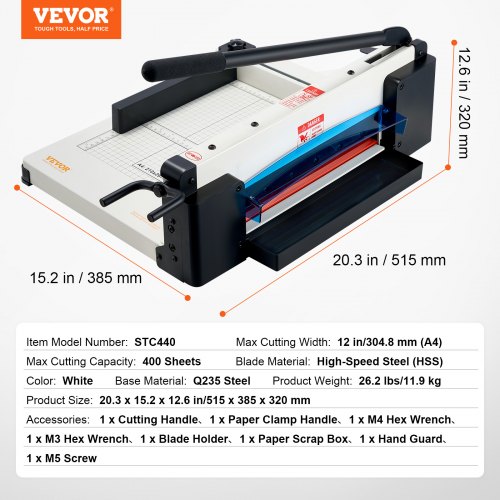
Check both cutting width and stack height together, not just one or the other. A wide cutter with a shallow stack limit still means constant reloading on thick jobs. If you are running a lot of print jobs, a high-capacity paper cutter or Heavy-Duty Stack Cutters model will greatly reduce the need to reload as often when compared to a standard office unit, which adds up over a full day of production. VEVOR clearly labels the cutting width and max stack height on each paper cutter product page, so you can match capacity to your workload instead of guessing based on price alone.
Features Worth Checking Before You Buy
Beyond sheer capacity, a few particular features affect how well a paper cutter performs in daily use. Hydraulic paper cutters use hydraulic pressure to move the blade, resulting in a smoother, more controlled cut through thick stacks than a simple mechanical lever. This is important for shops that regularly cut dense cardstock or laminated material. Programmable paper cutters take this automation a step further by storing preset cut dimensions so you don’t have to remeasure and realign the paper each time for repeat jobs, saving real time on repetitive print runs.
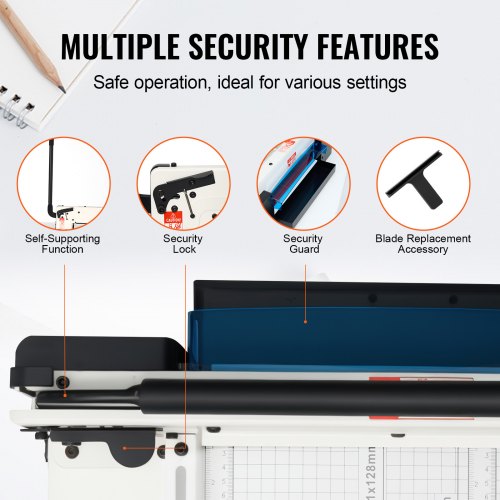
Blade quality also affects how cleanly it cuts and how often it needs maintenance, so check whether you can easily get replacement cutter blades for a given model before you buy it. A dull blade will tear rather than cut cleanly and will eventually need swapping out, no matter how well the machine itself holds up. Due to the difference in blade exposure, guillotine-style units have more safety features, such as blade guards and two-hand operation requirements, than rotary trimmers. By checking these details on a paper cutter product page before you buy, you end up with a unit that fits the workflow, not one that becomes a bottleneck once real volume begins running through it.
Why Choose VEVOR Paper Cutters?
VEVOR paper cutters come in electric and manual, guillotine and rotary cutting styles, from desktop to industrial capacity, with obvious cutting width and stack height so you aren't guessing before you buy. No sacrifice in blade quality or motor power, and prices are reasonable. VEVOR has it in stock, whether you need a desktop paper cutter for light office trimming, hydraulic paper cutter for dense cardstock, or commercial paper cutter for daily print shop volume. See the complete line-up and find the right paper cutter for how much you really cut.
FAQs
What's the difference between a guillotine and a rotary paper trimmer?
A guillotine cutter has a big blade that swings down to make one cut through a big stack. A rotary trimmer has a small rolling blade used for lighter, more precise cuts. Guillotines are better for bulk, and rotary trimmers are better for craft and photo work.
Should I buy an electric or manual paper cutter?
A manual paper cutter is a good choice for smaller, infrequent jobs and is cheaper to start with. Electric paper cutters speed up repetitive, high-volume cutting, reduce physical effort, and fit better for daily office or shop use.
How do I know what cutting capacity I need?
Compare your typical job size to both cutting width and maximum stack height. If you find yourself reloading paper in the middle of a job, consider upgrading to a higher-capacity or heavy-duty model to cut down on reload time.
Are hydraulic paper cutters worth the extra cost?
Yes, for heavy card stock or laminated material. Hydraulic paper cutters make a cleaner, more controlled cut through thick stacks than typical mechanical lever models and help prevent torn or uneven edges on heavier paper.
How often do paper cutter blades need replacing?
Replace blades when they begin to tear rather than cut cleanly. This happens faster with heavy daily use or with thicker materials. Before you buy, check that replacement cutter blades are available for your model.