
Plant Support
































Results for Plant Support
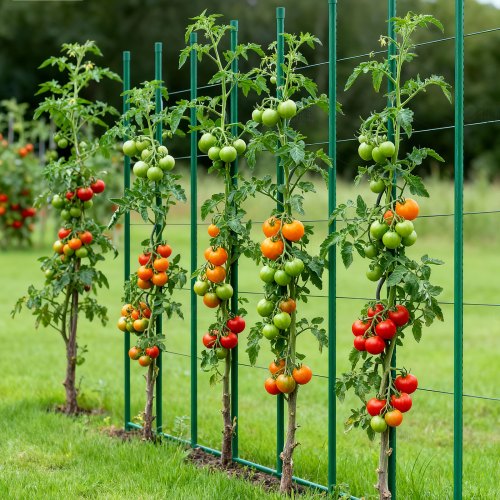
Plant supports are garden structures that hold plants upright and steady while they grow. They give stems, vines and branches something firm to lean on, climb or be tied to, so a plant can carry the weight of its own foliage, flowers and fruit without bending, snapping or collapsing onto the soil. By keeping growth vertical and spaced out, a support lets light reach more leaves, lets air move through the canopy and keeps fruit clean and off the ground. Some supports also form a physical barrier around the plant, shielding it from wind, animals and other outside damage through the growing season.
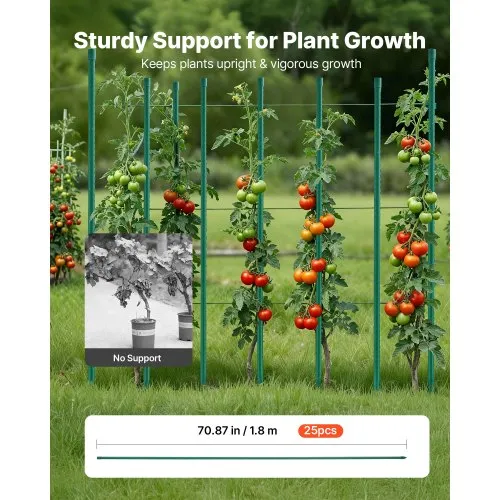
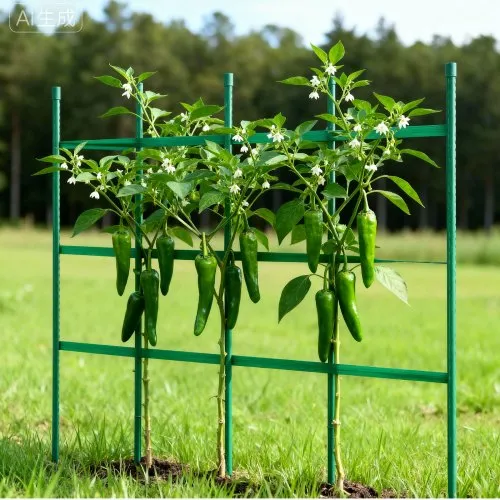
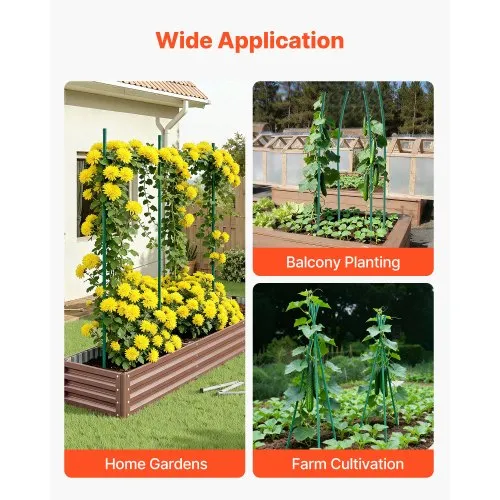
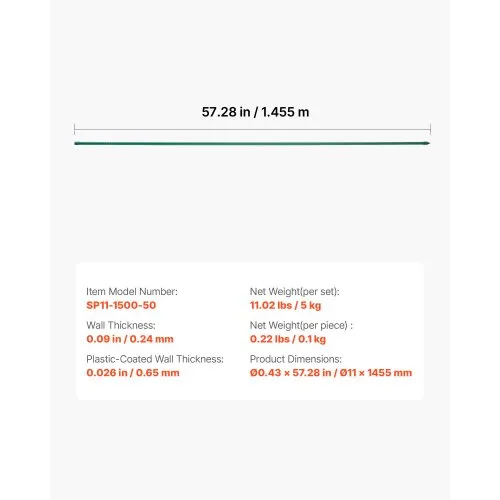
VEVOR plant supports cover four main types. Tomato cages include square folding cages 39.4 to 46.1 inches tall and stackable 48 inch towers built from rods and connectors. Garden stakes run from 46.06 to 93.7 inches in packs of 10, 25 or 50, with plastic-coated steel cores. Crop cages are mesh tents on steel frames, 49 to 78 inches high, that enclose a whole bed, while chicken wire plant protectors surround single plants with 12 or 14 inch stackable mesh panels. Typical uses are training tomatoes, peppers and cucumbers, holding up beans, peas and climbing flowers, and guarding raised beds, seedlings and perennials from rabbits, birds and squirrels.
Five things decide what you need:
- Mature plant height: match cage or stake height to the plant's full season height, not its size at planting.
- Growth habit: climbers need stakes or grids to wrap around, while bushy, heavy fruiting plants need a surrounding cage.
- Pest pressure: if animals or birds are eating crops, choose an enclosing crop cage or individual protectors over open supports.
- Bed footprint: measure bed length and width before buying a crop cage, since the frame has to fit around the bed edges.
- Storage space: fold-flat cages, stackable towers and removable stakes break down for compact off-season storage.
Compare sizes, pack counts and materials across the range below, or explore the wider garden center for more equipment to pair with your supports.
Plant Support Types at a Glance
Use this comparison to see how each support type holds a plant, what it protects against and how far it adjusts.
| Type | Support Method | Pest Protection | Adjustability | Trade-off |
|---|---|---|---|---|
| Square folding tomato cages | 3-tier square frame plant grows through | None, open frame | Folds flat; panels interlock into new shapes | Fixed height; tall vines can outgrow it |
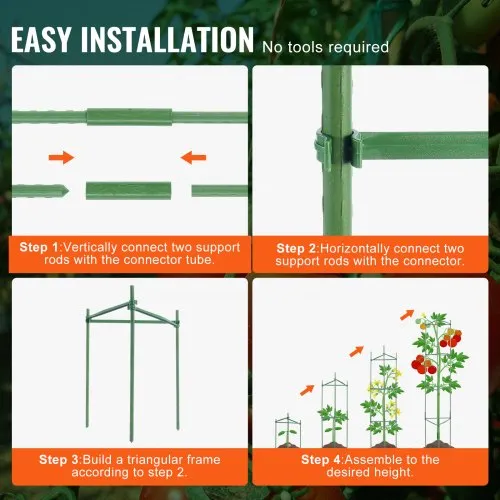
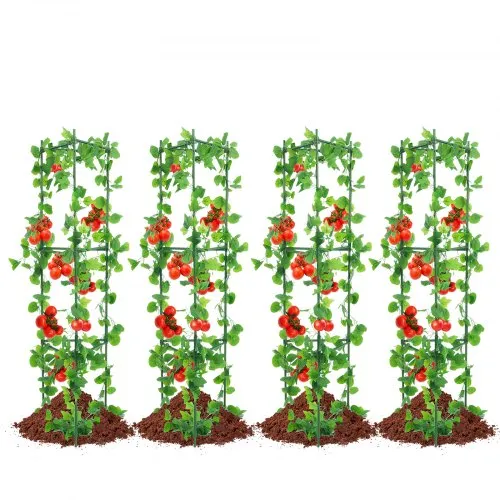
| Stackable tomato cages | Rod and connector tower around plant | None, open frame | Add sections to raise height mid-season | More parts to assemble at set-up |
| Garden stakes | Single post; stem tied or wraps on | None | Height fixed by length chosen | Needs ties or wrapping; one plant per stake |
| Crop cage tents | Steel frame with mesh over whole bed | Full enclosure vs animals, birds, insects | Fixed frame size | More set-up than open cages or stakes |
| Chicken wire plant protectors | Mesh panel cube around one plant | Barrier vs rabbits, chickens, squirrels | Stack panels for more height | Low height suits young plants, not tall crops |
VEVOR Plant Supports Including Cages, Stakes, and Protection Tents for Every Crop
Are you looking for plant supports that scale to fit your garden beds and containers, support heavy crops, and shield seedlings from pests and frost? For all crop types and growth conditions, VEVOR offers tomato cages, garden stakes, plant support cages, plant protection tents, and plant protectors. Get the ideal material, size, and support for your garden right now.
Plant Support Types and the Crops and Applications Each One Serves
The type of crop, its mature height and weight, and whether support, training, or environmental protection are the main requirements all influence the choice of plant support. VEVOR's variety of plant supports covers the major support categories for successful, well-managed garden growth.
Tomato Cages and Plant Support Cages for Upright Crop Training
The most popular plant support in any vegetable garden is a tomato cage, which gives indeterminate and semi-determinate tomato varieties a three-dimensional framework to grow into and lean against as they develop the heavy stem and fruit load that unsupported plants cannot support without collapsing onto the soil's surface. The heavy-gauge steel wire or powder-coated steel rod construction of VEVOR tomato cages allows them to support the combined weight of a mature tomato plant, including fully developed fruit clusters, without bending, spreading, or toppling during the windy conditions that often occur during the mid-to-late summer growing period when plants are near their maximum weight.
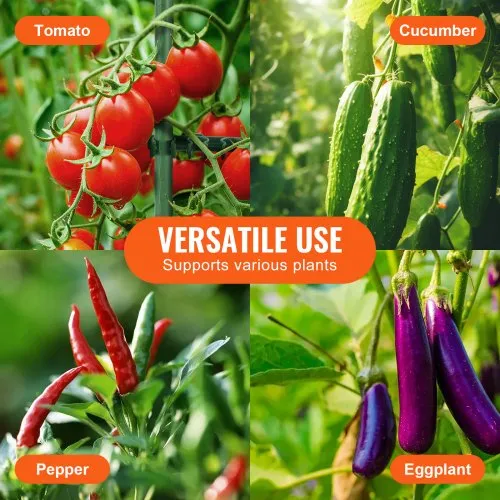
A VEVOR tomato cage's ring diameter dictates how much lateral growing space the plant has as it matures. Choosing a cage large enough for the variety being grown prevents overcrowding, which reduces air circulation within the plant canopy and increases disease pressure from fungal conditions that thrive in humid, poorly ventilated growing environments. Peppers, eggplants, cucumbers, and heavy-fruiting annual flowers that require upright support during their productive season can all benefit from VEVOR's plant support cages, which provide the same three-dimensional support structure as tomato cages. The VEVOR range's stackable or collapsible features make end-of-season cleanup and storage more efficient by enabling compact off-season storage without permanently taking up garden space.
Garden Stakes for Individual Plant Training and Support
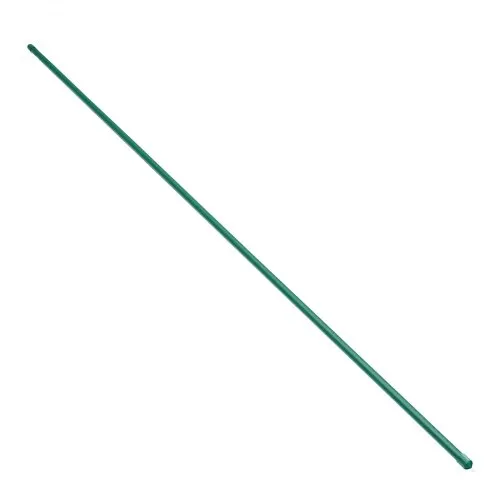
Garden stakes are a basic and adaptable type of plant support. They offer a single vertical anchor point to which plants are tied as they grow, directing stem growth and preventing wind- and fruit-weight-driven leaning that causes unsupported plants to grow horizontally instead of maintaining the upright posture that maximizes sun exposure and air circulation across the plant canopy. From short 12-inch seedling stakes to tall 6-foot or taller stakes suitable for mature indeterminate tomato plants and climbing bean varieties that reach full trellis height, VEVOR garden stakes are available in bamboo, fiberglass, and coated steel.
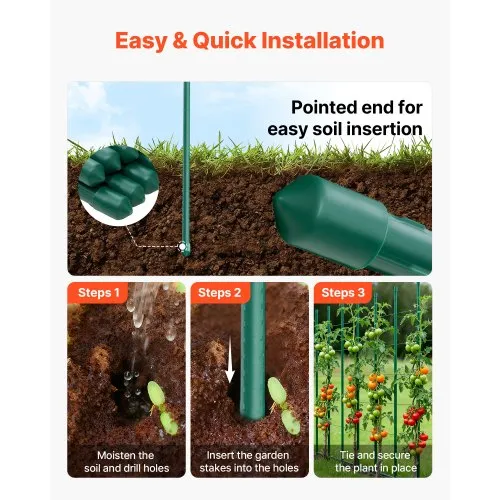
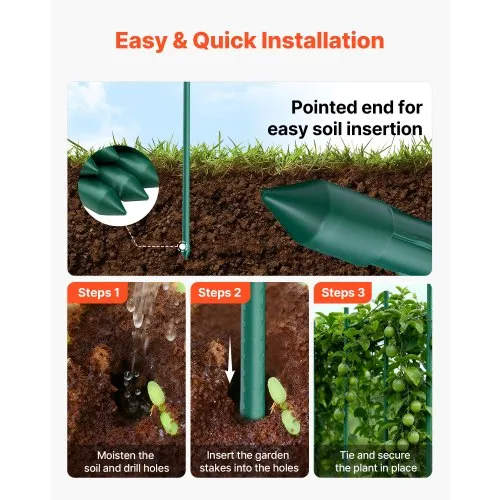
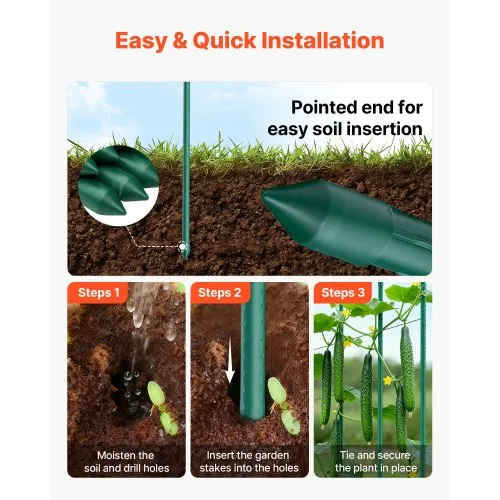
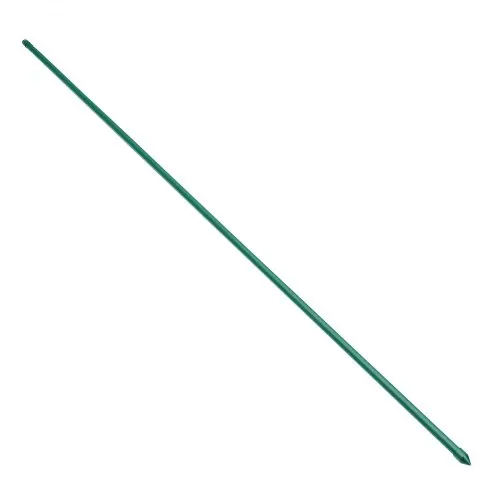
When weathering deteriorates the outer fiber layer, and the stake breaks at a knot or grain weakness under lateral plant load, VEVOR's steel and fiberglass stakes withstand the snapping and splitting that bamboo stakes experience during the second and third seasons of operation. Without the need for a mallet or other specialized equipment to compact the surrounding growth media around plant root zones, the pointed lower end of VEVOR garden stakes drives into garden bed soil and container growing media with just hand pressure. A bulk set of VEVOR garden stakes provides reliable, ready-to-use support throughout the planting season for gardeners managing a large number of individual plants across raised beds and open growing areas, without the per-unit cost and quality variation of buying stakes individually from various sources.
Crop Cage Plant Protection Tents for Multi-Threat Environmental Defense
To protect plants within a controlled microenvironment, a crop cage plant protection tent combines a structural frame with a mesh or fabric covering. This feature protects plants from the combined threats of insect pest access, bird damage, wind, and light frost, which can seriously damage unprotected crops during the vulnerable seedling establishment period and throughout the growing season in exposed garden locations. To prevent frame-on-plant contact, which damages foliage, breaks stems, and creates a humid microenvironment within the collapsed covering that encourages fungal disease, VEVOR crop cage plant protection tents use a rigid or semi-rigid frame structure that maintains the tent's shape over the plants without collapsing under rain load or deforming in wind.
The covering material for VEVOR crop cage plant protection tents is selected based on the specific protection function it serves. Lightweight frost cloth coverings offer a few degrees of frost protection while maintaining sufficient light transmission for ongoing plant photosynthesis beneath the covering during cold-weather protection periods, while fine-mesh coverings provide insect exclusion while allowing adequate light, air, and water penetration. A VEVOR crop cage plant protection tent is a practical, reusable solution that provides dependable protection without daily monitoring or manual intervention for market gardeners and serious home vegetable growers who invest heavily in transplants and wish to safeguard that investment from the common early- and late-season threats that frequently destroy unprotected crops.
Plant Protectors and Tomato Plant Protectors for Targeted Defense
Instead of providing the row- or bed-level coverage that larger crop cage tents offer, plant protectors, including tomato plant protectors, target specific susceptibility stages in individual plant development by providing tailored physical protection at the plant level. To prevent cutworm damage at the soil's surface, slug and snail access to the lower stem, and wind rock that weakens root establishment in recently transplanted seedlings during the crucial first two weeks after transplanting, while root anchoring is still developing, VEVOR tomato plant protectors use a collar or surround design that places protective material immediately around the plant stem and lower foliage.
Because a bed-level tent covers both protected and unprotected crops simultaneously, individual plant protectors from VEVOR are especially helpful in mixed planting arrangements where crops that need protection grow interspersed with those that do not. VEVOR plant protectors are useful for gardeners who manage a large number of individual plants that require targeted protection rather than collective coverage, thanks to their lightweight, stackable design, which enables large quantities to be stored compactly between growing seasons and quickly deployed across a planting in a single session.
Choosing Plant Supports by Garden Situation
The right support also depends on where and what you grow, so match your garden situation to the setup below.
| Garden Situation | Best-Fit Support | What to Check First | Why It Works |
|---|---|---|---|
| Raised bed raided by rabbits, deer or birds | Crop cage tent | Cage length and width vs bed edges | Encloses the whole bed; zip door still allows easy access |
| Indeterminate tomatoes that keep climbing | Stackable tomato cages | Expected height at end of season | Add sections as vines grow instead of buying taller cages |
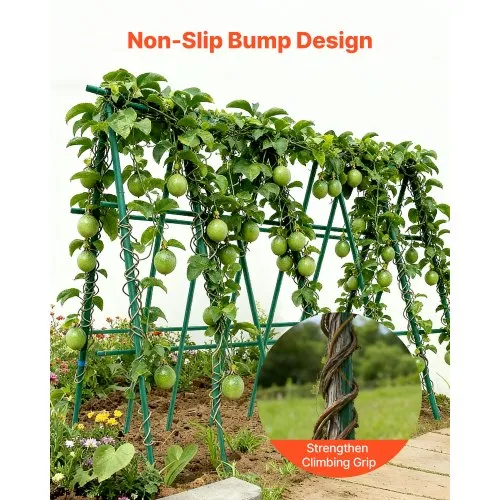
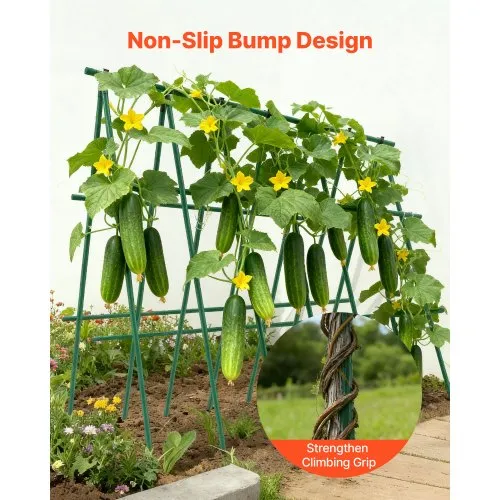
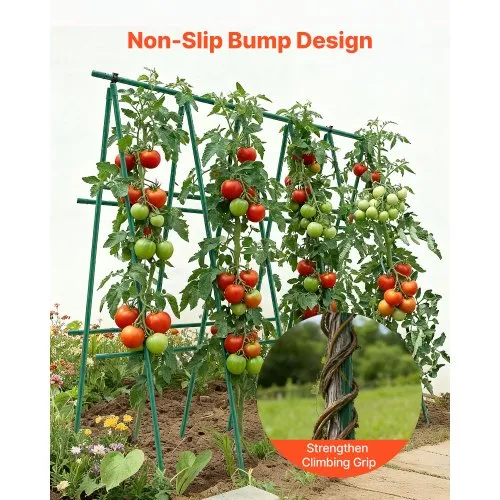
| Beans, peas and vines along a row | Garden stakes in a pyramid | Stake length vs final vine reach | Pyramid spreads load; bumps give tendrils grip |
| Patio or balcony containers | Square folding tomato cages | Pot depth for the 10 in legs | Short legs and fold-flat storage suit tight spaces |
| New perennials dug up by pets or squirrels | Chicken wire plant protectors | Plant spread vs cage width | Ground spikes hold each cage; stack panels as plants grow |
| Very tall or heavy crops | 93.7 in garden stakes | Firm soil to sink the stake deep | Thicker 20 mm tube resists bending under heavy loads |
Material and Size Across VEVOR Plant Supports
How long plant supports last during outdoor growing seasons and whether they meet the precise crop dimensions and bed layouts your garden needs, depend on the material construction and size range.
Steel, Fiberglass, and Fabric Materials in Plant Support Construction
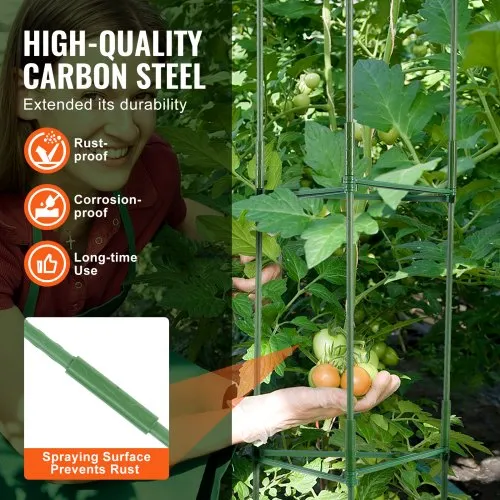
The choice of material for plant supports affects their load-bearing capability, outdoor durability, and simplicity of installation, adjustment, and seasonal storage. The powder-coated steel used in VEVOR tomato cages and plant support cages is rust-resistant for several outdoor seasons, unlike thin or improperly prepared steel surfaces, which can fail after a year or two of soil contact and exposure to wet weather. After two to three seasons of direct sun exposure in an outdoor garden setting, powder coating on VEVOR steel plant supports provides a UV-stable finish that prevents chalking and color fading, unlike less durable coating methods.
VEVOR's fiberglass garden stakes are resistant to rot, moisture absorption, and surface splitting, which occur in hardwood and bamboo stakes due to seasonal wetting and drying cycles that break down natural fiber materials over two to three growing seasons of consistent use. VEVOR plant protection tents' mesh and fabric covering materials are made of UV-stabilized polypropylene or polyester, which preserves structural integrity and mesh opening consistency over multiple growing seasons of outdoor use without the fiber deterioration and mesh deformation that non-stabilized fabrics experience when exposed to direct sunlight for an entire growing season.
Size Selection for Different Crop Heights and Bed Configurations
A cage that is too short for the mature crop height provides initial support but leaves the plant unsupported during its most productive and heavy period, and a stake that is too short to securely anchor in the soil while reaching the plant's upper growth provides insufficient support against wind loading at full plant height. For practical garden performance, size matching in plant supports is just as important as material selection. VEVOR tomato cages range in height from 36 inches for compact determinate kinds to 60 inches for vigorous indeterminate varieties that flourish all season long until frost.
With stake diameter options that balance the rigidity required for heavy crop support against the ease of soil penetration that thinner diameter stakes provide for hand-pushing into dense garden bed soil without the soil disturbance that driving a thick stake with a mallet creates around established plant root zones, the VEVOR range of garden stake lengths spans the entire crop height spectrum, from short ornamental and seedling stakes to full-height vegetable support stakes.
Best-Seller Comparison
These five best sellers cover every support type in the range, compared on the specs that set them apart.
| Product | Pack Size | Dimensions | Frame | Assembly | Anchoring | Best For |
|---|---|---|---|---|---|---|
| Square Tomato Cages, 46.1 in, 10 Pack | 10 cages | 11.8 x 11.8 x 46.1 in | 4 mm steel wire | Welded 3-tier frame; no tools | 10 in in-ground legs | Only cage with a rated load (22 lbs); heavy tomato rows |
| Crop Cage Tent, 7.8 x 3.9 x 5.9 ft | 1 tent | 94.33 x 47.24 x 70.87 in | 16 mm steel tube | Tubes snap into connectors; mesh drapes over | U-shaped stakes and guy ropes | Only full enclosure here; whole beds facing animals |
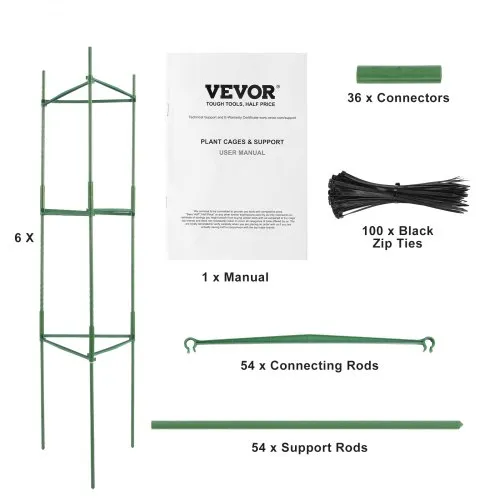
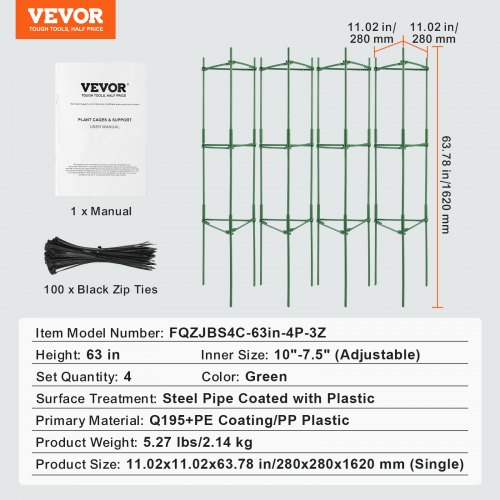
| Stackable Tomato Cages, 48 in, 6 Pack | 6 sets | 12.6 x 12.6 x 48.43 in (single) | Carbon steel pipe | Rods, pipes and 100 zip ties | / | Only height-adjustable cage; tomatoes that keep climbing |
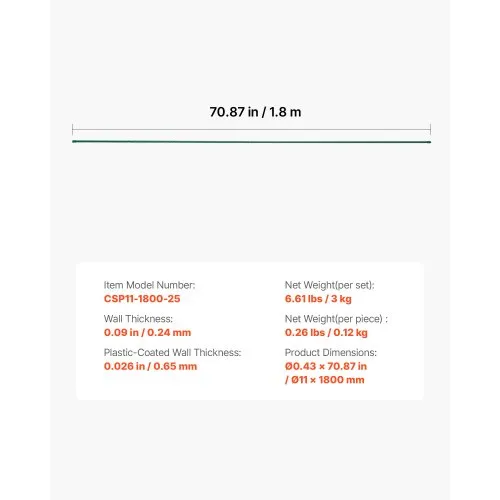
| Garden Stakes, 70.87 in, 50 Pack | 50 stakes | 0.43 x 70.87 in | 11 mm steel tube | None; push in by hand | Pointed end | Most pieces per pack; long rows of beans and vines |
| Chicken Wire Plant Protector, 5 Pack | 5 cages (20 panels) | 15.35 x 15.35 x 14.37 in | Carbon steel wire | Panels joined with clips and zip ties | 20 U-shaped ground spikes | Only single-plant animal barrier; mixed beds, new perennials |
Why Choose VEVOR Plant Supports?
For home gardeners and serious growers, VEVOR offers a full range of plant supports, including tomato cages, garden stakes, plant support cages, crop cage plant protection tents, plant protectors, and tomato plant protectors. Every product offers dependable crop support and protection at every garden scale, combining long-lasting outdoor materials, useful size options, and affordable prices. Your plant supports are built to withstand multiple growing seasons and are backed by VEVOR's dependable after-sales service. Explore the entire selection and provide your landscape with the assistance it requires right now.
FAQs
What tomato cage height do I need for indeterminate tomato varieties?
Indeterminate tomatoes require cages that are at least 54 to 60 inches tall since they continue growing throughout the season. Tall VEVOR tomato cages are ideal for robust indeterminate varieties that outgrow the typical 36-inch garden-center cages by the halfway point of the season.
Can plant protection tents stay on crops throughout the growing season?
For crops that do not require pollinator access, fine-mesh insect-exclusion tents can remain in place throughout the growing season. To avoid overheating, remove the frost cloth tents once the risk of frost has passed. In contrast to rigid plastic covers during hot weather, VEVOR crop cage plant protection tents employ permeable materials that reduce heat buildup.
What is the advantage of fiberglass garden stakes over bamboo?
Fiberglass garden stakes are resistant to surface cracking, rot, and moisture absorption, which deteriorate bamboo stakes after one to two seasons outdoors. Without the break risk at knot points that renders aging bamboo stakes unreliable under lateral plant stress, VEVOR fiberglass stakes retain their structural strength and smooth surface finish for several growing seasons.
How do I store tomato cages and plant support cages during winter?
For small off-season storage in a garage or garden shed, VEVOR's stackable and collapsible tomato cage designs fold flat or nest together. The service life of steel plant supports is extended over several outdoor seasons by cleaning dirt and debris from cage wire before storage and lightly misting any scratched coating with a rust-inhibiting spray.
How do I choose the right plant support for different types of plants?
Match the support to how the plant grows. Climbing beans, peas and vines need tall stakes or grids to wrap around, while bushy, heavy fruiting tomatoes and peppers need a surrounding cage. Size it to mature height, and add an enclosure where animals or birds are a problem.
What are the best types of supports for climbing plants?
Tall stakes and open cages work best for climbing plants because tendrils and twining stems need firm points to grip. VEVOR garden stakes have non-slip bumps along a plastic-coated steel core, and arranging them in a pyramid helps them resist tipping under heavy vines.
Can you recommend durable garden stakes for outdoor use?
Choose coated steel stakes over bare wood or bamboo for multi-season outdoor use. VEVOR 70.87 inch garden stakes use an 11 mm steel tube with a weatherproof PE coating that resists rust, fading and cracking. For the heaviest crops, the 93.7 inch set uses a 20 mm diameter.
Can you recommend durable cages for vegetable plants?
Look for coated steel cages with solid frames and secure anchoring. VEVOR square tomato cages use 4 mm steel core wire with PVC coating and 10 inch in-ground legs, and the 46.1 inch model is rated for 22 lbs. They also suit peppers, eggplants, beans and cucumbers.
Where to buy plant supports?
You can buy plant supports directly from VEVOR's online store, which carries tomato cages, garden stakes, crop cages and chicken wire plant protectors in one place. Many listings also offer pickup or ship-to-store options, and since stock varies, check the product page for availability in your area.