
Plastic Edging










Results for Plastic Edging
For hardscape projects, lawns, gardens, and walkways, VEVOR plastic edging provides expert landscape definition. For separating planting beds, containing mulch, preventing grass encroachment, and creating clear property boundaries, we offer a wide range of flexible border strips, rigid panel systems, and decorative edging profiles in various heights, lengths, and colors. For homeowners, landscapers, and property managers who require long lasting borders that preserve curb appeal and reduce landscape maintenance across residential and commercial applications, VEVOR offers comprehensive edging solutions with UV resistant materials, simple installation, and sturdy construction that withstands weather exposure and mowing equipment.
VEVOR Plastic Edging, Versatile Garden Borders for Professional Landscape Definition
Do you have issues with mulch overflowing onto walkways, grass encroaching on flower beds, or unclear landscaping borders? Choosing the right plastic garden edging transforms an unkempt yard into clean, polished borders that enhance a property's appearance while requiring less upkeep. Flexible installation options and long-lasting performance make VEVOR plastic landscape edging suitable for curving beds, straight walkways, and intricate landscape designs. Our selection of plastic border edging offers the height options, material durability, and ease of installation required to create long-lasting landscape boundaries that can endure years of mowing, edging, and exposure to seasonal weather, whether you are a homeowner designing a backyard garden, a professional landscaper overseeing commercial properties, or a property manager keeping up community areas.
Height, Length & Application Types: Selecting the Perfect Plastic Garden Edging Border
For the best border performance and longevity, selecting the right plastic edging means knowing how height requirements, available lengths, and intended uses fit into your landscape design, soil conditions, and maintenance needs.
Height Specifications and Functional Requirements
The height of plastic garden edging affects both its aesthetic appeal and practicality. Conventional selections range from 3 inches for delicate definition to 8 inches for strong confinement and root barrier applications. When aesthetic delicacy outweighs aggressive confinement needs, low-profile 3–4-inch edging creates sufficient barriers for established lawns and beautiful rock borders with minimal visual presence. These shorter profiles retain sightlines across landscape beds and provide sufficient resistance to casual grass creep when installed 1.5 to 2 inches underground and 1.5 to 2 inches above grade.
While staying low enough to prevent visible disturbances of the landscape and its overall composition, this height range allows for moderate root barriers that keep aggressively spreading plants, such as ornamental grasses or groundcovers, from crossing boundaries. Bamboo containment, aggressive perennial control, and deep mulch beds that require 4 to 6 inches of organic material are just a few of the difficult applications that tall 7 to 8 inches plastic garden edging border systems can handle. The installation process entails burying 4 to 5 inches below grade to provide strong root barriers and leaving 3 to 4 inches exposed for visual clarity and mulch retention.
Length Options and Coverage Planning
Usually available in rigid chunks or coiled rolls, plastic edging offers a variety of covering options and installation features suited to specific landscape layouts. Flexible coiled edging in continuous lengths of 20 to 100 feet can form curving beds, circular tree rings, and serpentine borders without the need for numerous connections or connecting points that could cause failure spots and visual disruptions. A 50-foot roll can easily cover most residential flower bed perimeters measuring 12 to 15 feet in diameter or 25-foot linear borders along sidewalks and driveways.
For commercial installations spanning wide property boundaries, professional landscapers like 100-foot rolls because they simplify installation across large-scale projects and minimize connections. Depending on panel flexibility and connection design, rigid panel systems usually have sections 4 to 10 feet long, with interlocking ends that produce either straight runs or soft curves. These parts are appropriate for formal gardens, geometric bed layouts, and applications where the aesthetics of a property are defined by straight lines, such as architectural gardens that prioritize clean geometry over organic curves, modern landscapes, or commercial properties. Measure all bed edges, walkway borders, and transition zones before making a purchase. While some plastic border edging systems come with integrated connectors, others need separate coupling hardware, which can affect the final cost and installation difficulty.
Matching Edging to Landscape Style and Maintenance Goals
Selecting a plastic garden edging border that works well strikes a balance among long term landscape health, reduced maintenance, and aesthetic preferences. Modern landscapes prefer low profile edging, 3 to 4 inches tall, in neutral hues that blend in with the surroundings while serving as a practical border between planting areas and hardscape. To add period appropriate embellishments without overpowering the plants, traditional gardens can accommodate ornate profiles with scalloped tips or ornamental patterns that are 4 to 5 inches tall. Taller 6 to 7 inch barriers that provide clear separation and eliminate hand trimming along borders are beneficial for low maintenance landscapes.
This feature is especially useful for properties with large perimeter beds or tight maintenance budgets. Instead of using herbicide strips around fences and foundations, organic gardeners choose chemical free barriers. Five to six inches of plastic edging physically excludes weeds instead of using chemicals. Durable edging, 6 to 8 inches wide, that can withstand toy impact, foot traffic, and animal activity without cracking or dislodging, is necessary for high traffic areas near play or pet areas. The choice of color affects both visual presence and heat absorption. Tan and brown alternatives mix with natural materials, reflecting more heat in sunny exposures, while black edging blends into shadows and dark mulches but absorbs solar heat that may impair nearby plant roots.
Application Specific Design Considerations
Beyond the fundamental requirements for height and length, several landscape applications call for particular qualities in plastic edging. Flower bed borders that divide lawns from planting areas need flexible profiles that fit the organic shapes and soft curves common in home garden design. Rigid portions that preserve straight lines and equal spacing, usually 3 to 4 inches high, provide visual definition without posing a trip hazard or hindering foot circulation, making them ideal for delineating driveway borders, patios, and pathways.
To eliminate grass competition and preserve moisture-conserving mulch, tree ring applications use extremely flexible edging to create circular borders around specimen trees. 50-foot coils may hold rings 3 to 15 feet in diameter and 5 to 6 inches high. 6 to 8 inches of edging is necessary for vegetable garden borders to keep aggressive plants like spreading squash, horseradish, and mint from encroaching on other growing areas. This trait is particularly important on sloped properties, where gravel can move when it rains due to gravity. For slope uses, you need to bury the piles deeper and sometimes stake them to strengthen them.
Material & Installation Method, Ensuring Durability and Professional Results
Property owners and landscapers can achieve solid borders, avoid common failure modes, and extend the lifespan of plastic edging across a range of weather conditions and landscape applications by understanding the materials and installation practices.
Material Composition and Durability Factors
High-quality plastic landscape edging is made from UV-stabilized polyethylene or polypropylene formulations designed to withstand deterioration over 15 to 20 years due to constant exposure to sunlight, severe temperatures, and soil contact. UV inhibitors are especially important in southern regions with high ambient temperatures and intense solar radiation because they prevent polymer chain breakdown, which makes untreated polymers brittle and prone to splitting within 2 to 3 years of outdoor exposure. When appropriately manufactured, recycled plastic content between 25 and 90 percent maintains structural performance while offering environmental benefits. High-quality recycled edging performs just as well as goods made from virgin materials, but with a smaller environmental impact.
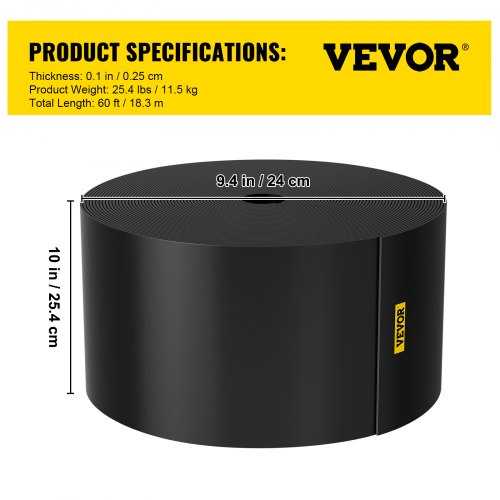
For circular beds and serpentine borders, smaller profiles provide better curve conformance, while thicker materials resist lawnmower damage and preserve straight lines in formal applications. Typical thickness ranges from about 0.060 to 0.125 inches. Premium plastic border edging is malleable at temperatures as low as 20°F, enabling fall and early spring installation in northern climates without material splitting during trenching and placing. This temperature flexibility ensures year-round installation. In landscapes that use fertilizers, herbicides, or soil amendments, chemical resistance is crucial. High-quality plastics can tolerate pH values between 4 and 9 as well as common landscape chemicals without degrading, which is crucial for long-term performance in commercial landscapes and actively managed gardens that receive frequent inputs.
Installation Methods and Securing Techniques
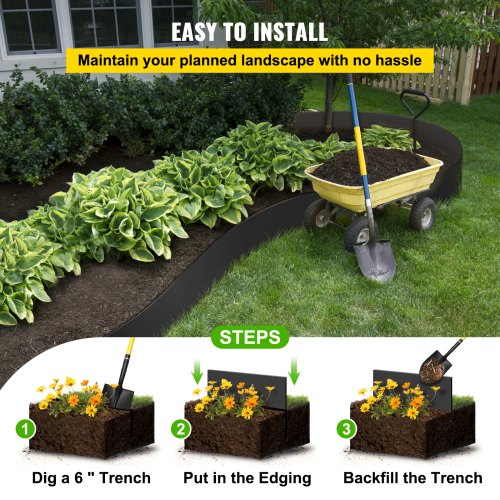
Proper trench preparation is the first step in installing plastic edging successfully because it creates firm foundations that stop future shifting, heaving, or settling during seasonal freeze-thaw cycles. The depth of the trench should be 50 to 60 percent of the height of the edging. For example, 5-inch edging necessitates 3-inch trenches that expose 2 inches above grade for practical confinement while yet providing sufficient burial for stability. Half-moon edgers or square mouth spades make suitable trenches in most soil types. A trench width equal to the edging thickness plus 0.5 inches permits placement without forcing, while avoiding excessive gaps that jeopardize stability.
Backfilling practices have a big impact on long-term performance. For example, tamping soil firmly against both sides of installed edging stops frost heave from shifting borders during freeze-thaw cycles and creating holes where grass roots can enter. Certain types of plastic garden edging come with built-in stakes molded into profiles at 12- to 24-inch intervals, eliminating the need for additional fasteners and ensuring uniform fastening across installations. In standalone stake systems, 8–12 inch plastic or metal spikes are driven through edge flanges or pre-punched holes. In stable soils, stakes are spaced every 3–5 feet, whereas in loose or sandy soils that are prone to moving, they are spaced every 2-3 feet. Connector clips or channels offer a more sophisticated look in conspicuous locations where joint quality influences aesthetics, whereas overlap joints require 4-6-inch overlaps held in place with two stakes.
Why Choose VEVOR Plastic Edging for Long-Lasting Landscape Definition?
For homeowners, landscapers, and property managers, VEVOR plastic edging offers outstanding value by combining UV-resistant materials, a variety of heights, and a low price. You may discover the ideal solution for your landscape-defining needs with our extensive product selection, which includes rigid sections for straight borders and a choice of heights that accommodate both deep root barrier installations and shallow decorative borders. VEVOR offers the edging products and expertise to create clean landscape transitions that require less maintenance. Discover our selection of plastic landscape edging today to create expert borders that exquisitely delineate your outdoor areas.
FAQs
How deep should I bury plastic garden edging?
For best stability, bury between 50 and 60 percent of the overall height. It takes 3 inches to bury and 2 inches to expose a 5-inch edging. While clay allows a shallower installation with sufficient stability, sandy soils may require a somewhat deeper burial.
Will plastic edging stop aggressive spreading plants?
Yes, when installed correctly, 6- to 8-inch plastic landscape edging can restrict the spread of most grasses and perennials. Bamboo and very aggressive species might need 12-inch barriers. Make sure the burial depth is sufficient to contain the roots.
Can I install plastic border edging in winter?
Installation is possible in cool weather, as high-quality UV-stabilized plastic remains flexible down to 20°F. When materials become brittle, avoid frozen ground and freezing temperatures below 15°F. In most climates, the best seasons for installation are spring and fall.
How long does plastic edging last outdoors?
When installed correctly, UV-stabilized plastic garden edging border can last 15 to 20 years. In two to three years, untreated polymers break down. Longevity depends on quality and high-end formulations that are far more resistant to chemicals, weather, and sunlight than low-cost ones.
Do I need stakes for all plastic edging installations?
For stability, most installations benefit from staking every three to five feet. Stake systems with integrated components make installation easier. To avoid shifting and displacement, closer stake spacing of 2 to 3 feet is necessary in sandy soils, on slopes, and in high-traffic locations.
