Prylever


















Results for Prylever
In reality, VEVOR's prylever bars cover two distinct tools under one category page: smaller wrecking pry bars rated to 2000 lbs for prying up deck boards and flooring, and heavy-duty lever dollies rated 6600 to 11000 lbs for lifting and hauling pallets and equipment. The carbon steel handle and wheels of the lever dollies are designed for frequent heavy lifting in a shop or warehouse. To gain leverage on difficult boards, the wrecking bars completely avoid the wheels in favor of a longer reach of 40 to 50 inches. Avoid a return by knowing which family you need before placing your order.
VEVOR Prylever Bars for Pallet Handling and Deck Board Removal
Need to move a loaded pallet across a warehouse floor, or pry a rotten deck board off a joist? VEVOR divides its prylever bars based on the fact that moving a loaded pallet across a warehouse floor and prying a rotten deck board off a joist are two entirely different tasks. The first is handled by the heavy-duty wheeled prylever bars, which roll up the edge of a pallet, slide the flat plate underneath, and push it where it needs to go without a forklift. The second is handled by the wrecking pry bar line, which is long and flat to split boards apart without breaking them.
Prylever Bars by Capacity and Length: Two Different Tools
Here, capacity and length refer to two distinct product lines, not two bar sizes. This is how VEVOR divides them.
High-Capacity Lever Dollies: 6600 to 11000 lbs
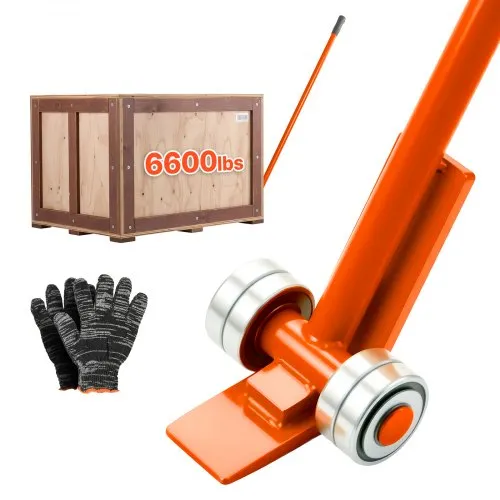
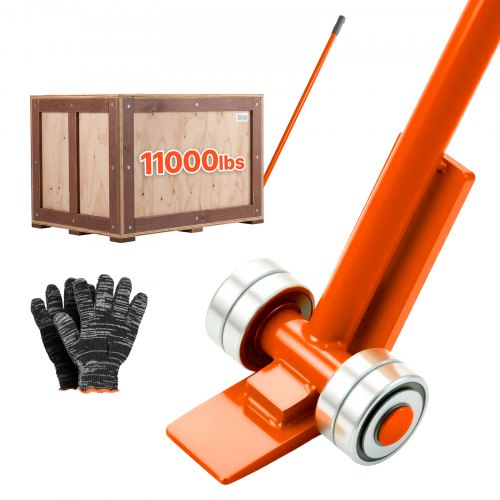
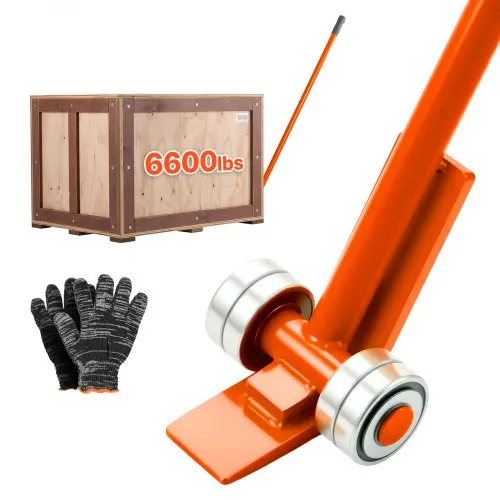
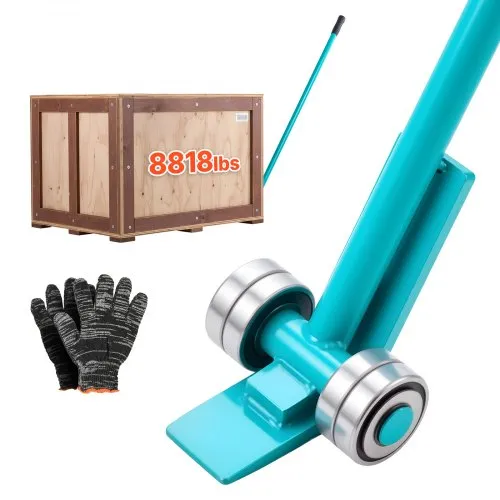
VEVOR's heavy-duty lever dolly range begins with the 6600 lbs Prylever Bar, which is designed for pallets and equipment that a hand truck cannot manage on its own but do not require a forklift. For machine bases, palletized stock, or crated equipment nearing the four-ton mark, upgrade to the 8818 lbs Prylever Bar; for the highest loads VEVOR rates for manual leverage (more than five tons), the 11000 lbs Prylever Bar is at the top of the range.
All three are marketed as Heavy-Duty Prylever Bars with Wheels. That combination matters because the wheels let a five-ton load be used by a single person, not just as a convenience accessory. Instead of pulling or re-lifting the load with each step, use leverage to lift it, let the wheels carry the weight, and roll it.
A bar rated precisely at your load's weight leaves you no margin, and margin is what prevents the handle from bending under a load that is heavier than anticipated. So choosing between the three capacities comes down to your biggest realistic load, not your average one. These three are designed for the occasional big pull in a warehouse, loading dock, or shop, not a job requiring hundreds of lifts per shift. They are not intended for continuous industrial cycling all day.
Carbon Steel Handles and Lever Dolly Design
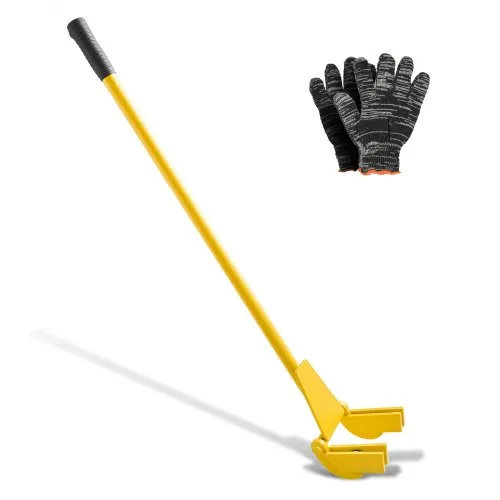
Because a seam is exactly where a lever bar under heavy leverage would eventually crack, every model in this heavier range is a carbon steel handle lever dolly with wheels, with a single continuous steel handle rather than a welded or bolted junction. The handle length (56 to 67 inches, depending on capacity) serves two purposes: longer handles provide greater mechanical advantage, so higher-capacity bars need longer handles to maintain a reasonable lift by hand.
Specifically designed as a lever dolly for large pallets, it uses the wheel axle as the fulcrum and a flat prying plate at the working end that is low enough to slip under a pallet's edge. When the handle is depressed, the plate raises the pallet edge, and the wheels roll under load rather than scraping the plate over the floor.
It's a straightforward mechanism with very few points of failure; aside from the occasional wheel bearing, it has no hydraulics, no seals, and nothing that leaks or needs replacing. Because there is no motor or hydraulic cylinder to break, a well-maintained bar from years ago still functions just like a new one. This mechanical simplicity is another reason older prylever bars keep their value over time.
Wrecking Pry Bars by Length: 40 to 50 Inches
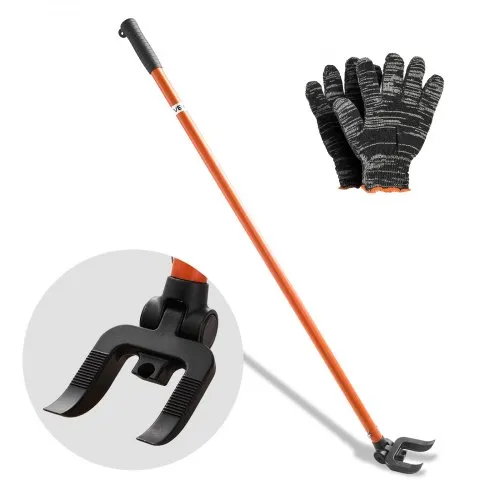
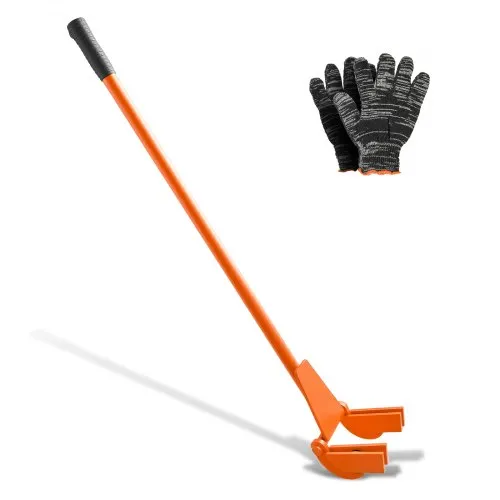
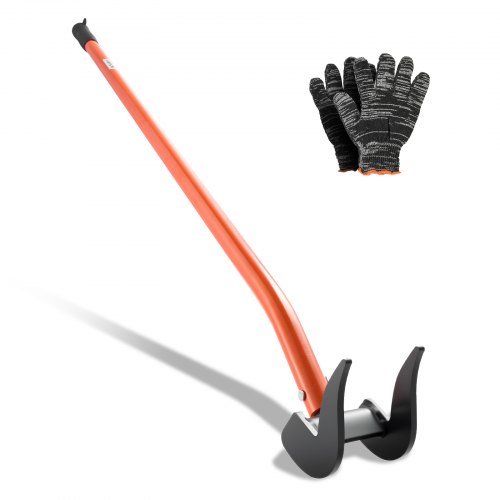
Of VEVOR's deck-board series, the 40 inch Wrecking Pry Bar is the smallest and most maneuverable, making it simple to operate in confined subterranean spaces or between closely spaced joists. The 41 inch Wrecking Pry Bar has almost the same reach but slightly more leverage, which is important when a board is recalcitrant rather than just stuck.
Upgrade to the 44 inch Wrecking Pry Bar for standing-height work that requires less bending. This is a popular choice for full deck rebuilds that require hours of standing, not a quick fix. The longest in the line, the 50-inch Wrecking Pry Bar sacrifices some maneuverability for maximum leverage, which helps on boards that have been screwed down more times than anticipated, cupped, or deformed.
These four wrecking bars are rated to 2000 lbs, which is sufficient for prying deck boards but a very different tool from the pallet-lifting line above. None of them have the 6600 to 11000 lbs rating of the wheeled lever dollies. Wrecking pry bars pry boards apart without using any wheels, while prylever bars with wheels carry large loads short distances. The terms overlap enough to be confusing at checkout, so it's worth repeating.
Matching the Right Tool to the Job
A prylever bar with wheels rated between 6600 and 11000 pounds is preferable to a wrecking bar if your job involves moving a heavy object a short distance, such as a pallet across a warehouse, a package off a vehicle, or an appliance into place. A wrecking pry bar in the 40 to 50 inch range is preferable to a lever dolly if your task involves disassembling something, such as deck boards, pallets for scrap wood, or old subflooring.
The term "pry bar" appears in the descriptions of both tools, which use a long steel handle and leverage against a fulcrum, which is typically the source of confusion. However, the fulcrum of a wheeled lever dolly is built around a wheel axle that is intended to roll under pressure, whereas the fulcrum of a wrecking bar is either the bar's own bend or a separate block you place below it; there are no wheels, no rolling, just sheer prying force.
A wrecking bar won't roll a pallet, and a wheeled lever dolly is excessive and cumbersome for splitting a deck board. Purchasing the incorrect one isn't harmful, just annoying.
Prylever Bars in Use: Wheels and Application
Wheels and application tell you how VEVOR's prylever bars actually function while they're on the job, while capacity and length tell you which family you require.
Wheel Features That Make Moving Easier
The wheels on VEVOR's larger prylever bars are positioned as the working fulcrum, meaning the load passes through them as soon as you start levering down, rather than being an afterthought fastened onto a simple bar. A bar with a fixed foot or skid plate, on the other hand, needs to be dragged or moved after each lift.
When a loaded pallet can be moved several feet in a single continuous motion rather than lift-set-lift-set, rolling under load is especially important on smooth warehouse or shop floors. The wheels still help on harder terrain, such as gravel, a loading dock lip, or uneven pavement, but you will need to reposition them more often because they cannot glide smoothly over gaps or debris.
Wheel maintenance is modest but not nonexistent. Before beginning a heavy task, make sure the wheels are spinning smoothly because a seized wheel can change a rolling lever dolly back into a dragging one, in which case you are fighting both the tool and the load. A bar rated for 11,000 pounds but equipped with an undersized wheel will still struggle to roll that weight smoothly. For this reason, VEVOR sizes the wheels to match each capacity tier rather than using a single wheel throughout the entire prylever bar lineup.
Applications: Deck Boards, Flooring, and Pallets
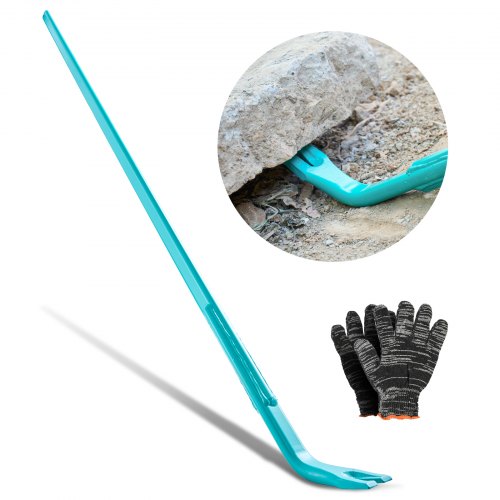
The wrecking pry bar line is designed expressly for the geometry of decking as a heavy duty deck board removal tool. It has a thin prying edge that slides into the space between boards without splitting the board, and it is long enough to apply real leverage without having to stand on your knees.
The same tool works for framing, roofing, trim, and drywall because the process of getting a thin edge beneath tied-down material and then applying leverage is the same for deck boards and roofing. The same bar functions as a pallet breaker or flooring remover: it breaks down a pallet for salvaged timber and removes old flooring to make room for fresh material.
On the side that moves equipment, such as warehouse pallets, concrete blocks, crated machinery, and anything else where the task is relocation rather than demolition, the wheeled prylever bars remain in their designated channel. The simplest approach to avoid getting the incorrect item is to know which side of the lineup you're shopping for: the wheeled prylever bars for transporting or the wrecking pry bars for disassembling before you add anything to your cart.
Why Choose VEVOR Prylever Bars?
VEVOR's prylever bars cover both sides of the job: wrecking pry bars from 40 to 50 inches for prying apart deck boards, pallets, and old flooring, and heavy-duty lever dollies rated 6600 to 11000 lbs for moving pallets and equipment across a warehouse floor. Each wheeled model comes with wheels and a carbon steel handle, ready to lift a load the day it is delivered, and it costs significantly less than renting or buying a powered substitute for sporadic heavy lifting. Choose the family that best suits your task (moving or demolishing) and the appropriate length or capacity.
FAQs
What's the difference between a prylever bar and a wrecking pry bar?
Built to roll pallets and equipment, a prylever bar features wheels and is rated for larger loads (6600–11000 lbs). A wrecking pry bar is designed to pry deck boards and flooring apart, not to move heavy items. It has no wheels and a 2000-pound rating.
What capacity prylever bar do I need for a standard pallet?
Most tasks can be done with VEVOR's lightest lever dolly because a standard wood pallet filled with typical warehouse goods usually weighs less than 6600 pounds. For large pallets, crated machinery, or anything whose weight you're unsure about, choose the 8818 or 11000 lbs model.
Can a wrecking pry bar remove deck boards without damaging them?
Yes, when used properly. To prevent cracking, slip the thin end into the space between boards, use steady leverage rather than jerking, and work along the length of the board rather than prying hard from one location.
Are the wheels on a pry lever bar replaceable?
Wheel wear is a common mechanical issue; keep them clear of dirt and make sure they spin freely before doing any heavy work. Wheel wear varies with use and surface. Don't wait until a major repair to notice a seized wheel has stopped turning, or until it rolls back into dragging.