Quick Support Rods
















Results for Quick Support Rods
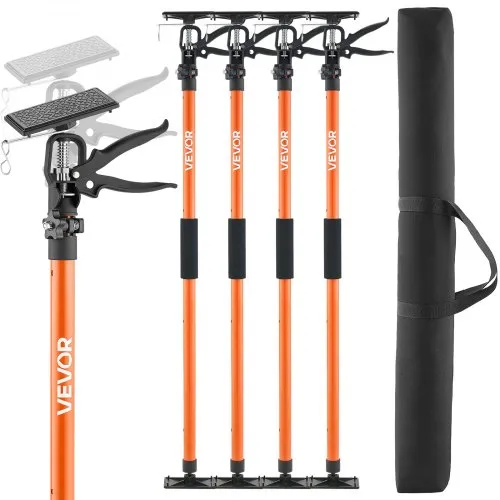
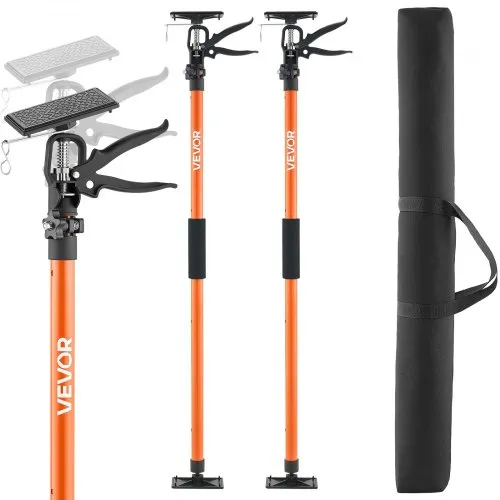
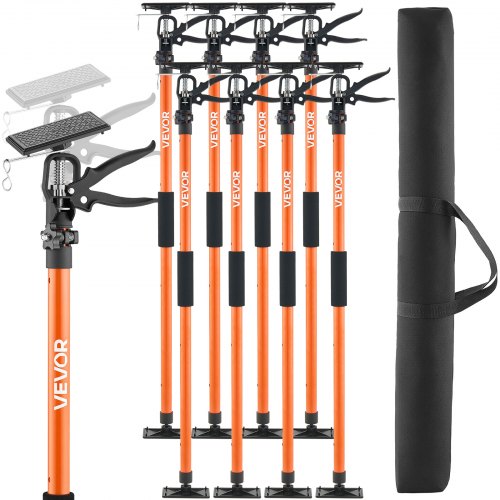
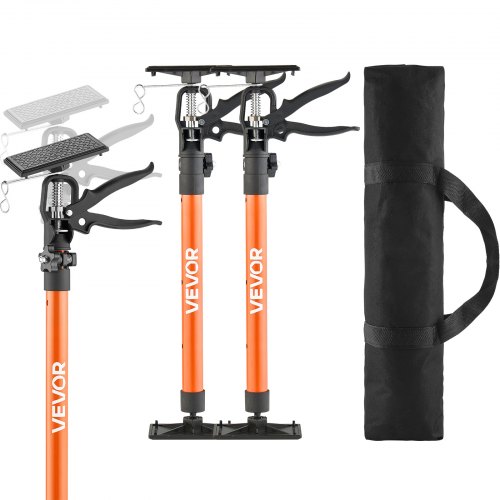
VEVOR quick support rods give installers, remodelers, and DIY builders a steady, adjustable way to hold things up for hard-to-reach or overhead tasks. These quick support rods are designed to hold up cabinets, drywall, trim, and other materials during installation. They have a wide range of heights and strong load ratings. VEVOR offers a full range of products ready for workshops, home projects, and professional job sites. They come in a variety of sizes and are built to last.
VEVOR Adjustable Quick Support Rods for Precise On-Site Positioning
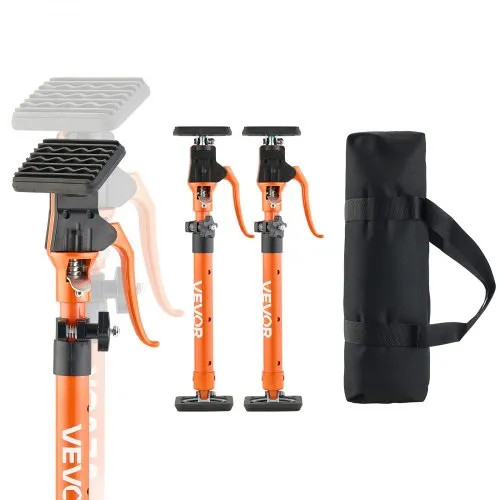
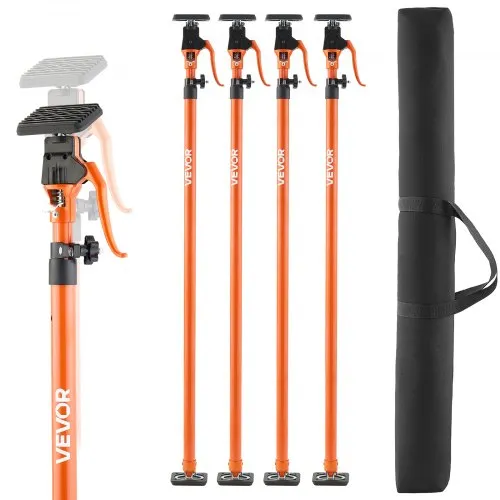
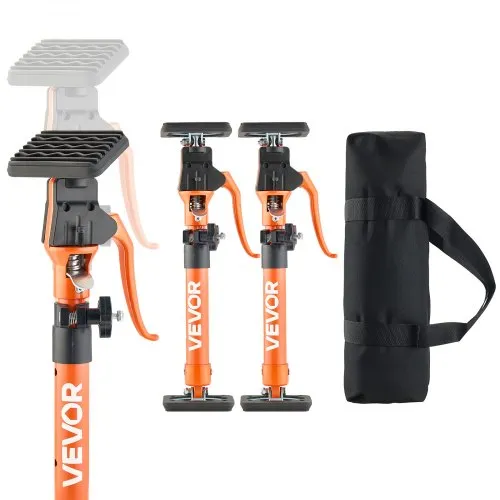
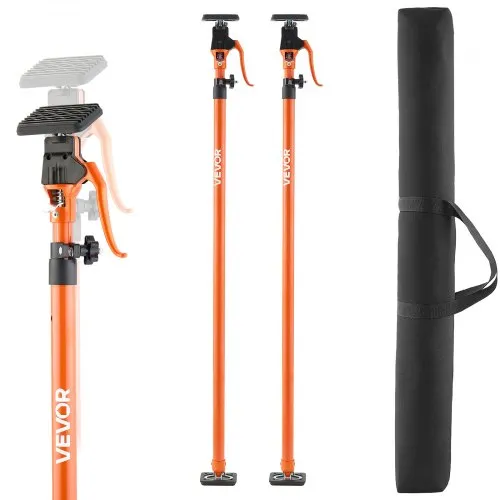
Want a reliable way to keep cabinets, drywall, trim, or panels in place while you install them? You can adjust the height, grip strength, and stability of VEVOR quick support rods to work overhead or in tight spaces. Each telescoping support pole is designed to extend smoothly, lock securely, and operate reliably in all job-site conditions. These quick support rods give you reliable support when you need an extra set of hands, whether you're mounting upper cabinets or keeping long materials steady.
Maximizing Load Capacity and Length Range in Professional Quick Support Rods
Before you buy a set of quick support rods, you should know how the load capacity and length range affect stability and workflow. It can have a big impact on how well the installation goes.
Load Capacity with Real-World Performance of Quick Support Rods
When a project needs a tool that can lift or support materials overhead without slipping, bending, or shifting under weight, a quick support rod is a must. Many installers don't give this specification enough thought, but it affects how well the rod can handle aligning a cabinet box, a sheet of drywall, or a heavy trim board. VEVOR quick support rods can hold between 154 and 220 pounds per pole, which shows that they are ready for tough jobs where accuracy is important and time is short. A cabinet jack support pole with a higher load capacity lets the user move heavier assemblies by themselves, which is especially helpful when putting up big wall cabinets that need to be perfectly level the first time.
Load capacity is also very important for repeat installations. After a few uses, a weaker quick-support rod may sag, but VEVOR's steel telescopic support pole design remains strong even under heavy pressure. When remodeling, the weight of the panels changes, but the quick support rods stay strong, so the user doesn't have to worry about whether the pole can handle the next lift safely. Using a telescoping support pole with a high enough rating keeps the edges of drywall aligned while screws are set, which stops gaps and misalignment. With a strong third hand support pole, workers can do jobs that usually require two people, making them safer and more independent on the job site. Load capacity is no longer just a number; it becomes a way to measure how much more efficient and accurate something is.
Length Range of Quick Support Rods for Complex Spaces
The length range directly affects where and how quickly support rods can be used, especially in rooms with uneven ceiling heights or small work areas. VEVOR quick support rods come in sizes from 15.75 to 23.6 inches, 18.9 to 29.5 inches, 25.4 to 45.3 inches, and 45.7 to 114.2 inches. This means they will fit in small closets, large kitchen walls, or vaulted ceilings. A telescopic quick support rod with a longer reach lets you install it in different ways. This means you can maintain supporting pressure even when you change the angle of the rod or move things around.
Installers often find that measurements from one wall to the next vary. A telescoping support pole that locks firmly at different lengths cuts down on the time spent looking for other tools or making temporary braces.
For example, when hanging a long shelf from the ceiling, multiple quick-support rods installed across different spans evenly distribute the weight and allow you to make small adjustments. Shorter models work best in crawl spaces or under counters, where a standard quick support rod might be too tall to work well. VEVOR's telescopic support poles adjust smoothly, allowing them to adapt to the job at hand quickly. This flexibility means that you don't need different tools for different height ranges. It makes quick-support rods essential for cabinetry, framing, and renovation work where conditions change during a single project.
Load Requirements with Ceiling Heights for Safe and Efficient Installations
Before they start an installation, professionals often check the weight of the object and the distance between the floor and the ceiling to determine which quick support rods will provide sufficient stability. By taking all these factors into account, you can be sure that the quick support rod you choose will operate safely within its height-adjustment and load-rating limits. A cabinet jack support pole with a high load capacity works best when its extension is in the middle of its telescoping range, where it is most rigid and can move sideways the least. It is an important rule to remember when lifting heavy cabinets in kitchens or workshops with ceilings that are eight to ten feet high.
On the other hand, installing beadboard or ceiling trim often requires a telescoping support pole that can reach higher extensions and still lock securely. VEVOR quick support rods address these issues by being made of steel tubes and offering a wide range of adjustable lengths that maintain internal tension even when fully extended. When several quick support rods are used together, installers can create a temporary, free-standing frame that can hold longer items, such as crown molding or track systems. By matching the load capacity to the height, the risk during installation decreases, and the work speed increases. It ensures that each quick support rod contributes equally to the overall alignment effort. Users can choose the right tools based on this relationship instead of just guessing.
Practical Job-Site Scenarios for Load Capacity and Length Determine Success
Installers on renovation sites often encounter situations where the right quick support rods prevent costly mistakes. When installing upper cabinets, a pair of VEVOR third-hand support poles hold the boxes in the air while the installer checks stud placement. It keeps the cabinet steady even when the installer is using leveling tools or wiring. Because these quick support rods can hold up to 198–220 lbs, depending on the model, you don't need a second technician, and the chance of the cabinet moving while it is being anchored is reduced. Long telescopic quick support rods are great for lifting wide sheets of drywall to the ceiling. Because they can maintain a constant pressure, the installer can screw the panels into place without having to hurry.
When installing backsplashes, window casings, or interior trim, homeowners often use shorter, quick-support rods. These jobs require maintaining the angle and flush contact to achieve a smooth finish. Cargo transport also benefits greatly; many people install a telescoping support pole in their vans or trucks to prevent cargo from shifting while driving. These common situations show that the length range and load capacity of support rods determine how quickly they can do different jobs. Professionals and do-it-yourselfers alike can easily choose the right quick support rod from VEVOR's models, which are built to be strong, adjustable, and useful in a wide range of situations.
Materials and Locking Mechanisms in Modern Quick Support Rods
When installing cabinets, positioning drywall, or performing other workshop tasks, choosing the right construction materials and locking systems will ensure that any quick support rod stays stable for a long time.
Material Strength and Durability in Quick Support Rod Construction
The quality of the material determines how well a quick support rod can withstand repeated pressure, accidental overtightening, and exposure to dust or changes in temperature. VEVOR quick support rods use reinforced steel tubes, making them stiffer than aluminum or composite models made by other companies. Steel resists bending when a cabinet jack support pole holds weight for extended periods, giving installers confidence when working above their heads. Padded ends spread pressure evenly, keeping surfaces safe while still providing grip. When working in construction zones or in older buildings with uneven floors, a telescopic steel support pole is strong enough to keep working even after being moved dozens of times during a project.
Evaluating Locking Mechanisms for Reliable Hold and Easy Adjustments
A reliable locking system determines whether a quick support rod stays taut under load. VEVOR models feature both twist locks and release triggers, allowing you to make small adjustments without sacrificing stability. A telescoping quick-support rod with a precise locking mechanism prevents sudden slipping, which is especially important when installing overhead, where stability is critical. Even when the telescoping support pole is almost fully extended, the lock works well, so you can count on it to work. For repeated work leveling cabinets, installers can use one hand to make small height adjustments while the third hand supports the pole, which continues to push up. Because they are so reliable, VEVOR quick support rods are ideal for professional work where tools need to perform flawlessly.
Why Choose VEVOR Quick Support Rods?
VEVOR quick support rods are made of strong steel, can hold a lot of weight, and can be adjusted to a wide range of heights. They are great for installing cabinets, doing drywall work, and positioning things overhead. Each quick support rod provides professionals and DIYers with steady support in tough places thanks to its precise locking systems, value-driven pricing, and a variety of sizes. Check out VEVOR's quick support rods today and get tools for your workspace that are precise and durable.
FAQ
Can quick support rods safely hold heavy wall cabinets?
Yes. VEVOR quick support rods can hold up to 220 lbs, which means they can keep cabinets stable while leveling and anchoring them. Their steel construction and secure locking mechanisms keep the pressure steady during installation.
What size quick support rod should I choose for tall ceilings?
Choose a telescoping quick support rod that extends up to 114 inches for ceilings over 8 feet high. It keeps the pole in its strongest working section for maximum stability and ensures the bracing range is correct.
Are VEVOR quick support rods suitable for drywall installation?
Yes, for sure. Long-range quick support rods hold drywall sheets securely above the installers' heads, giving them time to line up the edges and screw them in without rushing. Their pressure pads can be adjusted to prevent surface damage and improve accuracy.
Do locking mechanisms differ between rod models?
Yes, VEVOR has both twist-lock and trigger-release systems. Both keep things in place well, but twist locks let you make small changes, and triggers let you quickly adjust the height when installing components that may shift.
Can quick support rods be used for cargo stabilization in trucks?
Yes. To keep things from shifting while they are being transported, many people use a telescoping support pole between the walls of their vehicles. The adjustable pressure and strong locking system make a temporary brace that keeps things safe.