Saw Accessories






Results for Saw Accessories
VEVOR has all the saw accessories you could need for your table saw, miter saw, circular saw, jigsaw, or reciprocating saw. Browse carbide-tipped blades, precision miter gauges, rip fences, sharpeners, dust collection bags, and full accessory kits that fit most arbor and slot standards. All have hardened steel bodies, machined aluminum extrusions, and laser-etched scales for clarity. This section covers all kinds of shops, from those that make things for others to those that use their garages for fun.
VEVOR Saw Accessories for Cleaner Cuts and Faster Setups
Are you up against blade burn, moving rip cuts, or a miter that will not close all the way? Fixing these issues with new saws takes longer than getting the right saw accessories. When VEVOR makes blades, gauges, and fences, they ensure they fit standard arbor sizes and T-slot dimensions for easy installation. Choose the accessory that best fits your job, make sure it works, and then get back to cutting.
Matching Accessory Type to Your Saw
Two factors affect cut quality: the accessory type and how well it works with the machine. If you do both right, your current saw will work like a much more expensive one.
Blades by Saw Type and Tooth Count
Everything about your finish depends on the blade you choose. Most circular saw blades are between 165 and 235 mm long and have 24 teeth for quick framing rips or 60 teeth for clean crosscuts in melamine and plywood. Most table saw blades are 250 mm or 305 mm long and have a 15.88 mm arbor. They have 40-tooth combination grinds that are good enough for regular shop work for both ripping and crosscutting. Do not switch to an 80-tooth blade until the finish quality is better than the feed speed.
When you make chop cuts with a miter saw blade with a negative hook angle, usually between -5° and 0°, the blade does not grab and climb the workpiece. This is more important for compound saws that slide. Check your jigsaw before you order to see if the jigsaw blades fittings are T-shank or U-shank. For sheet metal and laminate, fine 20-TPI blades work best. For thick softwood, coarse 6-TPI blades remove sawdust quickly.
For nail-filled demolition, reciprocating saw blades come in bi-metal and carbide-grit varieties, with the latter being better for brickwork or cast iron. A blade that bends wastes cutting energy, so keep a few different lengths on hand.
Miter Gauges and Adjustable Angle Stops
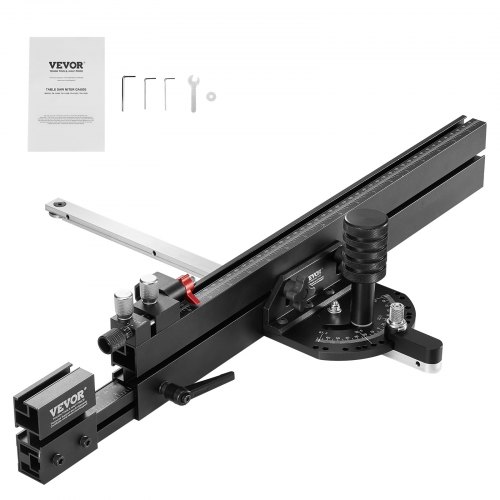
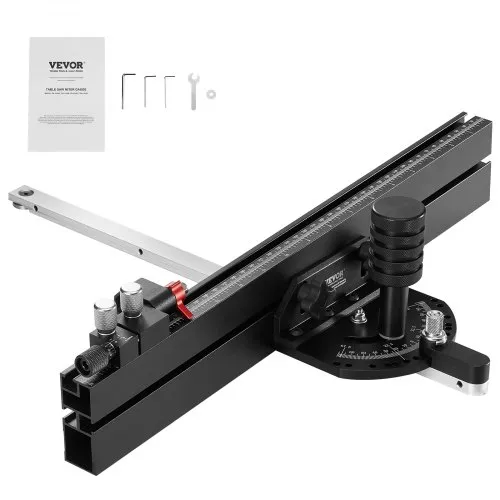
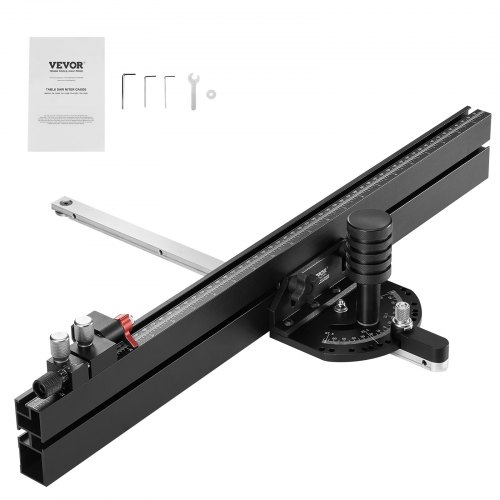
Most of the time, the weaker part of a table saw is the stock miter gauge. Instead of a loose plastic one, a precision aftermarket table saw miter gauge has a machined aluminum fence bar and a movable steel guide bar that keeps the T-slot straight. Look for a bar with set screws or expansion disks along its length to prevent side-to-side play. It should fit the standard 19 × 9.5 mm miter slot. This one change often eliminates more mistakes than any blade upgrade.
Flexible adjustable angle stops are the other part of the puzzle. Positive stops at 0°, 15°, 22.5°, 30°, and 45° let you quickly return to common angles. A vernier scale covers all the angles in between. When trimming and framing pictures, consistency is more important than raw accuracy. For example, a gauge that always reads 45° will make corners that are tighter than one that reads 45.2° all the time. If you add an extra gate with a flip stop, you can group the same parts without measuring them twice.
Fences, Guides, and Rip Accuracy
Saw fences and guides make hand cutting a reliable method for repetitive tasks. Both ends of a good rip fence lock are parallel to the blade, so it stays in place even when a big board presses against it from the side. Make sure the fence extrusion is straight along its entire length. A bow of even 0.5 mm across a meter makes the taper in a rip cut stand out. Aluminum extrusions with ribs inside them do not bend as easily as folded sheet steel.
Circle saws can use track guides, which are well worth the money if you need to cut up whole sheets of plywood. A 1.4-meter track can cut crosscuts on a 1220 × 2440 mm panel, and a 2.7-meter track can rip the long side in one pass. On most surfaces, the track does not need clamps because it has non-slip strips on the bottom. This group also includes featherboards and roller stands. Both keep the stock flat on the table and against the fence, improving the finish and lowering the risk of kickback more than any other tool in the shop.
Sharpeners, Dust Bags, and Complete Kits
Saw blade sharpeners make blades last a lot longer. With customizable hook and bevel-angle settings, a benchtop diamond-wheel sharpener can sharpen carbide teeth on blades ranging from 100 mm to 400 mm. It takes about twenty minutes to sharpen a 60-tooth blade, and it costs far less than buying a new one.
Attaching saw dust collection bags to the saw port keeps chips from falling to the floor. With zippered bottoms for easy emptying and cloth weights that can catch particles as small as five microns, most bags come in sizes ranging from 40 to 150 liters. For miter saw ports, put a bag together with a 100 mm hose connector.
Saw accessory kits come with a blade set, push sticks, an insert plate, and hardware. This is everything you need to set up a new machine. Kits usually cost less than buying items one at a time, and they ensure all the pieces fit together. Do not keep a drawer full of dull steel for general shop saw accessories. Instead, keep extra blades and one sharpener on hand.
Applications and Features to Look for in Saw Accessories
Beyond fit, an accessory's material and feature choices determine how long it will last. Professional-grade parts are different from throwaway ones in these ways.
Materials, Coatings, and Build Quality
Carbide tooth size is most important for blades. The C3 micrograin carbide grade lasts much longer than the C2 grade found on cheaper blades when cutting through lumber and manufactured board. The tooth body also lasts longer before it wears out.
Coatings that stop friction, usually PTFE or a baked polymer, lower heat and pitch buildup that cause burn marks on cherry and maple. It can grow without warping when heated thanks to expansion slots cut into the blade plate. Laser-cut holes with resin plugs also significantly reduce noise.
For fences and gauges, look for bases made of anodized aluminum and guide bars made of hardened steel. When exposed to dust and solvents over years, laser-etched scales remain readable, whereas printed scales become unreadable. The adjustment knobs should have metal threads instead of molded plastic ones.
Matching Accessories to Real Projects
To build a deck or a cabinet, you need different tools. For sheet goods, a triple-chip grind on a high-tooth-count blade keeps veneer faces from tearing, and a zero-clearance insert holds the fibers in place right at the cut line.
Blades with many teeth that cut through waste quickly are best for framing and outdoor work. A track guide makes it easy to cut sheathing consistently. When working with metal, you need only ferrous-cutting blades. Never use a wood blade on aluminum because it grabs and is dangerous.
To do trim work, you need to trust your miter gauge and flip stops. When you cut fifty identical pieces, each joint will close. Instead of buying one blade and forcing it through all kinds of materials, match the accessory to the job. This will immediately improve both cut quality and tool life.
Why Choose VEVOR Saw Accessories?
VEVOR sells all kinds of saw blades, including circular saw blades, miter saw blades, table saw blades, jigsaw blades, and reciprocating saw blades. They also sell miter gauges, fences, sharpeners, dust bags, and full kits, so you can get everything you need for your whole shop in one place. Each part is made of high-quality materials and comes in standard sizes. It also offers lower prices than specialty tool brands. Upgrading your setup is low-risk because you can get quick post-sale help and easily return items. Browse VEVOR saw accessories right now to start cutting more cleanly.
FAQs
How do I know which blade fits my saw?
Check three numbers: blade diameter, arbor hole size, and maximum RPM. The arbor must fit perfectly, the diameter must not be bigger than what your saw can handle, and the RPM rating must be the same as or faster than your saw's speed.
What tooth count should I choose?
Fewer teeth cut rougher and faster than more teeth. If you want to rip softwood, use 24 teeth. For general work, use 40 teeth. For end crosscuts in plywood or melamine, use 60 to 80 teeth.
Will an aftermarket miter gauge fit my table saw?
Most aftermarket miter gauges fit the common 19 × 9.5 mm T-slot on most table saws. Before you order, measure the width and depth of your slot, and make sure you know whether it is T-shaped or rectangular.
Is sharpening a blade worth it versus replacing it?
Yes, for blades with carbide tips that have more than 40 teeth. It is much cheaper to sharpen than to buy a new one, and you can do it more than once before the carbide runs out. You should not sharpen cheap stamped steel knives.
Do dust collection bags fit any saw?
Most of them connect with common 40 mm, 63 mm, or 100 mm port adapters. Please check your saw's outlet diameter and purchase the appropriate adapter if needed. Once connected, the bag is generally compatible with all saws.