Saw Blades
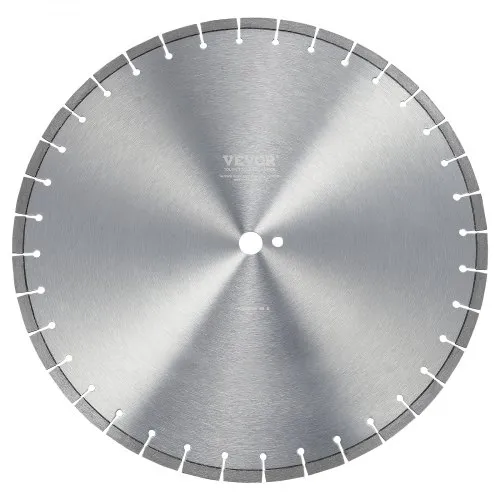

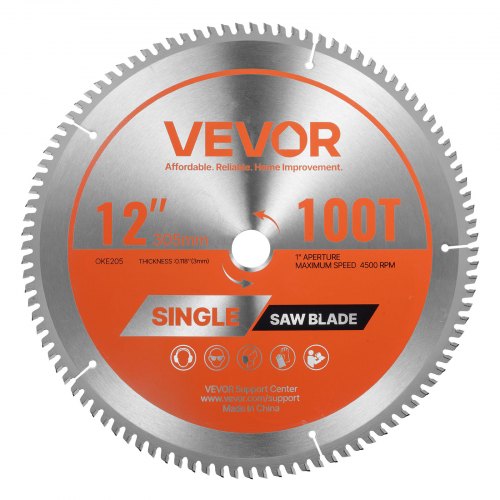


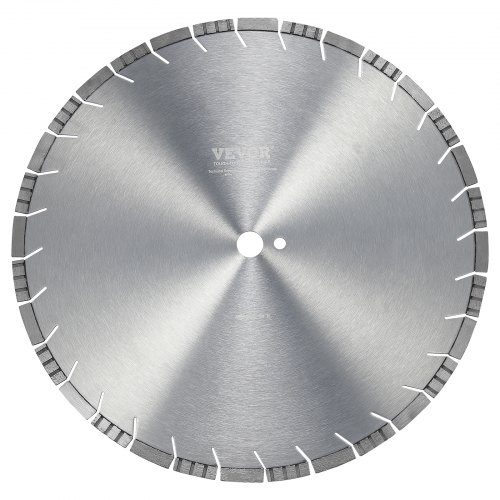


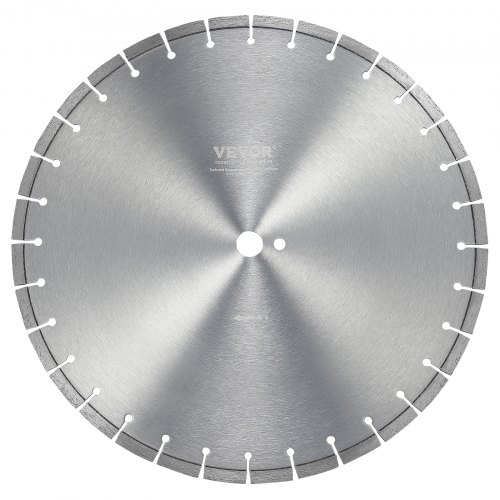










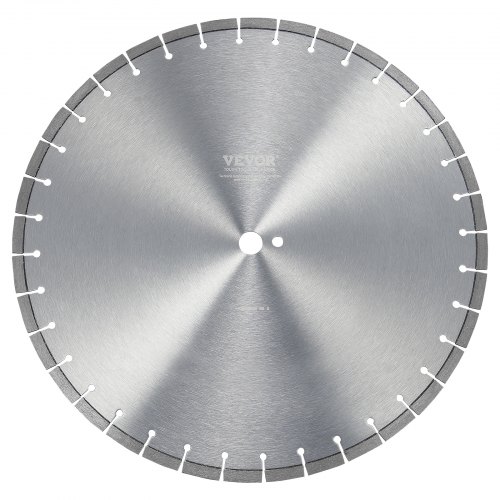


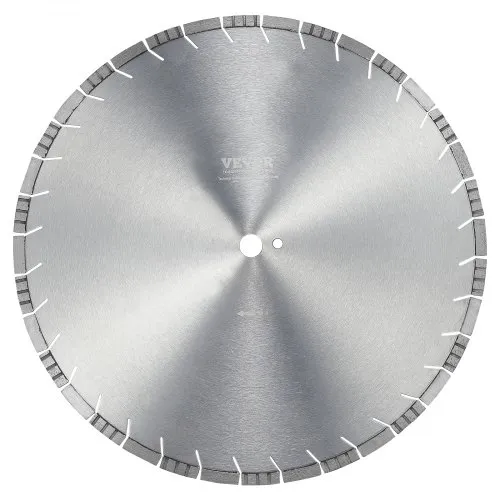


Results for Saw Blades
A saw blade is the toothed cutting element that mounts on a powered saw and does the actual work of dividing or shaping material. It consists of a hardened steel body with a row of sharpened teeth along its edge. As the saw drives the blade through the workpiece, each tooth shears away a small chip and carries it out of the cut, leaving a narrow channel called the kerf. The shape, spacing and hardness of those teeth decide how quickly material is removed, how smooth the cut surface is, and how long the blade stays sharp before it needs replacing.
VEVOR saw blades cover four main groups. Wood-cutting circular saw blades run from 8 to 12 inches with 24 to 80 teeth on 5/8 or 1 inch arbors for plywood, OSB and hardwood. Metal cutting blades span 7-1/4 to 14 inches with 48 to 100 alloy teeth for steel and aluminum. Dado blade sets stack two 8 inch outer blades, chippers and shims on a table saw for grooves and rabbets. Reciprocating saw blades come as bi-metal sets with a universal shank for metal, rough wood and plastic pipe. Typical uses are framing and sheet goods cuts, cabinet joinery, cutting steel studs and aluminum profiles, and demolition through nail-embedded timber.
Six things decide what you need:
- Material: wood, steel, aluminum and mixed demolition debris each need a different blade, so start with what you are cutting.
- Saw type: circular, table and miter saws take round blades, dado sets need a table saw, and reciprocating saws take straight shank blades.
- Diameter: match the blade size your saw and guard are built for, since it also sets the deepest cut you can make.
- Arbor size: the center hole must match your saw's spindle, which is 5/8 inch or 1 inch on the round blades here.
- Tooth count: fewer teeth cut faster and rougher, while more teeth cut slower and leave a cleaner face.
- Maximum speed: the blade's rated rpm should be at or above your saw's top speed for safe running.
Compare the blade types below, then browse more cutting add-ons in power tool accessories or explore the wider VEVOR tools range to pair the right blade with the right saw.
Saw Blade Types at a Glance
The table below shows which saw each blade type fits, the cut it leaves, and where each one falls short.
| Blade Type | Compatible Saw | Tooth Design | Cut Produced | Limitation |
|---|---|---|---|---|
| Wood-cutting circular blade | Circular, table and miter saws | 24 to 80 alloy teeth | Straight rip or crosscut in lumber and panels | Dulls quickly and grabs on metal |
| Metal-cutting circular blade | Circular saws and cold saws | 48 to 100 teeth, low hook angle | Smooth, low-burr cut in steel and aluminum | Slower feed; not intended for wood |
| Dado blade set | Table saws only | Two outer blades plus 2-wing chippers | Flat-bottomed groove, 1/4 to 13/16 in wide | Cuts grooves only; no handheld saw use |
| Reciprocating blade | Corded or cordless reciprocating saws | Bi-metal teeth, rated by TPI | Rough cut in tight or awkward spots | Rough finish; not for joinery or trim |
VEVOR Saw Blades for Wood, Metal, and Composite Cutting Applications
Are you looking for saw blades that can handle everything from vigorous demolition work to exquisite finish cuts? Professionals and serious do-it-yourselfers can choose from circular, reciprocating, dado, and metal cutting options in VEVOR's portfolio of saw blades. Discover the ideal blade for your project, your saw, and your material, backed by sturdy construction and affordable prices that deliver professional performance.
Saw Blade Types and the Materials They Cut Best
The key to safe, effective, and clean cutting is choosing the right kind of blade. Every major blade category is covered in VEVOR's saw blade portfolio, which is designed for specific materials and applications to ensure you always start the right cut with the right tool.
Versatile Performance Across Wood and Sheet Materials
Because they can cut dimensional lumber, plywood, MDF, OSB, and engineered wood panels quickly and accurately, circular saw blades are among the most popular cutting tools on any worksite or workshop. The most widely used circular saw and table saw models on the market are compatible with VEVOR's saw blades, which come in a variety of diameters, most typically 7-1/4, 10, and 12 inches. For balanced, vibration-free rotation that safeguards the saw's motor and the operator's control during cuts, each blade is precisely honed and tensioned.
The carbide-tipped teeth of VEVOR circular saw blades remain sharper for much longer than those of regular steel blades, reducing the cost per cut and the frequency of replacements. When using a freehand circular saw, anti-kickback shoulder designs between teeth reduce the bite rate on aggressive cuts, increasing safety. To prevent blade warping, which would otherwise impair cut precision, expansion grooves carved into the blade body allow for thermal expansion during prolonged cutting sessions. VEVOR's saw blades provide the consistency and durability both experts and serious do-it-yourselfers demand from a high-quality blade, whether you are tearing sheets of plywood on a jobsite or creating precise crosscuts in a cabinet shop.
Demolition, Plumbing, and Remodeling Work
For demolition, renovation, plumbing rough-ins, and any other situation where you need to cut in difficult, confined locations that other saws cannot reach, reciprocating blades are the best option. Reciprocating blades, unlike circular blades, travel back and forth, allowing them to cut through pipe chases, door frames, walls, and subfloors without the need for a level, steady cutting surface. VEVOR's reciprocating blades cover wood, nail-embedded timber, plastic pipe, copper tubing, cast iron, and plasterboard with a single lineup. They come in bi-metal and carbide-grit variants.
Bi-metal reciprocating blades are essential for cutting through walls with hidden fasteners because they have a flexible steel body and hardened, high-speed steel teeth that flex without cracking during vigorous cuts through mixed materials. Operators can match the reach to the specific work with blade lengths ranging from 6 to 12 inches; longer blades are better suited for deep demolition cuts, while shorter blades offer better control in tight locations. When exchanging blades between instruments on a busy jobsite, VEVOR's universal shank design eliminates compatibility difficulties because it fits all major reciprocating saw brands. Having a complete set of VEVOR reciprocating saw blades on hand enables contractors and remodelers to be prepared for any material they may encounter.
Precision Joinery and Woodworking Applications
Dado blade sets are specialist table saw accessories that cut wide, flat-bottomed grooves known as dados and rabbets, which are necessary for traditional woodworking joinery, shelving, and drawer building. A dado set stacks several blades and chippers to create grooves ranging in width from 1/4 to 13/16 inches in a single pass, rather than a single blade that makes a single kerf-width cut. Woodworkers can precisely adjust groove width with VEVOR's blade sets, which include both outer blades and interior chippers with different tooth counts.
The flatness of the groove bottom and the cleanliness of the groove walls are two aspects of a blade set's quality that directly impact how securely joinery fits together. All of the outer blades and chippers on VEVOR dado sets feature carbide-tipped teeth to maintain cutting sharpness on MDF, plywood, and hardwoods without burning or tearing. The shims that come with VEVOR dado sets enable woodworkers to precisely alter the dimensions of the grooves for the ideal friction fit by micro-adjusting the overall stack width. A VEVOR blade set is a necessary addition to the table saw setup for hobbyist woodworkers, cabinetmakers, and furniture makers who want accuracy in every joint. It can improve accuracy on a wide range of joinery tasks.
Clean Cuts Through Steel and Aluminum
When used on steel, aluminum, or other metals, standard wood-cutting circular saw blades will dull quickly or break dangerously because they are not designed for metal cutting. Instead of violently chipping material, a metal-cutting circular saw blade features a different tooth geometry, often with a significantly higher tooth count and a neutral or negative hook angle. This feature results in smooth, burr-minimal cuts that require little finishing. Metal cutting is now possible without a specialized machine thanks to VEVOR's metal cutting blades, which work with both regular circular saws and cold saws.
VEVOR metal cutting blades have carbide-tipped teeth that are designed to cut both ferrous and non-ferrous metals. The tooth shape is suited for aluminum extrusions, steel studs, thin sheet metal, pipe, and angle iron. When cutting metal with poorly made blades, a low hook angle reduces the likelihood that the teeth will grasp material during the cut, reducing hazardous kickback incidents. In contrast to unvented designs, heat-dissipation grooves in the blade body help control elevated temperatures during metal cutting, prolonging blade life. VEVOR's metal-cutting circular saw blade offers the safety and convenience of a regular circular saw while delivering clean results for builders installing metal framing, fabricators working with aluminum profiles, and tradespeople cutting conduit and pipe on-site.
Choosing a Saw Blade by Job
Matching the blade to the job in front of you narrows the choice faster than browsing by type.
| Job | Blade to Choose | Watch For | Why It Fits |
|---|---|---|---|
| Breaking down plywood and OSB | 7-1/4 or 10 in wood blade, 40 to 50 teeth | Tearout on the face veneer | Mid tooth counts balance feed speed and a clean veneer face |
| Shelf and cabinet joinery | 8 in stacking dado set with shims | Groove fit | Shims fine-tune stack width for a snug friction fit |
| Steel studs and conduit | Metal cutting circular blade, 48 to 72 teeth | Stainless steel | Low hook teeth resist grabbing and leave ends needing little deburring |
| Aluminum extrusions and profiles | 10 or 12 in blade, 80 to 100 teeth | Burrs on thin walls | Highest tooth counts keep several teeth engaged on thin aluminum |
| Walls with hidden nails | Bi-metal reciprocating blade, 6/12 TPI | Hidden fasteners | Flexible bi-metal body survives nail strikes that snap rigid blades |
| Branches and firewood | Reciprocating wood blade | Rough cut face | Coarse teeth clear green wood fast where finish does not matter |
Tooth Configuration and Size: Getting the Cut Quality You Need
Cutting speed, surface finish quality, and compatibility with your saw are influenced by tooth configuration, blade size, and blade type. You can select saw blades that complement your material and the required cut quality for your project by considering these criteria.
Balancing Speed Against Finish Quality
One of the most crucial characteristics of any saw blade is its tooth count, which directly regulates the trade-off between cutting speed and surface finish quality. For ripping dimensional timber along the grain when a rough-cut surface is acceptable, low-tooth-count blades, typically 16 to 24 teeth on a 10-inch circular saw blade, are perfect because they remove material aggressively and cut swiftly. For final crosscuts in hardwood, veneered panels, or laminate where tearout would destroy the workpiece, high tooth count blades, 60 to 80 teeth or more, cut more slowly but provide noticeably smoother surfaces.
For general-purpose workshop use, medium-tooth-count blades in the 40–50 tooth range offer a workable compromise that can handle both ripping and crosscutting with satisfactory results. Groove bottom flatness for dado blade sets depends on the number and arrangement of chippers; more chippers result in a flatter, cleaner groove bottom that requires less cleanup. All VEVOR blades in this range feature clearly marked tooth counts, making it easy to choose the appropriate blade for your specific cut type. One of the easiest ways to enhance cut quality right away and cut down on sanding or finishing time on any woodworking or construction project is to match the tooth count to the material and the cut direction.
Ensuring Compatibility With Your Saw
Blade diameter determines the maximum depth of cut a saw can achieve and must match the blade guard and arbor specifications of your saw exactly. The most common circular saw blade diameter for handheld saws is 7-1/4 inch, which provides a maximum cut depth of approximately 2-1/2 inches at 90 degrees, sufficient for cutting dimensional lumber and sheet goods on a jobsite. Table saws typically have 10-inch blades, whereas bigger contractor and cabinet saws intended for heavy production work or cutting thick, wide stock may have 12-inch blades.
Arbor size, the diameter of the hole at the center of the blade, must match your saw's spindle exactly to ensure safe, concentric blade mounting. Table saws and circular saws typically have arbor diameters of 5/8 inch; some machines sold in Europe have 1-inch arbor diameters. VEVOR saw blades clearly specify both blade diameter and arbor size, and many models include reducing bushings that allow a single blade to fit multiple arbor sizes, increasing versatility across your shop's tools. Selecting the correct diameter and arbor combination is non-negotiable for safety: an incorrectly sized blade that does not seat properly on the arbor can wobble, vibrate excessively, or detach during operation, creating a serious hazard for the operator and anyone nearby.
Best-Seller Comparison
These five best sellers span every blade type on this page, so you can see how the specs differ before you choose.
| Product | Blade Style | Diameter | Teeth | Mounting | Blade Material | Max Speed | Best For |
|---|---|---|---|---|---|---|---|
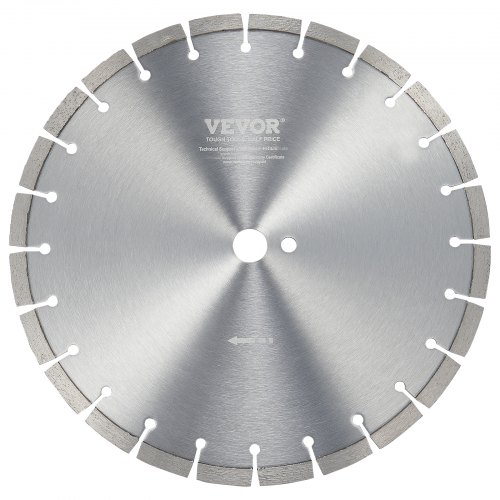
| 14 in Metal Cutting Blade, 72T | Metal cutting circular | 14 in | 72 | 1 in arbor | SKS51 steel | 3500 rpm | Largest blade here; deep cuts in steel and aluminum |
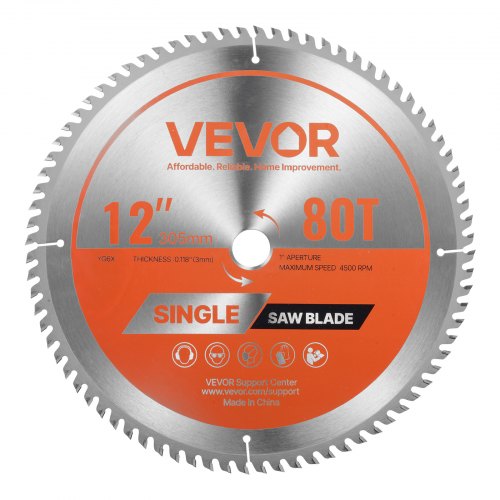
| 12 in Wood Cutting Blade, 80T | Wood crosscut circular | 12 in | 80 | 1 in arbor | 65Mn steel | 4500 rpm | Only wood crosscut blade here; plywood, OSB and hardwood |
| 12 in Aluminum Cutting Blade, 100T | Aluminum cutting circular | 12 in | 100 | 1 in arbor | 65Mn steel | 4500 rpm | Highest tooth count here; thin aluminum and sheet metal |
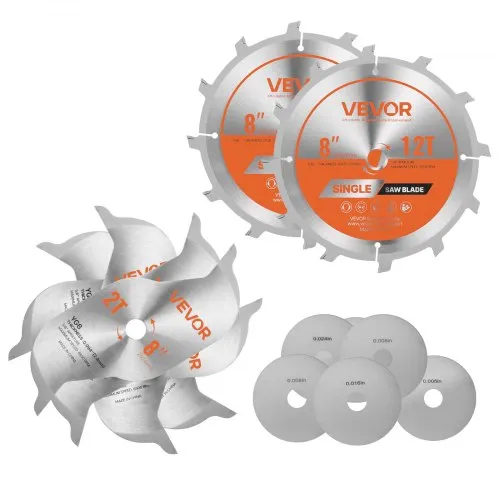
| 8 in Stacking Dado Set, 12T | 2 blades, 5 chippers, 4 shims | 8 in | 12 | 5/8 in arbor | 65Mn steel | 6500 rpm | Only grooving set and highest rated speed; table saw joinery |
| 32-Piece Bi-Metal Reciprocating Set | Reciprocating set with case | Straight blades, no diameter | / | Universal shank | Bi-metal (M2 + 6150) | / | Most pieces in one kit; mixed metal, wood and pipe cuts |
Why Choose VEVOR Saw Blades?
From circular and reciprocating saw blades to dado blade sets and metal-cutting circular saw blades, VEVOR offers a comprehensive selection for both serious do-it-yourselfers and professionals. VEVOR offers excellent cutting performance at a reasonable cost thanks to its carbide-tipped design, accurate tooth geometry, and low pricing. Every blade comes with dependable after-sales support. Browse the entire selection to find the ideal blade now.
FAQs
Can I use a circular saw blade for wood to cut metal?
No, the severe hook angles of wood blades result in hazardous grasping and quick dulling on metal. For both ferrous and non-ferrous materials, always use a special metal cutting circular saw blade with a neutral or negative hook angle.
How many pieces are included in a dado blade set?
The majority of dado blade sets consist of shims for adjusting groove width, many interior chipper blades of different widths, and two outside blades. When combined, these parts enable grooves ranging in width from 1/4 to 13/16 inches to be cut in a single pass on a table saw.
What does "bi-metal" mean on reciprocating saw blades?
The term "bi-metal" refers to a blade that has both hardened high-speed steel teeth and a flexible alloy steel body. During forceful cuts through nail-embedded wood, pipe, and mixed demolition materials, this design enables the blade to flex without snapping.
How do I choose the right tooth count for my project?
For quick rip cuts in lumber, use blades with a low tooth count (16–24 teeth). For smooth finish crosscuts in hardwood or veneered panels, use blades with a high tooth count (60–80 teeth). For general-purpose cutting in both jobs, mid-range counts (40–50 teeth) are effective.
Where can I buy high-quality saw blades online?
You can buy them directly from VEVOR's online store, where each circular blade page states its diameter, tooth count, arbor size and maximum speed. Circular, metal cutting and dado options sit alongside bi-metal reciprocating sets, so you can compare specs against your saw before ordering.
What maintenance is required to keep saw blades in good condition?
Clean, dry storage and regular cleaning keep blades sharp longer. Remove pitch and resin buildup, dry the blade to prevent rust, and store it so the teeth never touch metal; the 32-piece reciprocating blade set ships with a protective case for this. Resharpen or replace once cuts start burning.
How do I choose the right saw blade for my project?
Start with your saw, then the material. Match the blade's diameter and arbor to the saw and make sure its maximum rpm is at or above the saw's speed. Then pick wood, metal or reciprocating blades by material, or a stacking dado set for grooves.
What are the different types of saw blades available for woodworking?
Woodworkers mainly use three circular blade styles plus dado sets. Rip blades with 16 to 24 teeth cut fast along the grain, general-purpose blades with 40 to 50 teeth handle both directions, and crosscut wood cutting circular blades with 60 to 80 teeth leave the smoothest edges.
What are the best saw blades for woodworking and construction?
Carbide-tipped circular blades cover most work in both. Choose 10 or 12 inch blades with high tooth counts for table saw joinery and clean panels, 7-1/4 inch blades for handheld framing cuts, and bi-metal reciprocating blades for demolition. Add a metal cutting blade for steel studs and conduit.