

Sliding Door Track Kit





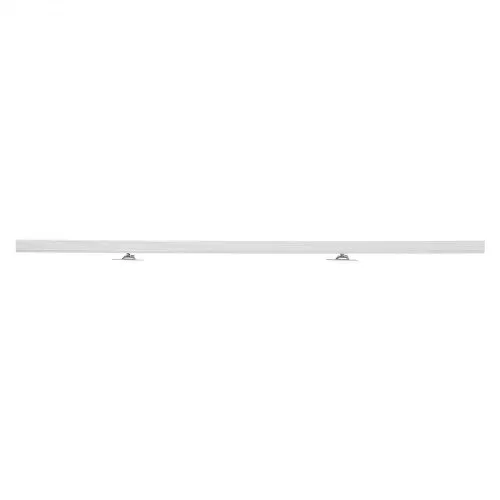


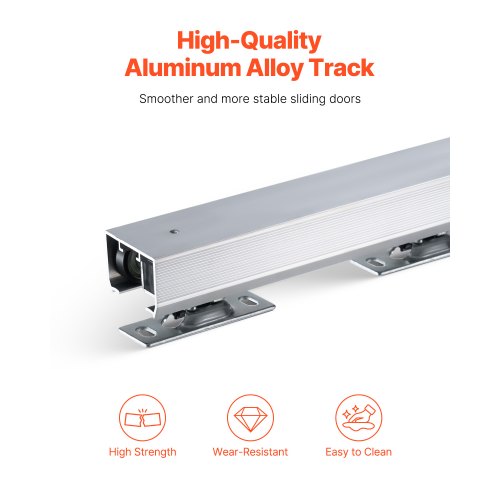

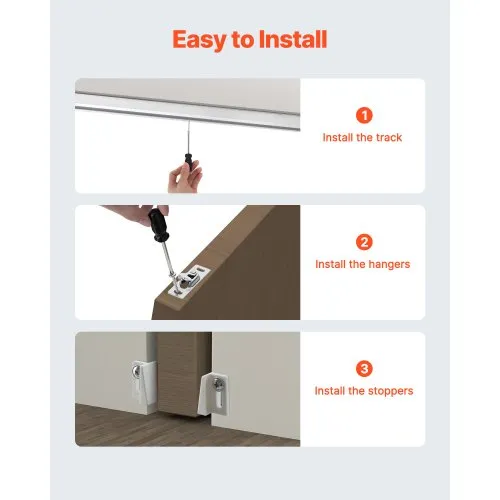


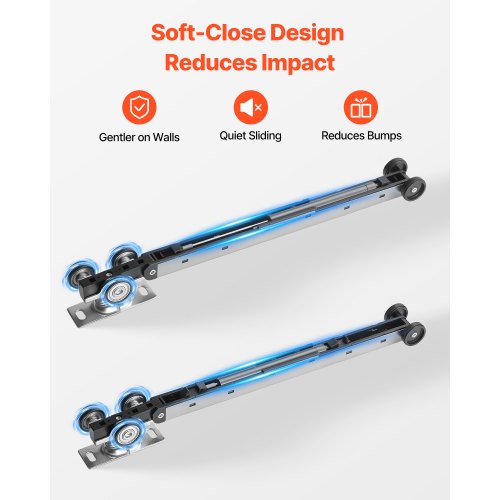













Results for Sliding Door Track Kit
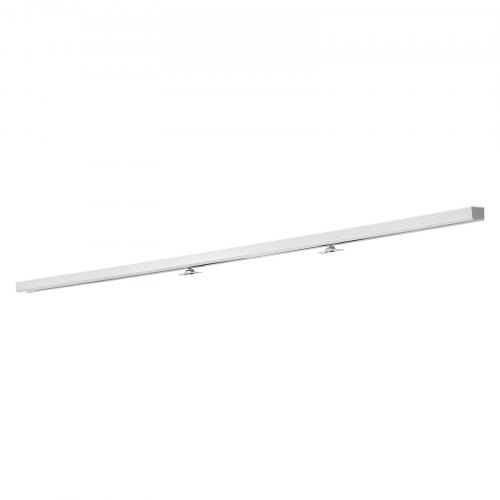
A sliding door track kit is the hardware assembly that lets a door glide horizontally across an opening instead of swinging on hinges. Each kit pairs a mounted track, or rail, with roller carriers that hang the door and move it along that rail, together with the brackets, floor guides, and stops that keep the panel aligned and controlled. The track carries the door's weight and sets its path of travel, the rollers handle the motion, and the floor guide keeps the panel from swaying. Together these parts turn a fixed opening into a smooth, space-saving sliding passage.
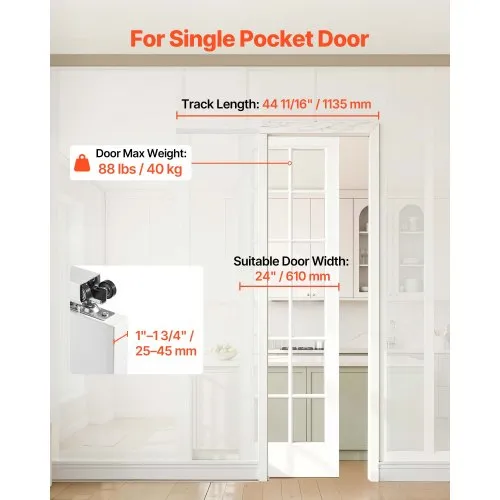
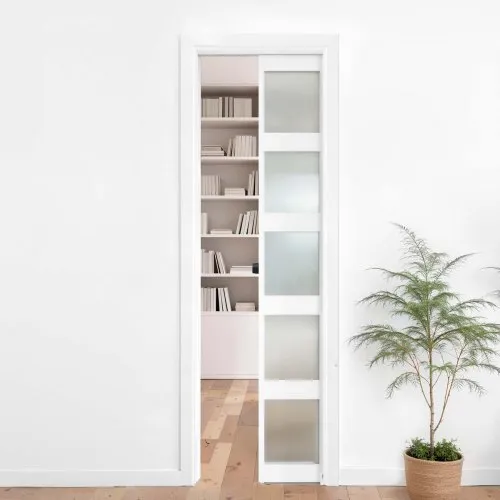
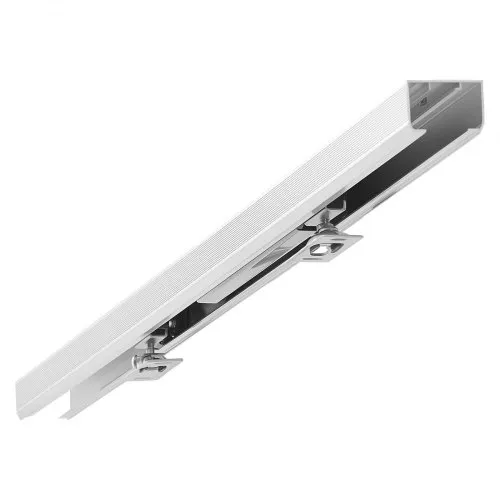
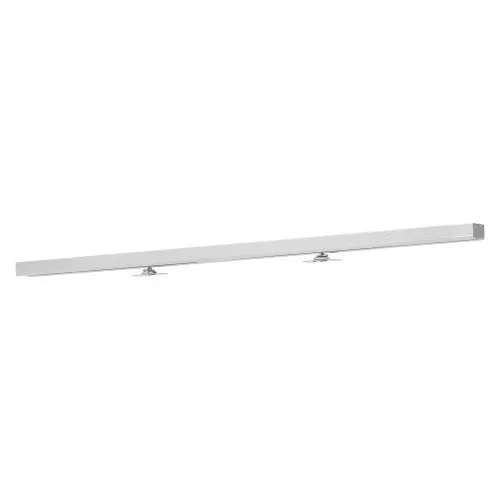
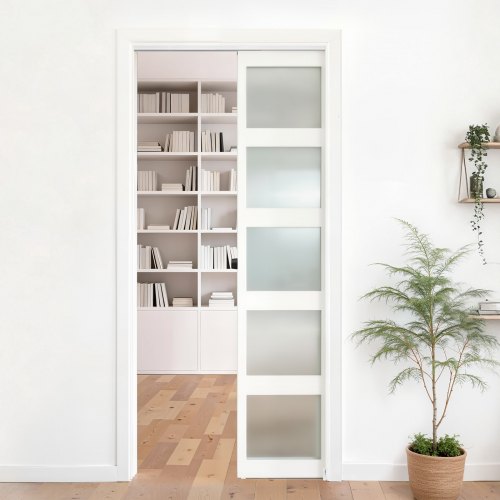
Most kits fall into a few families. Bypass hardware runs two panels on parallel tracks so they pass each other within one opening, while pocket door hardware hides the rail inside the wall so the panel disappears from view. Single-panel barn-style sets slide one door across the wall face, and glass-panel versions swap brackets for clamps and soft-close buffers. Tracks commonly span 4 to 8 feet, fit door thicknesses around 1 to 1 3/4 inches, and carry panels from lightweight hollow-core up to heavy solid wood or glass. Typical uses are closets, pantries, bathrooms, room dividers, and office or retail partitions.
Five things decide what you need:
- Configuration: choose single-panel, bypass, pocket, or glass based on how the door should move and how much wall sits beside the opening.
- Track length: measure the opening, then add overlap for a bypass pair or room for a single panel to clear the opening fully.
- Weight capacity: weigh the door and add a safety margin, since hollow-core, solid wood, and glass panels load the track very differently.
- Door thickness: confirm the kit's clamp or bracket range matches your panel so the rollers sit square.
- Finish: pick exposed decorative hardware to show off, or a concealed low-profile track to keep it hidden.
Ready to plan an install? Browse the full sliding door track kit range, or step up to the wider door hardware collection to match guides, pulls, and stops to your build.
Sliding Door Track Kit Types at a Glance
The table below sorts the main track styles by how the door moves and how the hardware shows, so you can match a type to your opening before you compare individual products.
| Type / Sub-type | Track Configuration | Door Movement | Hardware Visibility | Selection Note |
|---|---|---|---|---|
| Single-panel barn track | Single top-mounted track | Slides one door across the wall face | Exposed, decorative | Needs clear wall beside the opening equal to the door width |
| Bypass dual-track | Two parallel tracks | Two doors pass each other in one opening | Exposed, overlapping | Fits tight rooms since the doors never travel past the opening |
| Pocket door track | Track concealed in the wall | Door recedes fully into a wall cavity | Fully concealed | Frees the whole wall but needs an open, stud-free cavity |
| Glass-panel track | Single track with glass clamps | Slides a glass panel on clamp carriers | Exposed, minimal | Pair with soft-close and bumpers to protect the panel |
| Multi-panel track | Repeated parallel tracks | Several panels span a wide opening | Exposed, repeated | Choose when one opening is wider than a single slide covers |
VEVOR Premium Sliding Door Track Kits for Every Interior and Exterior Application
Are you looking for the best hardware to convert traditional swinging doors into space-saving sliding systems? For contemporary residences, workplaces, shops, and warehouses where floor space is crucial, and aesthetics are important, sliding door track kits have become a popular choice. VEVOR sliding door track kits offer well-thought-out hardware solutions that address key issues in weight distribution, installation, and long-term reliability. Our bypass door hardware kit comes with everything you need for professional results, whether you're creating a rustic barn door entrance, installing a modern bypass barn door, or building strong commercial dividers.
Length, Weight Capacity & Door Type Considerations for Your Project
The first step in selecting the best sliding door track kits is to understand the physical requirements of the installation space and the door's specifications.
Track Length Options and Space Planning Requirements
Sliding door track kits are offered in a variety of lengths to accommodate different opening widths and installation layouts. Standard residential sliding door track kits typically range from 4 to 8 feet for single-door applications, while bypass systems require tracks that are 1.5 to 2 times the width of the door to allow for proper overlap. A 36-inch door requires at least 6 feet of track for single installations, and 10 to 12 feet for bypass configurations. Commercial applications sometimes require 10- to 16-foot tracks for larger openings or multiple door panels.
VEVOR provides both standard-length sliding door track kits and custom track parts that may be cut to precise measurements for a perfect fit, regardless of the size of your opening. In addition to adding space for mounting brackets (about 4 to 6 inches on each side), measure the width of your door and account for bypass overlap if you're installing multiple doors. In installations with cathedral walls or sloped ceilings, adjustable mounting brackets compensate for non-standard heights while maintaining smooth operation.
Weight Capacity Ratings and Load Distribution Systems
With high-quality sliding door track kits, knowing weight restrictions guarantees safe, long-lasting operation and helps avoid hardware failure. Entry-level sliding barn door hardware track kit is suitable for thin-panel installations or lightweight hollow-core doors and can support 100 to 150 pounds. With the right reinforcement, mid-range systems can support glass installations, decorative metal panels, or solid wood doors weighing 200 to 300 pounds.
Designed for industrial applications, large panels, or multiple-door setups, heavy-duty commercial sliding door track kits may support 400 to 600 pounds or more. To reduce friction and prevent premature wear, VEVOR engineering uses ball-bearing roller systems that evenly distribute weight across the track. When buying sliding door track kits, carefully check your door's actual weight and include a 20–30% safety buffer for dynamic loads generated during opening and closing. Higher-capacity systems are necessary for thicker doors (1.75 to 2 inches) and for dense materials like metal or salvaged wood. The total capacity also accounts for wall-mounting strength. For doors weighing more than 100 pounds, use concrete or wall studs for sufficient anchoring; never use drywall alone.
Door Type Compatibility and Hardware Configuration
For sliding door track kits to work as well as possible, different door styles require different hardware setups. Basic track systems, including two rollers, mounting brackets, and floor guides, are required for standard single-panel sliding doors. Two doors can slide past one another in opposite directions using bypass door hardware kits, necessitating double-track systems or overlapping single tracks with offset roller mounting. Glass doors require mounting clamps made specifically for glass rather than brackets, as well as rubber bumpers and specialist soft-close mechanisms to prevent breaking.
Recessed wall frameworks and sophisticated track systems that blend entirely into wall cavities are necessary for pocket door conversions. To endure moisture and temperature changes, exterior applications require corrosion-proof materials, sealed roller bearings, and weather-resistant coatings. With specific systems for wood, metal, glass, and composite materials, VEVOR sliding door track kits explicitly outline compatible door types. Decorative exposed hardware in oil-rubbed bronze, brushed nickel, or black powder coat looks great on barn-style doors. Many minimalist installations use low-profile, concealed track systems that blend in with the ceiling lines.
Installation Configuration Planning for Single and Multiple Doors
Whether you require a single-door, bypass, or multi-panel configuration for your sliding door track kits depends on the room's shape. The optimal locations for single-door installations are closets with one-sided access, entries that require full-opening access, or areas where the door may slide entirely out of the opening. Bypass barn door hardware kits are ideal for reach-in closets, pantries, or bathroom entries because they maximize accessibility in confined situations where doors cannot extend past the opening width. For master suites, conference rooms, or business storefronts, double-door arrangements provide dramatic, expansive apertures that can slide away to the opposing walls or meet in the center.
In retail settings or in large rooms, tri-panel or multi-panel systems can handle very large openings. Determine how much wall space you have beyond the opening; doors require a sliding room equal to their entire width plus the clearance for mounting hardware. Ensure the wall depth for the bypass door hardware kit is sufficient to support the roller mounting brackets and the thickness of the overlapping door. Before drilling anchor holes, VEVOR sliding door track kits offer comprehensive installation templates that outline precise spacing requirements, helping you avoid costly errors. To ensure seamless everyday operation with your sliding door track kits, consider the door travel direction based on furniture placement, traffic flow, and room layout.
Matching a Sliding Kit to Your Door
Beyond the type itself, these pairings add the roller style and the soft-close call for common door situations, details a product listing rarely spells out side by side.
| Door Situation | Suggested Configuration | Rollers or Carriers Needed | Soft-Close Recommended | What to Watch For |
|---|---|---|---|---|
| Lightweight hollow-core closet door | Single-panel track | Standard rollers | Optional | Hollow cores stay light, but still anchor brackets into studs |
| Two doors, narrow room | Bypass dual-track | Standard rollers, offset mounting | Optional | Doors never fully clear the opening, so half stays covered |
| Solid wood feature door | Single-panel heavy-duty track | Reinforced ball-bearing rollers | Worth it for the weight | Confirm capacity and lag-bolt into studs, not drywall alone |
| Tempered glass panel | Glass-clamp track | Glass clamps with rubber bumpers | Strongly recommended | Use clamps, not bracket screws, to avoid cracking the glass |
| Concealed in-wall conversion | Pocket door track | Rollers built into the carriage | Built into many kits | Plan a stud-free wall cavity before buying the hardware |
Material Quality and Installation Process for Long-Term Performance
Long-lasting components and proper installation methods ensure your sliding door track kits will function flawlessly for many years without requiring maintenance.
Construction Materials and Finish Durability Standards
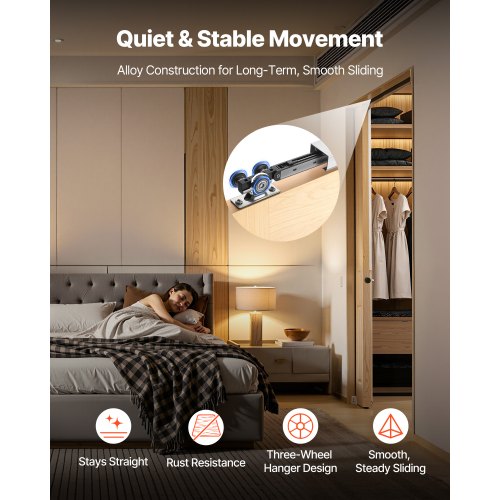
High-end sliding door track kits use heavy-gauge steel tracks (14 to 12 gauge) that hold their alignment for thousands of cycles and don't bend under strain. Instead of using plastic bushings, roller assemblies use sealed ball bearings, which offer quiet operation and a longer lifespan even under regular use.
Track treatments come in oil-rubbed bronze for classic settings, brushed steel for modern designs, and powder-coated black for modern looks. While retaining their aesthetic appeal, these coatings are resistant to daily wear, corrosion, and scratches. Solid steel or hefty aluminum mounting brackets are preferable to hollow stamped-metal ones that bend under the weight of the door. All of VEVOR's sliding door track kits are made with commercial-grade materials, and the rollers are rated for up to 50,000 or more operating cycles (per lab testing).
Rubber or nylon parts used in floor guides and bumpers soften door movement without leaving noise or scuffing the flooring. Stainless steel fasteners ensure safe mounting in damp areas, such as bathrooms or outdoor installations, and prevent rust staining on painted walls.
Step-by-Step Installation Process and Required Tools
Basic tools and careful attention to levelness are necessary for installing sliding closet door hardware. Using a stud finder, locate the wall studs first, then mark at least 2 stud locations to ensure proper support distribution. When mounting doors weighing more than 100 pounds, use 3-inch lag screws to attach brackets directly to studs or mount the track header board, if one is required. Use a 4- to 6-foot level to properly level the track; even small angles can cause doors to bind or drift while in use.
Using the included bolts, fasten the door mounting brackets to the top of the door, spacing them according to the manufacturer's recommended spacing (usually 2 to 4 inches from the door edges). Lifting the rollers into the track channels and adjusting the roller height to provide the appropriate floor clearance, typically 0.5 to 0.75 inches, allows you to hang the door. To stop doors from swinging and to enable smooth sliding, install floor guides. To prohibit rollers from slipping off during a violent opening, install door stops at the ends of the tracks.
VEVOR sliding door track kits include all necessary installation hardware, thorough instructions with illustrations, and troubleshooting assistance from customer service. With two workers, most installations take 2 to 4 hours to complete, particularly for doors weighing more than 150 pounds and requiring lifting assistance.
Best-Seller Comparison
These five kits appear first on the category page; the columns line up the specs that actually differ between them, so you can pick on length, finish, and door count.
| Product | Kit Type | Track Length | Door System | Finish | Grip Feature | Best For |
|---|---|---|---|---|---|---|
| Bypass Door Hardware, 6 ft, Silver | Bypass, single track | 6 ft | 2-door bypass | Silver | Finger pulls included | Mid-length bypass pick; standard 36 in closet openings in silver |
| Bypass Door Hardware, 4 ft, Black | Bypass, single track | 4 ft | 2-door bypass | Black | Finger pulls included | Shortest track here; narrow two-door closets wanting black hardware |
| Pocket Door Track Kit, 5.73 ft | Pocket door, concealed | 5.73 ft | Single door | Silver | Finger pulls included | Only concealed kit; frees the whole wall for a single door |
| Bypass Door Hardware, 8 ft, Black | Bypass, single track | 8 ft | 2-door bypass | Black | Finger pulls included | Longest track in the group; the widest two-door closet openings |
| Bypass Door Hardware, 5 ft, Silver | Bypass, single track | 5 ft | 2-door bypass | Silver | Finger pulls included | Compact silver option; smaller two-door closets without finger pulls |
Why Choose VEVOR Sliding Door Track Kits for Reliable Hardware Solutions?
With its extensive selection of sliding door track kits, professional-grade materials, flexible configurations, and affordable prices, VEVOR makes high-quality sliding closet door hardware affordable for every project. From precisely designed rails and smooth-rolling carriages to mounting hardware and installation instructions, our comprehensive sliding barn door hardware track kit removes all uncertainty. For builders, contractors, and homeowners seeking reliable performance, VEVOR sliding door track kits offer solutions with weight capacities that cover heavy commercial and residential applications and finishes that complement any design style. Browse our entire inventory now to update your areas with gear that comes with hassle-free shipping and quick customer service!
FAQs
Can I cut the track to a custom length for my specific opening?
Yes, an angle grinder with a cutoff wheel or a metal-cutting saw can cut most VEVOR steel rails. To avoid roller damage, measure carefully, mark your cut line, and smooth out edges before installing.
What wall type is required for the safe installation of heavy doors?
It is necessary to mount doors weighing more than 100 pounds directly into steel framing, concrete, or solid-wood studs. Drywall anchors may fail over time because they are not designed to handle the dynamic loads generated by sliding doors.
Do bypass sliding door hardware require special track configurations compared to single doors?
Indeed, bypass sliding door hardware enables two doors to smoothly slide past one another while sharing the same opening space, using either double parallel tracks or overlapping single-track systems with offset roller mounting.
How much clearance space is needed above the door opening?
To ensure smooth operation without ceiling interference or binding, allow 4 to 6 inches of space above your door opening for track-mounting hardware, roller assemblies, and door-top brackets.
Can you recommend some durable sliding door tracks for outdoor use?
For outdoor openings, pick a kit with corrosion-proof materials, sealed roller bearings, and weather-resistant coatings, matched with stainless steel fasteners that resist rust. Aluminum alloy or powder-coated tracks cope best with moisture and temperature swings. Browse the sliding door hardware sets and anchor exterior rails into concrete, never drywall.
What are the different types of sliding screen door tracks available?
The range covers a few track styles: single-panel tracks that slide one door across the wall, bypass dual-track systems that let two doors pass within one opening, and concealed pocket door hardware that hides inside the wall cavity. Each style suits a different opening width and layout.
What are the best types of sliding door hardware for heavy doors?
Heavy doors need a track rated for the panel's full weight, built from heavy-gauge steel with sealed ball-bearing rollers that spread the load. Reinforced solid-steel or aluminum brackets plus stud or concrete anchoring are essential. A dual-track bypass kit suits solid wood two-door setups.
How do I choose the right sliding door kit?
Start with your door: measure its width, thickness, and weight, then match a configuration, single, bypass, or pocket, to how much wall space sits beside the opening. Confirm the track length and capacity cover your panel with a safety margin. Compare options in the sliding door track kit collection.
How do I know if a sliding door hardware kit can support heavy doors?
Check the kit's stated weight capacity against your door's actual weight, then add a 20 to 30 percent buffer for the forces created while opening and closing. Entry sets handle 100 to 150 pounds, while reinforced systems carry 400 to 600 pounds or more. Thicker, denser panels need higher ratings.
