Slip Roller


Results for Slip Roller
Metalworkers, HVAC fabricators, and hobbyists may shape flat sheet stock into smooth curves, cones, and cylinders using VEVOR's slip rollers, which come in a variety of roller widths and metal thickness capacities. These machines use adjustable rollers to precisely manage curve radius throughout multiple runs, whether you're shaping car body panels, rolling ducting, or making decorative metal panels. Without specialized power infrastructure, manual operation keeps the equipment accessible for home and shop use. With VEVOR's warranty and support, each slip roller ships ready for shop use.
VEVOR Slip Rollers for Sheet Metal Curves, Cones, and Cylinders
Do you need to shape flat sheet metal into consistent, smooth curves without using a bending brake? VEVOR's adjustable three-roll slip rollers can precisely bend steel, aluminum, and other sheet stock into cylinders, cones, and curves across several passes. HVAC fabricators, metalworkers, and hobbyists can operate these machines manually without needing specialized power infrastructure in the shop or home garage.
VEVOR Slip Rollers: Roller Type and Metal Capacity Explained
Choosing the wrong roller size or capacity means paying for capacity you won't use or struggling to feed material through. Here's how to match slip rollers to your real-world metalworking needs.
Understanding Slip Roller Types and Roll Configurations
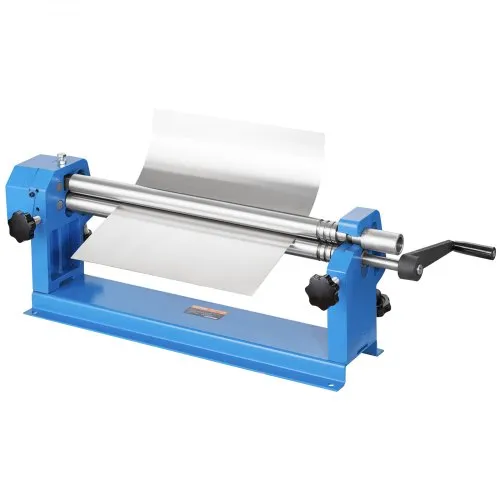
A slip roller bends flat sheet metal into a curve gradually using three parallel rolls; the top roll can be adjusted to change the curve's tightness or openness. A real slip roller machine differs from ordinary bending brakes, which fold metal at a fixed angle instead of creating a continuous, smooth curve along the material's length, because it uses a three-roll construction.
Most slip rollers have a front roll that can be removed or slipped out completely, which gives the operator access. This feature allows the operator to slide a fully formed cylinder off the machine without unrolling it, which is important for finishing closed shapes like decorative columns or ductwork sections. If your designs call for full tubes rather than partial arcs, machines without this slip-out capability restrict you to open curves.
Roll arrangement also affects the surface finish of the rolled metal. For visible ornamental work or car body panels, where surface quality influences the final appearance, rollers with a smooth, hardened surface minimize marking and scratches on finished panels. Raw capacity and throughput are more important for strictly functional applications, such as ducting concealed behind walls.
Matching Metal Capacity to Your Material Thickness
Metal capacity ratings indicate the highest sheet thickness slip rollers can produce without requiring much human effort or risking damage to the rollers. Most HVAC ducting and decorative sheet metal work can be easily handled by a machine certified for light-gauge steel and aluminum, but pushing larger material through an undersized slip roller stresses the mechanism and creates uneven curves.
Wider, heavier-built machines typically handle thicker material because the frame resists flex under the greater force needed to bend heavier-gauge stock. Manual slip roll capacity usually scales with roller width and total frame size. Because aluminum and steel have different hardness and springback properties, they perform differently under the same roller pressure; before you buy, confirm the manufacturer's rated capacity for your metal type.
Regardless of capacity rating, consider springback. A manual slip roll machine needs somewhat tighter initial settings than the final intended curve to compensate for the metal's tendency to relax slightly after exiting the rollers. Instead of guessing final settings on a completed workpiece, operators working with unknown material thicknesses should test on scrap stock first and gradually adjust roller tension.
Sheet Metal Roller Machines for Ductwork and Fabrication
Although ducting is usually thinner than automobile body panel stock, a manual sheet metal roller machine designed for HVAC fabrication must handle the gauge ranges found in ductwork, which require uniform, repeatable bends throughout numerous identical sections in a single job run. Because misaligned duct sections lead to installation issues later, consistency across rolled pieces matters more in ductwork fabrication than in one-off ornamental projects.
Applications for manual steel sheet rollers go beyond ducting and include general fabrication tasks like shaping brackets, decorative trim, and structural components that need curved sections. With clear capacity indicators and adjustable end stops, a metal rolling machine used for a variety of fabrication operations can be quickly reconfigured between project types without much trial-and-error setup each time.
For shops doing routine, repetitive fabrication work, look for slip rollers with reliable adjustment mechanisms that will hold settings from one use to the next. A machine that drifts out of calibration between operations wastes material and adds rework time. This consistency matters less for hobbyists or infrequent fabricators than for a business that makes the same parts every day for several projects.
Roller Tool Uses on Different Metal Types
Aluminum, copper, and other soft metals react differently to the same roller pressure. Metal roller tools aren't just for steel. Rated slip rollers for a variety of metals generally have instructions for making adjustments. Aluminum requires less force than steel of the same thickness but is more prone to surface marking, so roller surface quality is especially important in aluminum fabrication.
A benefit across many material types is the wide adjustment range for both roller gap and tension, because recalibration must be quick when switching from a heavy steel task to a lighter aluminum project in the same shift. When machines have uniform, well-defined adjustment settings, it is simpler and faster to switch between different metals and thicknesses throughout the day’s work.
Hobbyists and small-shop users working with multiple metal types should prioritize flexibility over maximum single-material capacity, as a machine rated highly for steel but poorly suited to thin aluminum will limit the range of projects. Day-to-day use is improved when you select a roller tool with a capacity that matches the real blend of materials you usually have in your project queue, rather than the thickest material you might see once in a while.
Slip Rollers Operating Methods and Features
However, slip roller functionality and features, in addition to roll type and capacity, affect a slip roller’s day-to-day usability in a working shop.
Manual Operation & Control Accuracy
Many fabricators prefer manual metal rollers for precision work where feel matters as much as speed, since they use a hand crank and provide immediate tactile feedback on resistance and progress with each pass. Manual slip rollers are also ideal for mobile shops, shops where power isn’t reliable, or operators who want a simple, low-maintenance device, since they don’t require an electrical setup. The quality of the crank mechanism determines the control precision of slip rolling machines. A smoother, steadier crank resistance prevents jerky or uneven motion, which can show up as flat sections in the final curve, and helps develop smooth curves over multiple runs.
When comparing manual models, operators doing attractive or prominent work should treat crank smoothness and raw capacity as equal. For lighter material or low-volume projects, powered options are more suitable than hand-cranking, as a full day of hand-cranking through many passes adds labor. Manual slip rollers are the most practical and affordable for occasional use, hobby projects, or stores that don’t need to roll high volumes often without sacrificing curve quality.
Build Quality and Features for Adjustability
For a slip roller to work properly for a long time, it must have clear capacity gauges, adjustable end stops, and a sturdy base installation. Select rolling machines with heavy frame designs that resist flexing during operation, as frame flex while rolling directly results in an uneven curve radius across the width of the material being produced.
A bench-mountable base is handy for sheet metal rolling equipment often used in the shop. It provides stability during operation, preventing the walking or shifting a lighter, unsecured machine can experience after cranking for a while. This stability directly affects output consistency and operator safety during long periods of use for shops that run slip rollers daily.
Why Choose VEVOR Rolling Machine?
VEVOR’s slip roller lineup provides shops and hobbyists with manual equipment to form reliable, repeatable curves across steel, aluminum, and other sheet stock in a variety of roller widths and metal capacities. Its strong frame and adjustable settings ensure productivity from the first to the last pass. With reliable after-sales support, VEVOR remains cost-effective compared with name-brand suppliers of metalworking equipment. Get the full range and start shaping metal with precision today.
FAQs
What's the difference between a slip roller and a bending brake?
Bending brakes produce folds at a set angle, while slip rollers use three rolls to make continuous curves. Instead of using a slip roller for metal for sharp angular bends, use one for cylinders, cones, and flat curves.
What metal thickness can a manual slip roller handle?
Each machine has a different capacity, although it usually covers light-gauge steel and aluminum for decorative work and ductwork. Before attempting thicker material, check the manufacturer's rated capacity for your metal type.
Why does the front roll on a slip roller come out?
The detachable front roll lets you slide a fully formed cylinder off the machine without unrolling, which is crucial for finishing closed structures like tubes or ducting sections.
Do I need to adjust for springback when using a slip roller?
Yes, once you remove the metal from the rollers, it relaxes a little. Before rolling a completed workpiece, test the roller on scrap material by setting it slightly tighter than the final intended curve.
Can a slip roller handle both steel and aluminum?
Yes; however, because aluminum requires less force than steel of the same thickness, adjust roller tension for each material. To prevent uneven curves or surface marking, test settings on scrap first.