Soap Cutter




Results for Soap Cutter
Browse a wide range of soap cutters for people who make their own soap, candles, and small craft businesses. VEVOR sells wire models, loaf-style box designs, adjustable wood slicers, and full bamboo kits, so you can make bars in any size your recipe calls for and that fit your packaging. This tool has an option for every volume, mold size, and budget, whether you're pouring a test batch on the weekend or making a lot for markets and online orders.
VEVOR Adjustable Wire and Loaf Soap Cutters for Clean, Consistent Bars
Are you fed up with cutting a cured loaf with a kitchen knife and getting uneven bars? With a dedicated cutter, you get square edges, consistent thickness every time, and much less waste. From a simple soap slicer for beginners to multi-wire production tools, VEVOR has everything amateurs and small brands need to quickly turn a rough loaf into a batch ready to go on the shelf.
Wire and Loaf Soap Cutters With Adjustable Precision for Every Batch
The type of soap, batch size, and how much finishing work you want to avoid will help you decide between wire and blade styles. Here are the main formats and how switching between them will affect your results.
Multi-Bar Wire Cutters for Fast Batch Production
A multi-bar wire soap cutter is the best tool for cutting a loaf of soap into even bars with one downward stroke. This is why it is the top choice for people who sell at craft shows or take regular online orders. Steel wires, about 0.3 to 0.5 mm wide, are strung across a frame at set or random spacing. The wires cut through cold-process soap without dragging or smearing the surface. You lose much less product than you would with a wide blade because the wire is small and removes little. It is easy to stamp and label cured bars because they have a smooth, matte surface.
Soft to medium soaps work best with wire cutters. If your recipe calls for a lot of oatmeal, poppy seeds, or big plants, expect some pushback. Cut slowly to keep the wire from bending. Most frames hold loaves up to 15 inches long and 3.5 inches high. Multi-wire soap cutters make large batches much easier for people who pour many loaves at once. One pass replaces ten separate measurements and knife strokes, and each bar lands within a millimeter of the last.
Loaf and Box Style Cutters for Straight, Square Edges
A soap cutting box works differently. You do not press wires through the loaf; instead, you place the cured block inside a three-sided wooden or bamboo channel and run a blade or wire through holes that have already been machined. The walls keep the loaf square, so even if your hand shakes, your cut will stay straight.
This pattern is easy for beginners to use and works great for soaps, salt bars, and shampoo bars that are hard and will not bend easily when made with thin wire. If your mold made a slightly rounded top, you can trim it flat before cutting with a well-built soap cutter box that also works as a straightening jig.
Look for models with movable end stops that let you move the loaf forward a set distance between cuts, or models with slots spaced every inch. Blades should rub against the slots less, and the cut line stays clean. Because box-style tools are small and store flat, they work well for soapers who work at their kitchen tables and don't have a studio. Many artists keep both types on hand: a box for thick recipes and wire soap cutters for quick work with softer ones.
Adjustable Thickness and Width for Custom Bar Sizes
Standard tools aren't adjustable, but the ones you'll use for years are. You can change the bar depth on an adjustable thickness wood soap slicer with a sliding stop block or threaded guide. This means that you can use the same loaf to make thin guest bars, standard 4-ounce retail bars, and thick spa blocks.
An adjustable-width soap loaf cutter is even better because it fits molds of different sizes. With adjustable side rails, you can use one tool for both a 3-inch silicone liner and a larger 4-inch wooden mold, so you don't have to shim or make do.
Tip: Set your width stop before the loaf is fully hard, and then cut the end piece to make sure it fits. That test cut will tell you whether the tension is right and whether the goal weight is what you want. In business, consistent sizes are important. The weight on the label is what buyers expect, and with flexible soap cutters, hitting 4.0 or 5.0 ounces is easy and does not have to be a guessing game for each batch.
Matching Cutter Type to Your Soap Recipe and Volume
Do some honest math on the volume first. A simple soap mold cutter or single-wire box gives you everything you need for the least money if you only pour one or two loaves a month. Cutting four or more loaves a week with multi-bar tools saves enough time to pay for itself in a season. The recipe also matters. Castile with a lot of olive oil hardens very quickly and can break thin wire, so pick a box with blade slots or a frame made of thicker-gauge wire. If you press too hard on soft, high-shear foods too quickly, they can change shape inside a tight box channel.
The third factor is time. After pouring, cold-process soap is best cut 18 to 48 hours later, while melt-and-pour soap is ready in just a few hours. Use a rigid blade for hot-process soap because it is firmer. If you work with clay, fudge, cheese, or candle wax, you should get a multi purpose craft cutter. It can cut all of these materials with the same frame and wire assembly, which is great for businesses that do many different kinds of crafts.
Materials and Kit Contents in VEVOR Soap Cutters
The cutting mechanism isn't the only thing that affects how long your tool lasts or how quickly you can start working. The included accessories also matter. Check these things out before you buy.
Bamboo, Wood, and Stainless Steel Construction
Bamboo is the most common frame material for a good reason: it doesn't change shape when it comes into contact with lye and oils left after soapmaking, and it naturally resists water absorption. A bamboo wire soap slicer usually has a laminated bamboo base, a stainless steel wire, and tensioning hardware. This makes it stiff without being too heavy. Hardwood types, like beech, birch, or pine, feel heavier and more stable on the bench and do not tip over when you make hard cuts. Look for surfaces that have been sealed or oiled. Over time, soap residue and scents will soak into raw wood.
Use food-grade stainless steel for all cutting tools and wires because soap batter is acidic and will quickly rust regular carbon steel. Make sure you can adjust the wire tension with a wing nut or turnbuckle, since the wire stretches a little over time. Simple to take care of: wipe down surfaces with a wet cloth after each use and let them dry right away. To keep the joints from coming apart, don't soak wooden soap cutters, and keep them out of direct sunlight.
What's Included in Complete Soap Making Kits
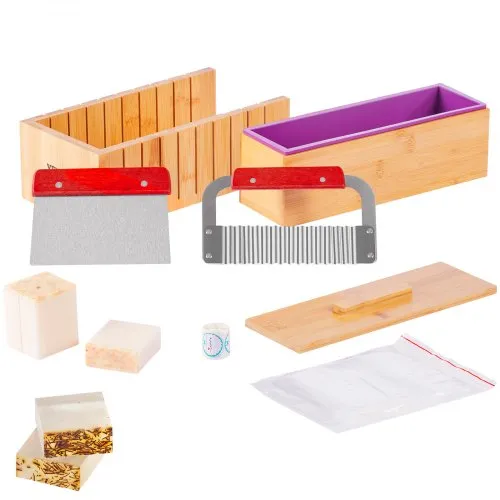
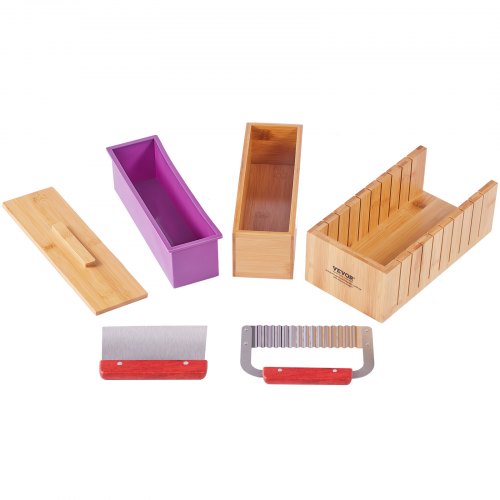
Most soap makers buy extras separately, such as a silicone loaf mold, a wooden mold box, a straight cutting blade, a wavy or crinkle blade for decorative edges, extra wires, and sometimes a beveler and planer for finishing corners. A bamboo soap making kit includes the cutter and these extras. The kit option is the better deal for beginners. Buying a mold, slicer, and blades separately usually costs 30–40% more than buying them all together. For beginners, it can be frustrating when the mold and cutter dimensions don't match.
Check the specifications to see how much the mold can hold. A standard 42-ounce silicone loaf mold makes about ten 4-ounce bars, making it easy to use with a 10-slot cutting frame. When you place your order, make sure that replacement blades are available and read the assembly instructions. Most bamboo units come flat-packed and can be assembled in less than ten minutes with the included hex key. VEVOR backs up its soap cutters with quick after-sales service if any hardware breaks.
Why Choose VEVOR Soap Cutters?
VEVOR has everything you need to start making soap, from single-wire bamboo slicers to multi-bar production frames and complete starter kits. Their prices are low enough that you can still afford the materials. Plus, each tool includes clear assembly instructions, replaceable wires, and reliable post-sale support. Today, browse the full collection. With your next batch, you can start making bars that are clean, uniform, and ready to sell.
FAQs
When should I cut a loaf of cold-process soap?
Wait 18 to 48 hours. The loaf should be hard but slightly soft when you press it with your fingers. If you wait too long, the soap will become brittle and likely to break or crumble when you cut it.
Can you cut wire with soap that has oatmeal or seeds in it?
Yes, but cut steadily and slowly. Large inclusions can bend thin wire and leave lines called drag marks. A blade-slot box design usually makes cleaner faces for recipes with a lot of texture.
How can I keep the wood frame clean?
Clean it right away with a damp cloth, and then let it dry completely. Do not soak it or put it in a dishwasher. Applying mineral oil occasionally keeps the surface sealed and easy to clean.
Can I change the bar thickness?
With adjustable models, you can use a sliding stop block to set the thickness, which is usually between 0.4 and 2 inches. First, cut a test piece from the end to make sure the setting hits your target bar weight.
Can you use these tools for something other than soap?
Yes. They cut through clay, fudge, cheese, butter, and candle wax cleanly with the same wire frames. This makes them useful in kitchens and mixed-craft workshops.