Stick Welders
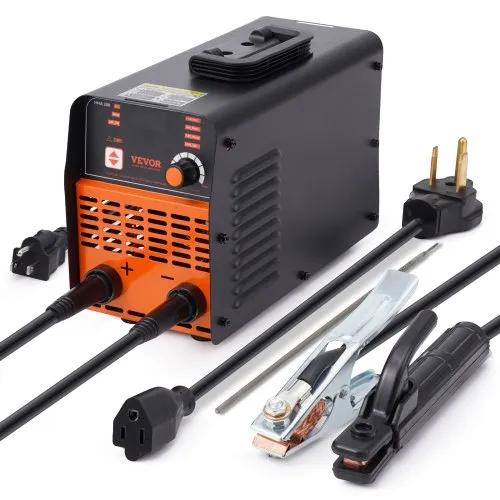


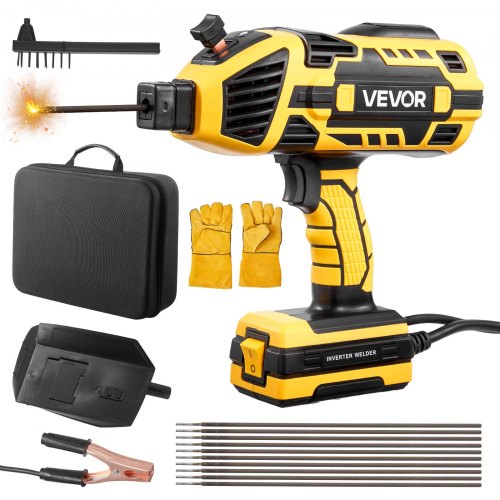


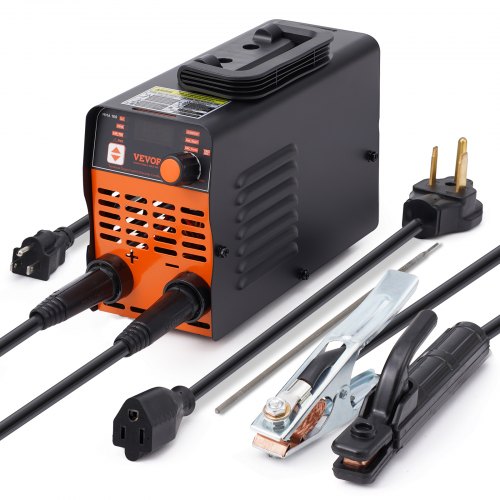


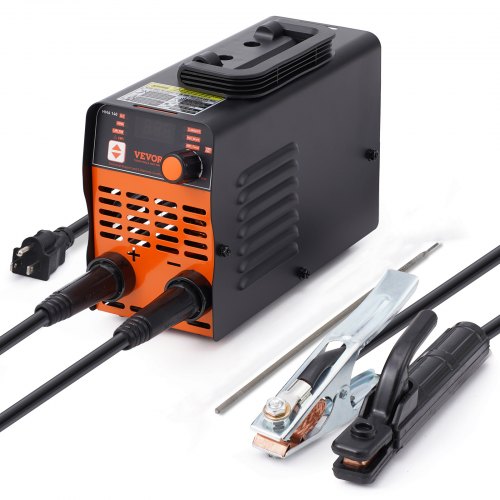


Results for Stick Welders
With VEVOR's expertly crafted stick welders, which are built for dependability and versatility in a variety of challenging applications, you can tackle any welding assignment. Our extensive inventory includes industrial-duty machinery from major fabrication firms as well as small, lightweight units ideal for mobile repairs. VEVOR delivers reliable arc performance, producing strong, high-quality welds in every position. Every welder ensures professional outcomes for both inexperienced users and seasoned pros by combining user-friendly controls with tried-and-true inverter technology. Our selection provides consistent performance and affordable prices for all welding needs, from business fabrication to farm maintenance.
VEVOR Stick Welders: Reliable Welding Solutions for Every Application
Are you annoyed by the limited mobility and irregular arc starts? To overcome these difficulties, high-quality stick welders welding machine provide consistent arc characteristics across a broad amperage range. Advanced inverter technology is available in VEVOR's specialized collection, in configurations suitable for both professional fabricators and enthusiasts. Our catalogue offers professional-grade equipment at costs that respect both personal and company budgets, whether you're looking for portable stick welders, a powerful arc welding machine, a stable stick welder, or multipurpose arc welders.
Amperage Range & Welding Process Types: Optimizing Your Stick Welders Performance
Your stick welders can handle ongoing tasks while offering flexibility for future applications that require new materials, thicknesses, or welding procedures, provided you are aware of their amperage capabilities and welding process compatibility.
Understanding Amperage Output and Material Thickness Capabilities
The maximum material thickness that stick welders can successfully weld and the electrode diameters they can sustain are determined by their different amperage ranges. Typically, entry-level units have 20 to 140 amps and can be used with electrodes 1/16 to 1/8 inch in diameter to weld mild steel 1/16 to 1/4 inch thick. These little stick welders are useful for light maintenance, farm repairs, and hobbyist applications where portability and cost are more important than maximum thickness capability.
The bulk of general fabrication, vehicle repair, and structural maintenance jobs can be completed with mid-range arc welders that deliver 20 to 180 or 200 amps, allowing material thicknesses up to 3/8 inch. This amperage range offers flexibility for various joint configurations, welding positions, and penetration needs, supporting electrode diameters from 1/16 inch to 5/32 inch.
Industrial stick welders, which are welding machines with 20 to 250 amps, can weld materials up to 1/2 inch thick in a single pass. With the right joint preparation, multi-pass procedures can weld materials of any thickness. The 3/16-inch-diameter electrodes that these high-output machines can accommodate are essential for high-deposition welding on pressure vessels, heavy structural steel, and equipment construction.
Duty Cycle Ratings and Continuous Operation Capability
The percentage of ten minutes that stick welders can run at a certain amperage level without overheating and needing to cool down is known as the duty cycle. Six times out of ten, a welder rated for a 60% duty cycle at 140 amps performs at that output, requiring 4 minutes of rest between cycles. Understanding the duty cycle helps avoid heat shutdowns during demanding projects, which can cause equipment damage and production delays.
At their maximum rated output, professional-grade arc welders typically have a 60% duty cycle, ensuring continued productivity in commercial applications that require continuous welding. The duty cycle frequently rises to 80% or 100% at lower amperages— let's say 100 amps on a 200-amp machine, enabling almost continuous operation for thin-material processing.
The duty cycle of inverter-based welding machines is significantly higher than that of conventional transformer designs at the same size and weight. Whereas older transformer machines required 50 to 80 pounds to achieve the same performance, modern inverters can achieve a 60% duty cycle in packages weighing 10 to 15 pounds.
Multi-Process Capability and Welding Versatility
In addition to arc welding with stick electrodes, several modern stick welders offer multi-process capabilities that allow TIG (tungsten inert gas) and, on occasion, MIG (metal inert gas) welding. This versatility reduces the need for several specialized machines, frees up workshop space, and lowers equipment investment while offering process flexibility across a range of materials and applications.
In stick welders without high-frequency start systems, TIG functionality often works in lift-arc mode, where the tungsten electrode is lifted after making contact with the workpiece to create the welding arc. This entry-level TIG capability manages non-ferrous metal joining, thin-material welding, and maintenance repairs. Nevertheless, several specialized TIG equipment features, such as foot-pedal amperage control, are absent from it.
The dual-voltage input feature of portable stick welders allows them to operate from both 120-volt residential circuits and 240-volt outlets, offering the greatest installation versatility. The 120-volt input usually restricts the maximum output to 90 to 120 amps, which is enough for materials up to 3/16 inch thick, but 240-volt operation allows full amperage.
Arc force, hot start, and anti-stick are advanced control features that improve arc characteristics and the operator experience. By offering a quick amperage surge at arc initiation, a hot start guarantees reliable starts without electrode sticking. When the arc voltage falls, the arc force automatically raises the amperage to keep the arc length constant and prevent the electrode from freezing.
Electrode Compatibility and Welding Position Performance
Different electrode types designed for distinct materials, welding locations, and mechanical characteristics are compatible with stick welders. For pipe welding, root passes, and applications needing maximum penetration, the widely used E6010 and E6011 electrodes offer deep penetration and work in all positions. These cellulosic electrodes don't work well on inverters with insufficient voltage and require arc welders with greater open-circuit voltages, usually 70 to 85 volts.
For structural steel, pressure tanks, and applications requiring x-ray-quality welds, E7018 low-hydrogen electrodes provide smooth, slag-covered welds with exceptional mechanical properties. Because they require a constant arc and mild penetration rather than the aggressive digging arc of E6010, these electrodes are compatible with contemporary stick welders.
Stick welding's versatility extends beyond mild steel manufacturing with specialty electrodes for stainless steel, cast iron, hardfacing, and aluminum. Although amperage recommendations and arc characteristics vary by electrode type, high-quality welding arc machine units can handle these specialized electrodes without modification.
Features & Portability: Maximizing Stick Welders' Convenience and Performance
Professional stick welders are distinguished from entry-level equivalents by their sophisticated features and well-considered portable design, which have a substantial impact on user experience, productivity, and application adaptability.
Advanced Control Interfaces and Digital Precision
The rough management of previous analog dials that offered approximate settings is much outshone by modern stick welders with digital control interfaces that provide accurate amperage adjustment in 1-amp increments. LEDs or LCDs provide operators with comprehensive information for troubleshooting and optimal settings by displaying actual output amperage, input voltage, duty-cycle status, and fault codes.
Premium arc welders with memory features save preferred settings for frequently used electrodes and materials, enabling immediate recall without manual adjustment. By recalling preprogrammed settings rather than modifying numerous parameters for each transition, a fabricator that frequently switches between different electrode types saves substantial setup time.
Dig, softness, and arc force response are all controlled by dynamic arc control parameters, which enable arc properties to be fine-tuned beyond simple amperage settings. Skilled welders adjust these parameters for certain electrodes and methods, producing arc behavior that suits individual tastes and application specifications.
Even with variable input power, which is typical on building sites with long extension cords or undersized generators, automatic voltage monitoring and correction guarantee steady performance. Despite input changes of 10 to 15 percent, the stick welders maintain a steady output by sensing input voltage and adjusting internal settings.
Portability Features and Field-Ready Design
Modern inverters that generate 200 amps in systems weighing less than 20 pounds demonstrate how true portable stick welders strike a compromise between portability and weight. These days, stick welders are portable tools with built-in carrying handles, shoulder straps, and durable cases that can be used for various tasks on building sites, for remote repairs, and for agricultural maintenance.
Sensitive electronics are protected from drops, vibrations, and rough treatment in field service environments by protective casings and impact-resistant housings. Unprotected equipment can be destroyed within months of field deployment due to overuse, but this is avoided with rubber bumpers, reinforced corners, and sealed control panels.
Twist lock or tool free quick change cable connections speed up setup and breakdown times, which is essential when moving frequently between many job sites or when urgent repairs require prompt deployment. Detachable cable sets allow operators to adjust lead lengths for specific purposes, while built in cable storage prevents tangling and encourages organized transit.
Certain arc welders' internal electronics may supply 120-volt AC power via auxiliary power connections for work lights, drills, and grinders, eliminating the need for a separate generator when working outdoors. On distant construction sites, its dual-purpose adaptability reduces setup time and equipment transport.
Safety Features and Operator Protection
Extensive safety features on contemporary stick welders protect against electrical hazards, heat damage, and operational mistakes for both the tool and its users. By monitoring internal component temperatures, thermal overload prevention reduces output or shuts down before damage from an excessive duty cycle or inadequate airflow occurs.
By automatically reducing the open circuit voltage to safe levels below 35 volts within milliseconds of the electrode contact breaking, voltage-reduction devices dramatically reduce the risk of electric shock. This safety feature is particularly important in high-humidity environments, restricted work locations, and scenarios where workers may come into contact with workpieces while switching electrodes.
Short-circuit and overvoltage protection prevent damage from input power issues, incorrect generator sizing, or installation related wiring concerns. Because the welding arc machine can detect fault states in microseconds, it cuts internal circuits before component damage occurs.
When they detect current leakage, indicating an insulation failure or a ground fault, high-end portable stick welders with ground-fault circuit interruption immediately stop power to prevent electrocution. This protection provides an extra safety margin in high-risk scenarios, even if it exceeds requirements for the majority of industrial applications.
Why Choose VEVOR Stick Welders for Professional Results and Reliable Performance?
VEVOR offers a range of stick welders that combine state-of-the-art inverter technology with user-friendly features at affordable prices. It makes them suitable for both novice and experienced craftspeople. Every welder features digital controls, multi-process versatility, and the dependability your projects demand, whether you're looking for big 250-amp machines or tiny 140-amp devices. Every product undergoes rigorous testing and comes with comprehensive operation manuals, immediate technical support, and robust warranty protection. Invest in it now to experience professional welding outcomes, complimentary shipping, and the assurance of long-lasting equipment!
FAQs
What amperage stick welders do I need for general fabrication work?
For ordinary manufacturing, stick welders with 180 and 200 amps can handle thin sheets up to 3/8-inch plates. This range supports electrodes from 1/16 to 5/32 inches and covers 90% of typical shop applications, with adequate power reserves.
Can arc welders operate from household 120-volt power?
Many modern arc welders that operate on 120-volt or 240-volt power have dual-voltage input. A 120-volt input, however, often restricts output to 90 and 120 amps. Most systems require 240 volts of power to operate at their maximum amperage.
How do portable stick welders compare to full-size machines?
Modern portable stick welders can perform on par with full-size transformer rigs while weighing 70% less thanks to inverter technology. Reputable portable devices with a 60% duty cycle at 200 amps and a weight under 20 pounds are appropriate for professional use.
What's the difference between stick welders and TIG welders?
Stick welders use flux-coated electrodes that enable all-position welding without shielding gas, making them ideal for outdoor work and dirty materials. TIG welders use non-consumable tungsten electrodes with an external shielding gas to offer accuracy for thin materials and non-ferrous metals.