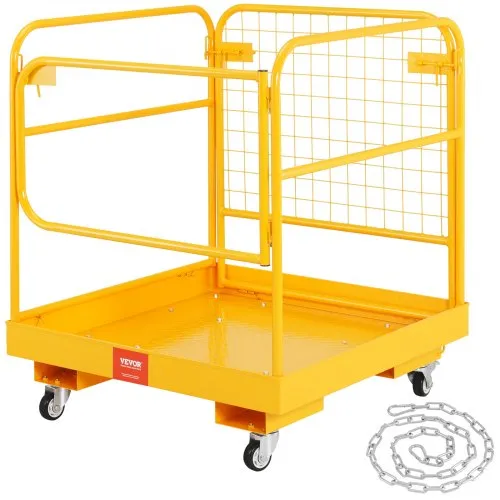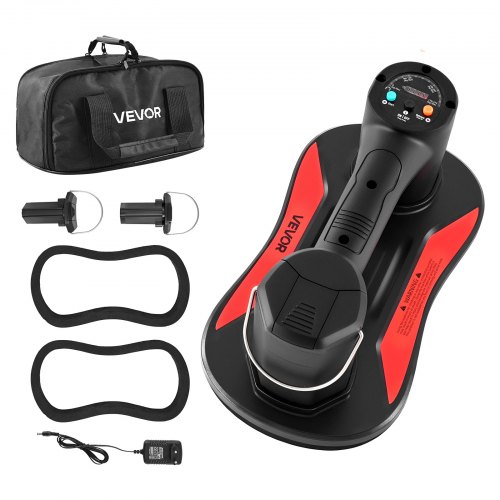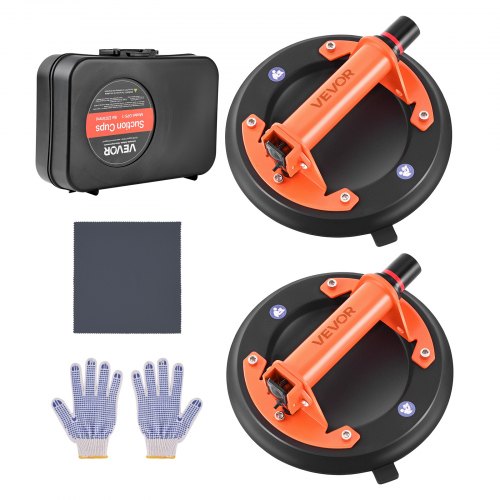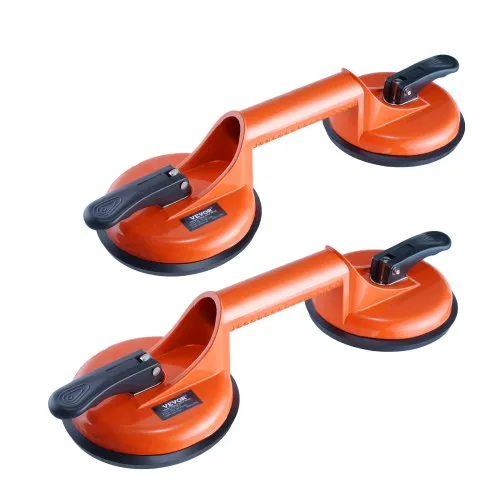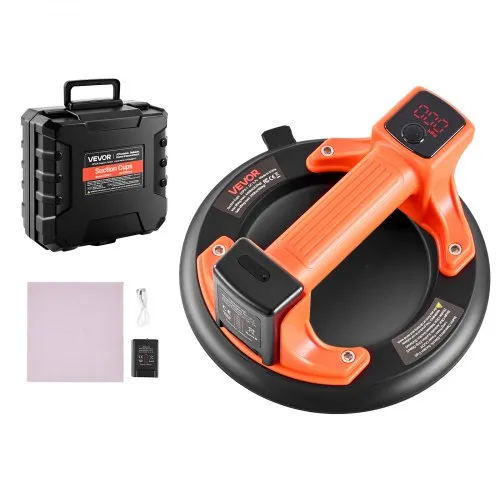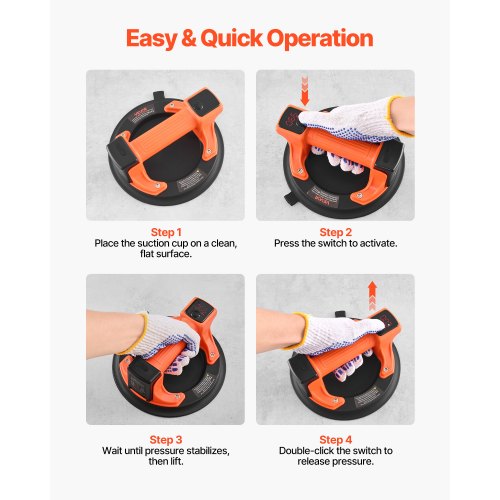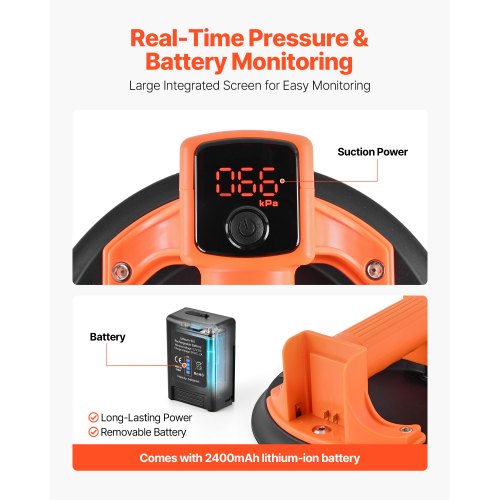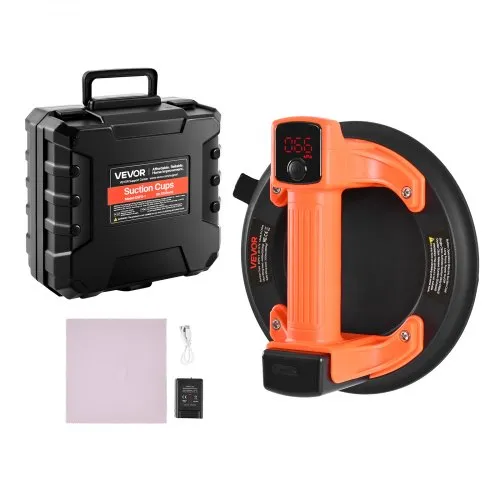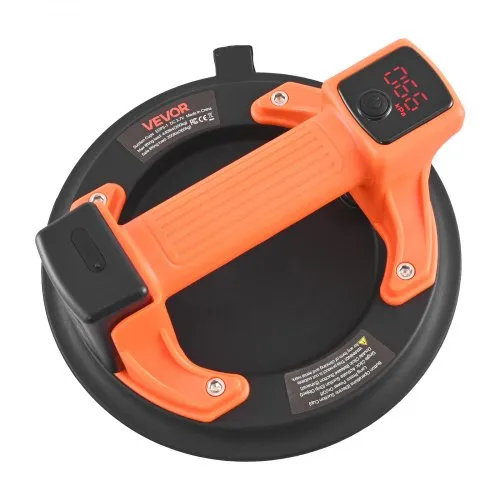

VEVOR offers a wide selection of glass suction cups for contractors, auto glass technicians, professional glaziers, and do-it-yourselfers. VEVOR meets all your lifting needs, whether you need auto glass suction cups for replacing your windshield or heavy duty suction cups for large window panels. Examine suction instruments with a secure grip and appropriate ratings, all at affordable prices and backed by trustworthy post-purchase assistance.
Is it safe to move huge glass panels, mirrors, or windshields without running the danger of damage or injury? High-quality glass suction cups give installers a firm grasp and control during positioning while distributing lifting power uniformly throughout the glass surface to avoid stress fractures. The holding capacity, cup diameter, and release mechanisms of VEVOR's suction cups for glass are designed to meet professional handling needs.
The two factors that determine whether glass suction cups can securely support the weight and dimensions of your particular glass are holding capacity and cup size. Knowing how these elements interact, one can avoid trying to lift glass with weak suction equipment.
The maximum load a single cup can support under ideal conditions, a completely clean, flat glass surface with an appropriate vacuum seal, is known as the weight capacity of a glass suction cup. To accommodate less than ideal circumstances, real-world safe operating loads should be substantially lower than the quoted maximum. The ratings for standard single cup suction instruments range from 30 to 100 lbs. In reality, glass weighing 30 to 35 pounds should be placed in a 50 pound rated cup, which provides a safety factor that accounts for surface contaminants, the impact of temperature on seal integrity, and the dynamic forces encountered during lifting and placement.
Professional multi cup systems distribute loads across two, three, or four cups to handle huge architectural glass panels weighing several hundred pounds. Heavy duty suction cups for glass are rated at 100 pounds or more. Always provide a safety margin of at least 40% above the actual glass weight when determining the necessary capacity. Lifting a 60-pound mirror, for instance, calls for suction cups with a combined rated capacity of at least 85 to 90 pounds. Instead of finding capacity constraints mid-installation, customers can compute safe working loads before trying lifts thanks to VEVOR's glass suction cups, which explicitly state the maximum rated capacity per cup on every product description.
The cup diameter determines the total surface area in contact with the glass, which directly affects the vacuum seal's strength and the distribution of lifting power across the glass surface to avoid localized stress. 3–4-inch small-diameter cups are ideal for handling tiny glass objects, such as picture frames, cabinet doors, and car side windows, where a small tool size improves maneuverability in confined areas. For basic glazing work, the average cup size is between 4.5 and 6 inches. This size provides sufficient contact areas for installing windows in homes, handling shower doors, and attaching mirrors, without requiring bulky tools.
For heavy architectural glass, storefront panels, and any other application where the glass's weight requires the largest possible vacuum seal area to ensure a safe hold, large-diameter cups (7 inches or more) are crucial. On thin or tempered glass, larger cups also reduce the risk of stress fractures at the cup attachment point by distributing the lifting force over a larger area of the glass. The full diameter range of VEVOR's glass handling suction cups is available, with product-specific details clearly stated. Instead of placing stress on smaller cups in a mixed-size arrangement, all cups in applications with multiple cup systems should have the same diameter to guarantee uniform load distribution across attachment points.
Both the initial holding strength and the seal's ability to hold over time during prolonged handling activities depend on the technique employed to generate a vacuum inside the suction cup. By firmly pressing the cup on the glass surface and compressing the air beneath the flexible rubber pad, manual suction cups generate a vacuum. Although this approach is easy to perform and requires no additional equipment, it depends entirely on the user's expertise and surface preparation to provide a reliable seal. Manual cups work well for short lifts of small to medium sized glass pieces, but as tiny air particles seep through the seal, the vacuum gradually weakens.
In contrast to manual compression, vacuum pump suction systems provide a significantly stronger and more dependable vacuum seal by removing air from the cup chamber using a mechanical or hand operated pump. Pump assisted heavy duty suction cups for glass are the necessary option for large installations where glass must be held in place during lengthy alignment and fastening procedures, as they maintain constant holding power for hours without significant vacuum loss. VEVOR's glass suction cup line offers both manual compression models for general purpose handling and pump assisted systems for professional glazing applications. Each listing specifies the vacuum generation method.
The maximum safe load that a single attachment point may sustain limits the use of single-cup suction instruments. By distributing weight across multiple vacuum sites, multi-cup systems significantly improve safe handling while reducing stress on the glass. Shower enclosures, huge mirrors, and windows installed in homes are often two-cup or three-cup models. When every cup is the same size and symmetrically placed on the glass surface, the load is distributed evenly. For tempered or thin glass, uneven cup placement or mixed cup sizes result in imbalanced loading, concentrating stress at certain attachment sites and increasing the risk of fracture.
Systems with four or more cups can handle hundreds of pounds of curtain wall panels, storefronts, and architectural glass. Expert multi cup frames guarantee proper load distribution during vertical lifts and horizontal carries by utilizing adjustable cup spacing and integrated lifting handles or crane attachment points. Instead of allowing individual cups to carry disproportionate loads that exceed their rated capacity, the frame architecture ensures that all cups share the weight equally. Suction cups for glass from VEVOR come in single cup models for everyday use and multi cup frame systems for heavy commercial glazing, with clear specifications for the number of cups, adjustable spacing, and overall system capacity.
The reliability of glass suction cups in difficult professional settings and their failure in everyday situations in real glazing, auto glass, and construction work depend on material quality and application specific design elements.
Since the rubber suction pad is the only part that comes into direct contact with the glass surface, its material properties affect the seal's performance, surface compatibility, and longevity under frequent use. Even on glass with modest roughness or contamination, natural rubber pads create dependable seals thanks to their exceptional flexibility and ability to conform to small surface irregularities. When exposed to UV radiation, ozone, and petroleum compounds, natural rubber deteriorates more quickly than synthetic equivalents. This feature is problematic for auto glass suction cups used in body shops that utilize solvents and cleaning agents.
The pad must maintain its suppleness throughout the temperature range it will experience during use. In cold weather, rubber pads become rigid, making it harder to conform to glass surfaces and leading to weak spots around the seal perimeter. Temperature-stable synthetic rubber compounds used in VEVOR's glass handling suction cups provide consistent seal performance in unheated warehouses, outdoor installation sites, and vehicle service bays, regardless of the season.
Selecting tools tailored to your use case enhances safety and productivity. The suction cup design is subject to different requirements depending on the glass-handling application. Because smaller cup sizes better fit complex curves than larger, flatter cups, auto glass suction cups are designed for curved windshield and rear window surfaces. Many car glass models come with ergonomic grips that allow one person to install and remove the windshield without a second person to steady the glass. Quick-release valves are essential for fine-tuning windshield alignment during adhesive curing because they provide regulated vacuum release without unexpected glass drops.
For large flat panels used in building construction, architectural glass suction equipment prioritizes maximum holding capacity and extended vacuum retention. To accommodate team lifts of panels weighing several hundred pounds, heavy duty suction cups for glass in this category sometimes connect to frame systems with crane lifting eyes or multiple operator handles. For extended holds, professional glazing suction systems feature vacuum gauges or indicators that alert operators when seal strength falls below acceptable limits. Instead of providing generic tools that compromise across all applications,
For safe glass installation and transportation, glaziers, car technicians, and contractors require glass suction cups with the right holding capacity, cup diameter, material quality, and application-specific features, which VEVOR offers. VEVOR can handle every lifting need, from single-cup heavy duty suction cups for windows and mirrors to multi-cup systems for architectural panels. Each tool has competitive pricing and dependable post-purchase assistance. Examine the entire selection and lift it with assurance right now.
Single-cup ratings range from 30 to more than 100 pounds; to account for surface conditions and dynamic pressures, real-world safe operating loads should be 60% of the certified capacity. For instance, in actual use, a 50-lb-rated cup should only lift 30 lbs of glass. Always increase the actual glass weight by 40% for safety.
By applying pressure to the glass surface, manual suction cups generate a vacuum; this is straightforward, but the vacuum slowly leaks over a period of five to fifteen minutes. Large installations that require prolonged positioning time require vacuum-pump suction cups, which use mechanical evacuation to provide stronger, longer-lasting seals that maintain a safe grip for hours.
Cups with a smaller diameter adapt well to curved surfaces, such as windshields. On compound curves, large flat cups made for architectural glass do not seal well. Architectural models are appropriate for flat panels, whereas auto glass suction cups are made especially for curved surfaces. For safe functioning, align the cup design with the curvature of your glass.
Before using suction cups, wipe the glass with isopropyl alcohol and allow it to dry completely. Any debris, moisture, oil, or dust impedes the development of a suitable vacuum seal. Try sliding the cup across the glass to test the seal's strength; a good seal will not shift. Clean the surface again if the cup slides easily.