Taps & Dies















Results for Taps & Dies
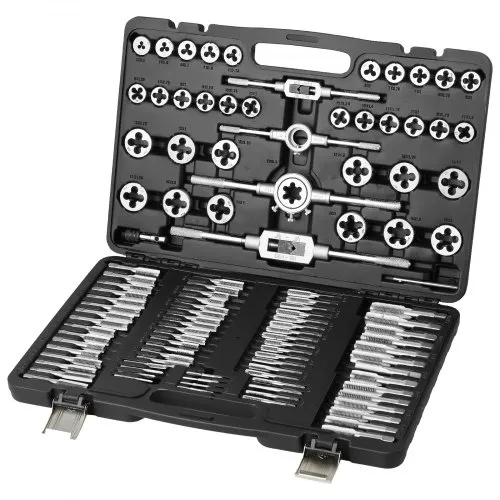
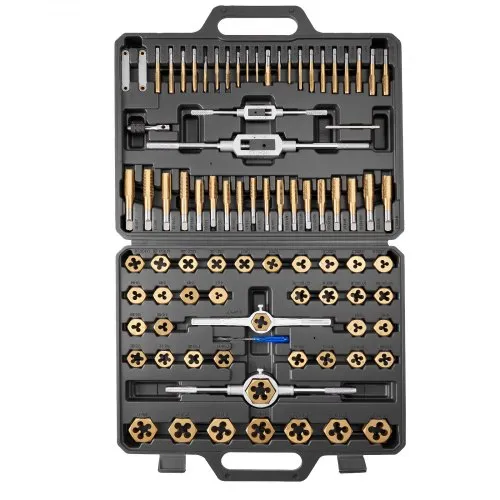
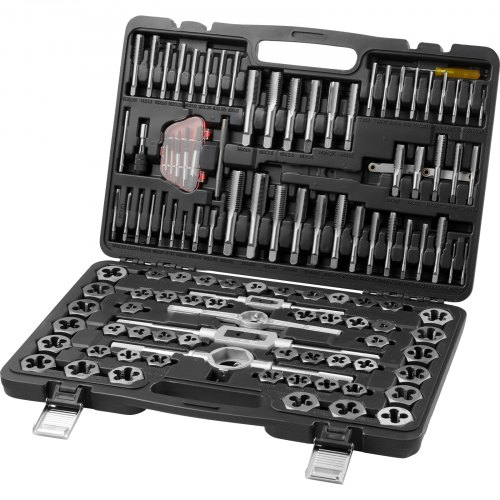
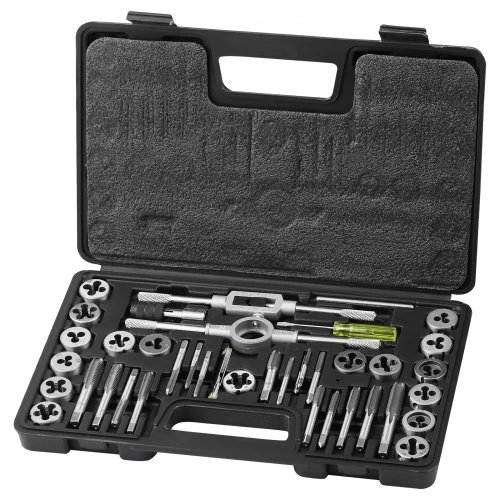
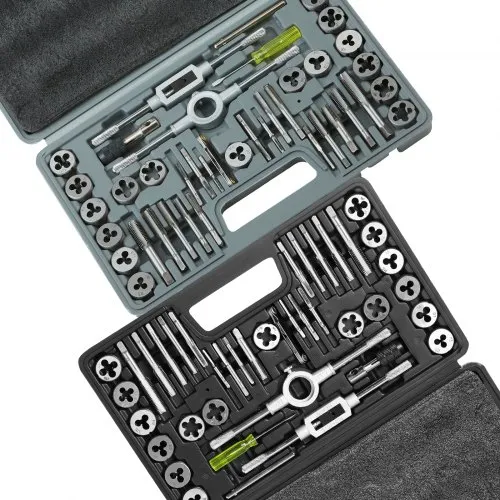
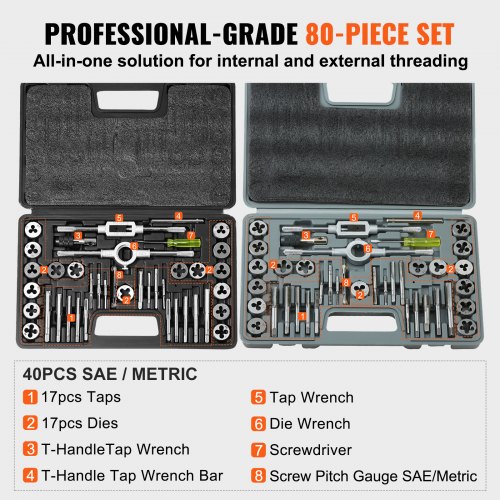
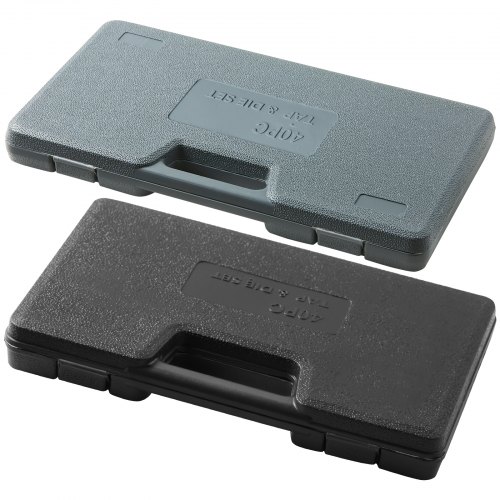
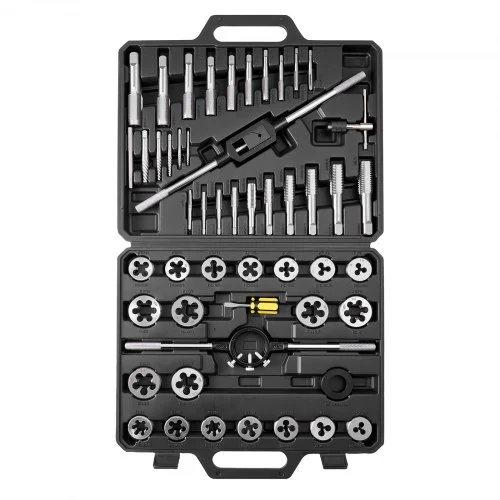
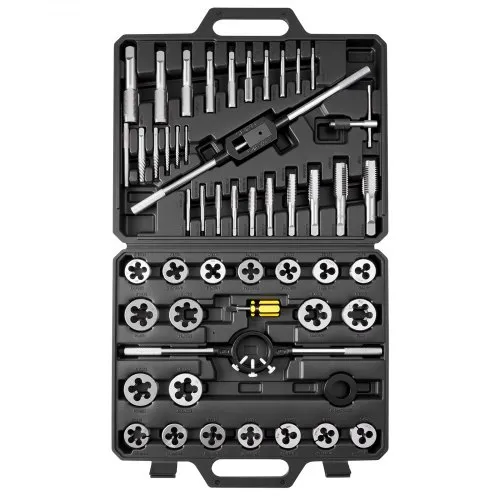
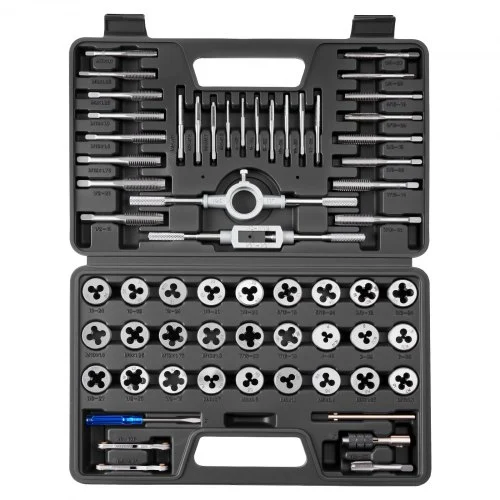
View a comprehensive selection of tap and die sets designed for serious home garages, fabricators, mechanics, and machinists. From extensive 116-piece metric and SAE collections, VEVOR offers compact 40-piece kits that include hand taps, dies, wrenches, and thread repair tools in a single container. Find the right thread standard, size range, and piece count in hardened steel here, at prices that fit the toolbox and the trade, whether you are repairing stripped holes, cutting new threads, or dealing with broken bolts.
VEVOR Tap and Die Sets for Cutting, Repairing, and Restoring Threads Cleanly
Have you ever stripped a bolt hole mid-project and been unable to fix it? A full tap and die kit lets you quickly repair damaged threads and cut new ones. When work stops, the right tool for internal or external threads is always within reach with VEVOR tap and die sets, which combine taps, dies, wrenches, and extractors in a neat box.
Choosing Thread Standard and Piece Count for Your Tap and Die Sets
The two decisions that determine whether a set truly covers your task are thread standard and kit size. Once you match both to your tasks, you rarely need anything else.
Metric Taps for European and Modern Vehicles
To make threads that are millimeters wide, you need a metric tap. These taps are common in European cars, motorcycles, machines, and most modern equipment worldwide. When working outside North America, you need metric coverage. Common VEVOR metric kits include the screws you see most often on engines, brackets, and bodywork. They include sizes from the simple M3 and M4 to the more complex M12 and beyond. A 51-piece metric tap and die set or a special 40-piece set can handle the daily range.
Every thread size comes with a matching die for external threads and a tap for internal ones, so you can rethread it and tap a new hole. Because the pieces fit together, a tap and die set is more useful than separate tools. Check the thread pitch and thickness. Before you cut, make sure that the set matches the pitch that your fasteners use. Metric sizes range from coarse to fine, and if you use the wrong pitch, the hole will cross thread.
SAE Taps for American and Classic Applications
SAE taps cut imperial threads, which are measured in inches and used on American automobiles, vintage cars, and much machinery manufactured in the United States. SAE coverage is required alongside metric for anyone working on outdated equipment or domestic trucks. From tiny machine screws to larger bolt diameters, a 51 piece SAE tap and die set covers the common inch sizes and their coarse and fine variations. Most general and automotive repairs on American machinery fall within that range.
SAE threads use the UNC and UNF designations for coarse and fine, and choosing the wrong one can remove the thread as quickly as a pitch inaccuracy. Before choosing the tap, read the fastening. Combination kits exist because many workshops handle both domestic and foreign work. The most common tap and die sets on the market are mixed sets because a 110-piece metric and SAE combo set, or an 86-piece metric and SAE tap and die set, covers both standards in a single case.
Pipe Thread Taps and Specialty Threading
Pipe thread taps cut the tapered threads used in gas fittings, hydraulics, and plumbing; the taper itself creates a pressure tight seal. Standard straight taps can't do this. Fuel lines, air lines, and water connections all require these tapered threads, which tighten and seal as the fitting goes deeper. For this reason, many larger tap and die sets include standard NPT pipe sizes.
Beyond pipework, some kits include thread pipe taps for fittings alongside typical bolt sizes, providing a single case that covers both plumbing and mechanical tasks. That breadth eliminates the need to carry separate sets for mobile mechanics or maintenance technicians. If you frequently work with gas or fluid connections, verify pipe thread coverage before purchasing. It isn't included in every set, and buying a complete set up front is cheaper than adding pipe taps later.
Matching Piece Count to Your Workload
Piece count is more than a higher number in the listing; it's about coverage. With more parts, you get more thread sizes and pitches available, without gaps that might halt an job. Compact 40- and 60-piece sets cover the sizes most repairs need, making them ideal for focused work or sporadic household use. They manage routine tapping and rethreading while keeping costs and case size low.
Workshops prefer larger 110-piece and 116-piece metric and SAE tap and die sets. A professional rarely encounters a thread a set can't cut or follow, since these sets span both standards' coarse and fine pitches. Prepare for the tasks you will encounter, not the ones you might encounter. The largest tap and die sets make sense in a busy mixed workshop, but a home mechanic working on a single vehicle type can save money with a specialized single-standard kit.
Judging Material and Application for Your VEVOR Tap and Die Sets
What a set can cut and how long it lasts depend on the steel grade and intended use. These characteristics distinguish a set that dulls on the first hard bolt from one that endures actual use.
Tool Steel Grades and Cutting Durability
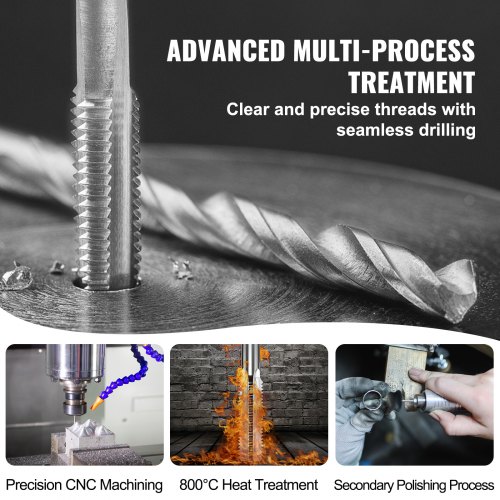
In a tap and die set, material is what you are actually paying for. Compared to inexpensive carbon steel, which dulls or chips on the first hardened fastener, hardened alloy steel and high-speed steel maintain a sharp cutting edge much longer. High-speed steel taps are a superior option for routine metalwork because they can handle tougher materials and withstand the heat that develops when cutting steel. Thread restorer files and alloy steel dies provide adequate coverage for general cleaning and repair tasks.
Most purchasers don't realize how important a clean cutting edge is. A dull tap shreds the metal, hardens the hole, and often breaks off inside, causing a much bigger issue, while a sharp tap cuts a true thread with less force. Instead of looking for surface-treated deals, look for hardened tools. High-quality tap and die sets keep working for years, not months, because the steel is hardened throughout, keeping the cutting flutes sharp even after repeated use.
Thread Repair, Restoration, and Extraction
Only half the work is cutting fresh threads. Thread repair kits, screw extractors, and restorer files belong in the case because real workshop work often comes down to rescue. Screw extractors remove broken bolts and studs that have snapped flush or below the surface. Every mechanic eventually encounters this issue.
Rethreading tools and thread restorer files repair damaged external threads on bolts and studs without removing new metal. To re-establish a clean fit, internal and external rethreading sets remove paint, rust, and small damage from existing threads. A full tap and die set is a real issue solver because of its repair capacity. One VEVOR case can handle cutting, chasing, and extraction for almost any threading operation when paired with hand taps, die stocks, and tap wrenches for control and leverage.
Why Choose VEVOR Tap and Die Sets?
In piece counts ranging from 40 to 116, VEVOR offers complete threading kits, including metric and SAE taps, pipe thread taps, dies, tap wrenches, die stocks, screw extractors, thread repair kits, and restorer files. You get well-organized cases and hardened steel cutting tools at affordable prices, plus prompt after-sales service. Browse the VEVOR tap and die sets collection today and cut clean threads every time, whether you cut new threads daily or need a dependable rescue kit in the garage.
FAQs
What distinguishes a die from a tap?
A die cuts external threads on a rod or bolt, whereas a tap cuts internal threads inside a hole. To create and match threads, a tap and die set includes both.
Is it better to get an SAE or metric tap and die set?
Your vehicles will determine this. SAE is appropriate for American and vintage cars, while metric is appropriate for European and contemporary vehicles. A combined set that covers both metric and SAE is the best option if you work on both.
Can you remove a broken bolt with a tap and die set?
Sure, if screw extractors are part of it. They allow you to clean and rethread the hole by gripping and backing out broken studs and bolts. Before you buy, make sure the kit includes extractors.
Which steel works best for dies and taps?
High-speed steel and hardened alloy steel cut harder metals cleanly and retain their edge the longest. Avoid inexpensive carbon steel tools, as they may break off inside the workpiece and dull quickly.
How can I prevent a tap from breaking?
To clear chips, use cutting oil, keep the tap square to the hole, and back it off every half turn. The quickest way to break a dry, misaligned tap is to force it.