Welding Carts










Results for Welding Carts
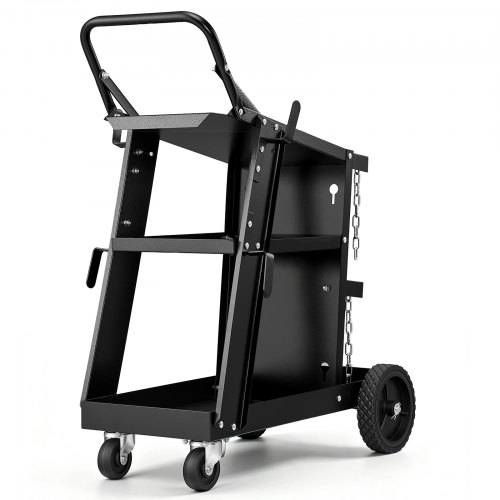
With 360° swivel wheels and standard tank storage safety chains, VEVOR's welding carts range from two-tier drawer units to heavy duty welding carts designed for a full commercial workshop. Each rolling MIG welder welding cart keeps your machine, gas cylinder, and supplies moving together instead of scattered across the shop floor. With weight capacities ranging from 265 to 440 pounds, you can choose from open-shelf tiers, lockable drawer cabinets, or a dedicated cylinder cart that fits the equipment you're actually carrying rather than simply the price.
VEVOR Welding Carts for MIG, TIG, and Plasma Cutter Setups
Are you sick of searching three separate areas of the shop for rods or stumbling over a loose gas cylinder? A MIG welder cart resolves this by giving your machine, tank, and supplies a single mobile home base you can roll to any location. Built on sturdy steel frames with swivel casters for easy mobility throughout the shop, VEVOR's array includes 2-tier and 3-tier configurations, drawer and open-shelf storage, and a dedicated cylinder cart.
Welding Carts by Tier, Drawer Configuration, and Equipment Fit
The first step in selecting the appropriate welding carts is determining how many tiers and drawers you require. Next, make sure the cart will fit your welder or plasma cutter.
2-Tier Configurations for Everyday Shop Use
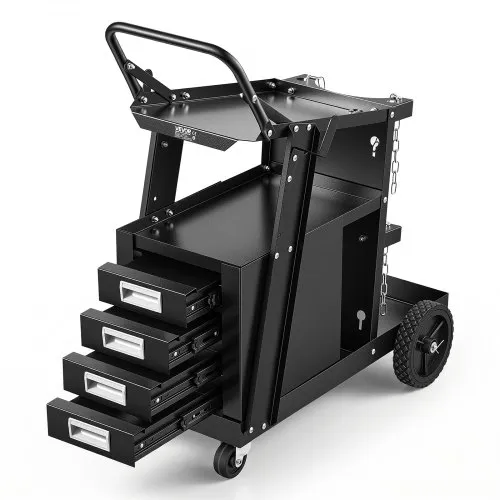
A 2-Tier 4-Drawer Welding Cart has four drawers underneath for rods, gloves, pliers, and other small consumables that would otherwise wind up loose on a shelf or strewn across a workstation, plus a top surface for the machine itself. When you want true organization without the size of a full three-tier unit taking up important floor space, this layout works well for most home and small workshop setups.
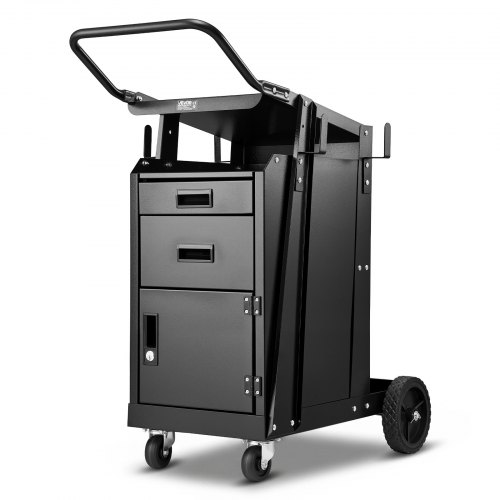
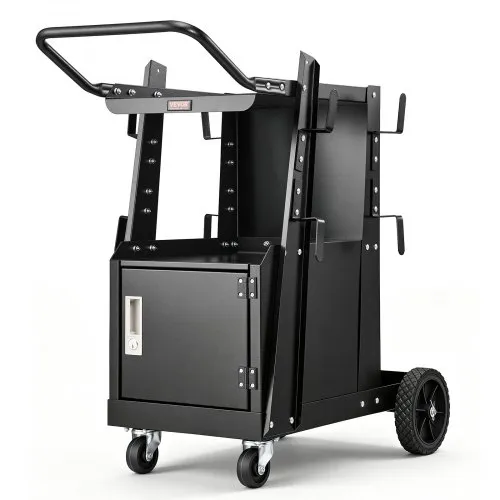
A 2-Tier Welding Cabinet with Anti-Theft Lock replaces open drawers with an enclosed, lockable section for shops storing anything worth locking up. This keeps pricey electrodes or a second torch out of sight and out of reach at night or between shifts. Compared to open drawers, the trade-off is slightly less obvious: grab-and-go access in exchange for true security and peace of mind.
Two-tier welding carts typically have a weight capacity of about 265 pounds, which is enough for a MIG welder, a plasma cutter, or other mid-size equipment plus a fully loaded set of drawers without the frame flexing or the casters straining under the combined load during regular daily use in the shop. Headroom is essential when the cart is fully loaded and rolling over an uneven concrete floor.
3-Tier and Large Configurations for Bigger Shops
In addition to providing enough headroom for a heavier welding machine and a complete set of accessories, cylinders, and consumables stacked across three distinct surfaces rather than two competing for the same limited space, a 3-Tier Heavy-Duty Welder Cart adds a full extra shelf level, usually pushing weight capacity up toward 400 pounds.
This large welding cart style is ideal for larger shops that run several welding operations from a single mobile station, or for anyone who has outgrown a two-tier unit and often ends up placing overflow goods on the floor next to the cart instead of where they should be. More layers create a more organized surface area without making the cart's overall footprint considerably larger or harder to maneuver.
For anyone operating TIG, ARC, MMA, and plasma cutting from the same station, the added capacity of larger welding carts also matters because each process typically has its own specialized accessories, and three tiers give each set dedicated space rather than piling everything into an unorganized heap. During a hectic workday switching between processes, that isolation alone saves actual time.
MIG and TIG Welder Compatibility
For a MIG welding cart to move across the shop floor, it must have a strong top platform that matches the machine's footprint and enough room underneath for cables to run without kinking or dragging on the ground. Most consumer and light-commercial MIG units fit VEVOR's rolling MIG welder cart solutions without the machine awkwardly overhanging the platform edge or throwing the cart off balance.
Since TIG setups usually include tungsten electrodes, filler rod, and a foot pedal, which benefit from dedicated drawer space rather than an open shelf where small parts can roll off or get lost in the shuffle during a busy project, a TIG welder cart performs a similar function but frequently pairs with slightly different accessory storage.
Most welding carts in this lineup handle either process without problems, or you need to purchase two separate carts for essentially the same job, because a TIG cart and a MIG-focused cart share the same basic platform and storage structure. The practical difference typically comes down to drawer count and depth rather than a fundamentally different design.
Plasma Cutter Compatibility
Compared to MIG or TIG welders, plasma cutter carts typically have a smaller footprint but require a clear path off the cart for the air compressor line or hose that runs to the cutting flame. A top surface with sufficient space to prevent the hose from tangling with cables from other equipment using the same cart is advantageous for a plasma cutter.
3-tier and higher-capacity 2-tier welding carts outperform lighter-duty units designed for a single machine at a time because a welder/plasma cutter cart handling both a welding machine and a plasma cutter on the same platform needs enough combined weight capacity for both units operating simultaneously.
Checking the listed weight capacity against the total weight of your equipment will prevent overloading the platform or prematurely straining the swivel wheels during frequent daily use and travel across the shop, whether you're looking for a dedicated cart for plasma cutter or a welder and plasma cutter cart designed to handle both machines together.
Welding Carts: Cylinder Storage and Security Features
The welding component comes down to tier count and equipment fit; cylinder storage and lockable security round out the differences between welding carts and regular shop carts.
Cylinder and Tank Storage
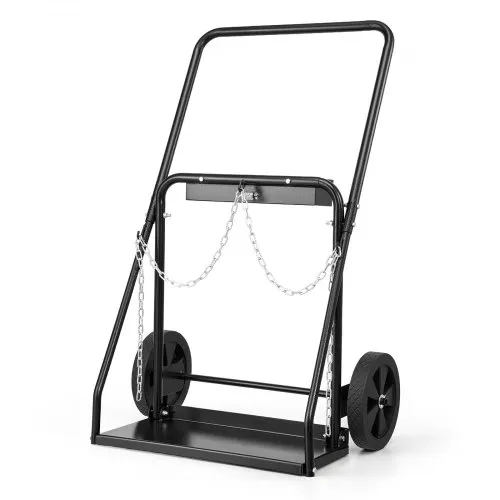
Tank storage safety chains are included with every cart in this series. This simple but essential part prevents a gas cylinder from toppling over or rolling when the trolley travels around the factory floor. This matters more than it may seem because if the cart is bumped mid-job or hits an uneven floor, an unsecured tank poses a major risk.
Instead of being a basic tool cart with a chain added as an afterthought, a dual welding cylinder cart is specifically designed for establishments that perform oxy-fuel welding or cutting. This type of oxygen-acetylene tank cart is designed for standard double 12.5-inch-diameter cylinders. It uses fixed wheels instead of swivel casters because stability matters more in confined spaces than maneuverability.
In larger shops, it's typical to run a general-purpose welding cart next to a dedicated cylinder cart, maintaining consumables and tools on one mobile station. At the same time, tanks remain secure on their own specially designed base nearby. For welding carts, the more sensible long-term configuration is typically to pair the two instead of packing everything onto a single cart.
Lockable and Anti-Theft Storage Features
It might be worthwhile to give up some of the open-access convenience of standard drawers for true security if the 2-Drawer Welder Cart with Lockable Cabinet is situated in a shared shop, a job site, or any other location where tools frequently disappear between shifts without anyone noticing until it's too late and the replacement bill arrives.
This level of security is not necessary for every store. In a private garage or regulated workshop where theft isn't a regular problem, welding carts with drawers and no lock work well. With open access, you can grab what you need mid-project without searching for a key when your hands are already full or dirty.
Keeping consumables on an open-drawer cart and more costly items, such as a second torch or extra electrodes, in a lockable compartment elsewhere balances daily ease with the cost of replacing stolen equipment for establishments that split the cost. For stores between entirely private and fully open access, this hybrid method often proves the most sensible option.
Why Choose VEVOR Welding Carts for Your Workshop?
VEVOR offers 2-tier and 3-tier welding carts, open-drawer and locked-cabinet storage, and a dedicated cylinder cart instead of settling for a generic cart that doesn't fit your shop design. Every cart includes safety chains and swivel casters, and the cost is significantly lower than bespoke shop fabrication. With VEVOR's guarantee and timely support, upgrading to a real cart is a low-risk way to organize your workspace. Explore the full assortment and start building a more efficient store today.
FAQs
How many tiers do I need on a welding cart?
For homeowners and small businesses with modest storage needs, two-tier carts are perfect. Three-tier carts boost capacity for busy workplaces that run multiple welding processes or require additional space for consumables and accessories.
Will a welding cart fit my MIG, TIG, or plasma cutter?
Most welding carts handle MIG, TIG, and plasma cutter equipment because platform size and weight capacity matter more than the specific process. Examine the weight and footprint of your machine in relation to the specified parameters.
Do I need a separate cart for gas cylinders?
Not all the time. For a single cylinder, welding carts usually have tank-storage safety chains. For oxy-fuel configurations that need two tanks, a customized dual cylinder cart offers more durable, purpose-built storage.
Are lockable welding carts worth the extra cost?
Yes, if the cart is located in a common workplace or business. A lockable cabinet secures higher-value items, such as a second torch. Open drawers, on the other hand, provide quicker daily access for a private, controlled workshop.
What weight capacity should I look for?
Match capacity to the total weight of your equipment, which includes accessories, a loaded cylinder, and a welder or cutter. Depending on tier count and size, most carts here have capacities between 265 and 440 pounds.