

Welding Helmets








Results for Welding Helmets
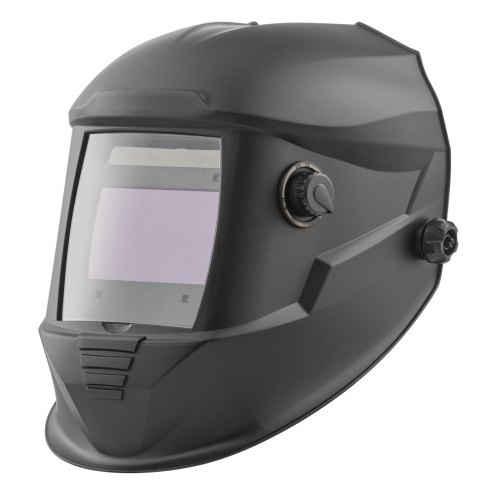
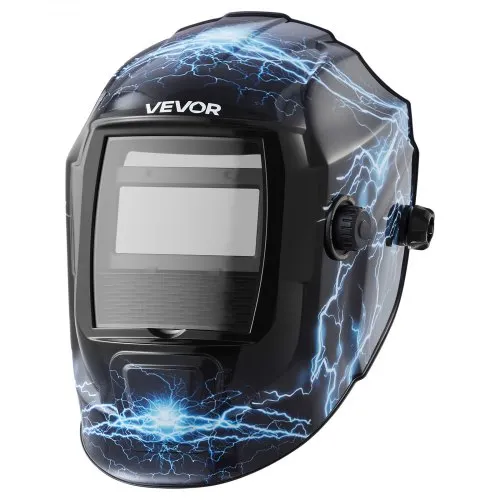
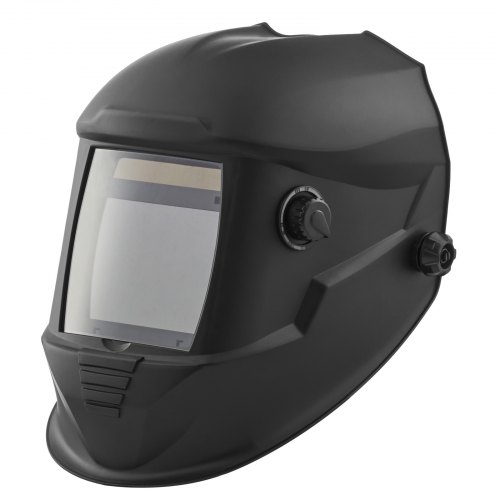
A welding helmet is a head-worn piece of personal protective equipment that shields a welder's eyes, face, and neck from the intense light and heat produced by an electric welding arc. It combines a protective shell with a filter lens that blocks ultraviolet and infrared radiation, the visible glare of the arc, and the flying sparks and spatter thrown off as metal is joined. By cutting arc brightness to a safe level while still letting the welder see the joint, it prevents flash burns to the eyes, protects the skin from radiant burns, and lets the operator position the weld accurately and work for long periods in comfort.
The range spans a few clear types. Auto darkening welding helmets carry an electronic filter that switches from a light to a dark shade the instant an arc strikes, with wide-view and compact face sizes and adjustable shade bands for stick, MIG, TIG, and cutting. Auto darkening welding lens cartridges drop into most standard hoods as a filter upgrade or replacement, in fixed single shades or a continuously variable range. True color lenses refine that filter so the weld pool shows in natural tones rather than a green tint, and clear polycarbonate cover lenses sit over the filter as sacrificial protection against spatter and scratches. Typical uses are stick, MIG, flux-core, and TIG welding, plasma cutting, and grinding across fabrication shops, repair work, and home projects.
Five things decide what you need:
- Lens type: a full auto-darkening helmet is the all-round pick, while a loose lens cartridge suits welders upgrading a hood they already own.
- Shade range: a fixed shade covers one process, a variable band (roughly 5 to 13) covers everything from light TIG to heavy stick and plasma cutting.
- Viewing area: a larger window shows more of the joint without moving the hood, a compact window keeps the helmet lighter and cheaper.
- Arc sensors: more sensors read the arc reliably in corners and out-of-position welds where one or two can be blocked.
- Grind mode: a fixed light setting lets the same helmet protect against sparks while grinding, so there is no need to swap to a separate face shield.
Browse the full welding helmets range to compare full hoods, or jump straight to the auto darkening welding lens selection to upgrade the hood you already run.
Welding Helmet Types at a Glance
The line splits into four clear types; this table sets them side by side on the points that separate them.
| Type | Shade Behavior | Viewing Window | Grind Mode | Selection Note |
|---|---|---|---|---|
| Auto darkening helmet (wide view) | Variable, switches on arc | Large, up to 12 to 15 sq in | Yes, fixed light shade | The all-round choice when one helmet must cover welding, cutting and grinding |
| Auto darkening helmet (compact) | Variable, switches on arc | Small, around 6 sq in | Yes, fixed light shade | Lighter and lower cost for occasional or tight-space work where a big window is not needed |
| Auto darkening lens cartridge | Fixed single shade or variable, by model | Fits most hoods, 4.25 x 2 in | Light-state only on variable models | Pick this to upgrade or revive a hood you already own rather than buy a whole helmet |
| Clear cover lens | None, stays clear | Matches the filter it covers | Not applicable | A consumable shield that takes the spatter and scratches so the costly filter lasts |
VEVOR Welding Helmets – Auto-Darkening, True Color Lenses & Cover Lens Options for Every Welder
Are you looking for a welder's helmet that protects your eyes from arcs? The lens technology, shade range, and fit of a welding helmet directly affect how well it protects your eyes. It also determines how well you can see the weld pool, which is what determines the quality of the weld. VEVOR has a wide range of welding helmets with different lens types and specifications for professional welders, trade apprentices, and dedicated amateurs.
Selecting Welding Helmets by Lens Type and Shade Range
The two most important safety features to look for in a welding helmet are the lens type and shade range. Together, they determine how well the helmet shields the welder's eyes and face from arc radiation, UV and infrared light, and weld spatter. They also check how well the welder can see the work area and weld pool while they are welding.
Auto Darkening Welding Helmets and Lenses with Switching Speed, Sensitivity, and Arc Detection
The latest standard in welding eye protection is an auto-darkening welding helmet. It replaces the fixed-shade passive lens format, which required welders to tilt the helmet down before striking an arc. The electronically controlled lens transitions from a light-viewing state to a protective dark shade in milliseconds when an arc is detected.
The auto darkening welding lens and helmets use liquid-crystal display (LCD) technology, with polarizing filter layers that line up under electrical control. They block arc radiation at the moment of arc strike. It is done without the welder having to stop what they're doing or move their hands to lower the helmet.
The most important safety feature of an auto darkening welding lens is its switching speed. The auto-darkening glasses go from light to dark in 1/25,000 to 1/30,000 of a second. It is fast enough to protect your eyes from arc flashes before you even notice any light exposure. The switching speed is critical for TIG welding because the high-frequency arc start produces an instant, full-intensity arc without the time-consuming ramp-up.
True Color Welding Lens with Optical Clarity, Color Accuracy, and Weld Pool Visibility
True color welding lens are a big step up from regular auto-darkening lenses in terms of optical clarity and color accuracy. These are the two visual performance factors that directly affect a welder's ability to read the weld pool correctly and determine material condition. They also help make consistent, high-quality welds across a variety of base metals and filler materials. The true color lens uses advanced optical filter formulations that reveal the weld area in true, natural colors rather than a green or yellow tint.
True-color viewing is most useful when the weld-pool color is a key indicator of heat input and material condition. For example, when TIG welding stainless steel, aluminum, and exotic alloys, the puddle color indicates oxidation, contamination, and fusion quality. Standard auto-darkening tinted lenses cover these color cues with a monochromatic filter. True-color welding lenses preserve the natural color differences between the weld pool, the heat-affected zone, and the base material. It lets experienced welders make precise, immediate changes to travel speed, heat input, and filler addition rate.
Cover Lens for Welding Helmets for Protection, Replacement Intervals, and Compatibility
Cover lens for welding helmets are the outer and inner protective layers intended for disposal. They protect the auto-darkening welding lens or passive lens assembly from spatter, grinding debris, scratches, and arc dust that accumulate on the lens surface. There are two types of welding helmet covers. The outer lenses protect the lens cartridge from spatter and physical wear and tear. The inner lenses protect the lens interior from sweat, condensation, and small particles that enter through ventilation holes.
How often cover lenses need to be replaced depends on the welding process, amperage, and location. Stick-and-flux-core MIG welding, which uses high-spatter processes, leaves the most aggressive spatter deposits on the outer cover lenses. These lenses need to be replaced every 8 to 20 hours of arc time, based on the amperage level and the material being welded. Lower-spatter processes like TIG and gas MIG help cover lenses that last much longer. They can often last 40 hours or more of arc time before the visual clarity is poor enough to warrant replacement.
Optical-grade polycarbonate is used to make welding helmet cover lenses. The material resists impacts, scratches, and loss of clarity better than the acrylic cover lenses found in lower-quality helmet accessories. For longer welding hours, polycarbonate cover lenses keep the view clear before debris builds up enough to affect weld quality. It means the lenses don't need to be replaced as often, lowering the ongoing cost of helmet upkeep.
Matching the Right Setup to Your Welding Job
The sections above explain the lens technologies on their own; this table turns them into a job-by-job pick, adding the amperage band and the cover-lens change interval a buyer otherwise has to work out separately.
| Welding Job | Lens Setup to Prioritize | Usual Shade | Cover Lens Interval | Why It Fits |
|---|---|---|---|---|
| Light TIG on thin steel or aluminum | True color lens, high sensor count | 8 to 10 | 40+ hours, low spatter | Natural color reads the puddle for oxidation and fusion on alloy work |
| General MIG in a home or repair shop | Variable-shade auto darkening helmet | 10 to 12 | 8 to 20 hours, high spatter | One hood flips between weld and grind without a second face shield |
| Heavy stick and flux-core | Wide variable band, 4 arc sensors | 12 to 13 | 8 to 20 hours, high spatter | Darker top shade and extra sensors suit high amps and fixed covers chip fast |
| Plasma cutting plus grinding | Helmet with dedicated grind mode | 5 to 9, plus grind 3 to 4 | Check outer cover weekly | Grind mode guards against sparks when no arc is present, saving a gear change |
| Upgrading an older passive hood | Drop-in auto darkening lens cartridge | Fixed 9, or variable 5 to 13 | Add a clear cover over it | Brings instant darkening to a shell you already own at a fraction of a new helmet |
Evaluating Welding Helmets by Features and Wearing Comfort
In addition to lens technology and shade specifications, you also need to consider a welding helmet's features and how well it fits. These features determine how well you can use the welding helmet throughout the workday without discomfort or poor visibility.
Viewing Area, Shade Range Adjustability, and Grind Mode Features
The viewing area of a welding helmet lens is the clear opening through which the welder sees the work area and weld pool. It directly affects the welder's ability to keep the torch or electrode in the right place and to see the entire weld area. You don’t have to move the helmet during the weld pass. Auto darkening welding helmets come with different viewing area sizes, ranging from small standard-format lenses measuring 3.86" x 1.97". You can also get the larger wide-format lenses measuring 3.94" x 3.66" for a much wider field of view.
The shade-range adjustability of an auto-darkening welding helmet tells you how many different welding processes and power levels it can handle. Fixed-shade 10 or 11 lenses on welding helmets can only be used within a specific amperage range. The auto darkening welding helmets, on the other hand, can be used for all welding processes, from low-amperage TIG at shade 8 to heavy stick and plasma cutting at shade 13. That is because the lenses can be continuously changed from shade 5 to shade 13.
The Grind mode is a useful function that changes the auto-darkening lens to a fixed light shade, usually shade 3 or 4. It is useful for cutting and grinding tasks where arc detection is not required, but eye protection from sparks and grinding debris is still needed. With welding helmets that have dedicated grind mode switches, you don't have to switch from a welding helmet to a separate grinding face shield. It saves time and ensures you always have the right face and eye protection throughout the fabrication process, without having to switch protective gear.
Headgear Fit Systems, Weight Distribution, and Extended Wearing Comfort
Comfort during long welding sessions depends on the headgear fit system, the helmet's weight and balance point, and the padding and airflow on the inside. These features help keep the wearer comfortable even when sweating, getting hot, or moving around while welding. The welding helmets are made to meet the ergonomic needs of professional welders. A helmet that makes the welder uncomfortable or tired after 2 hours of use lowers productivity and increases the risk of compromised eye protection.
Headgear fit systems on welding helmets use ratchet-style adjustment mechanisms that let you make precise circumference adjustments in 1mm increments without removing the helmet. It is very helpful during the workday when gloves are on, and adjustments can't be made with tools. Four-point suspension headbands distribute the weight of the helmet evenly across the face and crown. It makes it easier to wear for longer than two hours without getting tired.
Best-Seller Comparison
These are the distinct models in the range, set side by side on the specs that actually differ so you can see which earns its place in your kit.
| Product | Type | Viewing Size | Shade Range | Lens Technology | Arc Sensors | Best For |
|---|---|---|---|---|---|---|
| Auto Darkening Helmet 3.94 x 3.15, 4 Sensors | Full helmet | 3.94 x 3.15 in (12 sq in) | 4/5-9/9-13 | True Color Auto-Darkening | 4 | Widest window and most sensors here; the do-everything shop hood for out-of-position work |
| Compact Auto Darkening Helmet 3.66 x 1.69 | Full helmet | 3.66 x 1.69 in (6 sq in) | 4/9-13 | True Color Auto-Darkening | 2 | Lightest helmet at 1.3 lbs; occasional welds and tight spots where a big view is not needed |
| Shade 9 Auto Darkening Lens 4.25 x 2, Gold Coated | Lens cartridge | 4.25 x 2 in | Fixed 9 | Gold-Coated Auto-Darkening | 2 | Only drop-in filter in the lineup; upgrades a hood you own for steady mid-amp welding |
| Outer Cover Lens 20-Pack 4.76 x 4.65 | Cover lens | 4.76 x 4.65 in | Clear, none | Clear Protective Lens | None | Only consumable here; the bulk stock of sacrificial shields that keeps a filter spatter-free |
Shop VEVOR Welding Helmets for Every Process, Welder, and Work Environment
VEVOR has everything you need for reliable arc protection, clear weld pool visibility, and all-day comfort when wearing welding eye protection. Our products include variable-shade auto darkening welding helmets, high-clarity true color welding lens, and replacement cover lens for welding helmet maintenance. Our collection also includes upgrades for auto darkening welding lens. VEVOR offers lens technology, a wide shade range, and comfort features to help you weld safely and correctly in any process or application. The lenses are ideal whether you're a professional fabricator, a trade apprentice, or a dedicated hobbyist welder. Every buy comes with competitive prices and reliable support after the sale. Browse our full selection of welding helmets today and feel confident in protecting your eyes.
FAQs
What shade setting should I use for MIG and TIG welding?
Depending on the current, shades 10-12 are usually needed for MIG welding. Darker shades are needed for higher amperages. Shades 8 to 10 are often used for TIG welding at lower amps. You can use auto darkening welding helmets with shade adjustments from 5 to 13 for all processes.
How often should the cover lens on welding helmets be replaced?
The cover lenses with variable shade adjustment protect against plasma cutting at shades 8-11, depending on amperage. Models with dedicated grind mode provide fixed shade 3-4 protection during grinding operations. They eliminate the need to switch between a welding helmet and a separate grinding face shield during fabrication work.
What is the difference between a true color welding lens and a standard auto darkening lens?
Normal auto-darkening lenses add a yellow or green tint that covers up the natural colors of the weld pool. True-color welding lenses show the weld area in its natural colors. It lets welders see the puddle color, oxidation, and fusion quality right away, which is especially helpful when TIG welding aluminum and stainless steel.
Can I use my welding helmet for plasma cutting and grinding?
Yes, the auto-darkening welding helmets with shade adjustments from 8 to 11 are suitable for plasma cutting at different amperage levels. Models with a specific grind mode offer fixed shade 3 to 4 protection for grinding tasks, so you don't have to switch.
How do I choose the best welding helmet for beginners?
Start with a variable-shade auto darkening welding helmet that covers shade 5 to 13, since it handles every common process while you learn. Look for a grind mode, a few arc sensors, and a comfortable ratchet headgear so one helmet carries you through MIG, TIG, and grinding.
What are the best welding helmets for safety and comfort?
The best ones pair reliable arc protection with all-day wearability. Prioritize a fast auto-darkening response, four arc sensors for dependable triggering, and true color optics to cut eye strain. For comfort, choose a four-point ratchet headband and a light shell near 1.3 to 1.5 lbs that balances evenly over long sessions.
What are the main features to consider when choosing a welding helmet?
Weigh six features: lens type, shade range, viewing area, arc sensor count, grind mode, and headgear fit. Together they set how safely and clearly you can work. A variable auto darkening lens with true color optics and a wide window suits the widest mix of welding, cutting, and grinding tasks.
Where can I buy welding helmets?
You can buy welding helmets, replacement lenses, and cover lenses directly from the VEVOR welding helmets range, with full hoods and drop-in filter upgrades in one place. Ordering from VEVOR gives you current pricing, model options across shade ranges and viewing sizes, and after-sale support on every purchase.
What is the difference between auto-darkening and passive welding helmets?
A passive helmet has a fixed-shade lens, so you nod it down before striking the arc and it stays dark throughout. An auto-darkening helmet keeps a light view until an arc is detected, then switches to the dark shade in a fraction of a second, which speeds setup and improves joint placement and accuracy.
What should I look for in a welding helmet viewing area size?
Match the window to your work. A large area, around 12 to 15 square inches, shows more of the joint for pipe, out-of-position, and production welds without repositioning the hood. A compact window near 6 square inches keeps the helmet lighter and lower cost, which suits occasional repairs and tight spaces.
