

WiFi & Networking Devices








Results for WiFi & Networking Devices
WiFi networking devices are the hardware that holds, connects and services the equipment behind a home or office network. A network moves data between a modem, router, switches and computers over cables and WiFi. The devices on this page do the physical work around that network: server racks and cabinets mount switches, patch panels and servers on 19 in rails, structured media enclosures gather phone, coax and Ethernet lines inside a wall, and underground cable locators trace buried low-voltage wires and find breaks. They suit home labs, offices, network closets and new builds.
Wall-mount open racks in 9, 12 and 15U hold patch panels and switches at up to 150 lbs, with a gate that opens 180°. Where gear needs locking away, glass-door network cabinets run from 6U to 22U. Four-post open frame racks adjust from 15 to 40 in deep and roll on casters for servers and AV gear, and 16U AV racks carry up to 500 lbs of home theater and studio equipment. Rack shelves and lockable rack drawers add space for loose devices and tools. For new homes, structured media enclosures from 9 to 42 in recess between studs to gather phone, coax and Ethernet. Underground cable locators trace buried pet fence, irrigation and low-voltage lines from 1000 to 6561 ft and find breaks. Typical uses are home labs, network closets, small offices and new builds.
Five things decide which one fits:
- Main job: housing equipment, organizing wiring or tracing buried cable.
- Capacity: rack units for racks, or tracing length for locators.
- Depth: cabinet depth for your gear, or how deep a locator reads.
- Construction: steel frame and door type, or the locator housing.
- Key extras: load rating, shelves, earphones or batteries.
Browse all WiFi and networking devices or go straight to server racks and cabinets.
Networking Device Types at a Glance
The table below shows how each type of device on this page works, what to check and the key benefit of each.
| Type | How It Works | How to Check Your Needs | Key Benefit |
|---|---|---|---|
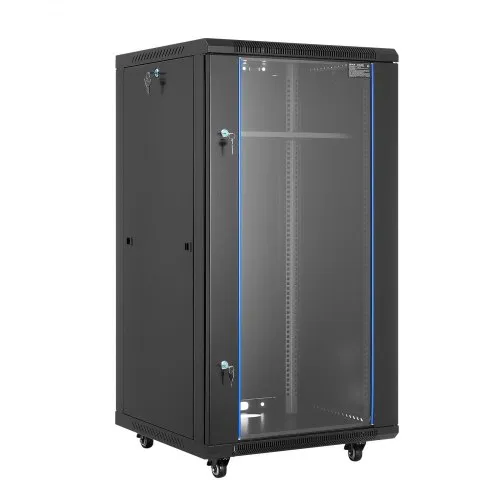
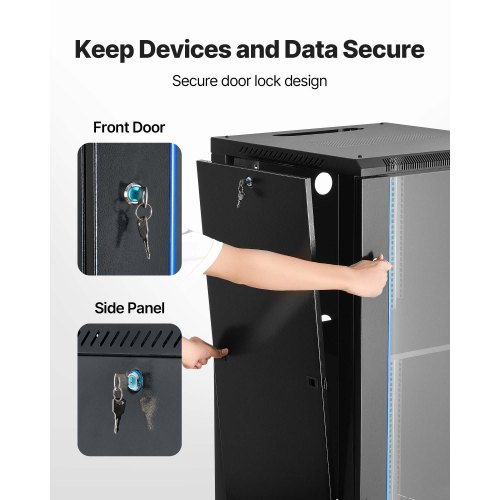
| Wall-mount glass-door cabinet | A 6U steel box with a locking glass door hangs on the wall | Measure your deepest device against 15.5 in | Locks gear behind a see-through glass door |
| Wall-mount open rack | A 12U open frame with a gate that opens 180° | Count the rack units of your gear plus spare | Gate swings 180° for easy front and back access |
| Four-post open frame rack | Four posts adjust from 15 to 40 in deep on casters | Check the depth of rack servers | Depth adjusts to fit short and long servers |
| AV rack stand | A 16U stand holds up to 500 lbs of AV gear | Add up the weight of amps and receivers | Holds up to 500 lbs of heavy AV gear |
| Structured media enclosure | A 28 in steel box recesses between wall studs | Plan ports for phone, coax and Ethernet | Gathers all home wiring in one wall box |
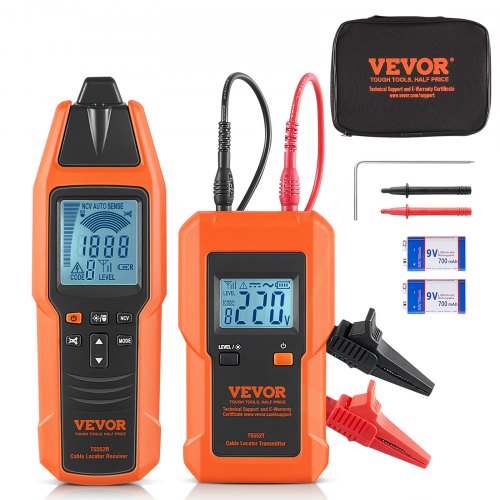
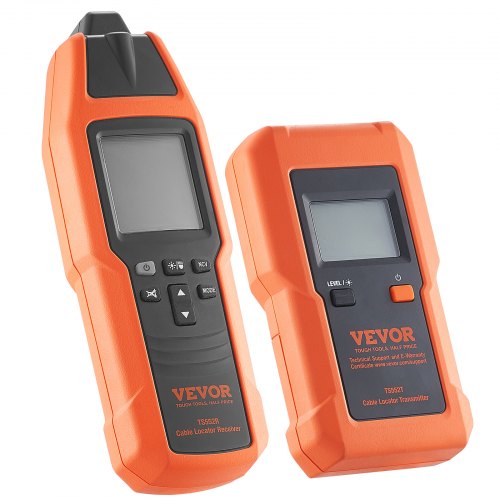
| Underground cable locator | A transmitter signals the wire and a receiver tracks it | Check the cable carries no more than 24 V | Finds breaks in buried wire without digging |
VEVOR Network Equipment, including Server Racks and Enclosures for Professional and Home Lab Installations
Are you trying to construct, arrange, or grow a server room, home lab, or structured cabling installation, and need reliable network equipment? VEVOR's entire line offers the quality and compatibility that every IT expert and home network builder requires, whether you need a 12U open-frame server rack for a small network setup, a network cable tester for fault diagnosis, or a structured media enclosure for clean residential wiring.
Network Equipment Types for Every Server Cabling and Infrastructure Need
The first step in choosing the appropriate network equipment is to match the product type to the particular infrastructure role it must fulfill. From initial cabling and testing to equipment mounting and systematic infrastructure management, VEVOR's array includes server racks, cable testing tools, enclosures, and PC gaming cases that cover every phase of network buildout.
Server Racks & Cabinets for Organized Equipment Mounting
Any well-organized network equipment installation starts with server racks & cabinets, which provide a standardized mounting structure that keeps switches, patch panels, servers, and power distribution units in a safe, easily accessible, and well-ventilated configuration. Because VEVOR's server racks & cabinets are constructed in accordance with the EIA-310 rack-unit standard, there are no fitment issues during installation, and the full range of rack-mountable network and server equipment from every major vendor is compatible.
In shared areas, offices, and light commercial settings where network equipment security is important, VEVOR's enclosed server cabinet models offer front- and rear-door access with lockable panels that protect equipment from unauthorized physical access. Additionally, the enclosed cabinet design reduces airflow interruptions and visual clutter caused by open-frame installations in customer-facing situations by routing cables within a specified region. With locking caster mechanisms that securely immobilize the cabinet once the installation position is verified, VEVOR server cabinet models with casters and leveling feet enable precise placement on data center and server room flooring. VEVOR's server rack and cabinet line offers a solid foundation for reliable, long-term infrastructure management for both home lab hobbyists organizing expanding equipment collections and IT administrators creating structured network rooms.
12U Open Frame Server Racks and 1U Server Rack Shelves for Compact Installations
For server rooms with dedicated cooling systems, home labs where physical security is not a priority, and installations where frequent front and rear access to equipment is required throughout the working day, open-frame server racks are the recommended network equipment mounting solution because they provide the accessibility and airflow advantages that enclosed cabinets sacrifice. The 12U open-frame server rack models from VEVOR are designed for small network setups that require well-organized rack mounting without occupying the entire footprint of a typical 42U floor cabinet.
In a modest vertical footprint that fits under desks, in network closets, and in small dedicated server spaces where a full-height cabinet would be difficult, the 12U rack height supports a useful assortment of network switches, patch panels, 1U servers, and power strips. For non-rack-mounted equipment, such as wireless access points, tiny-form-factor computers, and network appliances that require a horizontal surface rather than rack ears, a 1U server rack shelf from VEVOR provides a flat mounting surface inside any conventional rack. VEVOR's 1U shelf is a useful addition to any existing rack installation where non-standard equipment requires organized placement without the need for special construction or homemade shelving solutions, thanks to its universal compatibility with conventional rack widths.
Network Cable Testers and Underground Cable Locators for Cabling Diagnosis
Accurate cabling diagnosis is essential for any network equipment installation and maintenance process, and network cable testers and underground cable locators provide the verification and fault-location tools that cabling professionals rely on throughout each project. To find miswired pairs, open circuits, and short circuits that stop network connections from working at rated speeds after installation, VEVOR's network cable testers check the continuity, wiring sequence, and connection integrity of installed Ethernet, coaxial, and telephone cables.
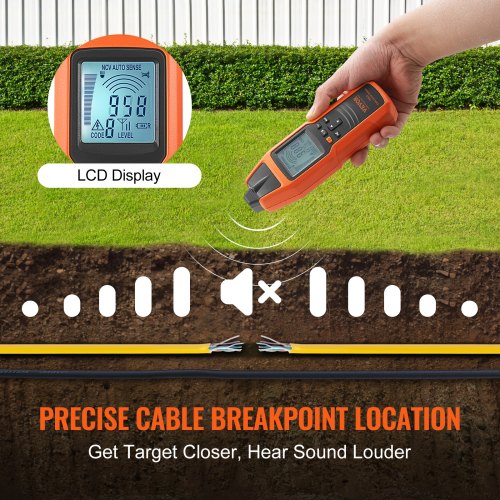
The time needed to confirm a full structured cabling installation across several rooms or floors is greatly reduced by the handheld form factor of VEVOR network cable testers, which enable technicians to carry the tool throughout the installation site and test each cable run at the point of termination rather than returning to a central testing station. VEVOR's range of underground cable locators uses signal injection and detection technology to locate faults in underground cable runs and trace buried cable routes without excavation. This feature enables maintenance teams to precisely identify damage before committing to expensive and disruptive digging operations. VEVOR's cable testing and locating tools give network installers, facilities maintenance teams, and structured cabling contractors the diagnostic capabilities they need to deliver consistently verified, fault-free installations.
Structured Media Enclosures and PC Computer Gaming Cases for Clean Wiring Organization
At the domestic and enthusiast ends of the infrastructure spectrum, structured media enclosures and PC gaming cases are two distinct but equally important parts of organized network equipment housing. For residential and light commercial installations where telephone, coaxial, and Ethernet distribution equipment requires centralized, organized housing behind a flush-mounted door that keeps wiring contained and shielded from physical disturbance in living spaces, VEVOR's structured media enclosures are wall-mounted panel boxes.
VEVOR structured media enclosures can serve as a distribution point for the entire home network in a single, well-organized wall cavity installation thanks to their modular interiors, which accept standard module inserts for cable splitters, patch panels, and wireless router mounting. VEVOR's selection of PC gaming cases caters to enthusiasts and home lab builders who require a well-ventilated, expandable chassis for building custom server and workstation gear, as well as specialized network equipment. The performance and aesthetic priorities of builders who desire functional network hardware housed in a visually refined chassis that complements a modern home office or gaming environment without the utilitarian appearance of standard server chassis designs are addressed by VEVOR gaming case models' tempered glass side panels, multiple drive bay configurations, and front panel connectivity options.
Matching Networking Devices to the Job
Use the table below to match each job's gear and available space to the one product that suits it, and its main limitation.
| Job | Gear to House | Space Available | Recommended Product | Main Limitation |
|---|---|---|---|---|
| Home network closet with a modem, router and switch | Modem, router and switch | Wall space for a 15.5 in deep box | 6U wall cabinet | Only 6U, and devices deeper than 15.5 in will not fit |
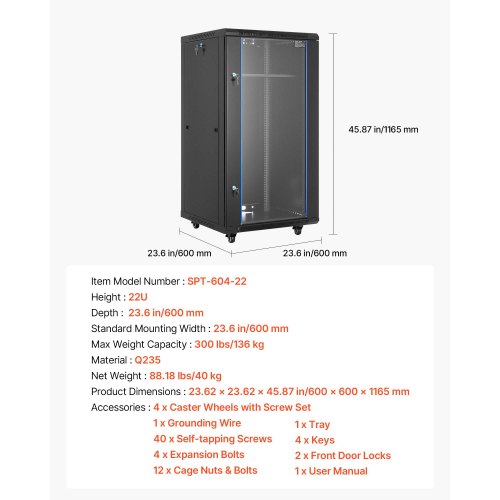
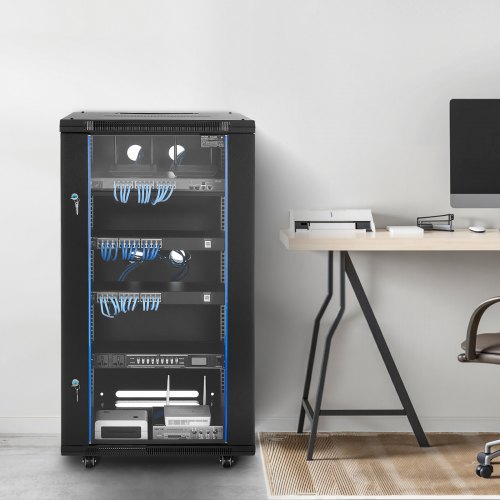
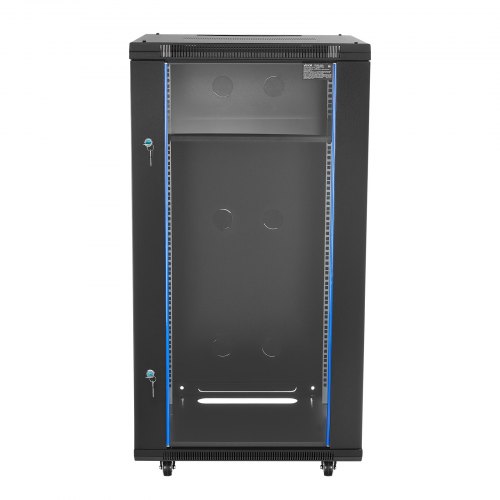
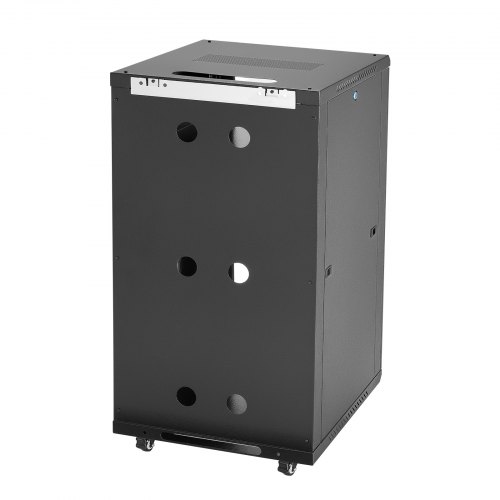
| Small office with gear that will grow | Switches, patch panels and servers up to 300 lbs | Wall space for a 23.6 in deep cabinet | 22U glass-door cabinet | Rated 200 lbs when wall mounted, below its 300 lbs total |
| Home lab with patch panel and switch | Patch panel and switch up to 150 lbs | Wall space for an 18 in deep open frame | 12U open wall rack | Open frame with no door, so gear is not locked away |
| Wiring a new home for Ethernet and coax | Modem, router, coax splitters and phone blocks | A stud bay at least 42 in tall | 42 in structured media enclosure | Easiest to fit while the walls are still open |
| Home theater receiver, amp and players | Up to 500 lbs of AV gear | Floor space for a 16U stand | 16U AV rack stand | Floor-standing, so it takes up room space |
| Finding a break in a buried dog fence wire | Wires up to 24 V | Runs up to 1000 ft, 2 to 3 ft deep | 1000 ft cable locator | Shortest range of the locators here, and it cannot trace live cables |
Capacity and Features Across the VEVOR Network Equipment
Beyond equipment type, the practical features and capacity requirements of network equipment dictate how effectively each product performs in everyday professional use and scales with infrastructure growth. To accommodate both current installation needs and future expansion requirements, VEVOR designs its network range with user-focused features and unambiguous capacity ratings.
Rack Unit Capacity and Load Ratings for Scalable Infrastructure
When choosing server racks & cabinets for any network equipment installation, the two most crucial factors are rack unit capacity and structural load rating. These factors determine how much equipment the rack can physically house and support without compromising its structural integrity as the installation expands. For each server rack and cabinet model, VEVOR provides precise rack unit counts and maximum load ratings, enabling IT planners to design infrastructure that supports current equipment and anticipated growth without requiring rack replacement in the near term.
Since equipment additions are common throughout the lifecycle of any active network infrastructure, and retrofitting a larger rack after the initial rack fills is far more disruptive and expensive than initial oversizing, choosing a rack with capacity headroom beyond the immediate installation requirement is standard procedure in professional network planning. Compact 6U and 12U open frame models, mid-size 24U cabinets, and full-height 42U enclosed cabinets are all part of VEVOR's rack range, which covers every scale from home lab and small office installations to dedicated server room buildouts that call for significant equipment mounting capacity and organized cable management across multiple rack positions within the same installation.
Cable Management and Ventilation Features for Long-Term Performance
The two operational characteristics that determine whether a server rack installation remains accessible, orderly, and thermally stable as equipment density increases over the infrastructure's lifespan are effective cable management and thermal ventilation. Instead of permitting uncontrolled bundling that causes airflow obstruction and maintenance challenges in densely populated rack installations, VEVOR's server racks & cabinets feature integrated cable management, including vertical cable channels, horizontal lacing bars, and rear cable-entry ports that guide power and data cables along predetermined pathways.
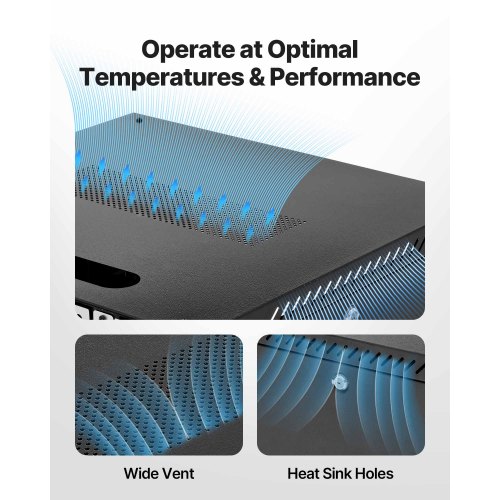
Perforated front and rear doors with high open-area percentages are used in ventilation panel designs throughout VEVOR's enclosed cabinet line to enable cooling airflow through the cabinet, eliminating the need for forced-air cooling at lower equipment densities. Maintaining the front-to-rear airflow direction is essential for network equipment thermal management; blanking panels for unoccupied rack units prevent hot exhaust air from recirculating into equipment intakes through empty rack spaces. VEVOR's integrated cable management and ventilation features deliver the infrastructure quality that professional network equipment installations need throughout their full operational service life for IT administrators overseeing active server and network installations, where thermal performance and cable accessibility directly affect uptime and maintenance efficiency.
Best-Seller Comparison
Compare the five best-selling networking devices below by main job, capacity, depth, construction and key extras.
| Product | Main Job | Capacity | Depth | Construction | Key Extras |
|---|---|---|---|---|---|
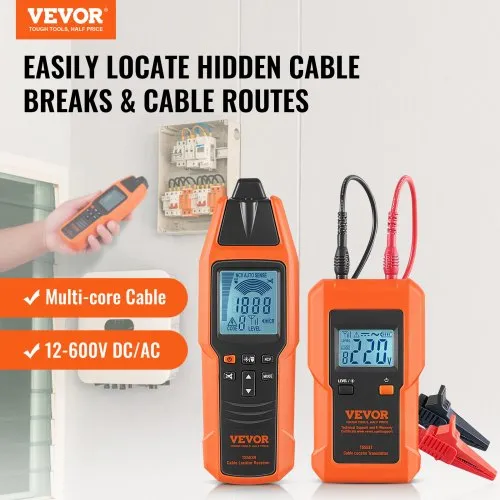
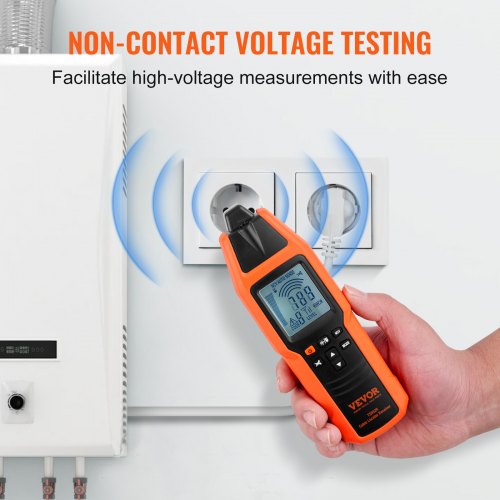
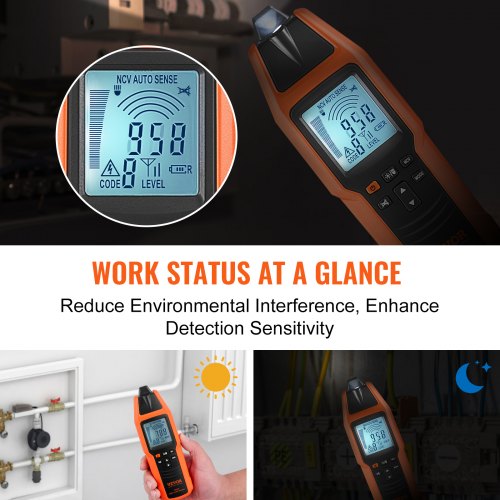
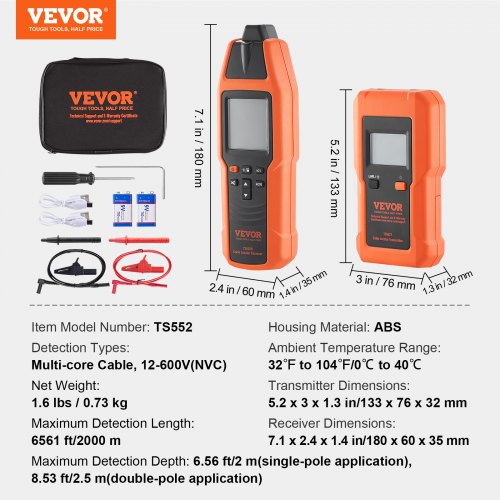
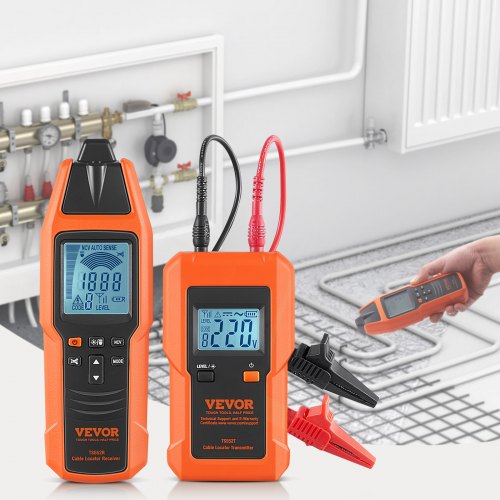
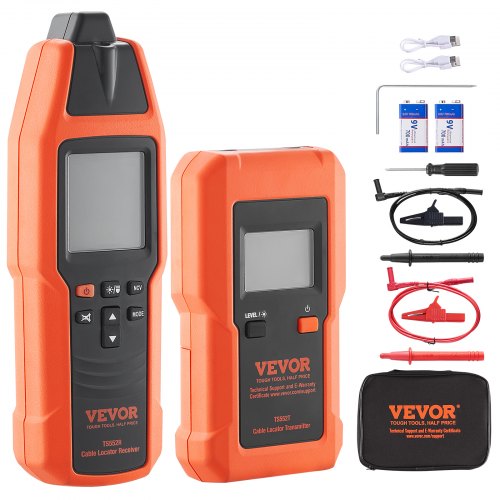
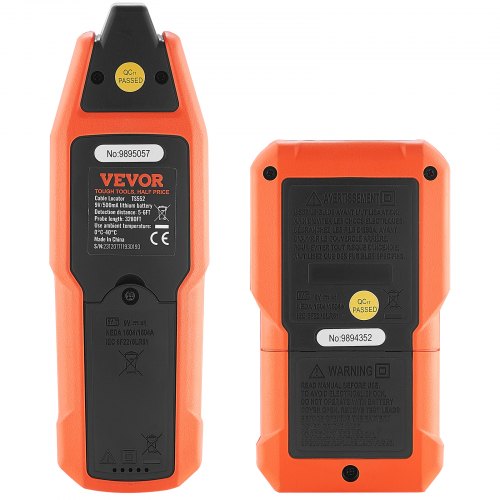
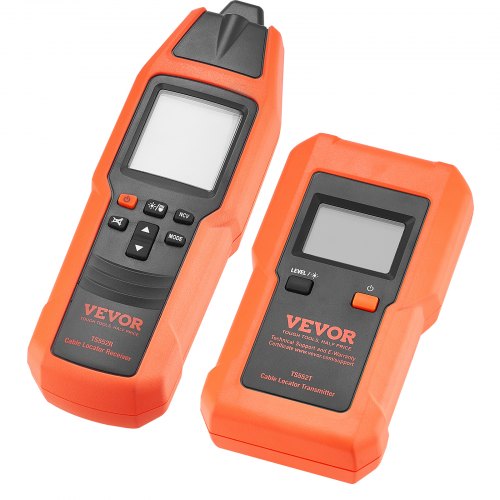
| VEVOR Underground Cable Locator, 6561 ft, 12 to 600 V NCV | Tracing buried cable and pipe, finding breaks and checking 12 to 600 V without contact | 6561 ft (2000 m) of tracing, the longest here | Up to 6.56 ft single-pole and 8.53 ft double-pole | ABS transmitter and receiver, both with backlit LCD screens | Digital and analog modes, rechargeable batteries for about 4 hours |
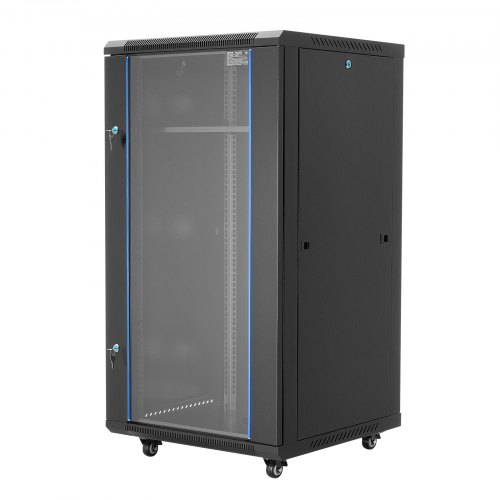
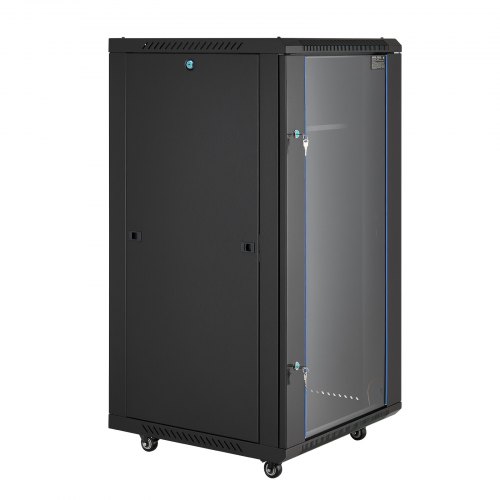
| VEVOR 22U Network Cabinet, Wall Mount, Glass Door | Housing switches, patch panels and servers behind a locked door | 22U, the tallest rack here | 23.6 in (600 mm) cabinet, 19.5 in rail to rail | Q235 steel with a lockable tempered glass door and side panels | 300 lbs rated load, one 19 in shelf and vented panels |
| VEVOR Underground Cable Locator, 3280 ft, with Earphone | Tracing pet fence and sprinkler wires up to 24 V | 3280 ft in digital mode, 1000 ft in analog | 6.56 ft in digital mode, 1 ft in analog | 1.3 lb set with indicator lights and sound alerts | Earphone, rechargeable transmitter and a spare 9 V battery |
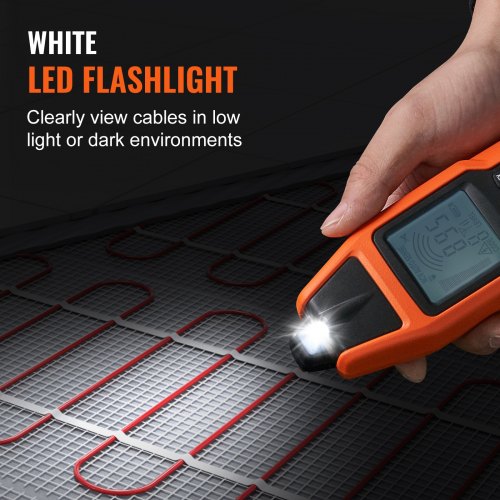
| VEVOR Underground Cable Locator, 1000 ft, with Earphone | Tracing pet fence, irrigation and low-voltage lines up to 24 V | 1000 ft, the shortest locator range here | 2 to 3 ft | ABS housing, 0.8 lb, the lightest product here | Earphone, LED flashlight, carry bag and two 9 V batteries |
| VEVOR 12U Wall Mount Server Rack, Open Frame, 150 lbs | Mounting patch panels and switches on a wall in an open frame | 12U | 18 in (455 mm), 20.5 in mounting width | Q235 carbon steel frame with a gate that opens 180° | 150 lbs rated load, screws and cage nuts, reversible door |
Why Choose VEVOR Network Equipment for Your Infrastructure Needs?
From 12U open frame server racks and structured media enclosures to network cable testers and underground cable locators, VEVOR network equipment has everything you need. Each product is constructed with standard-compliant dimensions, useful installation features, and a long-lasting design suitable for both home and professional lab settings. VEVOR is the ideal option for any network buildout thanks to its reasonable pricing across the entire range and dependable after-sales service. Shop now.
Frequently Asked Questions
What is the difference between an open frame server rack and an enclosed cabinet?
Without doors or side panels, an open-frame rack offers optimal airflow and access to both the front and rear equipment. For physical security and cable containment, an enclosed cabinet with lockable doors and side panels is ideal for shared areas and customer-facing settings.
How many rack units do I need for a home lab or small office network?
Most home lab and small office systems work well with a 12U rack, which can comfortably hold a switch, patch panel, router, and multiple 1U appliances. To accommodate future expansion without replacing racks, budget for at least 30% more headroom than the current equipment count.
What does a network cable tester check?
A network cable tester checks each conductor in an installed cable for continuity, wiring order, and connection integrity. It finds miswired pairs, short circuits, and open circuits that stop network connections from functioning at their rated performance after installation.
What is a structured media enclosure used for in a home network?
For domestic telephone, coaxial, and Ethernet distribution equipment, a structured media enclosure offers centralized wall-mounted housing. It maintains the organization and security of all home network wiring behind a flush-mounted door, installed in a single, easily accessible wall cavity.
What size server rack do I need for a home network?
Add up the rack units of your modem, router, switch and patch panel, then add about half again for growth. Most homes fit in 6 to 12U. The 12U open wall rack holds 150 lbs and has a gate that opens 180°.
What features should I look for in a wall-mounted network enclosure?
Look for enough depth for your deepest device, a locking door, removable side panels, vents and a load rating above your gear's weight. The 6U wall cabinet is 15.5 in deep with a locking glass door.
What is the difference between an open frame rack and an enclosed network cabinet?
An open frame rack has no doors or sides, so it gives the best airflow and access but no security. A cabinet closes gear behind locked doors. The 22U glass-door cabinet is the enclosed option here.
How do I choose between a wall mount and a floor standing server rack?
Wall racks save floor space and suit light gear like switches and patch panels. Floor racks suit heavy servers and UPS units. The four-post 12U rack stands on casters or mounts on a wall and adjusts from 15 to 40 in deep.
How much weight can a wall mounted server cabinet hold?
Ratings vary, so check each model and the wall it hangs on. Wall racks here are rated about 150 to 200 lbs, and the 22U network cabinet lists 300 lbs, with 200 lbs given for wall mounting. Always fix it to studs or masonry.
Do network cabinets need ventilation or cooling fans?
Yes, closed cabinets need airflow, because switches and servers run warm. Vented panels are enough for light loads, and fans help for servers. The 22U glass-door cabinet has vented side panels and cooling holes.
What is a structured media enclosure and do I need one?
It is a metal box set into a wall that gathers phone, coax and Ethernet lines in one place. It helps in new builds or remodels with several wired rooms. A 14 in media enclosure suits small homes.
What size structured media enclosure is best for a new home build?
A 28 in box suits most homes with a modem, router and small switch, and a 42 in box suits larger homes or extra gear. The
