
Wind Generators











Results for Wind Generators
From small home wind turbines for extra electricity to off-grid and maritime wind generators designed for places without dependable grid access, VEVOR's wind generators cover every configuration. This lineup includes permanent magnet wind generators for dependable output across a range of wind speeds, horizontal-axis versions for consistent open-field performance, and vertical-axis wind turbine generators for turbulent or changing wind conditions. This collection includes wind generators designed for your site, not just a spec sheet, whether you're powering a cabin, a boat, or a whole residential setup. You can generate power with confidence because each turbine is designed for actual wind conditions.
VEVOR Wind Generators for Home, Marine, and Off-Grid Use
Unsure which wind generators are best for your setup? Choosing the best turbine requires careful consideration of vertical-axis, horizontal-axis, and blade-count options. VEVOR keeps things simple: off-grid wind generators for cabins or isolated properties without utility access, maritime wind generators for boats and coastal areas, and home wind turbines for additional residential electricity. This site offers a wind generator that fits both your location and your budget, no matter what you're powering.
Choosing the Right Type of Wind Generator for Your Location
The type of wind generator you choose will depend on your local wind patterns, the amount of space available for installation, and whether you are operating entirely off the grid or supplementing it. VEVOR offers the following primary wind generator categories, along with their best applications.
Vertical Axis and Horizontal Axis Wind Turbines
Because they revolve around a vertical shaft, vertical-axis wind turbines can harness wind from any direction without turning toward the wind source. This is especially important in places where wind patterns are turbulent or regularly changing, like roofs or areas surrounded by trees and buildings, where wind direction changes rather than blowing steadily from one direction.
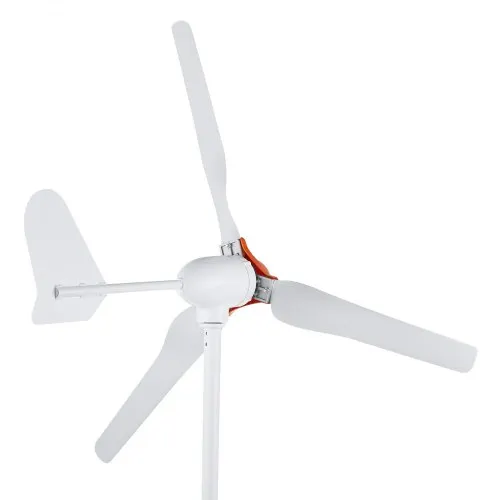
Mounted on a horizontal shaft that faces directly into the wind, horizontal-axis wind turbines use a more conventional propeller-style design. Because they capture wind more effectively when it blows persistently from a predictable direction rather than fluctuating, they usually produce more power in open areas with steady, unrestricted wind flow.
More than any other choice in the wind generator selection process, the decision between horizontal-axis models for open, consistent wind locations and vertical-axis turbines for turbulent or urban settings affects both installation complexity and actual power output. Before selecting a turbine orientation, focus on the wind patterns at your location rather than basing your decision solely on cost or aesthetics.
3-Blade and 5-Blade Wind Turbines for Different Wind Conditions
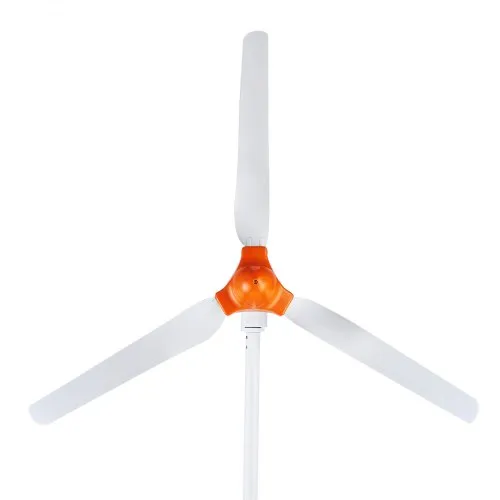
Blade count influences both power production and the wind speed range in which a turbine operates well. For most horizontal-axis designs, 3-blade wind turbines are the conventional layout because they balance mechanical simplicity and efficiency and suit various installation types. VEVOR's three-blade wind turbines can handle typical residential wind conditions without the added complication of extra blades.
In areas that don't regularly get strong, constant wind, 5-blade wind turbines add surface area to capture more energy at lower wind speeds. To improve performance under the lighter, more variable wind conditions typical of many residential settings, this arrangement sacrifices some top-end efficiency at high wind speeds.
Matching blade count to your local wind conditions can affect real-world energy output more than the specifications alone might suggest, whether you choose 3-blade turbines for conventional performance or 5-blade setups for low-wind-speed capture. The extra blades a low-wind locale needs to produce significant power may not help a site with consistently strong wind.
Home, Residential, and Rooftop Wind Turbines for Everyday Use
Instead of completely replacing grid electricity, home wind turbines are sized and designed to complement existing utility service or solar systems rather than function as a stand-alone power source. Depending on available space and local wind exposure, VEVOR's residential wind turbines can be installed on building-integrated mounts or ground-mounted towers.
Residential wind turbines extend this idea, ranging from modest supplemental units to larger systems that significantly reduce monthly electricity consumption. Because irregular or severely restricted wind flow limits what these systems can contribute, residential wind turbines work best in areas with generally steady wind access.
Rooftop wind turbines are installed directly on a roof structure, addressing sites with limited space where a ground-mounted tower isn't feasible or allowed. Because wind patterns are more turbulent at rooftop height, they usually favor vertical-axis designs. Installation necessitates careful consideration of structural load capacity and vibration transfer into the building below. This type of wind generator meets most residential power demands, including rooftop alternatives for limited spaces, home turbines for supplemental power, and residential systems scaled to property size.
Off-Grid, Marine, and Commercial Wind Generators for Specialized Applications
Off-grid wind turbines, often combined with battery storage and occasionally solar panels to provide continuous electricity despite wind's fundamentally unpredictable nature, serve properties and locations without a dependable utility connection. VEVOR off-grid wind generators are useful for cabins, remote properties, or emergency backup power because they are designed to work with conventional battery charging systems.
Because they are designed to resist salt air corrosion and continuous motion, which would rapidly deteriorate conventional turbines, marine wind generators operate in an entirely different environment. They are ideal for sailboats, anchored boats, or coastal residences where saltwater exposure is a regular issue rather than a sporadic one. For maritime wind generators, sealed components and corrosion-resistant materials are far more important than for conventional residential units.
Built for enterprises or larger operations seeking to offset significant commercial electricity bills, commercial wind generators produce far more power than households need. Over their lifespan, they can produce far more power than residential-scale units, but they usually require more extensive installation design and a larger initial investment. These specialized wind generators meet needs that ordinary home turbines aren't designed to meet, such as off-grid systems for remote electricity, marine-rated machines for saltwater settings, and commercial-scale generators for larger enterprises.
Matching Wind Generators to Application and Power Output
Selecting the right turbine is only half the work. Your generator's real performance depends on its power output and application-specific features.
Permanent Magnet Generators and Low Wind Start Turbines for Reliable Output
Permanent magnet wind generators are more efficient and require less maintenance than prior generator designs because they use magnets instead of electromagnets to produce energy. Compared with other generator designs, VEVOR's permanent magnet wind generators convert rotational energy into usable electricity more reliably across a range of wind speeds.
For regions that don't frequently get strong, persistent wind, low-wind-start turbines are designed to produce power at lower wind speeds than ordinary turbines require. This directly affects actual energy output rather than theoretical maximum capacity, since a turbine that requires high wind speeds to begin generating produces nothing during the many lighter-wind periods most places experience.
Permanent-magnet efficiency and low-wind start capabilities help bridge the gap between a turbine's rated maximum output and what it produces under average, less-than-ideal wind conditions at most installation sites.
Choosing Small Wind Turbine Kits and Silent Options for Your Setup
For those who are unfamiliar with wind power generation, small wind turbine kits simplify installation by combining the turbine, tower or mounting hardware, and charge controller into a single purchase. For first-time installations, where it's not always easy to match turbine output to controller and battery parameters, these kits eliminate much of the compatibility guesswork of sourcing components separately.
For residential installations close to living areas, silent wind turbines solve a practical issue: ordinary turbines can produce audible noise, especially at higher wind speeds. This matters for anyone installing near bedrooms or in locations where neighbors are noise-sensitive. Compared with conventional turbines, these silent wind turbines usually operate more quietly because of their blade design and optimized components.
Starting with a small wind turbine kit, especially a noise-rated model, reduces the technical complexity and noise concerns that can come with a poorly matched standard installation for anyone new to wind power or installing in a noise-sensitive area.
Why Choose VEVOR Wind Generators?
Because VEVOR offers a really extensive selection of wind generators, including off-grid, vertical axis, horizontal axis, and maritime models, you are not forced to choose a turbine type or power output based solely on what is available elsewhere. Blade configurations span both standard and low-wind-speed applications, and prices remain affordable for both household and commercial wind turbine generators. Selecting the ideal wind generator for your location is simple thanks to VEVOR's standard warranty and customer service. Browse the full selection of wind generators to choose the turbine that best fits your setup and budget.
FAQs
For my house, should I go with a horizontal or vertical axis wind turbine?
Your local wind patterns will determine this. Horizontal-axis turbines produce more power in broad areas with constant wind direction, while vertical-axis turbines are better suited to turbulent or shifting wind.
Do wind turbines with five blades produce more electricity than those with three blades?
Not always, especially in strong winds. While 3-blade designs frequently perform better in persistently strong wind situations, 5-blade turbines capture more energy at lower wind speeds.
Do regular household turbines and maritime wind generators differ from one another?
Yes, quite a bit. To withstand salt air, which would quickly deteriorate a typical home turbine, marine wind generators include sealed components and corrosion-resistant materials.
Is it possible to completely replace grid electricity with a home wind turbine?
Usually not by itself. Unless they are combined with significant battery storage and steady, high wind, home wind turbines usually complement current power sources rather than completely replacing grid electricity.
What determines a wind turbine's "low wind start" rating?
It means these turbines are designed to start producing power at lower wind speeds than typical models, they can produce useful electricity during the lighter wind periods most places see.
