VEVOR Sewer Camera with 512Hz Locator, 98 ft/30 m, Self-Leveling Drain Inspection Camera with 9" 1080P HD Screen, 36X Zoom, Snake Plumbing Camera with Lights-12 LED, 32GB SD Card for Duct Pipe


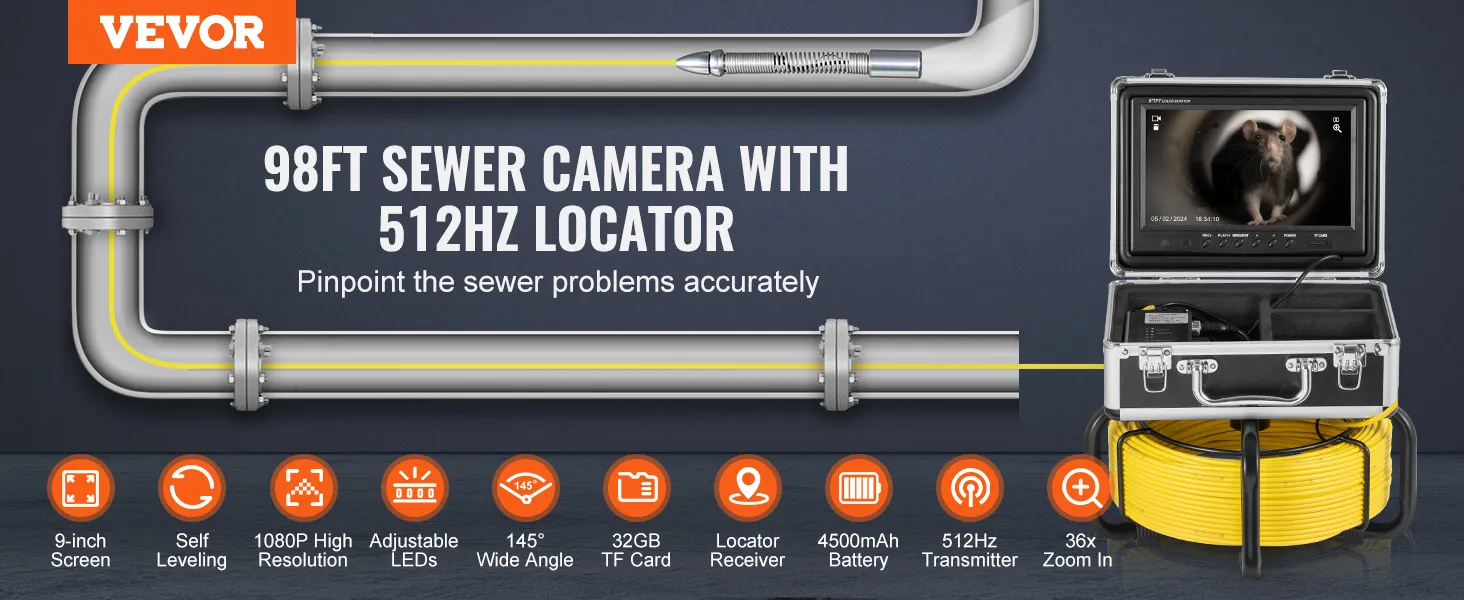
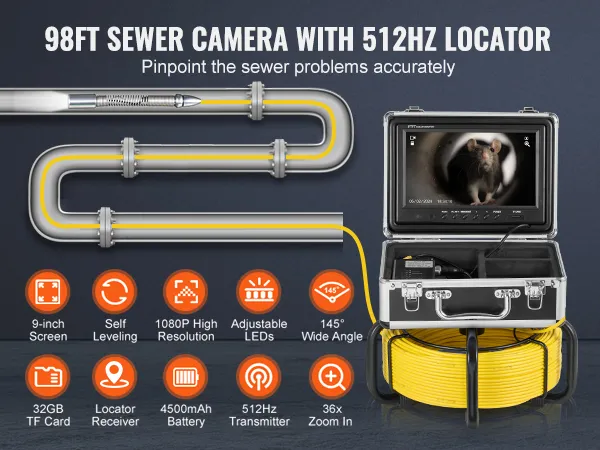
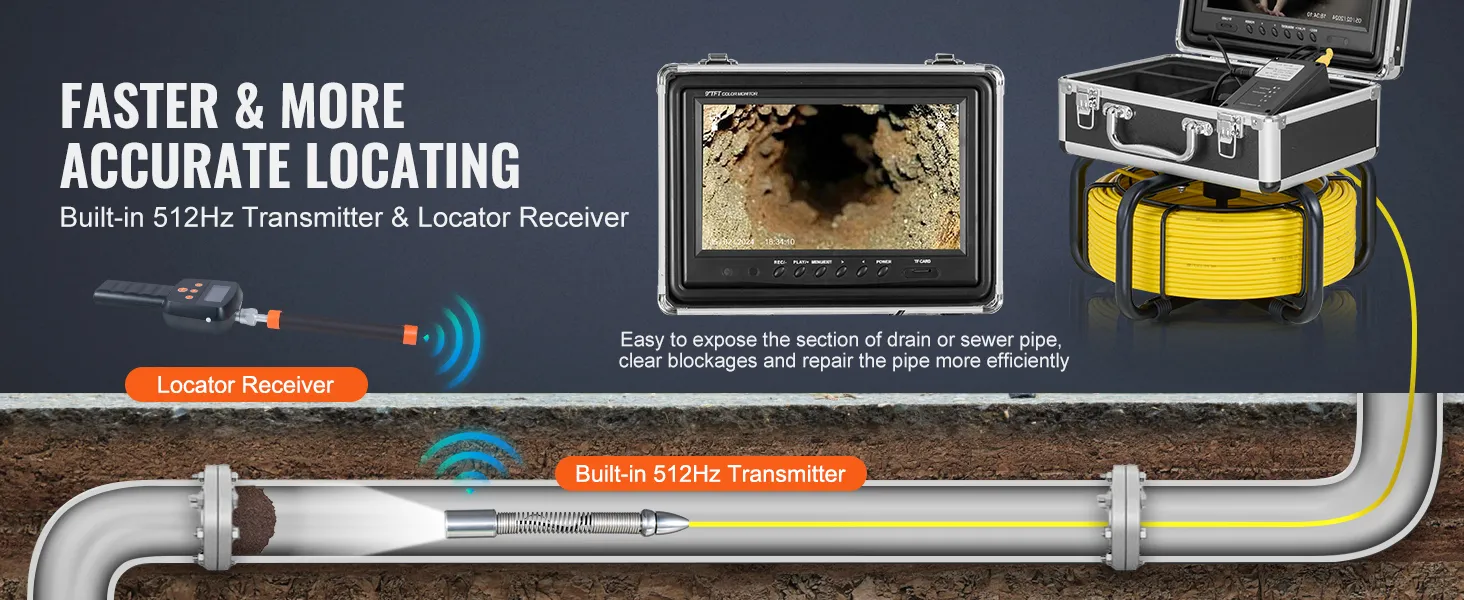
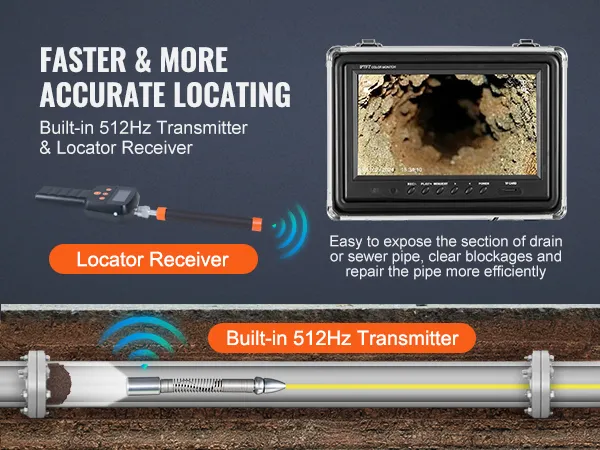
- Fast & Precise Locating: With the equipped 512Hz pipe locator receiver and the built-in transmitter, the VEVOR 98FT sewer camera pinpoints the sewer problems accurately, enhancing inspection efficiency with no extra purchase needed. The marked cable (at 3ft/0.9m intervals) lets you see how much cable has been fed into the pipeline, making pipe inspections and blockage troubleshooting more efficient.
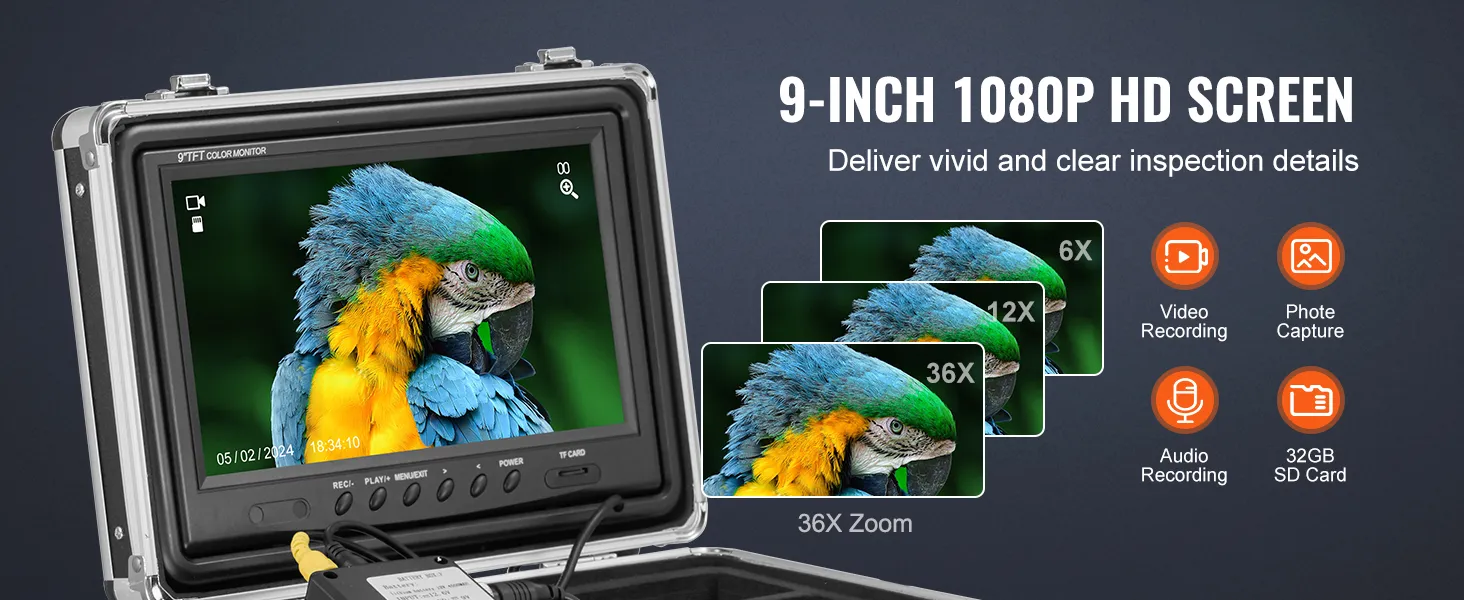
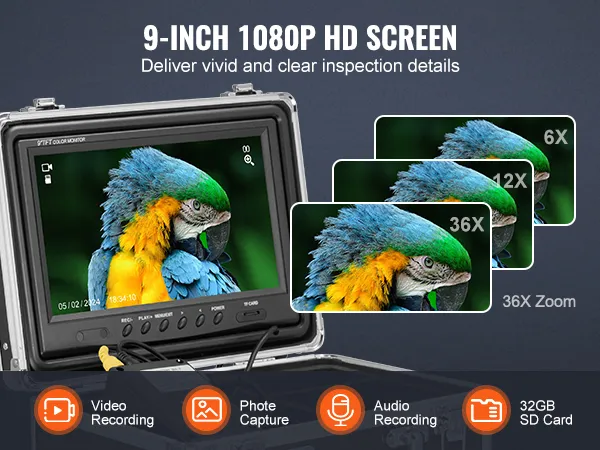
- Crystal-Clear 9-inch Screen: 9-inch large screen makes operation simple—just press the button to record HD video, capture clear images, or play back audio through your computer or headphones. 1080P HD display provides vivid and clear inspection details ; 32GB SD card provides plenty of storage for photos/videos ; and the included sunshade keeps the screen clearly visible even in bright sunlight.
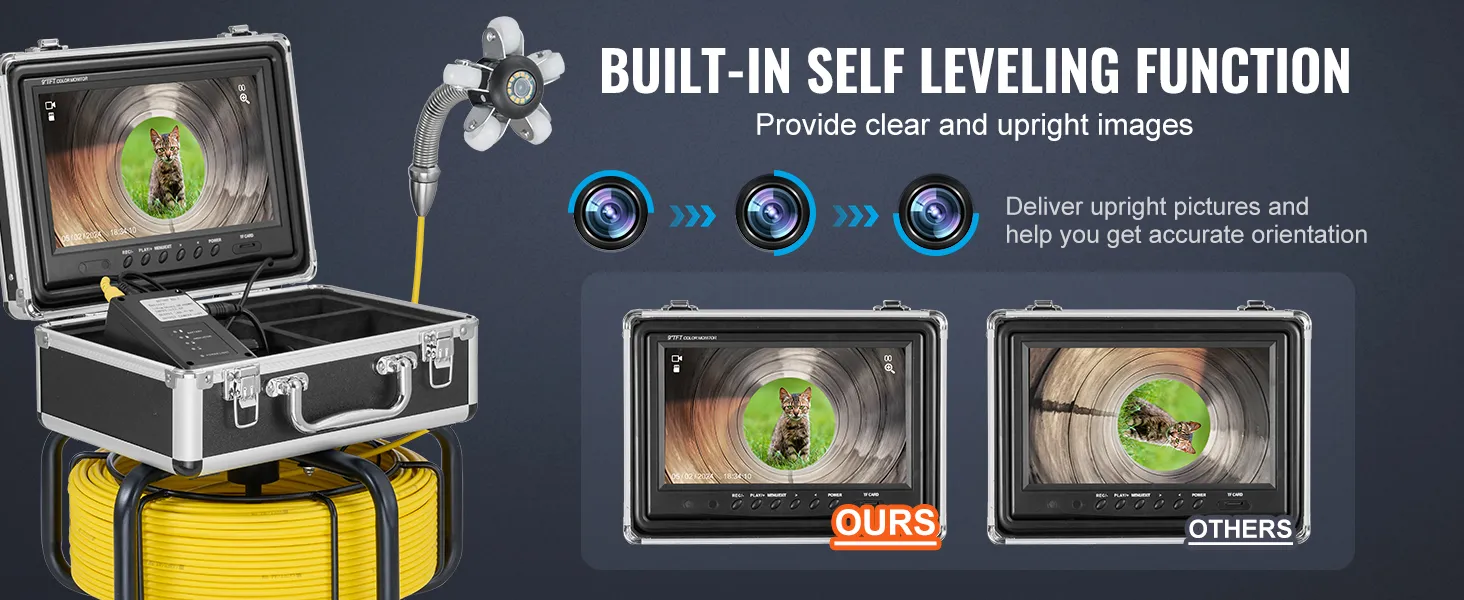
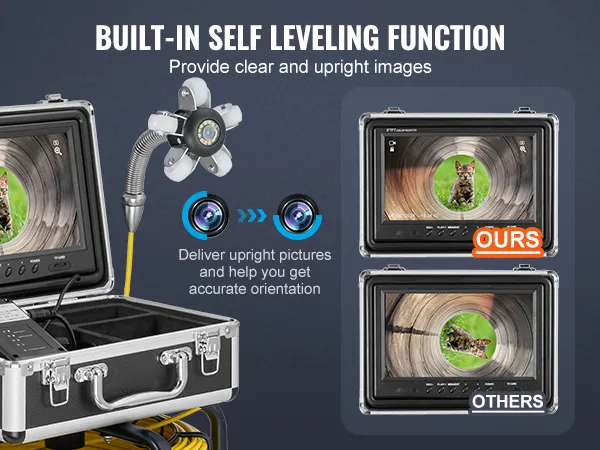
- Self-Leveling Camera: Our 0.9-inch self-leveling plumbing camera ensures images are always upright, giving you accurate orientation of obstacles for efficient inspections. It’s equipped with an IP68 waterproof sapphire lens and 12 adjustable LED lights with stepless brightness adjustment to suit different lighting conditions. The 36x digital zoom and 145° wide-angle view capture every detail, ensuring nothing gets missed.
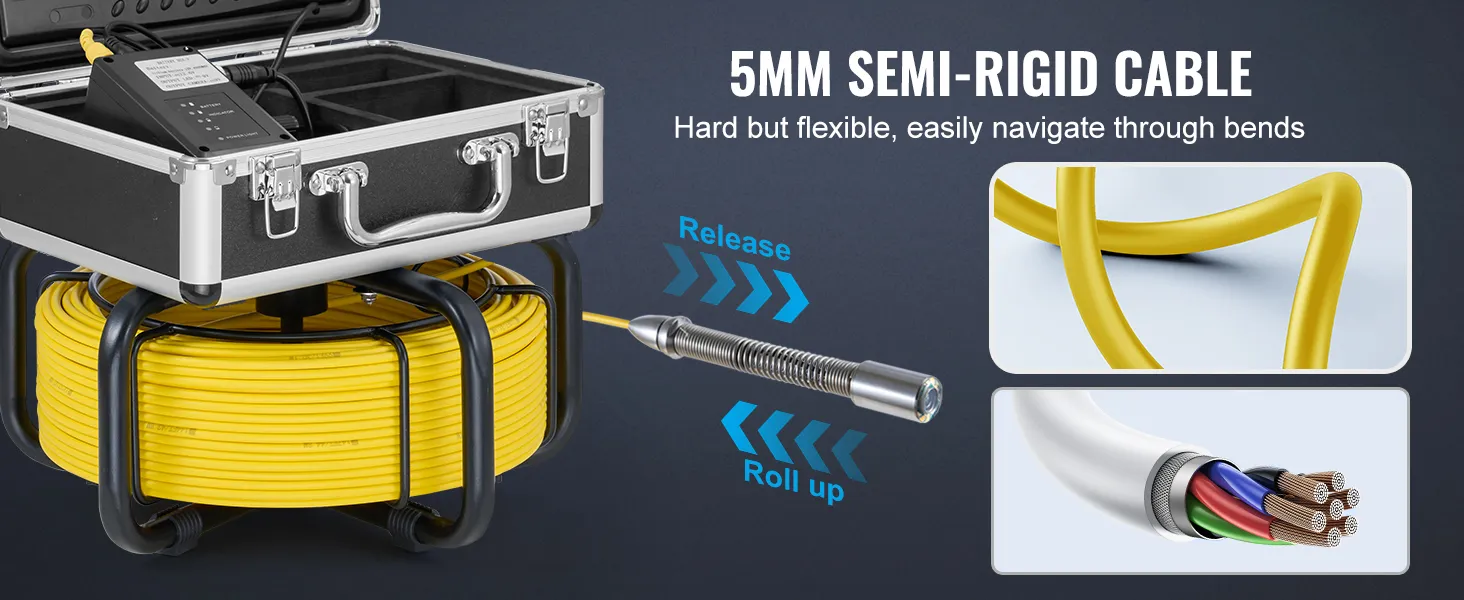
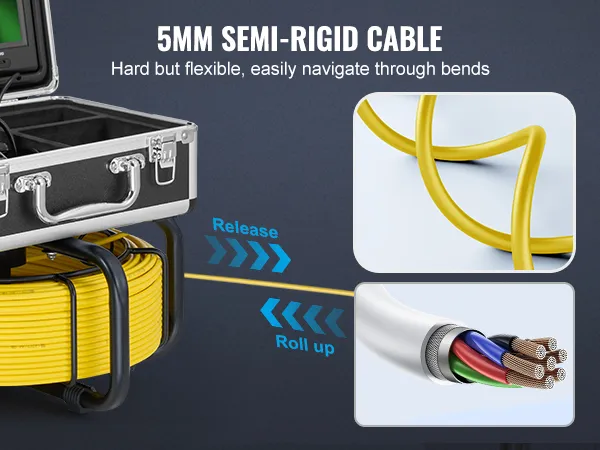
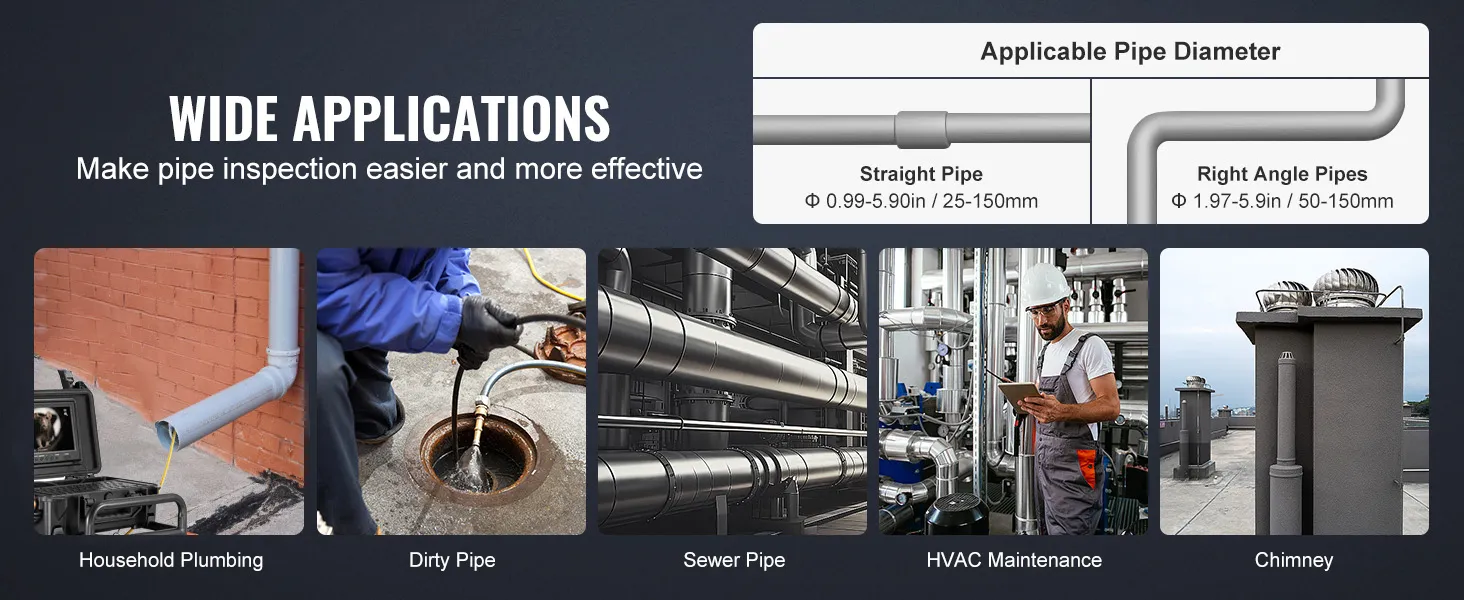
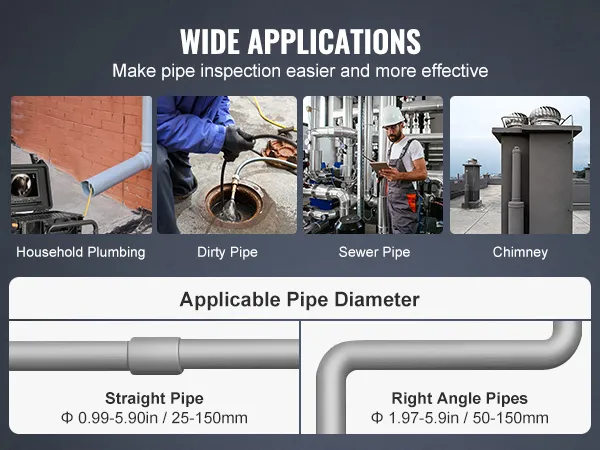
- Robust Semi-Rigid Cable: Our 98FT semi-rigid snake cable is perfect for 99.9% of small to medium-sized pipeline repair projects. Made of robust fiberglass, it easily navigates bends and long pipes, excelling in passability and resilience even in dark, damp conditions. Compatible Pipe Diameters: Straight Pipes: Φ 0.99 - 5.90 in / 25 - 150 mm; Right Angle Pipes: Φ 1.97 - 5.90 in / 50 - 150 mm.
- Wide Applications: VEVOR professional snake inspection camera is housed in the durable aluminum carrying case, providing excellent protection. It features a 4500mAh rechargeable lithium battery for 6-8 hours of continuous operation. (* The battery shown in the image is pre-installed in the sewer camera and is only for powering the camera's display. * We do NOT provide the battery for the 512HZ locator. Customers need to purchase it separately.)
Frequently Bought Together
Reviews
About this item


98 ft Reach for Sewer Line Camera Runs From Cleanout to Main
A house lateral is usually the longest pipe a sewer line camera will encounter on a residential call, from the cleanout to the city main, which can easily run 40, 60, or even 90-plus feet. The 98 ft (30 m) cable is sized for exactly that distance, so you get to the connection at the street without running out of reel partway along and having to guess at the rest.
The cable is semi-rigid fiberglass, which is what makes the reach usable. It is rigid enough to allow the head to travel down a long, flat run that already contains water. Flexible enough to take the bends at the cleanout and any sweeps along the way. It is marked every 3 ft (0.9 m) so that, as soon as the picture shows a problem, you can look at the cable and know how far the fault is before doing anything else.
512Hz Locator That Marks the Dig Spot Before You Break Ground
The 512Hz locator tells you where to dig. The sewer line camera shows you what's wrong on a buried line. The transmitter is in the camera head, and the included receiver picks up its signal from the surface. You walk through the yard, find the signal, and mark the ground directly above the fault: no separate hire locating gear and no second trip with another tool.
That is the difference between one dig and three. If you know the depth and position before you bring out the shovel, you can open the lawn once, over the actual break, instead of trenching, hopefully, and backfilling your mistakes. One caveat to deal with up front: the receiver's battery is not supplied; you buy it separately. Sort that out before the job, as a locator with a dead battery on site is just dead weight.
Self-Leveling 0.9-Inch Head for Reading Faults in Buried Laterals
Lateral orientation is important. A crack at 4 o'clock on a pipe versus 10 o'clock can mean root intrusion from one side, or a bellied section holding water on the other, and you can't tell which if the image is rolling around as the cable twists. The 0.9-inch (23 mm) self-leveling head keeps the frame upright all the way down, so what you see on screen is how the fault actually lies in the ground.
And the 0.9-inch diameter makes it through tight spots as well. It drops down to a 0.99 in. (25 mm) pipe at the small end and still reads a 5.90 in. (150 mm) main at the large end, covering the entire range of residential and light-commercial laterals, straight runs 0.99–5.90 in., and right-angle runs 1.97–5.90 in. without changing heads.
9-Inch HD Capture That Documents the Line for the Homeowner
In a sewer line job, the video is not just for you; it’s the evidence. If you tell a homeowner that their lateral has a collapsed section near the property line, a 9-inch 1080P video of the break will do more to close the sale than any verbal description. One button takes a video, the other a still. Files are saved as standard AVI and JPG on the 32GB card and can be opened on any computer, so you can hand over or email a clip without converting anything.
That documentation protects you, too. Later, if the customer disputes what was wrong, your answer is a dated recording of the pipe's condition before you quoted the work. The sunshade that comes with it allows the screen to be read when you are hunched over a trench in full sun, and this is exactly where these recordings are made.
Sapphire Lens and 12-LED Lighting Built for Wet, Dark Mains
A sewer lateral is the worst environment imaginable for a lens: standing water, grease, grit, and total darkness. The IP68 sapphire glass is rated to remain sealed and scratch-resistant throughout, so the picture doesn’t fog or haze as a cheaper lens would. It also resists the abrasive sludge that clouds softer covers over time.
The 12 LEDs dim steplessly, which pays off in a dark main: low when you're near a reflective wall and the light bounces back, and full when you're staring down a wide cast-iron pipe that swallows everything. Add in 36X zoom and a 145° wide-angle view, and you can hold position and study a suspect joint instead of jockeying the head back and forth to light it.
6–8 Hour Field Power in a Sewer Line Camera You Can Throw in the Van
Lateral inspections are rarely one-stop affairs; they are a route of callouts over the course of a day. The 4500mAh battery keeps the display going for 6–8 hours straight, enough to clear that route without having to hunt for an outlet at someone’s house between jobs. Charge overnight, load the van, and go.
All in all, this sewer line camera takes the knocks of being loaded and unloaded all day, and the screen or reel does not get damaged. That’s because the whole kit lives in an aluminum case (14.1 lbs / 6.4 kg). That matters for a tool that spends its life going from van to muddy yard to van again. The case is the difference between gear that lasts a season and gear that lasts years.