VEVOR Core Drill Machine 2.03-20.1 cm Dia 3000W Diamond Core Drill Rig with Stand


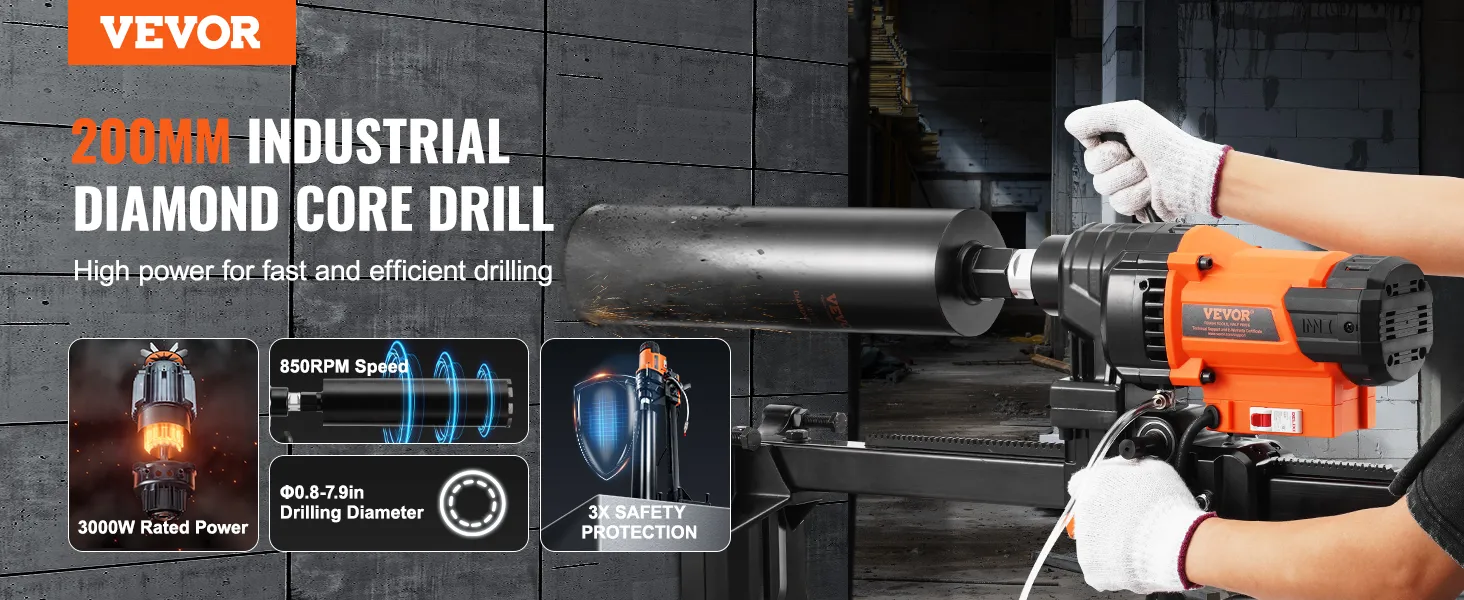
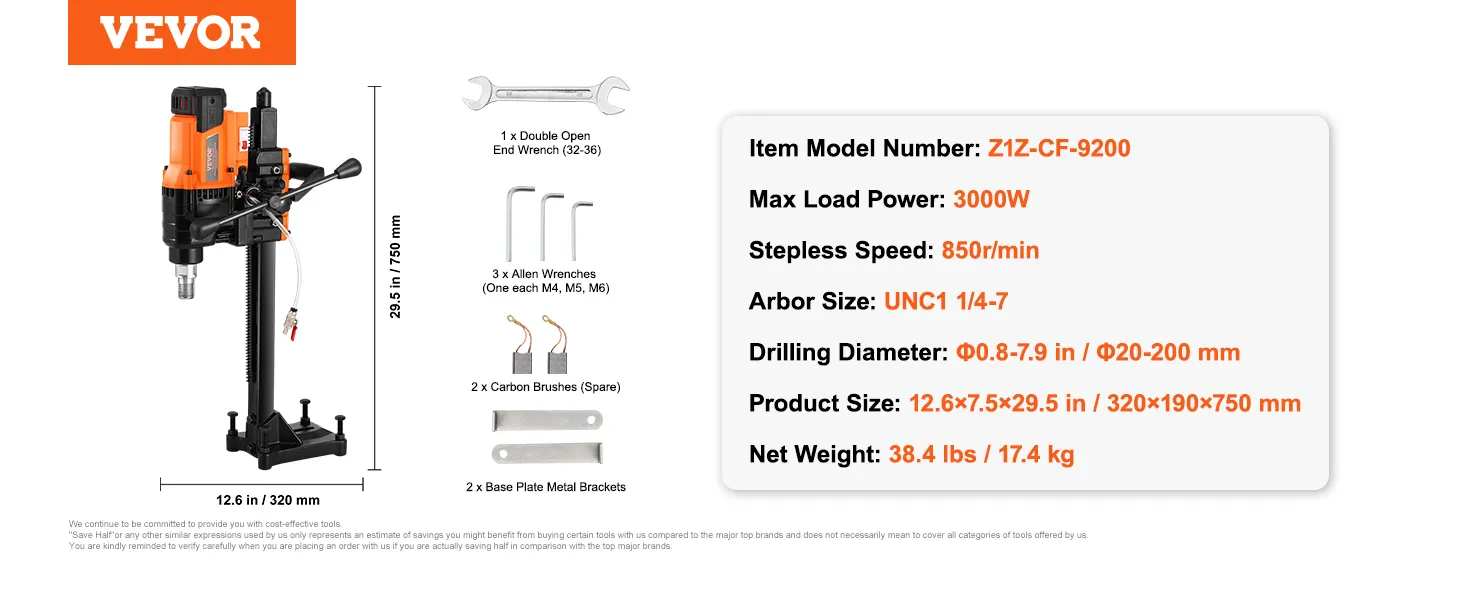
- Powerful Core Drilling Efficiency: Equipped with a 3000W motor, this core drill machine handles hole sizes from Φ0.8-7.9 in / Φ20-200 mm effortlessly. Whether you're drilling large or small holes, it ensures efficient and precise results every time.
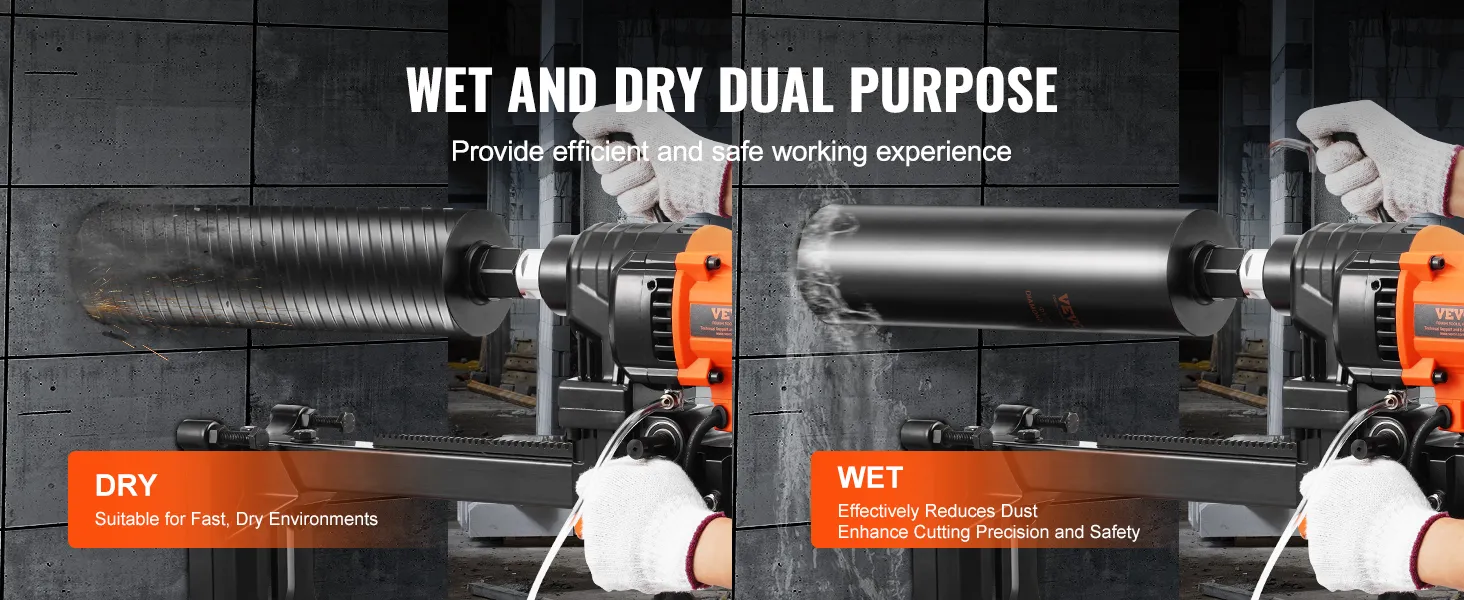
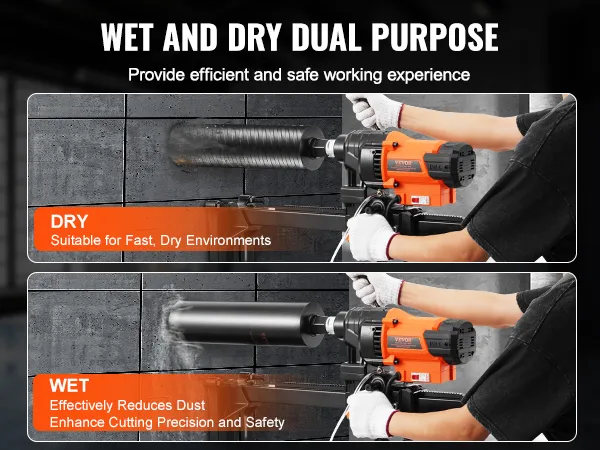
- Wet & Dry Cutting Capabilities: Our core drill rig supports both dry and wet cutting modes. Dry cutting is ideal for fast drilling in dry environments or high-efficiency scenarios, while wet cutting effectively reduces dust and heat, providing enhanced safety and comfort during operation.
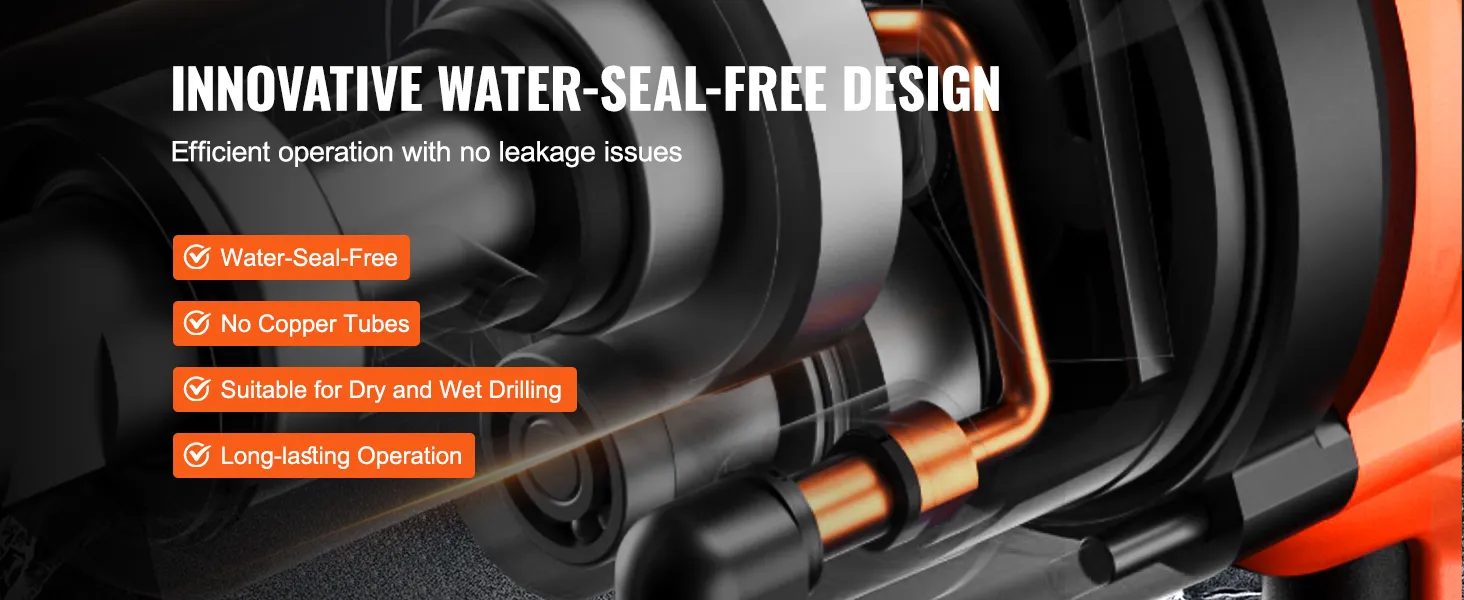
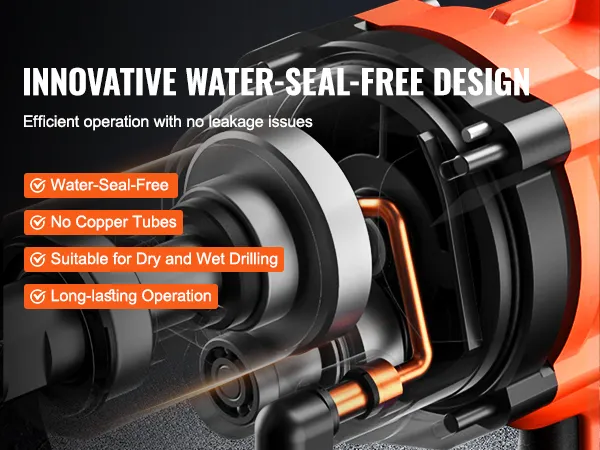
- No Water Seal Design: The innovative water-seal-free structure of the core drilling machine significantly increases water output while preventing the common leakage issues found in traditional tools. This design keeps the work area clean and prevents water from impacting the job site.
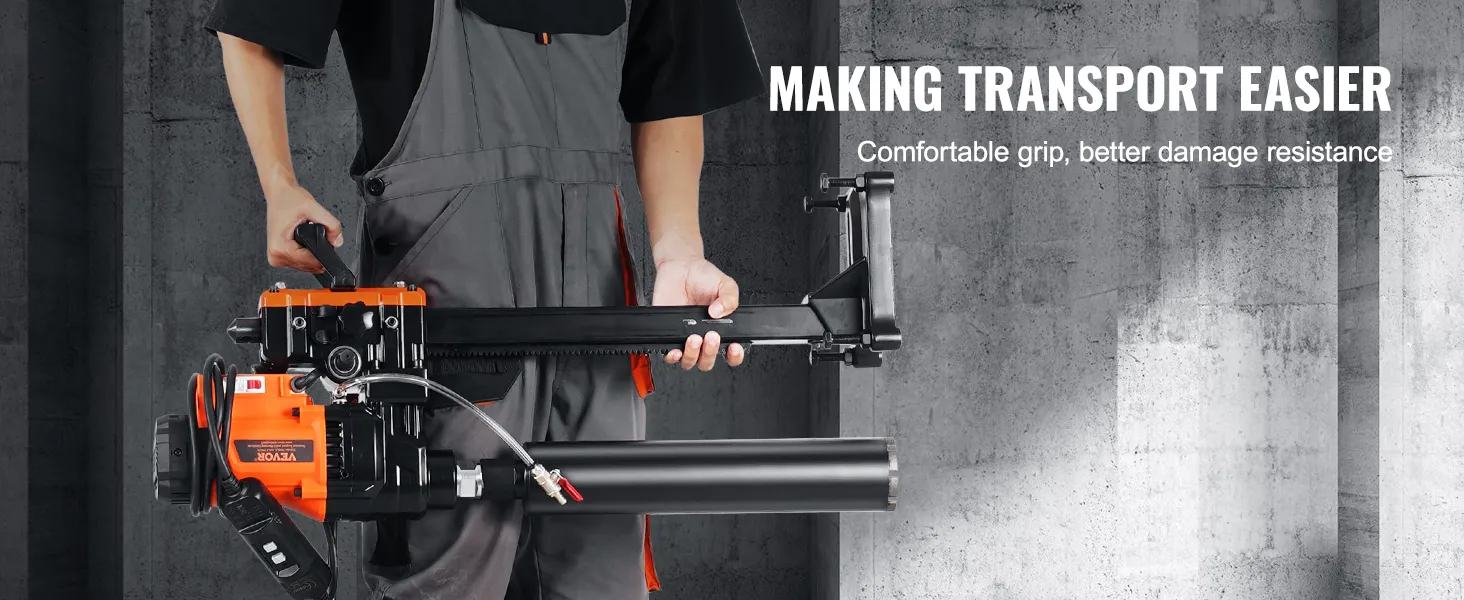
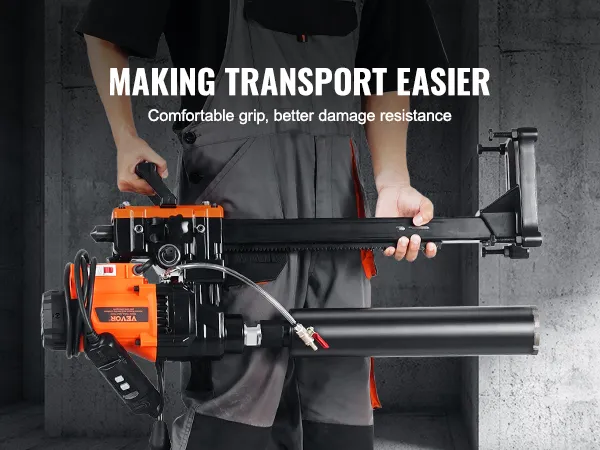
- Portable Handle Design: The ergonomic handle design of the coring drill makes transportation easier and more convenient. It enhances the comfort of carrying the tool and reduces the risk of bumps during transport, ensuring smooth and secure handling every time.
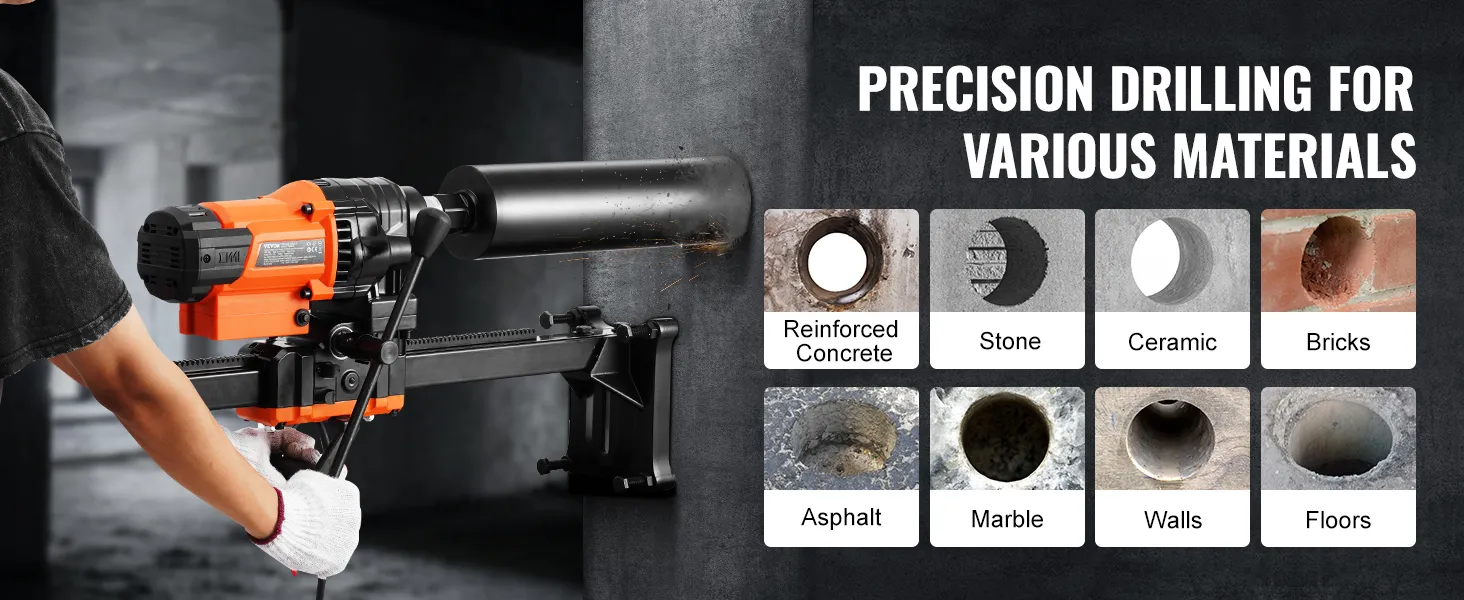
- Engineered for Precision Drilling: The diamond concrete core drill is designed for easy operation when drilling through reinforced concrete, red brick, marble, and more. It is particularly suited for large-scale professional projects, such as installing air conditioners, kitchen pipes, stair railings, and even highway repairs.
Frequently Bought Together
Reviews 4.8
About this item


Core Drill with Stand Powered by 3000W Motor and 850RPM for Heavy-Duty Drilling
A 3000W motor powers the core drill with stand. The rotation speed is fixed at 850RPM, providing a constant, high torque output across the full diameter range of Φ20-200 mm that this machine can handle. The set speed is tuned for stand-mount operation for large diameters, where steady torque is more important than variable rpm control. The vertical stand setup keeps the motor axis perpendicular to the work surface throughout the drilling stroke, producing straighter holes at large diameters than a handheld approach can.
The stand reduces angular drift that develops during a long stroke when the operator holds the machine by hand, keeping it stable. The stand is used on large-scale professional projects, such as installing air-conditioning sleeves through thick exterior walls, cutting large pipe penetrations in structural slabs, or boring stair-railing anchor points through reinforced concrete. The 3000W motor handles a wide range of diameters and depths without the torque dip that lighter machines experience at their rated capacity.
Wet and Dry Cutting Modes for Clean, Precise Holes in Any Condition
Wet cutting passes water through the bore during operation. The water continuously flushes out debris and cools the bit face throughout the stroke. As the bit is drilled, heat buildup degrades the bond between the diamond segments, reducing cutting speed and the effective bore diameter. Water prevents that buildup, keeping the hole diameter consistent and extending bit service life during high-volume drilling sessions. For indoor work, such as pipe penetrations through finished walls and AC sleeve installations near completed interior surfaces, the wet mode keeps airborne dust at manageable levels throughout the operation.
Dry cutting is suitable for outdoor work and for site conditions where water is not readily available or where water runoff is a site management problem. No internal configuration changes are needed to switch between modes; only a change of the water line connection is required. Both modes operate at the full 3000W motor output, so the performance is similar. The choice between wet and dry is determined solely by site conditions and material requirements, not by a performance trade-off between the two settings.
No Water Seal Design for Leak-Free, Uninterrupted Wet Drilling Operation
Wet core drills use a water seal to force water through the motor housing to the bit. The seal will break down with repeated heat and pressure cycling, eventually allowing water into the motor and causing electrical failure mid-job. The failure is progressive, with small, easily overlooked early leaks. But the deterioration accelerates until the machine fails at the worst possible time during an active drilling session.
This machine is designed without a water seal. The water path stays clean, and the flow rate remains constant throughout the machine's life because there is no seal to degrade. The design also increases water output over seal-based systems, improving debris flush rate and bit cooling at the larger diameters this machine is designed for. The seal can be removed without harming wet-drilling performance; it improves performance and eliminates the most common cause of mid-job failures on professional core-drilling equipment.
Core Drill with Stand Covering Φ20–200 mm Range with UNC1 1/4-7 Arbor
This single core drill with stand has a range of drilling diameters from Φ20 to 200 mm. It can be used to create small conduit penetrations at the low end or large ventilation duct or pipe sleeve openings at the high end, all without switching machines or reconfiguring the drivetrain. That covers a wide range of diameter requirements on professional construction and renovation sites.
The UNC 1/4-7 arbor is a standard professional thread specification and will work with a wide array of third-party core bits, as well as those included with the machine. If the job calls for a diameter outside the standard range, suitable bits can be readily obtained without the necessity of thread adapters or reducers. The stand frame measures 12.6 x 7.5 x 29.5 inches, so its footprint is compact enough to fit inside a jobsite without requiring excessive clearance around the drill setup during use.
Ergonomic Portable Handle for Safer, More Comfortable Transport Between Sites
The ergonomic handle is integrated into the machine frame, giving you more control and less strain when moving the 38.4 lb rig from one drilling location to another. A poorly placed carry point on a machine this heavy will cause the load to move unpredictably during transport, increasing the likelihood that the machine will hit walls, equipment, or the operator while moving on an active jobsite.
The handle design mitigates these issues by keeping the machine balanced while carrying and providing enough clearance to grip the handle firmly without repositioning your hand mid-transport. For jobs that require drilling in many spots spread across a large area - highway repairs, multi-unit residential installations, commercial fit-outs with many pipe penetrations - the carry handle gets plenty of use throughout the day. An ergonomic design at that usage frequency reduces cumulative fatigue and minor impacts that occur when heavy equipment is moved without a proper grip point.
Precision Performance on Reinforced Concrete, Red Brick, and Marble at Scale
The core drill with stand is suitable for the levels of material resistance encountered in professional large-scale drilling. Reinforced concrete is the hardest mixture, dense aggregate + embedded steel rebar that catches bits when torque is insufficient. The 3000W motor can handle both components without the RPM drop that indicates the motor is working above its practical capacity and supports diameters up to 200 mm. Red brick and marble present different problems.
The fixed 850RPM speed is well-suited to the diameter range this machine targets, producing clean bore walls without the edge damage that can occur at excessive rotational speeds on brittle materials. Applications are diverse, encompassing air conditioner installations, kitchen pipe routing, stair railing anchor bores, and highway repair work – a range of professional drilling tasks requiring both diameter capacity and sustained motor power.