VEVOR Magnetic Drill 220V-240V Magnetic Drilling Machine 980W, Metal Drill Press High Power 680 rpm, Multi-Function Metal Drill Press 35MM Core Drilling Machine for Drilling And Tapping

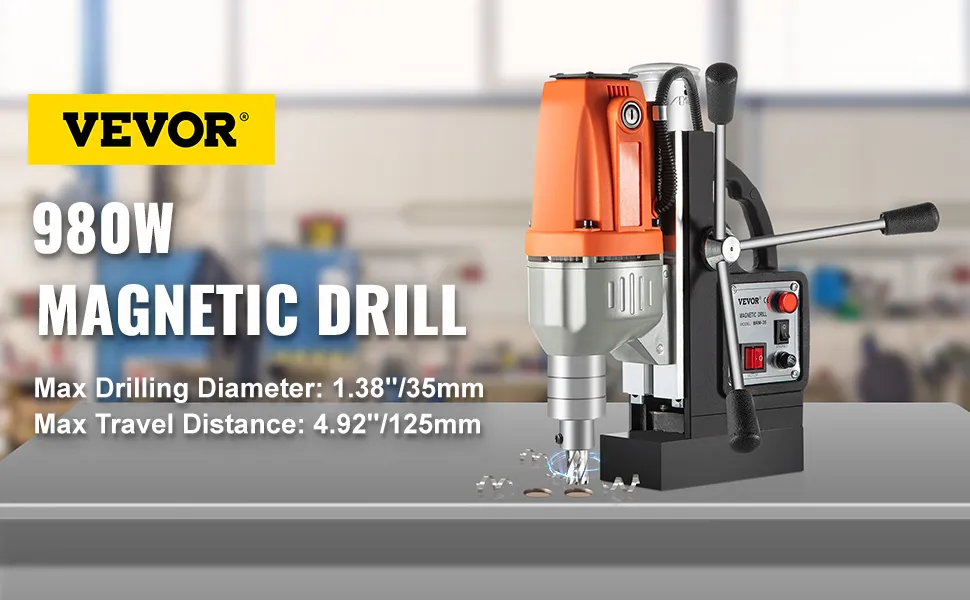
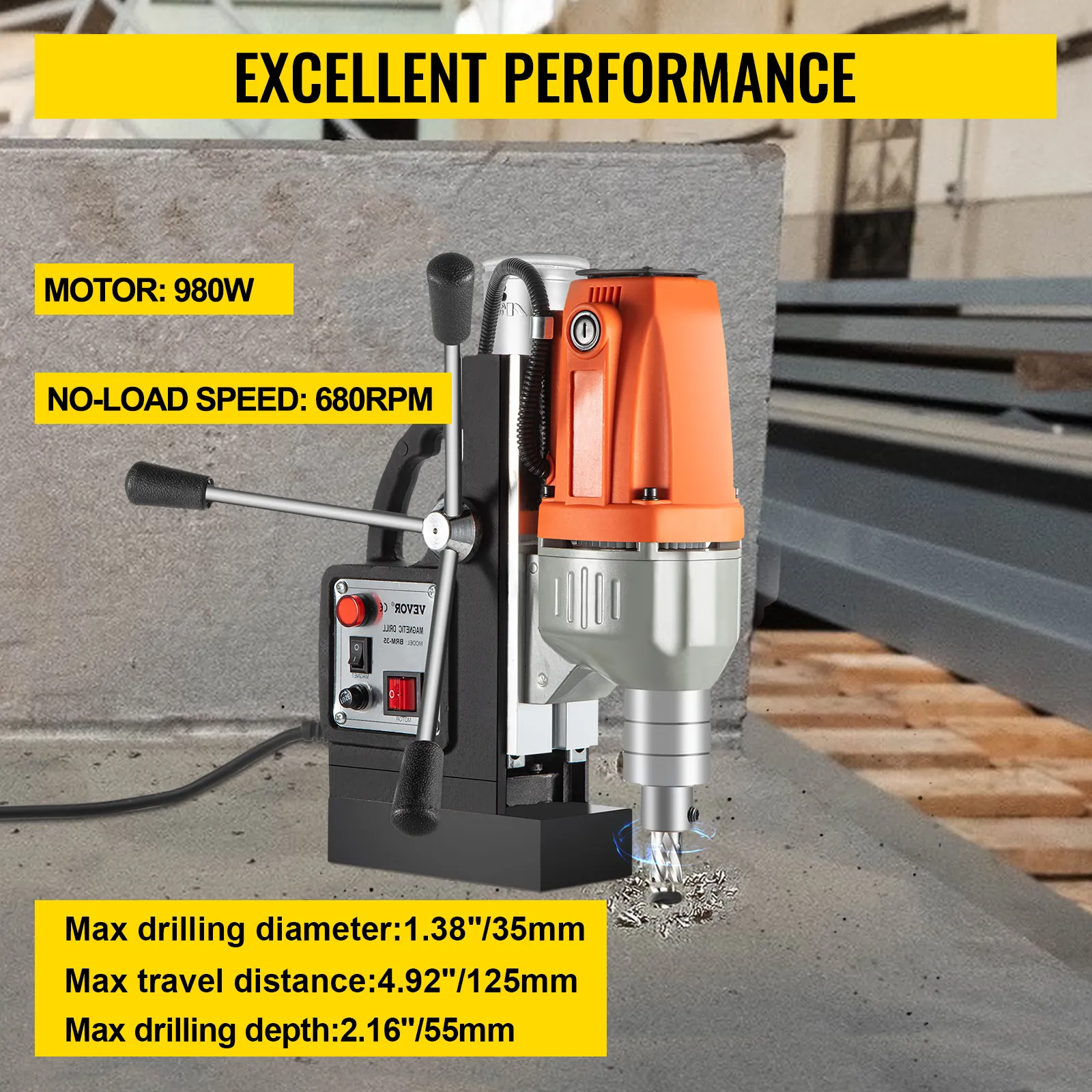
- Superior Performance: Our portable drill press generates exceptionally strong power thanks to its 980W copper motor. It is capable of drilling into the toughest materials at 680RPM. Maximum Coring Diameter: 1.38"/35mm; Maximum Travelling Distance: 4.92"/125mm. Besides, our magnetic drill can only be used with hollow boring bits, and annular bits less than 0.3"/8 mm in diameter.
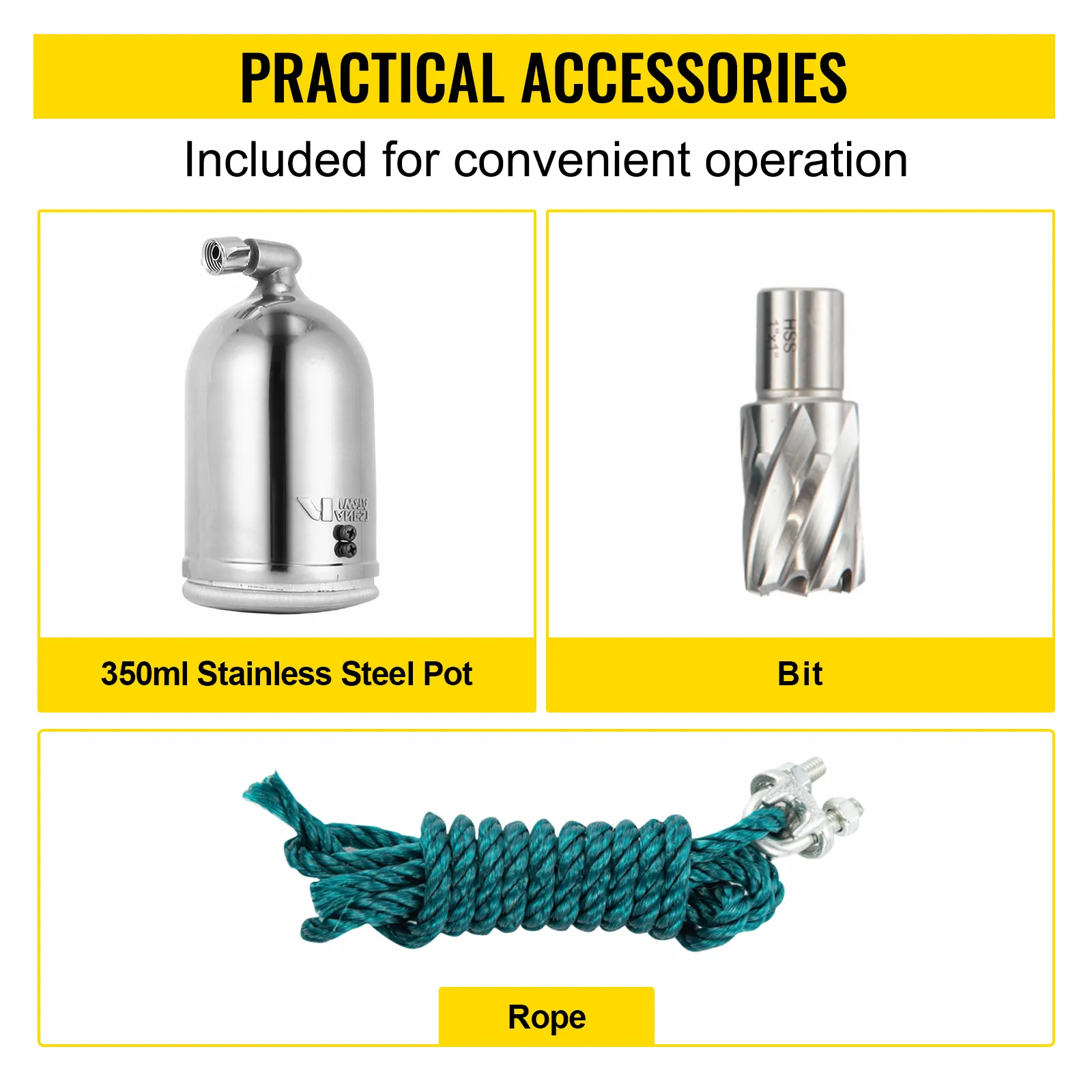
- Useful Accessory Kit: We provide you a rust-proof stainless steel cooling pot with the capacity of 21.36 Cubic Inch/350ml and a pilot pin. The pilot pin can remove screws and assist in the installation & removal of bits.
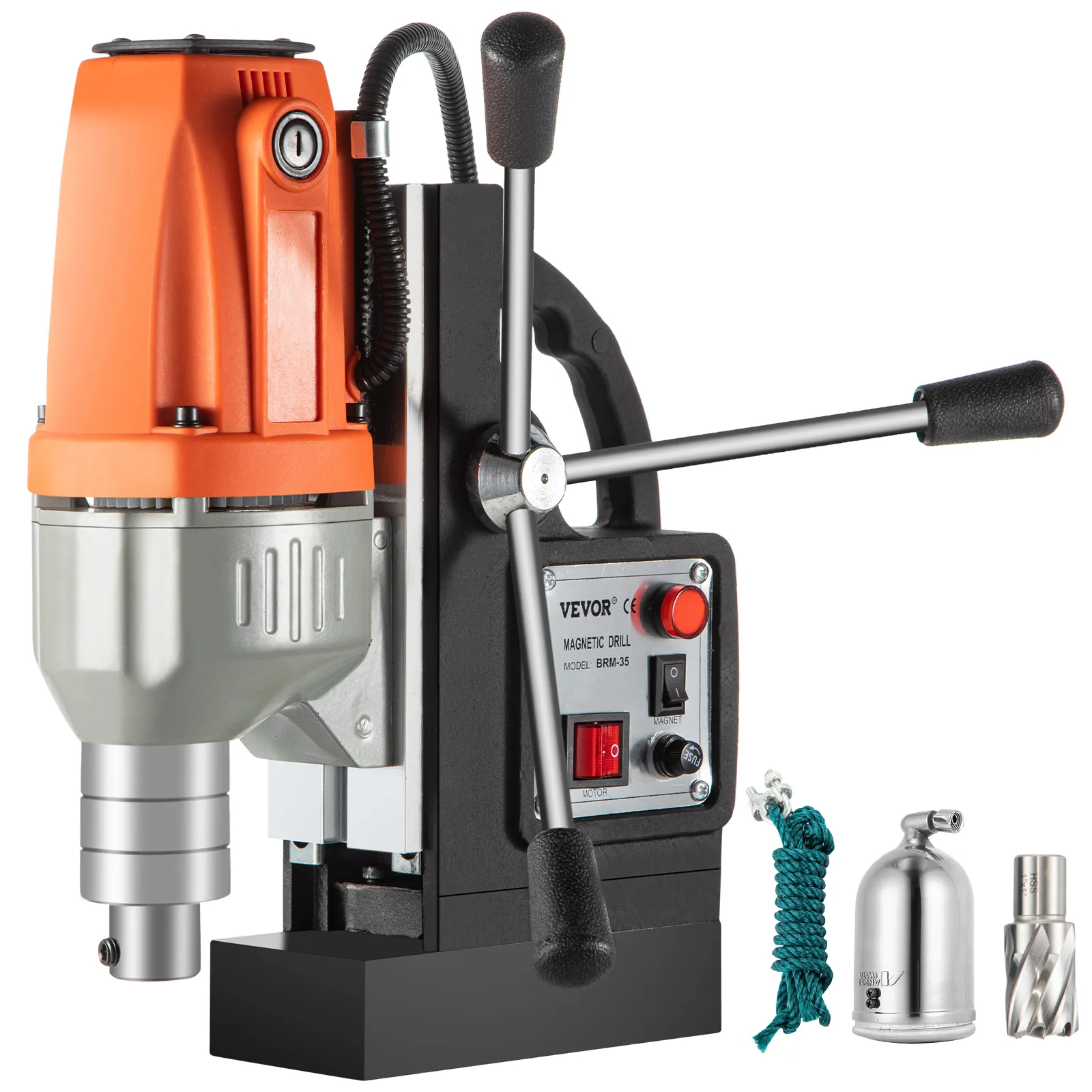
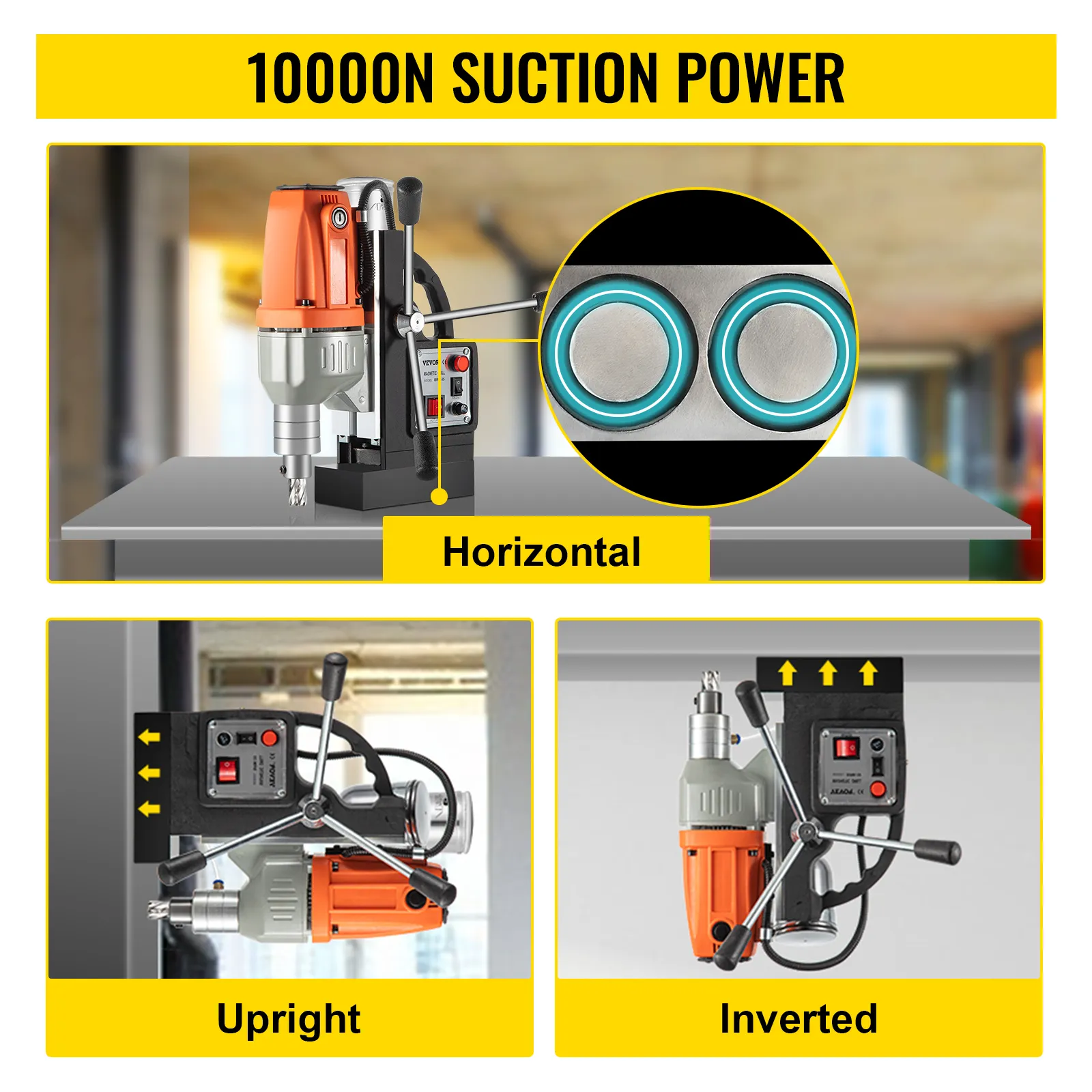
- 10,000N Magnetic Force: The powerful two-stage magnet can generate 10,000 N of holding force, ensuring the drill press machine will not move in the work. Thanks to its Electromagnet base, our magnetic drill press anchor itself securely during use through its solid iron bottom.
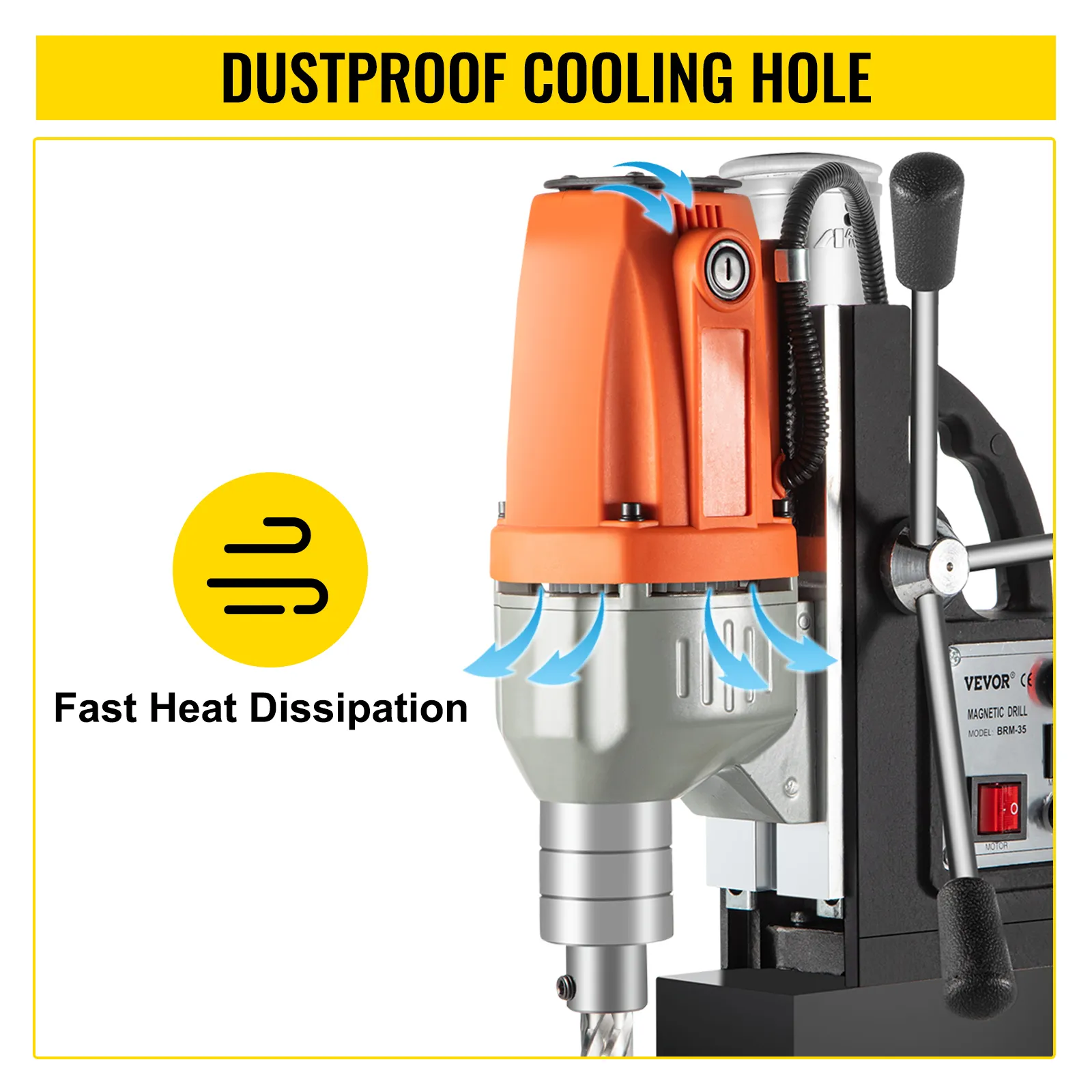
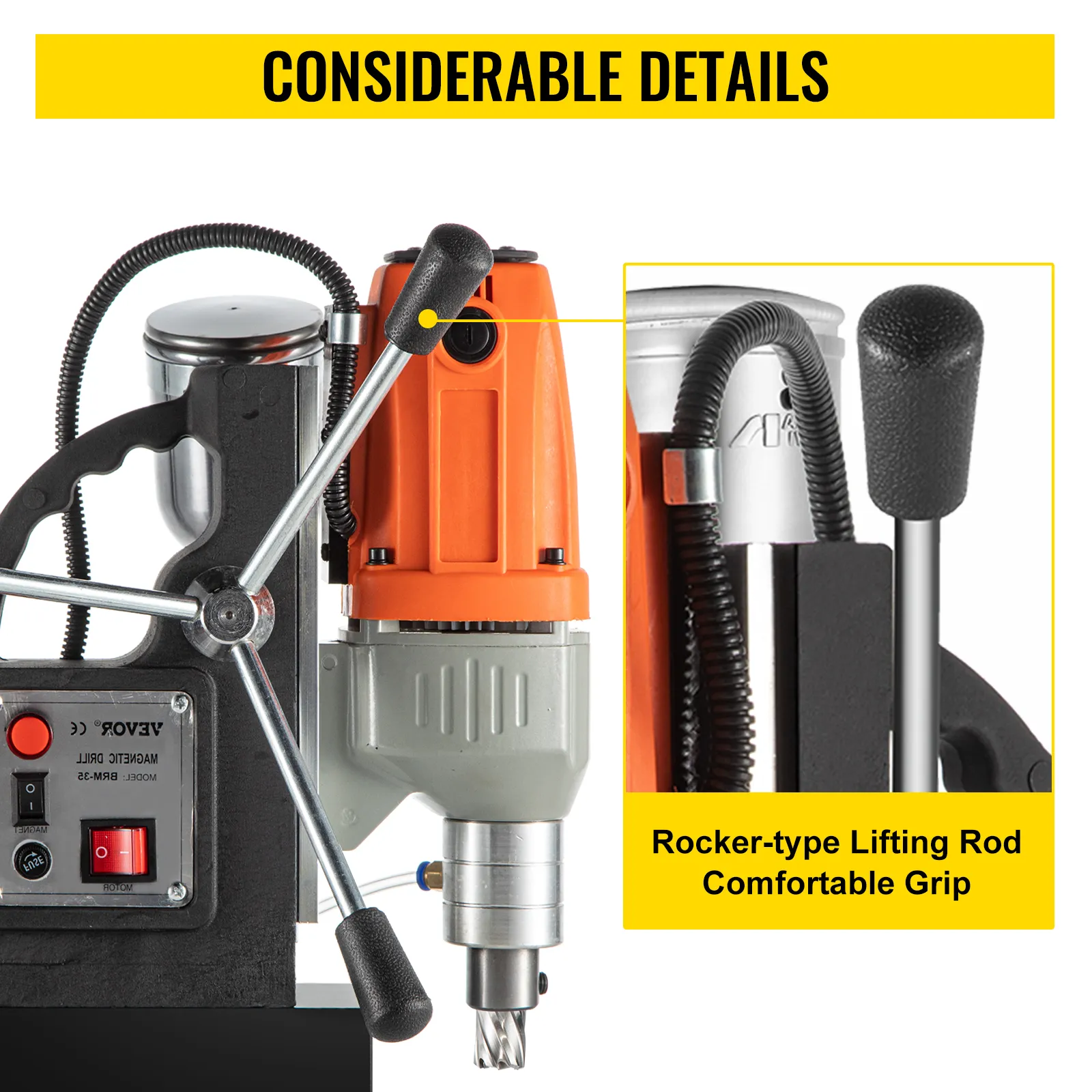
- Thoughtful Designs & Cooling System: This ergonomic design handle provides comfortable grip in operation and transport. These 3 extended crank handles are coated with nonslip rubber for laborsaving operation. Coolant tank, dustproof air inlet, and exhaust air holes are designed for cooling the magnetic drill press during overheating.
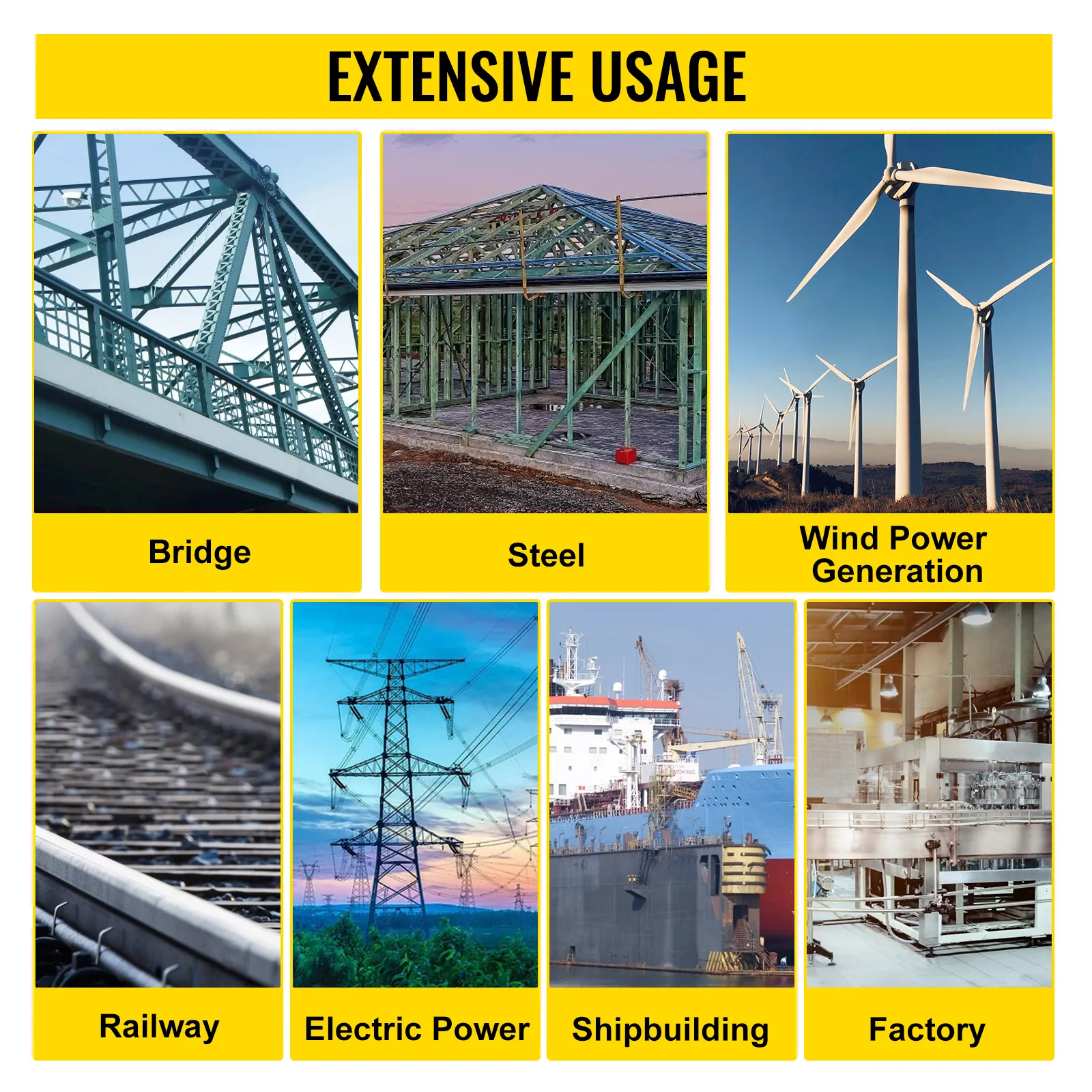
- Various Applications: This versatile magnetic drill press is immensely suitable for industrial and steel fabrication, ship or bridge building, railway manufacture, wind power generation, power-plant construction, home improvement, equipment installation, and a wide swath of other fields.
Frequently Bought Together
Reviews
About this item


- NOTE: Our magnetic drill can only be used with hollow boring bits, and annular bits less than 0.3"/8 mm in diameter.
- Superior Performance
- Useful Accessory Kit
- 10,000N Magnetic Force
- Thoughtful Designs & Cooling System
- Premium Tough Quality
- Incredibly Low Prices
- Fast & Secure Delivery
- 30-Day Free Returns
- 24/7 Attentive Service
- Premium Tough Quality
- Incredibly Low Prices
- Fast & Secure Delivery
- 30-Day Free Returns
- 24/7 Attentive Service
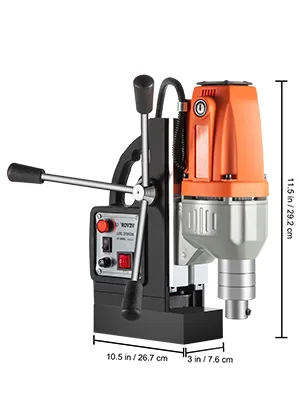
- Model: BRM-35
- Power: 980 watts
- Power supply: 240V 50 Hz
- Idle speed approx : 680 rpm
- Max. Drilling Φ (with core drill): 12-35mm
- Max. Drilling depth Φ (core drill): 2"(50mm)
- Max. Drilling Φ (with full drill): 1.5-13 mm
- Max. Travel distance: 150 mm
- Magnetic holding force: 10,000 N(2250Lbs)
- Magnetic foot dimensions ca: 160 x 80 mm
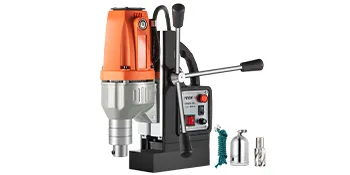
- 1 X 35mm Core Drilling Machine
- 1 X kettle
- 1 X rope
- 1 X drill chuck
- 1 X Silk power chuck
- 1 X chuck key
- Premium Tough Quality
- Incredibly Low Prices
- Fast & Secure Delivery
- 30-Day Free Returns
- 24/7 Attentive Service
- Premium Tough Quality
- Incredibly Low Prices
- Fast & Secure Delivery
- 30-Day Free Returns
- 24/7 Attentive Service
- NOTE: Our magnetic drill can only be used with hollow boring bits, and annular bits less than 0.3"/8 mm in diameter.
- Superior Performance
- Useful Accessory Kit
- 10,000N Magnetic Force
- Thoughtful Designs & Cooling System
- 1 X 35mm Core Drilling Machine
- 1 X kettle
- 1 X rope
- 1 X drill chuck
- 1 X Silk power chuck
- 1 X chuck key
- Model: BRM-35
- Power: 980 watts
- Power supply: 240V 50 Hz
- Idle speed approx : 680 rpm
- Max. Drilling Φ (with core drill): 12-35mm
- Max. Drilling depth Φ (core drill): 2"(50mm)
- Max. Drilling Φ (with full drill): 1.5-13 mm
- Max. Travel distance: 150 mm
- Magnetic holding force: 10,000 N(2250Lbs)
- Magnetic foot dimensions ca: 160 x 80 mm
980W Copper Motor in the Magnetic Core Drilling Machine for High-Speed Steel Boring
The magnetic core drilling machine has a 980W copper-wound motor for continuous duty in structural steel, fabricated plates, and heavy beam sections at a fixed spindle speed of 680 RPM. Copper windings run cooler than aluminum windings under constant load, which helps prevent the motor temperature from climbing during extended drilling without overheating. The most critical factor for consistency is during fabrication runs, where multiple sequential holes must be bored to the same quality standard throughout the shift.
This unit is specifically designed for international markets, using standard European grid voltage and a 240V / 50Hz power supply. Accepts hollow boring and annular coring bits from 12 to 35 mm diameter, cutting to a maximum coring depth of 2 in / 50 mm. The spindle will take bits ranging from 1.5 mm to 13 mm for twist drilling. That dual-mode capability means large-bore coring work and smaller fastener-hole drilling can be performed on one machine without a tool change to a second platform.
10,000 N Two-Stage Electromagnetic Base for Immovable Worksite Clamping
The two-stage magnet system creates a 10,000 N / 2,250 lbf holding force through a solid steel base that clamps the machine to the workpiece's steel surface. The two-stage magnet architecture builds field strength over two coil layers, which results in a denser, more uniform magnetic field across the 160 × 80 mm base contact area than single-stage designs of similar size. The uniform field distribution inhibits edge lift under the high lateral forces generated during deep coring passes.
The clamping force holds the unit in place for horizontal, angled, and upside-down drilling positions encountered in shipbuilding, bridge steelwork, and structural column installation. If you are doing inverted or lateral work, you must use a safety rope as a safety chain to the electromagnetic clamp. The steel base must be thick enough to achieve full magnetic saturation. Too thin surfaces, or stainless steel or cast iron, will not sustain the rated holding force and should be avoided.
12–35 mm Coring Range and 1.5–13 mm Full Drill Capacity for Versatile Hole Making
Its coring diameter range is 12-35 mm, covering the practical hole sizes most often needed in steel fabrication, equipment mounting, and structural connection work. Smaller-diameter bits, 12 to 20 mm, are suitable for fastener clearance holes and conduit penetrations, and larger bits up to 35 mm can be used for pipe flanges, cable glands, and structural plate connections. Using the correct bit size for each application within this range will prevent motor overload and increase bit service life.
Twist drill mode, 1.5-13 mm. It is smaller than the coring system. For pilot holes, smaller fastener holes, and precision drilling in thinner sections of material. With a maximum travel distance of 5.9 in / 150 mm, it provides sufficient stroke to complete coring and twist-drilling passes in a single motion without having to reposition the base. These two operational modes combined make this magnetic core drilling machine a one-platform solution for the complete spectrum of metal hole-making tasks on a structural jobsite.
Magnetic Core Drilling Machine with Stainless Steel Coolant Pot and Active Thermal Management
The included 350 ml stainless steel coolant pot supplies cutting fluid to the bore zone during operation, reducing friction heat at the cutting edge and flushing chips out of the hole as they are produced. Both bit overheating and premature failure of the cutting edge are significant causes of chip build-up in the bore, and continuous coolant flow helps prevent both problems. The pot is stainless steel to prevent corrosion and rust contamination of the coolant, which could clog the delivery system.
The dustproof air inlet and dedicated exhaust air channels help the machine’s ventilation system control the internal motor temperature during high-load drilling cycles. The dustproof inlet keeps out metal swarf that can enter the motor housing and, over time, damage the windings or bearings. It is a common failure mode in fabrication environments where airborne particles are everywhere.
Rubber-Coated Three-Crank Handle and Ergonomic Design for Fatigue-Free Operation
The three extended crank handles are covered in non-slip rubber for a comfortable, safe grip when feeding manually, even with hands wet from coolant or sweat. Crank coating also absorbs vibration from the cutting zone and along the feed mechanism, helping reduce hand fatigue during long drilling sessions. What sets the professional-grade equipment apart from bare-metal crank designs is that vibration isolation passes every cutting impulse straight into the operator's grip.
The ergonomically shaped main handle positions the operator’s wrist in a neutral position relative to the feed direction to reduce stress during the full stroke of each drilling pass. In addition to the rubber-coated cranks and the machine’s 680 RPM fixed speed, operators can maintain steady feed pressure as they work through each bore without fighting the tool.
160 × 80 mm Magnetic Foot and Broad Industrial Application Compatibility
The 160 x 80 mm magnetic foot provides a well-defined, measurable contact area that determines how the magnetic field couples to the workpiece surface. The larger contact footprint distributes the clamping force over a greater area, reducing the risk of surface indentation on thinner plates while maintaining full holding force on structural sections. This footprint provides solid four-corner contact on slightly irregular surfaces, keeping the base in a flat-seated position without rocking, which could lead to bore misalignment.
The magnetic core drilling machine can be used in industrial and steel fabrication, ship and bridge construction, railway manufacturing, wind power generation, power plant construction, home improvement, and equipment installation. The accessory kit includes a pilot pin to help secure and remove bits, so you spend less time setting up between holes. This accessory support, coupled with the machine’s 980W motor, dual-mode drilling capability, and integrated cooling system, makes the unit a self-contained platform for demanding metal drilling work across a wide range of industrial environments.