Deals
VEVOR Wood Router, 1.6 HP 1200W, Variable Speed Router Tool with Soft Start, Compact Wood Edge Trimmer with Plunge Base, Dust Hood & Parallel Guide, for Woodworking, Trimming, DIY Projects, Corded
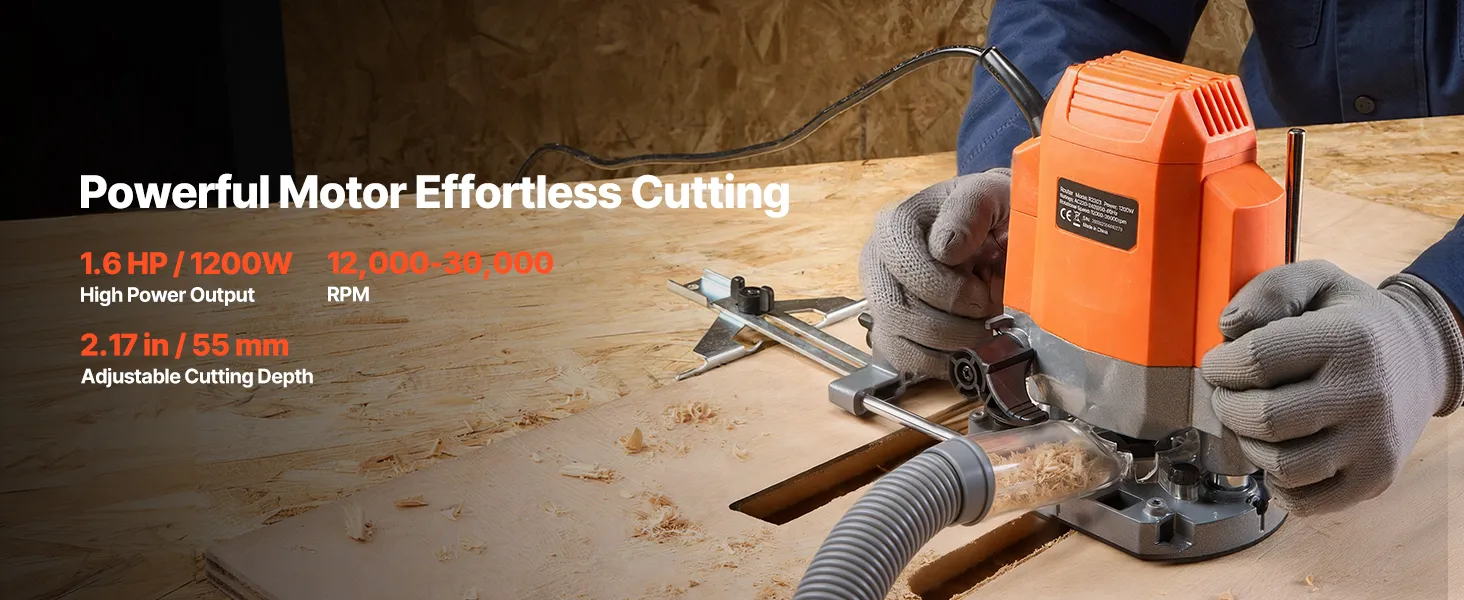
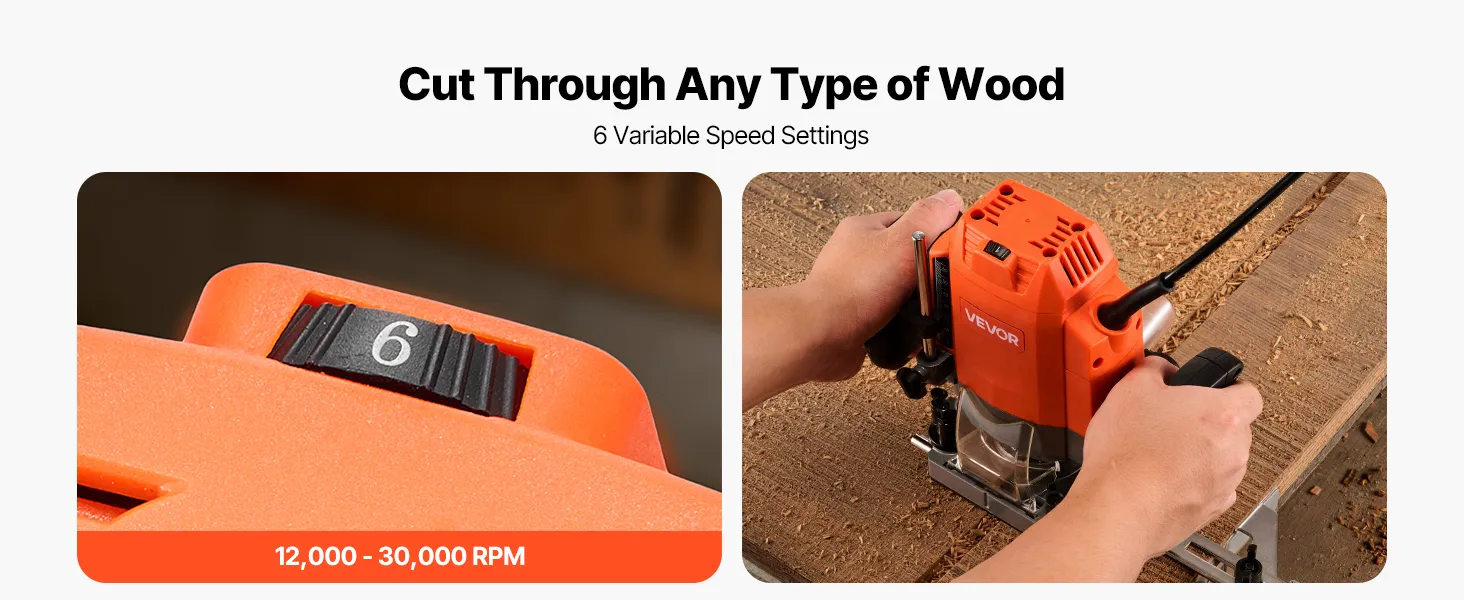
- Efficient Cutting Performance: This wood router features a 1.6 HP / 1200W power with 6 variable speeds from 12,000 to 30,000 RPM, delivering high-efficiency cutting across a wide range of woodworking tasks
- Cuts Through Thick Wood: With an adjustable cutting depth up to 2.17 in / 55 mm, this wood trimmer router cuts thick wood materials with ease
- Precision Processing Made Easy: Equipped with a parallel guide, this wood router tool helps achieve accurate and stable straight cuts during grooving
- Versatile for Multiple Applications: This woodworking trim router is ideal for edge trimming, furniture making, DIY projects, and can be mounted on a router table or insert plate for expanded functionality
- Soft Start, Smooth Operation: Built with a soft start feature, this woodworking router gradually increases speed to reduce startup impact, ensuring better cutting accuracy and a more controlled operation
Frequently Bought Together
Reviews
About this item








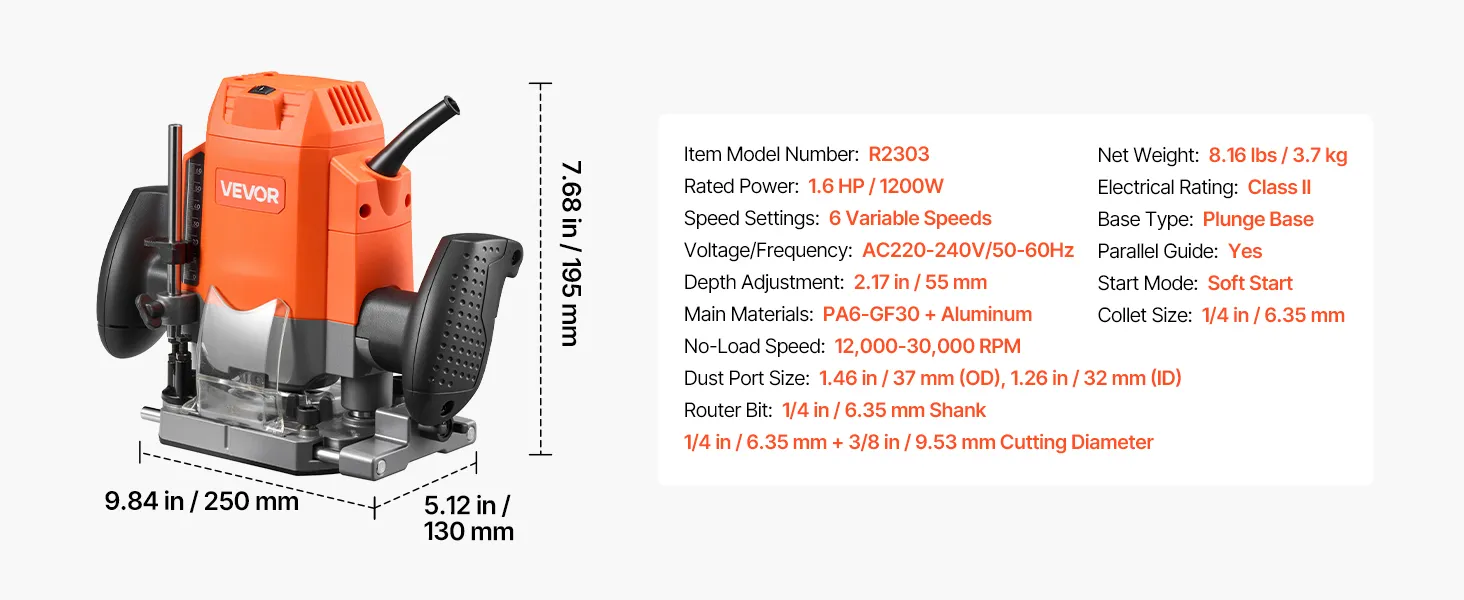
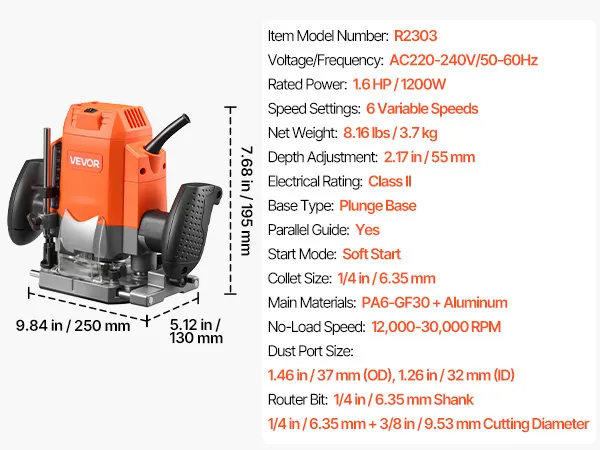
Variable Speed Wood Router with 1200W Motor and 12,000–30,000 RPM Variable Speed Range
The VEVOR variable speed wood router has a 1.6 HP/1200W motor with a variable no-load speed range of 12,000–30,000 RPM. It has six speed settings to choose from. The operator can choose the appropriate rotational speed for the material and bit, using slower speeds for large-diameter bits and dense hardwoods, where lower speeds provide better control.
The 1200W motor provides ample power for demanding routing applications. The higher-power motor helps maintain consistent cutting performance in a variety of woodworking applications.
Soft Start Function for Controlled Startup and Reduced Bit Impact on Wood Surface
Instead of going straight to full speed when the switch is turned on, the soft start system gradually increases the motor speed to the chosen RPM setting during a short startup period. This controlled acceleration stops the sudden rise in torque that happens when a regular router motor starts up at full power. This sudden movement can shift the router off of its starting position on the workpiece and dig the bit into the wood surface before the operator has set up the cut path.
Soft start is very important for edge-trimming and profiling jobs, where the bit first touches the wood. This helps prevent the router bit from digging into the workpiece at startup. Soft start helps reduce startup shock on the motor and routing components. This means that the motor and collet clamping system may help extend service life.
Plunge Base with 2.17 in Max Cutting Depth for Through-Cut and Interior Routing
With the plunge base, the operator can lower the spinning bit vertically into the workpiece surface at any point along the cut path. The plunge base makes interior routing easier by allowing the bit to enter the workpiece vertically. Releasing the plunge lock allows the base to move, while locking it secures the selected cutting depth.
The maximum plunge depth is 2.17 inches (55 mm), which lets you route through most normal cabinet and furniture stock thicknesses, such as solid hardwood panels, MDF, and layered plywood. Depending on the material's hardness, bit diameter, and routing application, multiple passes may be used. With the adjustable depth stop, the operator can set a precise target depth and maintain it consistently across multiple plunge entries in the same piece of work without repeated measurements.
Parallel Guide for Accurate Straight Cuts and Consistent Groove Width
The variable speed wood router comes with a parallel guide attachment that fits the base and moves along the edge of the workpiece. This keeps the distance between the workpiece edge and the bit center constant throughout the cut. This fixed-distance guidance makes grooves, dadoes, and edge profiles that are straight and consistent. The user does not have to hold a separate straightedge against the work surface and move the router by hand.
When doing repetitive routing tasks, like routing multiple shelf dado grooves at the same distance from the panel edge or profiling a bunch of identical cabinet door edges, the parallel guide saves time because you do not have to reposition the guide between cuts. It also helps improve consistency across multiple workpieces. The fence position on the guide can be adjusted to set the exact offset required for each routing job within the router's working range.
Variable Speed Wood Router with Transparent Dust Hood and Vacuum Port for Clean Operation
Connecting a standard vacuum hose to the dust hood's built-in port of this variable speed wood router keeps wood chips and fine dust from spreading across the workpiece and workshop floor while routing. Because the construction is clear, the operator can see the bit contact point and cut path through the hood body without removing it during operation.
It is very important to remove dust from the routing point during enclosed groove and pocket routing because the bit repeatedly passes through the same channel, collecting chips that make it hard for the user to see the cut depth and slow the airflow that cools the bit. During routing sessions, connecting the dust hood to a workshop vacuum or dust extractor keeps the work area clear enough to see the cutting progress. This also improves the visibility of the workpiece and reduces exposure to airborne fine particles.
Router Table Compatible with 1/4 in Collet and Aluminum Clamping for Expanded Use
This variable speed wood router can also be used with compatible router table setups for selected woodworking applications. In this setup, the workpiece is fed across the bit rather than moving the router across it. This setup on a table is best for long runs of edge profiling, raised panel door profiles, and shaping small parts, since hand-held routing is hard to control accurately on narrow or short pieces of work.
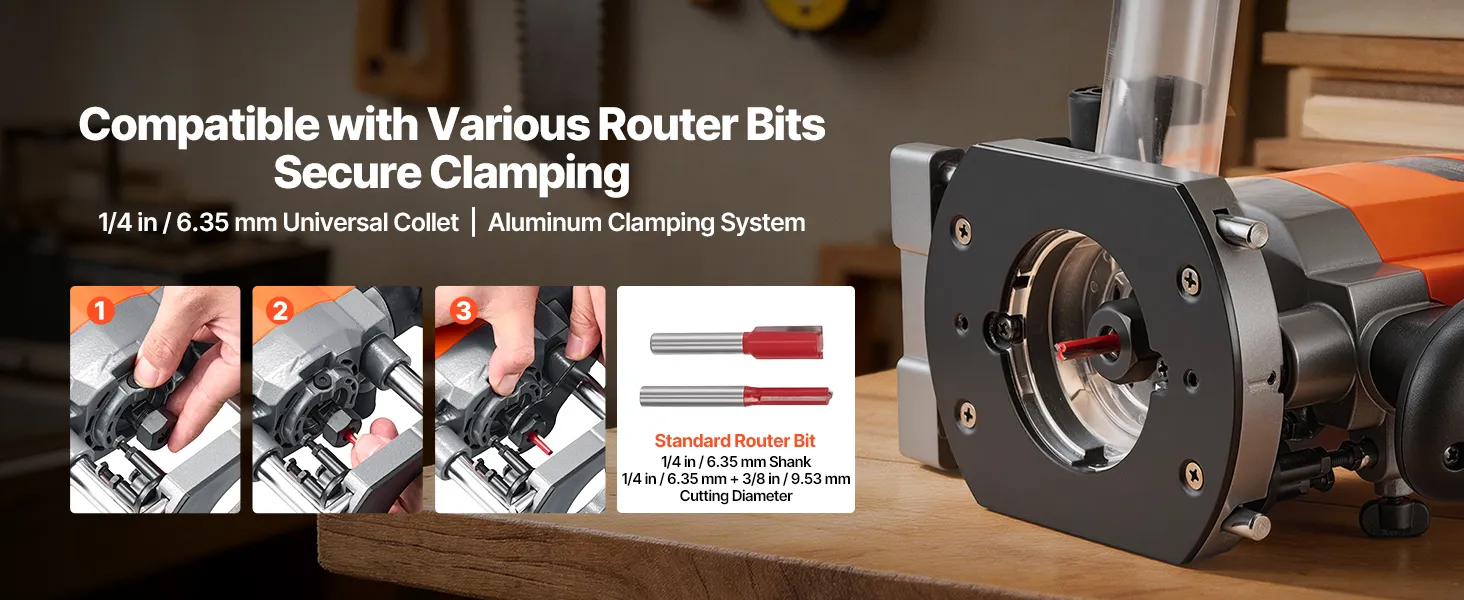
The 1/4 in (6.35 mm) collet and aluminum clamping system accepts the included router bits with 1/4 in shank and 1/4 in and 3/8 in cutting diameters and the full range of standard 1/4 in shank aftermarket bits available from woodworking suppliers. The aluminum clamping system securely holds the bit in place during operation.