


VEVOR Core Drill Machine 2.03-24.9 cm Dia 3200W Diamond Core Drill Rig with Stand


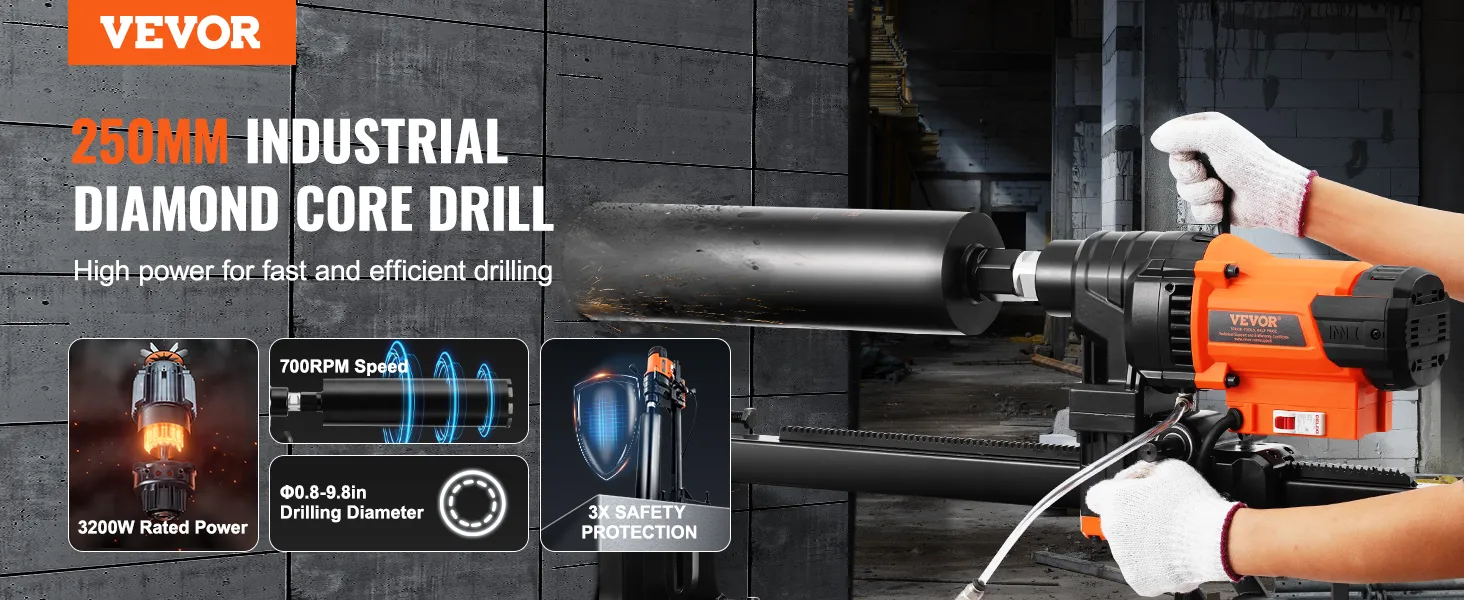
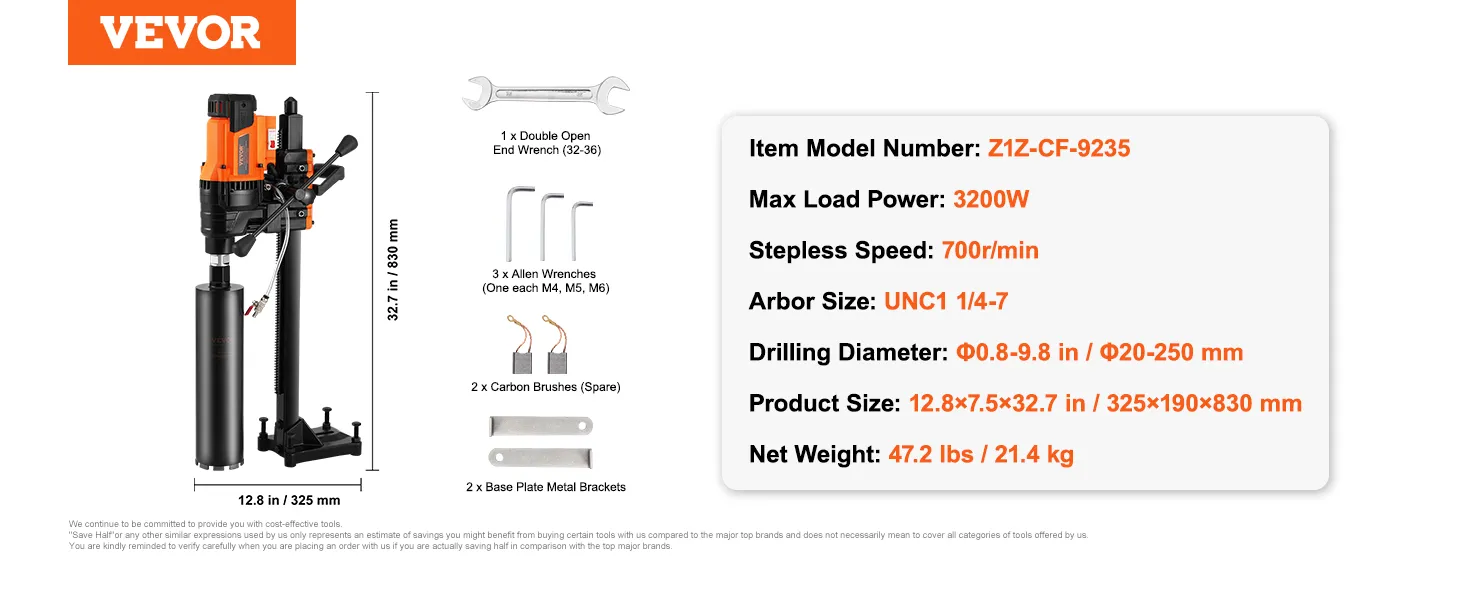
- Powerful Core Drilling Efficiency: Equipped with a 3200W motor, this core drill machine handles hole sizes from Φ0.8-9.8 in / Φ20-250 mm effortlessly. Whether you're drilling large or small holes, it ensures efficient and precise results every time.
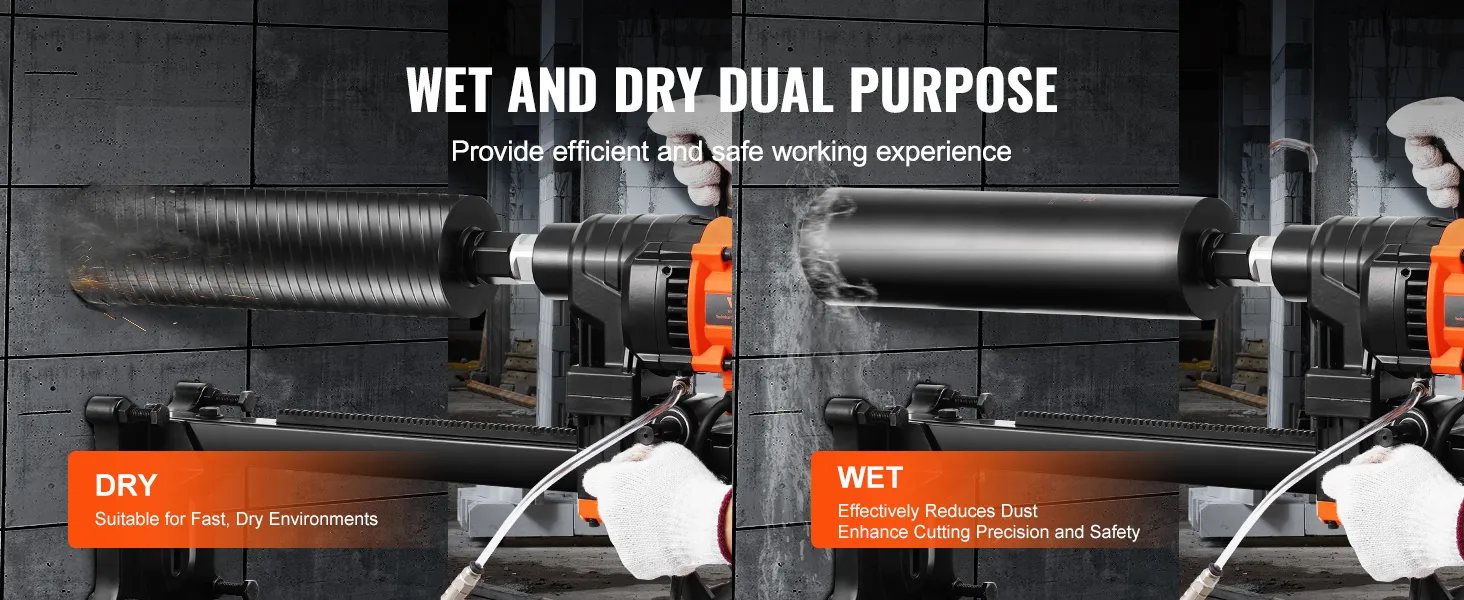
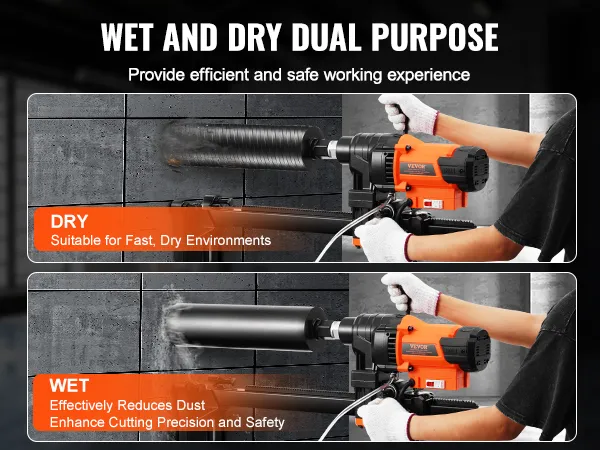
- Wet & Dry Cutting Capabilities: Our core drill rig supports both dry and wet cutting modes. Dry cutting is ideal for fast drilling in dry environments or high-efficiency scenarios, while wet cutting effectively reduces dust and heat, providing enhanced safety and comfort during operation.
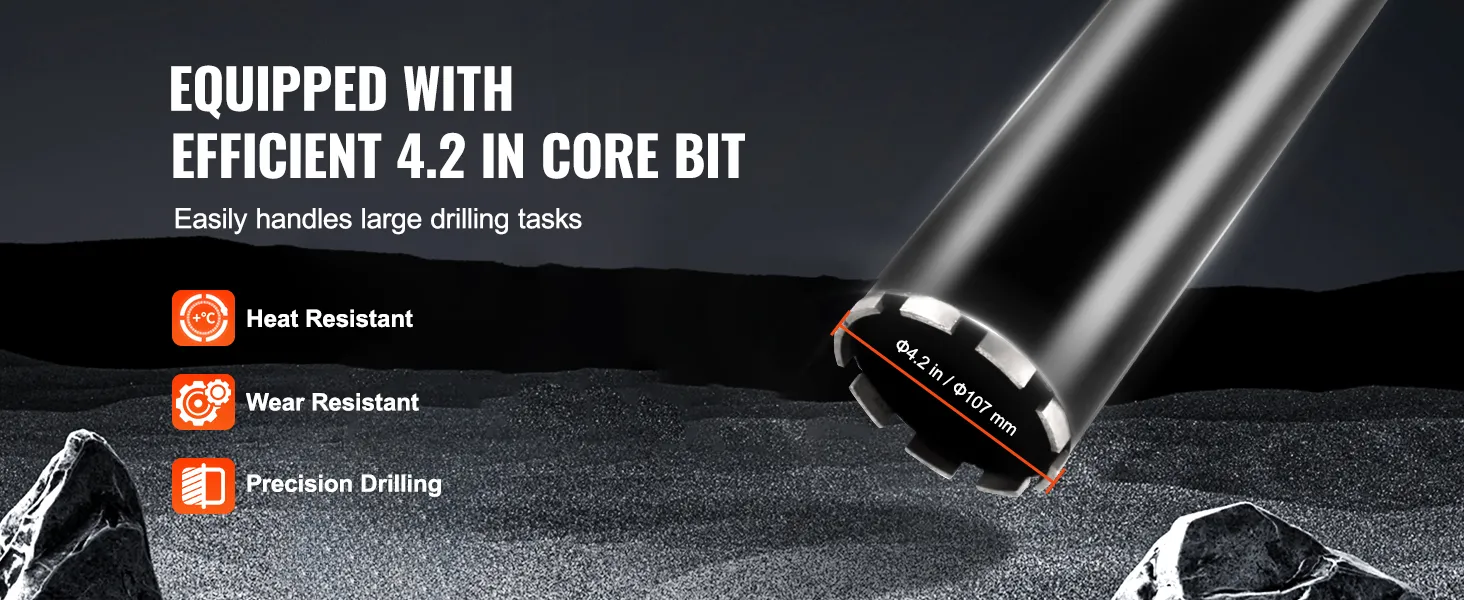
- Professional Accessories Included: The core drilling machine comes with a Φ4.2in/Φ107mm drill bit, allowing quick completion of large-diameter drilling tasks. It includes two carbon brushes and a double-ended wrench for convenient and quick maintenance.
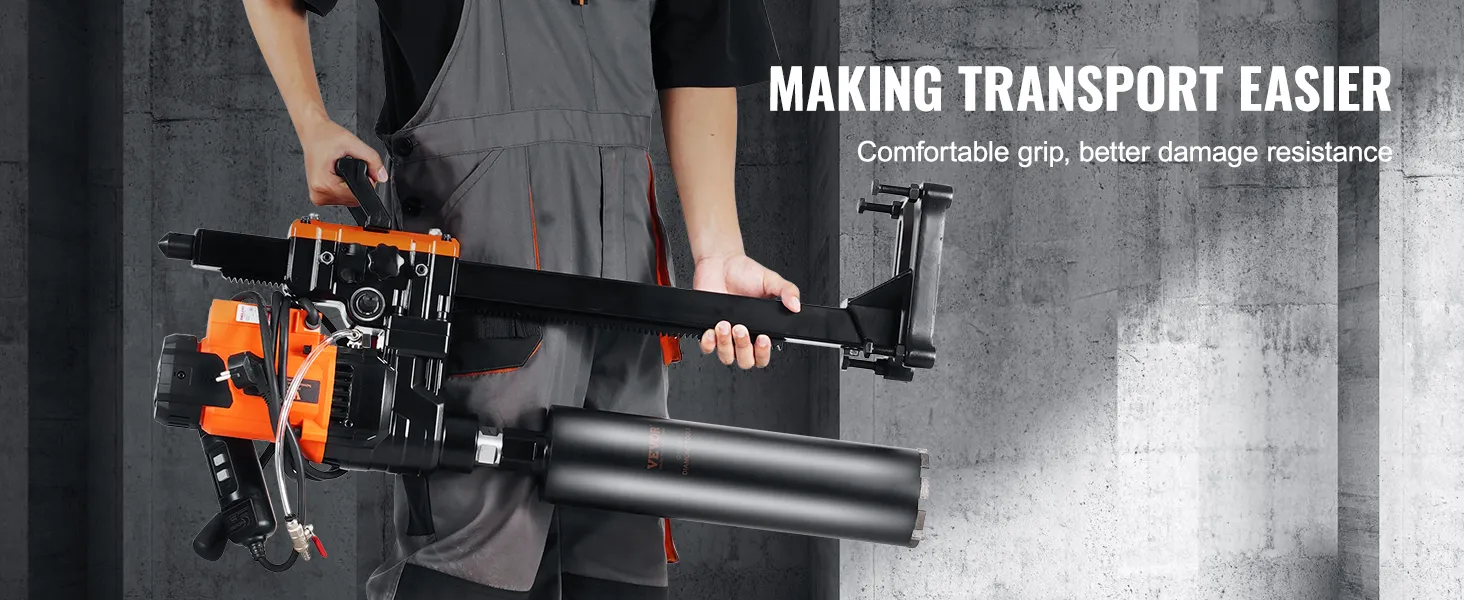
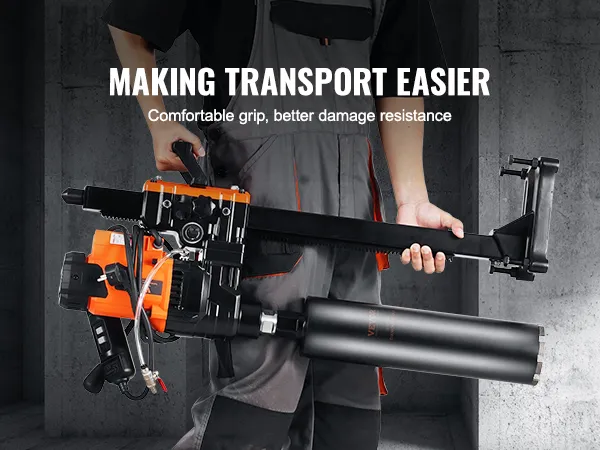
- Portable Handle Design: The ergonomic handle design of the coring drill makes transportation easier and more convenient. It enhances the comfort of carrying the tool and reduces the risk of bumps during transport, ensuring smooth and secure handling every time.
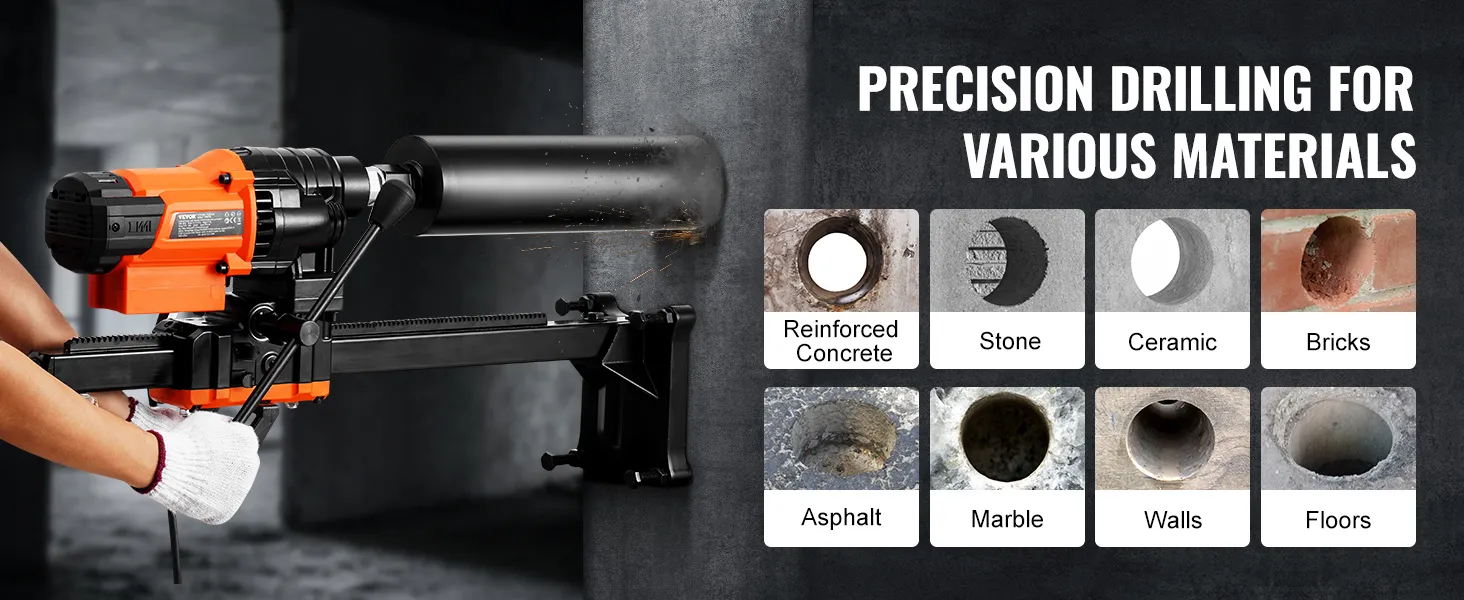
- Engineered for Precision Drilling: The diamond concrete core drill is designed for easy operation when drilling through reinforced concrete, red brick, marble, and more. It is particularly suited for large-scale professional projects, such as installing air conditioners, kitchen pipes, stair railings, and even highway repairs.
Frequently Bought Together
Reviews
About this item


Concrete Core Drill Machine with 3200W Motor and 570RPM Speed for Heavy-Duty Output
The 3200W max-load motor is ideally matched to the 570RPM running speed for stand-mounted drilling at the large diameters this concrete core drill machine can handle. As diameters approach 250 mm, it is a matter of sustained torque at controlled speed whether the bore goes cleanly through dense reinforced concrete or stalls under load mid-stroke. The 570 RPM is intentionally set at a low level relative to the motor's power output. High RPMs at large diameters generate heat too rapidly for the water to dissipate, wear diamond segments too quickly, and increase the chance of the bit binding in hard aggregate pockets.
The constant low speed enables the segments to cut evenly throughout the stroke, preventing thermal spikes that reduce bit performance and adversely affect bore wall quality. For the large-scale professional jobs, major pipe sleeve installations, structural anchor bores, and highway repair cuts, the 3200W motor at 570RPM offers the torque profile the work requires, not the speed profile suited to smaller-diameter drilling.
Wet and Dry Cutting Modes for Clean, Dust-Controlled Holes Across All Materials
Wet cutting directs water to the bore during operation, continuously flushing cut debris and cooling the bit face during the stroke. At the large diameters for which this concrete core drill machine is designed to operate, the contact area between the segment and the material is much greater than on smaller drills, resulting in proportionally more frictional heat to be handled by the water. Continuous water flow keeps the segment cool, maintains a uniform bore diameter from entry to full depth, and keeps airborne dust levels within acceptable limits for indoor work near finished surfaces.
Dry cutting is used on outdoor jobs and in locations where access to a water supply is limited or where controlling water runoff near adjacent finished areas is a site management concern. Switch between modes by simply connecting or disconnecting the water line; no internal changes to the machine are required. In both modes, the motor delivers up to 3200W, so the torque and drill speed are the same. There is no difference in performance between the wet and dry operation of this machine. Mode choice is dependent on site conditions and material requirements.
Φ107 mm Drill Bit, Carbon Brushes, and Wrench Included for Immediate Job Readiness
The included Φ107 mm diamond core bit can handle large-diameter drilling jobs from the first job without requiring additional tooling. Its size accommodates pipe sleeve penetrations, conduit runs through structural walls, and ventilation openings in the most common diameter range for residential and commercial construction sites. You wouldn't need to change the bit for normal large-scale installation work, as it cuts through reinforced concrete, red brick, and marble.
The supplied accessories also include two carbon brushes and a double-ended wrench, covering the maintenance jobs most likely to occur during prolonged professional use. Carbon brushes are wear items in high-load motors; having spares available prevents an unplanned job stop when a brush reaches the end of its service life mid-job. The wrench handles bit changes and mechanical adjustments in the field without requiring additional tools. The included accessories make the machine field-serviceable from first use and reduce the number of procurement steps between delivery and the first productive job.
Concrete Core Drill Machine with Φ20–250 mm Diameter Range and UNC1 1/4-7 Arbor
The drilling diameter range of Φ20–250 mm covers small conduit penetrations at the low end and large structural openings at the high end, addressing the majority of diameter requirements on professional construction and renovation sites with a single machine setup. It also eliminates the need for a second, higher-capacity drill when the same site encounters both small and large penetrations.
The UNC1 1/4-7 arbor is a professional-standard thread specification that fits a variety of third-party concrete core drill bits, including the included 107 mm bit. If the job needs a larger diameter than the included bit, it’s easy to find a compatible replacement without needing thread adapters. The stand frame measures 12.8 x 7.5 x 32.7 inches. It is small enough to keep the footprint compact for indoor placement, while providing the base stability the 3200W motor needs when running at full load with maximum diameters.
Ergonomic Portable Handle for Controlled, Fatigue-Free Transport on Active Jobsites
The integrated ergonomic carry handle makes it easy to physically handle and control the 47.2 lb machine as it is moved between drill locations during a full working day. At this weight, a poorly located grip point relative to the machine's center of gravity causes the load to move unpredictably during movement, increasing the risk of the machine contacting walls, adjacent equipment, or the operator in confined jobsite spaces.
The handle positions the load near the machine's balance point for transport, keeping it stable and requiring no compensation from the operator's grip strength. For jobs with many drill locations across a large site, commercial fit-outs, multi-unit residential installs, and infrastructure repair work, the carry handle gets pressed into service again and again throughout the session. The cumulative fatigue from repeated moves and the minor impacts that accumulate when heavy equipment is moved without a properly balanced grip are reduced by the ergonomic grip design.
Vertical Stand Frame for Accurate, Stable Drilling on Large-Scale Professional Projects
With the vertical stand frame, the motor axis remains perpendicular to the work surface throughout the drilling stroke, resulting in straight bores at large diameters that cannot be reliably achieved with the handheld technique. The angle deviation introduced early in the stroke becomes more visible at full depth. The stand removes that variable by locking the drill axis before drilling begins.
The frame supports the 3200W motor during sustained large-diameter drilling in reinforced concrete, red brick, and marble without base movement or frame flex that can introduce runout into the bore. Professional uses include large HVAC penetrations, major pipe sleeve installations, stair railing anchor bores, and highway repair cuts, where diameter capacity, motor output, and stand rigidity must all meet professional specifications simultaneously. The 570 RPM speed, 250 mm diameter capability, and rigid stand frame are not independent specs assembled from different machine classes, but rather form a unified system.
