Fall Upgrade
Deals
VEVOR Magnetic Drill, 1450W Motor 1.6 in Boring Diameter, 2810 lbf Portable Electric Mag Drill Press, with 2 Coring Bits, Variable Speed, Drilling Machine for Metal Surface, Home Improvement Industry

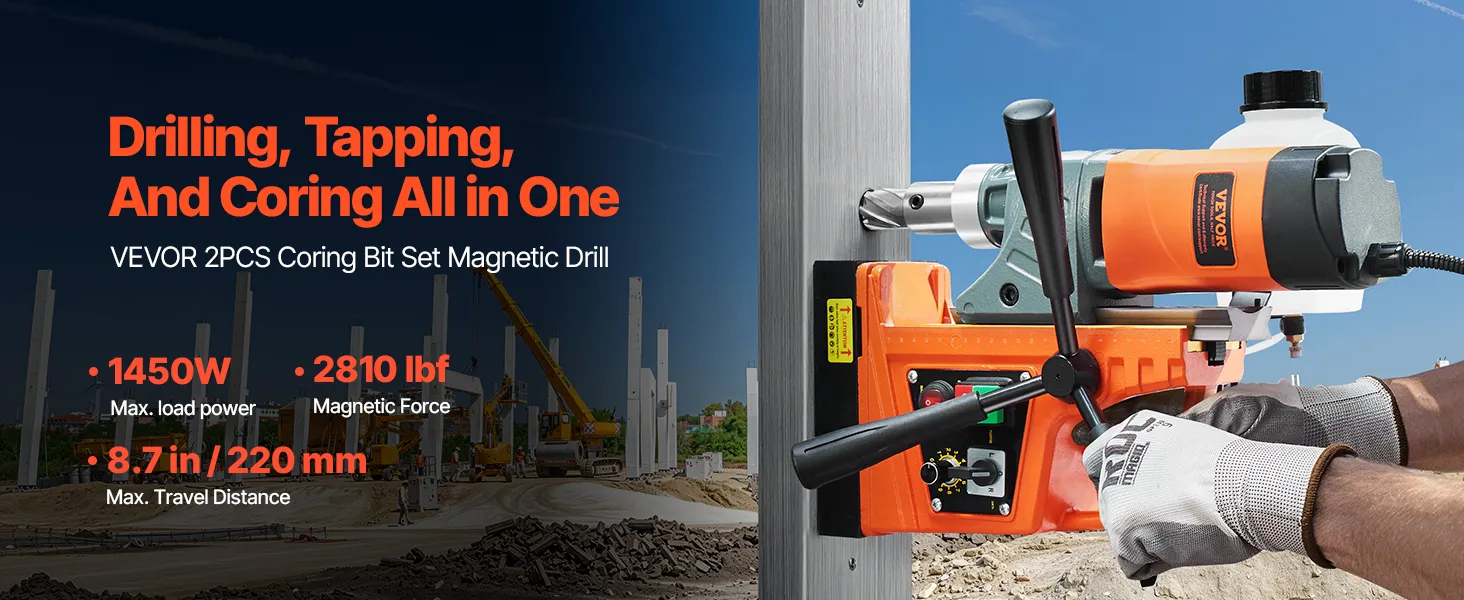
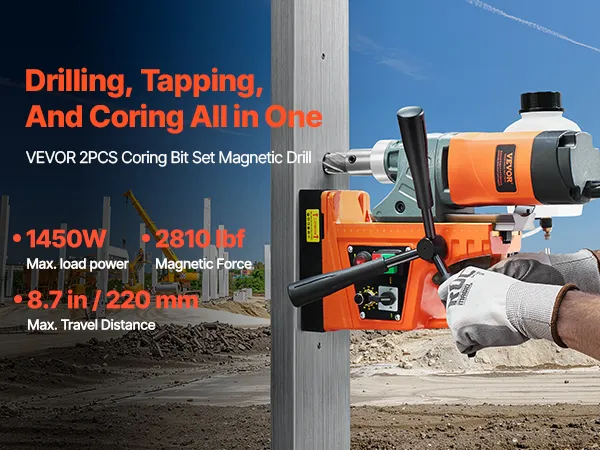
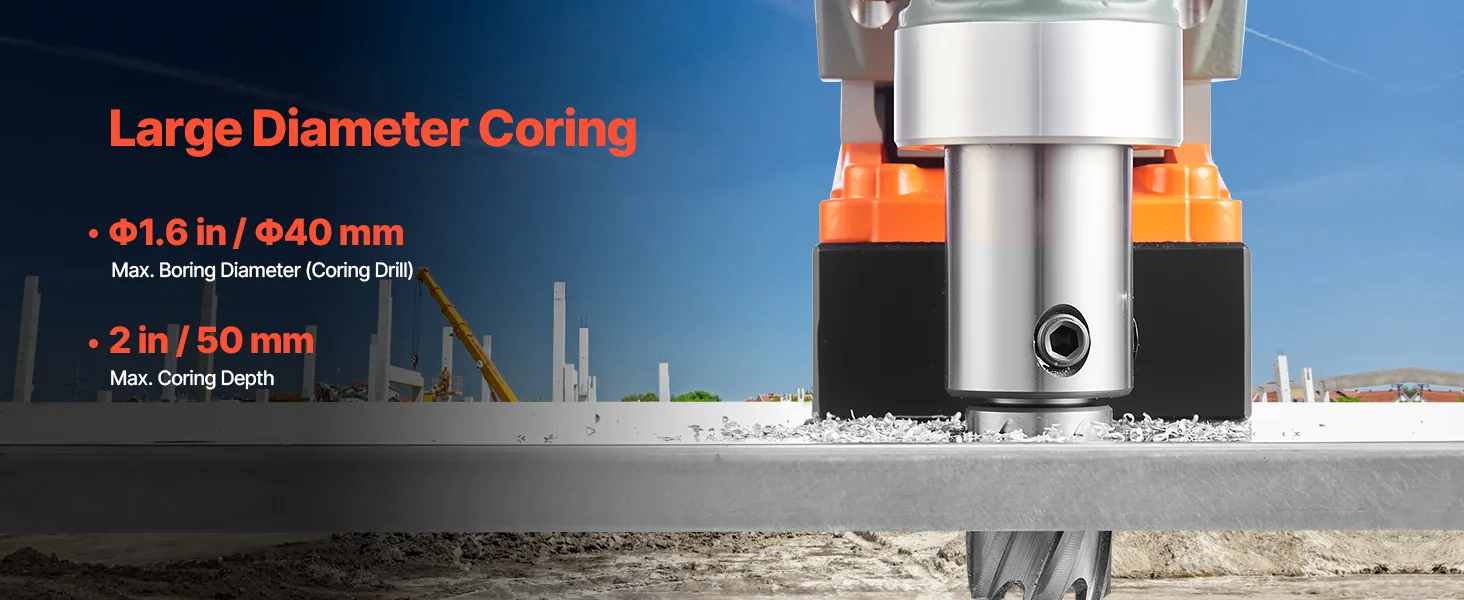
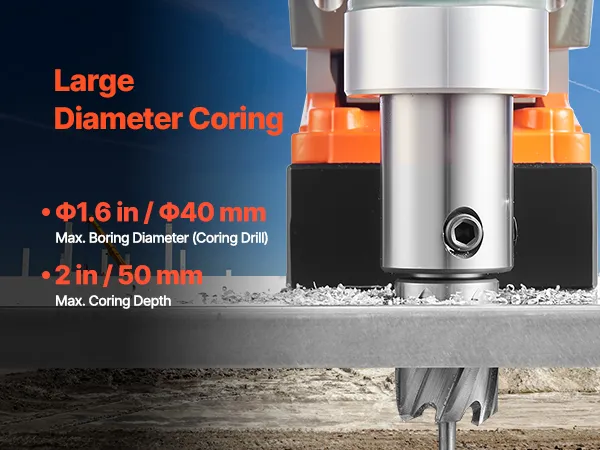
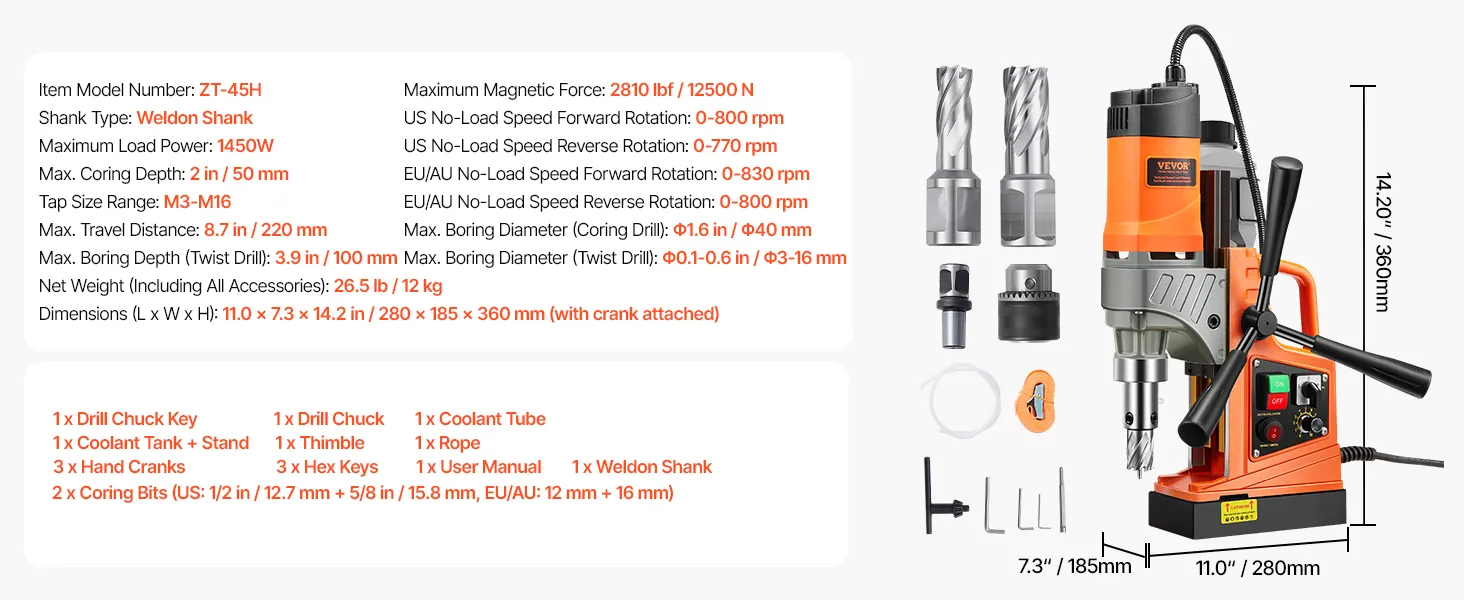
- Top-level Magnet: Get ready for unstoppable power! Our electric mag drill generates exceptionally powerful driving force with its 1450W copper motor. It is capable of drilling into the toughest material at 0-830 RPM. Max. Boring Diameter (Coring Drill): Φ1.6 in / Φ40 mm; Max. Coring Depth: 2 in / 50 mm
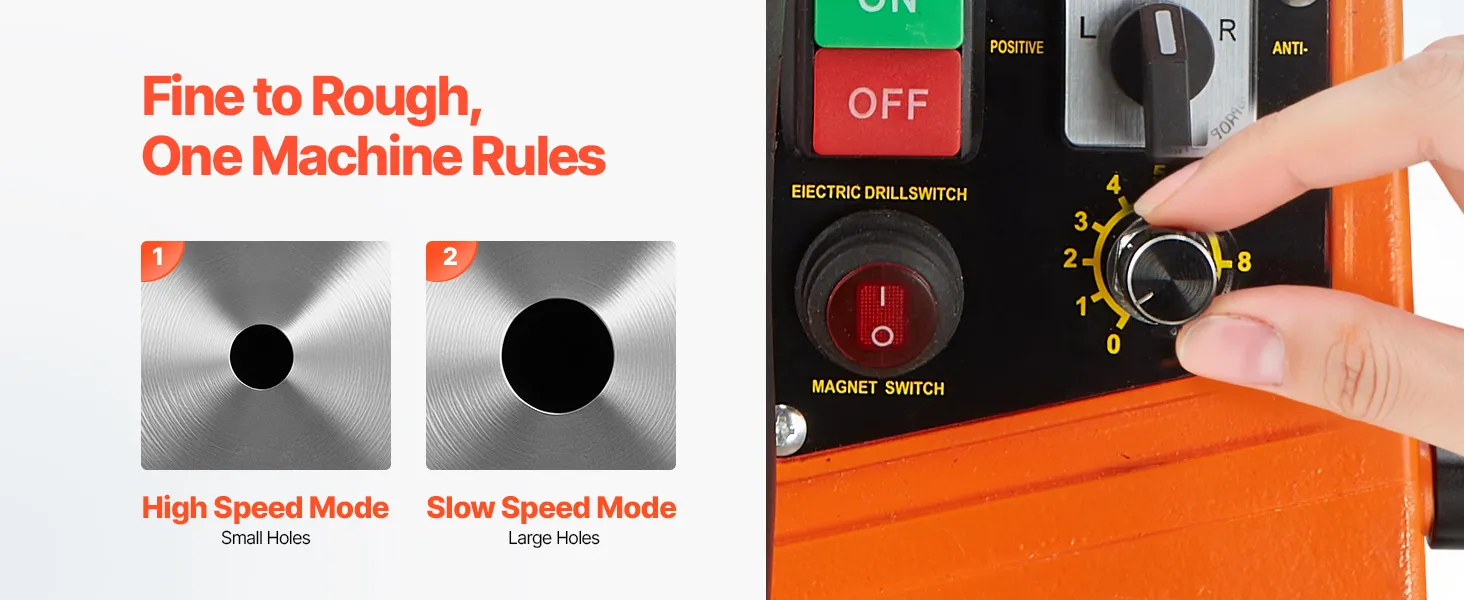
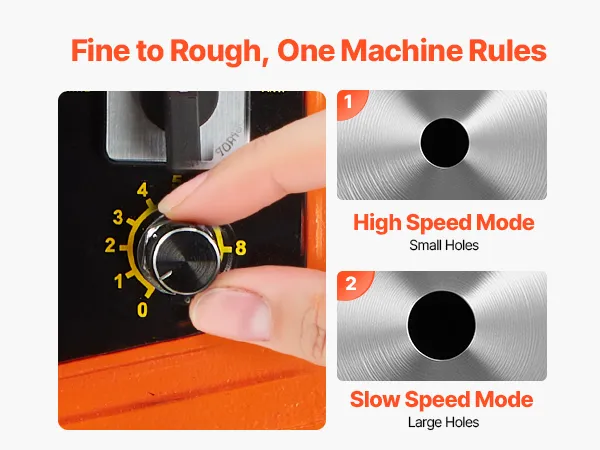
- Understand the Power: 2810 lbf / 12500 N of robust force is created by the electromagnetic thickened base, featuring pure iron anchors the mag drill press solidly works at any angle stably during the drilling process. Adjustable 10-speed gears achieve accurate and efficient operation according to different drilling diameter
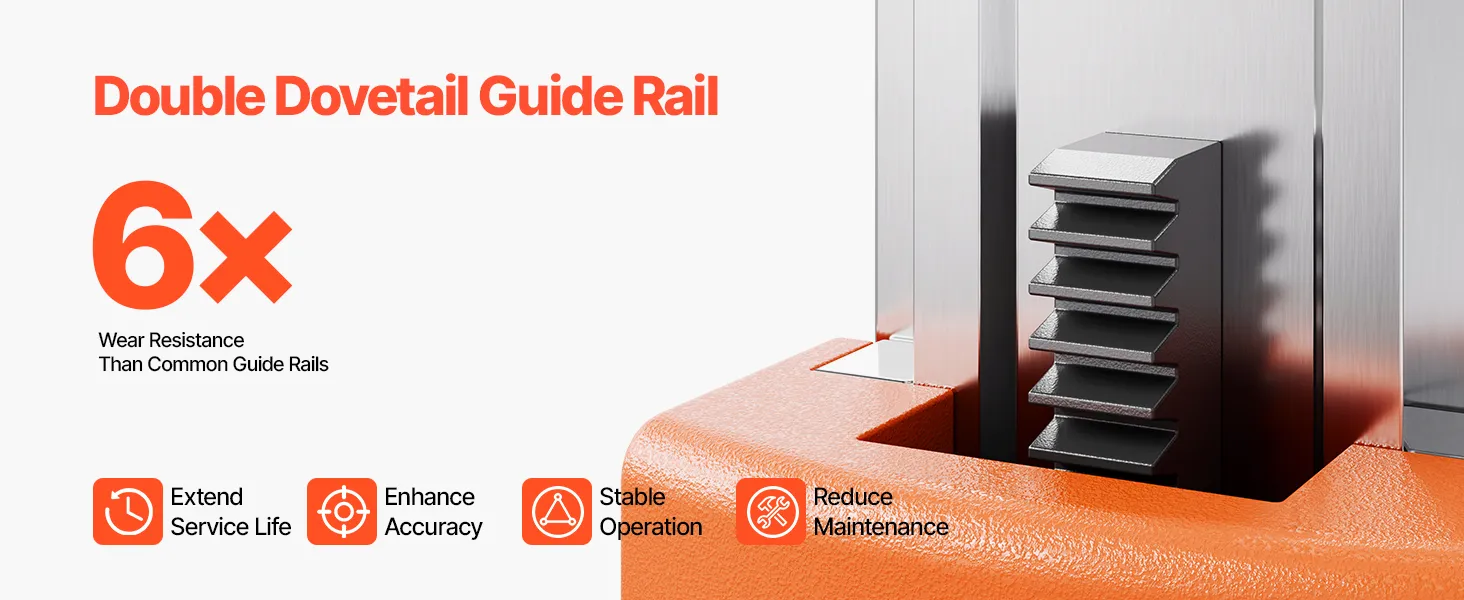
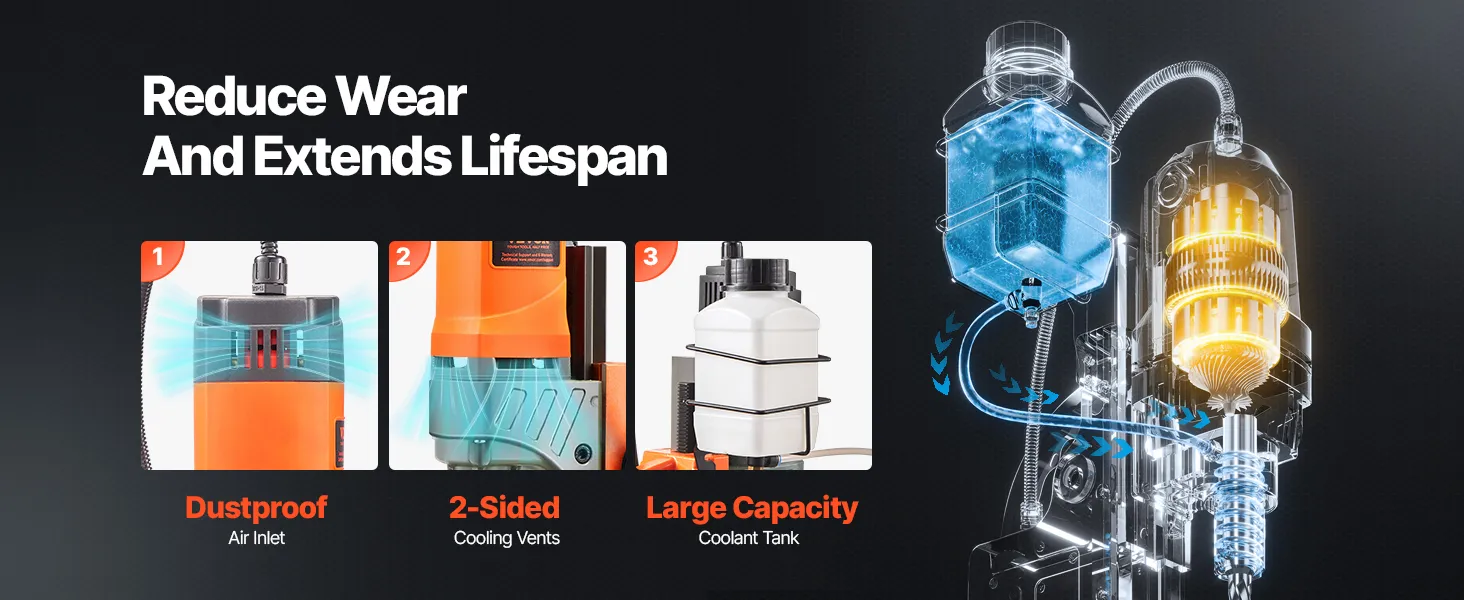
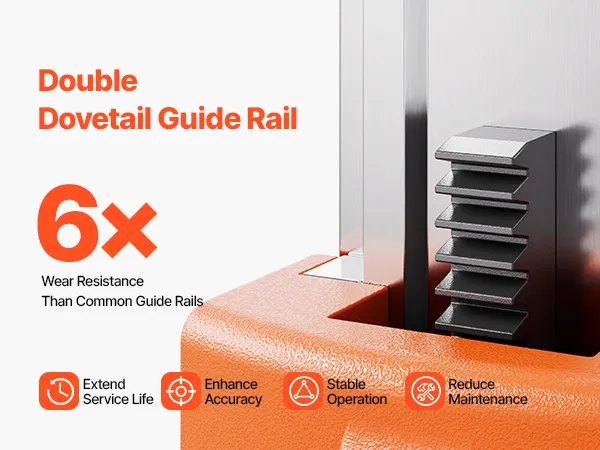
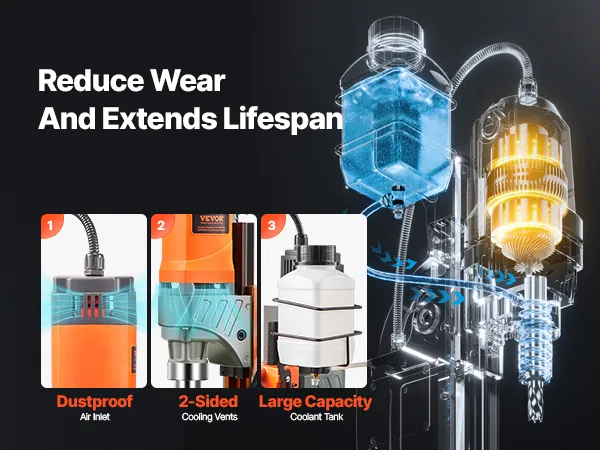
- Security and Durability: Your security comes first! That is why the combined overload protection features are in place. The cooling system features fast heat dissipation to protect operators from being hurt by instantaneous overpowering and high temperatures during drilling Besides, the titanium magnesium alloy guide rail has anti-corrosion and wear resistance characteristics, significantly improving the device's service life
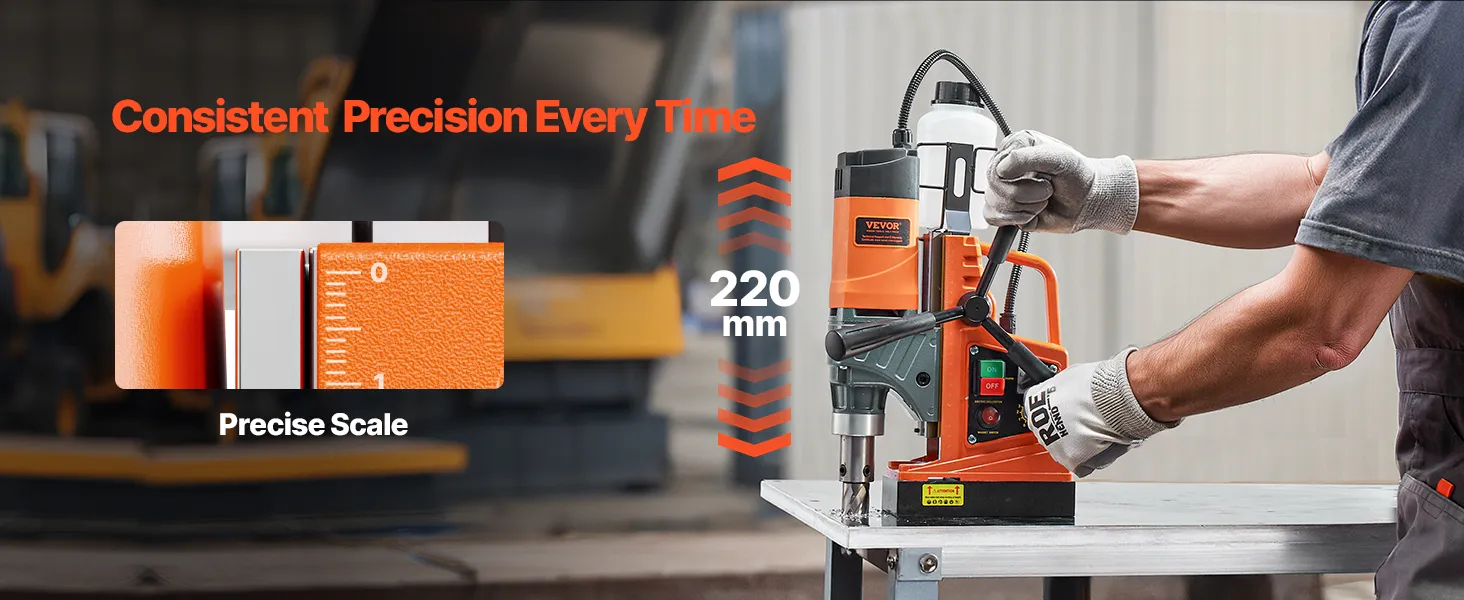
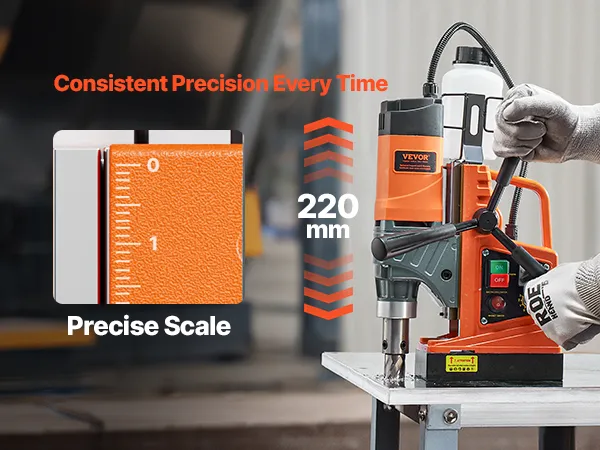
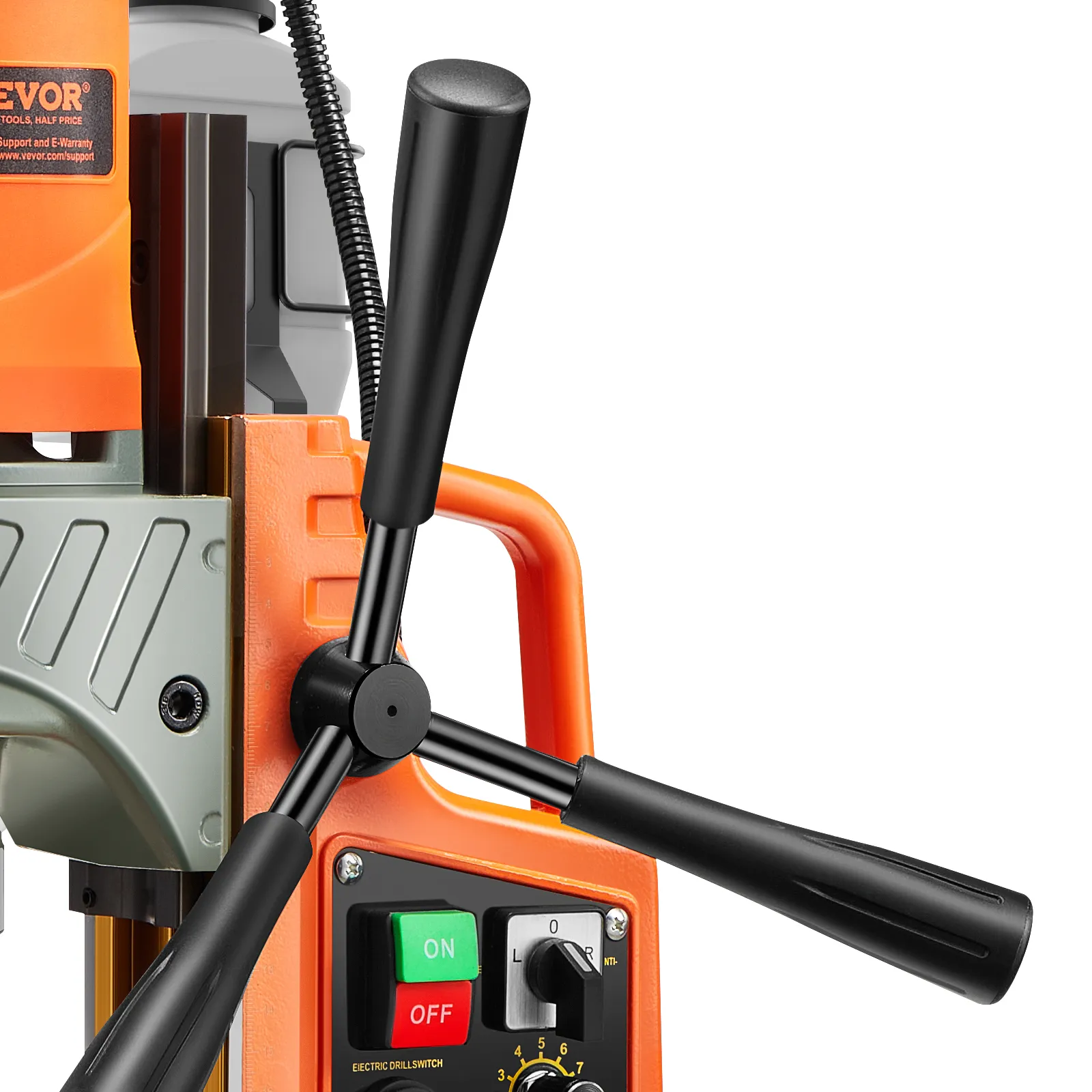
- User-friendly design: A scale has been added to the machine's frame to help users pinpoint the distance between the drill bit and the drilled material in millimeters. Even a novice can bore accurate and neat holes. In addition, the ergonomically designed handle and 3 extended cranks provide a comfortable grip during handling and moving, saving great effort
- Wide Applications: This versatile magnetic drill plays a vitally important role in home improvement, equipment installation, industrial and steel fabrication, ship and bridge building, railway manufacture, windmill & power-plant construction, and many other fields. Note: Ensure optimal use by adhering to a steel plate thickness of ≥ 0.39 in / 10 mm. Not suitable for stainless steel or cast iron. Please use a safety rope for inverted and horizontal drilling
Frequently Bought Together
Reviews
About this item


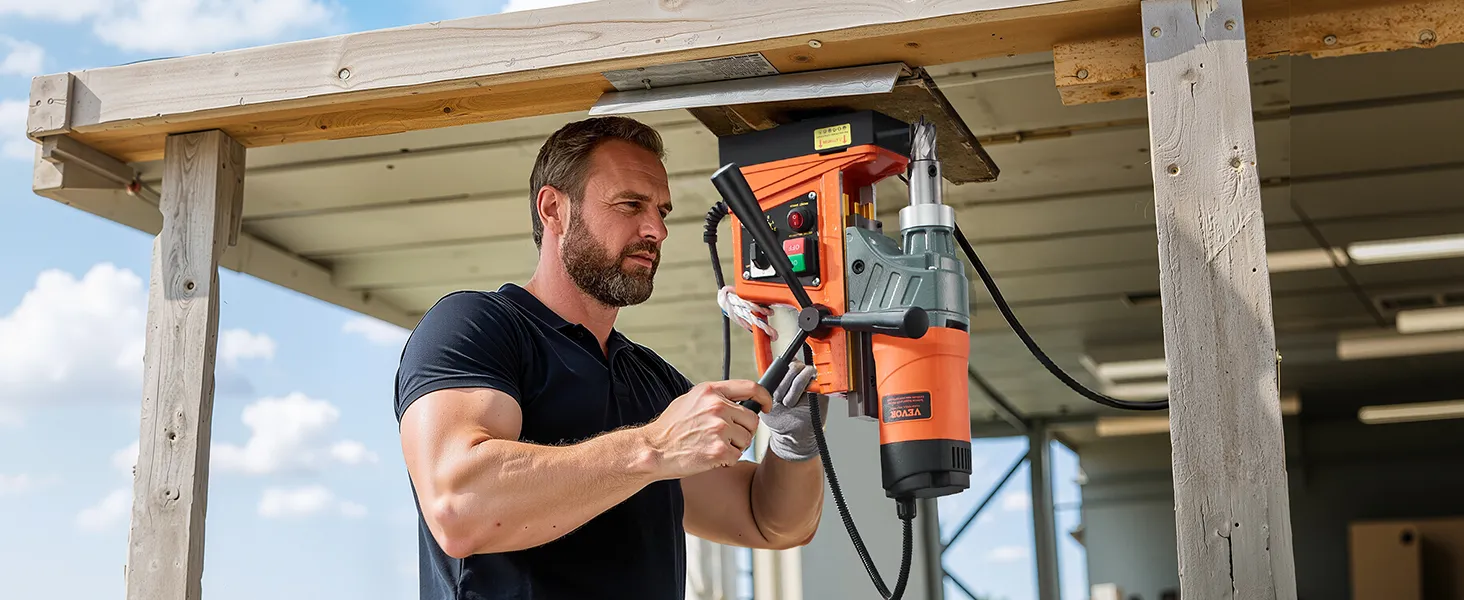
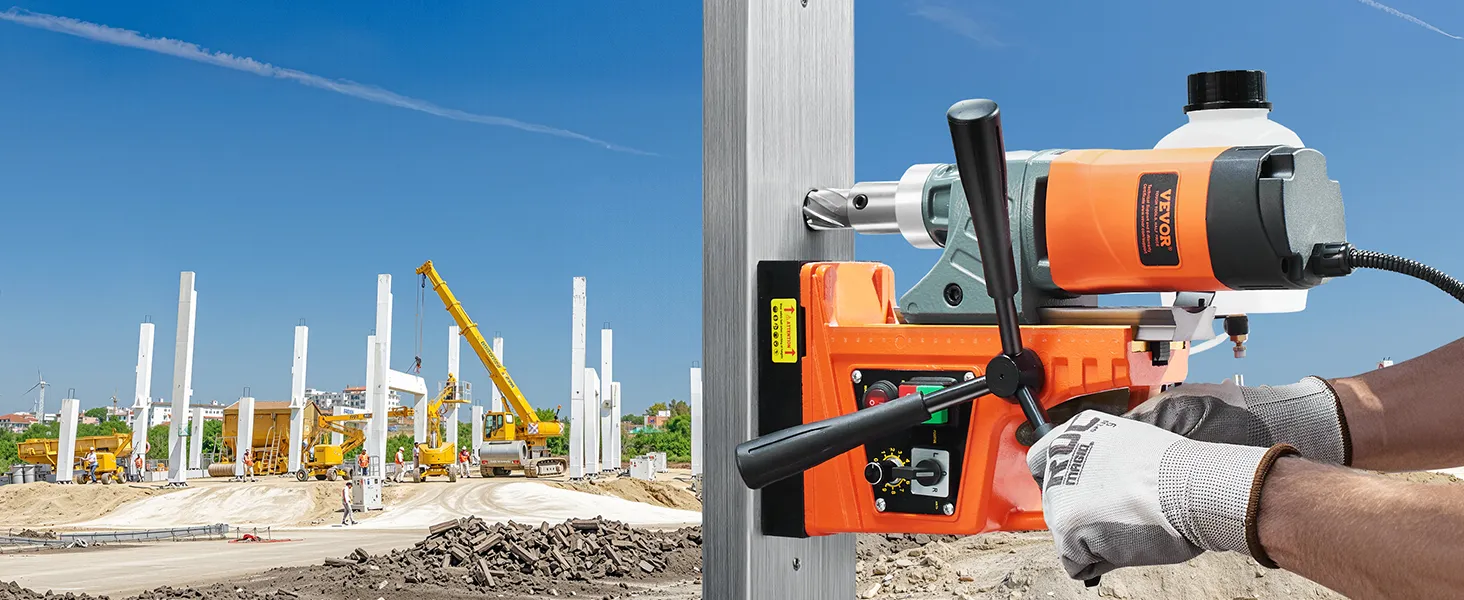
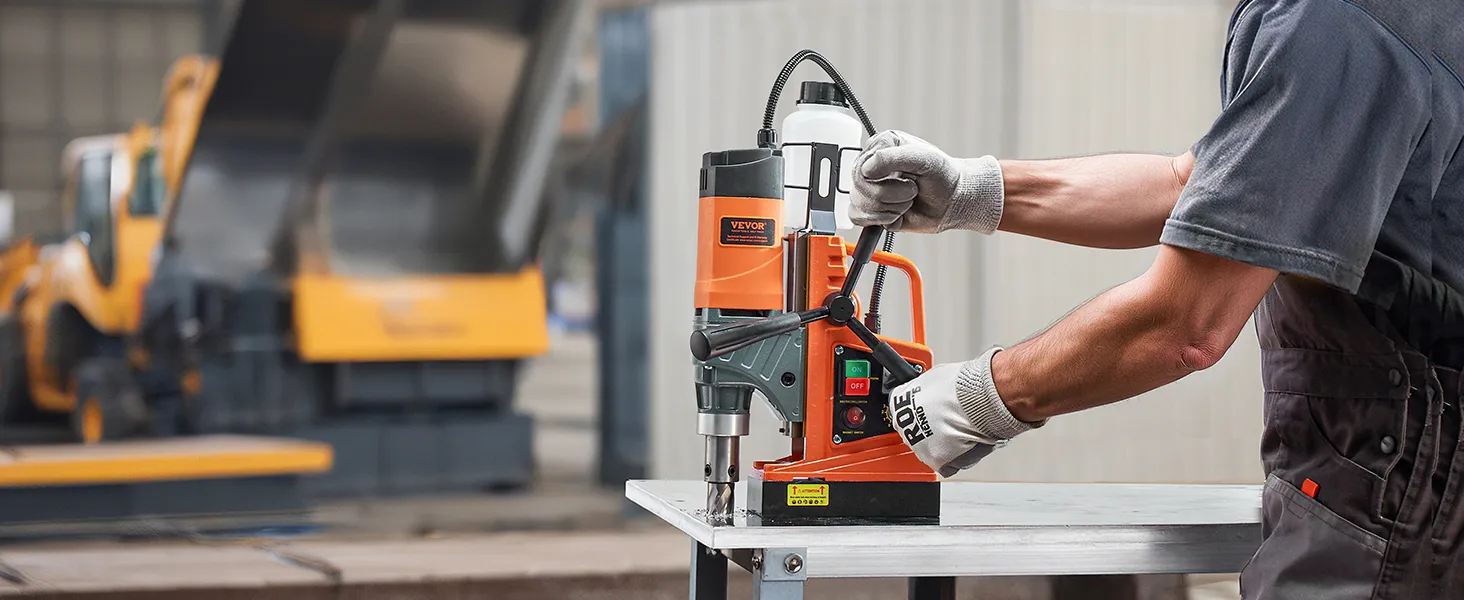
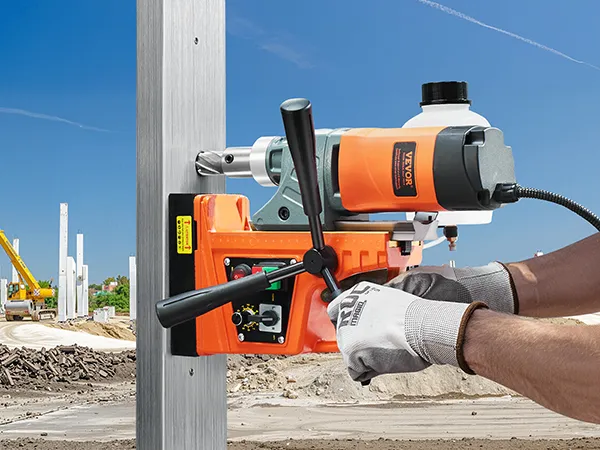
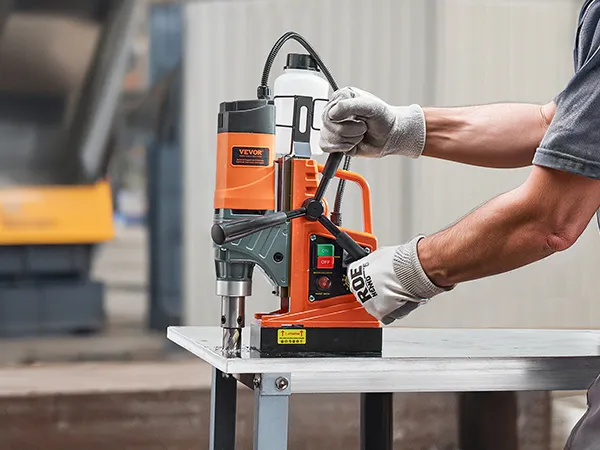
1450W Copper Motor in the Electromagnetic Drill Press for High-Speed Bi-Directional Drilling
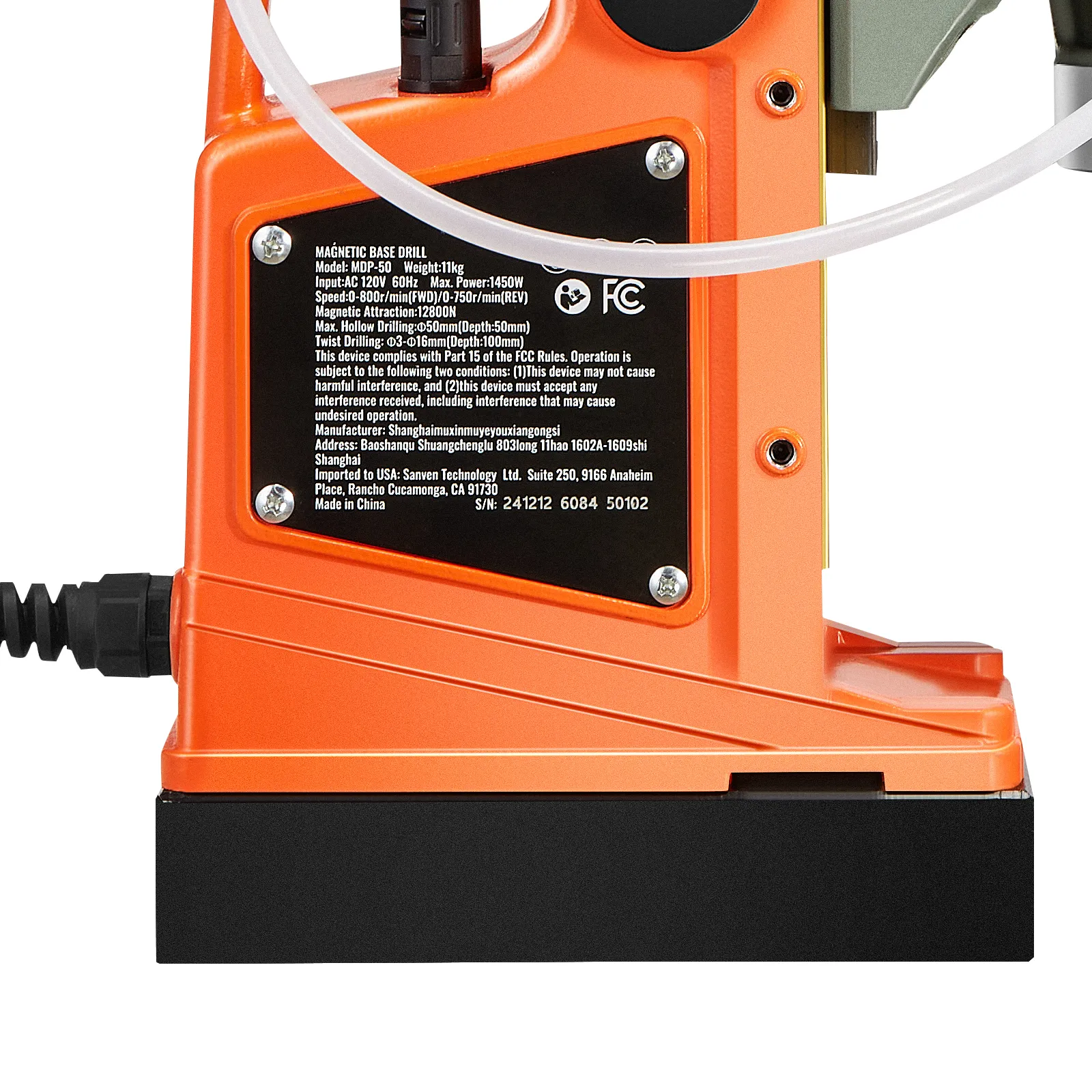
This electromagnetic drill press is equipped with a 1450W copper-wound motor that runs in both forward and reverse directions, with speeds of 0–830 RPM for drilling and coring and 0–800 RPM for tapping and bit extraction. Fixed-rotation mag drills don’t have that bi-directional capability, and it makes a noticeable difference in tapping applications where you need to reverse the rotation to back the tap out cleanly without damaging the threads or breaking the tap.
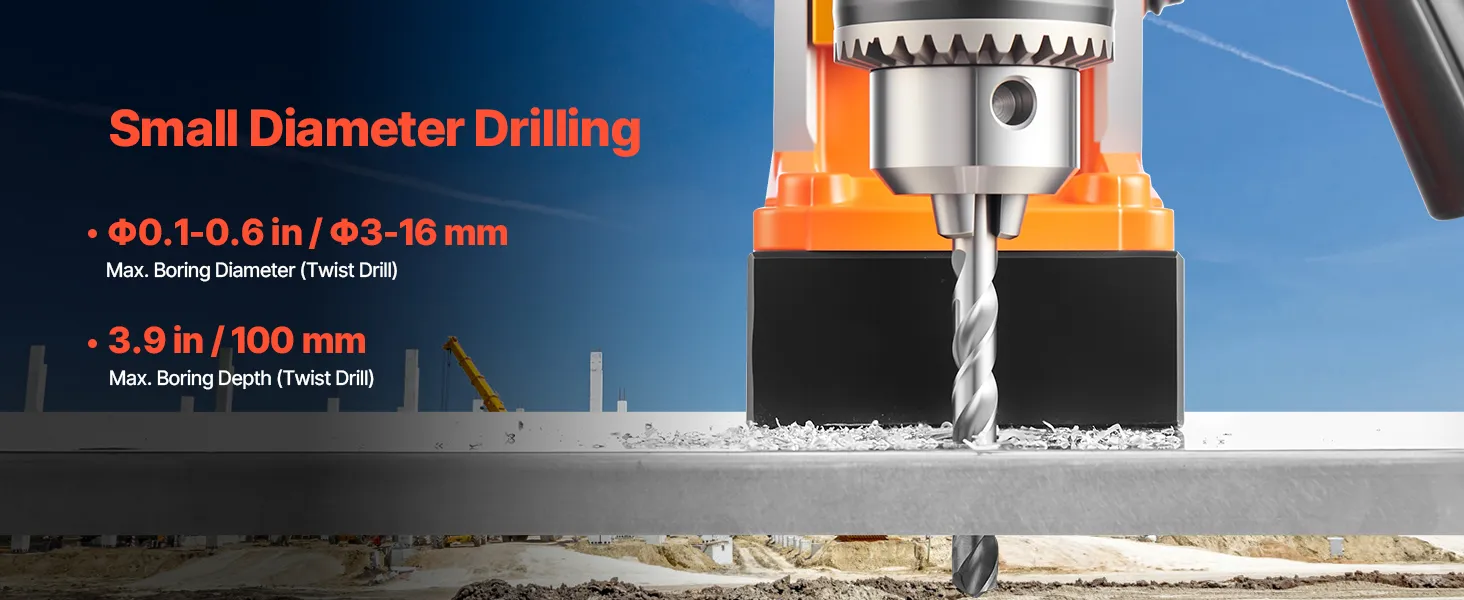
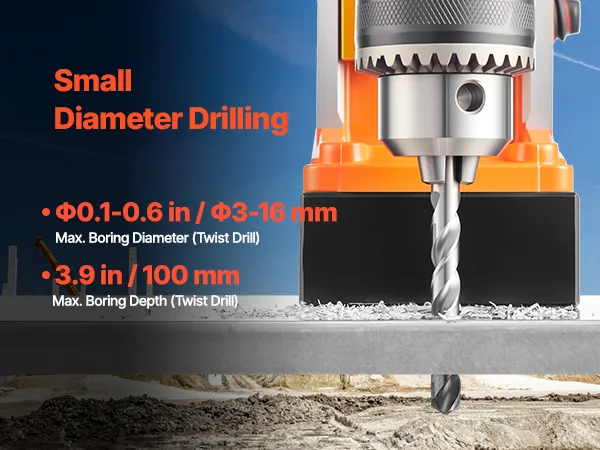
It is the lightest unit in the lineup at 26.5 lb / 12 kg, providing true one-person portability for transitions between work points on a structure without assistance. The motor can core up to Φ1.6 in / Φ40 mm at 2 in / 50 mm depth and twist drill from Φ3–16 mm to 3.9 in / 100 mm depth. Its compact bore capacity and bi-directional drive make it the right choice for installation work where threading and drilling alternate frequently in a session.
2810 lbf Pure Iron Electromagnetic Base for Rigid Multi-Angle Clamping on Steel
The electromagnetic base provides a clamping force of 2810 lbf (12,500 N) and features a thickened iron core to ensure a uniform field distribution across the entire base contact area. This uniform field distribution prevents edge lift along the base perimeter during high-torque passes, a failure mode that leads to bore deviation and bit damage. This clamping consistency is maintained when properly supported, whether it is vertical, horizontal, or inverted on the workpiece.
To clamp effectively by magnetism, full magnetic contact requires a minimum steel plate thickness of 0.39 in (10 mm). Stainless steel and cast iron are less compatible surfaces due to their low magnetic permeability. When the drilling position is horizontal or inverted, the safety rope should be used in conjunction with the electromagnetic clamp as the secondary restraint. This two-tiered approach of magnetic hold and mechanical backup is the correct protocol for any non-vertical drilling orientation on elevated or overhead structural steel.
0–830 RPM Forward and Reverse Variable Speed for Precision Drilling and Tapping
The 10-speed variable system offers the operator a large range of speeds to match the spindle speed to the bit diameter and material hardness, from 0 to 830 RPM in forward rotation. Large coring bits require low surface speeds to maintain their cutting-edge geometry. The smaller the twist drill bit, the more efficiently it will run at higher RPMs, as chip evacuation matches material removal. A 10-step gear system provides a positive, repeatable setting for each combination, eliminating the need for the operator to guess the correct speed during operation.
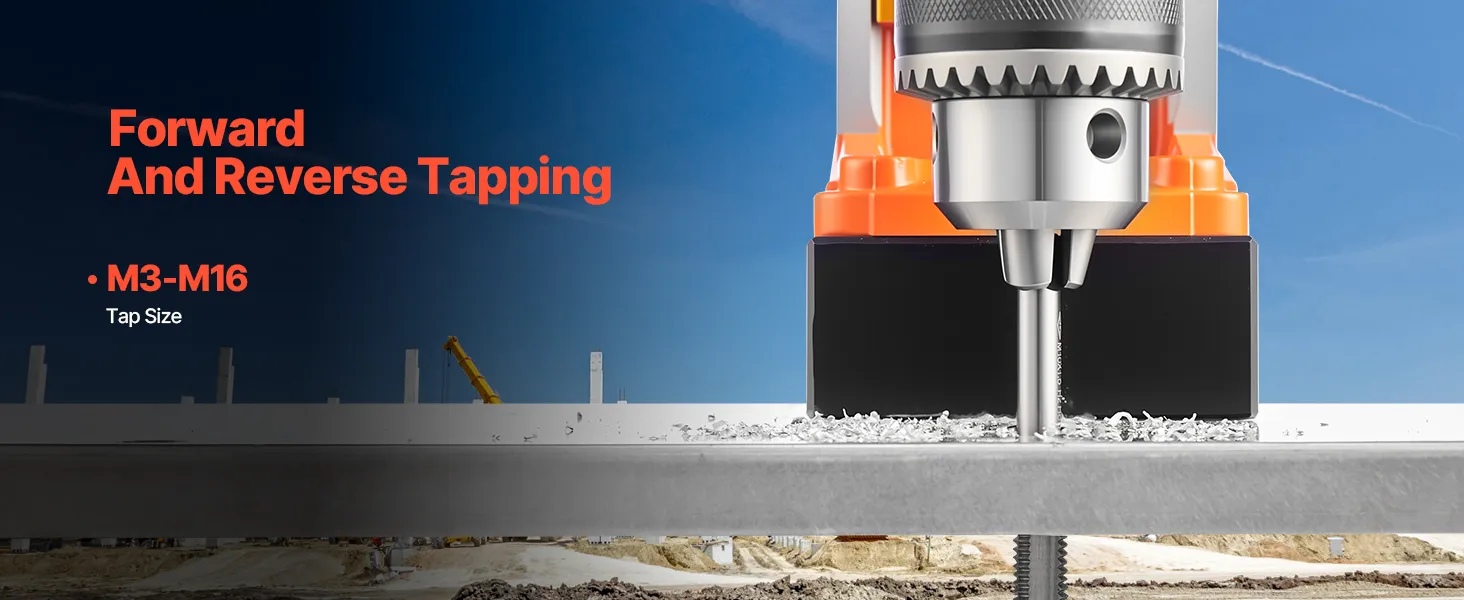
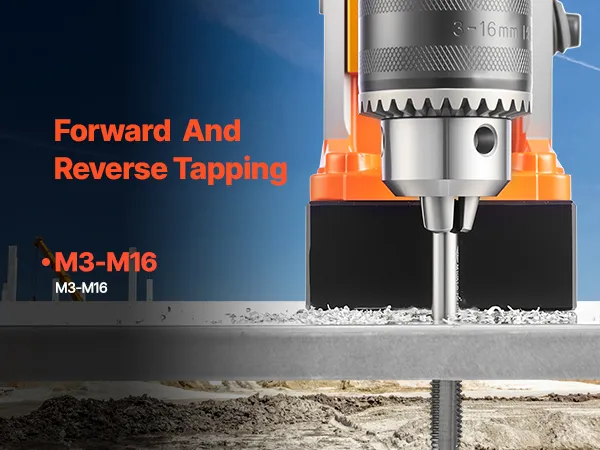
Tapping capability for M3–M16 thread sizes is available with reverse rotation up to 800 RPM. Tapping structural steel at uncontrolled speeds breaks taps and ruins the threaded hole, requiring extraction and re-tapping. The variable reverse range allows the operator to dial in the exact low speed needed for clean thread cutting, then reverse out at a controlled speed without cross-threading or tap breakage. No need for a separate tapping tool or manual tap handle; this electromagnetic drill press does it all.
Electromagnetic Drill Press with Titanium Magnesium Rail and 8.7 in Maximum Stroke
The guide rail is made of titanium-magnesium alloy with dimensional stability under repeated sliding contact and corrosion resistance in wet or chemically active environments. The dimensional stability of the rail directly controls the accuracy of the bore path. Any play in the carriage due to wear or corrosion introduces a lateral force on the cutting edge, causing chatter, damage to the hole wall, and shortened bit life. Titanium magnesium alloy maintains the carriage tolerance throughout the machine's entire service life.
8.7 in / 220 mm max travel distance, the longest stroke in this product range. That long stroke enables full-depth coring and drilling passes in one continuous motion without repositioning the base mid-hole, which is important when the magnetic clamp is anchored to a surface with limited access around it. A longer stroke reduces the number of setup moves per hole on deep-section structural steel, thereby reducing total cycle time across a multi-hole drilling sequence.
Overload Protection and Fast-Dissipation Cooling for Uninterrupted Safe Operation
The integrated overload protection circuit detects the motor current in real time. It cuts power before a sudden bit bind, feed rate overload, or workpiece movement can damage the motor. The circuit automatically resets when the fault is cleared, reducing the time to recover from a protection event. This protection prevents the kind of motor damage that would otherwise require repair or replacement on deep coring passes where torque demand peaks near breakthrough.
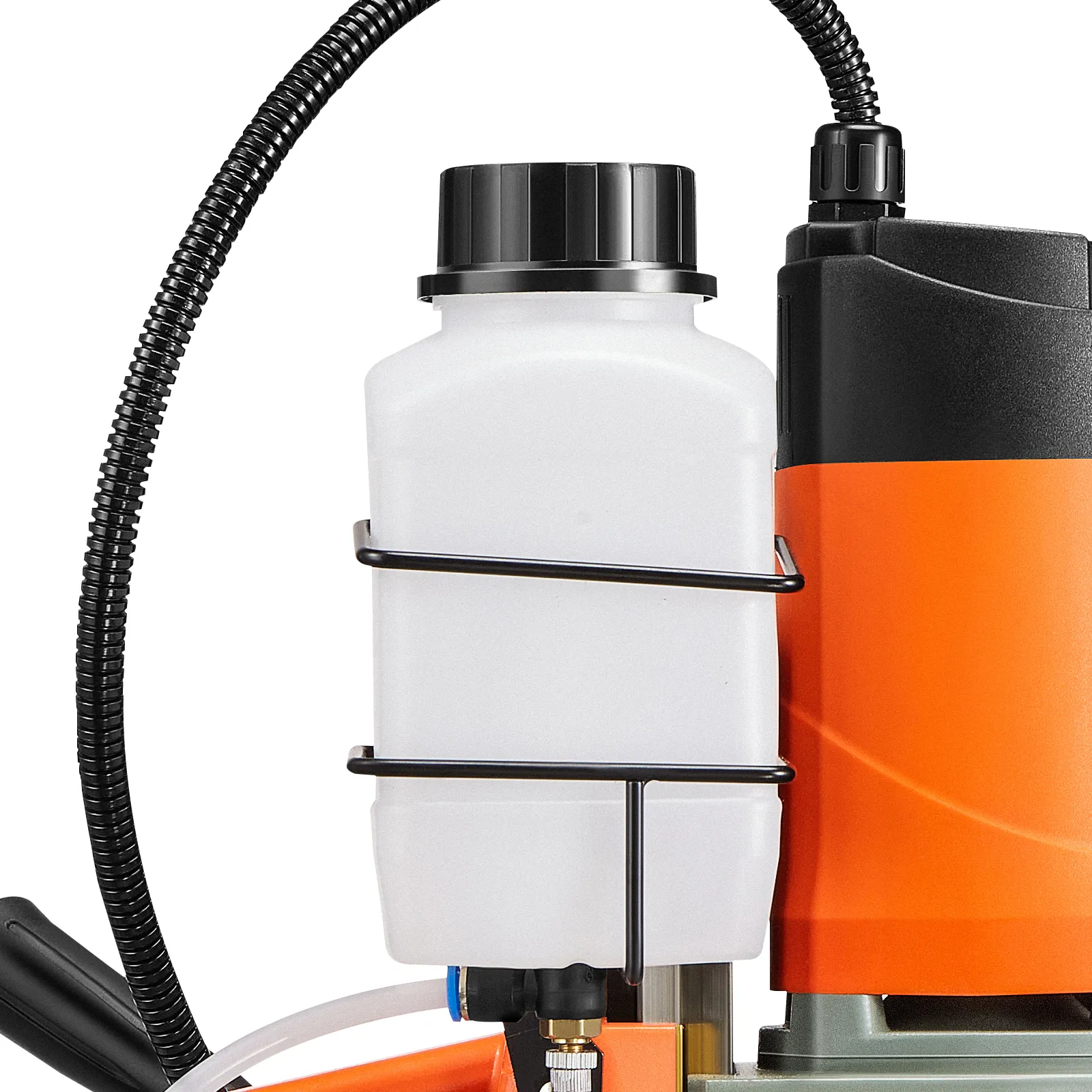
The fast-dissipation cooling system blows air through the motor housing continuously during operation, so the surface temperature does not get hot enough to burn operators when changing bits or handling the machine. Active cooling enables repeated drilling cycles without mandatory rest periods, a practical benefit for industrial fabrication runs where productivity depends on minimizing the time between holes without delays.
Weldon Shank System with M3–M16 Tapping and Broad Industrial Compatibility
The flat-sided drive engagement of the Weldon shank interface prevents tool spin under the torque spikes that occur at entry and breakthrough by locking bits and taps against rotational slip. It is an industry-standard connection format, allowing compatible tooling to be sourced from multiple suppliers without proprietary restrictions. Both core and drill bits that mount directly to this system cover the primary hole sizes required for the equipment installation and fabrication work that this machine targets.
The M3-M16 tapping range covers the fastener sizes used in home improvement, steel fabrication, railway manufacture, ship and bridge construction, and windmill and power plant installation. With dual-mode drilling capability and bi-directional spindle control, this electromagnetic drill press accomplishes the entire hole-making and thread-cutting process from a single 26.5-lb platform, reducing the number of cutting tools needed and the setup complexity on any job site where both operations are required.