VEVOR Sewer Camera, 230 ft/70m, Self-Leveling Drain Camera with 512Hz Transmitter, Distance Counter, 9" Screen 1080P HD Snake Plumbing Camera with Light-12 LED & 32GB Card for Duct Pipe


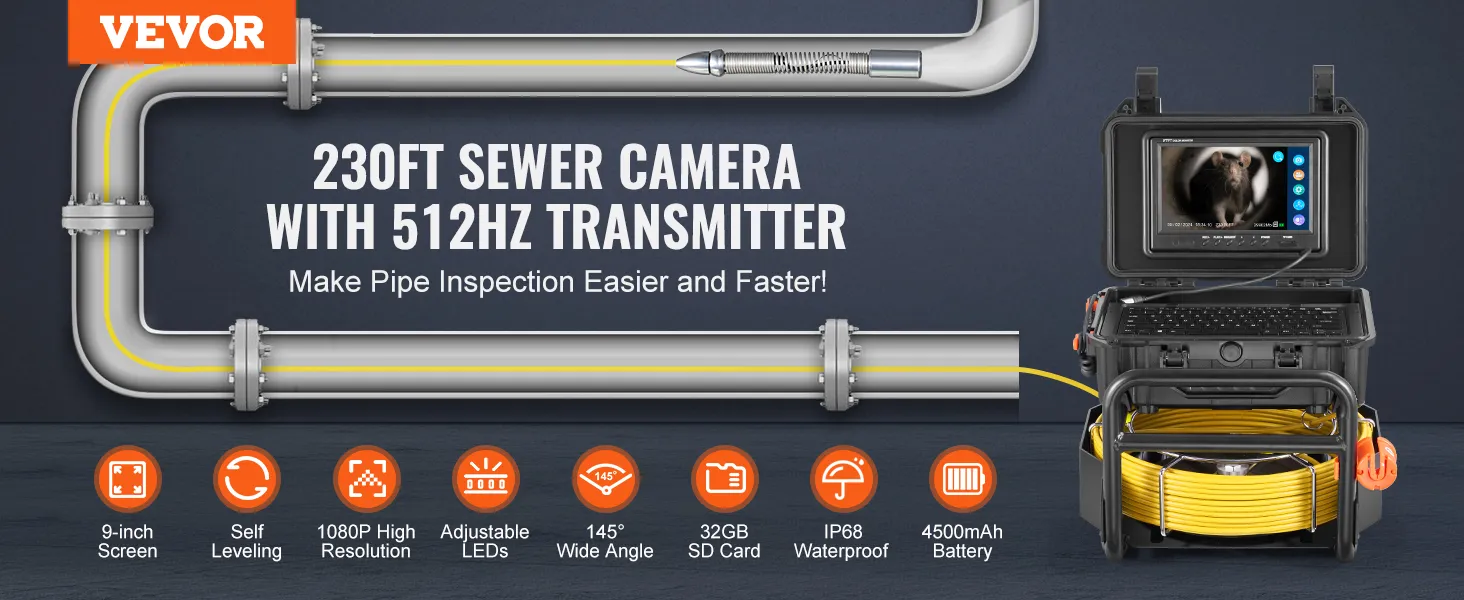
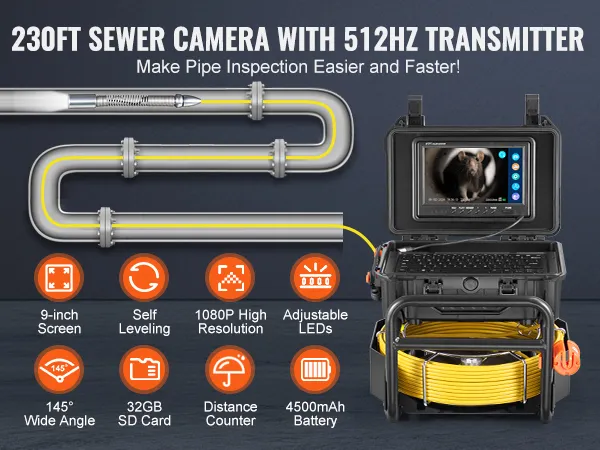
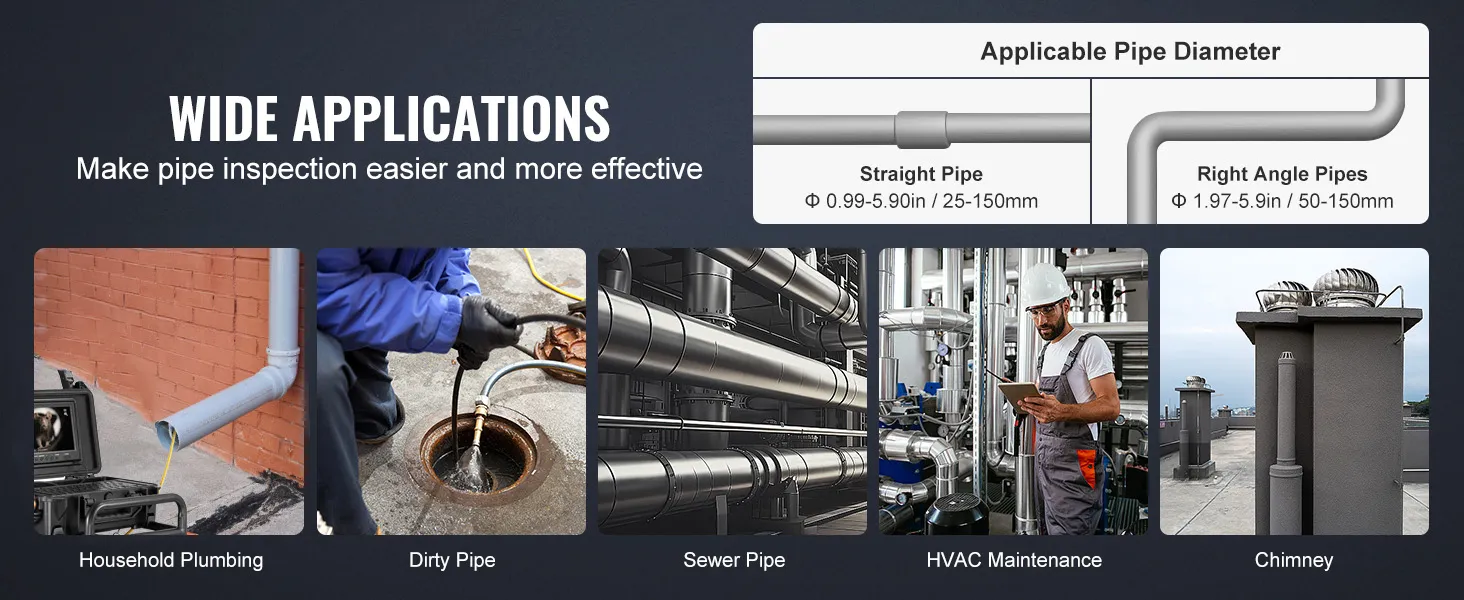
- Precise Locating & Distance Display: VEVOR 230FT sewer camera has a built-in 512Hz sonde transmitter for accurate location tracking. An on-screen distance counter measures the length of the cable in the sewer, enabling you to quickly locate problems when used with the locator (not included). Compatible Pipe Diameters: Straight Pipes: Φ 0.99 - 5.90 in / 25 - 150 mm; Right Angle Pipes: Φ 1.97 - 5.90 in / 50 - 150 mm.
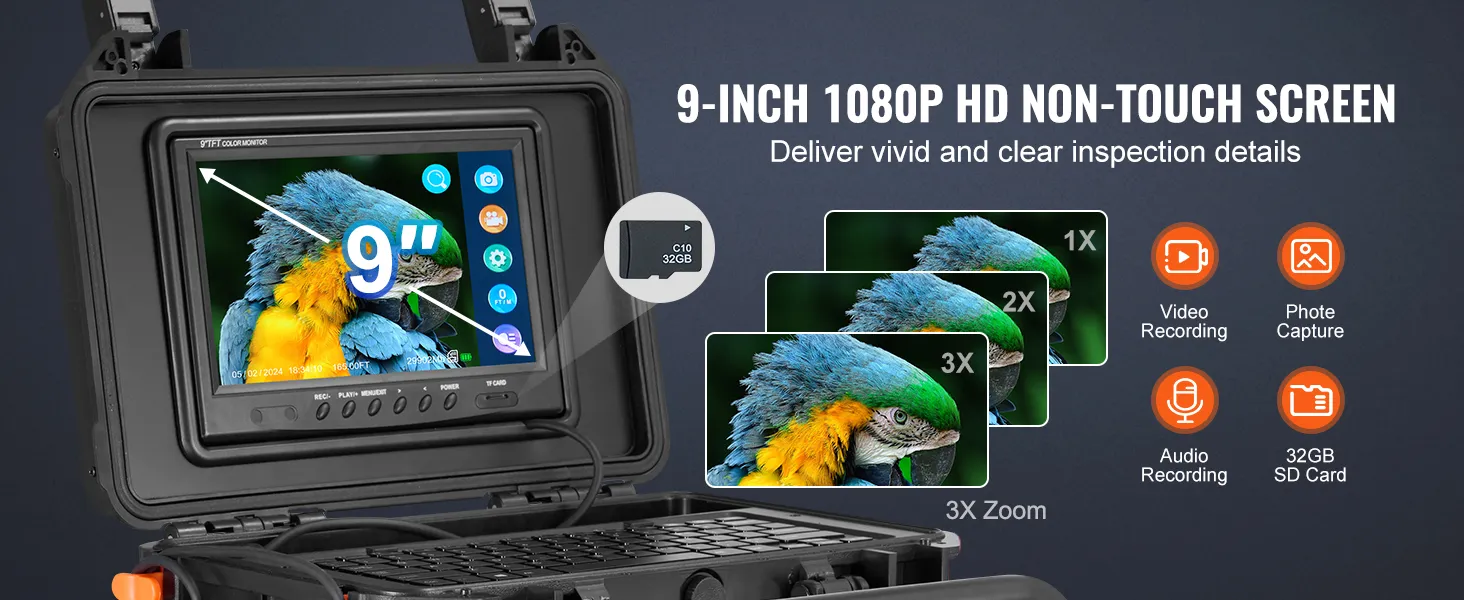
- Crystal-Clear 9-inch Screen: 9-inch large non-touch screen allows for easy operations such as video recording, photos taking, and audio playback (via computer or headphone output). 1080P HD display provides vivid and clear inspection details ; 32GB SD card provides plenty of storage for photos/videos ; input keyboard helps record inspection datas, and the sunshade keeps the screen clearly visible even in bright sunlight.
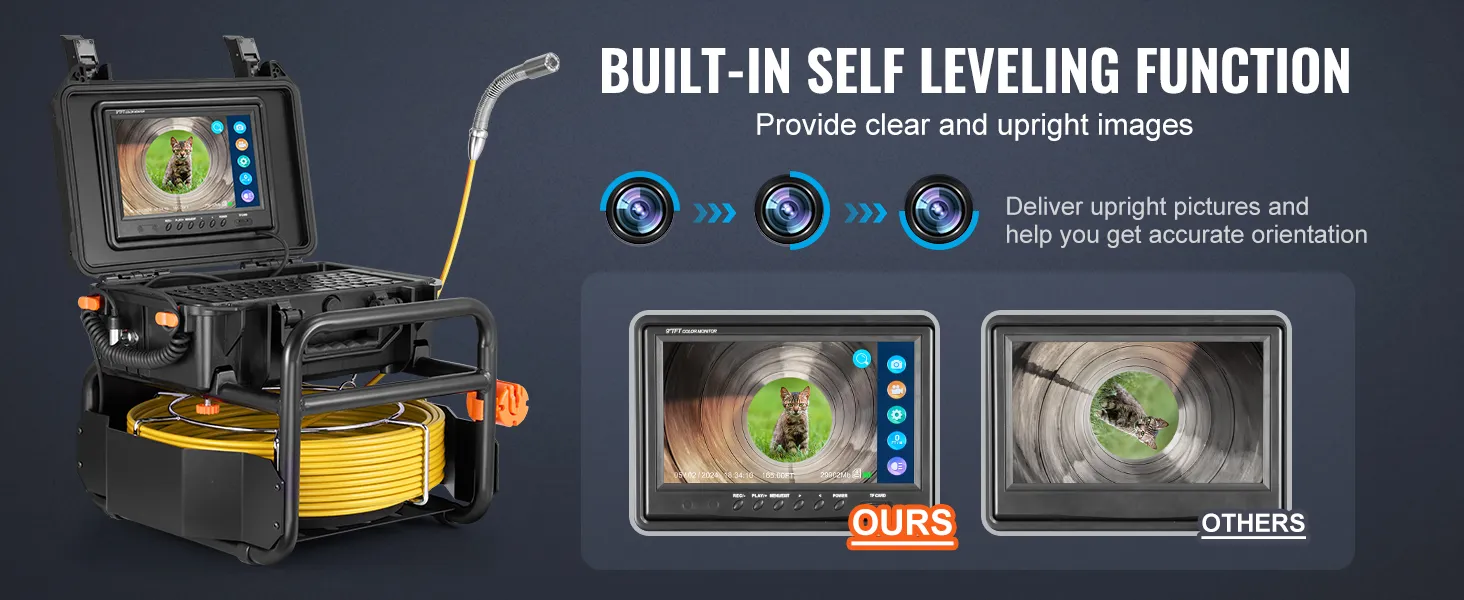
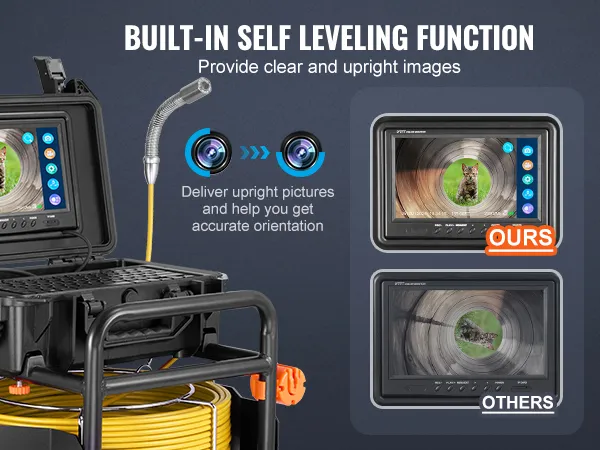
- Self-Leveling Camera: Our 0.9-inch self-leveling drain camera ensures images are always upright, giving you accurate orientation of obstacles for efficient inspections. It’s equipped with an IP68 waterproof sapphire lens and 12 adjustable LED lights with 3 brightness levels to suit different lighting conditions. The 3x digital zoom and 145° wide-angle view capture every detail, ensuring nothing gets missed.
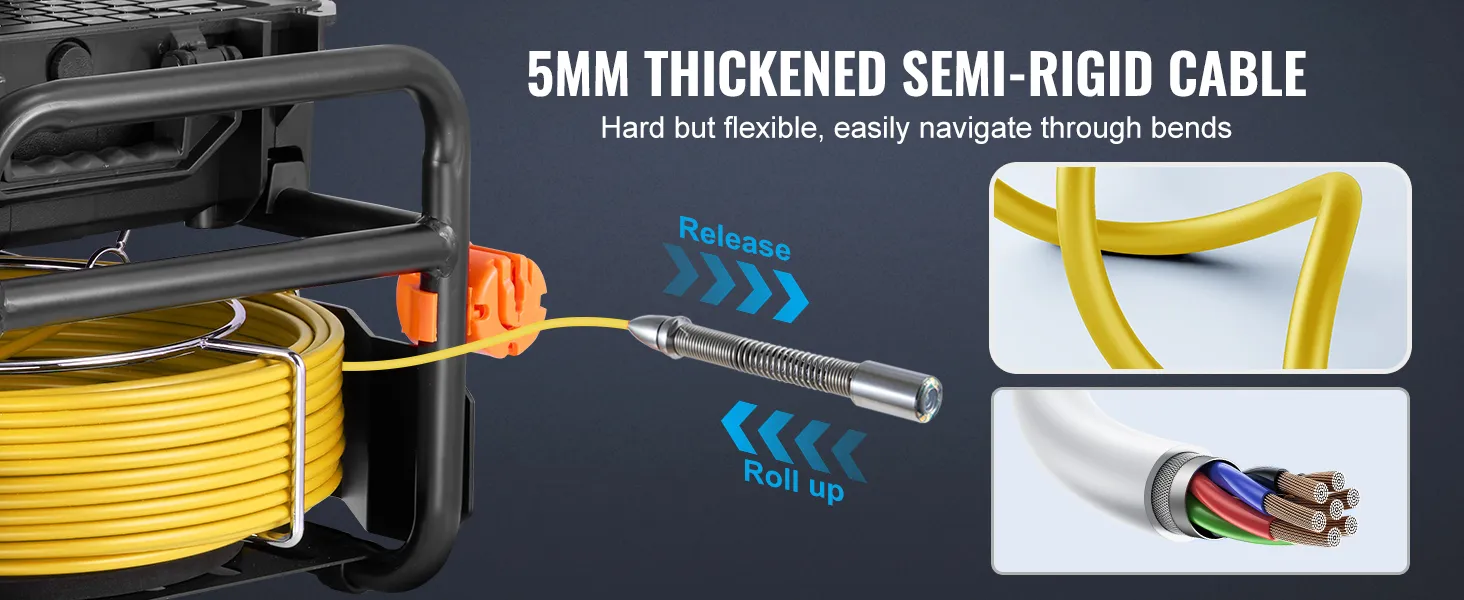
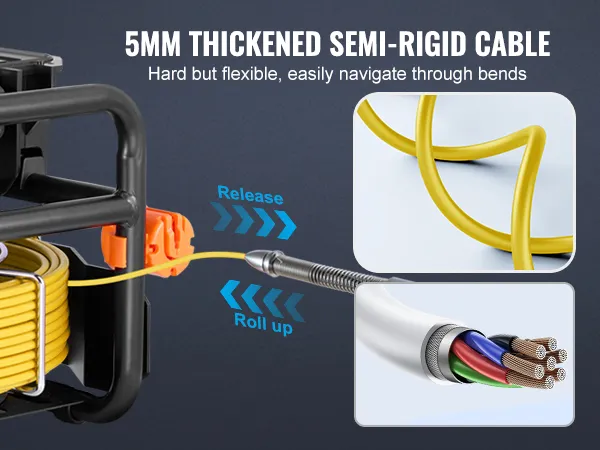
- Robust Semi-Rigid Cable: This 0.19 inch (5mm) diameter semi-rigid snake cable with an ultra-long 230ft length is ideal for 99.9% of medium to large-sized pipeline repair projects. Made of robust fiberglass, it excels in passability and durability, navigating bends and long pipes effortlessly. It also maintains outstanding resilience and durability in dark, damp conditions, effectively locating blockages without breakage.
- Wide Applications: VEVOR Sewer snake inspection camera features a 230FT ultra-long cable, suitable for 99.9% of medium to large-sized and extra-large pipeline repair projects, sturdy stainless steel frame for stable support. 4500mAh rechargeable lithium battery provides 6-8 hours of continuous operation, making this plumbing tool the top of choice for plumbers, contractors, inspectors, engineers and municipal workers.
Frequently Bought Together
Reviews
About this item


512Hz Sonde Makes This a Sewer Camera with Locator Compatibility
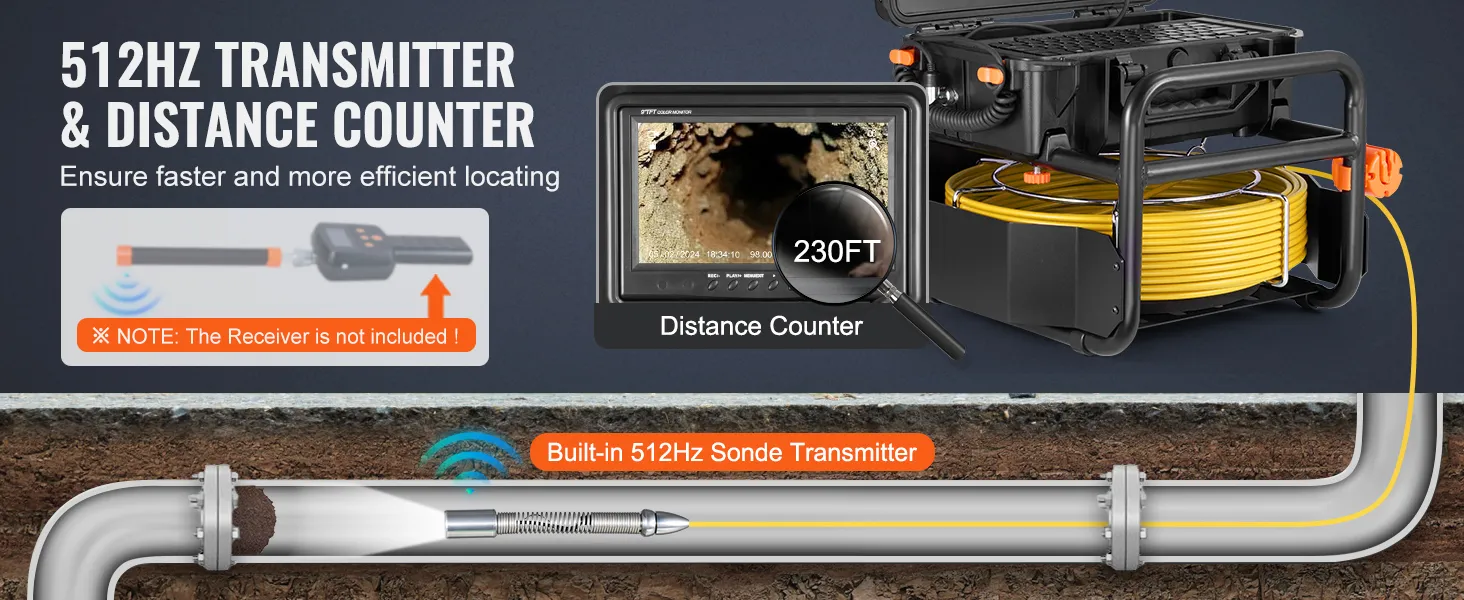
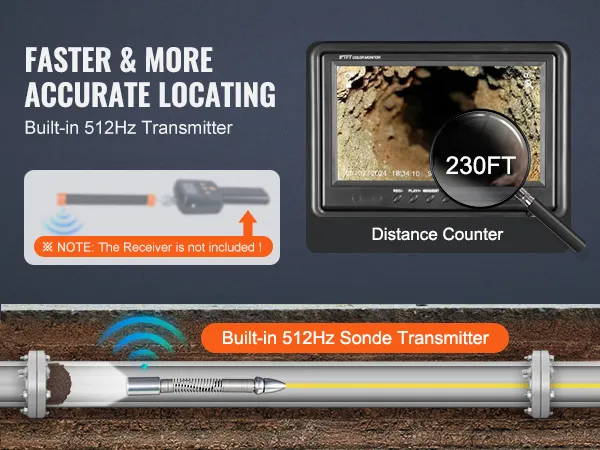
A 512Hz sonde transmitter built into the camera head is the industry-standard frequency used by pipe locators. It is what makes the device a sewer camera with locator support right out of the box: the camera emits a traceable signal from wherever the head sits in the line, so a 512Hz receiver up at the surface can walk it down and mark the ground directly over the fault.
Let us be clear from the start. The receiver is not included. You can use your own 512Hz locator or buy one separately. What VEVOR builds in is the transmitter, which is hard to retrofit. The camera is ready to trace as soon as you pair it with any standard 512Hz locator. If you don’t have one, factor in that cost before the job, not on-site.
On-Screen Distance Counter That Reads Fault Depth as You Feed
You don't need to take the camera out. You aren't flying blind on distance. A counter on the screen measures the amount of cable fed into the pipe and displays the value in real time. The moment the picture shows a crack, a root mass, or a collapse, you look at the counter, and you are distanced from your entry point; no manual counting, no marked cable to squint at.
That number is the basis of a successful excavation. Add to that the 512Hz trace for surface position, and the distance reading gives you depth into the run, so you are triangulating the fault from two directions rather than just guessing. That difference is huge on a 230-ft line; being off by ten feet in where to dig can mean the difference between one clean hole and a torn-up stretch of yard or roadway.
Built-In Keyboard for Logging Inspection Data On the Spot
This unit offers something you don’t get with the shorter models: a built-in keyboard. You type notes straight onto the recording as you go: job address, pipe ID, what you found at what distance - so the footage leaves the site already labeled rather than as anonymous clips you have to sort out later from memory.
That’s a huge time-saver and credibility-booster for anyone filing inspection reports. Video is also provided in the report by the municipal inspector or contractor to the client and is annotated on-screen, dated, and self-explanatory. The 9-inch 1080P screen is non-touch, driven by physical buttons and that keyboard, which makes sense for a tool used in wet, gloved, grimy conditions where a touchscreen would misfire constantly.
230 ft Reach for the Longest Mains and Extra-Large Lines
At 230 ft (70 m), this sewer camera with locator support is the long-reach unit in the range, built for the jobs that defeat shorter reels. Municipal mains, extra-large commercial laterals, and the runs where you’ve got to get deep into the line before the problem even shows up. The head runs the entire length of the 0.2 in (5 mm) semi-rigid fiberglass cable, which is stiff enough to push through long runs of water-filled horizontal pipe and tough enough to bend without kinking.
It fits straight pipes from Φ0.99 in (25 mm) to Φ5.90 in (150 mm). For right-angle runs, it fits Φ1.97–5.90 in (50–150 mm). You do not sacrifice diameter versatility for long reach. Fiberglass withstands the pressures of sewer mains without losing its push. It feeds in and retracts on long jobs without developing memory bends that make a tired cable fight back.
Self-Leveling Sapphire Head That Survives Flooded Pipe
The 0.9-inch (23 mm) head self-levels so the image stays upright no matter how the cable twists on its way down a long line. more than 230 feet of twisting pipe that is not a luxury but is what lets you read the true orientation of an obstacle instead of mentally un-rotating a frame that is rolled to some random angle deep in the run.
The lens is behind IP68-rated sapphire glass, sealed to keep it fully functional while submerged in a flooded main, and tough enough to resist abrasive grit that scuffs lesser lenses and makes them cloudy. 12 LEDs for illumination, with 3 brightness levels. A 145° wide-angle view offers a broad view of the pipe wall. 3X digital zoom lets you zoom in on a suspect spot to confirm what you're seeing before you call it.
9-Inch HD Screen and Field Power in a Sewer Camera with Locator Support
Everything is fed to the 9-inch 1080P screen, with a sunshade to make it readable in open daylight over a trench. Recordings are saved to the 32GB SD card as MOV video and JPG stills, and the audio is played back on a computer or through headphones, in standard formats that will play anywhere without conversion.
It’s powered by a 4500mAh rechargeable lithium battery, providing 6-8 hours of runtime, enough for a full shift. This sewer camera with locator support can clear a route of jobs without chasing an outlet between stops. The rig is heavier than short-reel models and built on a stainless-steel frame for stable support. It is housed in a rugged ABS case and weighs 27.6 lbs (12.5 kg) in total. That weight trades off for 230 ft of reach and a frame strong enough for years of field abuse.