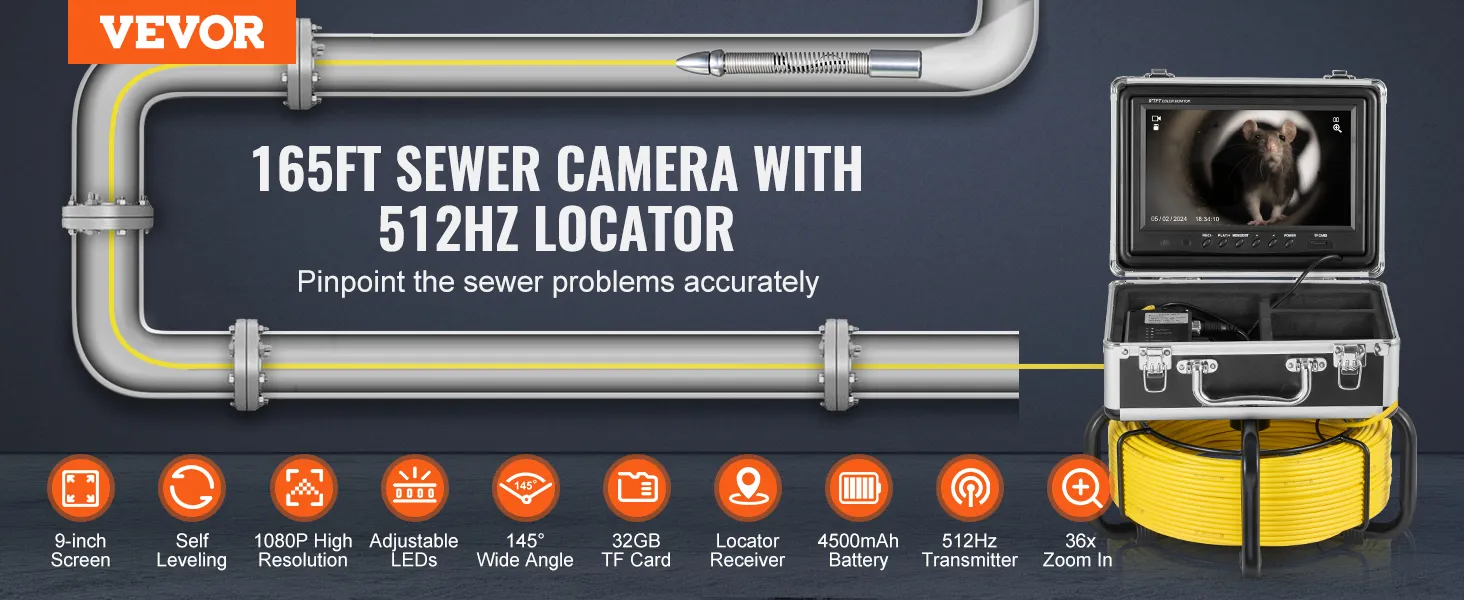
VEVOR Sewer Camera with 512Hz Locator,165 ft/50 m, Self-Leveling Drain Inspection Camera with 9" 1080P HD Screen, 36X Zoom, Snake Plumbing Camera with Lights-12 LED, 32GB SD Card for Duct Pipe


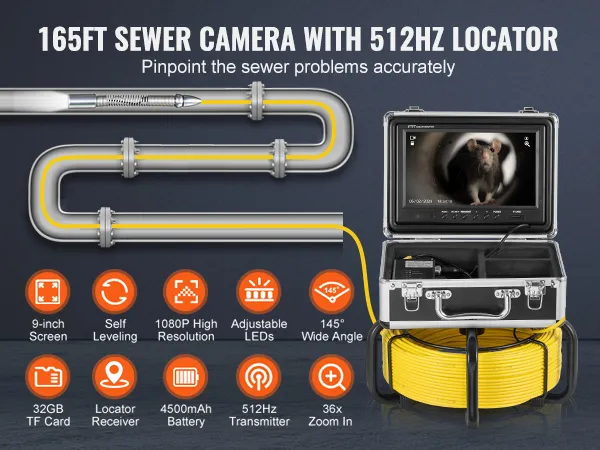
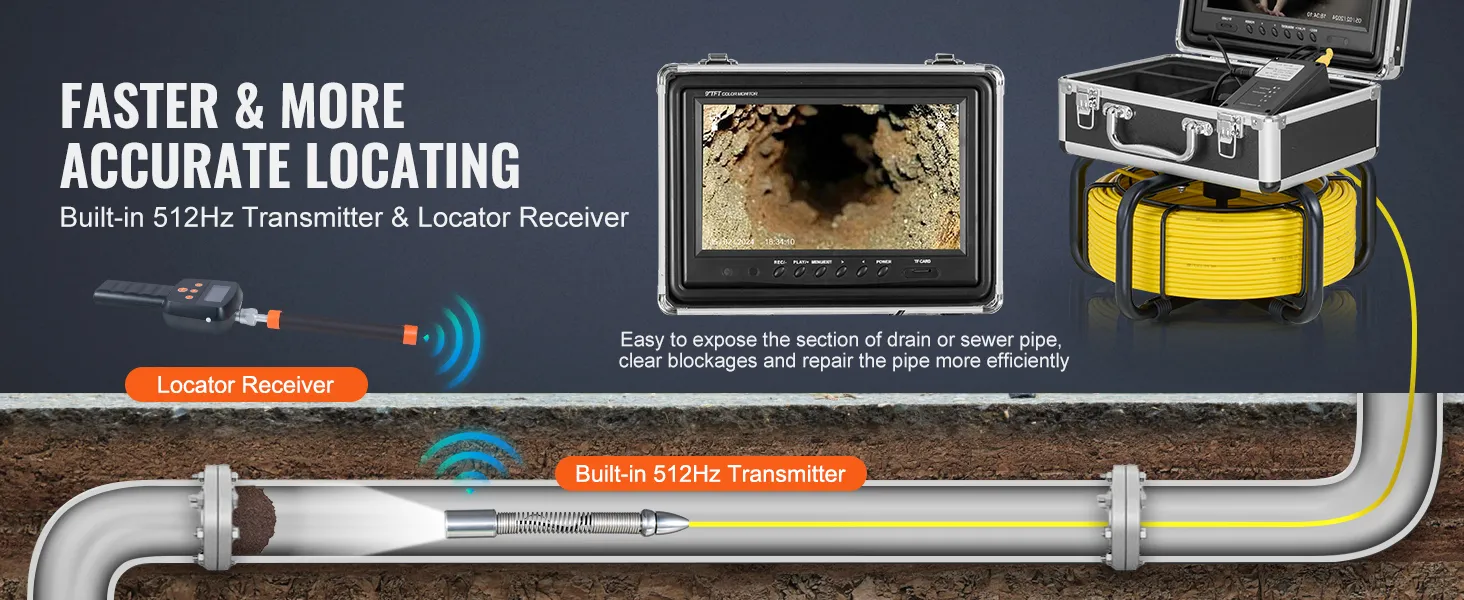
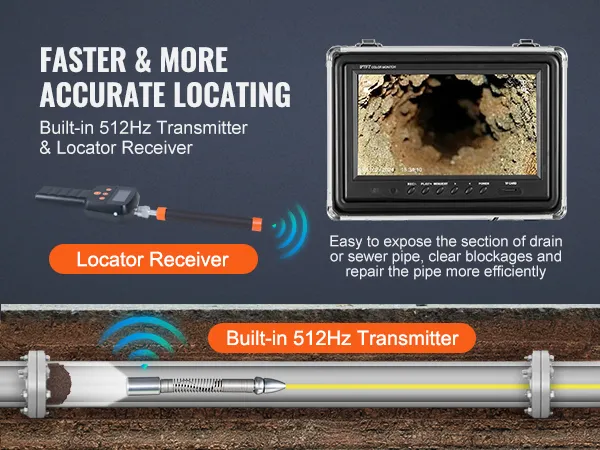
- Fast & Precise Locating: With the equipped 512Hz pipe locator receiver and the built-in transmitter, the VEVOR 165FT sewer camera pinpoints the sewer problems accurately, enhancing inspection efficiency with no extra purchase needed. The marked cable (at 3ft/0.9m intervals) lets you see how much cable has been fed into the pipeline, making pipe inspections and blockage troubleshooting more efficient.
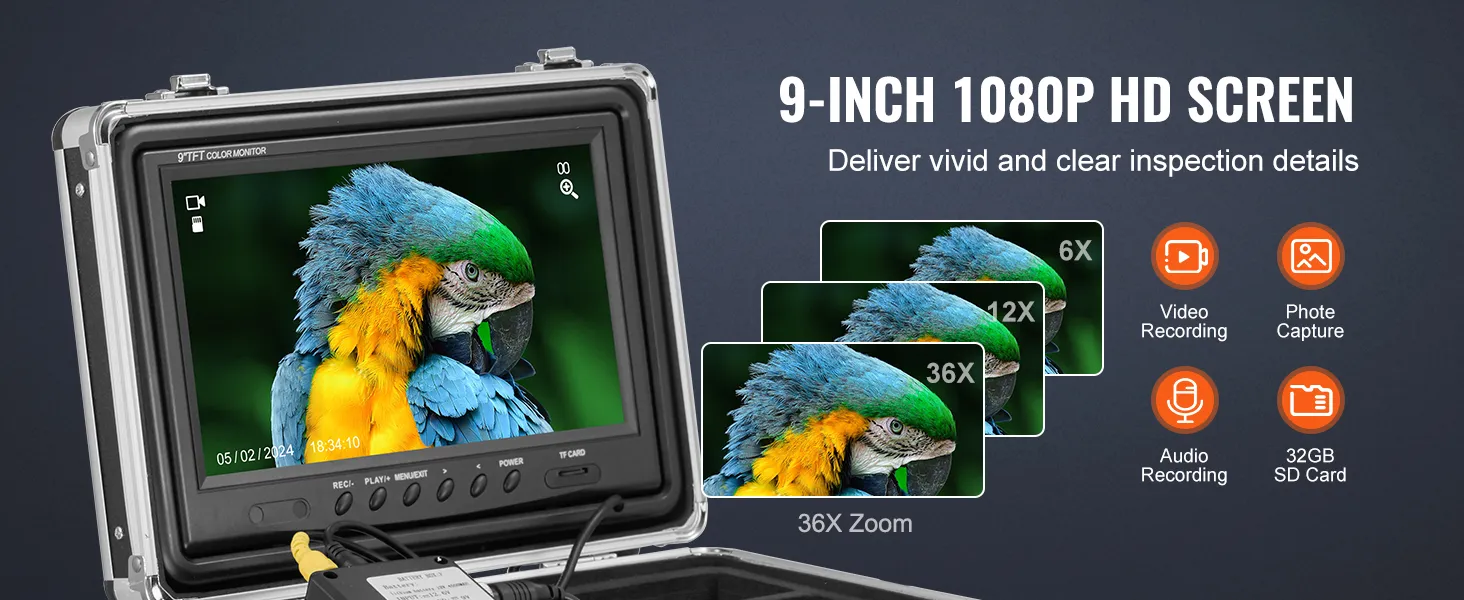
- Crystal-Clear 9-inch Screen: 9-inch large screen makes operation simple—just press the button to record HD video, capture clear images, or play back audio through your computer or headphones. 1080P HD display provides vivid and clear inspection details ; 32GB SD card provides plenty of storage for photos/videos ; and the included sunshade keeps the screen clearly visible even in bright sunlight.
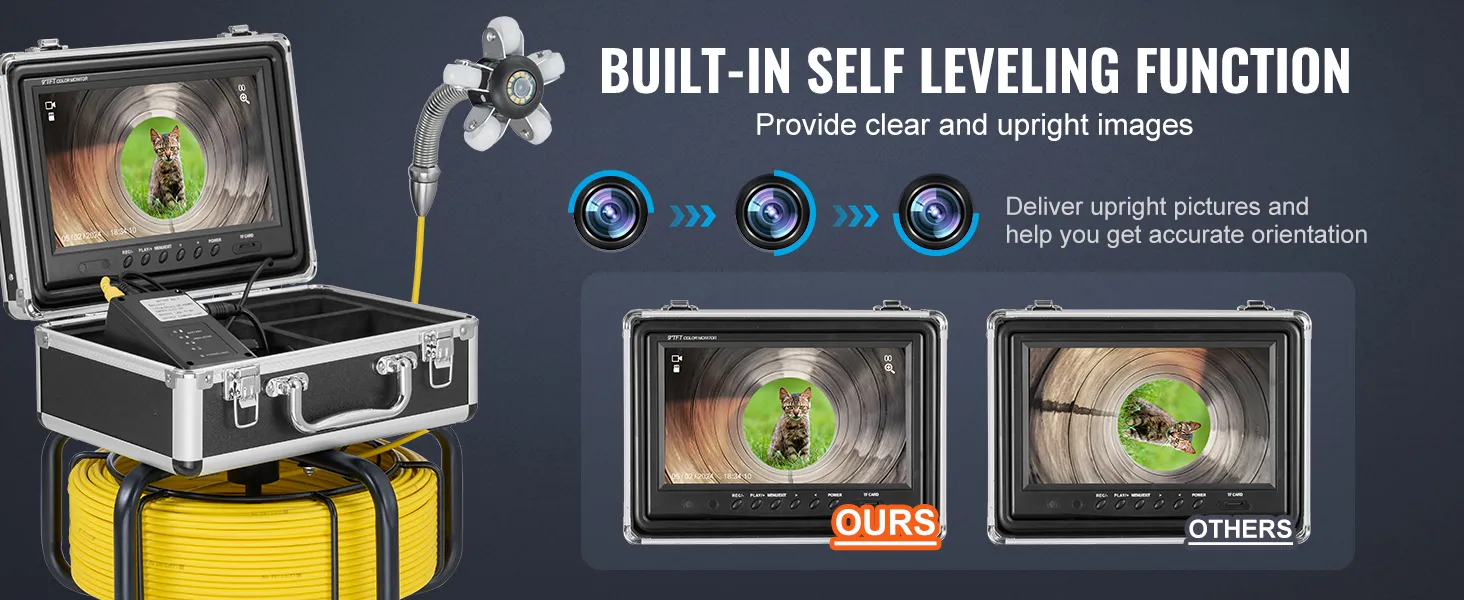
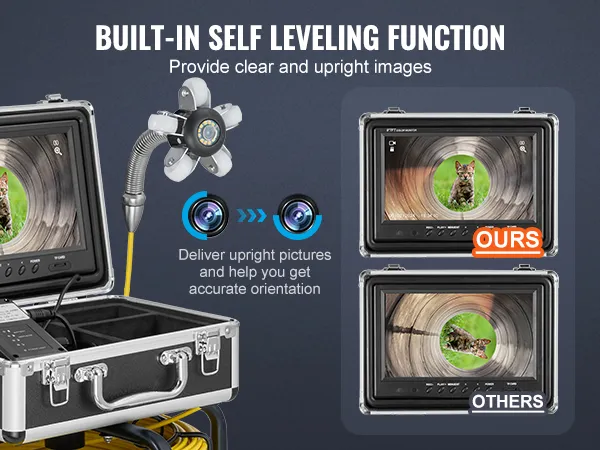
- Self-Leveling Camera: Our 0.9-inch self-leveling plumbing camera ensures images are always upright, giving you accurate orientation of obstacles for efficient inspections. It’s equipped with an IP68 waterproof sapphire lens and 12 adjustable LED lights with stepless brightness adjustment to suit different lighting conditions. The 36x digital zoom and 145° wide-angle view capture every detail, ensuring nothing gets missed.
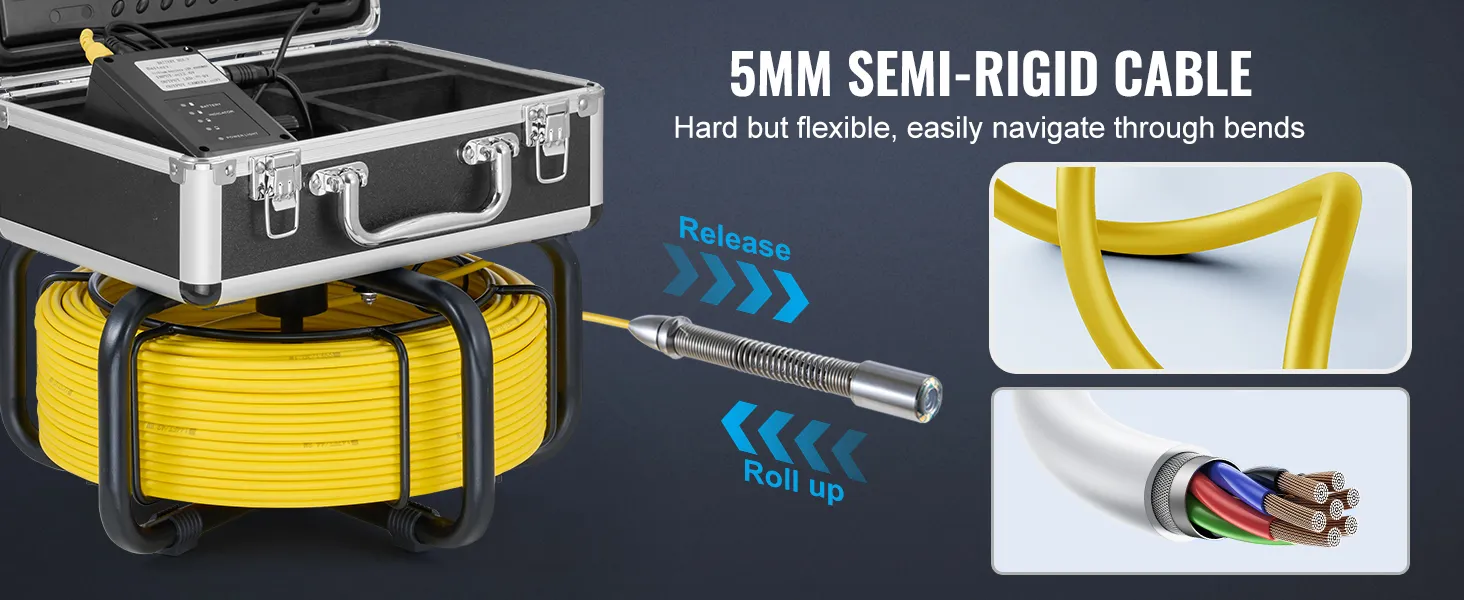
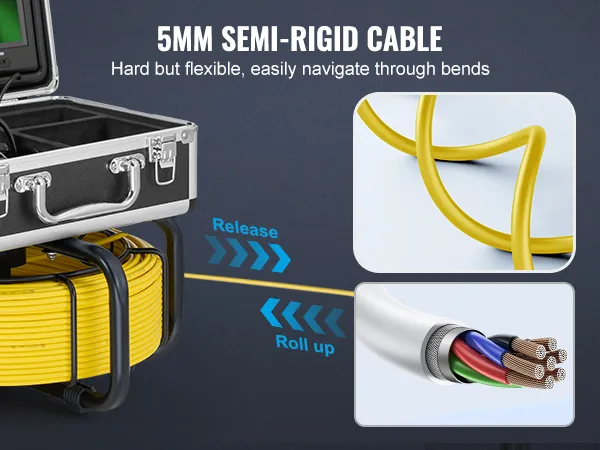
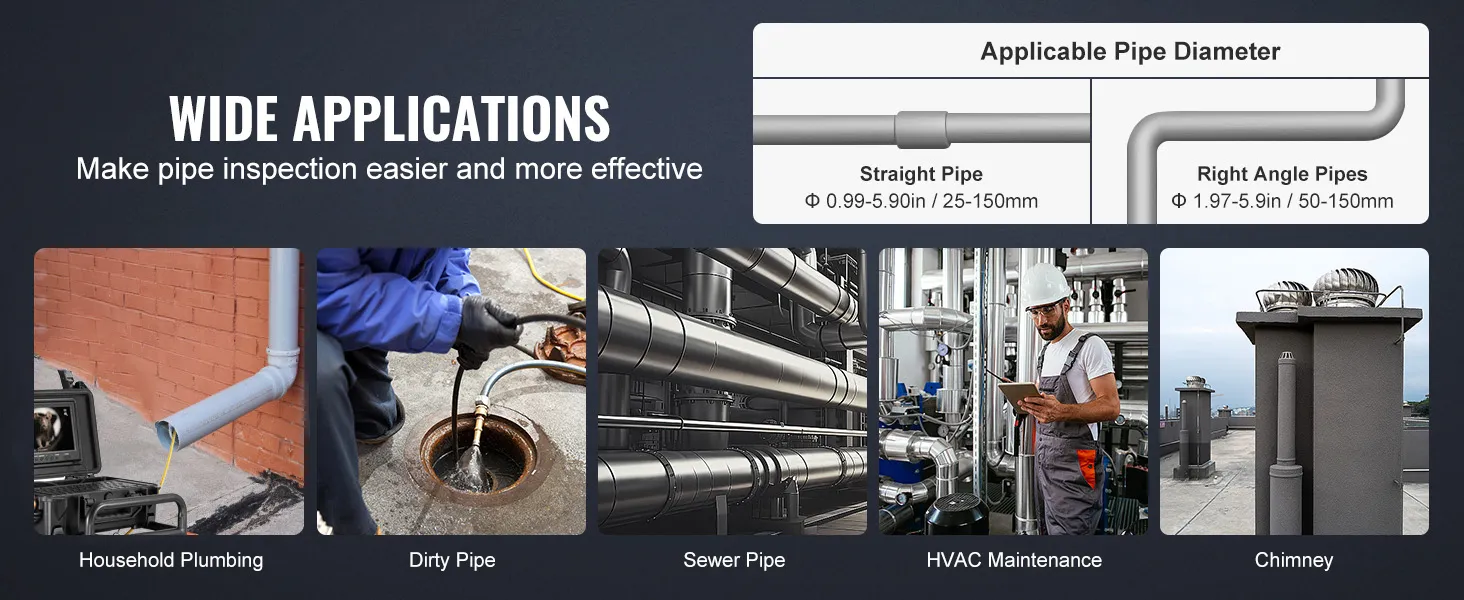
- Robust Semi-Rigid Cable: Our 165FT semi-rigid snake cable is perfect for 99.9% of medium to large-sized pipeline repair projects. Made of robust fiberglass, it easily navigates bends and long pipes, excelling in passability and resilience even in dark, damp conditions. Compatible Pipe Diameters: Straight Pipes: Φ 0.99 - 5.90 in / 25 - 150 mm; Right Angle Pipes: Φ 1.97 - 5.90 in / 50 - 150 mm.
- Wide Applications: VEVOR professional snake inspection camera is housed in the durable aluminum carrying case, providing excellent protection. It features a 4500mAh rechargeable lithium battery for 6-8 hours of continuous operation. (* The battery shown in the image is pre-installed in the sewer camera and is only for powering the camera's display. * We do NOT provide the battery for the 512HZ locator. Customers need to purchase it separately.)
Frequently Bought Together
Reviews
About this item


12 Adjustable LEDs Make This Camera Snake with Light Work in Total Darkness
A pipe is a black, closed tube. If the camera can't light it, you can't see it, which is why lighting is more important than almost any other spec on this tool. Around the lens, there are 12 LEDs in the head, steplessly adjustable, not with clicks between fixed levels. The whole point is to have fine control. Too much light off a near wall causes glare and hides the very crack you’re hunting for; too little, and a wide pipe goes murky.
The stepless dial allows you to match the output to the pipe in front of you in real time. Push it full as the line opens into a wide main that eats light; ease it down as the head nears a reflective bend. The LEDs are evenly spaced around the lens, so you don't get the harsh hot spot and shadow you would see from a single bulb - the pipe wall is evenly lit from edge to edge.
Sapphire-Glass Self-Leveling Head That Stays Sealed and Sharp
Behind those lights is a 0.9-inch (23 mm) head, doing two jobs at once. First, it self-levels, so it doesn’t matter how the cable rolls down; the picture on your screen stays upright. You read a joint offset or a root mass as it physically sits in the pipe, not rotated at some random angle you have to mentally correct.
Second, it withstands the environment. The lens is finished with IP68-rated waterproof sapphire glass, sapphire because it’s one of the hardest transparent materials around, so the grit and sludge that cloud ordinary covers over the months simply won’t mark it. The IP68 seal means the head still works when fully submerged in a flooded line. It threads into a pipe as narrow as 25 mm (Φ0.99 in) at 0.9 inches and still reads a 150 mm main, covering straight runs Φ0.99-5.90 in and right-angle runs Φ1.97-5.90 in.
165 ft Fiberglass Snake Built for Long Commercial Runs
The "snake" in a camera snake with light is the cable, and at 165 ft (50 m), this one is built for the long jobs the shorter reels can't finish, like main lines, commercial laterals, and the runs where you'd otherwise feed out everything you've got and still come up short of the problem. It is semi-rigid fiberglass, stiff enough to keep pushing the head forward through a long, waterlogged horizontal run and springy enough to follow the bends without folding.
Fiberglass can take repeated abuse without losing its shape. Fed in and dragged back out across hundreds of jobs, it keeps its straightness rather than developing memory kinks that fight you the next run. The cable is marked every 3 ft (0.9 m), so you can read off the distance directly. When the screen shows trouble, the mark on the reel tells you how deep into the line it is.
36X Zoom and 145° View for Reading Detail Without Moving the Head
Optics are where you really diagnose. The 145° wide-angle view of the camera snake with light is so wide it can capture the entire circumference of the pipe wall in one frame, so instead of a narrow keyhole, you have to sweep around; a single steady pass reveals the entire interior. Less movement of the head means less movement of the debris and silt that will cloud the water you are trying to see through.
When something suspicious comes into view, the 36X digital zoom zooms in on it without the need to inch the head closer and risk losing position. You hold still and zoom in, making sure the dark line is a hairline crack, not just a stain, and that the ring is scale, not grease. The optics, together with the even LED lighting, turn a vague shadow into a call you can actually stand behind.
9-Inch HD Screen and 32GB Storage for On-the-Spot Playback
The head’s view is shown on a 9-inch 1080P display, big enough to keep fine detail readable without squinting, which matters when you’re reading a pipe wall over your shoulder in mid-run. The controls are as simple as pressing a button to record video, take a still, or play back video with sound on the device or through headphones. No menu-hunting while your hands are busy.
Standard AVI video and JPG photos are saved to the included 32GB SD card, formats that will open on any machine, so sharing a clip with a client or site supervisor doesn’t require any conversion. The bundled sunshade clips over the screen to kill reflections, so the picture remains readable when you’re working out in open daylight rather than down a manhole.
Camera Snake with Light Powered for a Full 6–8 Hour Shift
LEDs, screen, and camera are all powered by one 4500mAh rechargeable lithium battery, sized to run them all together for 6-8 hours straight. That gives you a full working shift on one charge, enough to knock out a day’s worth of jobs for this camera snake with light, without you having to hunt for an outlet on site between stops.
It is housed in a complete aluminum carrying case weighing 15.2 lb (6.9 kg) that will withstand the daily knocks of loading in and out without damaging the reel or screen. One thing to note before the first job: the battery only powers the camera display; the 512Hz locator requires its own battery, which is not included. Be sure to buy it separately ahead of time.