



Deals
VEVOR Cordless Handheld Planer, 82 mm Cut Width, 15000 RPM Electric Hand Wood Planer with 4 Ah 18V Lithium Battery, Brushless Motor, Adjustable Cut Depth, Dust Collection Bag, for Woodworking

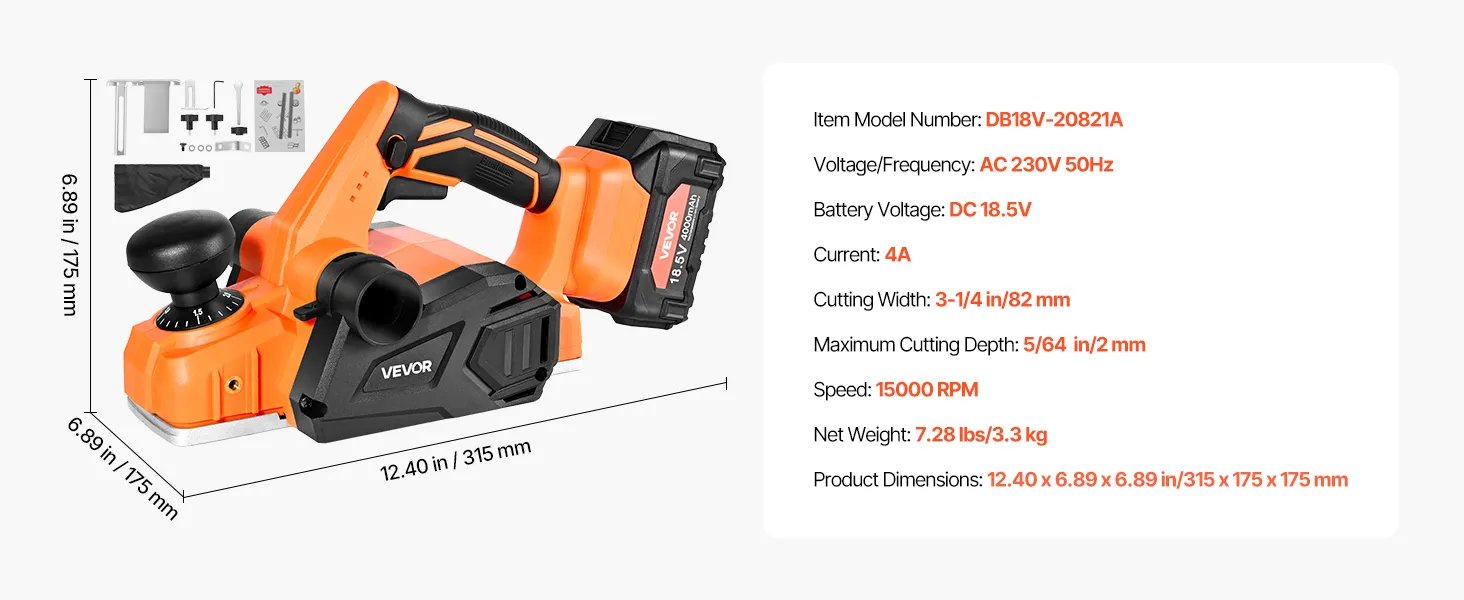
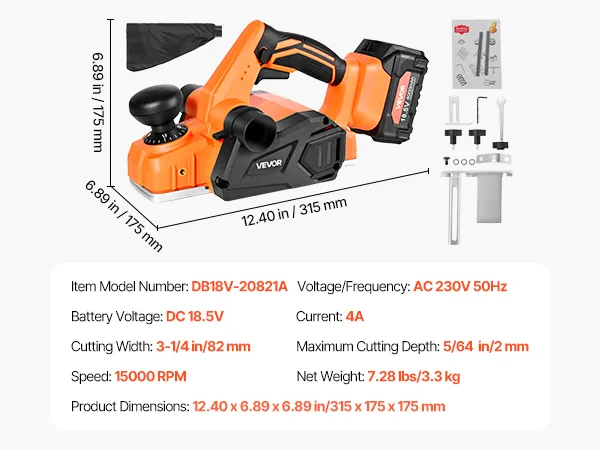
- Efficient & Precise Cutting: The cordless handheld planer provides a built-in 18V brushless motor with a maximum planing width of 3-1/4 in (82 mm) and a depth of 5/64 in (2 mm). It can easily achieve efficient and precise cutting, saving time and effort
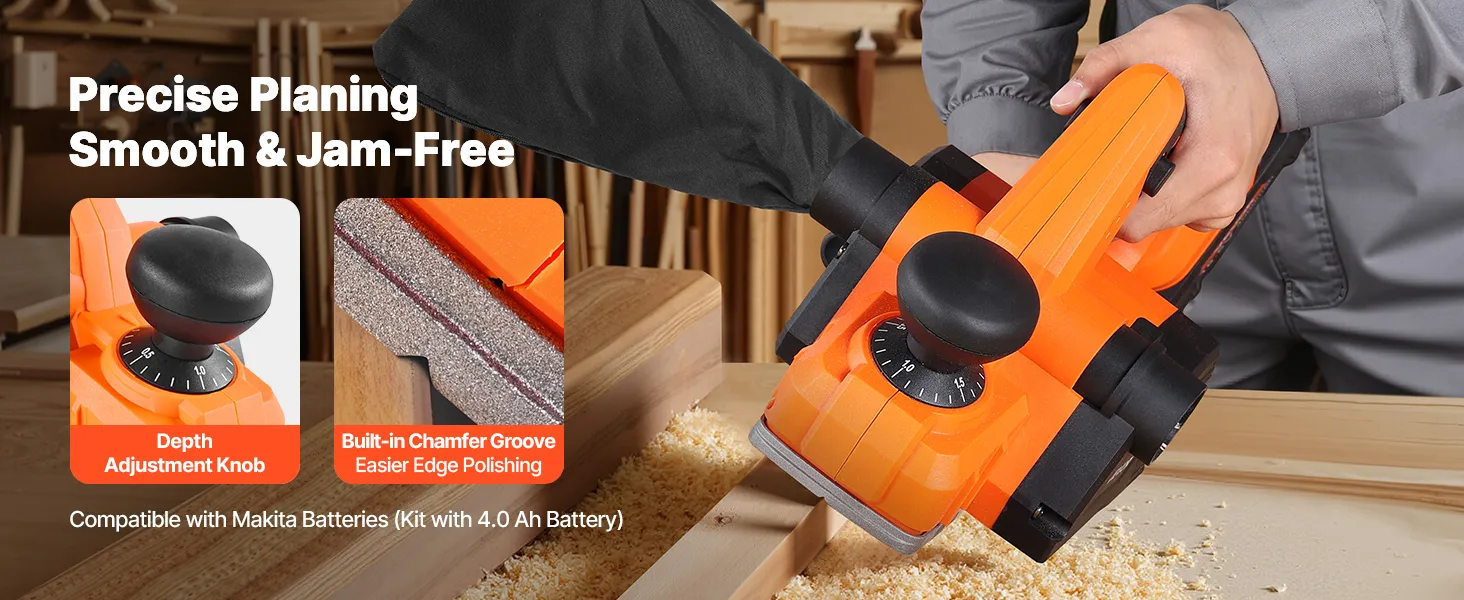
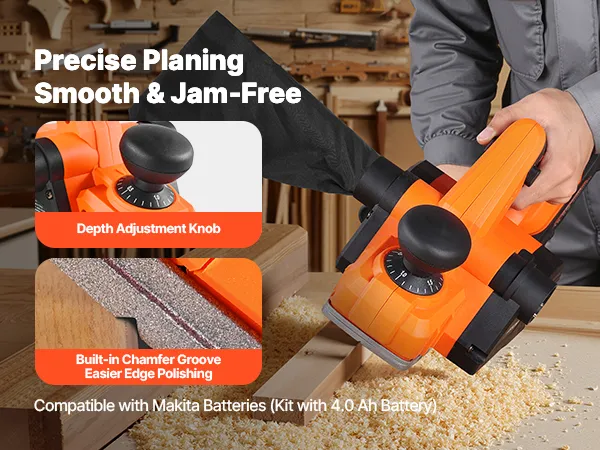
- Accurate Chamfering: With built-in chamfering grooves, the electric hand planer can easily plan the board edges, quickly achieving a smooth and flat chamfer effect. Say goodbye to rough, uneven edges
- Adjustable Cutting Depth: Featuring a knob adjustment, this power handheld planer allows you to fine-tune cutting depth for different woodworking tasks. Whether for thin or deep cutting, it handles them easily while ensuring precise results every time
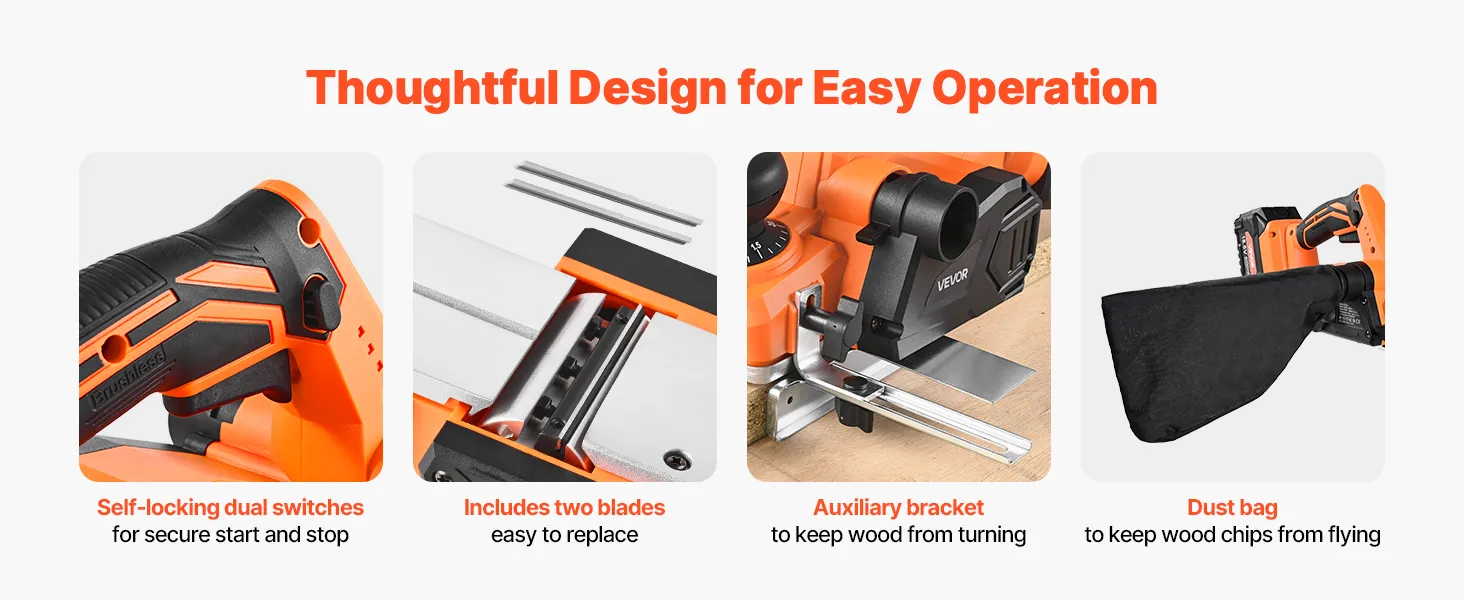
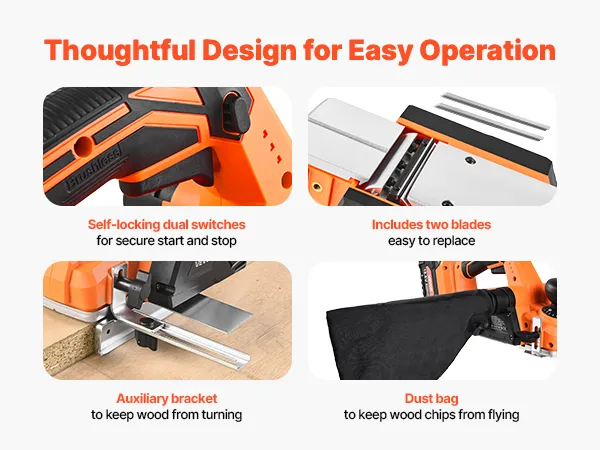
- Multiple Secure Protection: The electric wood planer features a dual-switch design to avoid accidental starts, giving you peace of mind while working. Its bottom bracket keeps blades from damage, while the parallel guide barrier keeps cuts precise
- Large-Capacity Battery: Our woodworking handheld planer comes with a high-capacity battery, so you can enjoy cordless convenience and work efficiently anytime, anywhere. Tackle demanding tasks in complex environments without power cord limits
Frequently Bought Together
Reviews
About this item


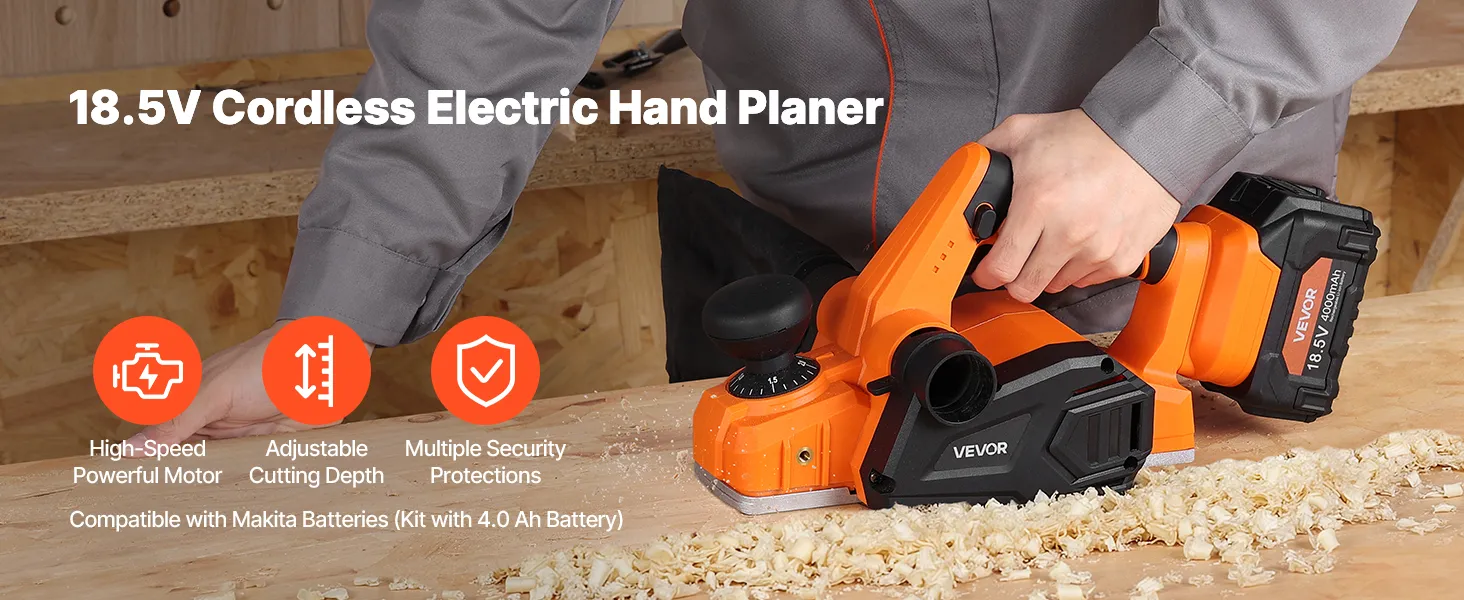
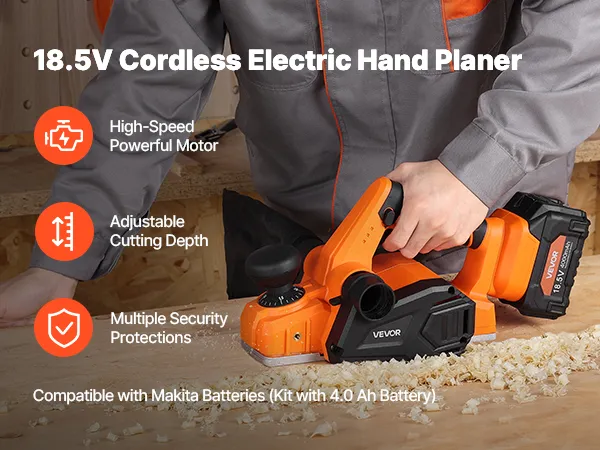
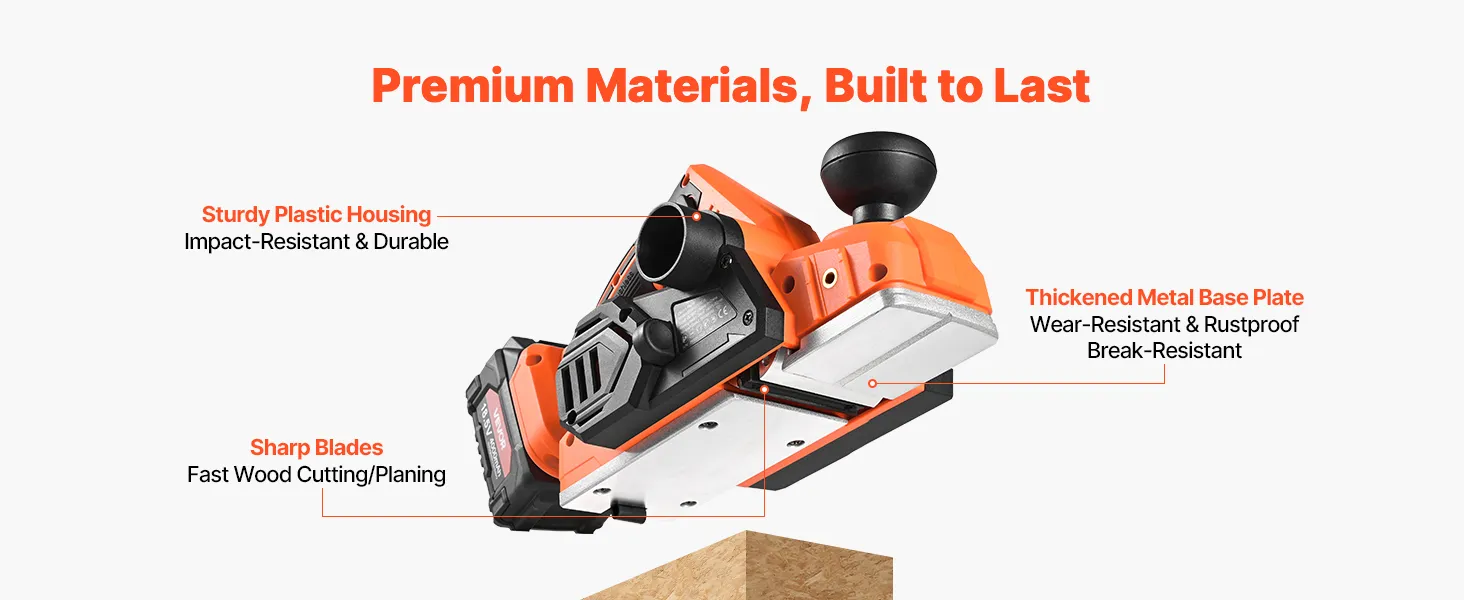
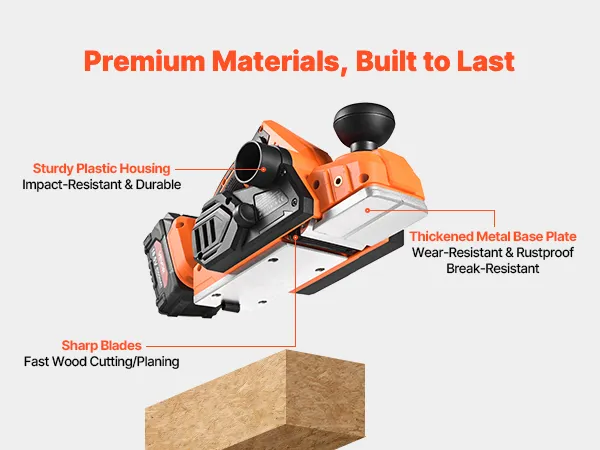
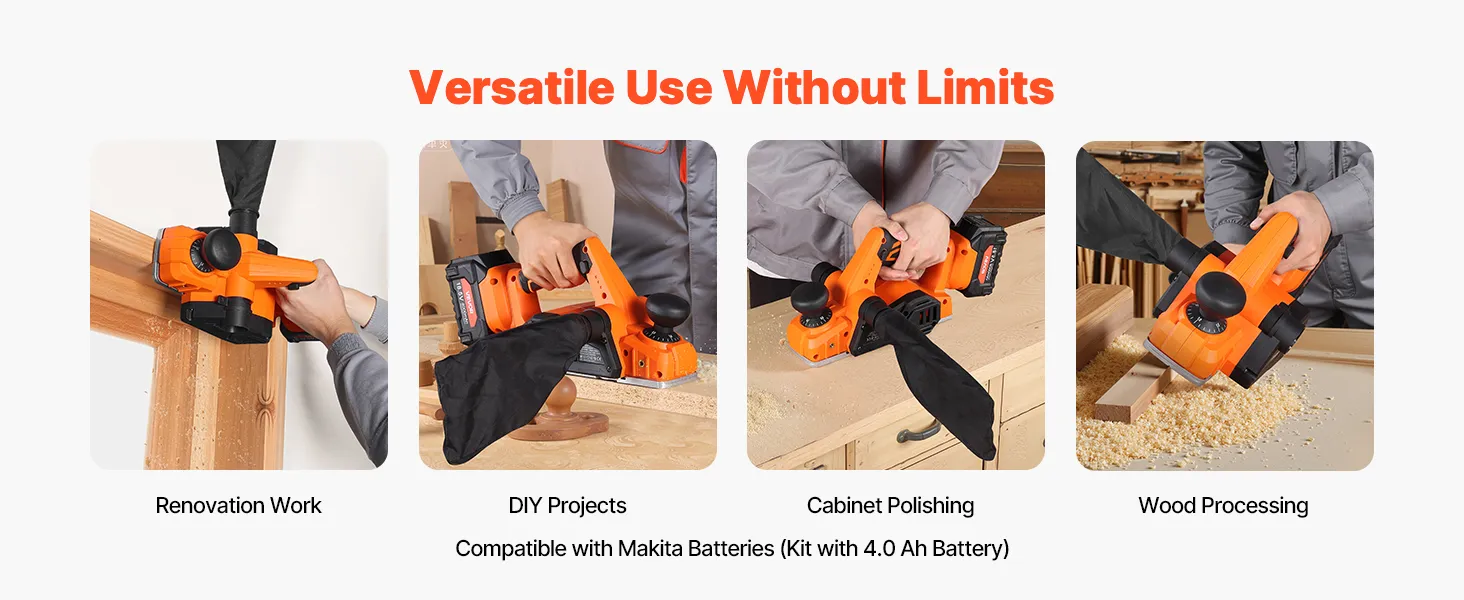
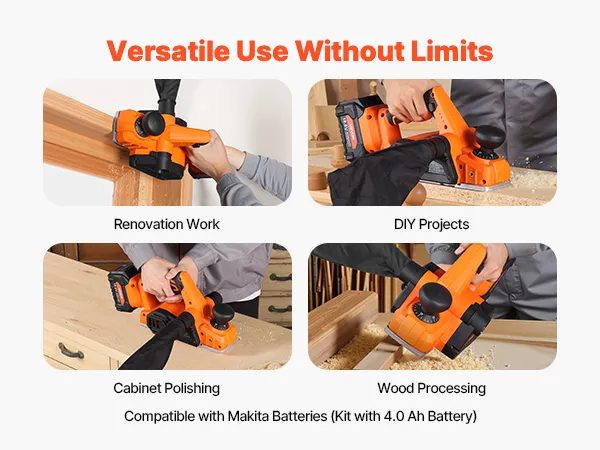
18V Brushless Motor Drives This Cordless Handheld Planer to 15000 RPM for Continuous High-Load Performance
A brushless motor eliminates the carbon brush contact points that cause heat, friction, and gradual wear in conventional motors. The VEVOR cordless handheld planer maintains a steady blade speed of 15,000 RPM, across hardwood, softwood, and engineered wood applications. It is different from brushed motors, which slow down under load.
Brushless architecture also captures the energy that brushed systems lose to friction and turns it back into runtime. For woodworkers who have to do a lot of stock removal work all day, this efficiency gain is not small; it noticeably increases the number of hours the tool can run on a single charge and lowers the temperature of the motor, which protects the internal parts from failing due to heat over the tool's service life.
82mm Cut Width and 2mm Maximum Depth Deliver Full-Width Material Removal in Single Passes
The standard cutting width for professional handheld planers is 82mm (3-1/4 inches). It means the tool can surface most dimensional lumber profiles, such as 2×4 and 1×6 stock, in a single longitudinal pass without requiring multiple overlapping runs. This specification directly affects how quickly a job can be finished: narrower cut paths need more passes per board face, which means more time spent and a higher chance of seeing ridge lines between passes.
This cordless handheld planer can remove rough stock and make fine finish passes with the same amount of mechanical power. It can go as deep as 5/64 inch (2mm) per pass. Operators can adjust the depth with a special knob rather than guessing body pressure. It ensures the same cut depth is reproduced reliably across multiple passes.
4Ah 18V Lithium Battery Pack Sustains Cordless Handheld Planer Operation Across Full Job Site Cycles
A 4 ampere-hour capacity at 18 volts gives you 72 watt-hours of stored energy, which is a good runtime spec for a motor that draws a steady current at 15000 RPM. Lithium chemistry keeps the voltage delivery across the discharge curve fairly flat. It means the tool stays close to its peak RPM for most of the charge cycle, rather than worsening over time as nickel-cadmium packs do.
The 18V cordless platform also eliminates the need to manage cords, which makes corded planers dangerous in busy workshops. The cordless handheld planer takes away that risk completely. It works around sawhorses, across wide benchtops, or on framing layouts where extension cords could trip or get caught.
Built-In Chamfering Groove Cuts Clean 45-Degree Board Edges Without Secondary Setup or Tooling
To chamfer with a handheld planer, you usually need a special fence attachment, a second pass with a router, or manual chiseling. All of these things take more time, complicate setup, and can lead to inconsistencies. The integrated chamfering groove in the sole of this handheld planer eliminates that extra step. The operator can go from face planing to edge chamfering in a single tool pass without changing or reconfiguring tools.
For furniture builders, cabinet makers, and finish carpenters, this built-in feature is a real time-saver because it makes it easier to add chamfered edges to stile-and-rail assemblies and door parts. There is no need to move between operations when making drawer fronts, shelf edges, door stops, or any other parts that all have the same 45-degree chamfers.
Knob-Adjustable Cut Depth Mechanism Enables Repeatable Precision Across Sequential Planing Passes
Instead of a lever or push-slide mechanism, the depth adjustment is done by turning a knob. It gives you finer control and, most importantly, adjustment resistance that keeps the set depth stable under vibration. A setting chosen before a pass stays correct until the end of that pass. It is important for dimensioning tasks where a target thickness must be achieved in several controlled steps rather than a single large removal.
With a repeatable depth setting, the operator can set a target depth, run all boards that require that dimension, and then adjust for the next specification, rather than having to dial in each piece separately. In batch production, this knob mechanism supports a more consistent batch setup, maintaining a consistent output size throughout the run without requiring the operator to measure the thickness at each pass.
Dual-Switch Safety System and Bottom Blade Guard Protect Both Operator and Cutting Edge During Use
The dual-switch activation design needs two different input actions to turn on the blade. It is a circuit architecture specifically designed to prevent accidental single-handed trigger engagement, which causes most handheld planer injuries when picking up, moving, or handling materials. The bottom bracket blade guard protects against the second type of damage: when the blade touches the work surface while the tool is down between passes.
When blades are left unguarded on benchtops, floors, or lumber stacks, their edges are damaged, lowering the surface finish quality and accelerating blade wear. The guard maintains a steady gap between the blade and the surface it rests on, protecting both the cutting edge geometry and the surface during a session.
Integrated Dust Collection Bag on Planer Captures Chips at the Source
Without a collection system, a handheld planer ejects chips that spread fine wood shavings across a wide area at high speed. It contaminates nearby work surfaces, clogs finish coats when applied right after planing, and builds up into slip hazards on workshop floors. This cordless handheld planer has a built-in dust bag that captures the chip stream at the ejection port, holding most of the material without needing to connect to a shop vacuum or use a stationary collection system.
For people who work in finished spaces, client environments, or small workshops where cleanup takes time and money, source-capture dust collection changes the practicality of using a planer on a project. Shavings in a bag can be emptied in seconds, but those spread out on a workbench require thorough cleaning before the next task can begin without risking contamination.
