Planers


























Results for Planers
A planer is a power tool that shaves thin layers off a board to flatten it, smooth it or bring it to an even thickness. It usually has a motor, a cutterhead with knives and a dust outlet. On a benchtop planer, the user sets the depth, feeds the board onto rollers that pull it under the cutterhead, then flips it for the other face. A handheld planer is pushed along the wood instead. These tools are designed for woodworkers, carpenters and DIY builders. Planing rough lumber at home saves buying boards that come pre-surfaced.
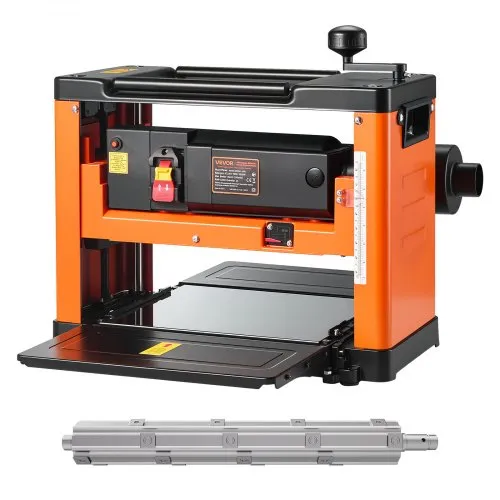
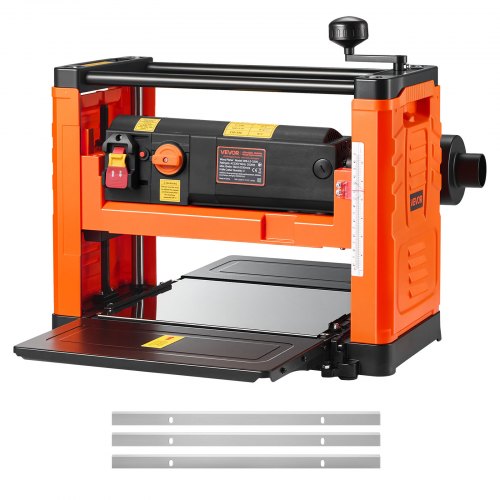
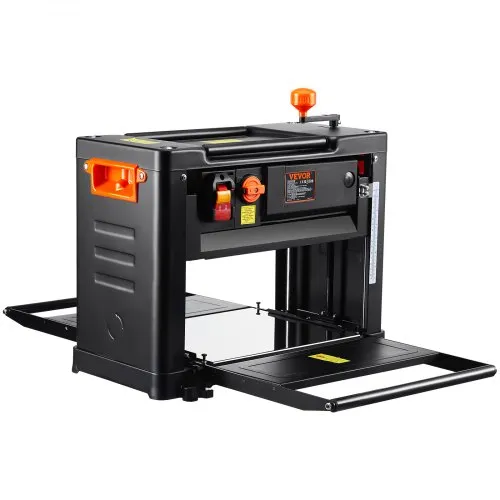
This page holds benchtop thickness planers and handheld planers. The spiral cutterhead planer uses 24 small inserts for a finer finish, while the three-knife benchtop planer uses straight high-speed steel knives. The 13 in planer with a stand comes with fold-out tables for long boards. For fitting doors and trimming edges, the corded hand planer takes a 3-1/4 in pass, and the 18V cordless planer works away from an outlet. A rolling planer stand and replacement planer knives complete the range. Spiral heads leave less tear-out on figured wood, while straight knives can be resharpened and reset. Buyers usually choose by board width first, then how they want to feed the wood and power the tool.
Five things decide which one fits:
- Cut width: the widest board face it can plane in one pass.
- Max cut depth: how much wood it removes in a single pass.
- Cutterhead: spiral inserts or straight knives, and how many.
- Power supply: a wall outlet or an 18V battery.
- Dust handling: the port, exhaust or bag that carries chips away.
Browse every planer here, and see the wider woodworking tools range.
Planer Types and Accessories at a Glance
The planers here cut and move wood in different ways, and two accessories support them, as each row shows.
| Type | Cutter Setup | How Stock Moves | Width Covered |
|---|---|---|---|
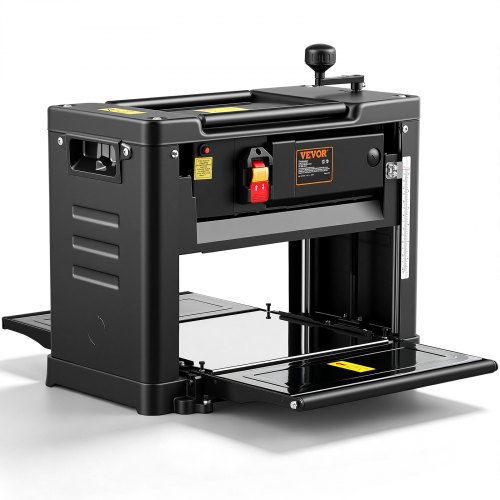
| Spiral cutterhead benchtop planer | 24 alloy inserts set in a spiral | Powered rollers pull the board under the head | Boards up to 13 in wide |
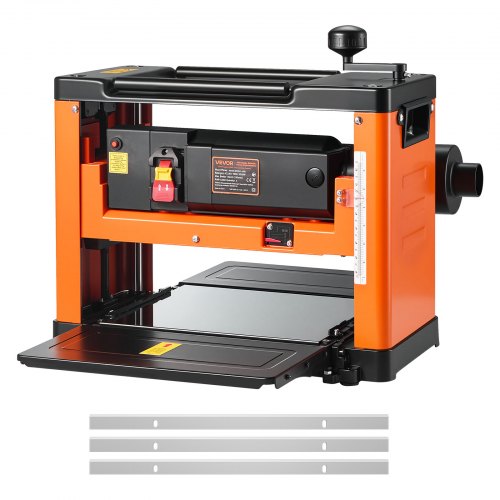
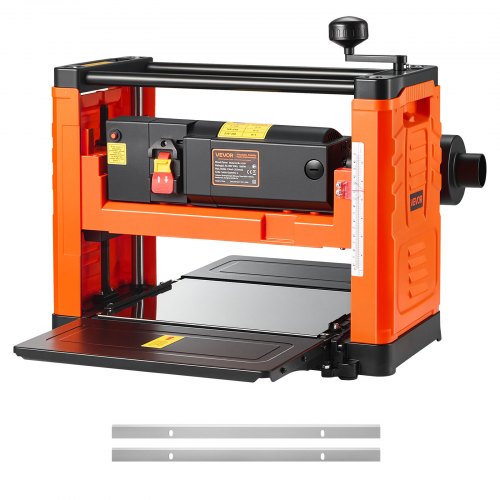
| Knife benchtop planer | 3 straight high-speed steel knives | Dual powered rollers | Boards up to 13 in wide |
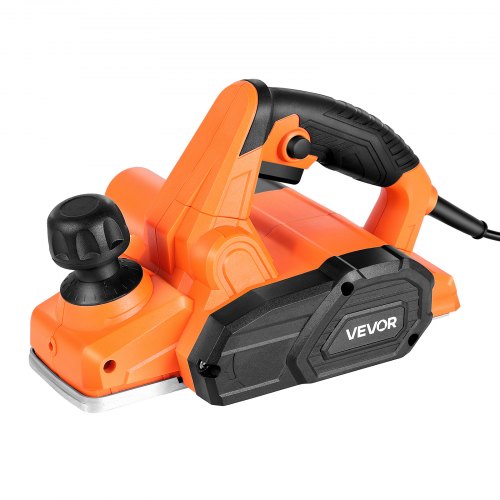
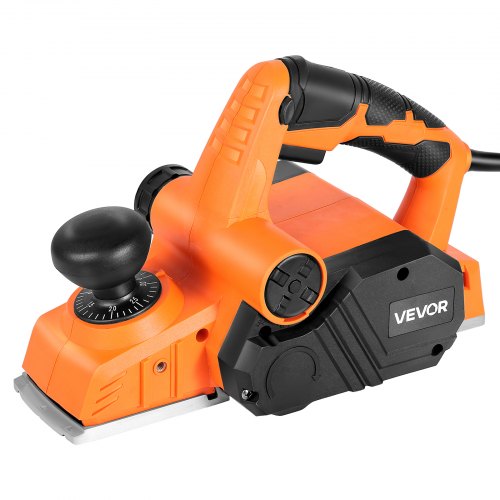
| Corded hand planer | 2 high-speed steel blades on a drum | You push the tool along the work | 3.25 in per pass |
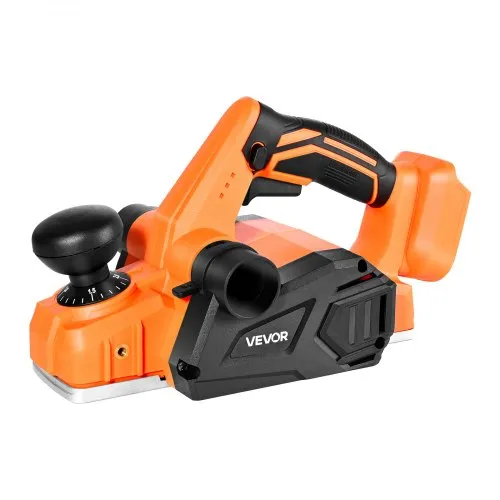
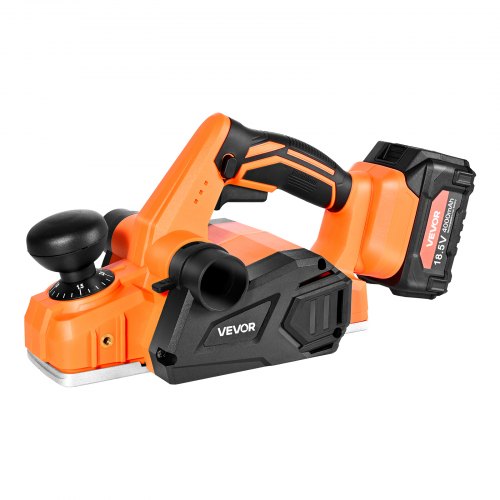
| Cordless hand planer | 2 blades on a brushless motor | You push the tool, powered by an 18V battery | 3.25 in per pass |
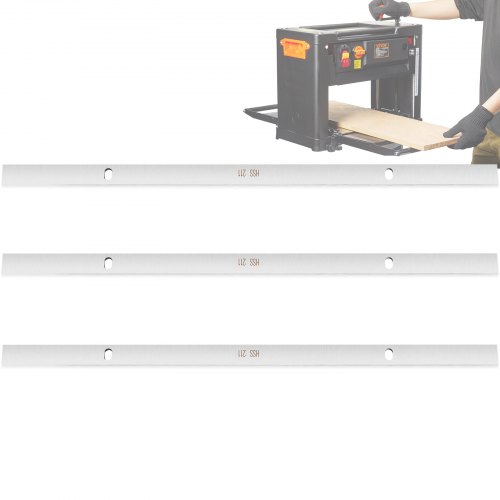
| Replacement knives (accessory) | 3 high-speed steel knives, HRC55 to 60 | Fit into 13 in thickness planers | 13 in knife length |
| Planer stand (accessory) | No cutter, a rolling base | Raises the planer on 4 locking casters | Not specified on the product page |
VEVOR Planers for Smooth Surfaces, Consistent Thickness, and Professional Woodworking Results
Looking for equipment that lets you avoid buying pricey surfaced lumber and lets you make unique dimensions that fit the needs of each project? Quality organizers let you save money on rough timber and provide you with control over dimensions that you can’t get with pre-milled stock alone. VEVOR makes planers that are carefully designed to meet the needs of specific workshops while maintaining the high standards of accuracy expected of professional woodworking tools. Our collection may meet a wide range of needs, from occasional usage by hobbyists to constant use by professionals who need the highest capacity and durability.
Planer Type, Power Options, and Configuration Categories
Knowing the many types of planers available helps consumers choose the right ones for their workshop needs and project sizes. VEVOR groups planers into useful categories that meet different needs, from portable material removal to stationary precision dimensioning, supporting a wide range of woodworking tasks.
Handheld Power Planer Options
Handheld power planers can remove material from anywhere, even where stationary equipment can’t reach, to fit doors, trim joints, and surface boards. Compact designs enable precise control, and powerful motors quickly remove material in tough situations. Handheld planers let you do more in the workplace than stationary tools can.
Electric hand planers feature corded connections that provide steady power, so they can work on long jobs without stopping. With a constant power supply, you don’t have to worry about batteries, but you do need to consider where to place the outlets so the cords can reach them. Planers that use corded electricity are best for workshops where people don’t need to move around too much.
Cordless handheld planers don’t require cords, so they can be used anywhere on job sites or in workshops without worrying about being near an outlet. Battery advancements provide greater power over time, and improvements in runtime enable finishing large projects between charges. Cordless planers give you the most freedom when you need to work in different places.
The cutting width of handheld planers determines how much material they can cover in a single pass, which affects how well they work. Wider cutting heads can handle bigger areas, while smaller heads are better for precise work in small regions. Planers chosen with the right cutting widths work well for the jobs they are meant to do.
Benchtop and Thickness Planers
Benchtop thickness planers set up the centerpieces of a workshop, allowing for consistent board sizing by carefully removing material. Adjustable cutting depths ensure all pieces are the same thickness, and motorized feed systems ensure all pieces are the same length. Planers that sit on a bench give you expert thickness control in a small workshop space.
The width and depth of the cutting capacity criteria determine the feasible board sizes that benchtop planers can handle. Maximum width ratings show the largest boards that can be processed, while depth capacity impacts how quickly boards can be removed. Planers that fit standard lumber sizes meet project needs without going overboard on features.
The surface quality of thickness planers is directly affected by feed rate consistency, as inconsistent feed rates cause snipe and uneven finishes. Powered infeed and outfeed rollers keep the stock moving forward at a regular pace, and regulated pressure keeps it from slipping. Planers with high-quality feed systems always make better surfaces.
Jointer planers can both joint and thickness-plane; therefore, they can prepare all the stock in one machine. Dual functionality addresses both face flattening and thickness consistency without the need for separate equipment. Machines that can do more than one thing make the most of the workshop’s usefulness.
Portable and Stationary Configurations
Portable planers enable on-site stock preparation and deliver dimensioning skills directly to the construction site. Lighter weight makes it easier to move, and strong construction can withstand tough site conditions. Planers that are easy to move about make it possible to do more work outside of the workshop.
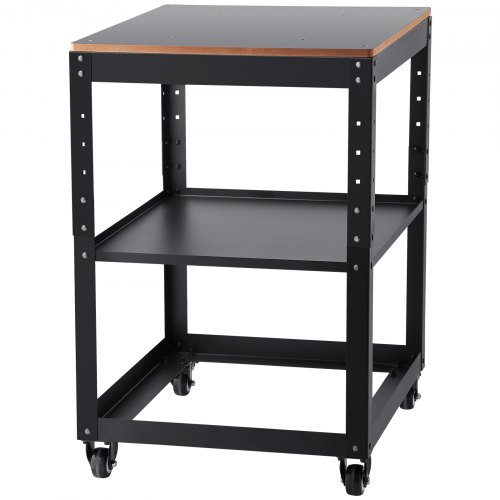
Planer stands give portable and benchtop planers steady support and raise work surfaces to a comfortable height. Folding designs make it easy to store things in a small space, and extended arrangements keep long stock safe. When you use planers with good stands, they work safely and make the workflow more comfortable.
Stationary planers anchor dedicated woodworking operations by providing the highest capacity and accuracy to meet professional production needs. Heavy construction reduces vibration, and large tables securely hold large stock. Planers meant for permanent installation work best when they are always working hard.
Which Planer Fits Your Work
Measure your widest boards and decide where you will work, then read across to one product.
| Confirm Before Purchase | Matching Specification | Recommended Product | Main Limitation |
|---|---|---|---|
| You plane figured hardwood up to 13 in wide | 24-insert spiral cutterhead, 13 in table, 0.125 in depth steps | spiral cutterhead planer | Weight not specified on the product page |
| You want a knife planer for 13 in boards | 3 high-speed steel knives, 2000 W, 15 A | three-knife benchtop planer | Max cut depth not specified on the product page |
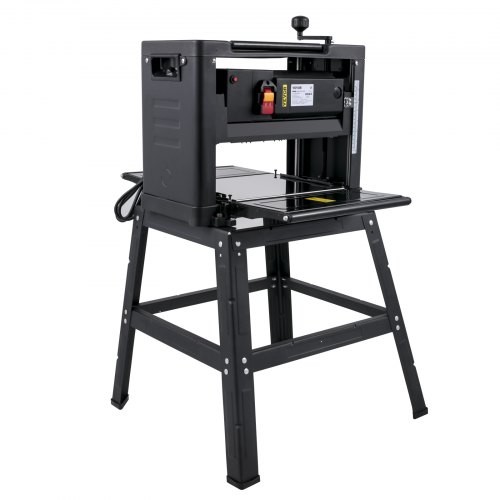
| You need the planer and its stand together | Foldable iron stand, fold-out tables, 0.2 to 6.3 in thickness | 13 in planer with stand | 69.4 lb, stand height not specified on the product page |
| You fit doors near an outlet | 3.25 in cut, 0 to 2 mm depth, 16,500 RPM, 6 A | corded hand planer | Cord length not specified on the product page |
| You trim work away from power | 18V 4.0 Ah battery, brushless motor, parallel fence | 18V cordless planer | Runtime not specified on the product page |
| Your benchtop planer needs a mobile base | 100 lb rating, 3 height settings, 4 locking casters | planer stand | Height values listed two different ways |
Features and Operational Specifications for Planers
In addition to choosing the right planer, understanding its specs and feature capabilities will help ensure your purchase meets your specific woodworking needs. VEVOR planers include many features and performance characteristics that make them useful for a wide range of workshop tasks.
Cutting Performance Features
The design of the cutterhead affects the quality of the planer’s surface by determining how the blades are set up and how they cut. Straight knife heads make rough cuts, while spiral or helical designs make finer cuts with less noise. Planers with the right cutterhead technology make surfaces that look and feel the way you want them to.
The ease with which blades can be replaced significantly affects the ease of maintaining planers over long periods of operation. Indexed blade systems let you replace quickly, and disposable designs don’t need sharpening. Planers that make it easy to service the blades keep them running at their best with minimal downtime.
Wood planer & accessories come in sets that include everything you need for a complete planer system, including dust-collection adapters, extra blades, and maintenance supplies. Comprehensive packages ensure that everything is ready to go, and coordinated parts ensure that everything works together. Organizers work best when they have the right accessories, which they should keep on hand at all times.
Dust Collection and Safety
The ability to remove dust affects air quality in the workshop and the amount of cleaning required throughout planning operations. Integrated dust ports link to collection systems, and effective hood designs catch debris at the source. Planers with good dust collection keep workshops cleaner and preserve workers’ health.
Planers have safety features that keep operators from being hit by the cutterhead or from material kicking back while they are working. Anti-kickback fingers stop stock from turning around, and effective guarding protects rotating parts. Planers with safety features keep users safe during tough tasks.
Noise levels during planer operation have a big impact on both hearing protection needs and relationships with neighbors in the workshop. Good construction reduces vibration-induced noise, and good blade maintenance prevents noise from dull cutting edges. Planers that run more quietly make workshops better places to work.
Precision and Adjustment Features
Planers can precisely control how much material they remove during dimensioning operations thanks to depth adjustment systems. Calibrated scales show settings, and the ability to make tiny adjustments lets you target the exact thickness. Planers with precise adjustment mechanisms ensure consistent outcomes that meet requirements.
The flatness of the table affects the dimensional accuracy of the planer because any changes in the table are directly transferred to the processed stock. Machined surfaces retain their accuracy, and changeable parts let you compensate for calibration errors. Planers with high-quality tables deliver reliable results even after long-term use.
Extension tables keep longer stock from sagging dangerously during planer feed operations. Integrated or add-on extensions can fit boards of different lengths, and foldable versions save space when not in use. Planers with the right support can securely handle standard lumber lengths.
Snipe-reduction mechanisms reduce the material depression that occurs at the ends of boards when using a planer. Locks on the cutterhead and adjustments to the table pressure fix the problems that cause snipe, while good design keeps it from happening as often. Planers designed to reduce snipe give you smooth surfaces along the entire length of the board.
Best-Seller Comparison
The five best sellers are three benchtop planers and two hand planers, compared below on cut width, max cut depth, cutterhead, power supply and dust handling.
| Product | Cut Width | Max Cut Depth | Cutterhead | Power Supply | Dust Handling |
|---|---|---|---|---|---|
| 13 in Spiral Cutterhead Thickness Planer | 13 in table, 6 in maximum board height | 3 mm per pass, matching row 3 | Spiral head with 24 alloy inserts | 110 V outlet, 2000 W motor | Ports for 2 in and 4 in hoses |
| 13 in Three-Blade Thickness Planer | 13 in table, 6 in maximum board height | Not specified on the product page | 3 straight high-speed steel knives on one drum | 110 V outlet, 2000 W motor | Ports for 2 in and 4 in hoses |
| 13 in Thickness Planer with Stand | 13 in wide, boards 0.2 to 6.3 in thick | Up to 3 mm per pass | 2 double-edge knives, crank depth with scale | 110 V outlet, 2000 W motor | Dust exhaust with a shield when no collector |
| 3.25 in Corded Hand Planer, 16,500 RPM | 3.25 in per pass, for edges and doors | 0 to 2 mm, set by a front knob | 2 high-speed steel blades rated HRC58 and above | 120 V outlet, 6 A motor | Ejects to either side into a bag |
| 3.25 in 18V Cordless Hand Planer | 3.25 in per pass, same as row 4 | Up to 2 mm, set by a front knob | 2 blades, with chamfer grooves in the base | 18 V battery, 4.0 Ah, charger included | Built-in bag collects chips as you plane |
Why Choose VEVOR Planers?
VEVOR makes a full range of planers that can handle any woodworking surface need, from portable material removal to precise thickness dimensioning, so that you can achieve professional results even under tight project timeframes. Our selection strikes a balance between high-quality construction and reasonable prices, ensuring tool purchases without going overboard on costs that would limit workshop possibilities. Competitive prices ensure key tools are easy to obtain without compromising cutting accuracy, construction durability, or the performance standards woodworkers expect. Check out our inventory today and find planers that turn rough lumber into beautiful finished stock with consistent results.
Frequently Asked Questions
What thickness capacity suits most woodworking?
Most standard planers can handle lumber that is 12 to 13 inches wide. Larger projects require machines with greater capacity, whereas smaller machines are sufficient for most hobby needs.
How often should planer blades be changed?
Change the blades on your planer when the surface quality worsens or when you notice damage. How often depends on how much you use it and what kind of wood you work with.
Can planers flatten warped boards?
Planers make parallel faces, but they can’t flatten twisted stock without first using a jointer. Combination machines can do both of these things in one unit.
What causes snipe in planer operations?
When the pressure on the cutterhead changes at the entry and departure locations of the board, snipe happens. Quality planners include design features that limit snipe, and changing how you use them further reduces it.
Do benchtop planers require special electrical circuits?
Some larger planers may need their own circuits, while smaller ones can work with standard outlets. Check the electrical needs before installing it.
How do I choose the right thickness planer for my workshop?
Match the cut width to your widest boards, then pick a cutterhead: spiral inserts leave a finer finish, while straight knives are simple to swap. Check the motor amps against your circuit. The 13 in planer with stand takes boards 0.2 to 6.3 in thick.
What are the main types of woodworking planers and their uses?
Thickness planers bring boards to an even thickness, jointers flatten one face and edge, and hand planers trim doors, edges and chamfers. Benchtop models suit small shops. The spiral cutterhead planer handles boards up to 13 in wide.
What are the best hand planers for woodworking projects?
A corded planer gives steady power for long sessions, while a cordless one moves freely on site. Look for depth control, a fence and dust collection. The 18V cordless planer has a brushless motor and a parallel fence, and corded models run at up to 16,800 RPM.
Can you explain how to operate a benchtop planer safely and effectively?
Wear eye and hearing protection, check boards for nails, set a shallow depth and feed with the grain, supporting long stock at both ends. Keep hands away from the infeed. The 13 in planer with stand has an emergency power-off switch.
What are some common mistakes to avoid when using a hand planer?
Common mistakes include cutting too deep in one pass, pressing down on the rear at the start, planing against the grain and setting the tool down while the blades spin. The corded hand planer adjusts depth from 0 to 2 mm.
What are the best types of planer blades for woodworking?
High-speed steel knives are common and can be resharpened, while carbide spiral inserts last longer and can be rotated to a fresh edge. Match the blade length to your planer. The 13 in replacement knives are high-speed steel rated HRC55 to 60.
How do I sharpen and maintain planer blades?
Unplug the planer, remove the knives and hone them on a fine stone or sharpening jig at the original angle, then reset them level. Clear resin and chips after each session. Replace knives with nicks. A 3-pack of planer knives keeps spares ready.