Power Handheld Planers








Results for Power Handheld Planers
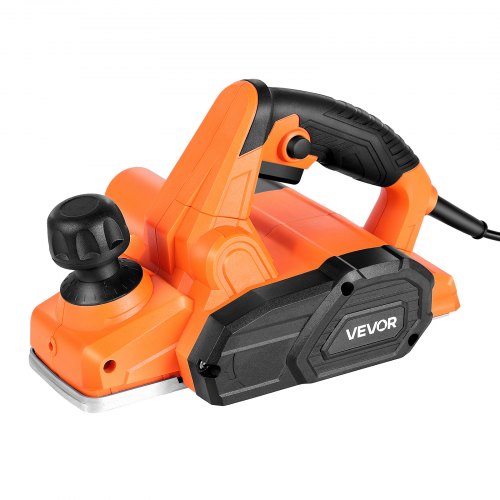
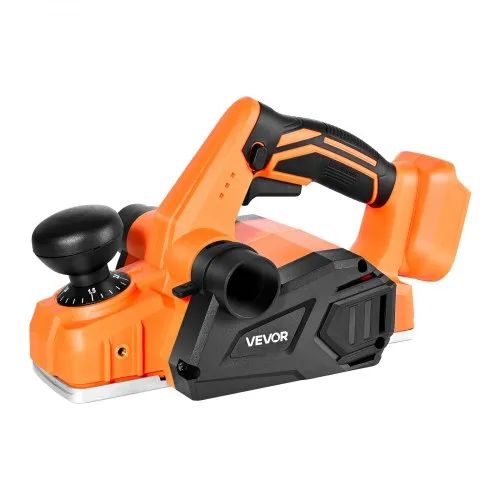
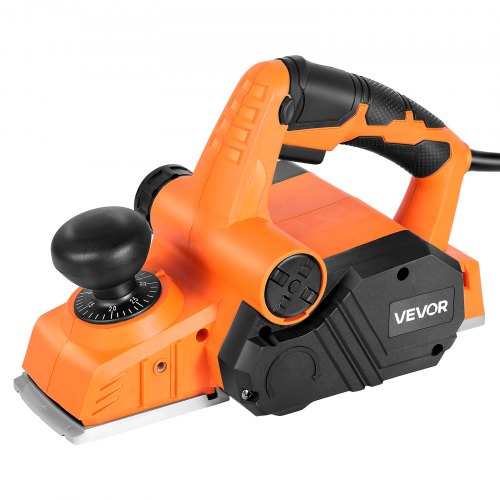
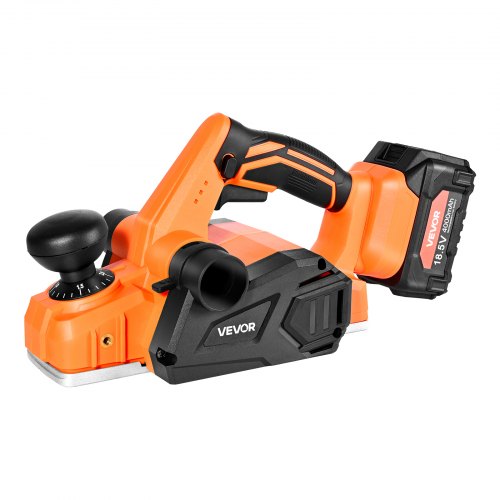
VEVOR offers a wide range of electric hand planers suitable for both professional workshops and private garages, enabling smooth, accurate wood removal. Our range can tackle every planning project, from cutting doors and leveling rough lumber to constructing novel shapes and chamfering edges. Each tool features powerful motors, customizable depth settings, and designs that make it easier to tackle hard woodworking tasks. VEVOR has the right tools that artisans need to get beautiful surfaces and correct dimensions on every job, all at a fair price and with great customer service.
VEVOR Electric Hand Planers: Versatile Hand Held Planers for Professional and DIY Woodworking
Are you looking for dependable equipment to smooth rough wood, trim resistant doors, or make surfaces absolutely flat? Electric hand planers turn slow, manual work into quick, accurate tasks that produce the same results on all types of wood. VEVOR sells a wide range of electric hand planers, from small to large. Our assortment has the cutting power your woodworking needs, whether you're constructing furniture, remodeling your home, or framing a building.
Understanding Cutting Width and Depth Capacity for Electric Hand Planers
To choose the best electric hand planers for your workshop, you need to know how cutting dimensions affect their adaptability and efficiency. The cutting width tells you how much surface area you can cover in one pass, and the depth capacity tells you how quickly you can remove material. By matching these specs to the kinds of projects you usually work on, you may achieve better results and avoid having your equipment slow down your work.
Choosing the Right Cutting Width for Your Projects
The breadth of the cut has a direct effect on how quickly you can work with different sizes of wood and finish different woodworking projects. Most standard electric hand planers have cutting widths between 3 and 3-1/4 inches. This is good for most ordinary tasks, such as fitting doors, joining edges, and smoothing the surfaces of boards up to a nominal 4 inches wide.
Narrow hand held planers are best for detailed work when accuracy is more important than speed. These little machines can get into tight spaces, handle smaller items, and carefully remove material when fitting joints or trimming moldings. Their narrower width makes it easier to see the cutting line and gives you more control when doing delicate work.
When cutting large panels, wide boards, or structural lumber, wider cutting capacities of 4 to 6 inches can greatly boost productivity. Electric hand planers with a wider base require fewer passes to flatten surfaces, making ridges less evident and speeding up project completion. Professional carpenters and furniture builders frequently choose these broader units because they operate better on large pieces of wood.
Maximum Depth Settings and Material Removal Rates
The depth capacity of your electric hand planer controls how much material it removes with each pass. Most entry-level power hand planers can only cut to about 1/16 inch deep, but professional-grade versions can cut to 1/8 inch or deeper. Knowing when to use shallow cuts and when to use deep cuts improves the finish and extends tool life.
Settings for shallow depth between 1/32 and 1/16 inch make surfaces smoother with little tearout, which is great for last passes and finishing work. These mild cuts put less pressure on the engine and make smaller shavings that are easy to clean up from the cutting area. When dealing with figured woods, softwoods that are likely to break, or when approaching the final measurements, use shallow settings.
Deeper cuts speed up rough dimensioning and heavy stock removal, but they also increase the risk of tearout and the motor's load. A hand held planer set to its deepest setting works well to remove twist, cup, or bow from raw lumber when it is first being flattened. To achieve smooth end surfaces without excessive sanding, always make deep cuts with the grain, then make lighter passes.
Balancing Width and Depth for Optimal Performance
Understanding how cutting width and depth work together can help you choose electric hand planers that perform well on all your projects. Wider cuts at the deepest point require much more motor power than narrow, shallow passes. Using the appropriate equipment for your typical workload ensures optimal performance, free from obstructions or overheating.
When planning wide boards, you have to make several passes that overlap, no matter how wide the cut is. To avoid ridges, keep the depth settings the same for all passes and slightly overlap each stroke. Handheld planers with accurate depth scales and positive stops make this process easier by ensuring consistent settings each time.
When listing your specs, think about what you use most. Standard 3-1/4-inch widths with a reasonable depth capacity are good for fitting doors and for ordinary construction. Furniture producers who work with rough woods, such as broader cuts, have a greater capacity to prepare their stock quickly. A mid-range electric hand planer can handle a wide range of tasks without requiring specialization in any particular area.
Practical Applications for Different Cutting Capacities
Examples from real world woodworking illustrate the practical application of cutting criteria. To fit inside doors, you need to remove small quantities of material from rather thin edges. Standard electric hand planers are great for this job. A few passes of the usual 1/8-inch cutting can fix most door clearance problems.
Reclaiming barnwood or processing rough-sawn lumber requires removing a lot of material quickly, which strains the machinery. To make the surfaces flat enough for furniture building, twisted, cupped boards may need to be passed over the full width several times with a 1/8-inch saw. A power hand planer with a large depth capacity can handle these tough jobs without taking too much time.
When chamfering and beveling, it's more important to maintain exact depth control than to remove the most material. To make consistent ornamental edges, you need to keep the same settings across long cuts. For these detail-oriented operations, where precision is more important than speed, a high-quality electric hand planer with fine adjustment mechanisms and clear depth scales is the best choice.
Power Ratings and Essential Features for Electric Hand Planers
Motor power, built-in functions, and cutting size all affect how easy it is to use daily and how happy you are with it in the long term. Knowing these things will help you choose electric hand planers that work well all the time and have the characteristics that make your woodworking process easier.
Motor Power and Performance Considerations
Motor ratings are strongly related to how well a saw can cut, especially when working with hardwoods or making deep passes. Most entry-level electric hand planers have motors that use between 5 and 7 amps, which is enough for softwoods and light-duty tasks. Professional electric hand planers can handle 7.5 to 15 amps, providing extra power for tough materials without slowing down.
Higher-amperage motors keep blade speed stable even under strain, resulting in cleaner cuts with less burning or ripping. If an electric hand planer encounters dense grain or knots, it may have enough power to keep running without stopping, which can damage the workpiece and put stress on the motor components. This constant performance is quite helpful when working with rare woods like oak, maple, and other hardwoods.
Advanced electric hand planers offer speed controls that let you adjust the blade speed to suit the job and material. You get less tearout, and they don't melt when you plane plastics or composite materials at a slower speed. Faster speeds make it easier to get stock out of softwoods. This ability to change speeds makes the device more helpful than devices with only one speed.
Convenience Features That Enhance Usability
Modern electric hand planers have many features that make them more comfortable to use and help projects go more smoothly. Dust-collecting ports link to shop vacuums and capture chips before they spread across work surfaces and into the air. Good dust control keeps cutting lines clear and significantly reduces cleanup time.
The onboard stands or parking rests keep the blades secure when you set down your instruments between cuts. This simple design keeps the blade from accidentally touching workbenches or metal surfaces, which can dull or nick it. A portable planer with a built-in rest is also more stable, so it is less likely to tip over in busy workplaces.
It's easier to labor for extended periods when the handles are easy to hold, and the weight is evenly distributed. The front knobs feature pleasant grip surfaces that let you adjust the tool's depth without losing control. Rear grips that allow natural arm angles reduce wrist strain during long operations. High-quality power hand planers have these qualities, making them more helpful over time and easier to operate for people who have to do a lot of work on tight project schedules.
Why Choose VEVOR Electric Hand Planers for Your Workshop?
VEVOR electric hand planers are ideal for woodworkers of all skill levels, featuring powerful motors, precise settings, and robust construction. Our full range comprises small handheld planers for detailed work, electric hand planers for a variety of tasks, and heavy-duty power hand planers for removing large amounts of stock. Each tool has high-quality parts, ergonomic designs, and useful features that make it easier to get things done every day. VEVOR offers consistent cutting performance your woodworking projects need at competitive prices and quick, responsive customer service. We invite you to explore our assortment today and plan with precision in your workspace.
FAQs
What cutting width works best for general woodworking?
The standard 3-1/4-inch cutting width works well for most woodworking tasks, such as fitting doors, joining edges, and smoothing surfaces. This size strikes a good balance between usefulness and ease of movement for a variety of project needs.
How deep should I cut when planing rough lumber?
For the first rough passes on boards that are twisted or cupped, set the maximum depth to around 1/8 inch. Gradually lower the depth to 1/32 inch for the final smoothing passes to create finished surfaces and reduce tearout.
Do electric hand planers work on hardwoods?
Yes, electric hand planers may work well on hardwoods if they have enough motor power. For oak, maple, and other dense woods, choose machines with a rating of 7 amps or higher. Use shallow depth settings to keep the wood from tearing out.
How often should planer blades be replaced?
When the cut quality drops substantially, usually after 20 to 40 hours of use, depending on the materials, you should replace or resharpen the blades. When blades go dull, they cause burning, tearing, and increased strain on the engine, so it's time to replace them.
Can handheld planers flatten large panels?
Handheld planers flatten panels by making overlapping passes with the same depth settings. This procedure works well to remove twist and cup from boards that are too wide for benchtop machines, though it is slower than with stationary planers.