Corner Stabilizer
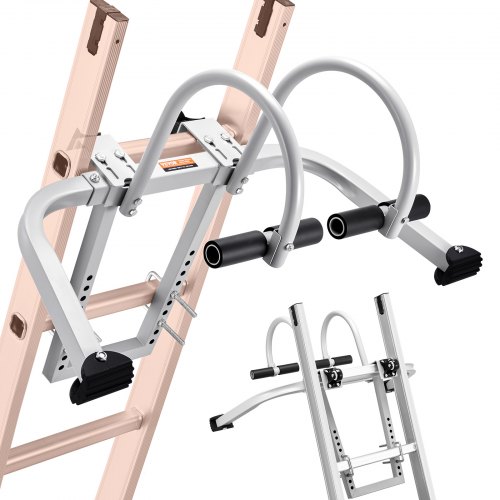


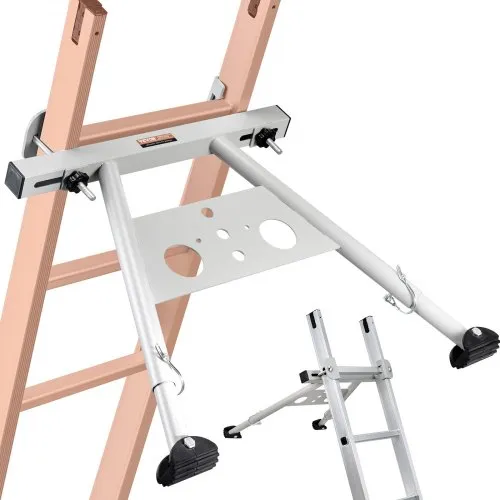


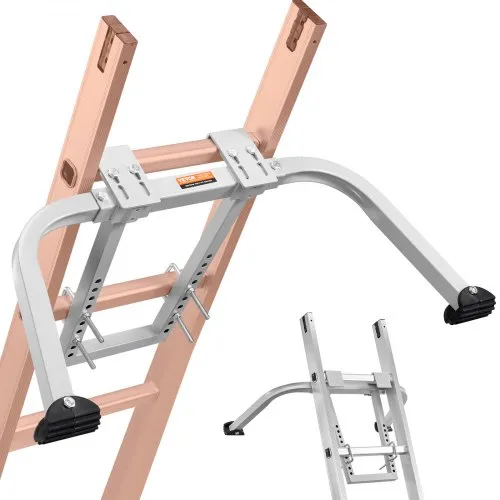


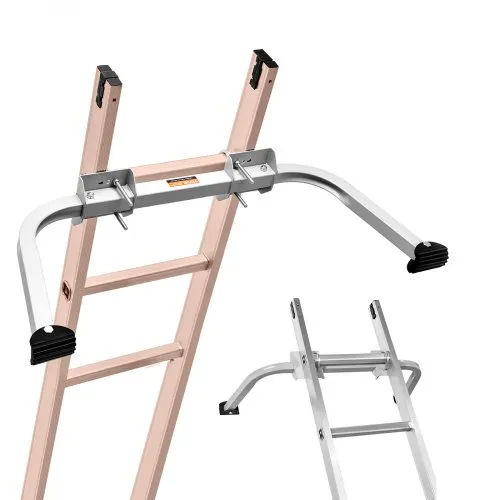


Results for Corner Stabilizer
With the whole line of corner ladder stabilizers from VEVOR, you can work at heights safely. VEVOR provides dependable ladder stabilization solutions for extension, step, and multipurpose ladders across typical work scenarios, catering to contractors, roofers, painters, and homeowners. VEVOR offers the ideal ladder stabilizer for any task, whether you require a ladder standoff stabilizer for painting walls or a ladder corner stabilizer for gutter maintenance.
VEVOR Corner Ladder Stabilizers for Wobble-Free Safety at Every Height
Are you using a ladder that moves, wobbles, or ruins the surface it rests on while working on gutters, fascia, soffits, or fixtures installed in corners? By spreading contact points over a larger base and maintaining the ladder's stability during each ascent and descent, corner ladder stabilizers provide the ideal solution to this issue. The sturdy design, firm grip, and useful flexibility of VEVOR's ladder stabilizers combine to provide safe work at any height, meeting the needs of a genuine job site.
Ladder Compatibility and Stabilization Method in VEVOR Corner Ladder Stabilizers
Whether a corner ladder stabilizer actually increases safety or just adds hardware depends on compatibility and stabilization technique. With stability designs optimized for real-world use and explicit compatibility specifications, VEVOR's range covers both.
How Corner Ladder Stabilizers Improve Safety Over Unsupported Ladders
When an unsupported ladder leans against a wall, it generates a single point of contact that moves laterally as the operator carries tools or reaches sideways. To create a stable triangulated contact geometry, corner ladder stabilizers use two widely separated arms that grab the structure on either side of the ladder's midline at this single point.
Even when the operator adjusts their weight during work, VEVOR corner ladder stabilizers prevent lateral movement by significantly increasing the effective support width. Additionally, the wider stance provides more space between the ladder and the wall, allowing work on window frames, gutters, and fascia without the ladder obstructing access or damaging completed surfaces.
Extension Ladder Compatibility and Mounting Systems
Extension ladder stabilizers must be mounted firmly to the top rail of the ladder without obstructing the rope-and-pulley adjustment or fly section travel systems. Full height adjustment is not possible with a stabilizer that clamps too close to the extension mechanism; a loosely mounted stabilizer completely shifts under lateral stress.
With positive-lock fasteners that maintain their hold under working loads, VEVOR extension ladder stabilizer models use clamp systems that fasten to the side rails at the top, away from the extension mechanism. The most popular extension ladder manufacturers' rail designs are compatible with clamp-jaw widths across both standard aluminum and fiberglass rail widths.
Corner Stabilization: Solving the Most Difficult Ladder Placement Problem
The hardest ladder positioning situation is when a standard ladder leans into an outside corner, since there is no flat surface to make contact with, forcing dangerous compromises. With arm geometry set up to make synchronous contact with both adjacent wall surfaces at a typical 90-degree corner, VEVOR ladder corner stabilizer designs address this issue.
Without the need for a level surface, the dual-wall contact provides a mechanically robust grasp that keeps the ladder firmly in place. For gutter cleaning, fascia painting, and soffit repair at building corners, non-marring contact pads on each arm prevent painted siding, rendered finishes, and cladding panels from scratching and indenting under load.
Stabilizer Load Ratings and Safe Working Practices
When performing actions such as prying, pulling cable, or applying pressure to a surface where operator-generated forces exceed anticipated levels, the ladder stabilizer's load rating—which specifies the maximum lateral force it can safely withstand is important. VEVOR ladder stabilizers are constructionally sound and qualified for both typical trade and do-it-yourself lateral load needs.
The entire system operates at the intended safety level thanks to the explicit load ratings and compatible ladder weight ratings on VEVOR models. Before each usage, check the tightness of the clamp fasteners and the wear of the contact pads. No matter the unit's rated capacity, a worn pad that slips over a smooth surface limits effective stabilization.
Material and Adjustability in VEVOR Corner Ladder Stabilizers
How long a ladder stabilizer lasts and how beneficial it is across different ladder types and work situations depends on its material construction and adjustment range. VEVOR manufactures its stabilizers with field durability and true adaptability in mind.
Steel and Aluminum Construction for Job Site Durability
The structure of VEVOR ladder corner stabilizer models varies, ranging from steel to aluminum. For operators who prioritize portability without compromising structural strength, aluminum helps minimize weight, while steel offers high stiffness under heavy lateral stresses. While aluminum models are naturally corrosion-resistant in frequently wet locations, such as gutter cleaning in rainy areas and coastal work, steel models with powder-coat finishes are resistant to corrosion from external moisture.
To avoid galvanic corrosion at clamp contact sites, a failure scenario that results in fasteners seizing or corroding loose on inferior stabilizers after a single wet season, fastener hardware for both types of construction uses stainless or zinc-plated steel. Over years of continuous outdoor use, VEVOR's material selection for its ladder stabilizers ensures the unit retains its clamping security, structural geometry, and contact pad positioning without developing play or looseness that indicates deteriorating construction.
Adjustable Arm Width and Angle for Versatile Stabilization
Only surfaces that closely match their intended contact arrangement are suitable for most fixed-geometry stabilizers to function properly. Depending on the available surface geometry, the arm width settings of the VEVOR ladder standoff stabilizer models can be adjusted to increase or decrease contact spread; they are wider for open wall sections and smaller for window bays and recessed architectural features. Because of its adaptability, a single VEVOR stabilizer can accommodate all likely placements throughout a typical trade workday.
On some VEVOR models, adjusting the arm angle maximizes the contact pad angle for non-vertical surfaces, such as angled cladding and sloped soffits. Positive-lock settings and clear adjustment marks ensure selected locations hold under load without creeping during use, providing consistent stabilization for all tasks for which the stabilizer is set up. This adaptability eliminates the need for multiple stabilizer models to cover various surface configurations on the same project site, which is beneficial for contractors who regularly work with a variety of building types.
Why Choose VEVOR Corner Ladder Stabilizers?
For safe work at heights, contractors and homeowners require lateral stability, ladder compatibility, and long-lasting construction, which VEVOR corner ladder stabilizers provide. Every product, from corner-specific designs for exterior corners to extension ladder stabilizer models for wall and gutter work, holds firmly and safeguards finished surfaces. Every operator can more easily carry out safer ladder work thanks to VEVOR's affordable prices and dependable after-sales assistance. VEVOR offers the ideal ladder stabilizer for any task, whether you require a ladder standoff stabilizer for painting walls or a ladder corner stabilizer for gutter maintenance. Work safer today by perusing the entire selection at VEVOR.com.
FAQs
What is the difference between a corner stabilizer and a standard ladder standoff?
A typical ladder standoff spaces the ladder away from a flat wall surface. Without a level leaning surface, a corner ladder stabilizer's angled arms can make simultaneous contact with the wall surfaces on either side of an outside corner, providing more stable support.
Will VEVOR corner ladder stabilizers fit my extension ladder?
Models of VEVOR extension ladder stabilizers are compatible with common width ranges for fiberglass and aluminum rail profiles. Verify rail width compatibility and ladder rail dimensions before making a purchase by checking each product page.
Do VEVOR stabilizers damage wall surfaces?
No, non-marring contact pads used in VEVOR ladder corner stabilizer models prevent scratches on painted, rendered, and clad surfaces when under working load. To ensure complete surface protection, check pads frequently and replace them if worn.
How do I install a VEVOR ladder stabilizer correctly?
Before climbing, make sure the pad makes contact with the surface, tighten bolts to the recommended torque, and attach clamps to the ladder's top rail section away from the extension mechanism. Every VEVOR model comes with comprehensive torque specifications and installation instructions.
Can VEVOR ladder stabilizers be used on both wood and vinyl siding?
Indeed. VEVOR corner ladder stabilizers' non-marring contact pads are generally safe for vinyl, wood, and the majority of finished exterior surfaces when used properly. Verify the condition of the pads before using them on softer or more easily marked surfaces, and add more padding if necessary.