Ladder Accessories










Results for Ladder Accessories
Ladder accessories are add-on components that attach to a ladder to make it safer and steadier while a person works at height. On their own they are not ladders. Each one corrects a specific weakness in how a plain ladder sits, leans, or holds its position. Some build a firm, level base where the ground is the problem. Others control how the top of the ladder meets the surface it rests against, so it does not rock, slide, or pull away under a worker's weight. Together they turn a basic ladder into a more stable and dependable working platform.
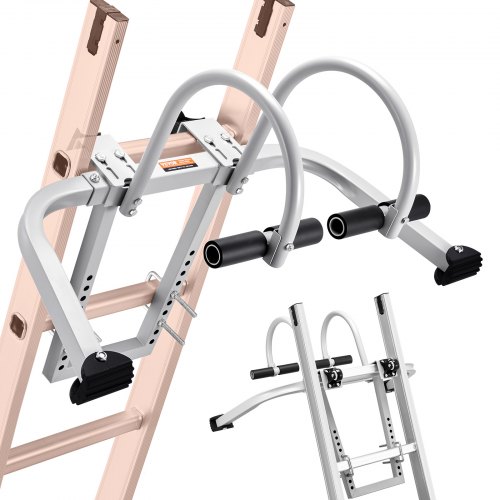
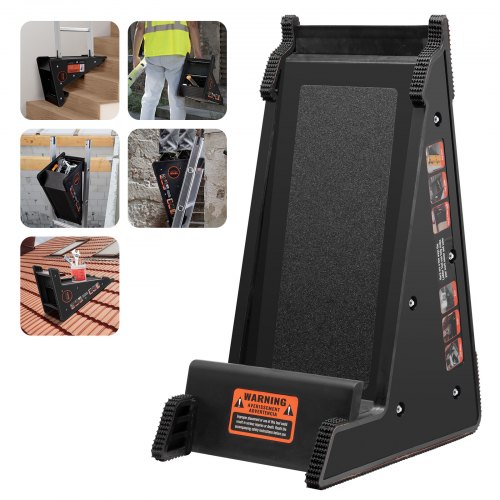
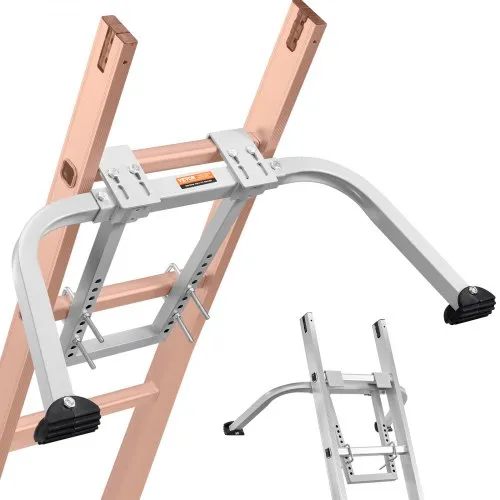
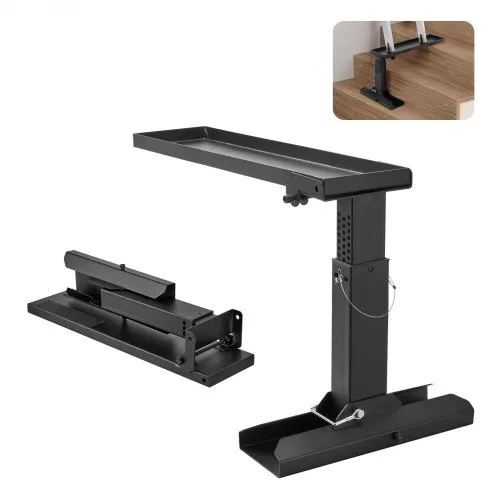
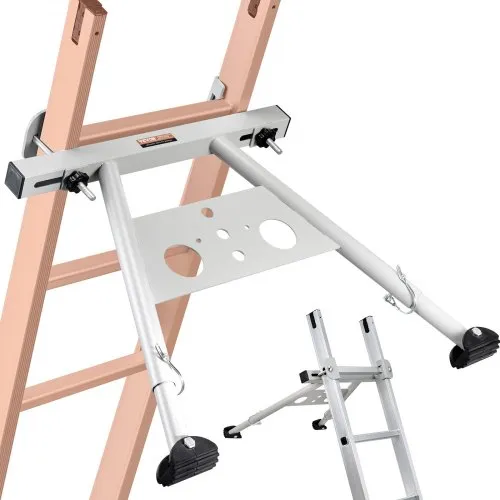
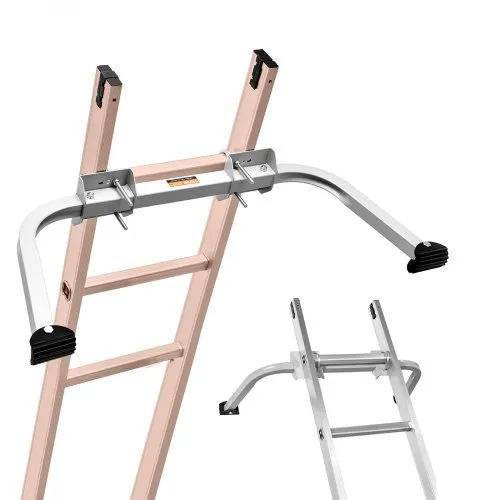
The range covers a few main types. Ladder levelers build a level base on uneven or sloped ground, in high-strength PP or carbon steel, with support heights that adjust up to around 18 inches. Corner stabilizers and flat-wall ladder standoffs mount at the top to hold the ladder steady against a wall or an outside corner, with load ratings near 330 lbs and standoff depths reaching nearly 28 inches. Ladder hooks and roof hooks anchor the ladder to an overhead beam or a pitched roof ridge. Typical uses are painting, gutter cleaning, roofing, window work, and repairs at height.
Four things decide what you need:
- Where the instability is: a leveler fixes an uneven base, while a stabilizer or standoff fixes a top that rocks or sits badly against the wall.
- Load rating: confirm the accessory carries your weight plus tools and materials, not only your body weight.
- Ladder fit: check stile width, step length, and ladder material (aluminum, fiberglass, or wood) against the stated range.
- Setup and transport: look for tool-free or single-tool fitting, and a folding or lightweight design if you move between jobs.
Browse the full VEVOR ladder accessories range to pair the right leveler, stabilizer, or standoff with your ladder and your job, backed by clear fitment specs and after-sales support on every ladder accessory.
Ladder Accessory Types at a Glance
Here is how the main types compare at a glance, so you can match the problem on your job to the right tool.
| Type | Engages (bears against) | Primary job | Distinctive part | Selection note |
|---|---|---|---|---|
| Ladder leveler | Uneven or sloped ground | Levels the base so the ladder stands vertical | Independently adjustable anti-slip feet | Choose when the ground, not the wall, is what is off |
| Ladder stabilizer | A flat wall face | Stops the top rocking side to side | Wide wing arms with rubber wall pads | The everyday upgrade for work above a straight wall |
| Ladder corner stabilizer | Two wall faces at an outside corner | Secures the ladder around a building corner | Articulating arm that wraps the corner | The only type that holds steady where two walls meet |
| Extension ladder standoff | A wall, held at a set distance | Keeps the ladder clear of the work area | Rigid arms with rubber wall tips | Pick when you must work on the surface the ladder would rest on |
| Ladder hook | An overhead beam, tube or ridge | Hangs the ladder from a fixed structure above | Heavy steel hook with non-slip facing | For hanging access where a solid structure is overhead |
| Ladder roof hook | A pitched roof ridge | Stops the ladder sliding down the slope | Ridge-engagement hook over the top rungs | Essential once the ladder must lie along a roof slope |
VEVOR Ladder Accessories: Levelers, Stabilizers, Hooks & Standoffs
You are not sure which ladder accessories will make your job safer and more productive in different situations. VEVOR's ladder accessories are designed to solve the most common problems with ladder stability, positioning, and access. They include ladder levelers, ladder corner stabilizers, ladder hooks, ladder stabilizers, extension ladder standoffs, and ladder roof hooks. These come in a variety of useful sizes that can be used with step ladders, extension ladders, and combination ladders in both home and business settings.
Ladder Accessory Type & Safety Features Explained
Each type of ladder accessory fixes a different safety or usefulness problem with a basic ladder. Knowing what each one does is the first step to making a safer, more useful ladder setup for any job. Assisting with leveling and stability at ground level, wall standoff positioning, and roof anchoring are just a few of the many ladder accessories that VEVOR offers. These accessories give tradespeople and homeowners all the tools they need to work safely at heights.
Ladder Levelers for Safe, Stable Setup on Uneven and Sloped Ground Surfaces
Many people who work on driveways, yard terraces, or other surfaces that aren't perfectly flat and level need ladder levelers. They are one of the most useful ladder accessories you can buy. If you don't have ladder levelers, you'll have to improvise shimming with bricks, wood scraps, or other unsafe materials that aren't very reliable, take a lot of time, and could fall apart while you're using the ladder.
Properly installed ladder levelers provide more safety benefits than just stability. A ladder that stands perfectly vertical sends weight directly down through the stiles to the ground, eliminating side stresses that could cause the base to pop out during climbing. The rubber foot pads on VEVOR's ladder levelers don't slip and can grip both hard surfaces (like concrete and pavers) and soft surfaces (like grass and dirt) without going through or damaging the ground.
Ladder Stabilizer and Ladder Corner Stabilizer for Wall Contact Security
A ladder stabilizer is an attachment that goes on top of a ladder and extends the contact points with the wall surface outward beyond the width of the ladder stiles. This spreads the lateral support load over a wider base and stops the bare ladder top from rocking and sliding when a worker bends over to reach something.
The ladder corner stabilizer solves the problem of safely setting up a ladder around the corners of an outside building, which a regular ladder stabilizer can't do because it can't touch two straight wall faces at once. The VEVOR ladder corner stabilizer features an articulating arm that wraps around the corner and contacts both wall faces. This gives the ladder stable, secure support and prevents it from sliding around the corner while in use.
Extension Ladder Standoff for Working Clear of Wall Surfaces and Obstructions
An extension ladder standoff keeps the ladder's top a set distance from the wall. This lets you work on gutters, fascias, and eaves without the top of the ladder touching the area you're working on. The VEVOR extension ladder standoff creates a clear space between the ladder and the wall, allowing painters, roofers, and gutter cleaners to reach every surface without issue.
There are rigid aluminum or steel arms on VEVOR's extension ladder standoff, with rubber tips that touch the wall. These rubber tips spread the standoff load over a larger wall contact area than the narrow stile tips of a bare ladder, which lowers the risk of surface marking while keeping the standoff in place during active use. The mounting hardware on VEVOR's standoff models safely attaches to standard extension ladder rungs without any permanent changes. This makes it easy to put them up and take them down between jobs.
Ladder Hooks and Ladder Roof Hook for Secure Overhead and Roof Anchoring
Assorted ladder accessories called ladder hooks give you a safe place to hang your ladder from the top. You can attach the ladder to a roof ridge, a scaffold tube, a beam, or any other horizontal structure that has a stable fixing point for the hook to connect. The heavy-duty steel used to make VEVOR's ladder hooks can hold the full weight of a person working with tools and materials. The hooks also have non-slip rubber surfaces that grip the supporting structure without leaving marks or damaging finished surfaces.
A ladder roof hook is a specialized hook designed to keep a ladder attached to a pitched roof surface while roofing, installing solar panels, maintaining chimneys, or accessing skylights. This is needed because the ladder must lie along the roof's slope and be held in place so it doesn't slide down. VEVOR's ladder roof hook fits onto the top rungs of a normal extension ladder and has a hooked ridge engagement profile that locks over the roof ridge. This prevents the ladder from moving downslope while it's in use.
Match the Accessory to the Job
Working backward from the task helps: this shows the right accessory for common jobs, the one fitment detail to check first, and what goes wrong if you skip it.
| Task or scenario | Right accessory | Fitment detail to check first | What goes wrong without it |
|---|---|---|---|
| Painting a stairwell | Ladder leveler | Height gap between the two ladder feet on the steps | Base kicks out sideways as you climb the uneven steps |
| Cleaning gutters along a wall | Extension ladder standoff | Standoff depth against the gutter and eave overhang | The top crushes the gutter and blocks the space behind it |
| Reaching a window above a sloped bed | Ladder leveler, plus a stabilizer | Slope grade and how soft the downhill ground is | Ladder sinks and twists on the soft downhill foot |
| Accessing a chimney on a pitched roof | Ladder roof hook | Roof pitch angle against the hook's rated range | Ladder slides down the slope with nothing holding it |
| Working around an outside building corner | Ladder corner stabilizer | Corner angle and contact on both wall faces | A flat stabilizer grips one face and slips around |
Choosing Ladder Compatibility & Installation
To see if an addition fits well with your current ladder and is easy to set up, check its compatibility and ease of installation. It's the difference between an accessory you use for every job and one you just keep in the van. VEVOR designs its ladder accessories for wide ladder compatibility and tool-free or minimal-tool installation.
Compatibility Specifications That Ensure a Secure Fit Across Every Ladder Type
Before buying a ladder stabilizer, leveler, hook, or standoff, check that it will work with other ladder accessories. VEVOR directly addresses this issue by including clear fitment specs for all of its ladder accessories. Ladder levelers show the range of stile widths and foot diameters they can work with. This includes the most common step and extension ladder stile sizes used by major ladder brands in both home and business settings.
VEVOR's ladder corner stabilizer and ladder roof hook models are both compatible with a wider range of ladder widths and roof pitch angles. The corner stabilizer's articulating arm can adapt to various corner geometries, and the roof hook's pitch adjustment works with the majority of roof-slope angles encountered in residential construction.
Simple Installation Designs That Get Accessories Fitted and Ready in Minutes
A stabilizer or leveler that needs complicated assembly or specialized tools to fit will be left behind on jobs where time is tight, which is exactly when the safety benefit it offers is most needed. Installation simplicity is a real practical priority for ladder accessories. It is possible to install VEVOR's ladder accessories with just one tool or without any tool. They connect to standard ladder rungs and stiles with clamp, pin, or bracket systems that don't require any permanent changes to the ladder.
You can tighten the quick-clamp or bolt-through attachment to the ladder stile base with a standard spanner or by hand, depending on the model. To change the height of each foot separately, you turn the threaded foot body against the adjustment lock. This is an easy process that doesn't need any instructions after the first use.
Best-Seller Comparison
These are the ladder accessories currently stocked in this category, set side by side on the specs that separate them.
| Product | Position | Material | Load rating | Adjustment | Net weight | Best for |
|---|---|---|---|---|---|---|
| PP Pitch-Hopper Leveler, 380 lbs | Base leveler (ground) | PP | 380 lbs | Fixed platform, 26 and 77 degree angles | 8 lbs | Highest load here and the only one with onboard tool storage; stair and step work |
| Steel Folding Leveler, 23.4 in | Base leveler (ground) | Carbon steel | / | Support height 11.4 to 18 in | 9.37 lbs | Only leveler that folds flat and adjusts by height; tall, uneven stair rises |
| Fixed Wing-Span Standoff, 330 lbs | Top standoff (rungs) | Carbon steel | 330 lbs | Fixed standoff, three leg positions | 6.48 lbs | Lightest unit and the only one with a rooftop ridge hook; quick gutter jobs |
| Adjustable-Feet Standoff, 27.95 in | Top standoff (rungs) | Carbon steel | 330 lbs | Five leg positions, depth 20.55 to 27.95 in | 9.96 lbs | Only standoff with adjustable depth; deep soffits and wide eaves |
Shop VEVOR Ladder Accessories for Safer, More Capable Working at Height
Ladder levelers and stabilizers for secure ground-level setup, as well as extension ladder standoffs, ladder hooks, and ladder stabilizers that increase safe access across any wall geometry and roof pitch, are just a few of the many ladder accessories offered by VEVOR. Each item is made from high-quality materials and is easy to assemble, so that it can be used correctly on any job. VEVOR makes professional-grade ladder safety easy for everyone to get by offering low prices and reliable customer service after the sale.
FAQs
What is the difference between a ladder stabilizer and a ladder corner stabilizer?
A standard ladder stabilizer extends contact points outward from a flat wall surface to prevent sideways rocking. A ladder corner stabilizer is specifically designed for external building corners, using an articulating arm that contacts both perpendicular wall faces simultaneously, preventing the ladder from sliding sideways around the corner during use on two-face access situations.
How much ground level difference can VEVOR's ladder levelers compensate for?
VEVOR's ladder levelers typically provide independent height adjustment of several inches per side, sufficient to compensate for the ground level differences encountered on most sloped driveways, garden terraces, and uneven outdoor surfaces. Always verify the model's specific adjustment range against your most extreme anticipated ground-level difference before purchasing.
Are VEVOR's ladder accessories compatible with fiberglass ladders as well as aluminum?
Yes. VEVOR's ladder accessories use clamp-and-bracket attachment systems that grip standard ladder stile and rung dimensions, regardless of whether the ladder is aluminum or fiberglass. Always verify the stile width and rung spacing compatibility specifications of the specific accessory against your ladder's dimensions before purchasing to confirm a secure fit.
What roof pitch angles does VEVOR's ladder roof hook accommodate?
VEVOR's ladder roof hook models feature pitch-angle adjustment to accommodate the range of roof slopes commonly encountered in residential construction, from low-pitch roofs around 15 degrees to steep pitches of 45 degrees and beyond, depending on the specific model. Always verify the pitch adjustment range against your roof's actual slope angle before purchasing.
Can ladder hooks be used on scaffold tubes as well as roof ridges?
Yes. VEVOR's ladder hooks are designed for use on any horizontal overhead structure that provides a secure bearing surface for the hook geometry, including scaffold tubes, structural beams, roof ridges, and wall plate timbers. Always verify that the supporting structure's diameter or width falls within the hook's engagement range and that the structure's load-bearing capacity exceeds the combined working load of the user and equipment.
What are the most essential safety accessories for a ladder?
The core four safety ladder accessories are a leveler for uneven ground, a stabilizer for wall-face steadiness, a standoff to set the top clear of the work, and a roof hook for pitched surfaces. Match each to your main risk, then confirm it fits your ladder before buying.
What are the best ladder levelers for roof access?
For roof access, the best leveler is a sturdy base model that sets the ladder plumb on the uneven ground beside the house, such as a steel or PP VEVOR ladder leveler. For the slope itself, add a standoff or roof hook, as a base leveler alone will not anchor a ladder to a roof.
How do I choose the right stabilizer for my ladder?
Start with your ladder's stile width, step length, and material, then match them to the stabilizer's stated range. VEVOR standoff stabilizers fit common square ladders roughly 11.8 to 17.3 inches wide. Then decide between a fixed model and an adjustable-depth one, based on your wall or soffit.
Are ladder stabilizers safe and easy to install?
Yes. VEVOR stabilizers ship with the full hardware set and clamp to standard ladder rungs with no permanent changes, so most fit in minutes without special tools. Safety features such as anti-slip rubber feet and a locking clip or D-ring hold the unit in place during use.
Which ladder stabilizer is best for heavy-duty use?
For heavy-duty work, choose a carbon-steel standoff rated for the load you expect to carry. VEVOR's steel stabilizers are rated to 330 lbs, enough for an adult plus tools. If you also need deep clearance over wide eaves, the adjustable-feet model extends the standoff depth to nearly 28 inches.