Dividing Head






Results for Dividing Head
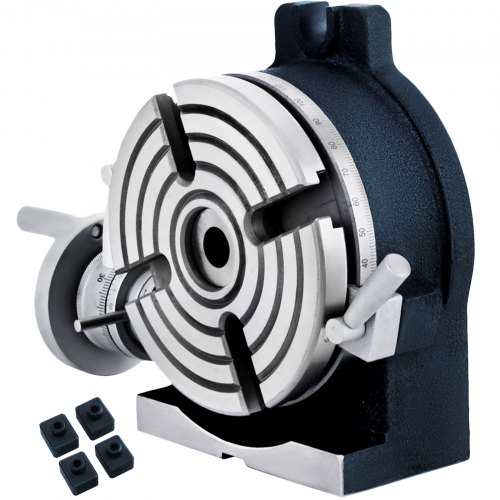
You can cut gears, splines, hex flats, and bolt circles accurately every time, instead of guessing. VEVOR dividing heads include semi-universal manual models, plate-indexed units, and 4th-axis CNC configurations for automated work. There are sizes from BS-0 to BS-2, and the three-jaw and four-jaw chucks, tailstocks, and index plate sets all match. With 40:1 ratios, hardened worm gears, and cast iron bodies, this machine can divide evenly in all 360 degrees. Ideal for toolrooms, gear shops, prototype workshops, machinist training programs, and people who run tabletop and knee mills at home.
VEVOR Dividing Heads for Accurate Milling and Indexing Operations
Need to drill a six-hole bolt pattern, cut a 37-tooth gear, or mill flats at exact intervals? Doing that by hand wastes stock and tools. A dividing head keeps your workpiece at the same angle every time. This makes it easy to set up difficult indexing jobs again and again on the machine you already own.
Dividing Head Types and Axis Configuration Options
What work you can do and how much of it can be left alone depend on the type and axis configuration. Figure them both out first, then pick a unit.
Semi Universal Manual Dividing Heads
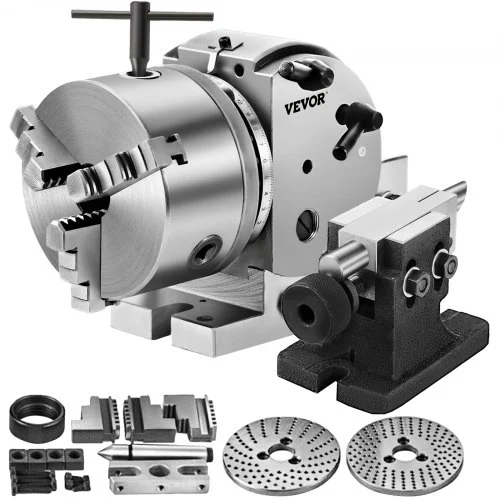
To divide a full rotation into exact steps, a semi universal dividing head has a worm and a wheel with index plates. When you turn the crank a certain number of holes on a certain plate circle, the spindle moves exactly as you expect. With a 40:1 worm ratio, 40 crank turns make one spindle revolution. With that ratio and the plates that come with it, you can do most common divisions immediately, from 2 to 50, and many higher counts with simple plate math.
You can tilt the spindle from horizontal to vertical with the help of a precision semi universal dividing head. This tilt lets you make bevel gears, angled faces, and tapered flutes without using a separate tool. Manual units require no electronics, controller, or programming. This is a real plus for a shop that only needs to cut gears or make bolt circles occasionally. Setup takes minutes, and nothing could go wrong electronically years from now.
4th Axis CNC Indexing Heads
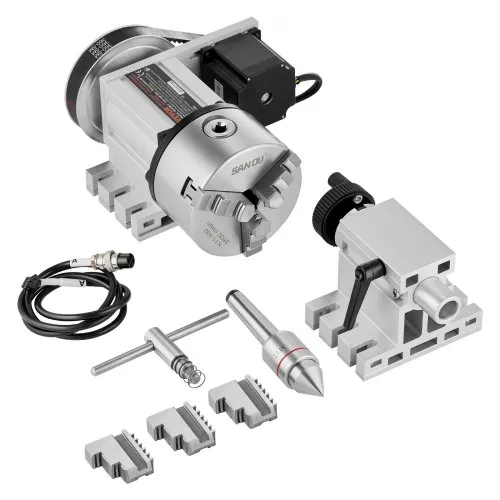
Your machine's controller directly controls a servo or stepper motor in a 4th-axis CNC indexing head instead of the crank and plates. You set an angle, and the head moves to that angle instead of counting holes. When this happens, jobs become more efficient. Because the head moves with X, Y, and Z instead of switching between separate manual operations, you can do helical milling, continuous rotary cutting, and complex parts that need to be in more than one place.
When mounting an A-axis indexing head, make sure that its rotation is parallel to the X axis. This is the most common way to mill along a cylinder. Before you buy, make sure that your controller can handle a fourth axis. Many cheap systems can't. The real benefit is the throughput. Someone doesn't have to manually turn twelve cranks for a part that needs twelve indexed positions; the head can index automatically. This level of dependability quickly offsets the extra cost, even for small production runs.
Sizing and Chuck Configuration
The BS number indicates the head size, or center height above the table. BS-0 units work well with benchtop mills and small parts, while BS-2 units can handle full knee mills with larger diameters. Center height should match your machine's Z movement. If a mill's head is too high and the quill can not move far, you can not reach the work with a cutter that is long enough.
Chuck choice is just as important. Three-jaw self-centering chucks can quickly hold round stock and work with most gear blanks. You can set the offset positions on four-jaw independent chucks, which can hold square, rectangular, and irregular work. A semi universal milling set usually has the head, chuck, tailstock, and index plates all in one package. When you buy a set, you can be sure that the threads on the chuck backplate match and that the tailstock center height is straight. If you buy parts separately, these two details can be very frustrating.
Mounting, Alignment, and Tailstock Use
Ensuring accurate mounting affects the accuracy of the final part. After using the T-slots to attach the head to the table, make sure the spindle is aligned along the X-axis before cutting anything. Long workpieces need tailstock support. Without it, cutting forces would deflect the free end, making cuts tapered or chattering. Make sure that the center height of the tailstock is the same as the head spindle.
If you need a dividing head for mill work involving shafts between centers, don't clamp them in the chuck. Instead, use a drive dog and a faceplate. This lets you flip the part from end to end without losing track of its angle. Before you cut, you should always lock the spindle. Most units have a spindle brake that, when engaged, keeps the worm from moving backward during cuts. If you skip this step, you will quickly end up with a broken gear blank and cutter.
Precision and Practical Applications of Dividing Heads
Specifications for accuracy and real-world uses in the shop finish off the picture. Consider both before you choose a unit.
Understanding Accuracy and Backlash
Most good dividing heads have an accuracy of 30 to 60 arc-seconds for angles, which is more than enough for gear cutting and general indexing work. The real issue is backlash in the worm drive. Always move toward your goal from the same rotational direction, making sure you always pick up slack. When you go backward to fix an overshoot, you add an error equal to the backlash amount.
Look for a worm mesh you can tweak. Better units let you adjust for wear over time instead of growing play. Also, make sure the sector arms can move freely and lock securely. A sector arm that drifts can easily mess up a division process halfway through a part.
Common Shop Applications
Most shops use one to cut gears. With the right involute cutter and a milling machine dividing head, you can make spur gears, sprockets, and ratchets in-house instead of waiting for a supplier. A mill indexing head can also make splines, serrations, hex and square flats on round stock, and evenly spaced holes on flanges. On a rotary table, the work is similar, but an indexing head for mill applications is more rigid for heavy cuts.
Prototype shops like how flexible it is. With a mill dividing head, you can make one-of-a-kind gears, custom fixtures, and replacement parts for old machines. This is work you would otherwise have to pay someone else to do in large quantities.
Why Choose VEVOR Dividing Heads?
You can get everything from VEVOR, including semi-universal manual heads with tilting spindles, plate-indexed units in sizes BS-0 to BS-2, and 4th-axis CNC indexing heads for automatic work. Built around hardened worm gears and strong cast-iron bodies, complete sets include matching chucks, tailstocks, and index plate collections. You get toolroom-grade capabilities at a direct price, along with helpful customer service and a clear warranty. Do not hire outside shops to do work that you could do yourself. Check out the whole VEVOR collection right now.
FAQs
How many turns does this use?
The worm ratio in most dividing heads is 40:1, which means that forty crank turns are equal to one spindle rotation. With the included index plates, this covers divisions from 2 to 50.
What size should I pick?
Match the BS number to your mill. BS-0 is good for benchtop machines and small parts, while BS-2 is better for knee mills with bigger diameters. Check the center height against your Z travel.
Chuck with three or four jaws?
Three-jaw self-centering chucks are best for holding round stock and gear blanks. There are four-jaw independent chucks that can hold both square and irregular work and let you place eccentric features off-center on purpose.
Should I get a tailstock?
Yes, for any piece of work that is far from the chuck. When cutting force hits unsupported stock, it bends, causing taper and chatter. Make sure the center height of the tailstock is the same as the spindle.
Can I use a CNC head on my machine?
If your controller can handle a fourth rotary axis, then yes. Many basic programs don't. Before you buy an indexing head, make sure you know what the controller can do and what drive outputs are available.