Drywall Hand Sanders








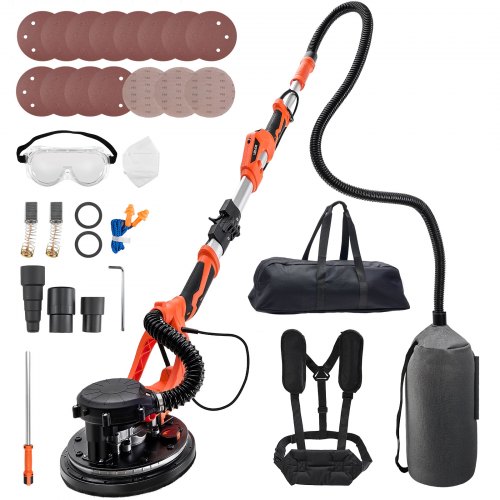


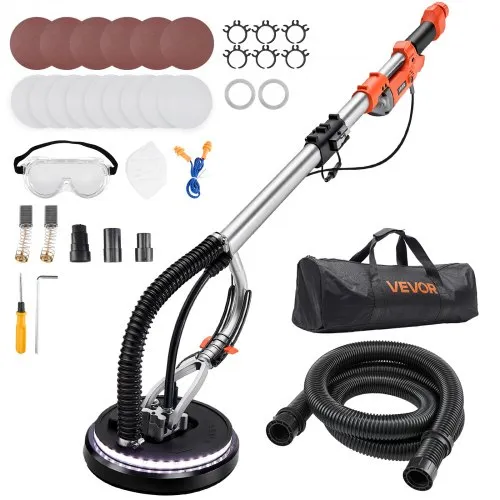


Results for Drywall Hand Sanders
VEVOR's drywall sanders cover every stage of wall and ceiling finishing, from compact 800W models for quick patch jobs to powerful 1150W units built for full-room projects. Whether you call it a sheetrock power sander, a sander for sheetrock, or just a wall sander, VEVOR has pole and round designs with built-in dust collection. These sheetrock sanders are for drywall installers, remodelers, and DIYers who want a smoother finish with less hand-held effort. VEVOR’s drywall sanders are suitable for all skill levels and all job sizes, from first-time renovators to full-time contractors.
VEVOR Drywall Sanders: Electric Pole and Round Sanding Machines for Drywalls
Tired of sore arms and dust clouds after you finish the drywall seams by hand? A reliable power drywall sander machine makes sanding joint compound, texture, and paint prep work easier. VEVOR’s drywall sanders, from light pole units for ceilings to heavy-duty round models for detail work, give weekend DIYers and professional crews a useful drywall sander to work faster and cleaner.
Choosing Drywall Sanders by Power Rating and Sander Type
Not all drywall sanders are equal in terms of power. Here is how type and wattage affect performance.
800W to 900W Drywall Sanders for Everyday Jobs
Most homeowners and weekend DIYers will find 800W to 900W drywall sanders powerful enough for patching, skim coating, and general wall prep, yet easy to control when working overhead. If you plan to sand the ceiling more than once or are new to power sanding and want an easier learning curve, the 800W drywall sander tool is the lightest in VEVOR’s lineup and a solid option.
An 850W drywall sander gives you a little more torque to cut through thicker ridges of dried joint compound without a heavy jump in weight or vibration. This middle tier suits renovators working on an entire room of drywall rather than a single patch job, since the extra power helps maintain consistent speed over large, flat areas.
The entry-level model is a 900W drywall sander, giving you the most power before you step up to heavy-duty tools. A good choice for small contracting crews or serious DIYers who sand multiple rooms in a weekend and want to avoid motor strain. All three wattages in this range typically use 6- to 9-inch sanding heads, balancing coverage and maneuverability for tighter spaces like closets or stairwells.
950W to 1150W Drywall Sanders for Heavy-Duty Projects
Drywall sanders from 950W to 1150W provide the continuous power to keep up without overheating or bogging down on dense compound when sanding an entire new-build interior or running a drywall finishing business. A 950W drywall sander delivers significantly more torque than entry-level models so that you can cut through textured ceilings and thick mud lines with fewer back-and-forth passes.
Leading off VEVOR’s lineup is the 1150W drywall sander, designed for constant, heavy-duty use on big commercial or new-construction jobs. Its more powerful motor keeps disc speed steady under heavy pressure, which matters when you're trying to finish a job on a tight schedule and can't afford the sander bogging down mid-wall.
Higher-wattage models do run a little heavier, so operators working overhead for extended periods may want to pace themselves or alternate with a lighter unit during marathon sessions. For full-time drywall finishers, however, the extra power of a 950W or 1150W motor usually pays for itself in reduced sanding time, fewer passes per seam, and a noticeably smoother first pass.
Electric Pole Drywall Sanders for Ceilings and High Walls
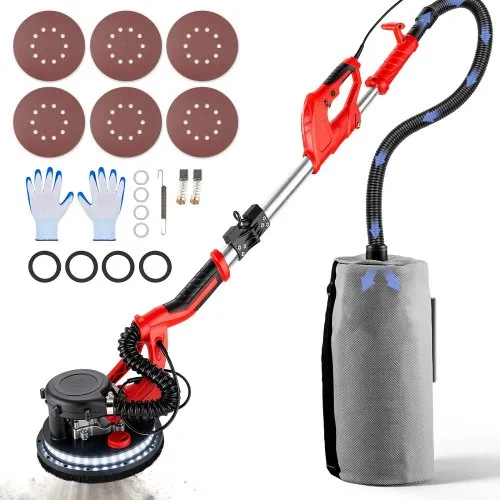
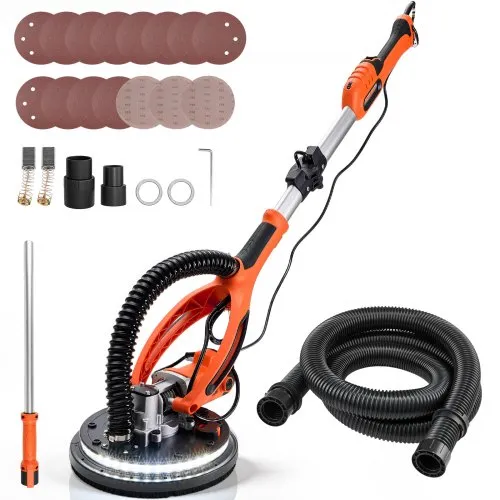
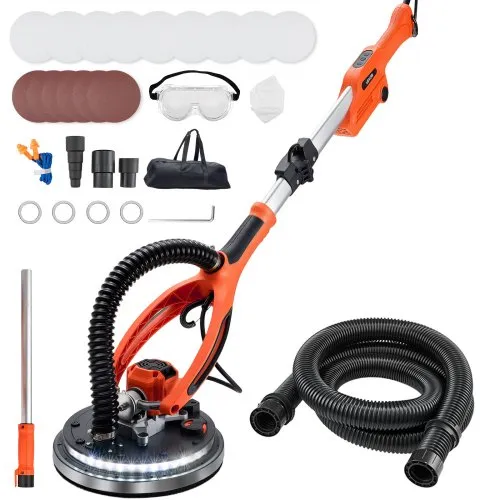
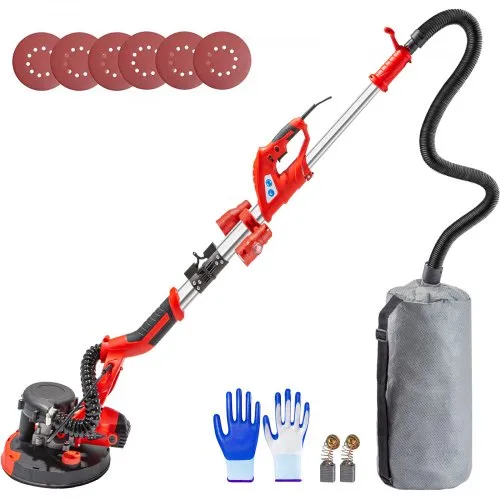
An electric pole sander for drywall is the way to go when you have ceilings or tall walls that would otherwise require a ladder and a sore shoulder. These drywall sanders feature an adjustable pole that extends the sanding head, so you can work standing up. This means you can cover a much larger area per session while keeping dust and debris away from your face.
Most VEVOR electric pole sanders for drywall feature a swiveling head that turns as you sand, keeping the disc flush to the surface even if your arm angle changes. This comes in handy, particularly when moving from a flat ceiling to an adjoining wall, so you don’t have to stop to readjust the tool.
As a dedicated ceiling sander, a pole model also reduces the fine dust that falls on your face and gets in your hair compared to sanding overhead by hand or with a handheld unit. Most pole sanders are attached directly to a shop vac or the unit’s own dust collection, so the debris is vacuumed up at the source instead of falling on you. For large rooms, vaulted ceilings, or stairwell walls, a pole sander often cuts the total project time nearly in half compared to handheld sanding alone.
Round Sanders for Detail Work and Tight Spaces
Pole models are great for open ceilings, but a electric sander for drywall round sander is better for detail work, corners, and tight spaces where a long handle gets awkward to maneuver. The compact, disc-shaped head comes closer to trim, light fixtures, and inside corners than a pole-mounted unit ever could.
Additionally, using a round wall sander with one hand is simpler. This helps when working near outlets, switch boxes, or door frames, where accuracy matters more than coverage speed. Depending on whether they are cleaning up detail seams along baseboards or covering a huge flat ceiling, many finishers will have both a pole unit and a round type on standby.
Because of their shorter reach, round plasterboard sanders are typically lighter and easier to pack in a tool bag or small van, which appeals to contractors who are always on the go. Without the added length and weight of a pole attachment, a round sander is easier to handle for repairs, remodels, and touch-ups rather than full-room finishing.
VEVOR Drywall Sanders for Dust Collection and Key Features
In daily use, dust management and minor design details matter as much as power and shape.
Vacuum Port Dust Collection and Integrated Dust Bags
A lot of fine dust is produced when plasterboard compound is sanded. One of the most important things to compare when buying is dust collection. Instead of letting dust settle on the floor, furniture, or into your lungs while you sand, the drywall vacuum sander uses a hose port to connect to your shop vacuum. This is especially helpful when remodeling indoors, where dust containment matters for cleanup time and air quality.
A drywall sander with dust bag is a simpler self-contained solution if you don't have a shop vacuum that works with it. Although it usually doesn't collect as many fine particles as a genuine Hoover connection, it attaches directly to the tool's exhaust port. It collects most coarse dust on the job site. For smaller patch work, dust bags can be more convenient because they are easier to tote and eliminate the need to run a hose down your pole or line.
For fast touch-ups, several VEVOR versions come with a dust bag or a whole-room hoover hose. In any case, effective dust collection shortens cleanup times and protects your respiratory health during lengthy sanding sessions, which is important for major restoration projects.
Features That Make Using a Plasterboard Sander Easier
Because bare plasterboard paper, compound, and texture all respond differently to abrasive contact, a variable speed drywall sander allows you to adjust the disc's rotation speed. Higher speeds speed up material removal on hardened, harder compounds or for leveling ridges left by a taping knife, while lower speeds reduce the chance of gouging soft, fresh mud.
Motor type is another factor to consider. Without the duration limits or power drop of a battery pack, a corded drywall sander provides continuous power as long as it is plugged in. For all-day finishing work, however, most professional crews prefer a corded electric plasterboard sander because battery changes and charging downtime quickly add up over a workday.
Look at the tool's marketing and description, not just the motor. Some manufacturers sell an electric drywall sander as a specialized tool. Some sell it as a versatile wall sander that can also be used on plaster or old paint. A decent drywall sanding machine should be easy to hold, vibration-free, and have a head that stays flat on the surface instead of penetrating. The most frequent cause of noticeable sanding lines following painting is uneven pressure.
Why Choose VEVOR Drywall Sanders?
From a light 800W pole unit for ceiling touch-ups to a heavy-duty 1150W professional drywall sander for daily job-site use, VEVOR's drywall sanders cover the full range homeowners and contractors need. Each model maintains construction quality while balancing motor power, dust control, and comfortable handling at a price significantly lower than boutique sanding-tool makers. You can outfit your entire crew with a single lineup thanks to pole and circular designs, hoover ports, and dust bag options. Choose the kind and power rating of VEVOR's plasterboard sanders for your upcoming job.
FAQs
What wattage drywall sander do I need for a full room?
950W to 1150W models are best for sustained use for whole-room jobs. Lighter 800W to 900W units work well for patch repairs, touch-ups, and smaller ceiling sections where you need less torque.
Is a pole sander or round sander better for ceilings?
A pole sander is usually better for ceilings because you can sand from the floor; no ladder needed. Round sanders are good for getting into detail areas such as corners, trim, and tight spaces that a pole can't reach.
Do drywall sanders need a shop vacuum to control dust?
Not necessarily. Many models come with a dust bag for basic containment, but hooking up a shop vacuum to catch far more fine dust is highly recommended for larger indoor renovation and remodeling jobs.
Can I use a drywall sander on plaster or painted walls?
Yes, most electric drywall sanders work on plaster, painted drywall, and textured surfaces, but you may need a coarser-grit abrasive disc for painted or heavily textured surfaces than for bare joint compound.
Are corded drywall sanders more powerful than cordless models?
Yes, usually. Corded models deliver full power as long as you are plugged in. Cordless models are limited by battery capacity and tend to lose power output as the battery runs down.