

Electric Fencing






Results for Electric Fencing
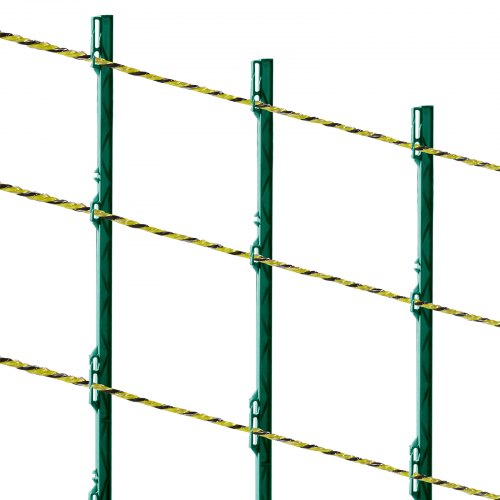
Electric fencing is a fence system that keeps animals in or out with a brief pulse instead of a solid barrier. It usually contains an energizer, a conductor such as polywire or polytape, insulators, posts and a ground rod. The energizer sends a high-voltage pulse along the line about once a second, and an animal that touches it completes the circuit through the ground and feels a shock. It is designed for cattle, horses, sheep, poultry, gardens and pets. Unlike woven wire fencing, it relies on the pulse, so lighter posts can do the job.
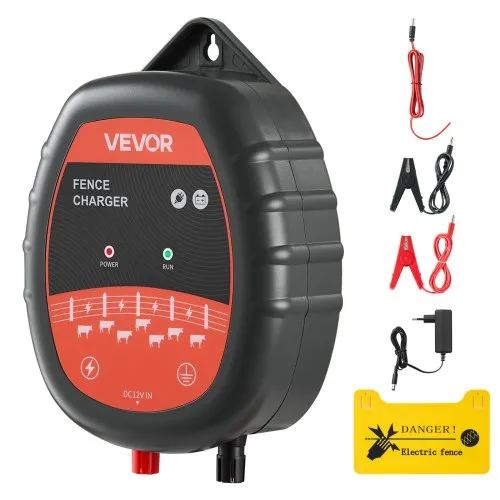
This page sells energizers and the line they power. Solar fence chargers pair a 10 W panel with a built-in battery for paddocks with no outlet, in 1 J and 0.3 J versions. Multi-powered chargers run from mains, a 12 V battery or solar and switch between 2, 3 and 5 J for long, weedy lines. Plug-in fence chargers give a fixed pulse for barns with power close by. Electric fence polywire comes as a 3366 ft reel of 1/8 in line with six stainless strands, while electric fence polytape widens to 3/4 in so horses can see it. Farmers, horse owners and gardeners choose by fence length, the power on site and the animal they need to stop.
Five things decide which one fits:
- Electrical role: whether the item makes the pulse or carries it.
- Fence reach: the length of fence one unit or reel covers.
- Power supply: solar, mains, battery, or none for the line itself.
- Weather protection: the housing rating or material that faces rain and sun.
- Carry weight: what you haul across the field.
Browse every electric fencing item here, then head back to all fencing and gates.
Electric Fencing Parts at a Glance
Each part of an electric fence has its own job, so the rows below show output energy, power source and weather rating.
| Type | Output Energy | Power Source | Weather Rating |
|---|---|---|---|
| Solar fence charger | 1 J at 10 kV | 10 W panel and built-in 10.8 V battery | IP65 |
| Multi-powered charger | 2, 3 and 5 J at 8 to 12 kV | AC adapter, 12 V battery and solar input | Not specified on the product page |
| Plug-in fence charger | 3 J | AC adapter, external 12 V battery and solar | IP65 unit, adapter not waterproof |
| Electric fence polywire | None, carries the pulse | None, needs a separate charger | UV-stabilized HDPE |
| Electric fence polytape | None, carries the pulse | None, needs a separate charger | UV and rust resistant HDPE tape |
VEVOR Electric Fencing Including Wire, Chargers, Solar Energizers, and Tape
Are you searching for electric fencing components that offer crop protection and efficient, humane animal containment for a wide range of farms, smallholdings, and rural properties without the material costs and installation difficulties of conventional physical fencing? For all livestock and property applications, VEVOR provides electric fence chargers, solar fence chargers, electric fence energizers, electric fence wire, aluminum fence wire, and electric fence tape. For your installation, choose the appropriate fence length coverage, power source, and component type right now.
Electric Fencing Component Types and the Power Sources Each One Uses
The performance of an electric fencing system depends on how well the conductor type, energizer power source, and installation technique meet the particular application, topography, and animal management needs. For a comprehensive, efficient fence system installation, VEVOR's electric fencing range covers all major components.
Electric Fence Chargers for Mains-Powered Installations
The high-voltage, low-current pulse that electric fencing systems deliver to the fence conductor is converted by an electric fence charger from a standard mains electrical supply. The pulse duration and current level specified by safe electric fence design standards produce the sharp deterrent shock that teaches animals to respect the fence boundary without causing lasting injury. To maximize the deterrent shock's effectiveness while maintaining energy per pulse within the safety parameters required by livestock fencing standards for animal and accidental human contact scenarios, VEVOR electric fence chargers use transformer and capacitor circuitry that stores energy between pulses and releases it during the controlled pulse duration.
Higher joule output is required for longer fence runs, multiple fence strands, and vegetation contact that drains current from the conductor through resistive shorting, lowering the voltage reaching the fence perimeter. The output joule rating on VEVOR electric fence charger models indicates the stored energy delivered per pulse to the fence conductor. If a charger's joule output does not provide enough current reserve to maintain adequate voltage across the entire fence length under realistic contact resistance conditions encountered in field installations during normal seasonal vegetation growth, it might not produce enough voltage on a longer or weed-contacted fence run.
Solar Fence Chargers and Electric Fence Energizers for Remote Locations
In remote paddock locations, off-grid rural properties, and temporary grazing installations where running mains power to the fence energizer would require expensive cable infrastructure that the seasonal or transient nature of the installation does not justify, a solar fence charger uses a photovoltaic panel to charge an internal battery that powers the fence energizer without requiring a mains electrical connection. VEVOR solar fence chargers simplify installation to a single-unit mounting and fence conductor connection without separate component wiring by combining the solar panel, battery storage, and energizer electronics into a single weatherproof unit that installs directly on a fence post.
The number of consecutive cloudy days that a VEVOR solar fence charger model can run at full output without solar recharging depends on its battery capacity. Larger battery reserves provide the autonomy required in areas with prolonged cloud cover, where several days without useful solar input are a regular seasonal occurrence rather than an exceptional weather event. In contrast to the permanent solar charging of a self-contained solar fence charger, electric fence energizer models that run on a 12-volt battery without an integrated solar panel offer the flexibility of battery-powered fence energizing in situations where solar charging is impractical but a regularly recharged battery provides acceptable ongoing management.
Electric Fence Wire and Aluminum Wire for Permanent Installations
Every location where an animal comes into contact with the fence receives a deterrent shock from the electric fence wire, which serves as the conductor element that transmits the energizer pulse around the fence perimeter and conditions the animal to avoid the boundary. Galvanized steel and aluminum conductor materials, which offer various combinations of electrical conductivity, tensile strength, corrosion resistance, and installation handling characteristics appropriate for various fence applications and environmental conditions, are available in VEVOR electric fence wire.
In large perimeter fences, where maintaining sufficient voltage at the far end of the fence run from the energizer connection point is a crucial performance requirement, aluminum wire for electric fence use from VEVOR offers substantially higher electrical conductivity than equivalent-diameter galvanized steel wire. This feature reduces voltage drop along long fence runs due to the higher resistance of steel wire. Because aluminum wire is lighter than steel wire with the same conductivity, it is easier to handle and install over lengthy fence runs. This feature is because unspooling, tensioning, and connecting the conductor through several posts and around the perimeter corners requires less physical effort.
Electric Fence Tape for Visible High-Conductivity Fencing
Electric fence tape improves the psychological deterrent effect of the fence beyond the touch-deterrence of fine wire, which animals may not perceive visually until they are in contact range. It does this by weaving several thin steel or copper conductor strands into a wide, flat polypropylene tape strip that serves both as an electrical conductor and as a high-visibility marker, making the fence boundary clearly perceptible to animals approaching from a distance. VEVOR electric fence tape is ideal for horse fencing and large livestock applications where the wide, highly visible tape strip reduces stress-driven fence pressure from animals that wire's low visibility fails to provide as a psychological barrier by providing the visual barrier presence that horses and cattle respond to as a physical-appearing boundary before the electrical deterrent is required.
The conductor strand count determines the electrical conductivity and tensile strength of VEVOR electric fence tape. Higher strand counts provide lower resistance for adequate voltage transmission along longer tape fence runs and greater breaking strength for installations subject to animal pressure and wind load, which can stress the fence tape beyond the tensile strength of low-strand-count alternatives. By preventing the surface deterioration and brittleness that non-stabilized polypropylene tape develops after one to two seasons of outdoor UV exposure, UV stabilization in VEVOR electric fence tape materials helps preserve tape flexibility and conductor integrity over several years of outdoor fence installation without the need to replace degraded tape when UV damage results in conductor strand breakage and tape surface cracking.
Which Electric Fencing Fits Your Property
With the parts covered, confirm the condition in each row and its matching specification to pick one product.
| Confirm Before Purchase | Matching Specification | Recommended Product | Main Limitation |
|---|---|---|---|
| Your fence sits far from an outlet with open sun on the panel | 1 J, 10 kV, 10 W panel, rated 1 to 3 km | 1 J solar fence charger | Sealed battery, not user replaceable |
| Your site sees several cloudy days in a row | 0.3 J, 8 kV, up to 7 days without sun, rated 1 to 3 km | 0.3 J solar charger | 0.3 J, the weakest pulse here |
| Weeds touch the line and you want to switch output | 2, 3 and 5 J at 8 to 12 kV, rated 3 to 10 km | 2, 3 and 5 J multi-powered charger | No IP rating listed |
| Horses need a fence line they can see | 1640 ft of 3/4 in tape, 6 stainless strands, 180 lb pull | 3/4 in polytape reel | Posts and insulators sold separately |
| Your run needs a long reel of thin line | 3366 ft of 1/8 in polywire, 6 stainless strands, 150 lb pull | 3366 ft polywire reel | 12.87 lb reel to carry |
Features and Installation Considerations Across VEVOR Electric Fencing
The effectiveness and dependability of an electric fencing system under seasonal weather, vegetation growth, and animal pressure encountered in real farm and property installations throughout the year depend on practical design and competent installation techniques.
Output Voltage, Pulse Rate, and Safety Features
The specification that establishes whether the electric fence effectively deters the target animal species at the point of contact across all sections of the installed fence under realistic field conditions, such as vegetation contact, wet insulator leakage, and fence wire resistance accumulation over long runs, is the output voltage delivered at the fence perimeter, not just the charger's nominal open-circuit output voltage. Under realistic load conditions, VEVOR electric fence chargers maintain output voltage at the fence perimeter. The charger's internal impedance and joule rating determine how well it maintains voltage when current drains through resistive contacts and partial shorts that field installations inevitably accumulate.
In VEVOR electric fence charger models, the pulse rate generates one deterrent pulse per second on the standard cadence specified by livestock fencing conventions. This feature provides the rhythmic fence activation that, instead of a continuous current flow that would create a sustained shock hazard, makes accidental human contact with the fence a brief, unexpected experience. During installation testing and regular fence inspection checks, visual pulse indicator lights on VEVOR fence charger devices validate that the energizer is generating pulses at the proper rate. This feature enables the fence operator to confirm energizer operation without a specialized fence tester.
Fence Length Coverage, Joule Sizing, and Installation Guidance
Before applying a de-rating factor for vegetation contact, multiple fence strands, and conductor resistance that lowers effective coverage below the clean fence maximum, fence designers use the fence length coverage ratings on VEVOR electric fence charger and energizer models to determine the maximum fence perimeter the unit powers under clean fence conditions without significant vegetation contact. The performance reserve that maintains sufficient fence voltage during seasonal vegetation growth periods, when contact resistance is highest, and the fence system is under the greatest electrical load, is provided by choosing an energizer whose output capacity comfortably exceeds the calculated fence requirements after de-rating factors are applied.
To complete the circuit through the animal's body contact that delivers the deterrent shock, the ground electrode array must provide a low-resistance earth connection across the varying soil moisture conditions during seasonal dry and wet periods. This feature is the most frequently overlooked installation requirements in electric fencing systems. The minimum ground rod length and spacing configuration recommended by VEVOR's electric fence installation guidelines should be matched to the soil conductivity at the installation site. Additional ground rods may be needed in dry or rocky soils where single-rod grounding cannot provide the earth-connection continuity necessary for effective electric fence deterrence year-round.
Best-Seller Comparison
Three energizers and two conductors make up the best sellers, set out below on electrical role, fence reach, power supply, weather protection and carry weight.
| Product | Electrical Role | Fence Reach | Power Supply | Weather Protection | Carry Weight |
|---|---|---|---|---|---|
| VEVOR 1 J Solar Fence Charger | Makes a 1 J, 10 kV pulse every 2 seconds | 1 to 3 km of fence | 10 W panel and 10.8 V, 8100 mAh battery, about 3 days in the dark | IP65 housing, -4 to 122°F | 5.93 lb |
| VEVOR 0.3 J Solar Fence Charger | Makes a 0.3 J, 8 kV pulse each second by day | 1 to 3 km of fence | 10 W panel and 10,400 mAh battery, up to 7 days without sun, the longest here | IP65 housing, -4 to 122°F | 3.57 lb |
| VEVOR 2, 3 and 5 J Multi-Powered Charger | Switches between 2, 3 and 5 J at 8 to 12 kV, the strongest here | 3 to 10 km, the longest here | AC adapter, 12 V battery and solar input | No IP rating listed, -40 to 131°F | 3.44 lb, the lightest here |
| VEVOR 3366 ft Electric Fence Polywire | Carries the pulse on 6 stainless steel strands | 1.03 km (3366 ft) per reel | None, needs a separate charger | UV and rust resistant HDPE line | 12.87 lb, the heaviest here |
| VEVOR 1640 ft Electric Fence Polytape | Carries the pulse on 6 stainless strands in 3/4 in tape | 0.5 km (1640 ft) per reel | None, needs a separate charger | UV and rust resistant HDPE in red, white and blue | 8 lb |
Why Choose VEVOR Electric Fencing?
For farmers, ranchers, and rural property owners managing livestock, wildlife exclusion, and property security, VEVOR offers a full range of electric fencing, including electric fence chargers, solar fence chargers, electric fence energizers, electric fence wire, aluminum wire for electric fences, and electric fence tape. Effective electric fencing is available for properties of all sizes thanks to its components' reliable electrical performance, sturdy outdoor construction, and affordable prices. Your electric fencing system is better prepared for every season thanks to VEVOR's dependable after-sales support. Look over the entire selection now.
Frequently Asked Questions
What joule output do I need for a cattle or horse fence?
For shorter runs in clean conditions, cattle fences usually need 1 to 2 joules; for longer perimeters or installations with substantial vegetation contact, they typically need 3 to 5 joules. Depending on the length of the fence and the number of strands, horse fences require 1 to 3 joules of energy.
What is the difference between a solar fence charger and a battery-powered energizer?
An integrated photovoltaic panel in a solar fence charger continuously recharges the internal battery from sunlight, enabling self-sustaining operation without the need to manually remove the battery for recharging. An external 12-volt battery powers an energizer, which needs to be recharged or replaced regularly.
Is aluminum wire or steel wire better for electric fencing?
Compared to equivalent steel wire, aluminum wire has much higher electrical conductivity, allowing better voltage maintenance along long fence lines with less weight and installation work. Higher-tensile-strength steel wire is ideal for applications requiring high mechanical strength and tightly tensioned permanent fences.
What equipment do I need for setting up an electric fence?
You need an energizer, a conductor such as polywire or tape, posts with insulators, a ground rod and leads to connect them. A fence tester helps confirm the voltage. The 1 J solar fence charger supplies the pulse without mains power.
How do I install an electric fence in my garden or pasture?
Set corner posts first, add line posts along the boundary and fit insulators at the right heights. Run the conductor, drive a ground rod 80 to 100 cm into moist soil and connect the charger last. The 3366 ft polywire reel covers a long pasture run.
What are the best types of electric fences for cattle and livestock?
Two or three strands on solid posts suit cattle, with the top strand near nose height. Polywire on a strong energizer handles long runs and grass contact. The multi-powered fence charger steps up to 5 J for large pastures.
What are the best portable electric fences for horses?
Horses respect what they can see, so wide polytape on step-in posts makes the best portable fence. Pair it with a solar charger so the paddock can move freely. The 3/4 in polytape reel uses red, white and blue stripes.
How do temporary electric fences work for livestock?
A temporary fence uses movable posts, polywire or tape and a portable energizer, so the paddock can shift as grass is grazed. Animals learn the pulse quickly and keep back. The 0.3 J solar charger runs up to 7 days without sun.
How can I prevent squirrels and groundhogs from damaging my garden with an electric fence?
Run two or three low strands, the first about 4 in above the soil, and keep grass trimmed so the line does not short. A small, steady pulse is enough for garden pests. The 0.6 J solar charger suits a garden perimeter.
How do I install an electric fence for my dog?
Mount one strand at about half the dog's shoulder height, add a second for small breeds and walk the dog on a leash so it learns the line. A low-energy charger is enough. The 10 kV 1 J plug-in charger runs from an outlet.
Can electric fences be easily installed and maintained?
Yes. Most fences go up with basic tools, and upkeep means walking the line, clearing weeds and checking voltage with a tester. Keep the ground rod in moist soil. The 2 J plug-in fence charger shows its status on an LED indicator.
