

Floor Scrapers


Results for Floor Scrapers
A razor blade scraper is a hand tool that holds a thin, flat blade at a fixed angle so its edge can slide between a surface and whatever is stuck to it. Pushing the tool forward lifts or shears off material such as dried paint, adhesive, labels, caulk, mineral deposits and baked-on residue without sanding or chemical stripping. The holder keeps fingers away from the edge, steadies the blade, and lets the user control pressure and angle so the cut stays on top of the surface instead of digging into it. Replaceable blades restore a sharp edge once the old one dulls.
Two hand-held blade styles cover most cleaning work. Plastic scrapers carry POM blades that flex slightly under pressure, so they stay safe on car paint, acrylic and coated finishes. Locking steel scrapers clamp a carbon steel edge for dried paint, glue and baked residue on glass, ceramic and metal. For demolition work, SDS floor scraper bits fit a rotary hammer and drive a forged steel blade under tile, thinset and glued flooring. Typical uses are sticker and decal removal, glass cooktop cleaning, window paint overspray, caulk removal, and tile or adhesive tear-outs.
Five things decide what you need:
- Surface: glass, glazed tile and bare metal tolerate a steel edge; paint, plastic and coated finishes need a plastic blade.
- Residue: labels and film lift with light pressure, while cured paint, epoxy and thinset need a rigid steel edge.
- Area: a short hand tool suits windows and cooktops; whole floors call for a standing scraper or a powered bit.
- Blade supply: count the spares in the pack and check that the holder locks the blade firmly.
- Power tool fit: for powered bits, match the SDS Plus or SDS Max shank to the hammer you own.
Browse the full range of flooring tools for surface prep and installation, or explore flooring supplies to finish the job once the old material is off.
Razor Blade Scraper Types at a Glance
Use this overview to match each scraper style to the surfaces and workload it handles best.
| Type | Blade Material | Operating Method | Suitable Surfaces | Trade-offs |
|---|---|---|---|---|
| Plastic blade hand scraper | POM plastic | One hand, close-up work | Car paint, acrylic, coated and painted finishes | Will not scratch, but wears quickly on cured paint |
| Steel blade hand scraper | Carbon steel, often with a spare plastic blade | One hand, blade locked in the head | Glass, ceramic, metal and cooktops | Cuts hard residue cleanly; needs a low angle on glass |
| Long-handle floor scraper | Wide, stiff steel blade | Two hands, standing | Concrete, tile, vinyl and hardwood floors | Saves the back on big floors; too bulky for detail |
| SDS floor scraper bit | Forged 40Cr steel | Driven by an SDS rotary hammer | Tile, thinset, mortar and glued flooring | Fastest tear-out; requires a matching SDS Plus or Max hammer |
VEVOR Razor Blade Scrapers for Clean, Precise Removal on Any Surface
Are you having trouble cleaning sticky residue, old paint, or thick adhesive film from floors, windows, or worktops? VEVOR's razor blade scraper tools are designed to complete the task without damaging the surface beneath, whether you are a homeowner doing weekend cleanup or a professional taking on a makeover. With confidence, select the appropriate material, handle design, and blade type for your particular purpose.
Choosing the Right Blade Size and Handle Type for Your Razor Blade Scraper
Selecting the correct blade size and handle configuration can dramatically affect how efficiently and safely you complete a scraping task. From extensive coverage on hardwood or tile floors to fine detail work on glass, VEVOR provides a broad range of blade sizes and handle designs to suit any purpose.
Understanding Blade Width Options for Different Tasks
One of the most crucial considerations when choosing a blade scraper tool for any surface is blade width. For precise scraping in delicate or confined areas, such as window corners, small glass panes, or tight grout lines, a narrow blade typically 1 to 2 inches works best. For quicker coverage on larger flat surfaces such as stovetops, countertops, or floor tiles, a wider blade, typically 3 to 6 inches, works best.
Both single-edge and double-edge blade types are available in VEVOR's blade scraper portfolio, providing users with versatility depending on their needs. Double-edge blades provide more use before a blade change is required, but single-edge blades are safer for controlled scraping where surface protection is a top concern. The blade systems on most VEVOR models are replaceable, which lowers long-term costs and ensures you always have a sharp, useful edge.
Wider blades save time and effort for flooring applications by requiring fewer passes. A more concentrated, thinner blade scraper for glass ensures smooth removal of glass or automotive surfaces without scratching other surfaces. Selecting the appropriate breadth at the outset lays the groundwork for a consistently quicker and cleaner job.
Short-Handle vs. Long-Handle Razor Blade Scrapers
Reach, control, and ergonomics are all directly impacted by the length of your blade scraper's handle. For one-handed use on close-up jobs like cleaning appliances, removing stickers from glass, or scraping paint off window frames, short-handled scrapers, which are usually 4 to 6 inches in length, are ideal. These little models enable accurate pressure on small areas and are simple to manage.
On the other hand, telescopic or long-handled blade floor scrapers are designed for standing use on broad floor areas. Depending on the design, these models' handles can range in length from 18 to more than 60 inches. To minimize back discomfort during prolonged scraping sessions on concrete, vinyl, laminate, or hardwood floors, this model allows the user to work comfortably while standing.
The ergonomic grip handles on VEVOR's long-handled floor scrapers work in tandem with the heavy-duty blade heads to evenly distribute pressure across the blades for effective removal. Adjustable handle angles are another feature of some models that enhances comfort and lessens strain. Matching the handle length to the task at hand makes your blade scraper tool far more efficient and safer to use for extended periods, whether you are standing in a large commercial space or crouching on the kitchen floor.
Ergonomic Grip Designs and User Comfort
In addition to handling length, a razor blade scraper's grip design has a big impact on user comfort and productivity. With professional-grade ergonomics in mind, VEVOR creates scraper handles with curved, textured, and rubberized grips that lessen hand fatigue over time. When working on damp surfaces or applying steady downward pressure to remove stubborn adhesives or coatings, a firm grip is essential.
Users who want firm, one-handed control on steep or above surfaces frequently choose pistol-style grip handles. When dealing with tough, stubborn residue that requires several passes, these designs reduce wrist strain and improve leverage. For maximum coverage on flat surfaces, T-bar handles, which are frequently featured on razor blade scrapers, distribute force more evenly and enable two-handed use.
VEVOR's ergonomic designs also take handle length and blade head weight into account. Uneven scraping pressure and user fatigue from an imbalanced instrument can cause surface damage or insufficient removal. VEVOR guarantees that both professionals and ordinary users can operate effectively without unnecessary effort by designing tools with balanced weight distribution. When choosing a razor blade scraper tool, consider your grip style, particularly if the operation requires repetitive action over a large surface area.
Blade Replacement Systems and Long-Term Value
The ease of blade replacement is a crucial practical aspect of any high-quality blade scraper tool. In addition to being less efficient, dull blades need more force, which raises the possibility of slipping and causing damage to the area you are working on. The VEVOR scraper versions feature simple blade-replacement systems that let customers swap blades quickly, without specialist equipment.
The majority of VEVOR scrapers feature a lock-slide or secure clamp mechanism that keeps new blades firmly in place during use. Standard single-edge razor blades, readily available and reasonably priced, are compatible with these systems. When the original edge begins to wear, some models come with a starting set of replacement blades, providing you with an instant backup.
A dependable, quick blade-change mechanism greatly reduces downtime in high-volume applications, such as commercial floor stripping or paint removal on large wall sections. Expert artisans frequently have several pre-loaded blade heads on hand so they can switch between jobs. Because of this workflow, VEVOR's product design ensures the blade retention mechanism is both simple to release under deliberate pressure and tight enough to prevent wobble. Purchasing a blade scraper with an easy-to-use blade replacement system increases the tool's useful life and, over time, reduces the total cost of ownership.
Choosing the Right Material and Application for Your Razor Blade Scraper
What distinguishes an effective blade scraper from one that damages surfaces is the material selection. For specific use cases and surface types, VEVOR offers both metal and plastic razor blade scrapers.
Plastic vs. Metal Razor Blade Scrapers — Which Do You Need?
Plastic blade scrapers are designed for use on softer, more delicate surfaces that might be scratched or gouged by a metal blade. These are the preferred options for removing adhesive, tint film, or decals from coated surfaces, acrylic panels, painted drywall, and automobile paint. Under pressure, the plastic blade flexes a little, helping it to adapt to the surface without digging in. The plastic blade scrapers from VEVOR are safe for one-handed use on curved or contoured surfaces, lightweight, and easy to handle.
On rough, flat surfaces, metal razor blade scrapers provide improved stiffness and cutting effectiveness. For removing dried grout, paint, epoxy, or thick glue from ceramic tile, concrete, glass, and metal surfaces, these tools are perfect. The steel blade can withstand high lateral pressure without flexing or breaking, and it keeps its edge longer than a plastic blade. A metal razor blade scraper gives workers on building sites, floor remodeling projects, or industrial kitchen cleaning the strength and longevity required for frequent, heavy-duty use.
It is easy to maintain both material types on hand for various surface needs, as VEVOR offers suitable replacement blades for each material type. Every time you use a blade scraper tool, matching the material to the surface type protects your workpiece and guarantees effective, clean removal.
Choosing a Razor Blade Scraper by Task
Each cleanup job calls for its own blade, angle and prep, so start from the residue in front of you.
| Task | Blade to Use | Holding Angle | Prep Step | What to Watch For |
|---|---|---|---|---|
| Labels and stickers on window glass | Steel blade | Low, nearly flat | Wet the glass with soapy water | Keep the blade clean; trapped grit is what scratches glass |
| Decals and tint on car paint | Plastic blade | Shallow, light pressure | Lift one corner by hand first | Steel cuts through clear coat, so stay with plastic here |
| Burnt-on cooktop residue | Steel blade | Low angle | Let the top cool, then apply cleaner | Lead with the flat edge; a blade corner can gouge glass |
| Old caulk on bathroom tile | Steel blade | Shallow | Score both edges of the bead | Glazed tile takes steel, but acrylic tubs need a plastic blade |
| Thinset and adhesive on floors | Wide steel blade or SDS bit | Low push angle | Lift loose tiles and sweep debris | Wear eye protection; powered bits throw sharp chips at speed |
Surface-Specific Applications — Glass, Floors, and Beyond
The ability of VEVOR's razor blade scraper line to properly match each model to particular surfaces and application types is one of its most prized features. For example, a razor blade scraper for glass needs a narrow, extremely sharp blade held at a low angle to remove mineral deposits, labels, and paint overspray without leaving tiny scratches on the pane. For this specific situation, VEVOR's glass scraper models feature tilted heads and protective blade guards.
The blade floor scraper category includes products for flooring applications such as epoxy coating peeling, vinyl plank lifting, tile adhesive removal, and carpet tape cleanup. Extensive, stiff blades on long-handled floor variants enable users to apply regulated pressure across extensive areas rapidly. These instruments are utilized by flooring contractors, property care crews, and remodeling specialists who demand consistent results.
In addition to cleaning floors and glass, VEVOR's blade scrapers are frequently used to remove paint from metal frames, remove silicone or sealant from bathroom tiles, and clean cooktops and induction surfaces. Choosing the proper blade angle, maintaining constant pressure, and, if necessary, working with the grain or along the panel edge are the keys to achieving the optimum outcome in any of these situations. It is easy to choose the appropriate instrument before you begin, thanks to VEVOR's product descriptions, which include suggested use cases for each model.
Best-Seller Comparison
These five VEVOR scrapers span hand-held cleaning tools and powered floor bits, compared on the specs that set them apart.
| Product | Drive Type | Blade Material | Handle or Shaft | Overall Size | Weight | Included Blades or Bits | Best For |
|---|---|---|---|---|---|---|---|
| Plastic Razor Blade Scraper, 120 Blades | Hand-held | POM plastic | POM | 3.9 x 1.6 x 0.3 in | 0.16 lb | 2 scrapers, 120 POM blades | Only all-plastic set here; scratch-free decal and tint removal |
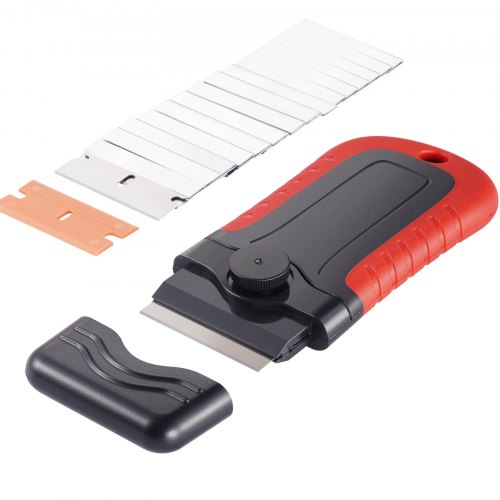
| Locking Razor Blade Scraper, 16 Blades | Hand-held, screw-lock | Carbon steel (HRC 60) plus POM | ABS + TPE | 4.4 x 2.0 x 0.6 in | 0.16 lb | 15 steel, 1 POM blade, 5-blade storage | Only steel-edge hand tool here; paint and baked residue on glass cooktops |
| SDS Plus Floor Scraper, 3.9 in Blade | SDS Plus rotary hammer | 40Cr steel | 40Cr steel shaft | 9.5 x 3.9 in | 0.88 lb | Scraper, 9.6 in point chisel | Lightest powered bit; small tile jobs with an SDS Plus hammer |
| SDS Max Floor Scraper, 5.9 x 15.7 in | SDS Max rotary hammer | 40Cr steel | 40Cr steel shaft | 15.7 x 5.9 in | 2.98 lb | Scraper, 11 in point chisel | Wide blade at mid length; thinset under kitchen and bath tile |
| SDS Max Floor Scraper, 5.9 x 24.4 in | SDS Max rotary hammer | 40Cr steel | 40Cr steel shaft | 24.4 x 5.9 in | 7.28 lb | Scraper, 11 in point chisel | Longest reach and heaviest here; large-room tile and mortar tear-outs |
Why Choose VEVOR Razor Blade Scrapers?
From lightweight plastic razor blade scrapers for sensitive surfaces to robust metal and blade floor scraper versions for professional job sites, VEVOR offers a wide variety of razor blade scrapers. Every tool features surface-specific setups, quick blade-replacement mechanisms, and ergonomic grip designs to ensure real-world performance. With VEVOR's affordable prices, you can achieve expert-caliber results without going over budget. Choose the ideal blade scraper tool for your upcoming job by browsing the entire assortment now.
FAQs
Can I use a razor blade scraper on glass without scratching it?
Yes, provided that the blade is clean and sharp and utilized properly at a low angle. To reduce friction and prevent scratches, always keep the blade flat against the surface, apply light pressure, and ensure the glass is moist or lubricated.
What is the difference between plastic and metal razor blade scrapers?
For soft or coated surfaces, such as acrylic panels and automobile paint, plastic blade scrapers are safe to use. When more force is needed to cut hard surfaces like tile, concrete, and glass, metal razor blade scrapers function better.
How often should I replace the blades on my scraper?
As soon as you notice the blade dragging instead of cutting cleanly, replace it. A single blade can cover a moderate work area for most activities. Blade changes may be necessary more frequently for heavy-duty floor or adhesive removal to ensure safe, effective operation.
Are VEVOR razor blade floor scrapers suitable for large commercial jobs?
Certainly, with their wide blade heads, sturdy steel construction, and ergonomic handles that lessen fatigue during large-area stripping or glue removal on business floors, VEVOR's long-handled razor blade floor scrapers are designed for prolonged professional use.
Can I use a razor blade scraper to remove caulk from bathroom tiles?
Indeed. When held at a shallow angle, a razor blade scraper tool excels at working on caulk. To lift it cleanly without damaging the tile surface below, score along the caulk bead first, then slip the blade under it.
Can you recommend some durable plastic scraper blades for home use?
Yes. Look for blades made from POM, a stiff, wear-resistant plastic that will not scratch glass or paint. VEVOR's two-tool POM scraper set comes with 120 spare plastic blades, enough for stickers, decals and kitchen grease around the house. Swap a blade once its edge rounds over.
How do I choose the best razor scraper for glass surfaces?
Pick a steel blade in a holder that locks firmly, since a shifting edge scratches at low angles. Keep a plastic blade for tinted or coated glass. VEVOR's locking scraper with a security cap pairs 15 carbon steel blades with one POM blade for both cases.
What safety tips should I follow when using a razor blade scraper?
Push the blade away from your body and keep your free hand clear of its path. Cover or retract the edge whenever you set the tool down, wear gloves, and replace dull blades promptly because they slip. With powered SDS bits, wear eye protection as well.
Where to buy razor blade scraper?
You can buy one directly from VEVOR's online store, which carries plastic and steel hand scrapers as well as SDS floor scraper bits. Compare blade material, spare blade count and handle style on each product page, then browse the wider flooring tool collection for related prep tools.
Can a razor blade scraper be used on stainless steel, tile, or wood?
Yes, with the right blade. Glazed tile accepts a steel edge held low and wet. Use a plastic blade on stainless steel appliances and finished wood, because steel can scratch brushed finishes and cut into varnish. To lift old floor tile, an SDS Plus floor scraper works faster.
