Grinders














Results for Grinders
Grinders are power tools that wear down, shape or break apart material with a spinning abrasive, cutter or hammer. Some sharpen and shape metal on a bench, some resurface concrete floors, and others crush rock, glass or plastic into smaller pieces. Metalworkers, flooring contractors, woodworkers, jewelers, recyclers and hobby miners use them daily. Matching the head and motor to the material lets a grinder cut cleanly without stalling or overheating.
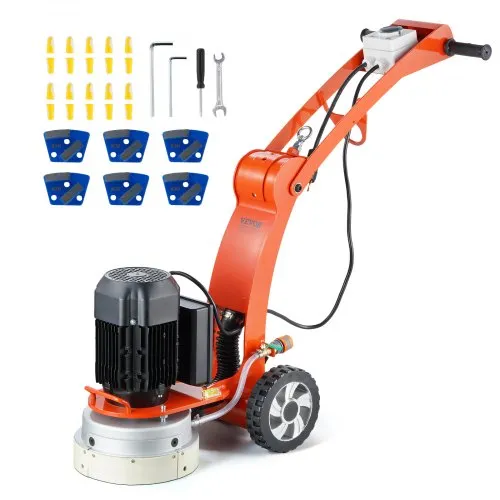
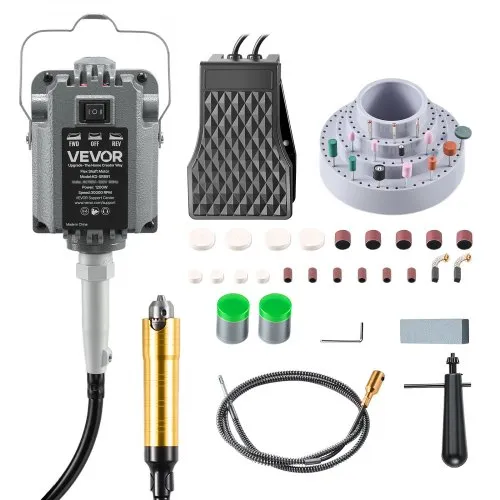
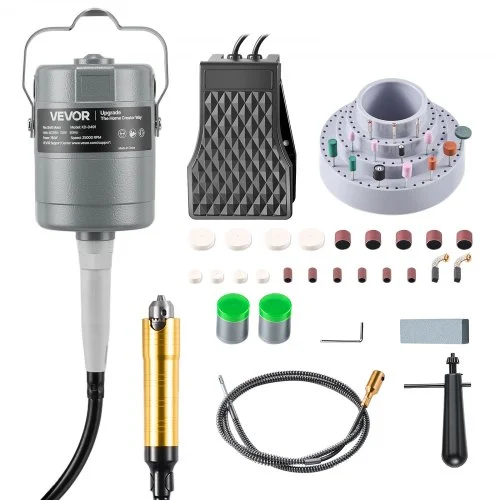
Concrete floor grinders walk a diamond disc across slabs to level them and open the surface for coatings, while scarifiers chew through paint lines and thick buildup with rows of carbide cutters. Bench grinders mount to a workbench and hone chisels, drill bits and mower blades on twin wheels. Angle grinders cut, grind and strip rust by hand with swappable discs, and die grinders reach tight ports and welds with small burrs. Flex shaft grinders hang the motor overhead so a pen-sized handpiece can carve fine detail. Rock crushers break stone, ore and glass between rollers, jaws or hammers, and plastic shredders chop scrap into flakes for reuse. Wet modes on the walk-behind floor grinders keep dust down, while dry units connect to a shop vacuum. Speeds run from 1,720 RPM on floor machines to 30,000 RPM on flex shaft tools. Fabricators, floor installers, prospectors and makers choose by material, finish and how much they process.
Five things decide which one fits:
- Working head: the disc, drum or hammers that do the cutting.
- Power source: the motor or engine and the supply it needs.
- Tool speed: how fast the head turns in RPM.
- Dust handling: how the machine keeps grit and debris under control.
- Body weight: how heavy the machine is to move and transport.
Browse every grinder here, then explore more power tools.
Grinder Types at a Glance
Each grinder style suits a different material and job, so the table below compares what does the cutting, what it works on and how it runs.
| Type | Cutting Element | Typical Material | Operation |
|---|---|---|---|
| Concrete floor grinder | Diamond disc spinning flat on the slab | Concrete, granite and marble | Walk-behind with wet and dry modes |
| Concrete scarifier | Drum of 76 tungsten carbide cutters | Concrete, pavement and paint lines | Walk-behind with a gasoline engine, run where exhaust vents |
| Low-speed bench grinder | Twin 6 in wheels, 36 and 60 grit | Tool steel edges and small parts | Bench-mounted at 1,750 RPM |
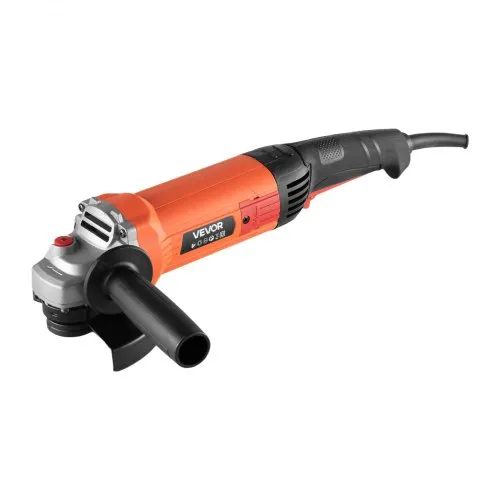
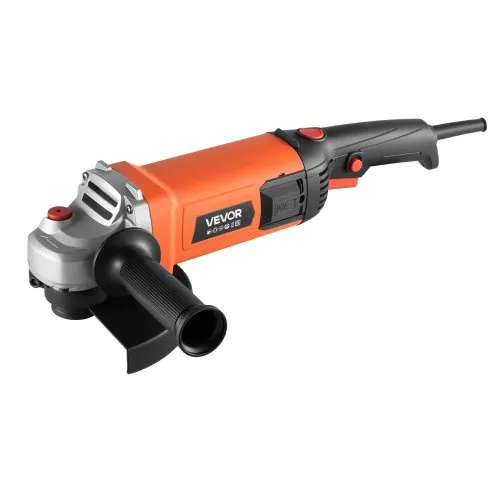
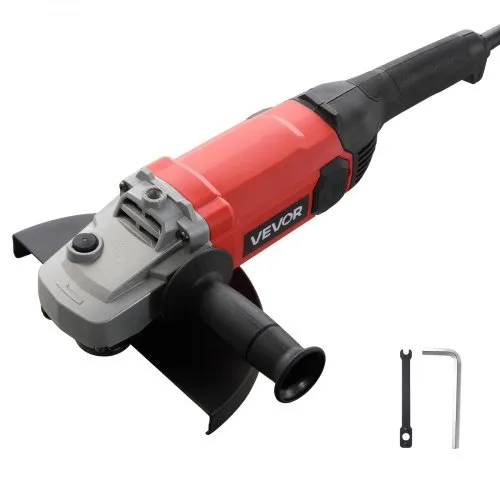
| Variable-speed angle grinder | 4.5 in cutting, grinding and flap discs | Metal | Handheld, 6 speeds from 3,000 to 12,000 RPM |
| Flex shaft grinder | Bits and burrs in a 3-jaw chuck handpiece | Small parts for carving, sanding and polishing | Hanging motor with foot-pedal speed control |
| Double-roller rock crusher | Two rollers turning inward | Rock, stone and glass | Hopper-fed through 2.56 x 0.59 in inlets |
VEVOR Dependable Grinders for Workshops, Construction Sites, and Manufacturing Facilities
Are you looking for grinding tools that can handle tough materials and deliver precise control over the quality of the results? Using the right tool for the job gets you the best outcomes and the most work done. VEVOR has a wide range of grinders that can handle any grinding job. Professionals and serious amateurs alike trust their tools since they work well and last a long time.
Exploring Grinder Categories and Their Ideal Uses
To choose the right grinders, you need to know about the many types of tools and how to match designs to the activities and materials you’ll be working with. Each type of workshop station, from fixed ones to transportable handheld units, has its own set of advantages for certain uses.
Bench Grinders for Stationary Workshop Excellence
Bench grinders set up important stationary grinding stations where people regularly do tool maintenance, metal forming, and finishing operations. These workshop-mounted grinders keep abrasive wheels at comfortable heights and provide continuous power for extended grinding. Reliable stationary grinding systems are important for productive workshops.
Restoring sharp edges on drill bits, wood chisels, and other cutting tools is one of the main things stationary grinders excel at. Well-maintained cutting tools work far better than dull ones and last much longer. Grinding ability is a must for workshops that care about how long their tools last.
Bench grinders with rock-solid platforms and adjustable work guides help remove burrs and shape metal profiles. Repeatable grinding angles ensure that all parts that need the same finish receive the same treatment. Precision stations define quality workshop grinding equipment.
Angle Grinders for Unmatched Portable Flexibility
An angle grinder is quite versatile, as you can change the discs to suit your needs for cutting, grinding, polishing, and conditioning surfaces. These handheld grinders can do a lot of work right where the workpieces are, no matter how hard they are to reach. Mobility and power together can solve many problems.
Metal fabrication requires crushers to separate stock, clean up welds, and prepare substrates before coating treatments may begin. Quickly removing material with aggressive grinding speeds up production while still meeting application requirements. Angle designs that can be used in many ways are still important for making things.
Choosing the right accessories for an angle grinder can change its purpose from cutting through tough materials to gently finishing them. Cutting wheels, wire cup brushes, sanding flaps, and polishing pads all use the same tool platforms to meet different needs. Different attachments can significantly enhance a single tool's capabilities.
Concrete Grinders for Floor Restoration Projects
A concrete grinder can refurbish floors and prepare substrates by peeling coatings, correcting unevenness, and creating bonding profiles, which require specialized tools. These large grinders use rotating diamond segments to quickly transform concrete, stone, and brick surfaces. How well the next finishing work depends on how effectively the preparation was done.
When renovating, crushers typically remove old treatments and prepare the surface for new ones. To use epoxy systems, polished concrete aesthetics, and decorative overlays, you need to properly prepare the substrates by grinding them. Thorough preparation sets the stage for a successful coating.
Grinders are used in businesses and factories to maintain concrete infrastructure by regularly renewing the surface and repairing damage. Removing damaged parts, leveling transition joints, and repairing areas worn down by traffic greatly extend the life of the flooring. Preventive grinding is a good way to protect investments in facilities.
Purpose-Built Grinders for Specialized Materials
A stone crusher machine uses a lot of grinding energy to break down rock and aggregate into smaller pieces that can be used. These heavy-duty grinders can change the size of materials for construction, landscaping, and recycling jobs that need it. Specialized crushing machinery may handle tough material processing needs.
A plastic grinder turns leftover materials and waste streams from manufacturing into smaller particles, enabling their recovery and reuse. These specialized grinders enable environmentally friendly production while recovering useful materials that would otherwise end up in landfills. You need more recycling equipment to be environmentally responsible.
In the agricultural industry, specialized grinders, such as hay choppers turn animal feed resources into formats. These formats are easier to handle. Our application-engineered grinders meet specific needs for quickly and easily handling crop materials. Purpose-built arrangements work best in certain industry settings.
Which Grinder Fits Your Job
With the grinder styles covered, match your material and power supply to the conditions below to land on one machine.
| Confirm Before Purchase | Matching Specification | Recommended Product | Main Limitation |
|---|---|---|---|
| Your garage slab is bare concrete headed for epoxy and you have a 110V outlet | 10 in diamond disc, 1,300 W brushless motor, 1,720 RPM, wet and dry modes | 10 in walk-behind floor grinder | Needs PCD heads to lift old glue |
| You remove paint lines from outdoor pavement where gasoline exhaust can vent | 8 in drum, 76 carbide cutters, depth up to 1/8 in | Gas-powered scarifier | Runs on gasoline, so outdoor use only |
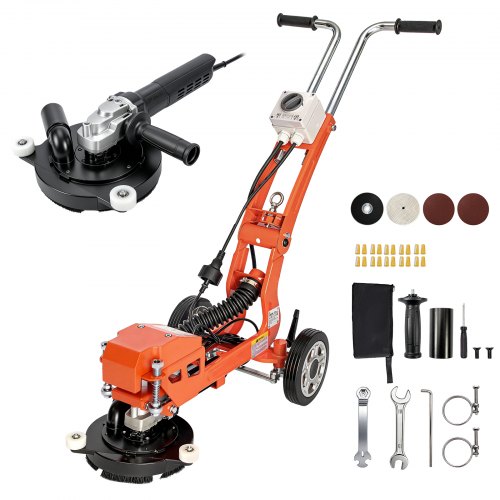
| You grind wall edges and stair treads on a 15 A circuit with a shop vacuum | 7.09 in detachable disc, 1,400 W, 3,600 RPM, 50 mm vacuum port | 1400 W dry concrete grinder | Dry grinding only |
| You sharpen chisels and plane irons and want slow wheels that heat the edge less | 6 in 36 and 60 grit wheels, 250 W, 1,750 RPM | 6 in low-speed bench grinder | The 250 W motor is light for heavy shaping |
| You crush rock samples and glass bottles on a 220V three-phase supply | 2.5 kW motor, hammers with 0.12, 0.24 and 0.4 in screens, 100 to 200 kg per hour | 2.5 kW hammer crusher | Feed pieces must be under 2.17 in |
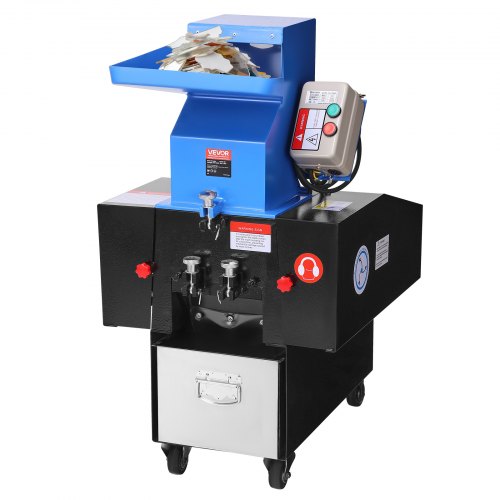
| You shred plastic offcuts and can hard-wire a 220V three-phase supply | 2.2 kW, 7.9 x 4.3 in feed opening, 11 blades | 2.2 kW plastic shredder | Capacity listing conflicts on the product page |
Assessing Power Capabilities and Feature Advantages
Motor parameters and feature packages affect how well grinders handle different materials and working conditions, as well as the category. Understanding these factors helps you make purchases that meet real operational needs.
Motor Capacity for Challenging Workloads
Grinders can maintain their rotational speed and turning force, even as the load gets heavier during severe material-removal cycles, if they have sufficient motor strength. When faced with tough jobs, underpowered equipment can fail and lead to excessive heat and incomplete work. Preventing disappointment requires matching the power capability to the application's severity.
Professional-grade grinders have motors which are designed to run continuously in a business setting. That’s why they are less likely to shut down from overheating, which might slow output. Business and industrial needs require consistent output that lighter equipment can’t provide. Serious uses call for machinery that is strong enough.
With adjustable speed features in advanced grinders, you can choose the right operational parameters for different substrates and processes that need controlled removal intensity. Slower speeds help some materials, whereas faster rates help remove stock more quickly in other areas. Speed customization improves results across many different situations.
Die Grinders for Intricate Precision Tasks
Die grinders are little machines that can do precise work when bigger machines are hard to get to or don’t give you enough control over how you move them. These finesse-oriented grinders are great for porting changes, cleaning edges, and polishing surfaces that need care rather than brute force. Tasks that require a lot of detail necessitate instruments scaled to the work at hand.
Straight grinders that place grinding surfaces directly in front of tool housings make it easier to access workpiece features. Inline orientation makes it easier to remove materials in a controlled way along edges and in recessed areas. Positioning benefits make it easier to achieve precise results.
A flex shaft grinder separates the motor weight from the working ends by using flexible drive connections. This makes it easy to move the tool around without having to deal with heavy tools. These grinders can handle intricate detailing and, even when handling large volumes, remain easy to control accurately. Better maneuverability makes complex work better.
Protection and Usability Enhancements
Guard assemblies on high-quality grinders keep users safe from wheel fragments, spark spray, and particles generated during intense grinding. Repositionable setups allow for different wheel sizes and approach angles while keeping the operator safe. Safety measures should be the most important factor in choosing.
Ergonomic engineering in grinders reduces user fatigue during long sessions by optimizing weight balance and molding the grip naturally. Less tiredness increases both the amount of work done and the safety of the workplace during long operations. Comfortable handling has a big effect on the results.
Integrating debris management with grinders solves breathing and sightline issues caused by airborne particles during grinding. Capture hood systems capture particles immediately, preventing them from spreading to other parts of the workplace. Controlled settings keep both people and buildings safe.
Best-Seller Comparison
Before ordering, set the five best sellers side by side on working head, power source, tool speed, dust handling and body weight.
| Product | Working Head | Power Source | Tool Speed | Dust Handling | Body Weight |
|---|---|---|---|---|---|
| VEVOR 10 in Walk-Behind Concrete Floor Grinder | 10 in diamond disc, the largest here | 1,300 W brushless motor on 110V | 1,720 RPM | Wet and dry modes | 122 lb |
| VEVOR Gas Concrete Scarifier | 8 in drum with 76 carbide cutters, depth up to 1/8 in | 3,700 W gasoline engine | 2,500 RPM | Vacuum port | 132.28 lb |
| VEVOR 7 in Walk-Behind Concrete Floor Grinder | 7 in diamond disc | 1,300 W brushless motor on 110V | 1,720 RPM | Wet and dry modes | 95 lb |
| VEVOR 2.5 kW Hammer Rock Crusher | Manganese steel hammers with 0.12, 0.24 and 0.4 in screens | 2,500 W motor on 220V three-phase | 1,740 RPM | Enclosed body with inlet and outlet dust covers | 136.7 lb, the heaviest here |
| VEVOR 1400 W Dry Concrete Grinder | 7.09 in diamond disc that detaches for wall work | 1,400 W motor drawing 15 A | 3,600 RPM, the fastest here | 50 mm vacuum port plus a lower shroud, dry only | 62.5 lb, the lightest here |
Why Choose VEVOR Grinders?
VEVOR grinders combine powerful motors with sturdy construction to handle tasks from delicate precision work to harsh surface reconditioning. Our large stock of grinding tools includes everything from permanent workshop setups to portable tools for a variety of applications to dedicated gear for processing materials. Every product features high-quality parts and smart design, ensuring it works reliably even in tough professional settings. VEVOR makes it easy to buy great grinding tools by making ordering easy and providing quick customer service for every transaction. Check out our full collection of grinders today and be better prepared to handle a wide range of grinding jobs.
Frequently Asked Questions
What protective gear should accompany grinder operation?
When using a grinder, you still need to wear eye protection, ear protection, and the right gloves. Full face shields provide extra protection during heavy grinding tasks.
How should I choose appropriate grinding wheels?
Ensure the wheel parameters align with the substrate's properties and the process goals. The abrasive formulation, grain coarseness, and wheel architecture determine a wheel's efficiency in a given application.
Why do grinders experience thermal issues during operation?
Overheating happens when you use too much force, block ventilation, or use the machine for longer than the recommended time. Take breaks over long periods of labor.
When should grinding wheels undergo conditioning?
Condition wheels if the surface glazing makes cutting less effective or debris buildup makes it harder for the abrasive to work. Regular conditioning keeps grinding at its best.
Do angle grinders effectively slice through metal stock?
Yes, angle grinders with the right tools can quickly cut through metal. Use thin cutting discs instead of grinding wheels to achieve clearer separation.
How do I choose the right size of bench grinder for my workshop?
Pick a 6 in grinder for light sharpening on a small bench and an 8 in model for heavier shaping, since larger wheels hold speed under load. Check motor power and bench space. The 8 in variable-speed bench grinder runs from 2,000 to 3,450 RPM.
How do I choose the right bench grinder for chisel sharpening?
Choose a low-speed grinder around 1,750 RPM with a fine wheel, which heats the edge less and protects the temper. Keep a water pot nearby to cool the steel. The 6 in low-speed bench grinder turns at 1,750 RPM.
Can you give me tips on how to safely use an angle grinder?
Keep the guard on, hold the tool with both hands, match each disc's RPM rating to the grinder, let it reach full speed before contact and stand out of the disc's path. Clamp the work. The variable-speed angle grinder slows down for finishing.
Can I use a 5-inch grinding wheel on a standard angle grinder?
Only if the grinder is built for 5 in wheels. Most standard grinders take 4.5 in discs, and fitting a larger wheel means removing the guard, which is unsafe. Match the arbor and RPM rating too. The 5 in angle grinder accepts 5 in discs.
Can I cut through reinforced concrete with an angle grinder?
Yes, for shallow cuts, using a diamond blade made for reinforced concrete, plus water or a vacuum shroud to control silica dust. Deeper cuts need a concrete saw. The 7 in angle grinder takes larger blades for deeper passes.
How do I choose the right concrete grinder for my project?
Match disc size to the area, then choose wet grinding for dust control or dry grinding with a vacuum port, and check whether you need edge work or coating removal. The 10 in concrete floor grinder covers open slabs fastest.
How do I use a concrete grinder safely and effectively?
Wear a respirator with eye and ear protection, connect a HEPA vacuum or use water, keep cords behind you and lower the head only once the motor is at speed. The dry-grinding concrete polisher has a 50 mm vacuum port and a lower shroud.
How does a double roller crusher work and what are its advantages?
Two rollers turn toward each other and pull material into the gap, squeezing it into smaller, even pieces with fewer fines and less dust than hammer crushing. It suits rock, ore and glass. The double-roller rock crusher handles up to 860 kg per hour.
How do I choose the right plastic shredder for my home workshop?
Compare the feed opening with your largest scrap, then check hourly output, blade steel and the power supply, since many shredders need three-phase power. Spare blade kits help. The 2.2 kW plastic shredder processes 100 to 150 kg per hour.